Photography has long provided a record of football culture beyond the action – documenting supporters, stadiums, fashion, rituals, communities and the changing world around the game.

Goals, players and trophies form one part of football history. But much of what gives the game its identity happens elsewhere: in the stands, outside grounds, on away journeys, in pubs and streets, and among the people who follow clubs week after week.
These details are often ordinary at the time.
Years later, they become part of the record.
At Lower Block, football photography is as much about documenting culture as sport – preserving the people, places and moments that show how football actually felt and how it was lived.
Documenting Football Beyond the Pitch
Some of the most revealing football photographs contain very little football.
A supporter waiting outside a turnstile. Friends travelling to an away game. A terrace before kick-off. A pub full of scarves and replica shirts. Floodlights above rows of houses. A group of young fans dressed in the fashions of a particular era.
These photographs show football as part of everyday life.
They record details that match reports rarely capture: clothes, architecture, advertising, transport, friendships, neighbourhoods and social behaviour.
Taken together, they provide a wider history of the game and the communities surrounding it.

Supporters and Football Fan Culture
Football supporters are continually changing, even when many of their rituals remain familiar.
Photography allows those changes to be seen.
Images from the 1960s, 70s, 80s and 90s show shifts in clothing, hairstyles, stadium design and supporter behaviour. Scarves and rosettes give way to sportswear and designer labels. Large standing terraces disappear. Fencing arrives and later goes. Replica shirts become increasingly common.
At the same time, other elements remain remarkably consistent.
Families still attend together. Friends meet before matches. Away supporters travel the country. Songs and traditions are passed between generations.
Documentary photography preserves both the changes and the continuity within football fan culture.

Football Grounds and Architecture
Football grounds are among the most distinctive settings in the game.
Many historic stadiums developed gradually over decades rather than being created from a single design. Different stands, floodlights, terraces, roofs, advertising and surrounding streets gave individual grounds their own character.
Photography has become increasingly important as these places change or disappear.
Highbury, Maine Road, the Boleyn Ground, Highfield Road, Elm Park and many other grounds now exist largely through memories, film and photographs.
Even stadiums that remain have often been transformed beyond recognition.
Images of football grounds therefore become more than architectural studies. They preserve the relationship between a club, its surroundings and the people who occupied those spaces.

Fashion, Subculture and the Terraces
Football photography also provides an important visual record of British youth and fashion culture.
The terraces have reflected changing styles for generations – from scarves, denim and Harrington jackets to skinhead culture, Casual fashion, sportswear and contemporary terrace style.
By the late 1970s and early 1980s, clothing had become particularly significant among groups of young supporters. Adidas trainers, European sportswear and designer labels became part of an increasingly recognisable football aesthetic.
Photographers documenting crowds were therefore also documenting fashion and youth culture.
Decades later, small details within those images – a particular trainer, jacket, haircut or football shirt – can become as interesting as the match itself.

Away Days and Football Travel
Away support creates another distinct photographic world.
Railway stations, coaches, motorway services, unfamiliar streets and packed away ends all form part of following a club on the road.
The photographs don’t need to show the match to tell the story.
Often the strongest images are found during the journey: supporters waiting for trains, drinking outside pubs, gathering around grounds or walking through unfamiliar cities.
European away games expand that visual language further, bringing together different football cultures, architecture, clothing and supporter traditions.
These journeys form an important part of the wider photographic record of football.
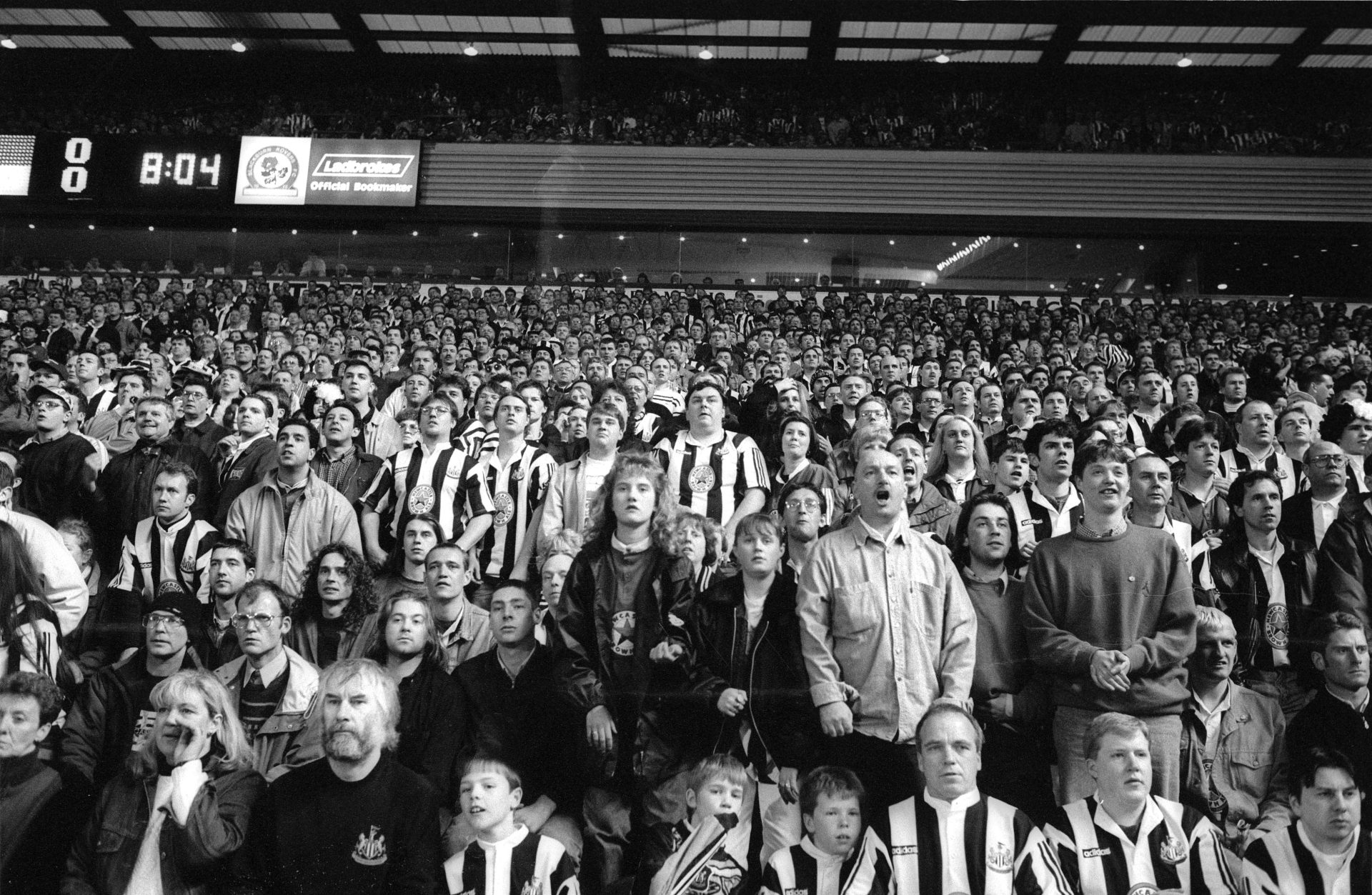
Analogue Photography and Football Culture
Film photography has retained a particularly strong relationship with football culture.
Part of that is aesthetic. Grain, colour, imperfections and the limitations of film can suit the atmosphere of football grounds, floodlights, terraces and matchday streets.
But there is also something in the process.
Film encourages photographers to observe rather than constantly shoot. With a limited number of frames, moments are selected more deliberately.
Many contemporary football photographers have returned to 35mm photography for precisely this reason, while older analogue archives have gained new significance as historical documents.
The format isn’t inherently more authentic than digital photography. The value ultimately comes from the photographer’s understanding of the subject and ability to recognise the moments that matter.
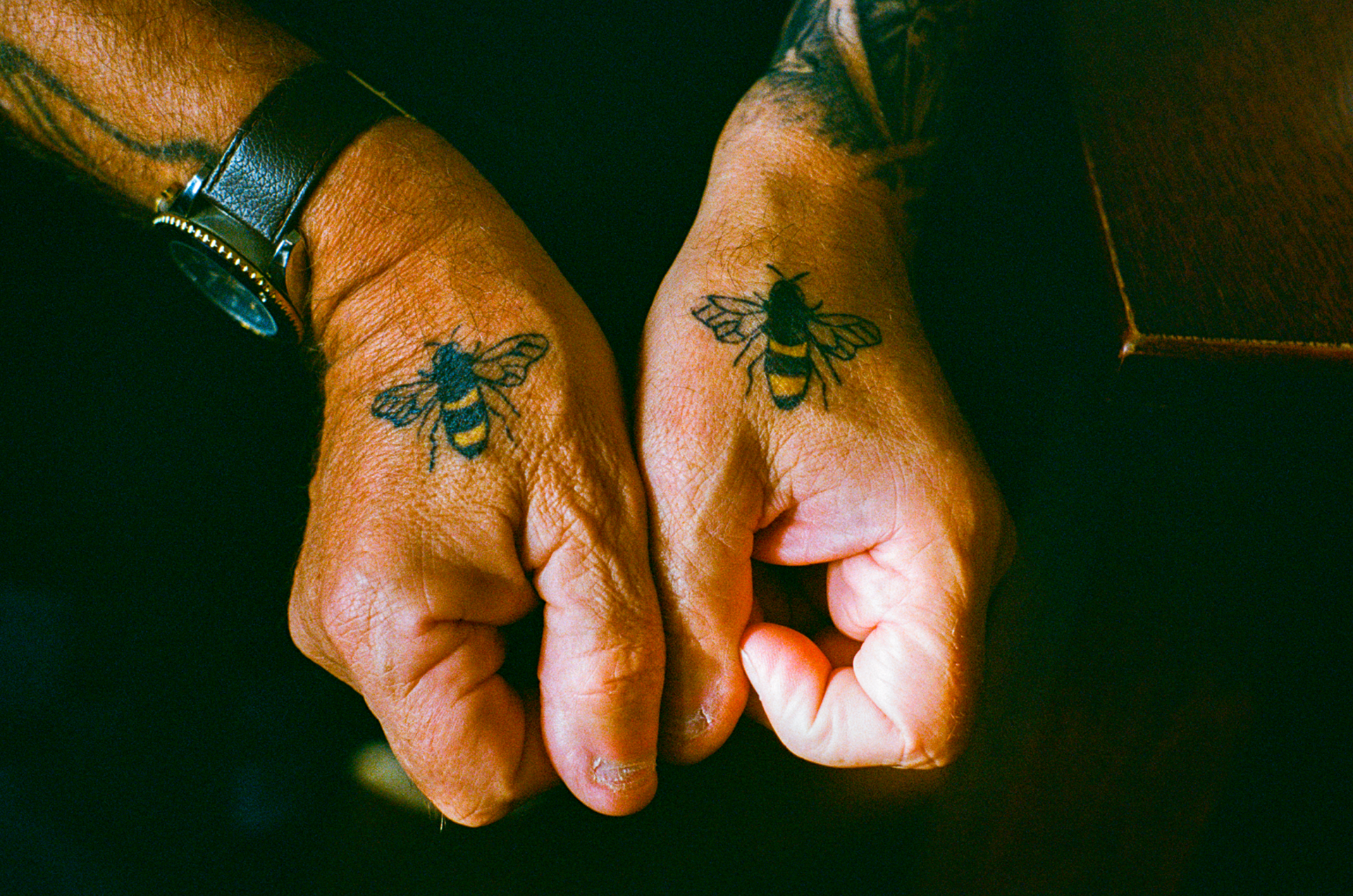
Curating and Archiving Football Photography
Taking photographs is only part of preserving football culture.
Archives need to be revisited, edited, identified and properly contextualised.
Photographs that appeared unremarkable when they were taken can become significant decades later because the ground has disappeared, fashions have changed or the people and places represented now belong to another era.
Good curation allows those photographs to be understood as collections rather than isolated images.
Dates, locations, clubs, photographers and stories matter.
So does the way photographs are brought together.
Digital archives make large bodies of work accessible to new audiences, while physical formats – books, photographic prints, magazines and independently published zines – give photographs a permanent life away from the endless movement of social media.
For Lower Block, both matter.

Football Photography in Print
Photography has always had a close relationship with printed football culture.
Newspapers, magazines, match programmes and fanzines helped define how generations saw the game. Independent publishing continues that tradition.
A printed collection allows a photographic story to be experienced differently.
Images can be sequenced, paired and given space. A season, ground, supporter group or particular period can be documented as a complete body of work rather than consumed one photograph at a time.
Lower Block Editions were created around this idea: affordable photographic publications that preserve football stories and make them accessible beyond the screen.
Fan Photography and the Digital Era
The ability to photograph football culture is no longer limited to professional photographers.
Phones and small digital cameras mean supporters document their own experiences constantly – from away journeys and concourses to celebrations, fashion and life around the ground.
This has produced an enormous visual record of contemporary football.
But more photographs do not automatically create a better archive.
Curation becomes increasingly important when images are produced in such quantities. Identifying work with lasting value, preserving context and giving photographs somewhere permanent to exist are now as important as taking them.
Social media can introduce photographs to huge audiences.
An archive gives them a future.
![Tottenham Hotspur supporters photo series. TRAINING GROUND [Blokes at worship - blokes at war] Kirsten Allen](https://lowerblock.com/wp-content/uploads/2024/07/000065510022-bw.jpg)
Why Football Culture Photography Matters
Football changes quickly.
Grounds disappear. Pubs close. neighbourhoods change. fashions come and go. Players move clubs and generations of supporters grow older.
Photography slows that process down.
It preserves the environments, people and details that might otherwise be forgotten and helps explain what following football looked and felt like at a particular moment.
The best football culture photography does not simply document the game.
It documents the life surrounding it.
Explore Lower Block Collections | Photography and stories documenting football culture across grounds, supporters, away days and communities
Suggested Lower Block Editions



More from the Lower Block Archive