Words and photographs by photographer and football culture enthusiast Guirec Munier offer a measured, detail-led portrait of Dalymount Park, one of the most historic stadiums in Irish football. Located in Phibsboro, Dublin, Dalymount Park -known as Dalyer to Bohemian FC supporters – has hosted international matches, domestic finals, and generations of top-flight football since opening in 1901.
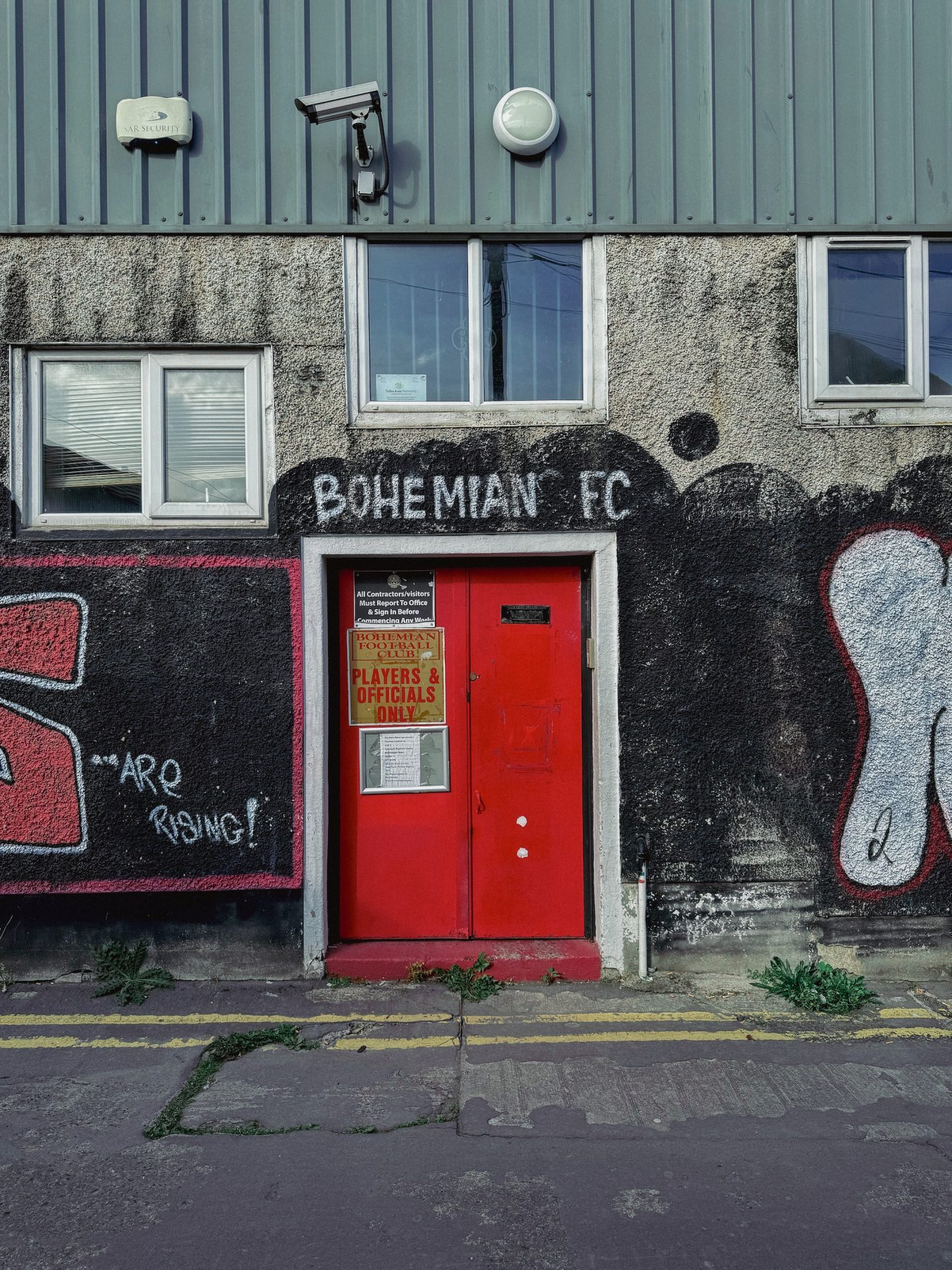
Shot away from matchday and free of crowds, these photographs focus on the fabric of the place: stadium architecture, weathered entrances, surrounding streets, murals, and graffiti that collectively express the identity of Bohemian Football Club and its community. From the wrought-iron gates of the Jodi Stand to the narrow lanes and painted walls that frame the ground, each image captures how football culture lives beyond the pitch. Calm, observational, and rooted in place, this visual essay documents Dalymount Park as it stands today – historic, imperfect, and deeply woven into Dublin’s urban landscape.
‘LOVE FOOTBALL – HATE RACISM…’
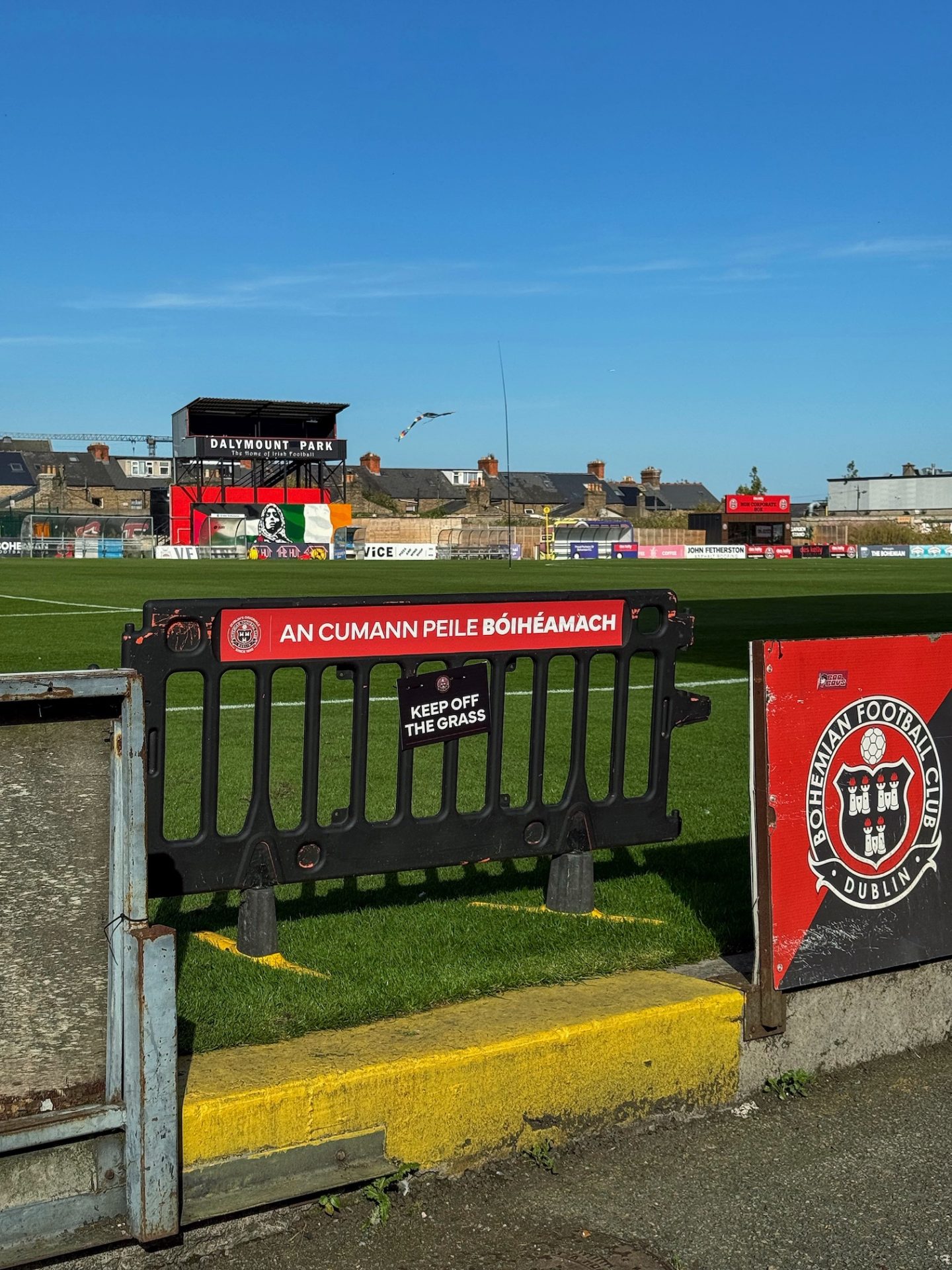
Considered the home of Irish football for having hosted the national team, FAI Cup finals, and Dublin’s top clubs, Dalymount Park – or Dalyer to Bohs fans – is first and foremost the stadium of Bohemian Football Club, An Cumann Peile Bóithéimeach to locals. Owned by its fans since its founding in 1890, Bohs has arguably been the undisputed champion of the most endearing, even cool, club for the past three years. Collaborations with Fontaines D.C. and Oasis have played a significant role (with an upcoming collaboration with Kneecap also sure to generate buzz), but it is their unwavering anti-racism, commitment to minorities, and support for the Palestinian people that position the North Dublin club as one of the few fully embracing humanitarian activism. These stances inevitably displease some, but that doesn’t matter. Standard-bearers of Paddystine, the Gypsies have shaped a stadium in their own image: a welcoming place where football and music icons coexist naturally, and where struggles dear to the community are emblazoned on weathered walls.
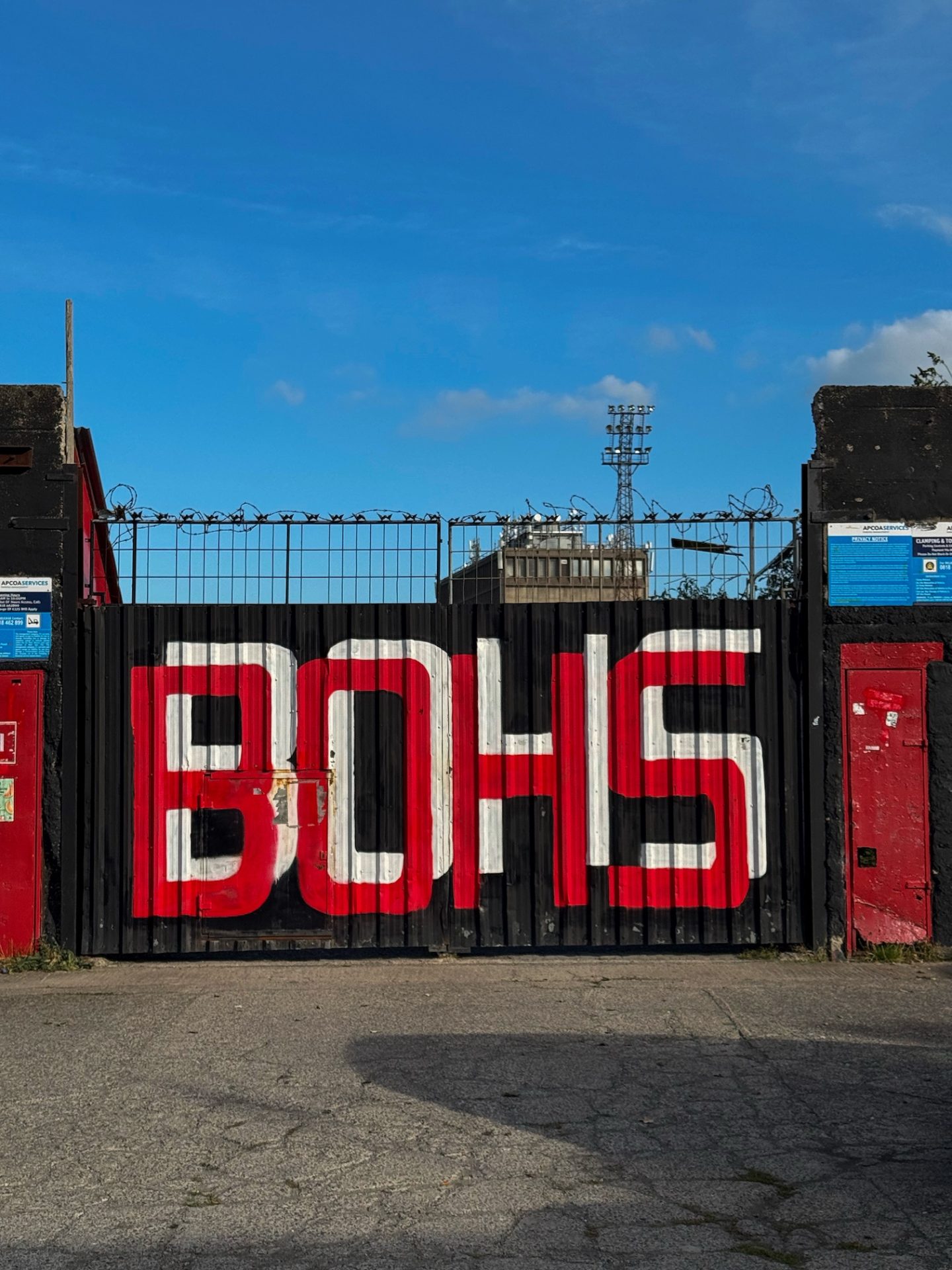
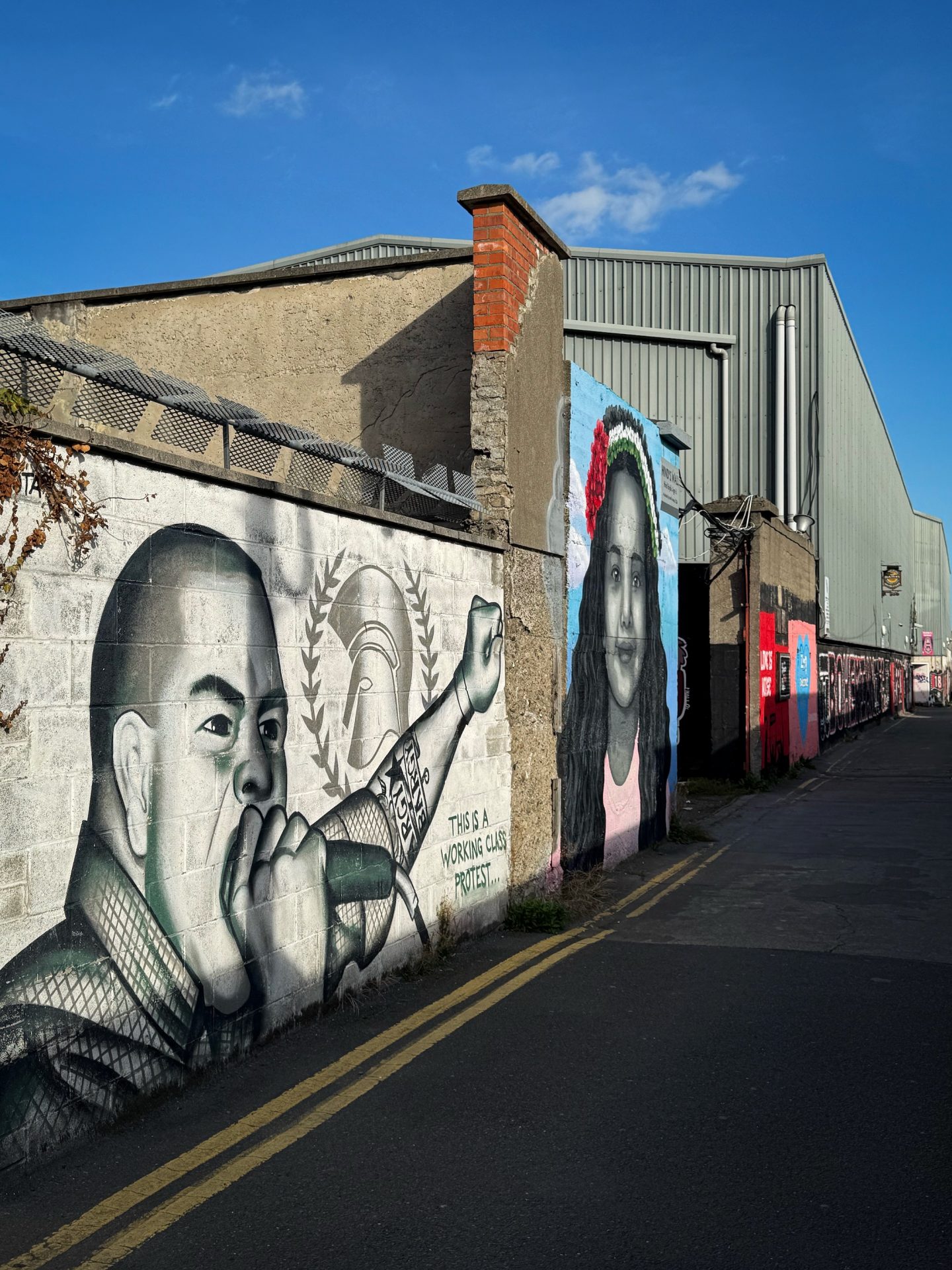
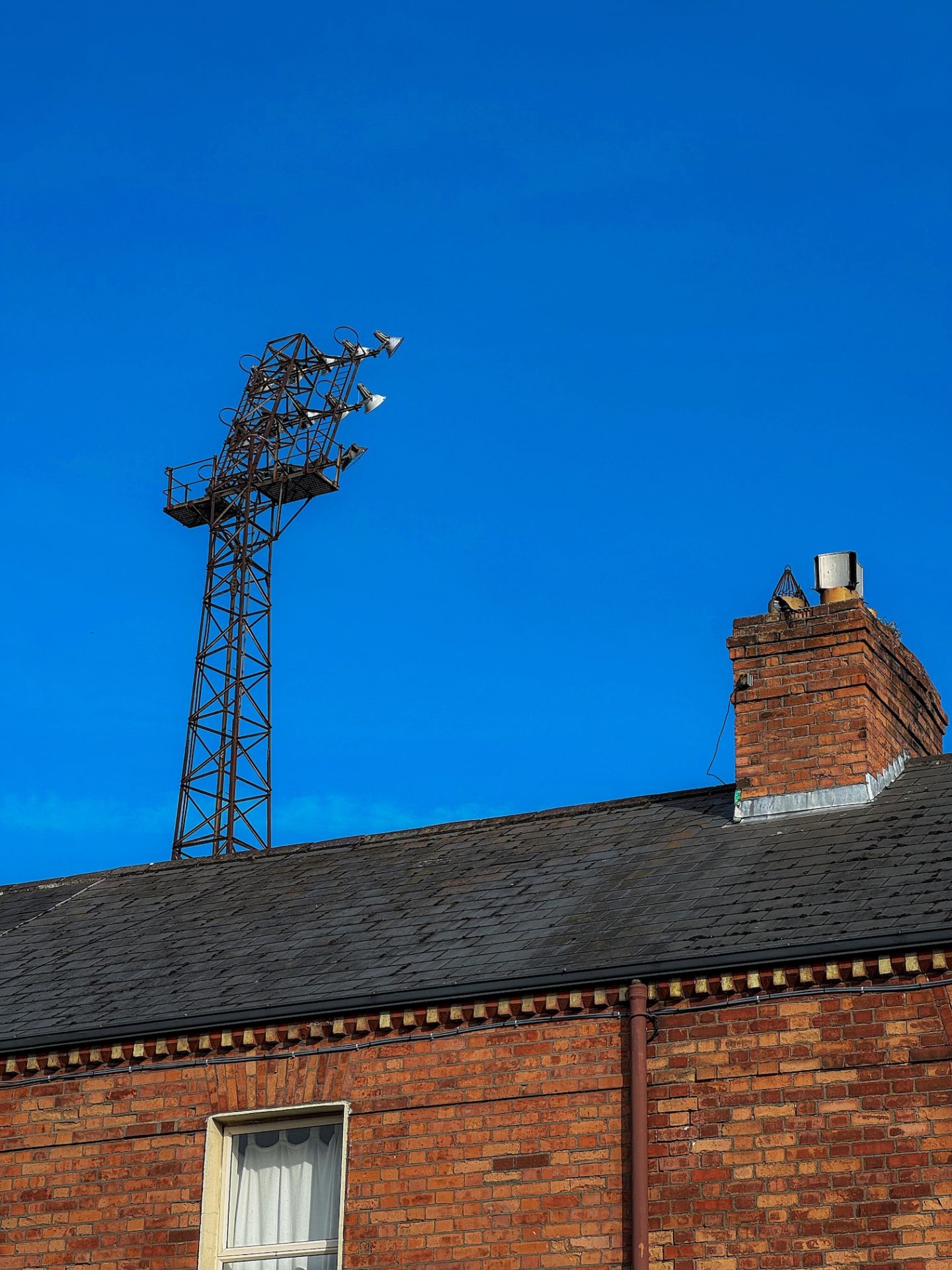
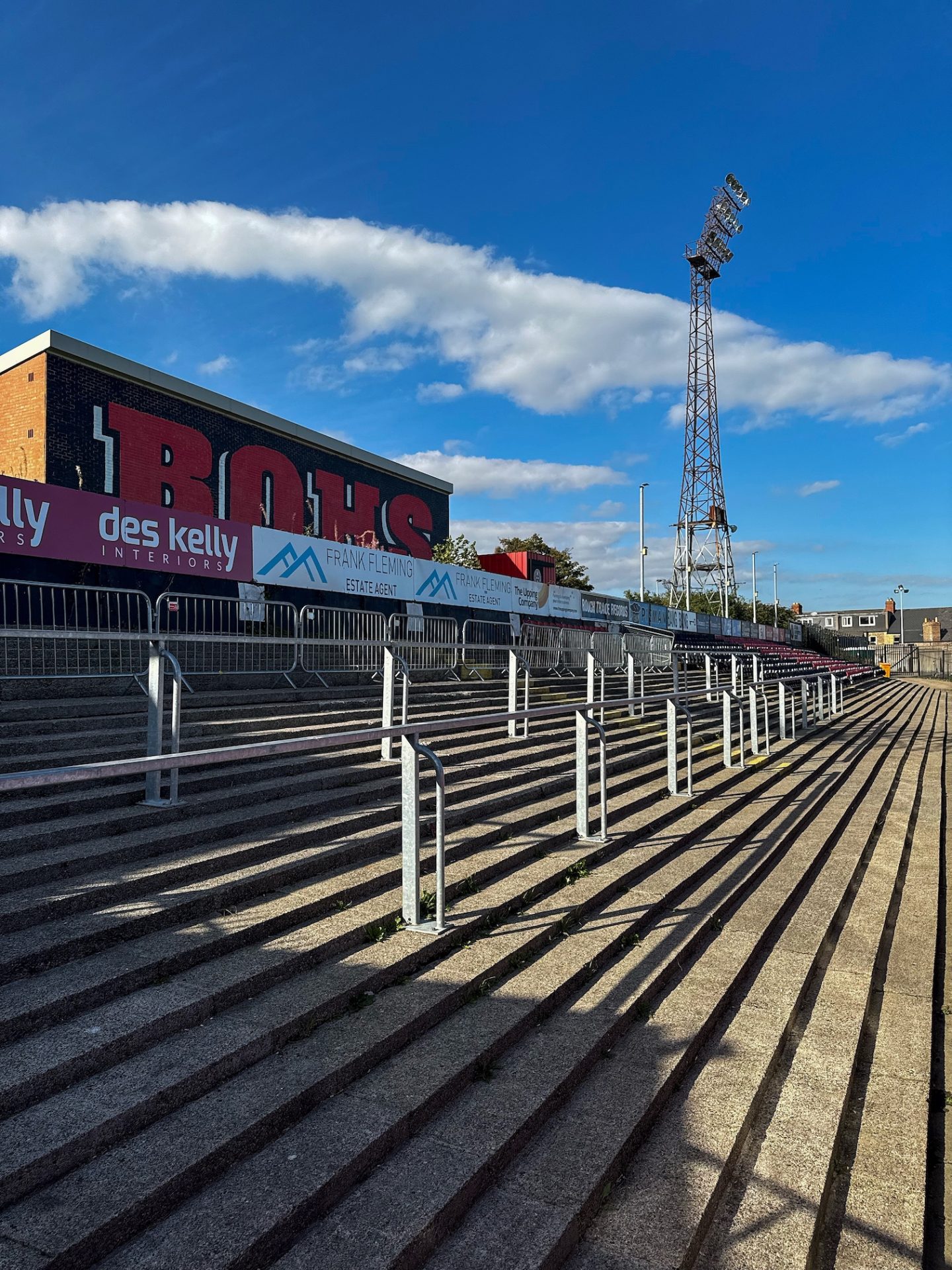
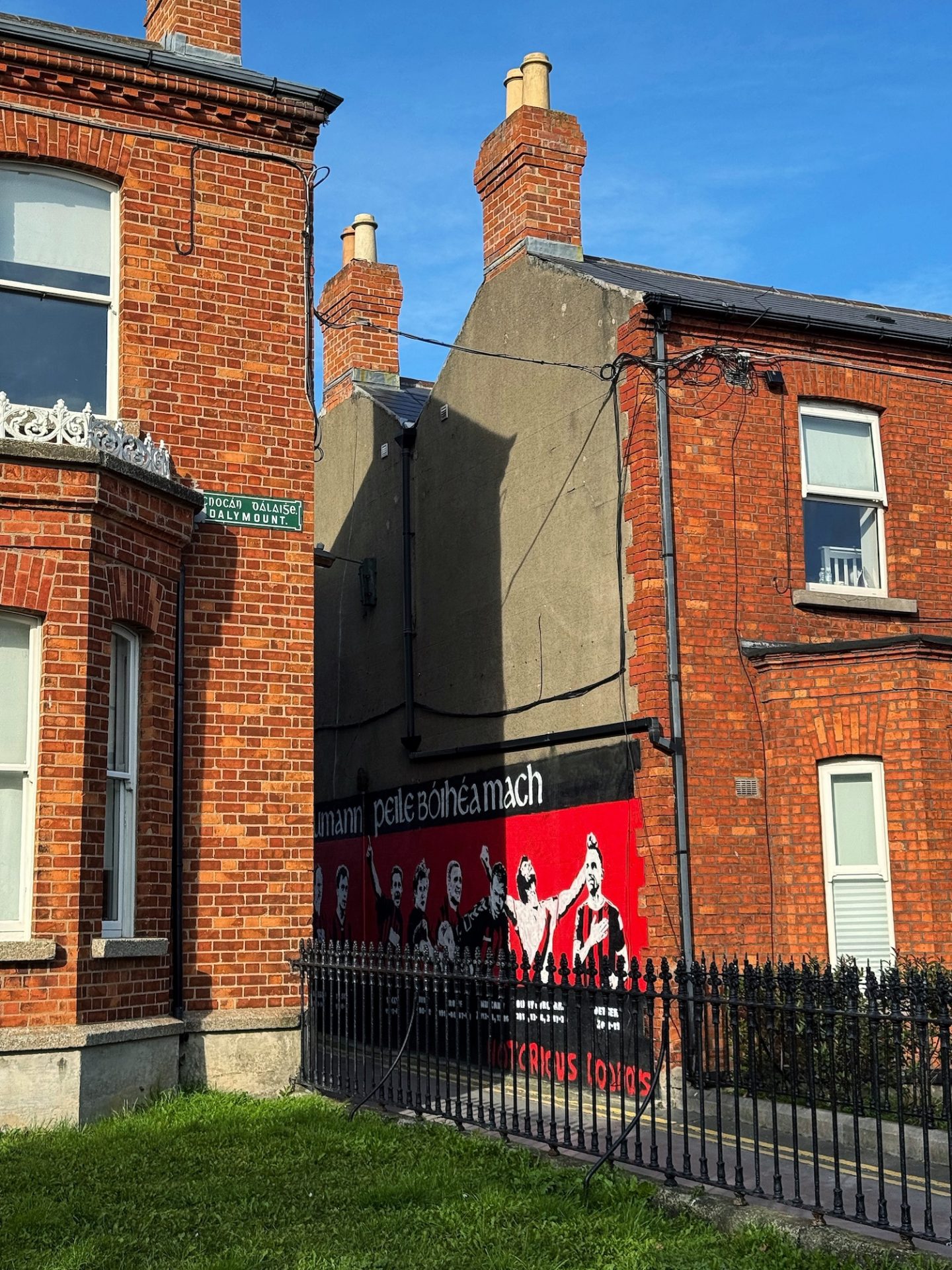
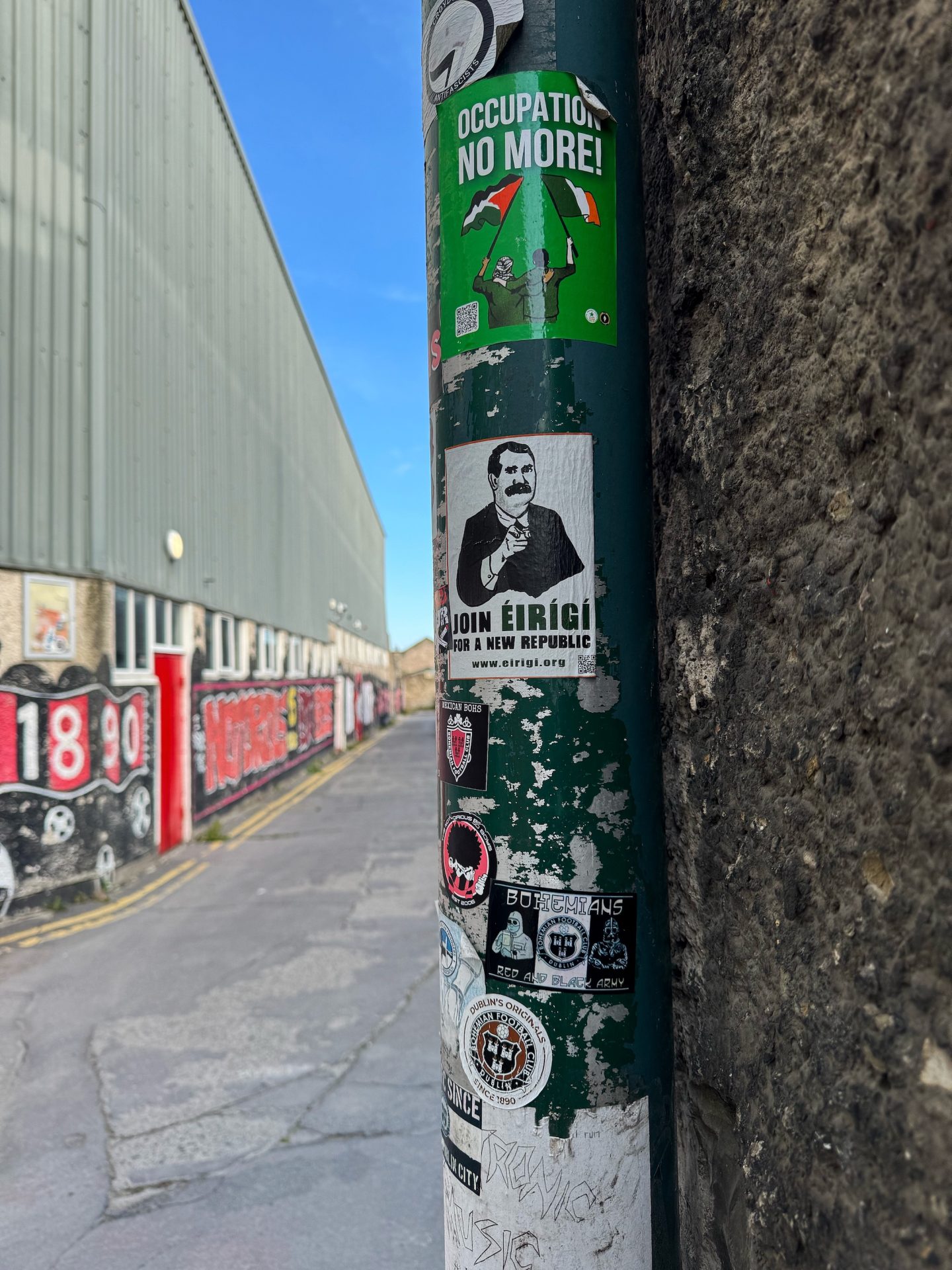
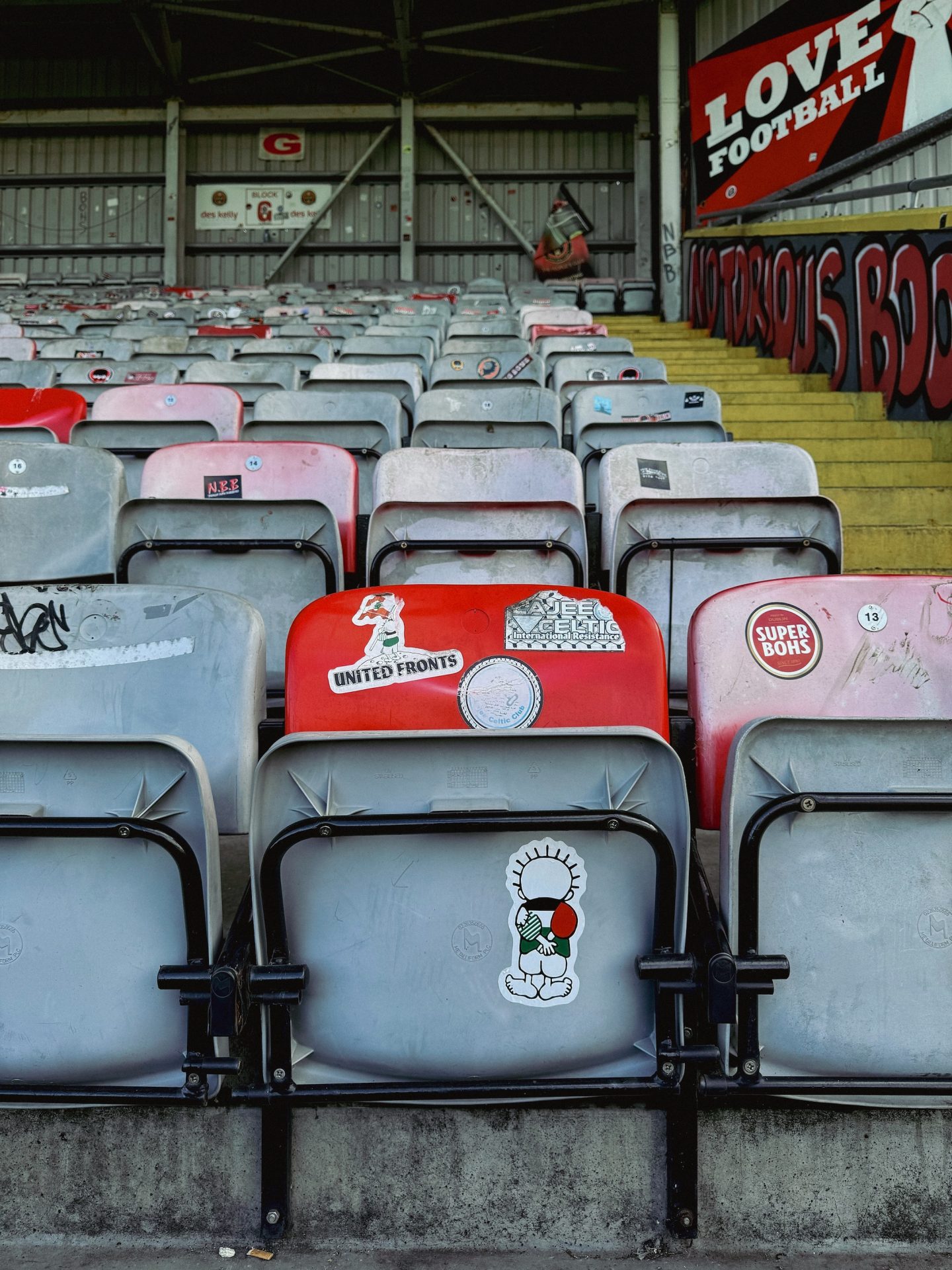
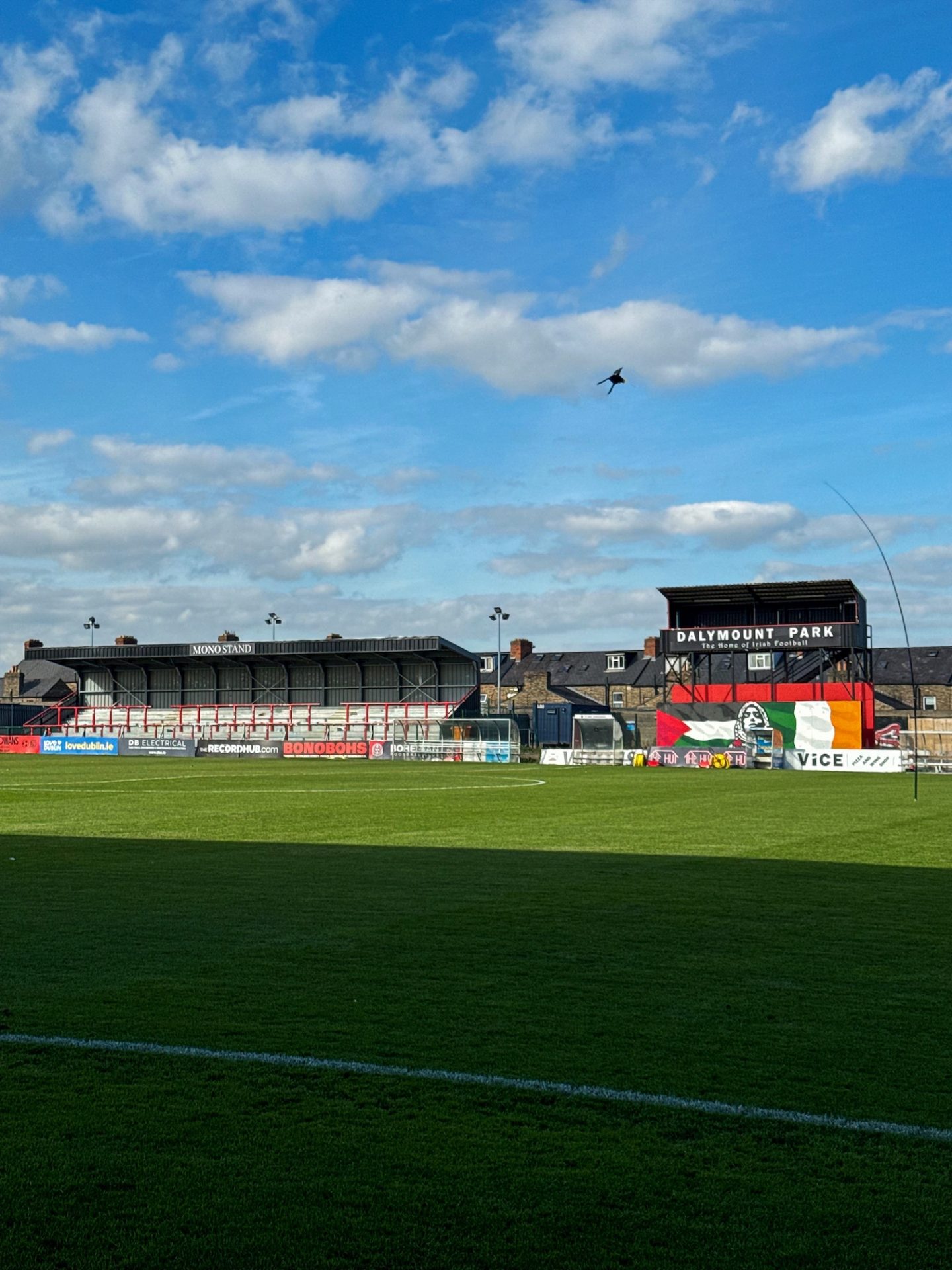
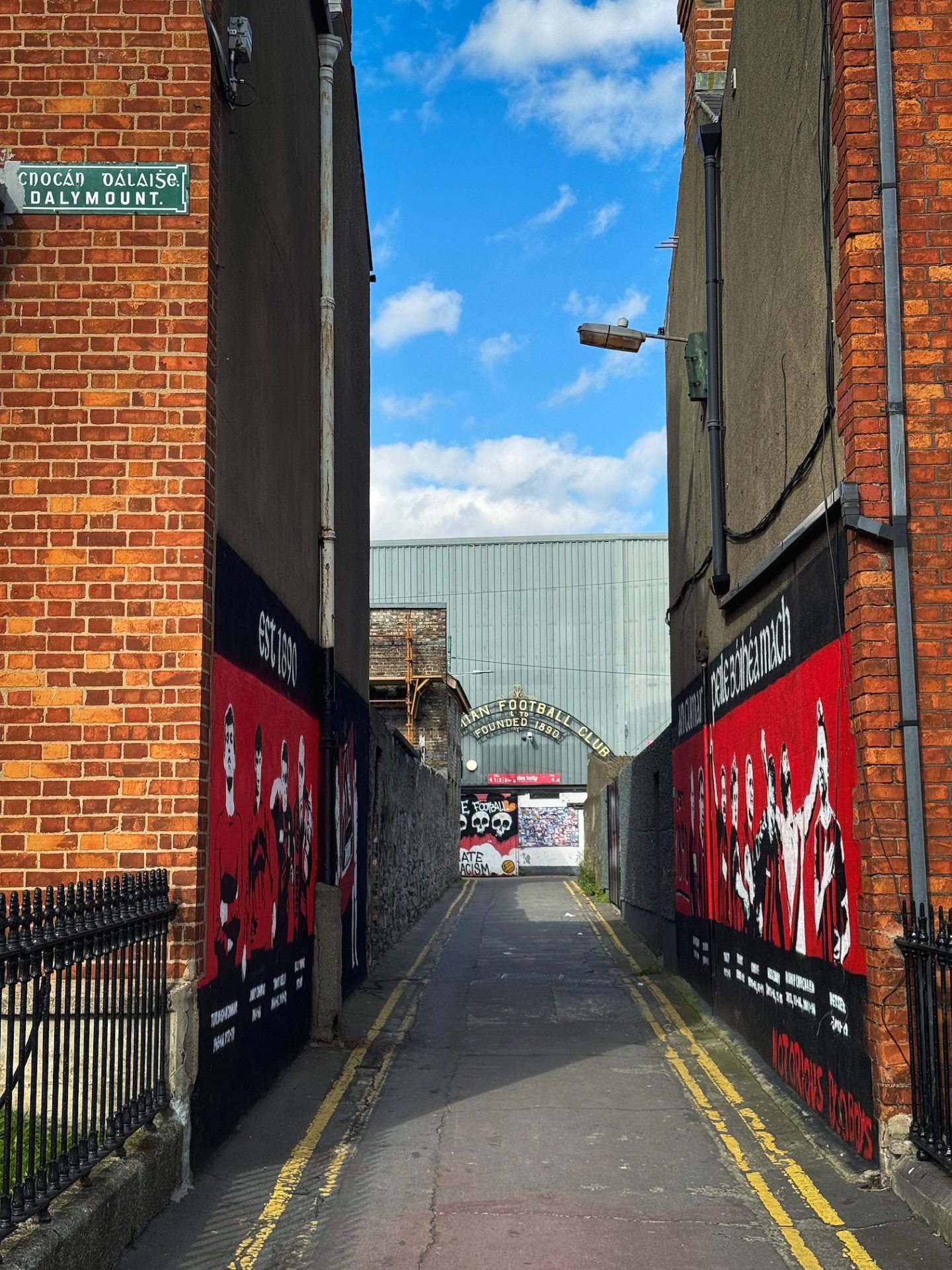
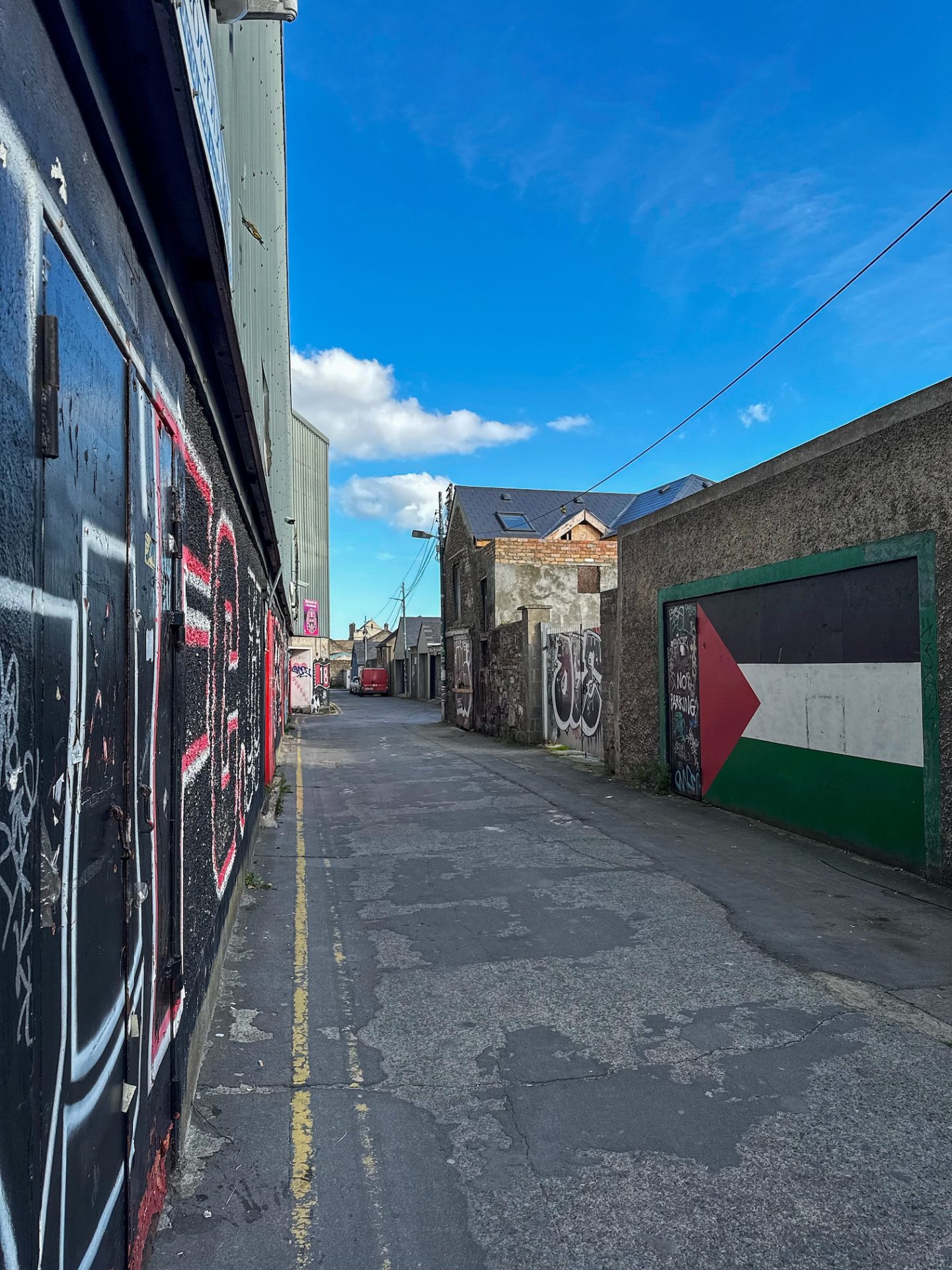
Overlooked by St. Peter’s Church and nestled within the rapidly changing Phibsboro neighbourhood, Dalymount Park has so far defied both time and a predicted demise in the mid-2000s. Still going strong, though showing signs of wear in places, Dalymount remains the beating heart of local social life. Each route leading to the stadium has its own character, but the most famous is undoubtedly the alleyway separating 1 Dalymount and 329 North Circular Road. Upon entering, the walls are painted a vibrant red and adorned with images of former Bohs legends. Just a few dozen metres further on, the iconic central entrance to the Jodi Stand comes into sharp focus. Topped with a wrought-iron sign reading “BOHEMIAN FOOTBALL CLUB – FOUNDED 1890”, it immediately sets the tone with the mural “LOVE FOOTBALL – HATE RACISM”. Almost the entire identity of the Bohemians is encapsulated here: a historic, popular, and activist institution.
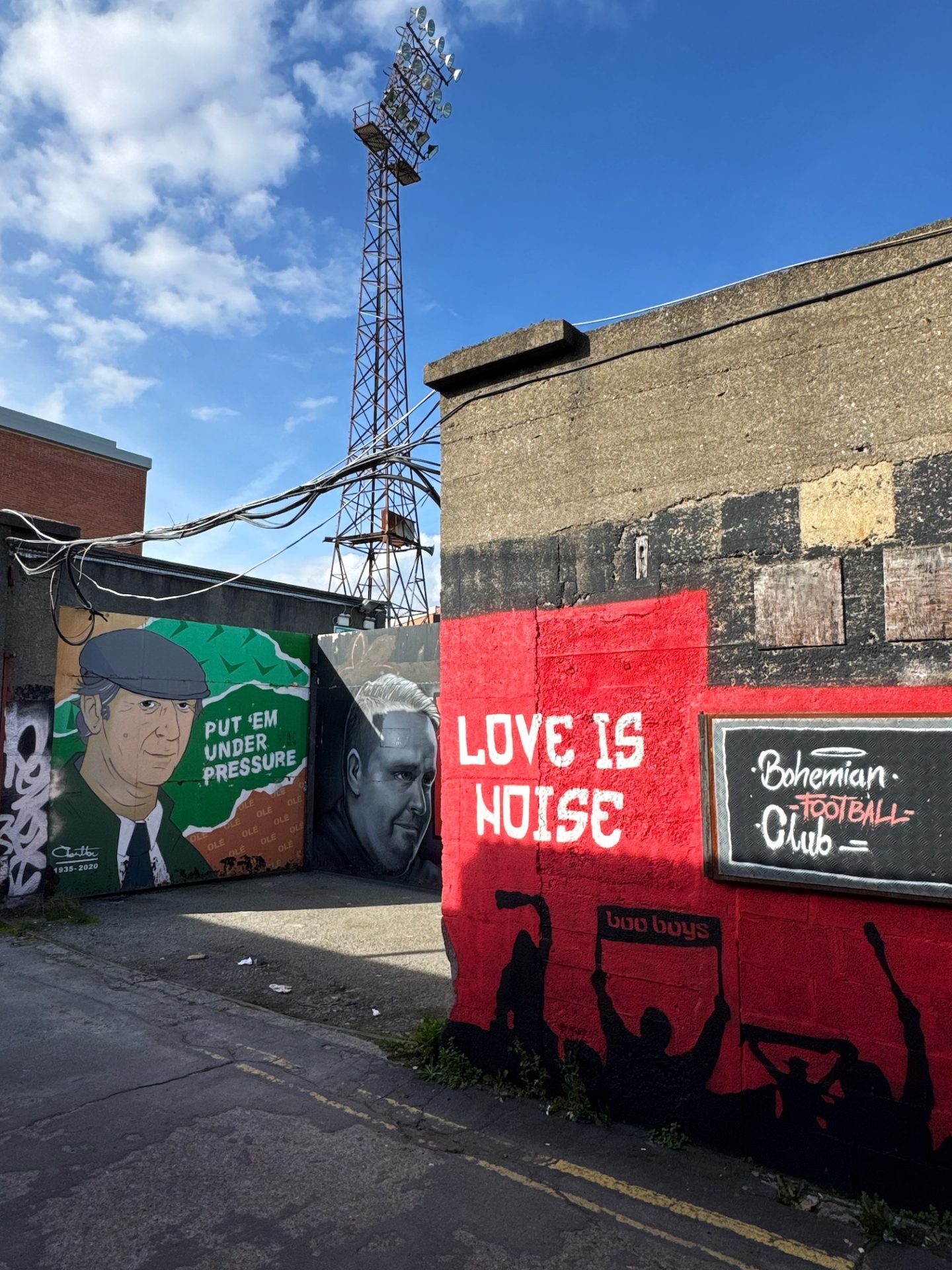
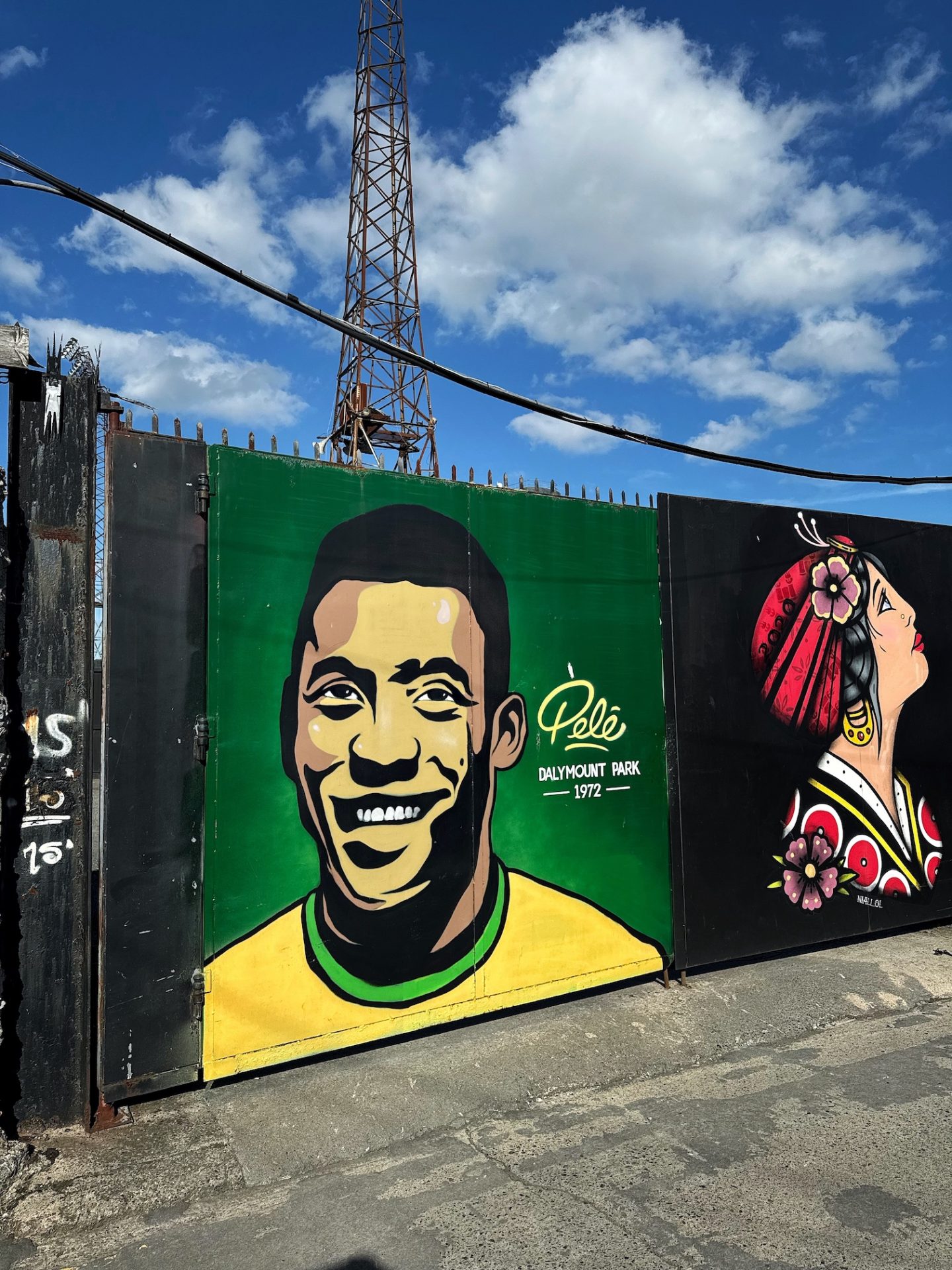
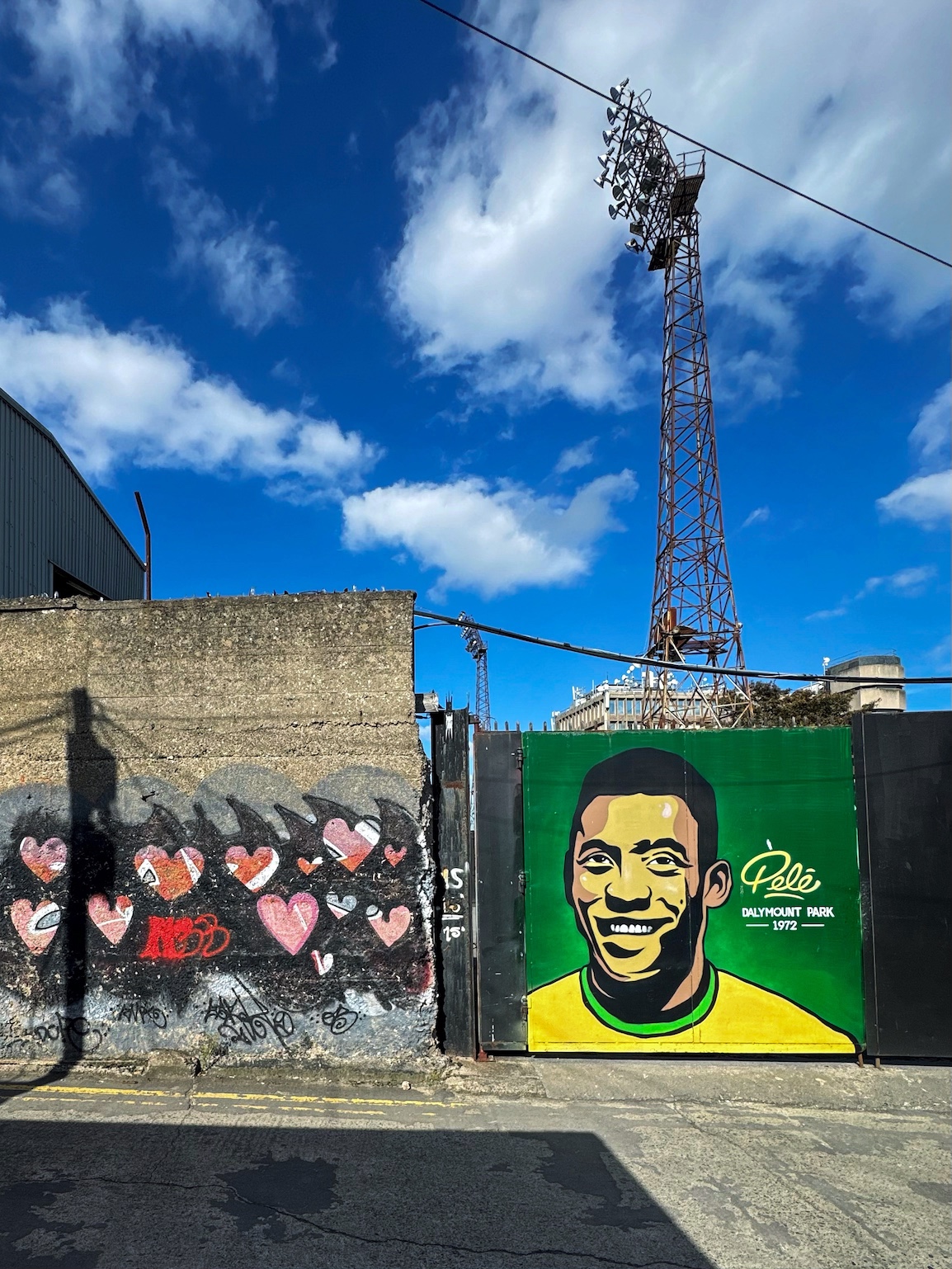
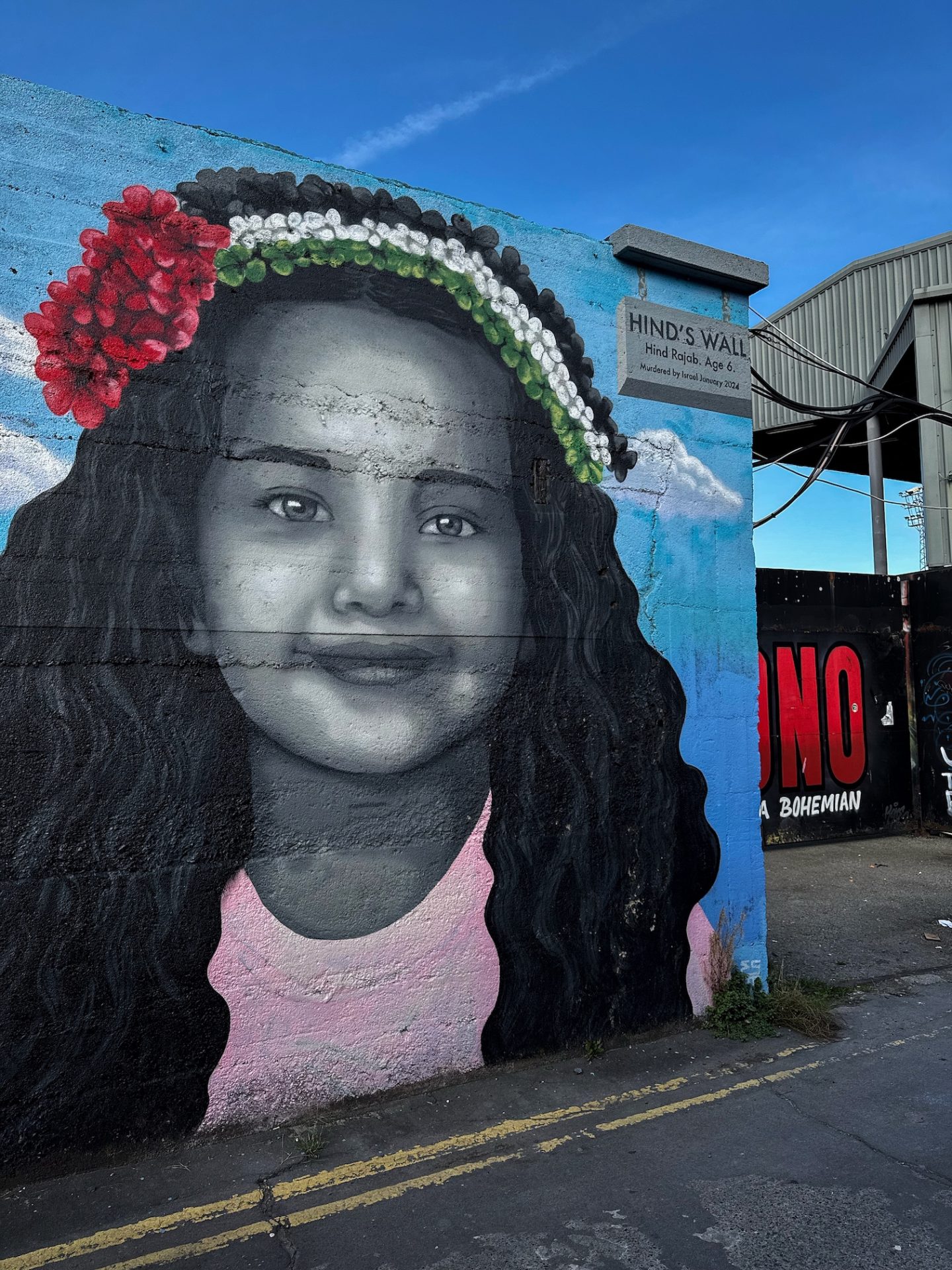
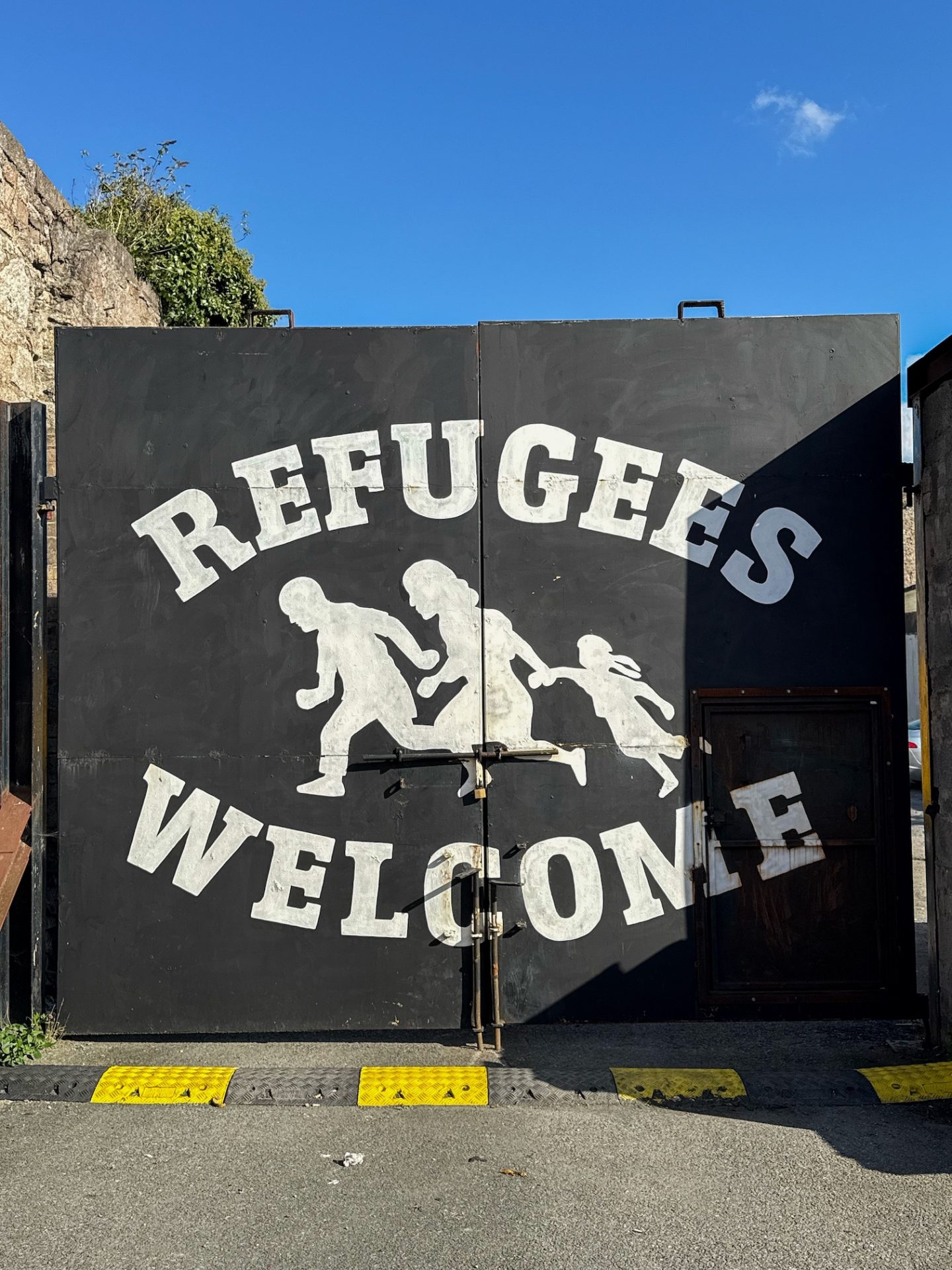
On either side, murals and stickers cover Dalymount Lane. From portraits of Jack Charlton and Pelé to, among others, the smiling face of Hind Rajab, a five-year-old Palestinian girl killed by Israeli forces during the Gaza war, the stadium’s exterior offers a powerful prelude before entering Dalyer. On the other side of the gate are works by Niall O’Lochlainn, a talented street artist whose pieces include a portrait of Bob Marley, a “Refugees Welcome” sign, and a portrait of a Palestinian woman surrounded by Palestinian and Irish flags at the halfway line. This last work was created ahead of the first-ever European match involving a Palestinian national team, in May 2024. In a packed Dalymount Park, the Bohs women’s team faced the Palestinian women’s team to raise funds for Gaza. Faced with ignominy, Bohs fans know how to unite.
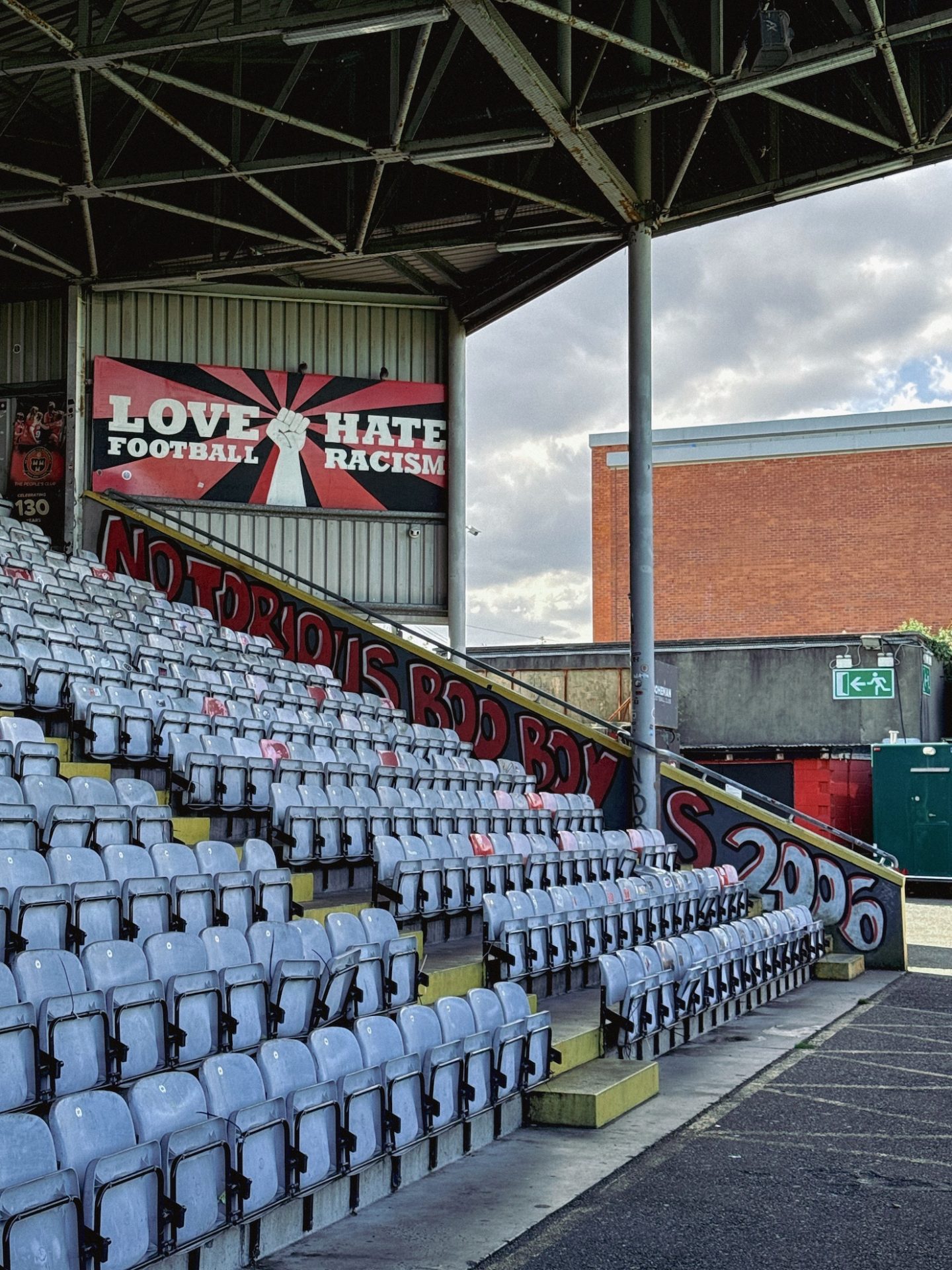
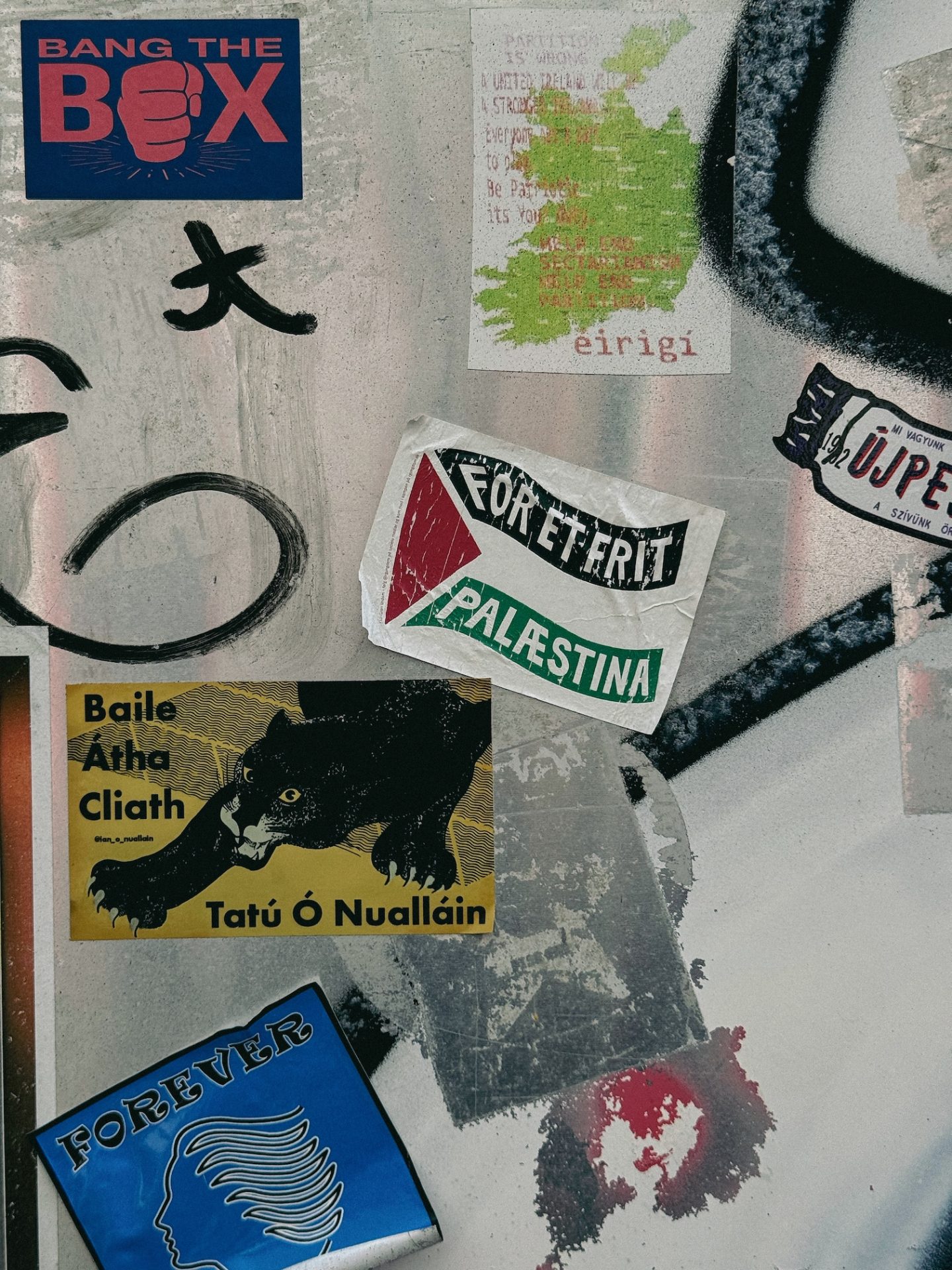
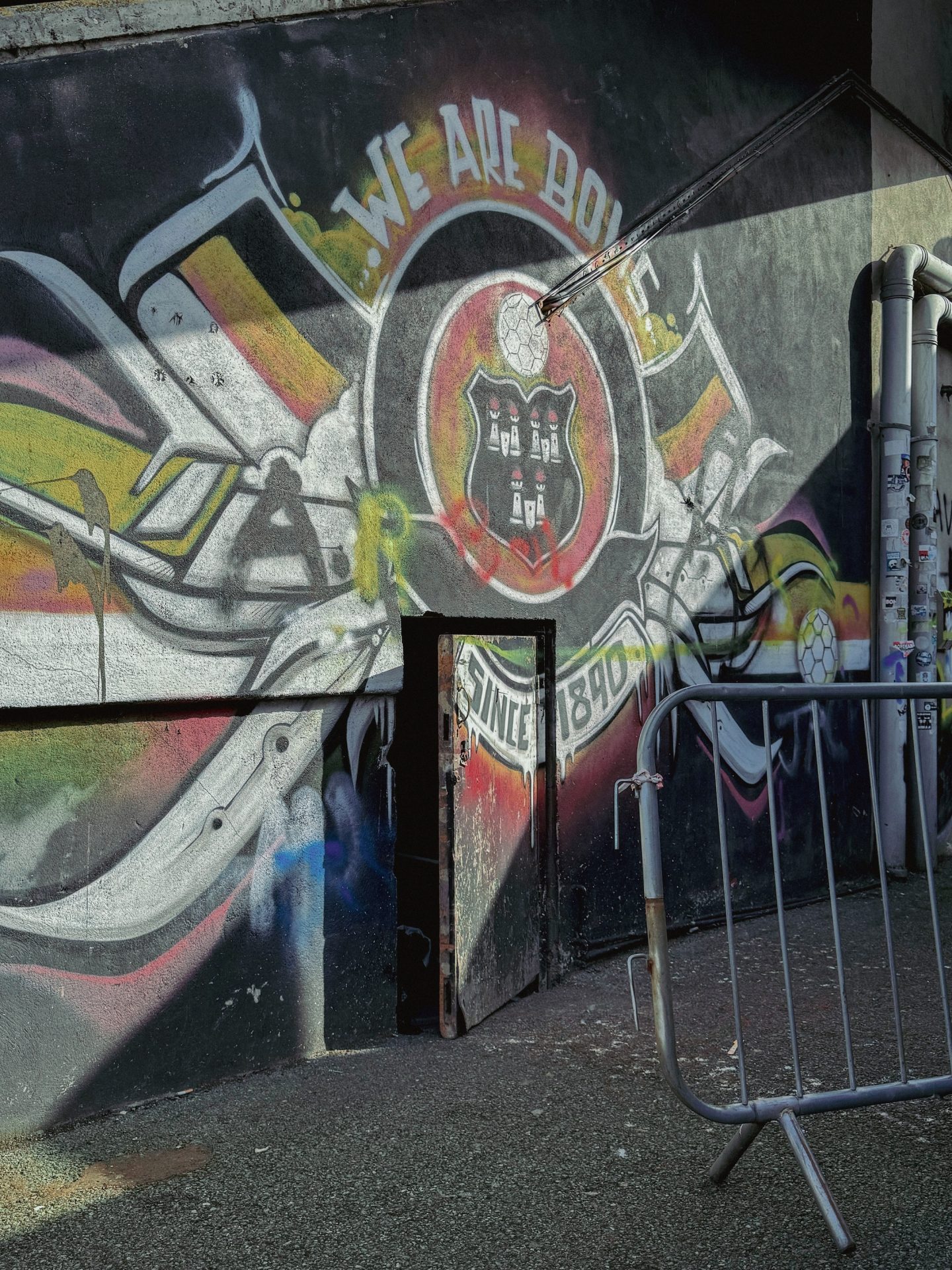
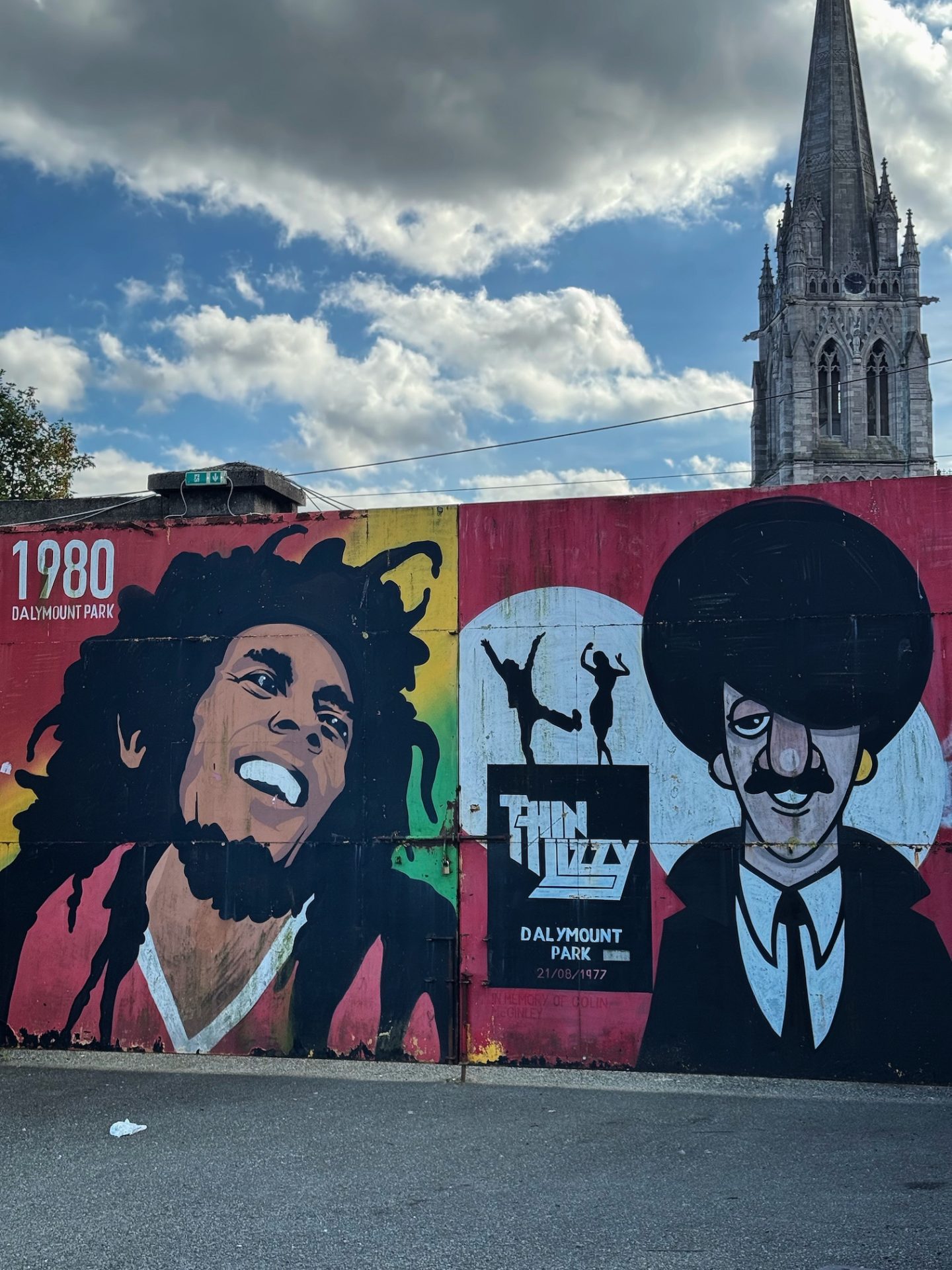
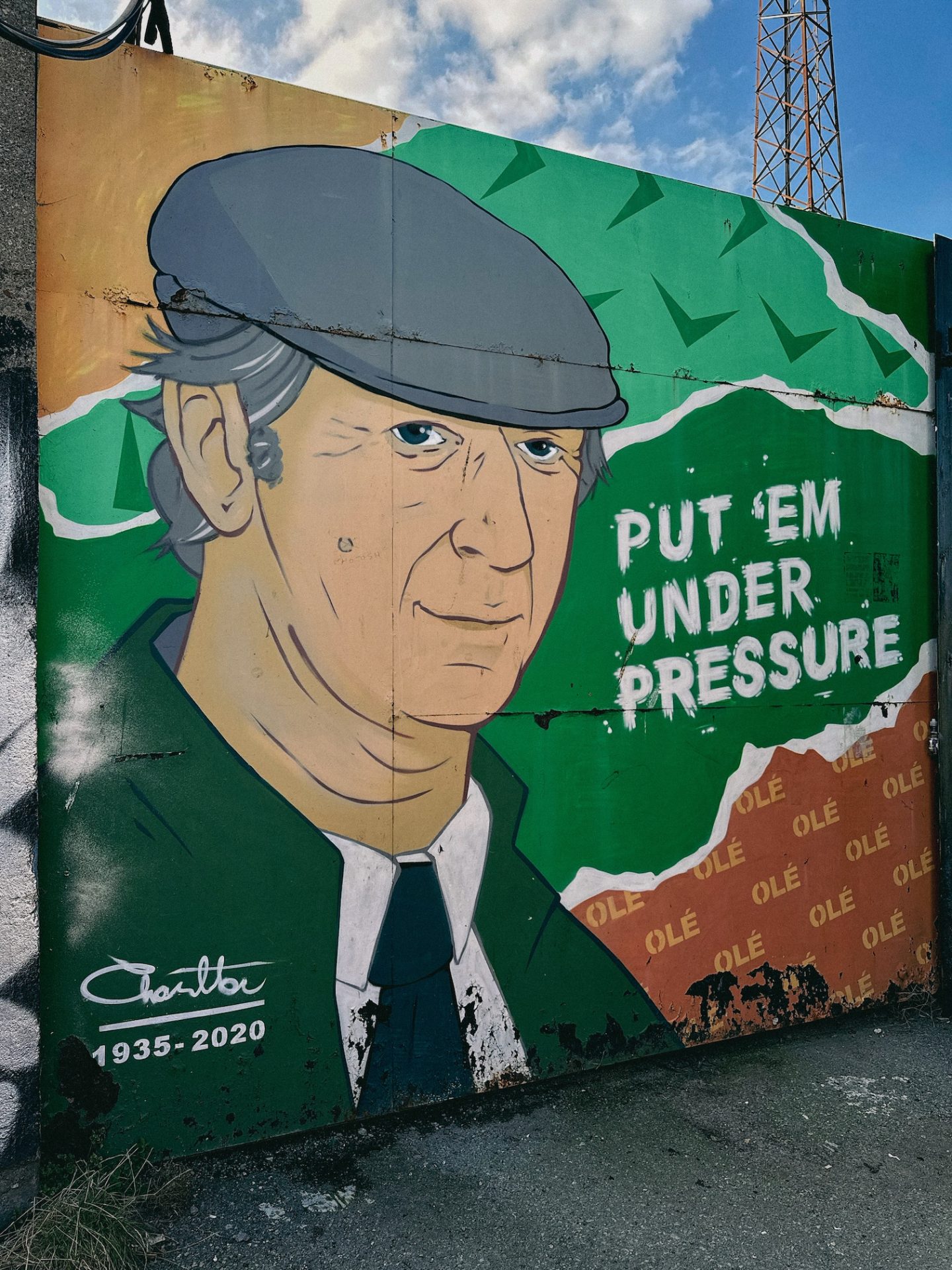
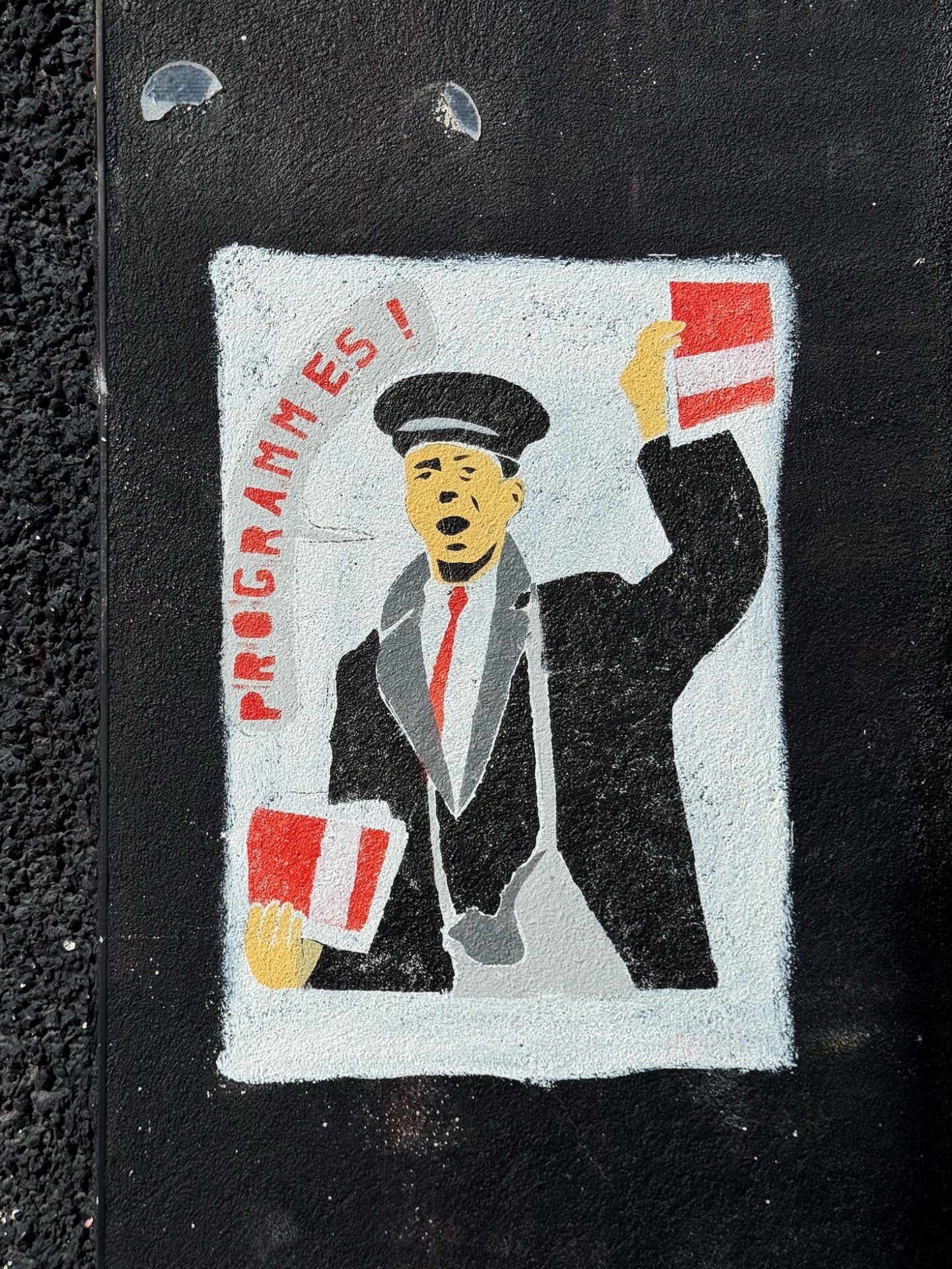
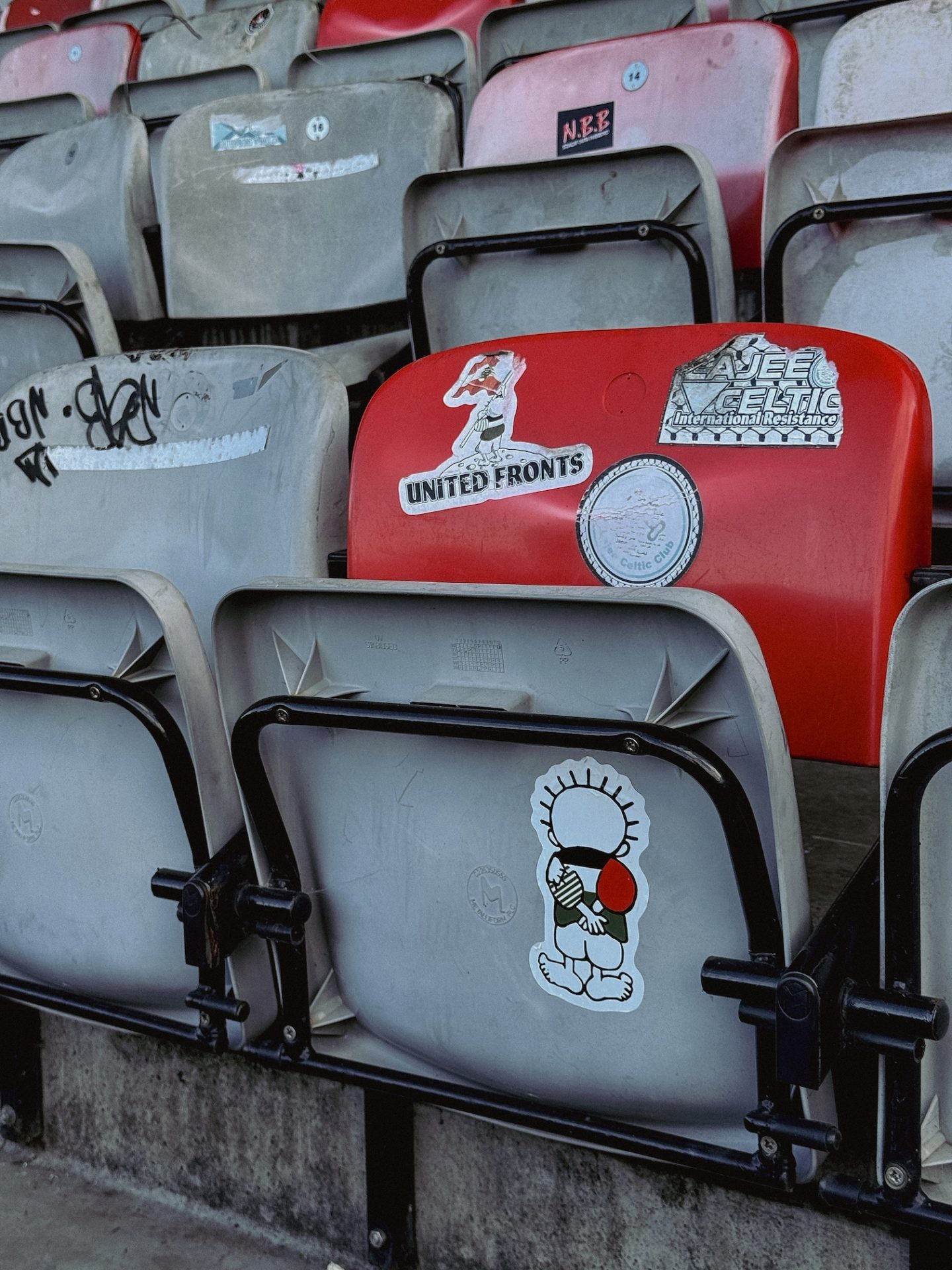
Three disparate stands remain in use, but it is the Tramway End in the east that draws the most attention, with its vast, abandoned terrace. One can easily imagine it overflowing on a derby night against Rovers, chants cascading step by step toward the pitch. The Jodi Stand, originally a wooden grandstand conceived and designed by the venerable Archibald Leitch, has a classic look with its roof and single-tier seating, though several elements catch the eye: the sarcastic “Visit Palestine” advertising board, the “LOVE FOOTBALL – HATE RACISM” sign, and stickers calling for Israel’s suspension from UEFA competitions. To the west, the Shed End combines terrace and seating, while to the north, the tiny Mono Stand shelters away fans ahead of the stadium’s future demolition.
After more than twenty years of aborted redevelopment projects, Dalymount Park will celebrate its 125th year in 2026—and its final season in its current configuration. The entire stadium will be razed, and the pitch rotated by 90 degrees. Yet, for once, I have faith in the Bohemian spirit to recreate an environment capable of carrying forward the values dear to its community. And, cherry on the sundae, perhaps the next Pelé or Bob Marley will also play in the new Dalyer. Bohs is « níos mó ná cumann ».