Conrad Tracy’s photographs from Ďolíček strip Bohemians Praha 1905 back to its bare bones – an empty, unguarded stadium holding the weight of a club shaped as much by politics and community as by football. Drawn to the Kangaroos’ working-class roots, their left-leaning culture, and the lineage that runs from a 1927 tour of Australia to the artistry of Antonín Panenka, Tracy approached Vršovice not as a tourist but as a witness. What he found was a ground woven into its neighbourhood: modest stands, tramlines brushing the touchline, murals and makeshift terraces carrying the humour and defiance of a fanbase. With no crowd to lean on, the details spoke louder – the weathered steps, the improvised fixtures, the lived-in green. This is Ďolíček as it breathes between matchdays: “a proper football ground, shaped by the hands, voices and footprints of its supporters”, as Tracy beautifully puts it.
Conrad Tracy, at the Ďolíček Stadium
I visited Prague for the first time in February 2025—a short, tightly packed work trip that didn’t leave much time outside of the itinerary. Still, as any football fan does when dropped into a new city, I checked the fixtures immediately. Sparta, Slavia, Bohemians… surely someone would be playing at home? But no luck. However, the club that I felt drawn to was Bohemians 1905, the smallest and perhaps the most characterful of the three, with its working-class fanbase, its predominantly left-leaning fan culture, its friendships with Bohemian FC in Dublin and Hamburg’s FC St. Pauli, the latter who I have already made documentary work about.
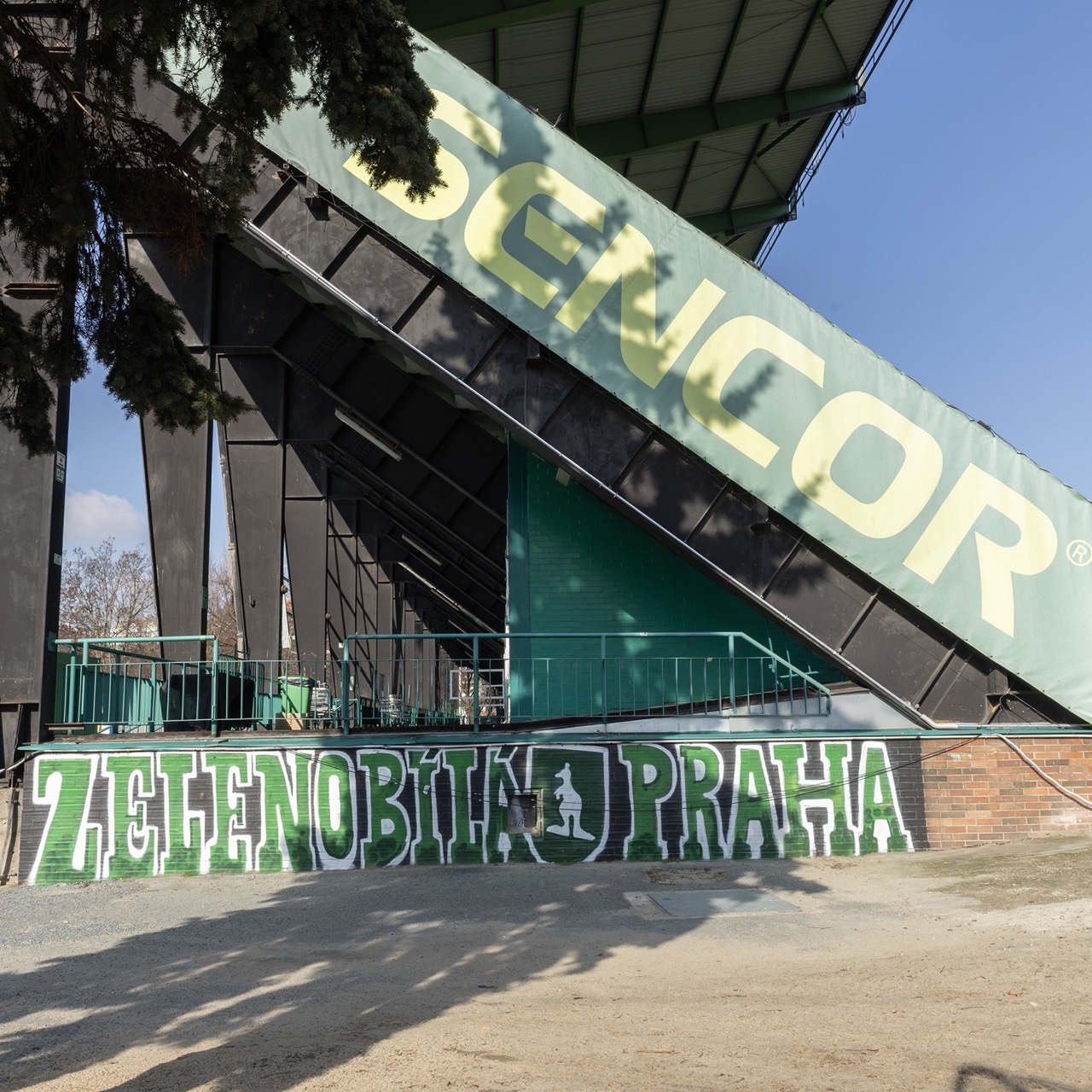
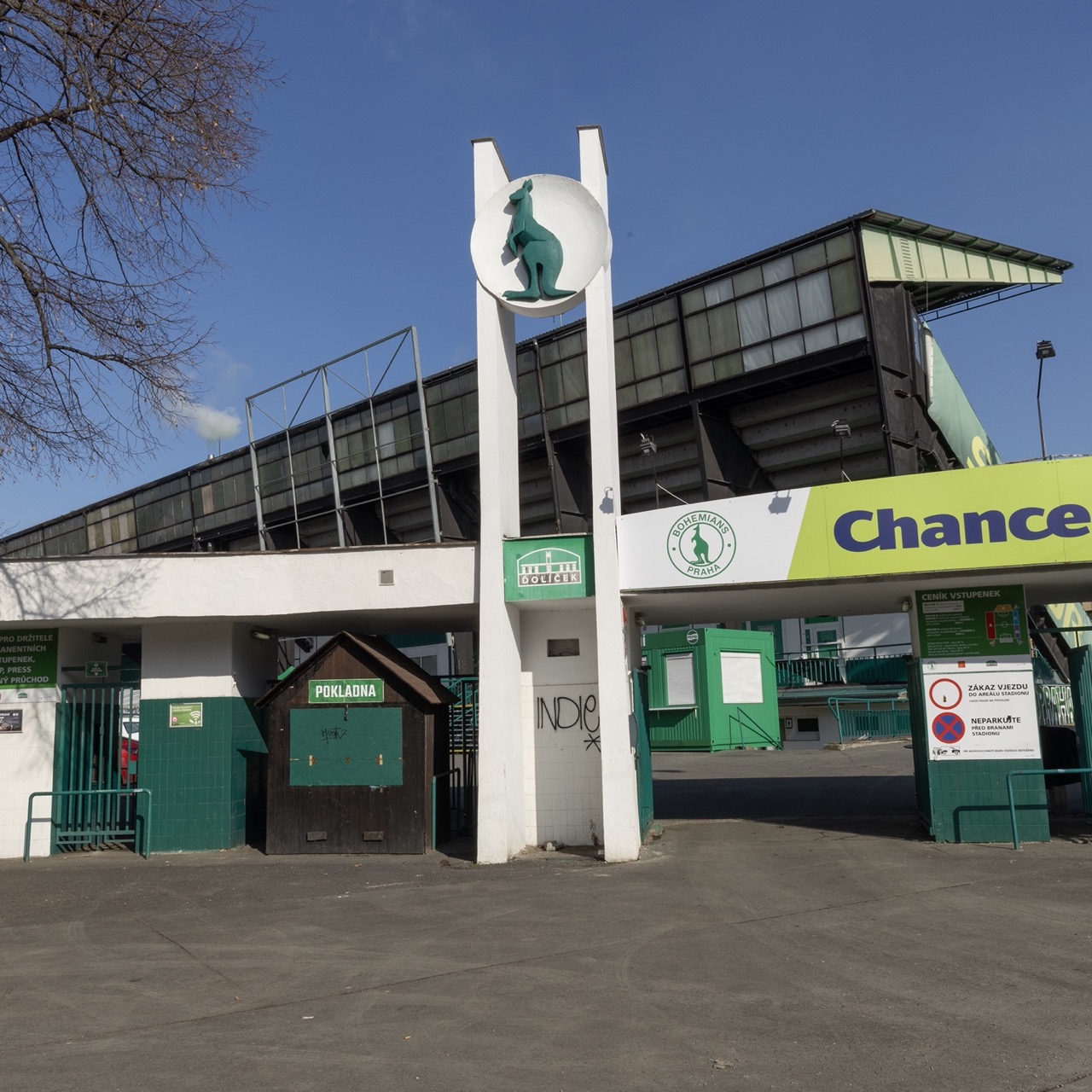
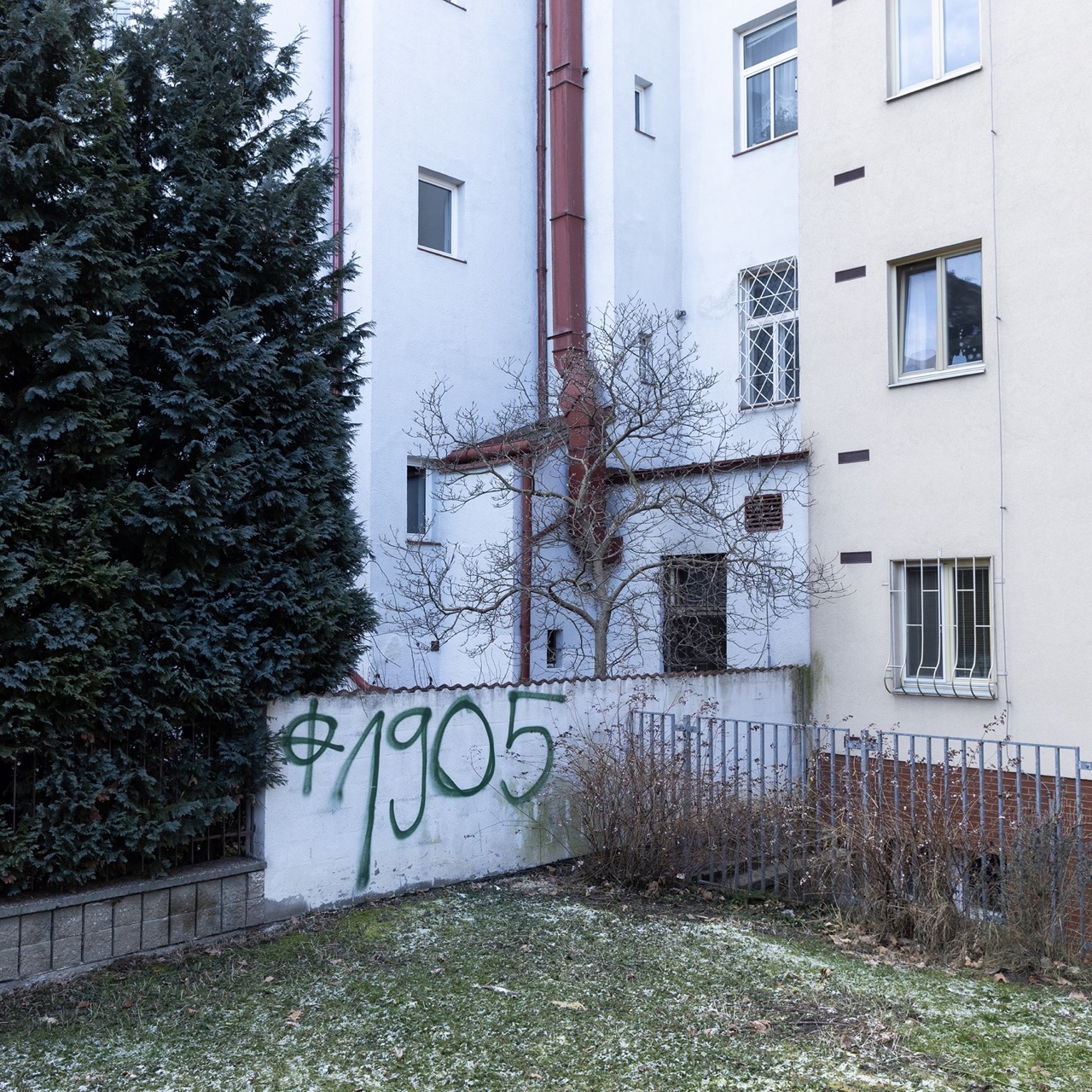
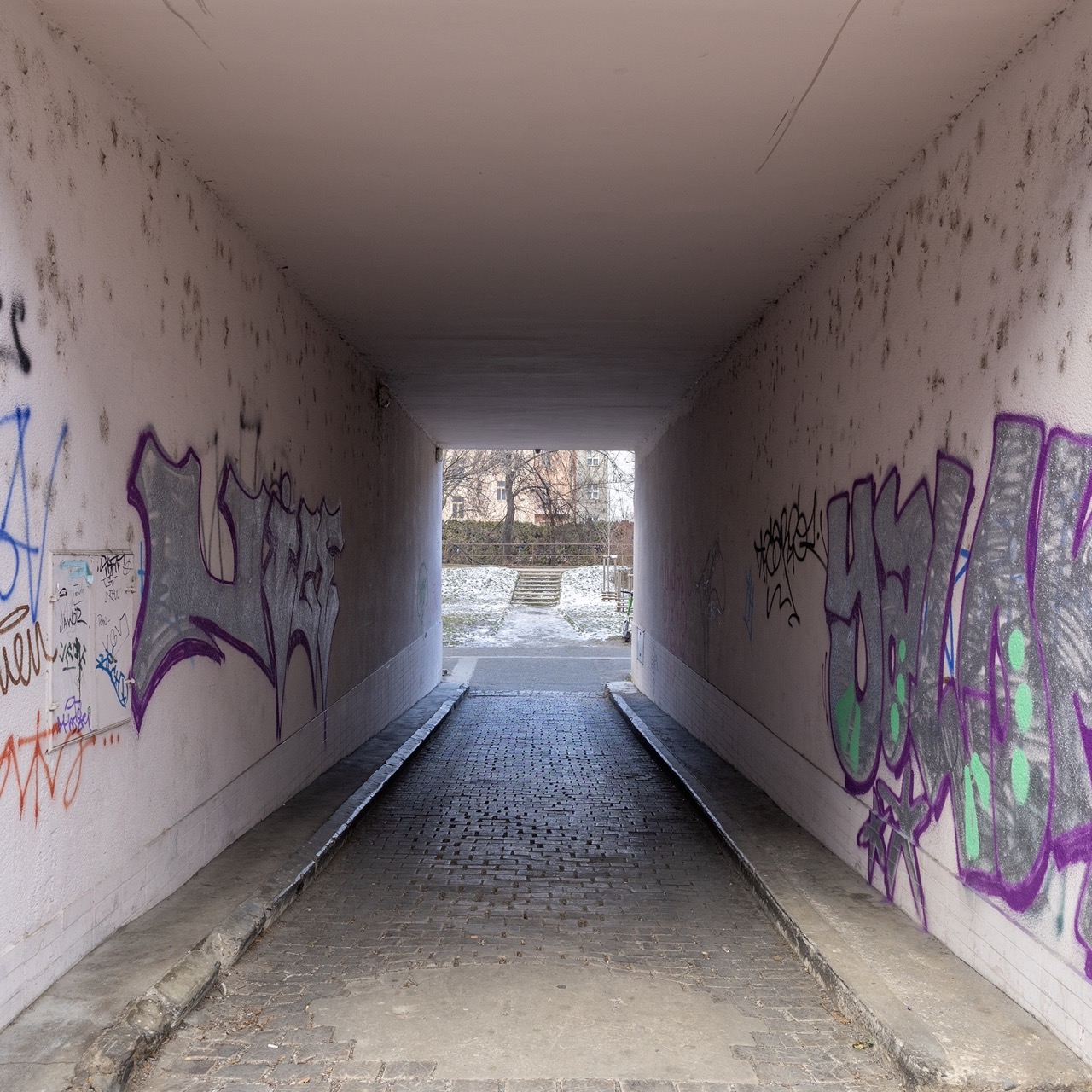
With half a day free, I decided to explore the Vršovice district, home to the club and its stadium, Ďolíček. As I walked closer to the ground through an estate of ’80s-era blocks giving way to elegant Art Nouveau apartments, there were subtle hints seen in the often green graffiti and stickers, that the area was more than just suburban.
Ďolíček emerged almost unexpectedly, nestled into its neighbourhood rather than imposing upon it. From one angle the main stand looks of a reasonable size, but the rest of the ground is modest: a slim line of seats down one side of the pitch, and on the other a bare openness where the pitch meets the road, and you can see the trams rolling by. When I got to the ground I expected locked gates or at least someone to talk my way past, but instead found the stadium devoid of security or staff—and, to my amazement, completely open. I simply walked in (can you imagine being able to do that at a Premier or even EFL ground!).
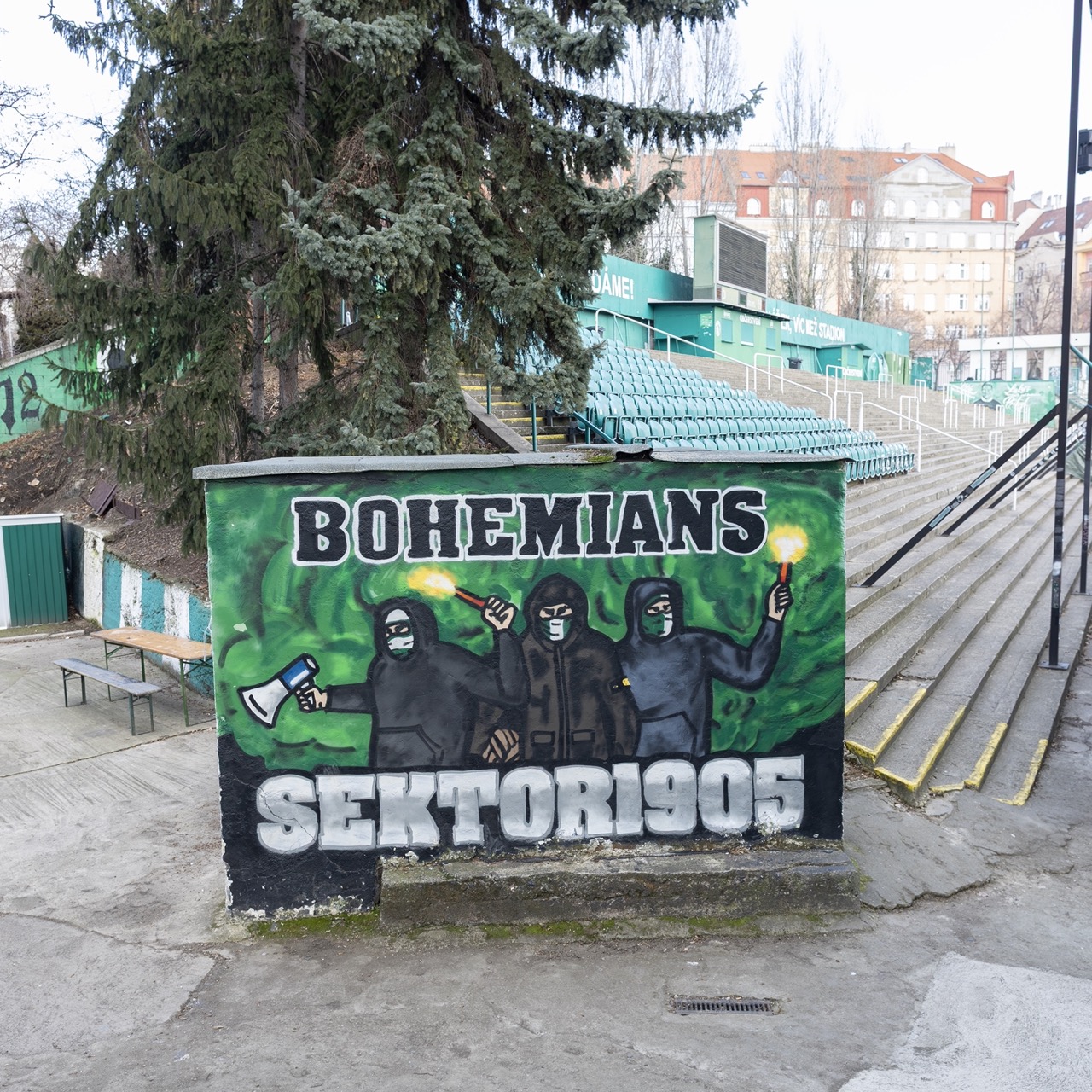
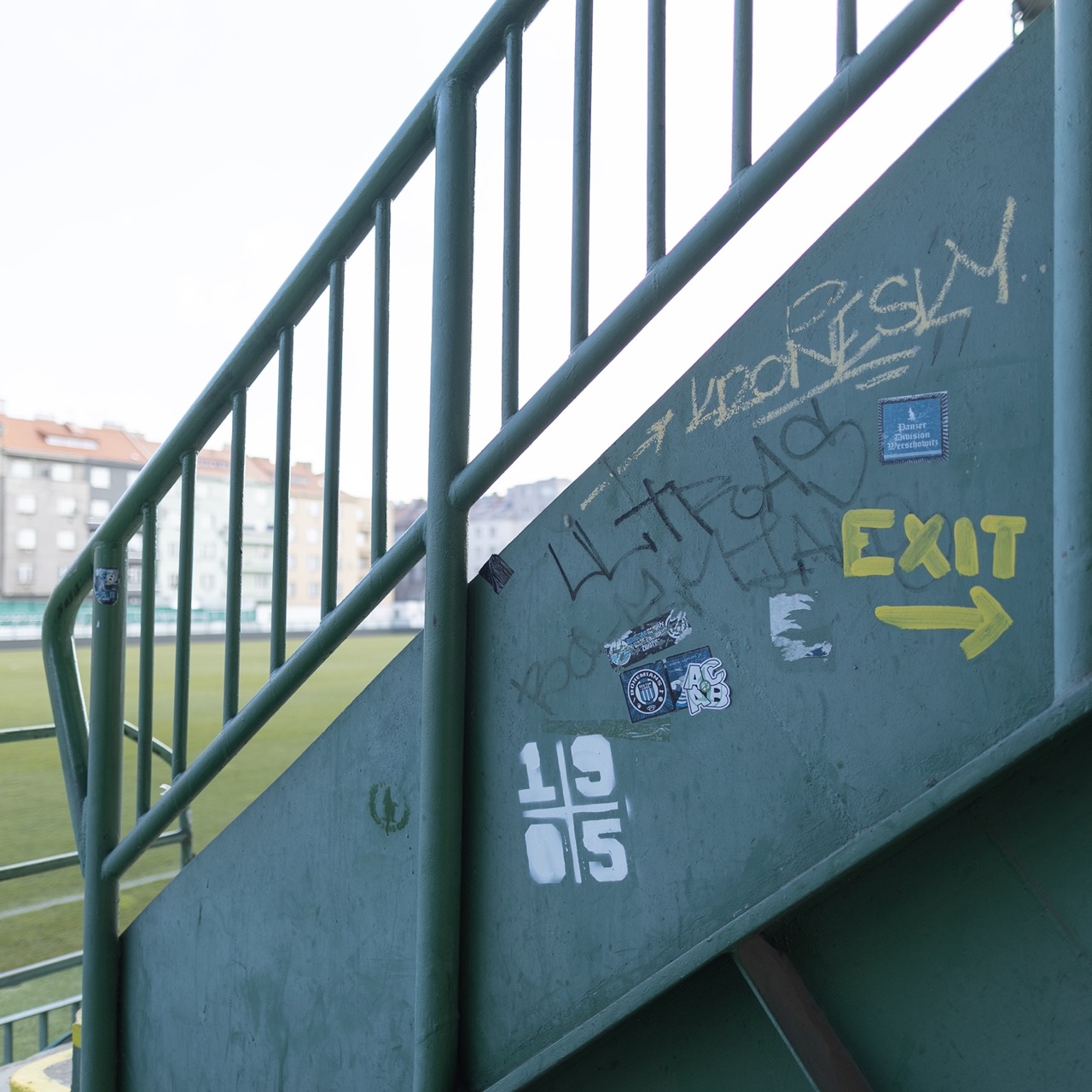

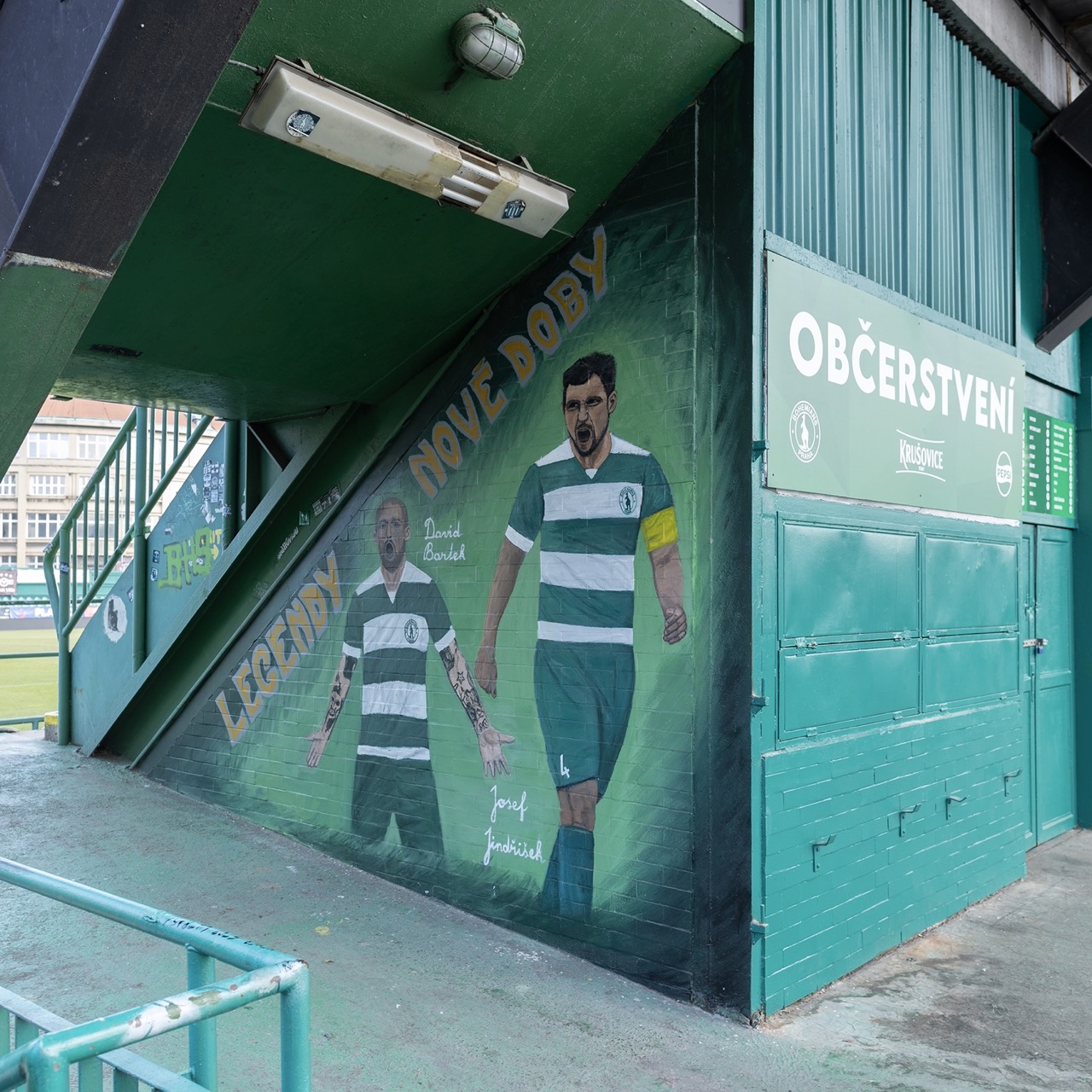
There’s a unique feeling to standing alone inside a football ground you’ve never visited before, but have an understanding of. No noise, the tension evaporated, but knowing that it is only a matter of days before the atmosphere will build again. For the next two hours I wandered through the stands and terraces. The Jízdní terrace, covered in fan murals, stickers, DIY drink holders and the elevated platform where the drummers lead the chants, felt like the heart of the place. You can read the culture in the details: the humour, the politics, the camaraderie, and the occasional edge of rivalry.
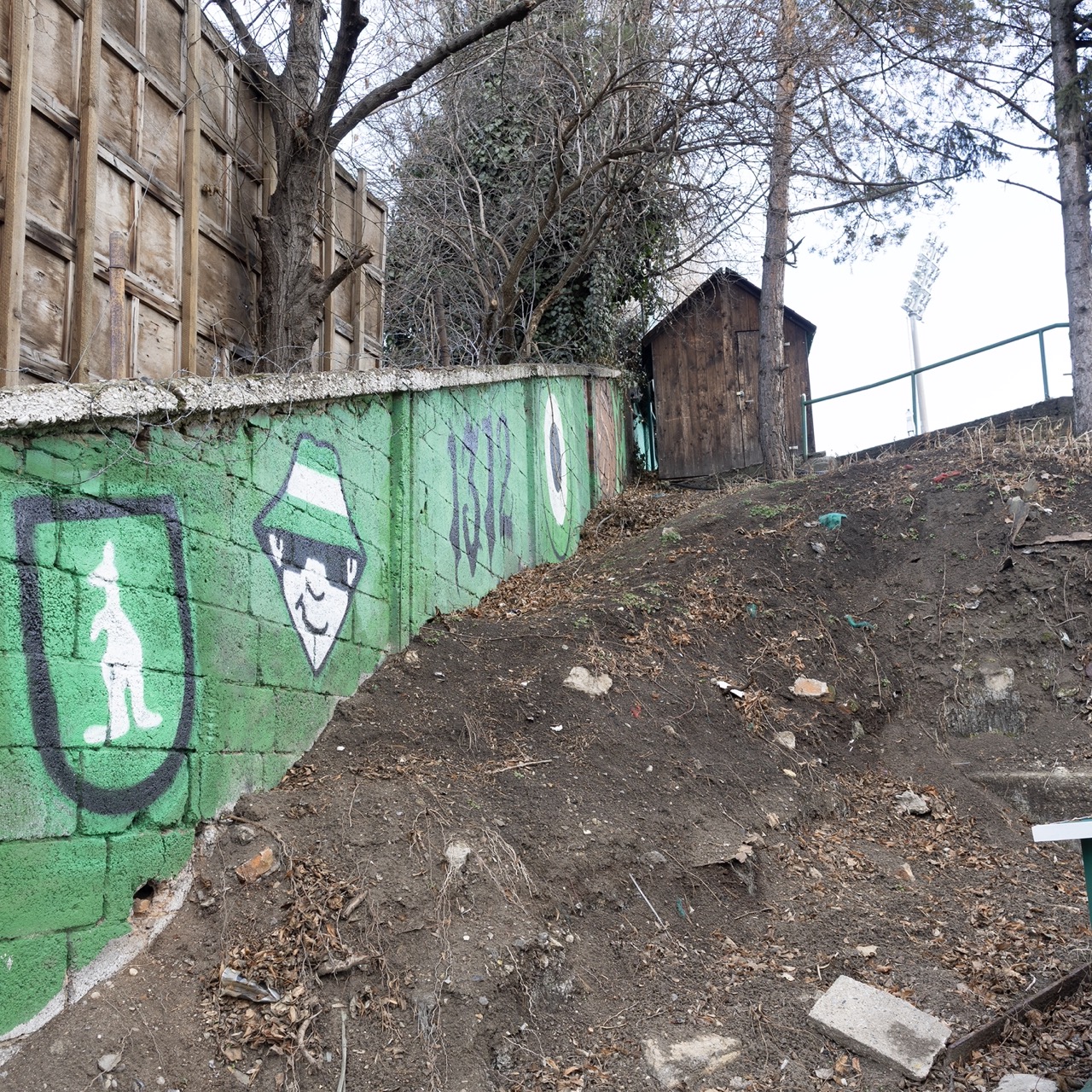
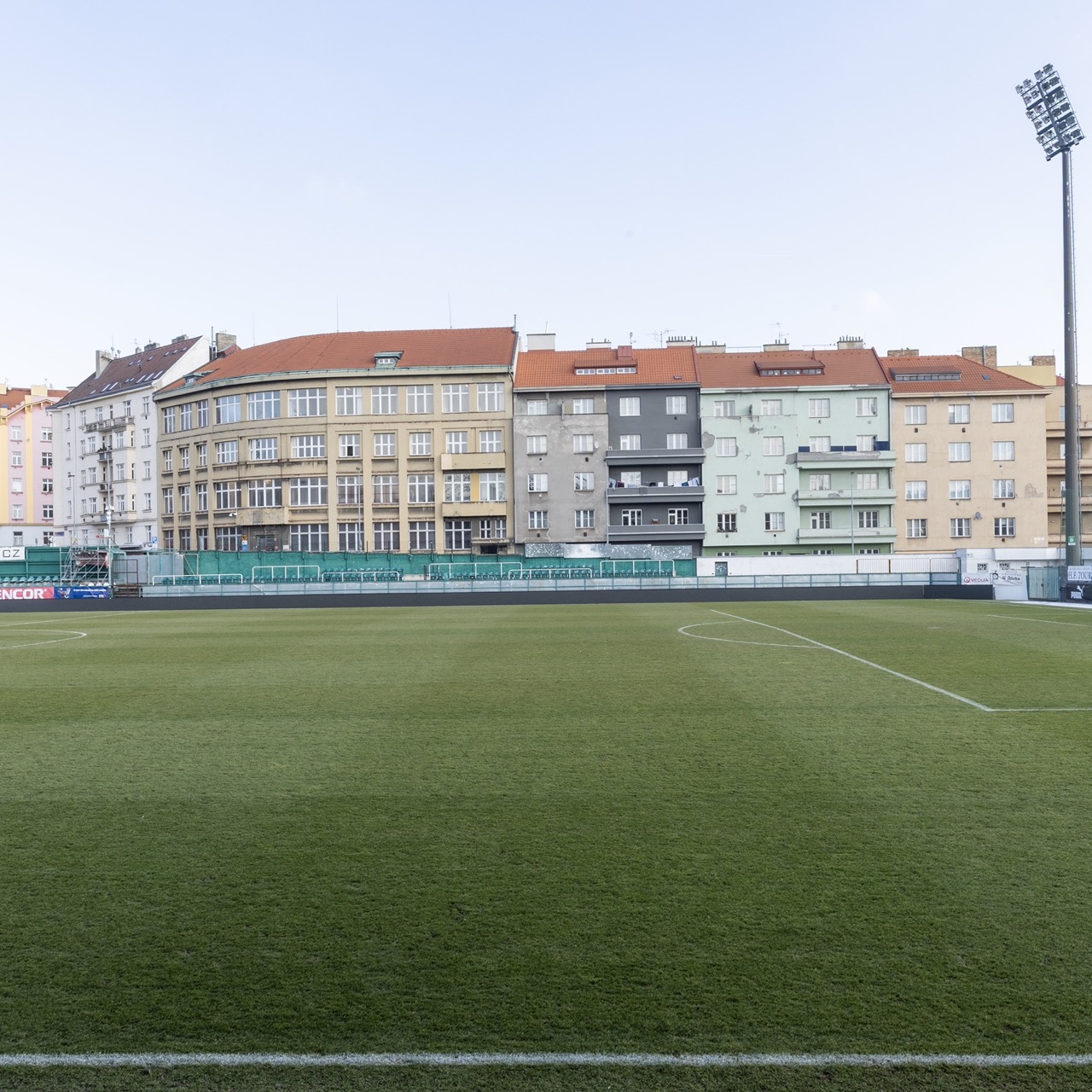

The main stand, with its steep rake of green seats, looking over the pitch and onto the apartments which also offer a great view of the pitch, with its rickety press gantry and media rooms and patched-together feel, tell a story of endurance, history, improvisation and ownership. It’s clear the ground is in need of the redevelopment scheduled for next season, but for me that wear and tear is part of its appeal. It feels like a proper football ground, shaped by the hands, voices and footprints of its supporters.
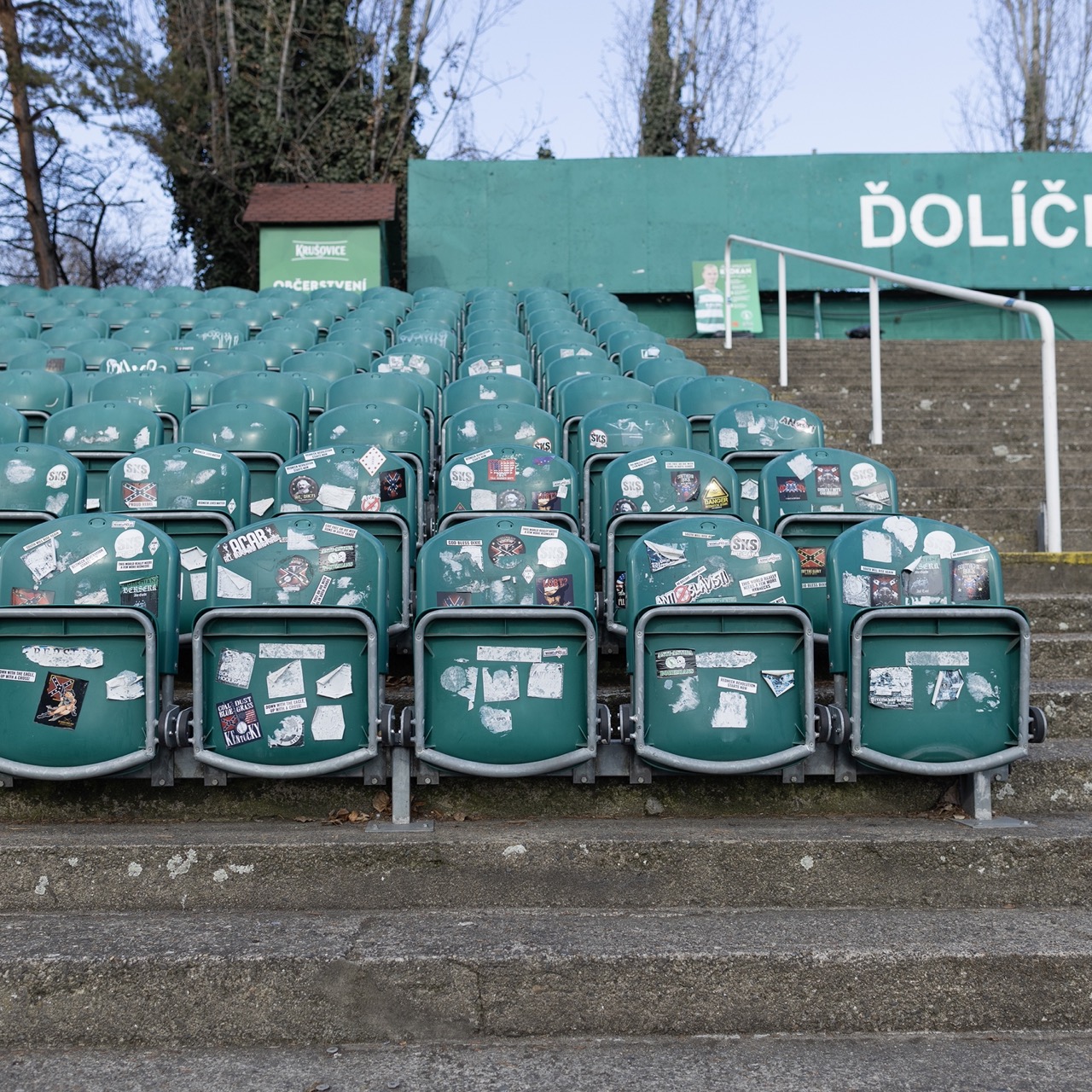
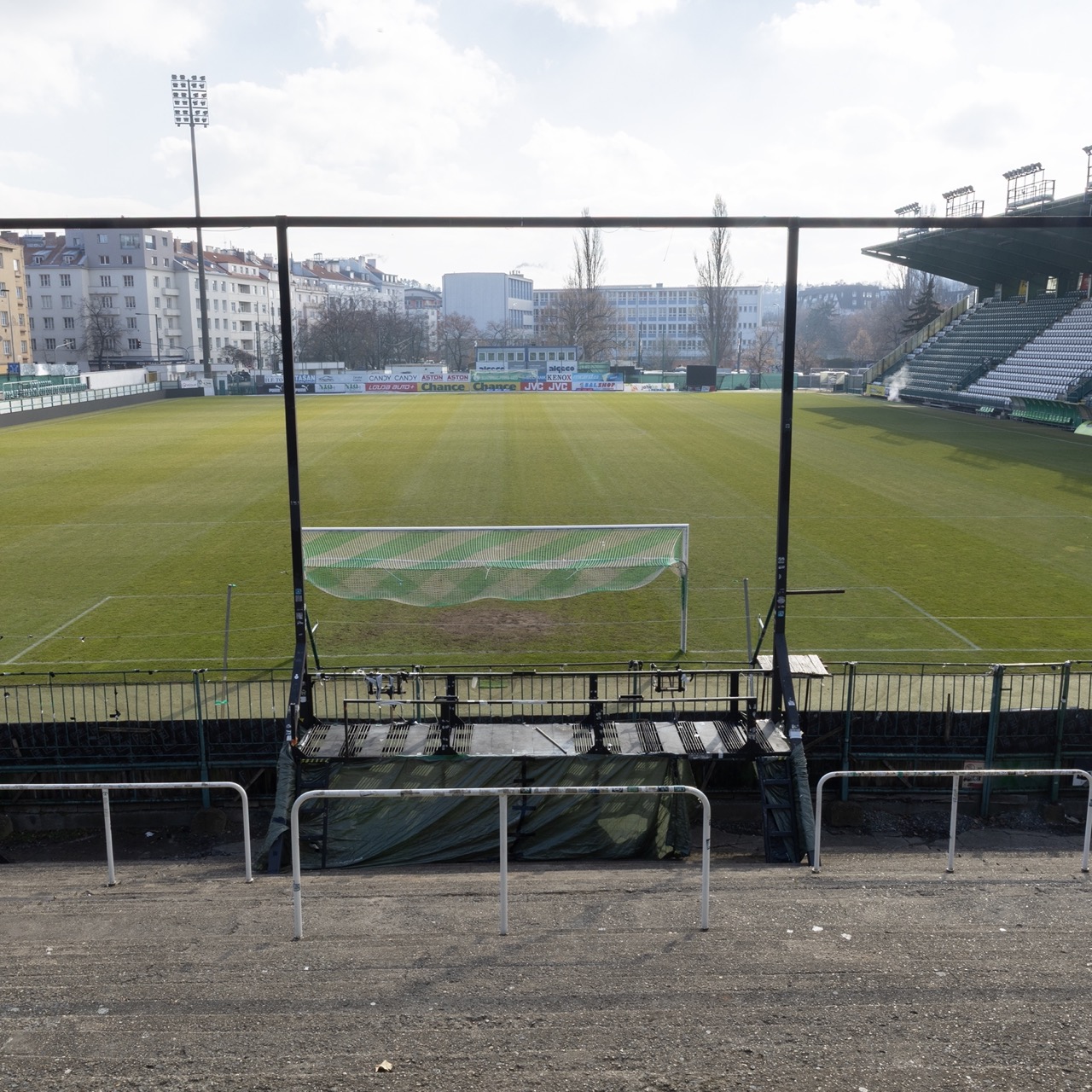
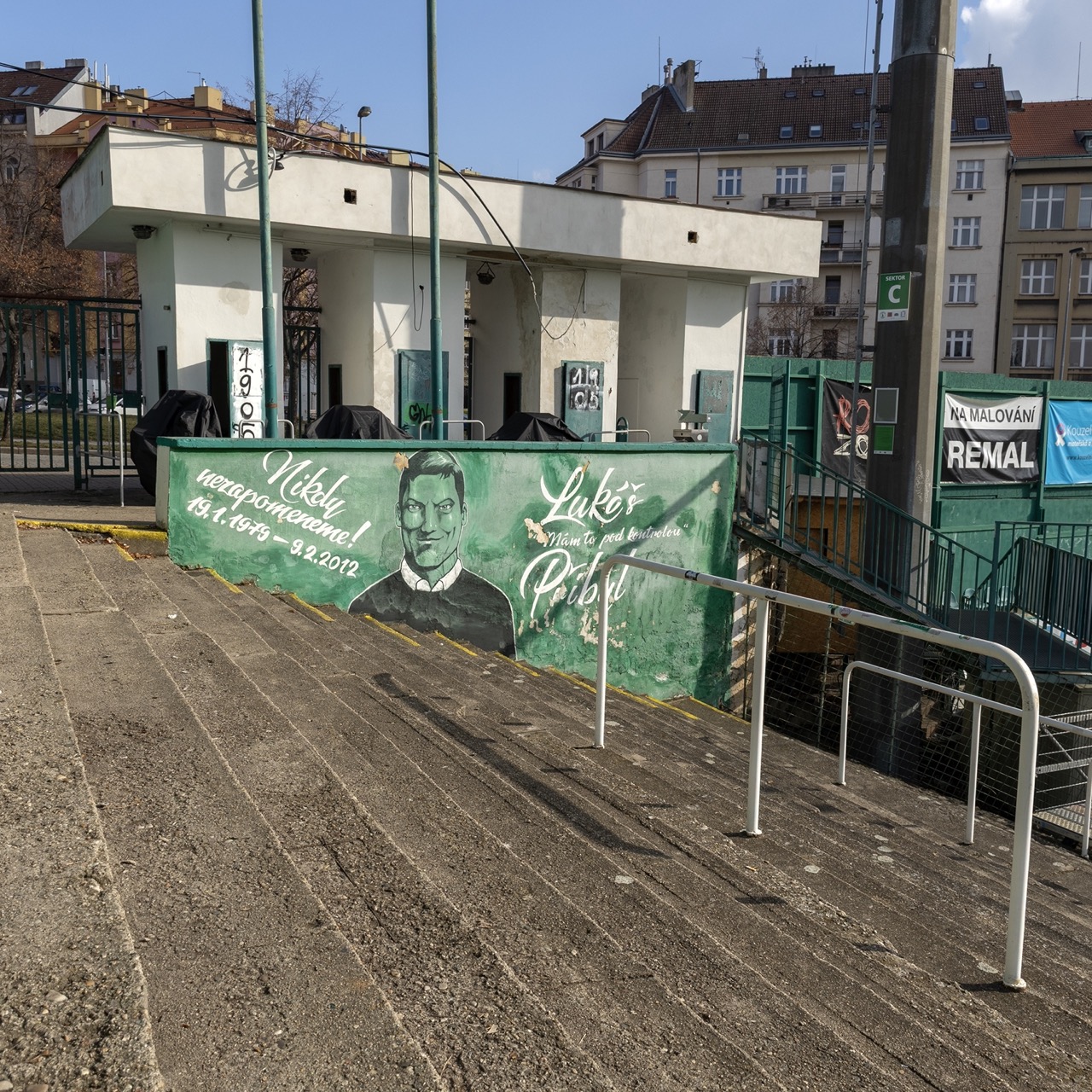
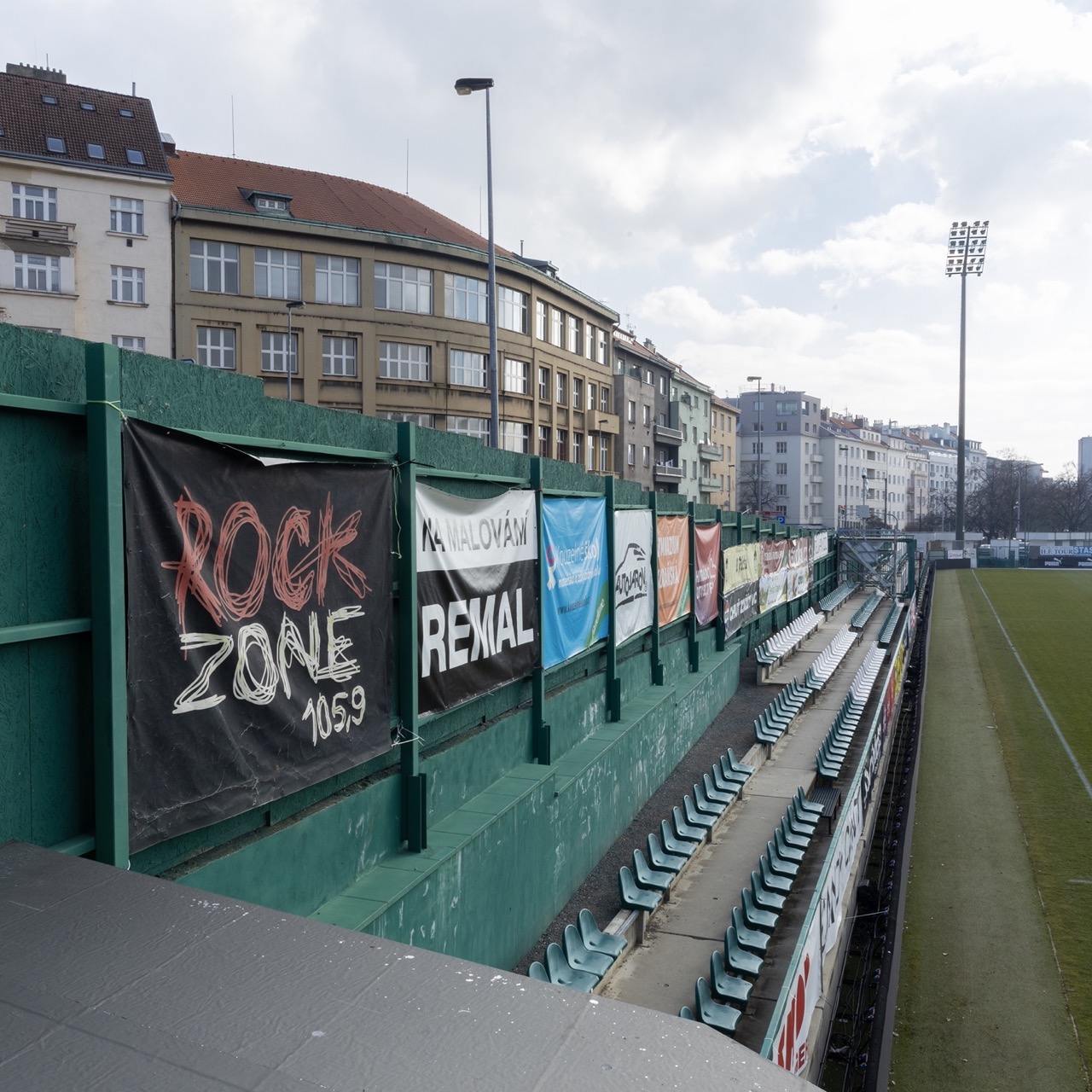

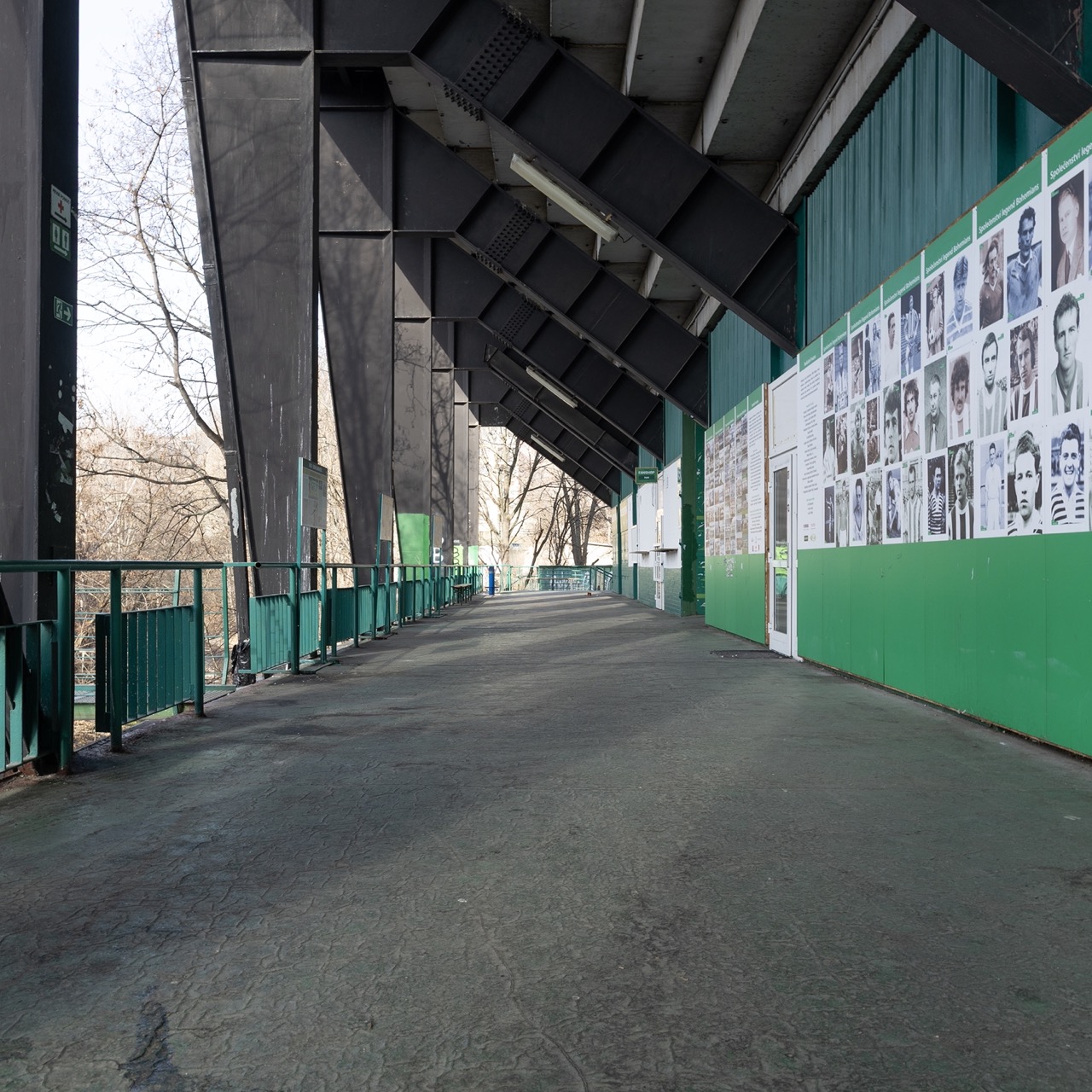
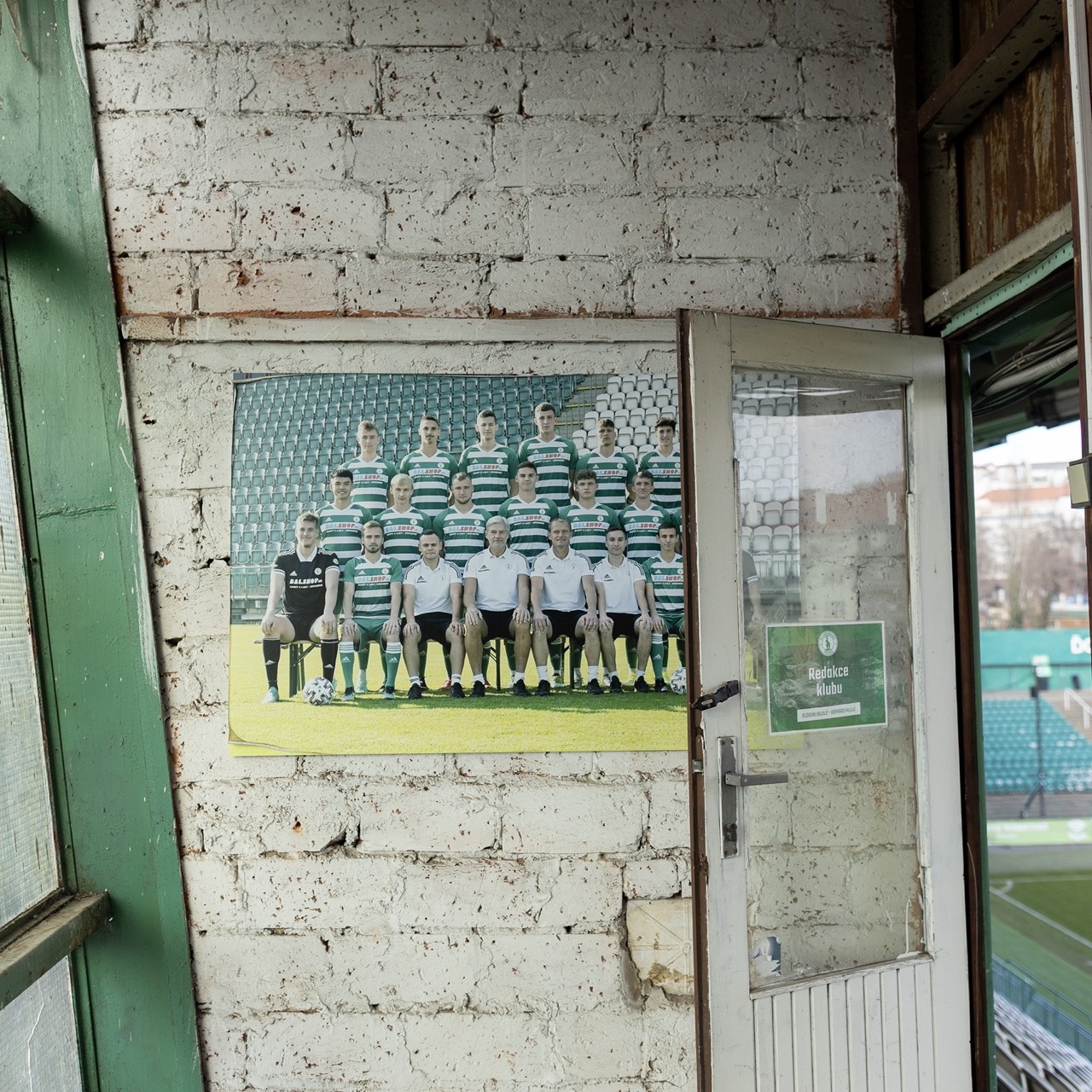
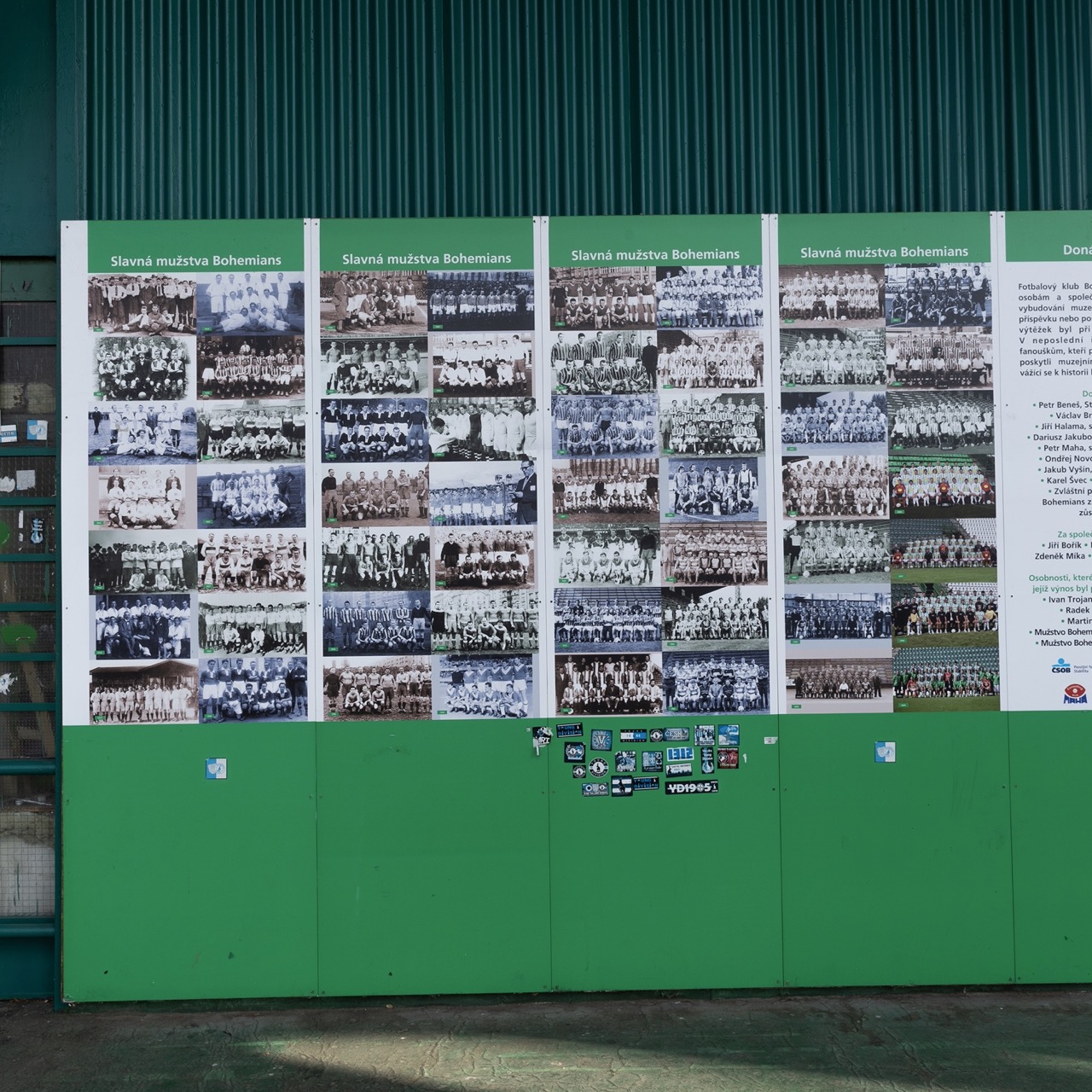

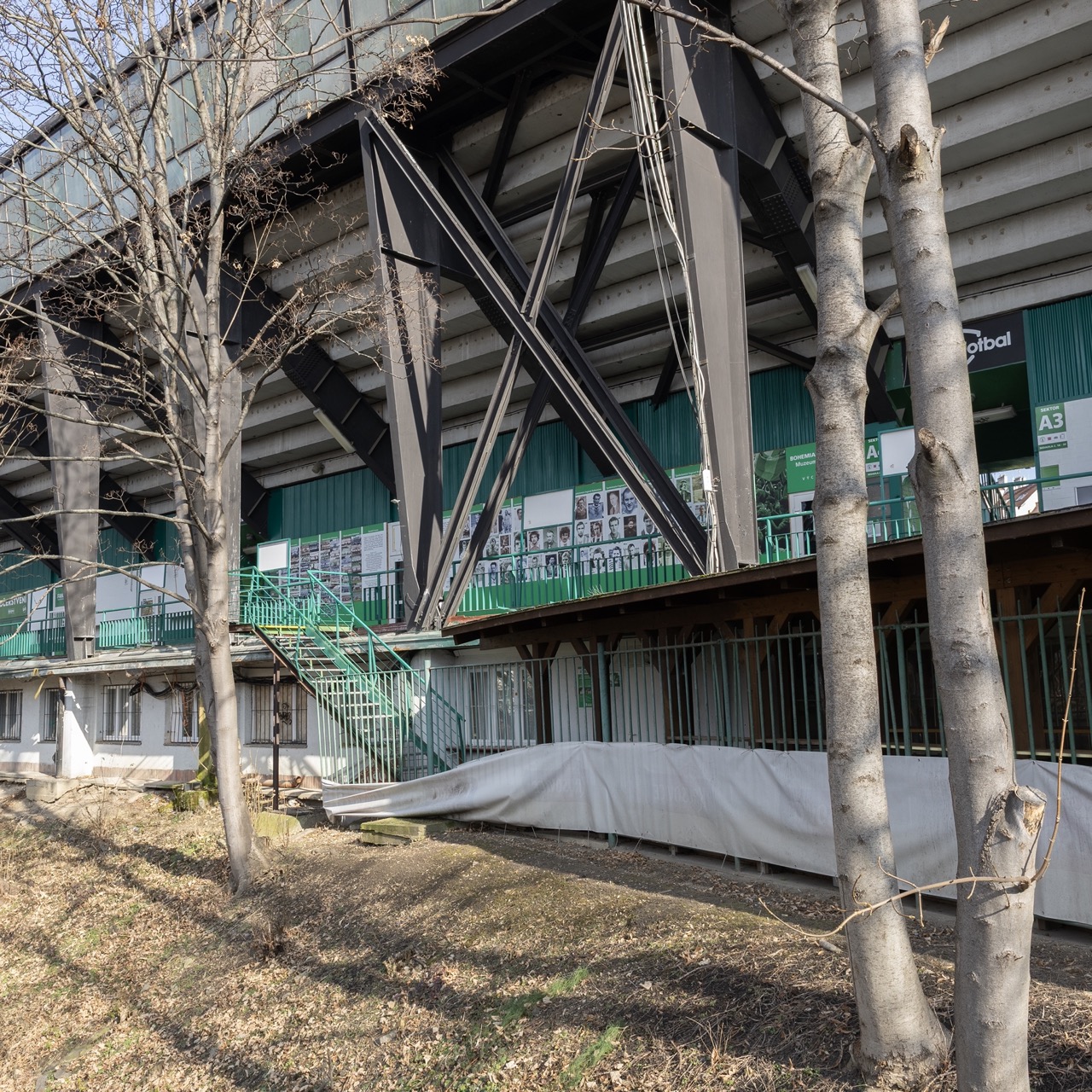
Photographing Ďolíček without its people felt at times like detective work—searching for clues about who the fans are, what drives them, how they occupy and transform the space. These images can only offer an outsider’s glimpse, but they hopefully capture the character of a club whose identity is inseparable from its neighbourhood.
And I know this much: I’ll be back. Next time, I’ll make sure my visit coincides with a Bohemians home match—so I can finally hear the Kangaroos in full voice, enjoy a few beers with the fans and see this historic little stadium come fully alive.
-
 Protests to Promotion | Clive Lawrence£8.50
 -
 The Old Showground | Nic Salmon£8.50
 -
 And You’ll Never Know | Conrad Tracy£8.50
 -
 Blades 1989-90 | Bill Stephenson£8.50
 -
 Estadio | Danny Last£8.50
 -
 Scottish Grounds 1990s | Tony Davis£8.50
 -
 MUFC Rotterdam 91 | Richard Davis£8.50
 -
 The Famous CFC | John Ingledew£8.50
 -
 No One Likes Us | Jérôme Favre£8.50