Photographer and Leeds United supporter Justin Slee’s portraits from Leeds Leeds Leeds capture one of the most exciting sides in English football at the turn of the millennium – and a moment when football, fashion, music and magazine culture collided.
There was a period around the turn of the millennium when Leeds United seemed to have everything.
A brilliant young side, one of English football’s great grounds, genuine ambition at home and in Europe and a collection of players with enough personality to fill the pages of a magazine.
And not just any football magazine.
Leeds Leeds Leeds arrived at the end of the 1990s with James Brown at the helm. Brown, a Leeds supporter himself, had been the founding editor of Loaded and one of the defining figures in the British magazine boom of the decade. His new Leeds title brought some of that same irreverence, wit and visual confidence into football publishing.
This wasn’t the traditional matchday programme, nor did it look or feel like the football magazines supporters were accustomed to.
Football sat alongside fashion, music, humour and terrace culture. The players could be treated like personalities rather than simply sportsmen.
For photographer Justin Slee, it was a perfect fit.
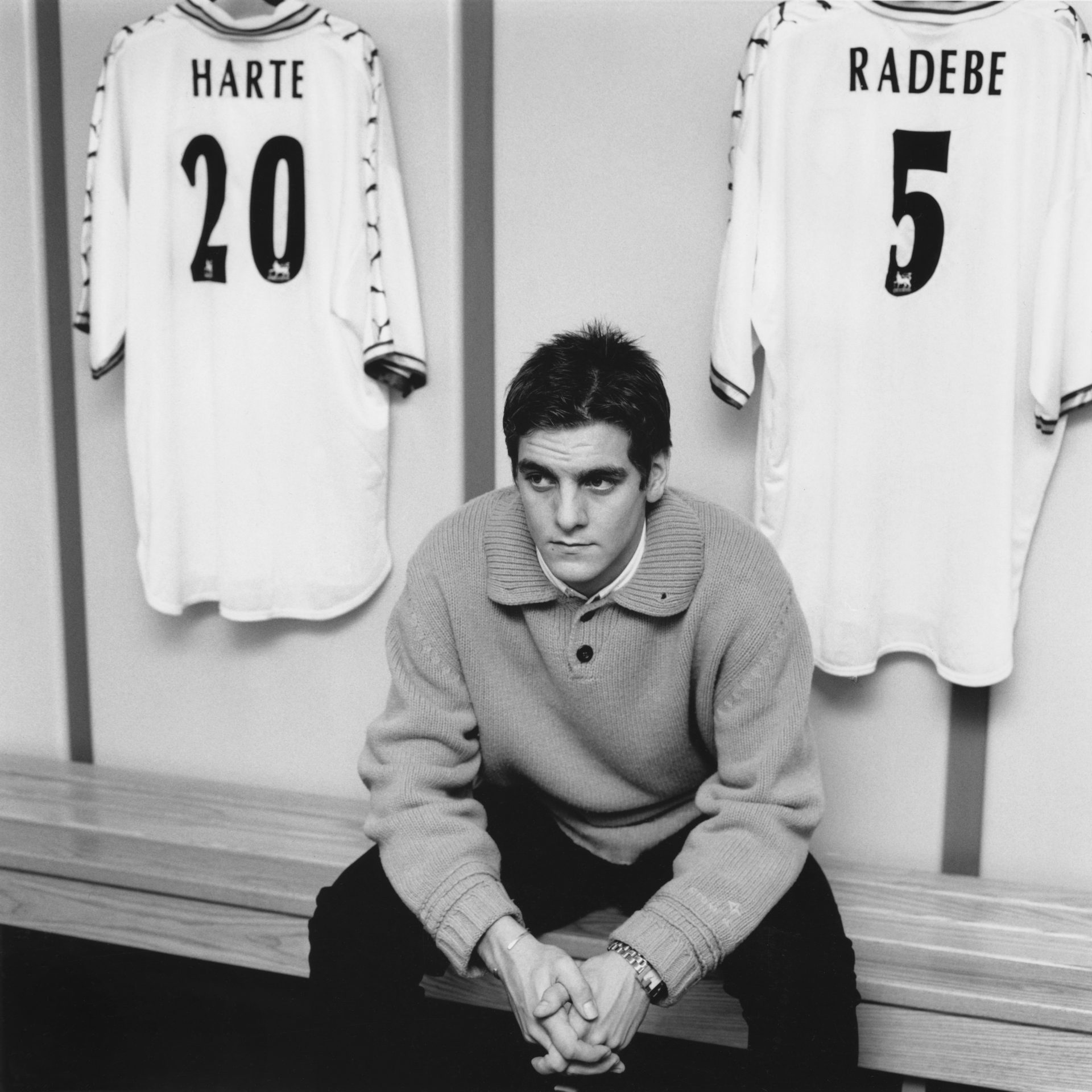
Slee was a Leeds fan, but also a portrait and documentary photographer with an eye shaped by editorial photography, design and music culture. Rather than photographing footballers simply as footballers, he could approach them as you might a musician, actor or band.
And Leeds gave him quite a cast.
A team on another level…
David O’Leary took charge in 1998 and inherited an emerging generation of young players that was soon supplemented by increasingly ambitious recruitment.
Harry Kewell, Alan Smith, Jonathan Woodgate, Ian Harte, Gary Kelly and Lee Bowyer were joined at different points by the likes of Mark Viduka, Robbie Keane, Rio Ferdinand and Olivier Dacourt.
For a while, it worked spectacularly.
Leeds reached the UEFA Cup semi-final in 2000 before going one better in Europe’s premier competition the following season, reaching the Champions League semi-final against Valencia. They were young, aggressive, exciting and seemingly fearless, capable of going toe-to-toe with Europe’s biggest clubs.
They were also magnificent to watch.
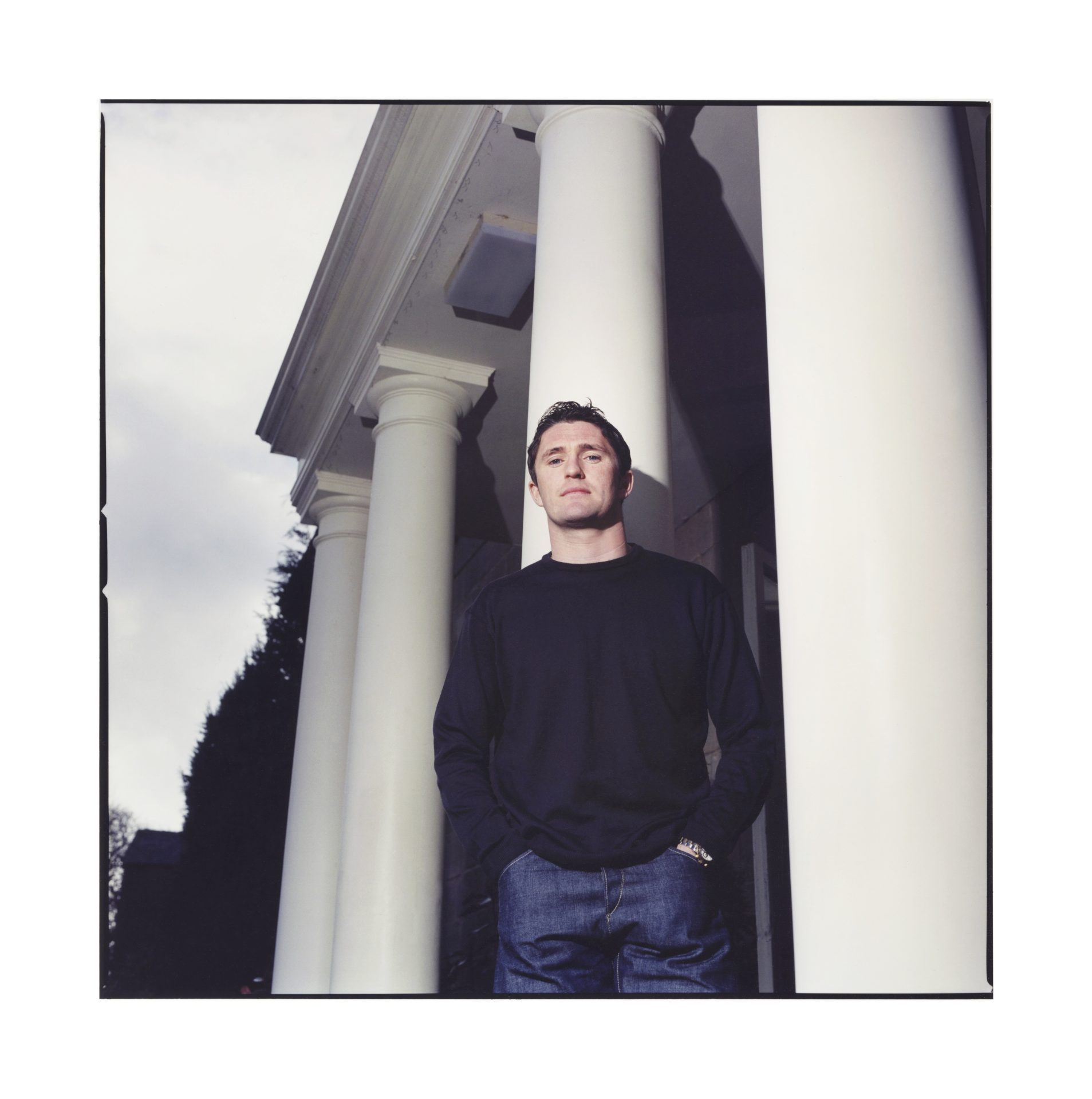
That swagger comes through in Slee’s portraits.
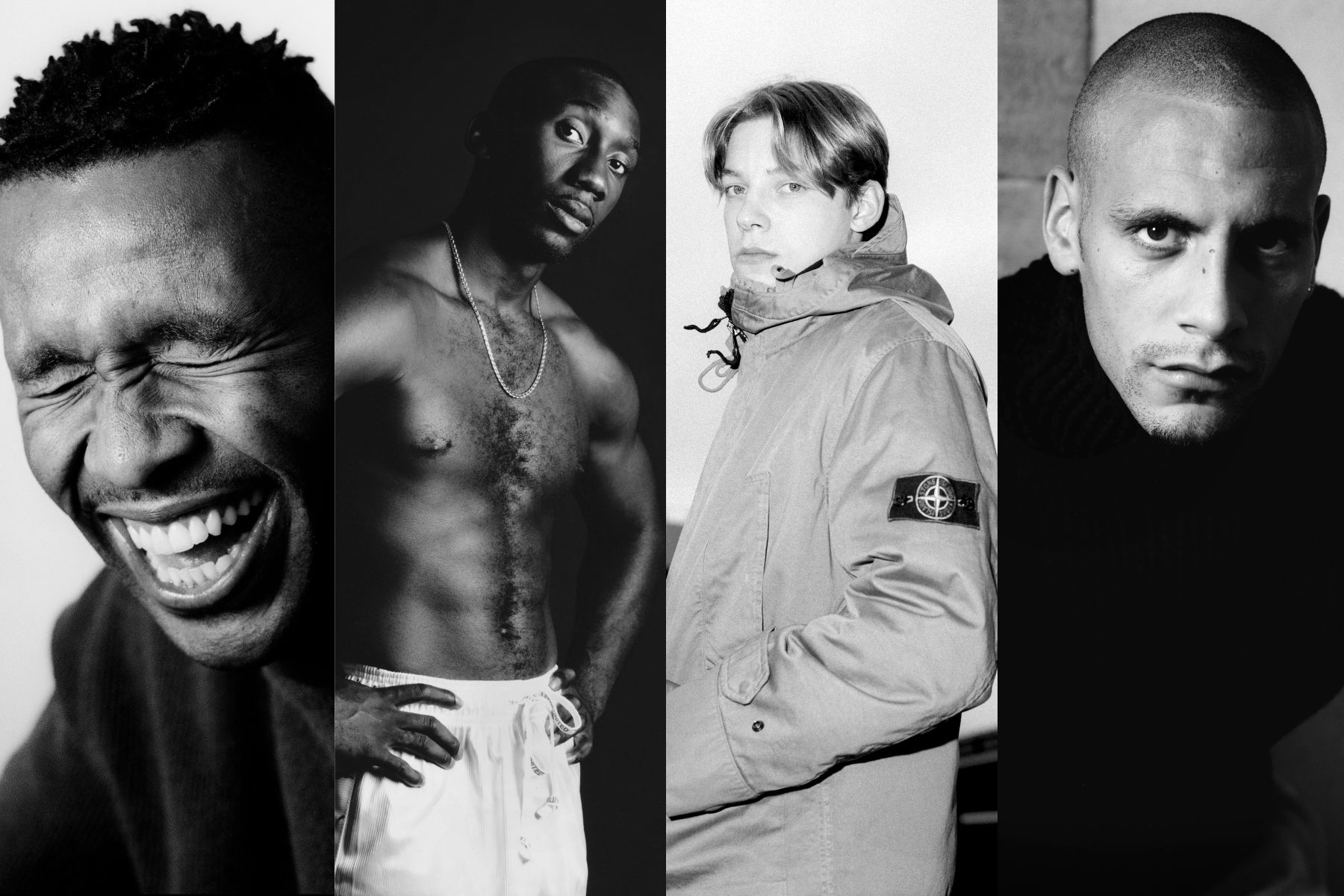
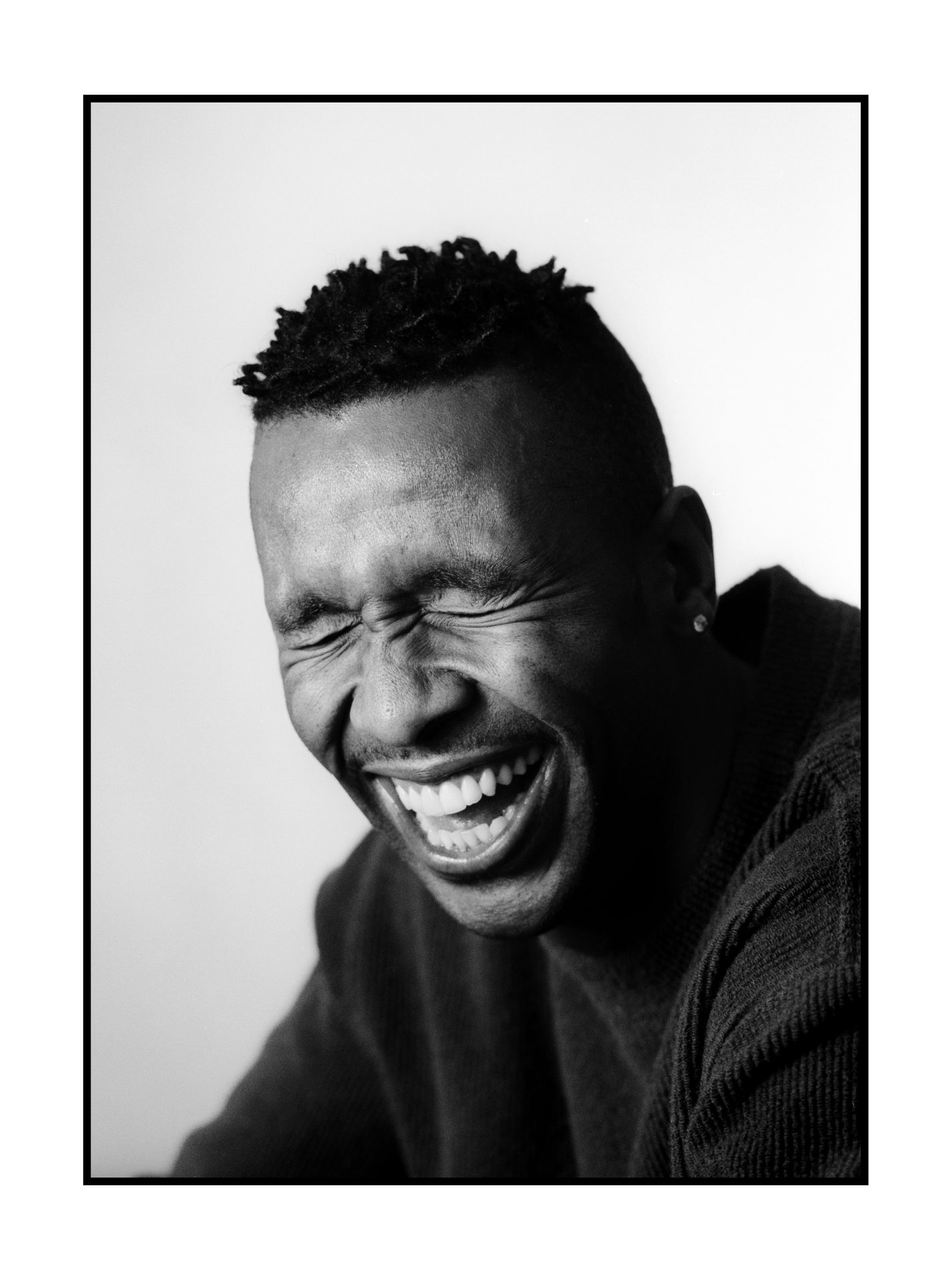
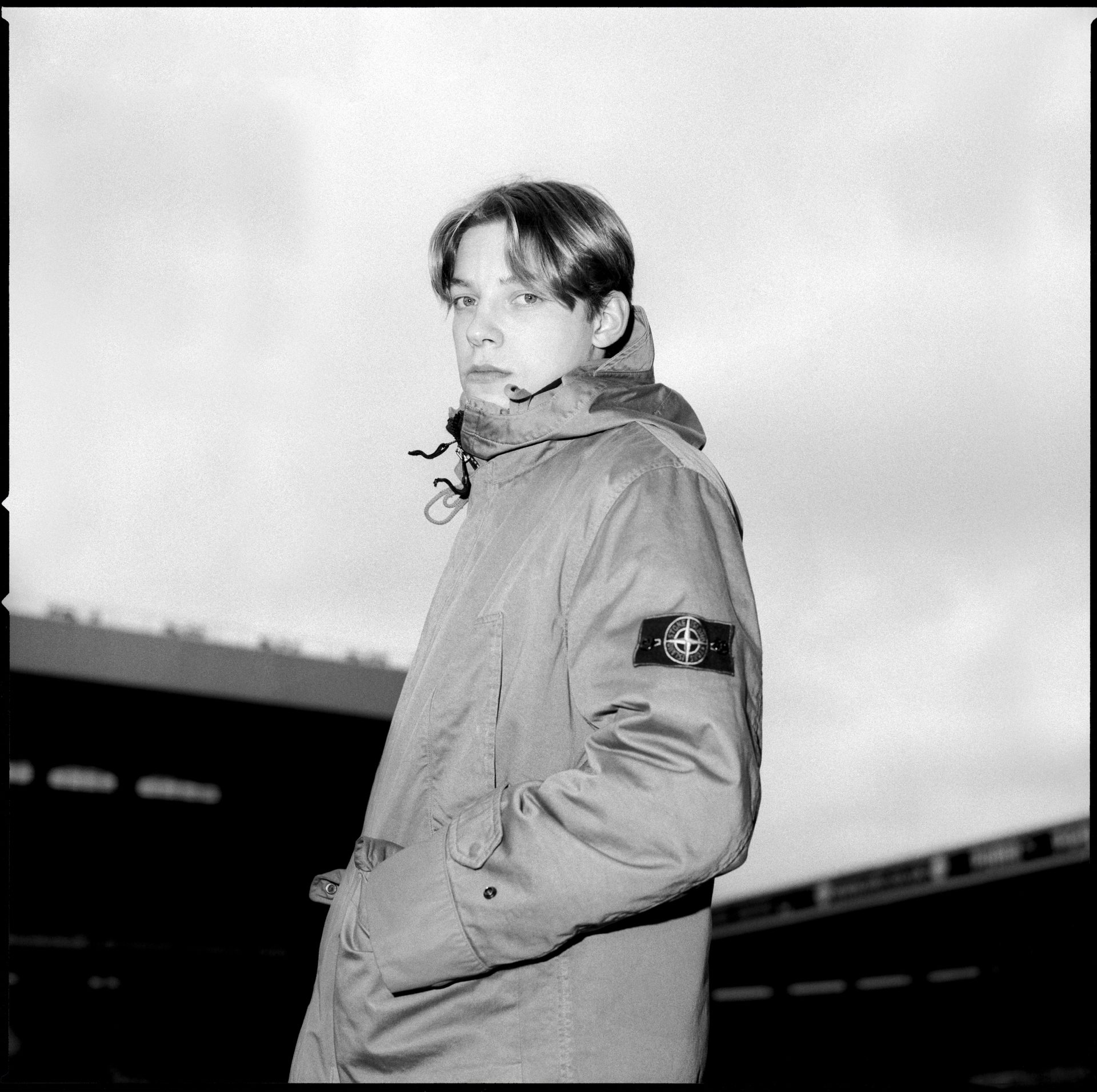
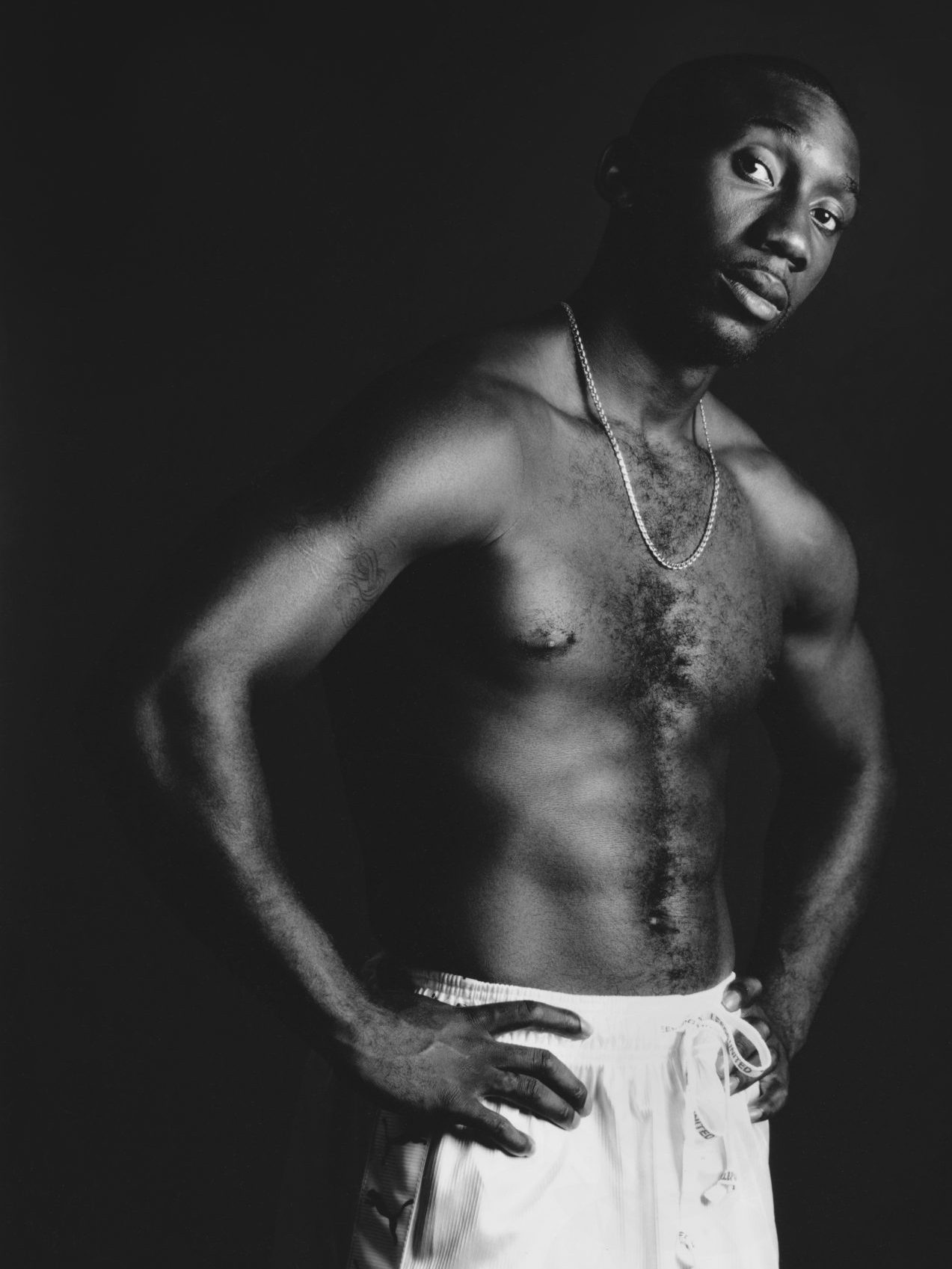
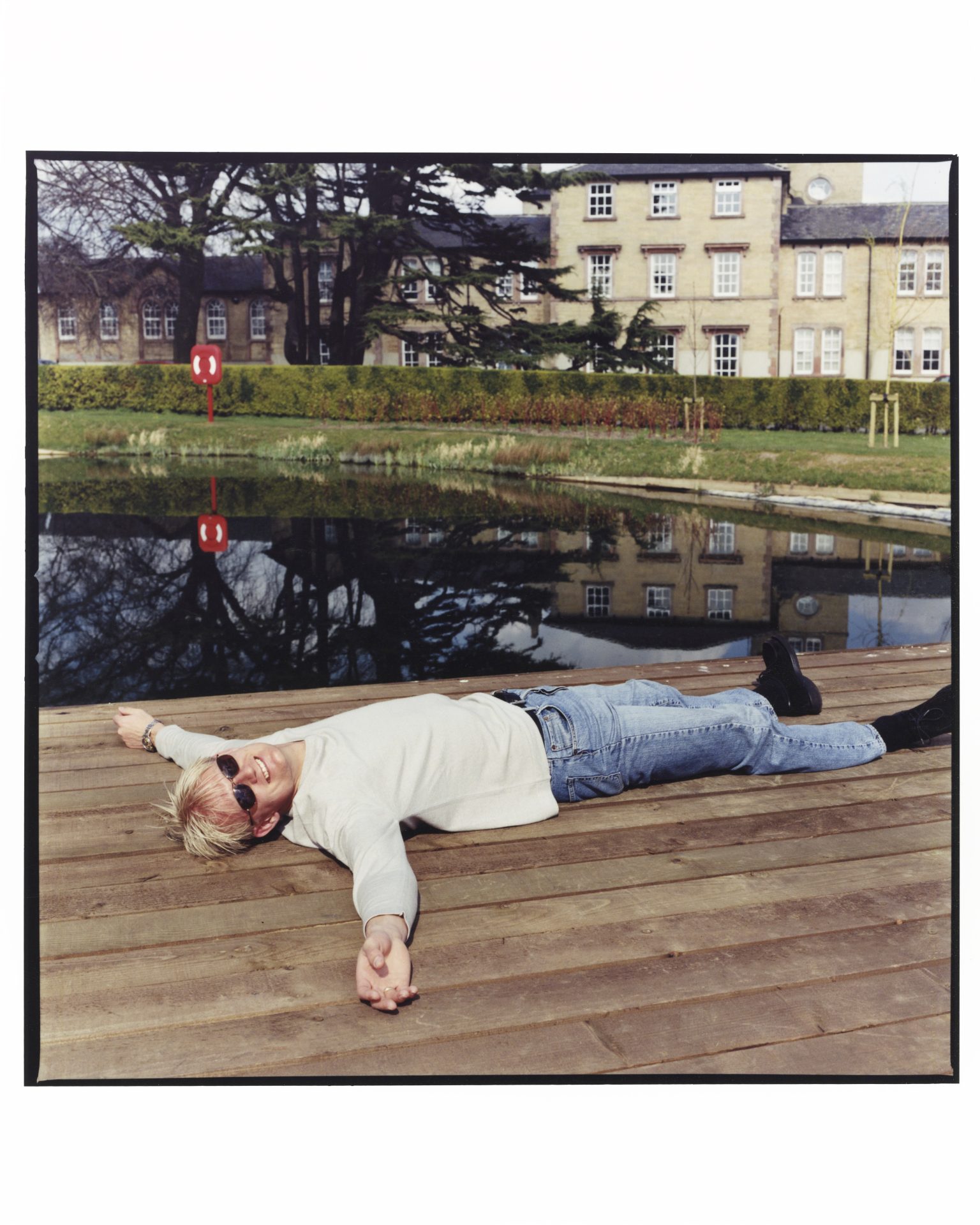
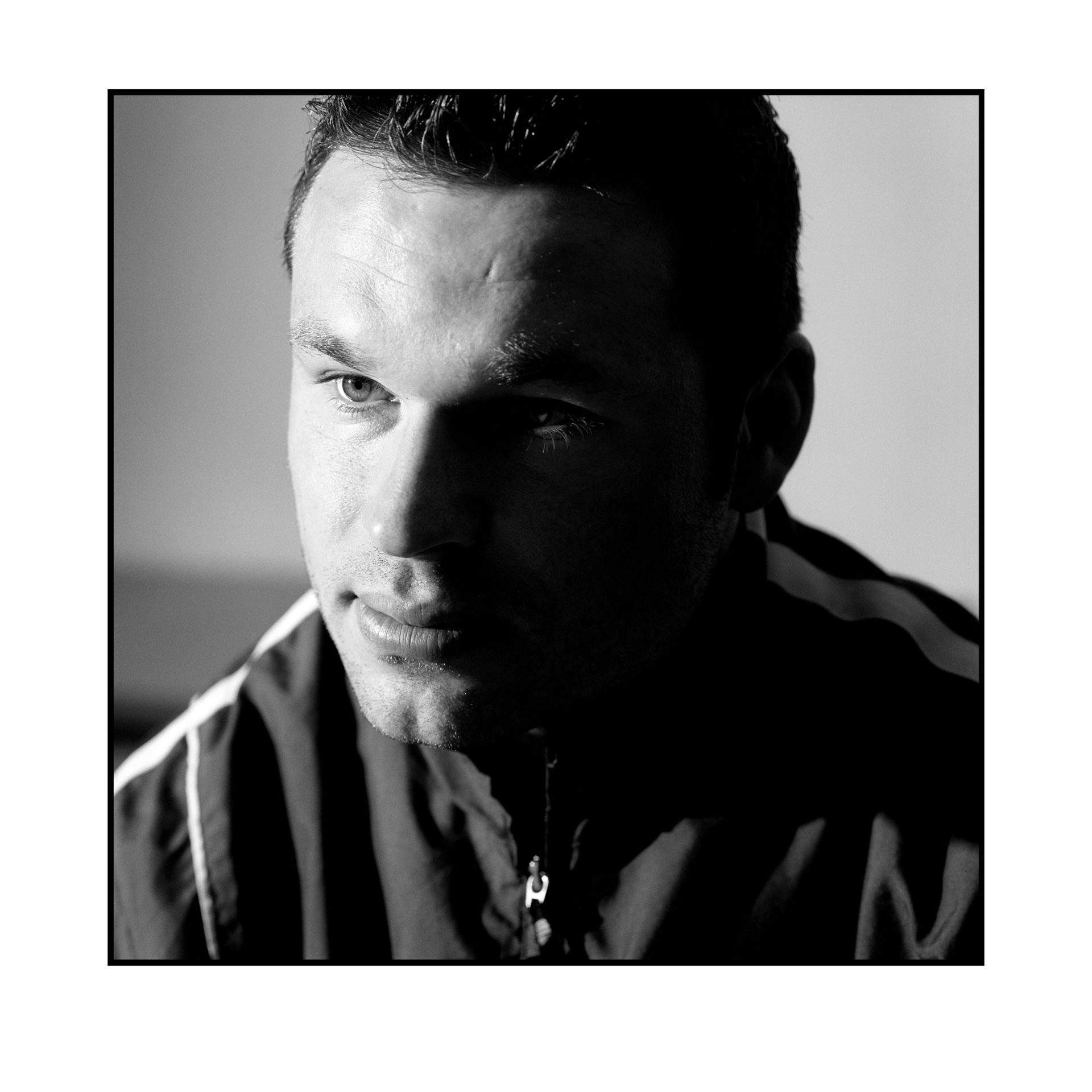
Lucas Radebe beams at the camera with an enormous smile. Jimmy Floyd Hasselbaink appears half in shadow, topless, a gold chain resting across his chest. Alan Smith wears Stone Island. Harry Kewell poses in Sergio Tacchini; Ian Harte in Evisu.
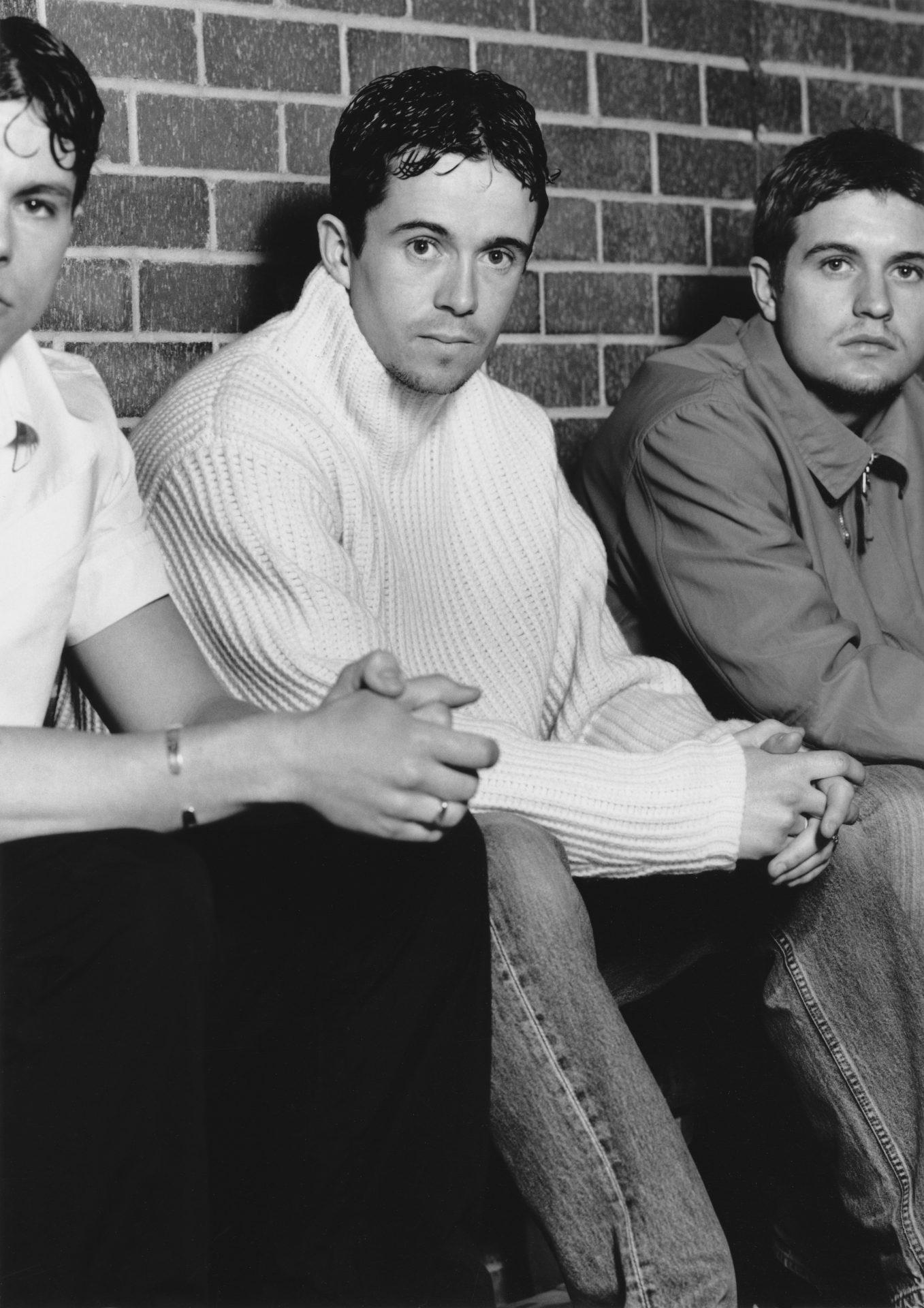
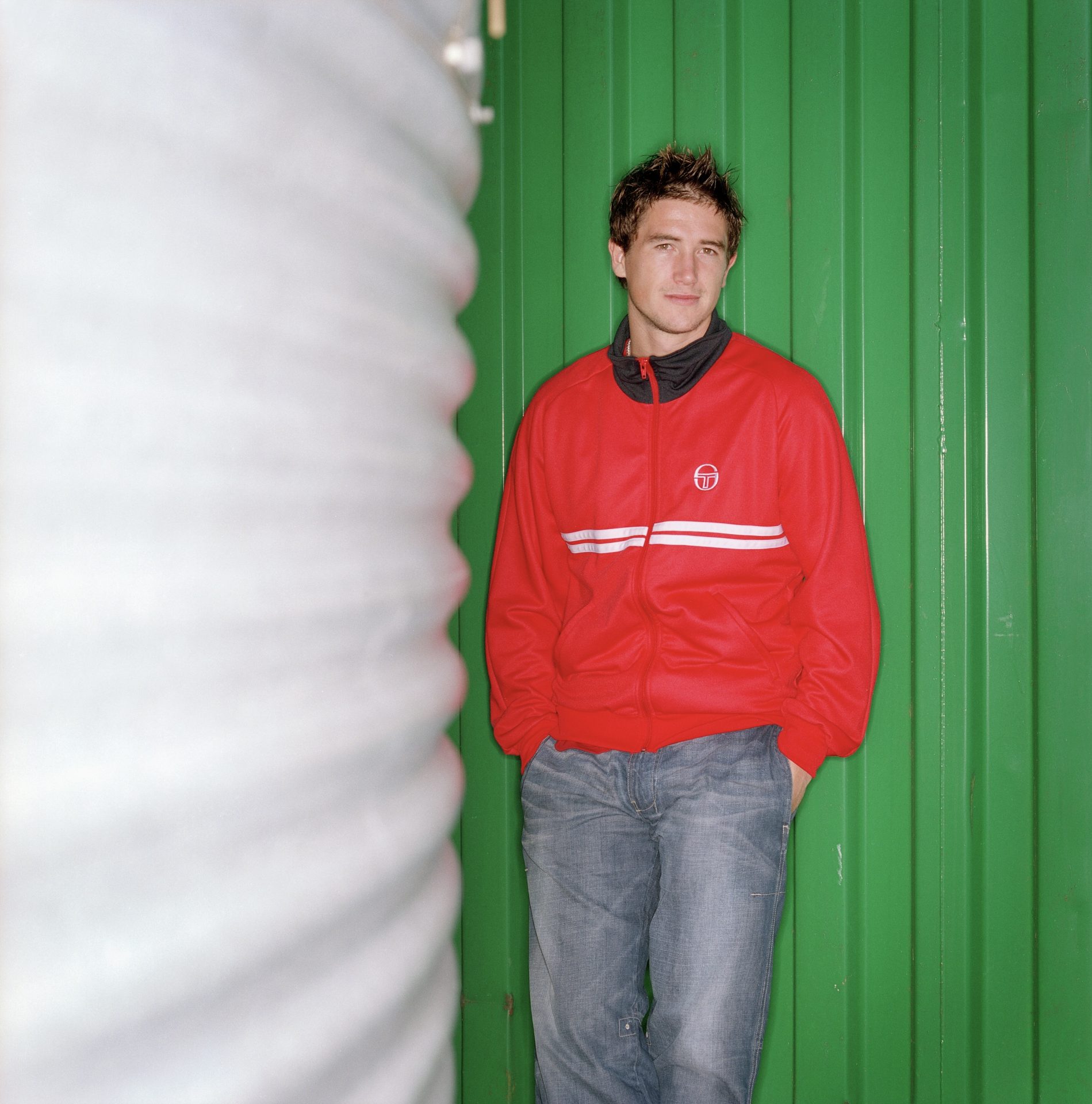
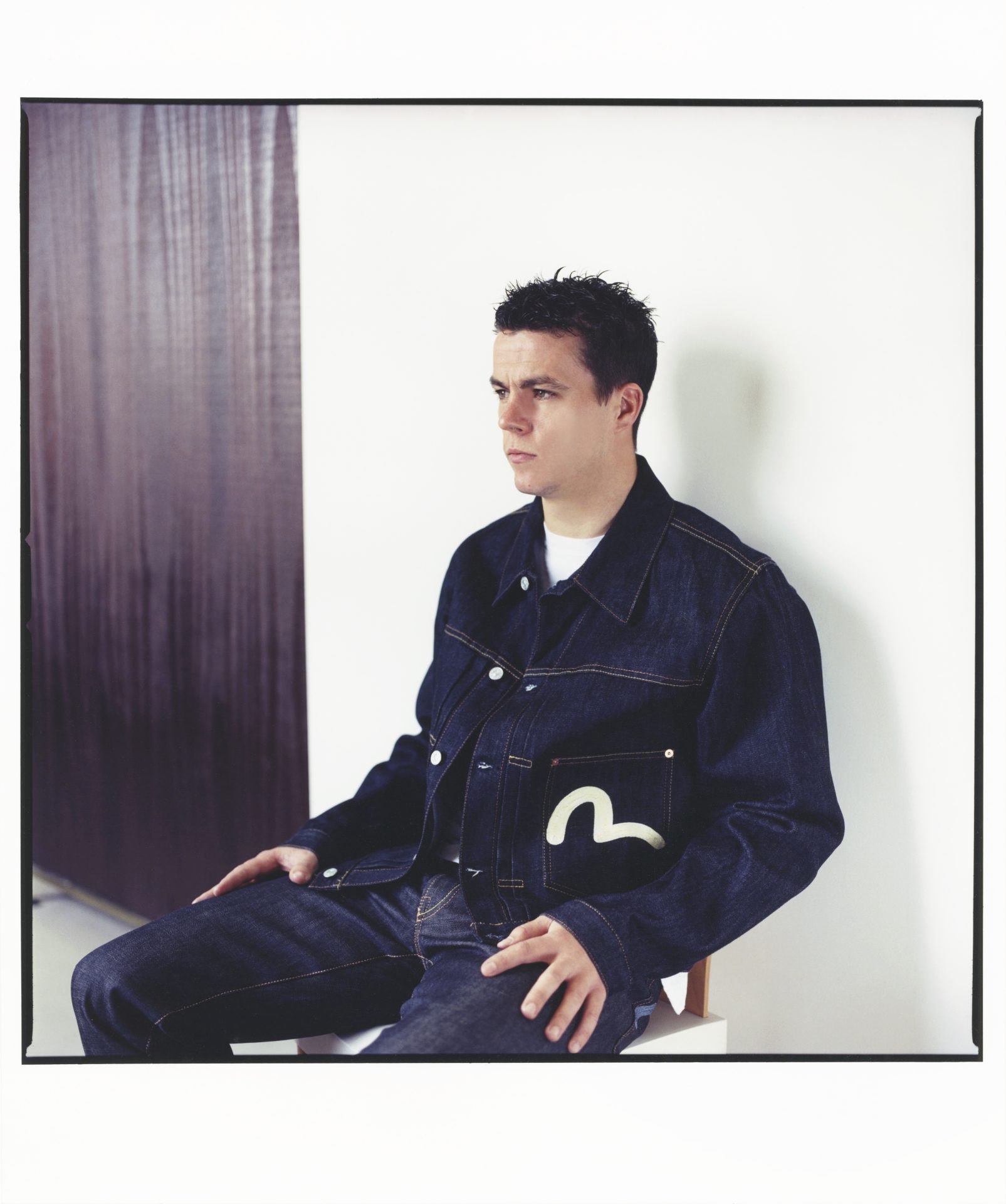
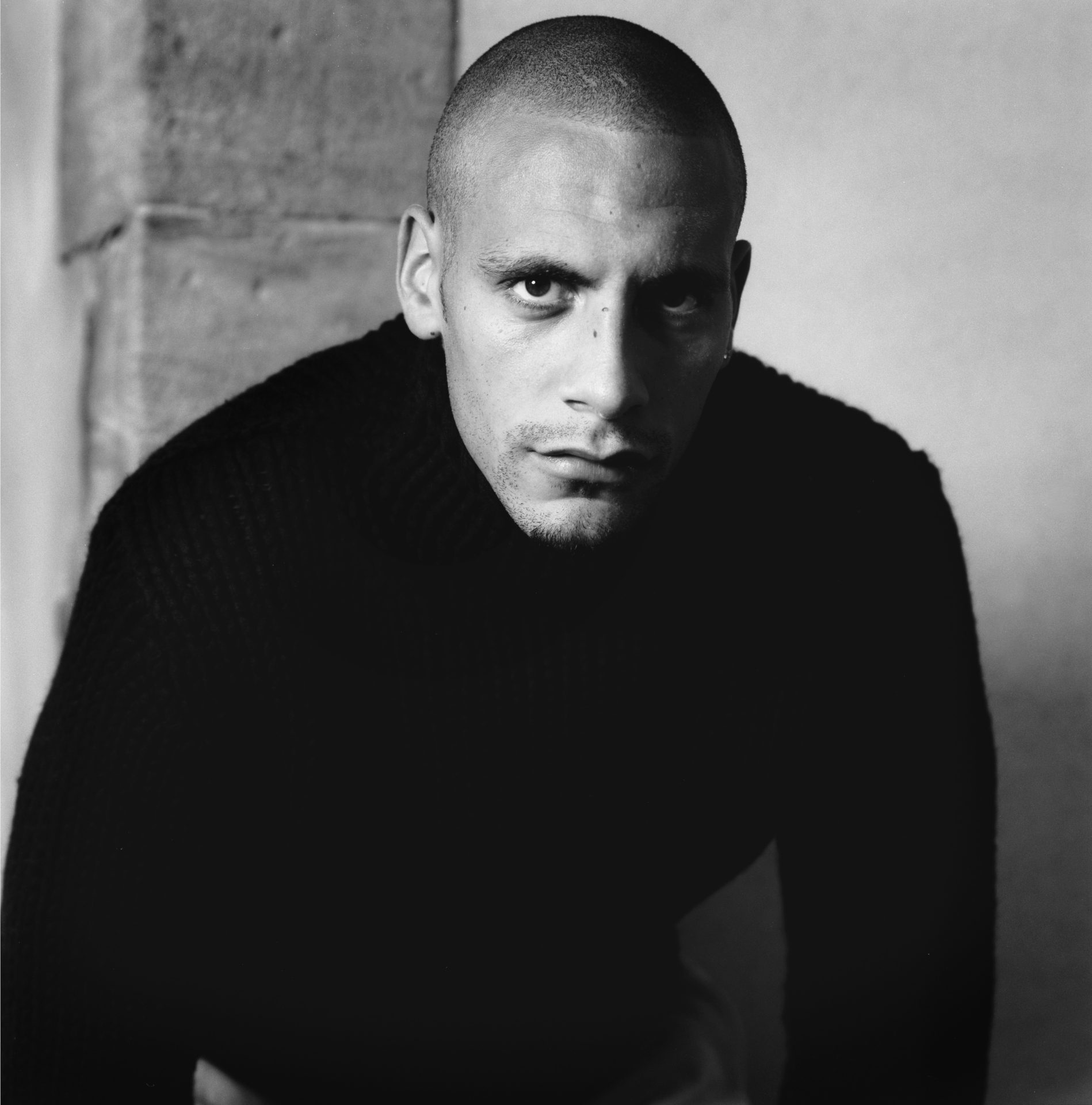
Rio Ferdinand looks every inch the superstar. Alfie Haaland lies spread-eagled beside water. Elsewhere Gary Kelly, Robbie Keane and Jonathan Woodgate look like something from an album cover sleeve.
At times they look less like a Premier League football squad and more like a boy band, a collection of musicians or characters pulled from the pages of a late-90s style magazine.
That is precisely what makes the photographs so good.
Slee wasn’t trying to strip away the culture surrounding football. He was embracing it.
The clothes matter. The haircuts matter. The poses matter. So does the humour.
These photographs belong unmistakably to their time.
Football meets magazine culture…
The late 1990s and early 2000s were an interesting moment in British football.
The Premier League was becoming enormous. Players were increasingly celebrities. Football shirts and terrace clothing were part of a wider fashion conversation, while music, magazines and football culture regularly occupied the same space.
Leeds Leeds Leeds understood that.
Brown brought the confidence and irreverence associated with the great British magazine era into a publication built around one football club. It could take the football seriously without treating everything surrounding it with reverence.
Slee’s photography fitted naturally into that world.
His portraits have the confidence of fashion photography and the personality of music photography, but they retain something important: he knew the club.
He wasn’t looking at Leeds United from the outside.
Before it all unravelled…
Seen more than two decades later, there is another layer to these photographs.
We know what happened next.
Leeds had spent heavily in pursuit of sustained Champions League football. Rio Ferdinand’s arrival in 2000 was part of more than approximately £45 million of spending during that season alone, but the financial model depended heavily on Leeds continuing to qualify for Europe’s biggest competition. When that didn’t happen, the consequences were brutal.
The magnificent young side began to disappear.
Ferdinand was sold to Manchester United in 2002. Robbie Keane went to Tottenham. Lee Bowyer, Robbie Fowler, Olivier Dacourt and Jonathan Woodgate followed as Leeds attempted to reduce a mounting debt burden. Harry Kewell’s eventual move to Liverpool came amid another complicated and acrimonious episode.
For supporters, some departures hurt more than others. Players who had seemed central to a new era were suddenly appearing in the colours of rivals or leaving amid disputes, financial necessity and uncertainty.
Even Alan Smith – the homegrown striker whose connection with the support had made him one of the symbols of that Leeds side – would eventually cross the divide to Manchester United after relegation.
Within a few years, a team that had stood within touching distance of a Champions League final had been dismantled. Leeds were relegated from the Premier League in 2004.
The rise had been exhilarating. The fall was extraordinary.
Perhaps that knowledge makes Slee’s photographs even better today.
There is no sense of what is coming.
Instead, they capture the swagger, optimism and personality of a football club that, for a brief period, genuinely looked capable of taking on anyone.
A brilliant team. Great footballers. Great clothes. A great magazine.
And a photographer who understood exactly how to make them look like stars.
Leeds on Another Level.
Leeds Leeds Leeds – 1998-2003 Photographs by Justin Slee
Explore the Edition
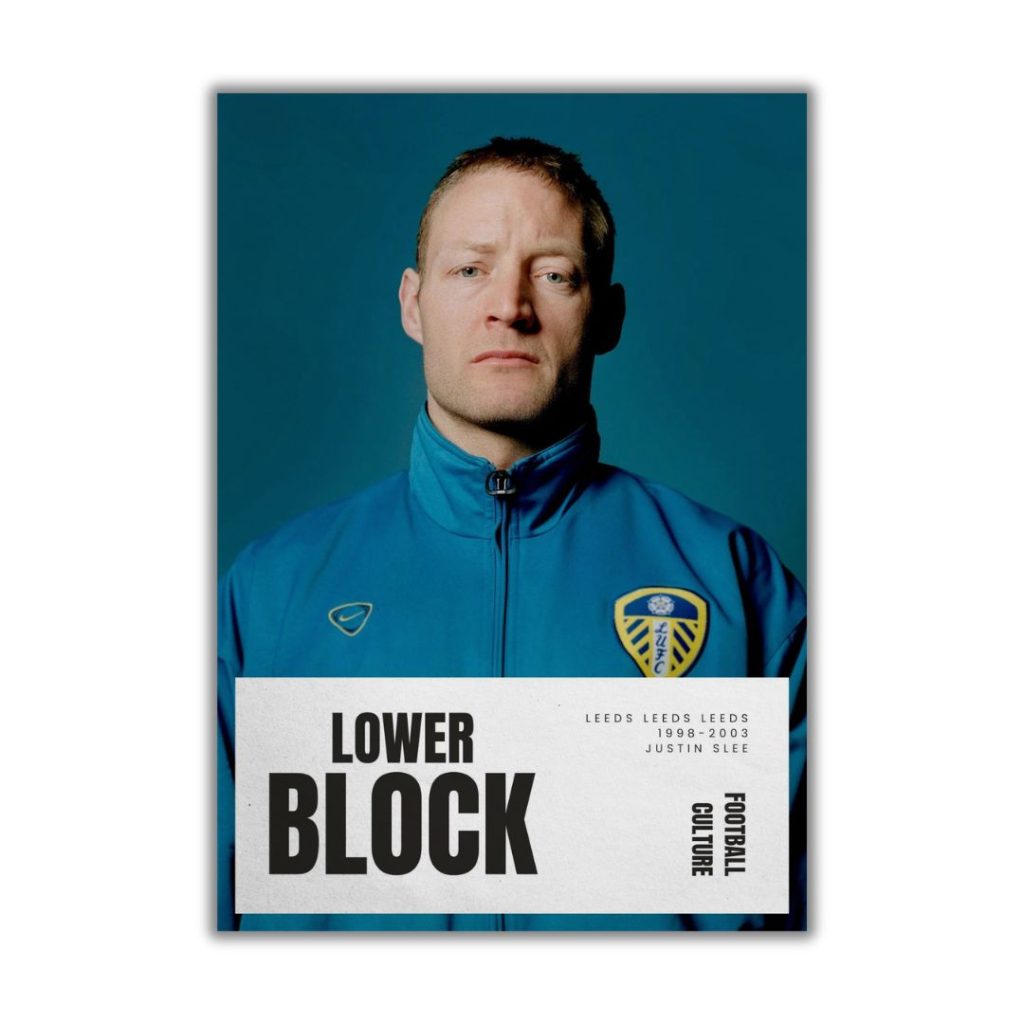
Leeds Leeds Leeds | Justin Slee
A series of photographs by Justin Slee taken during his time working for Leeds Leeds Leeds magazine, 1998-2003.
A limited edition A5 zine containing 33 photographs across 44 pages.
The zine includes a forward by former Leeds Leeds Leeds editor Neil Jeffries, and and introduction by the magazine’s founder and former Loaded and GQ editor, James Brown.
More from the Lower Block Archive