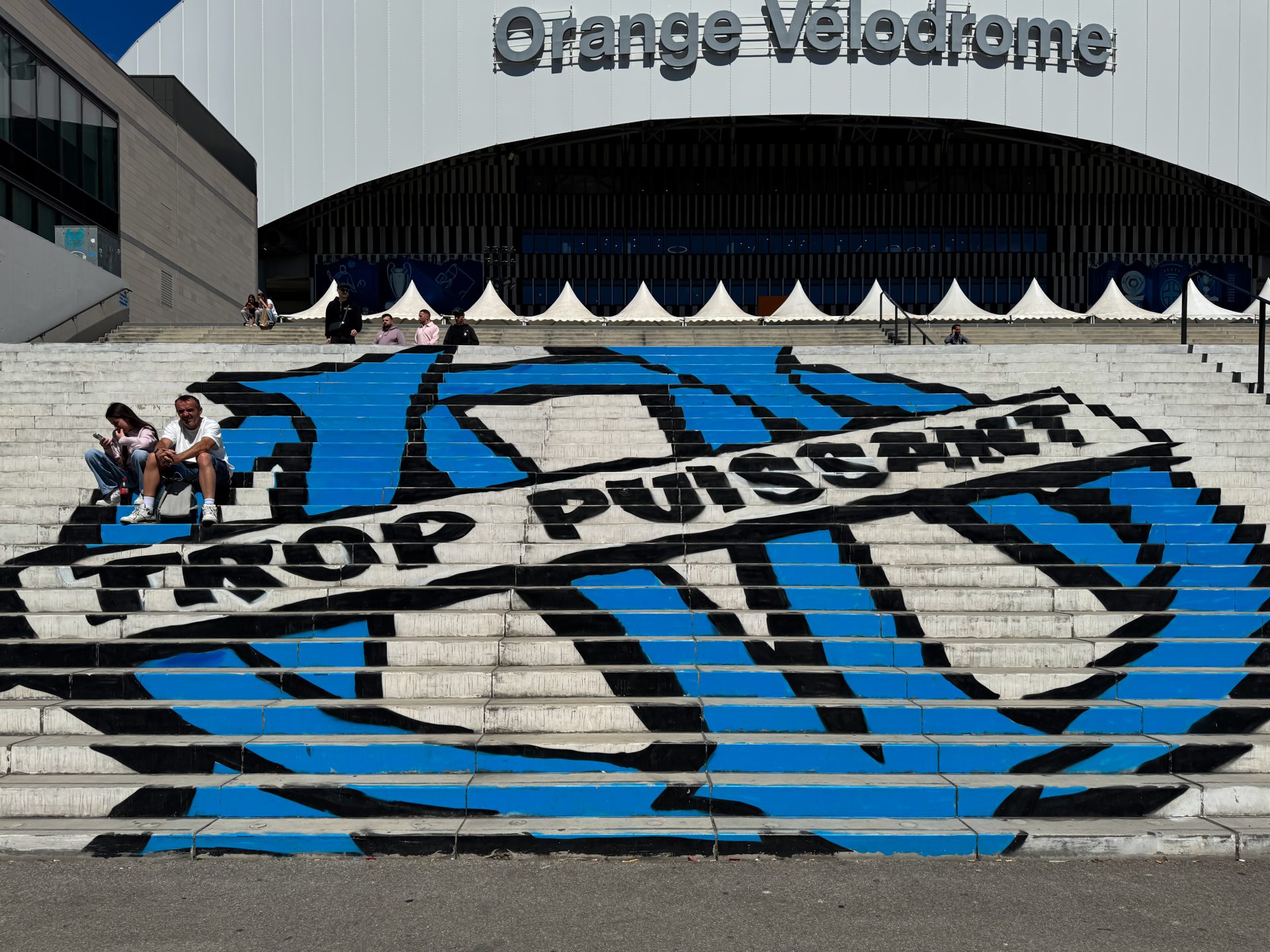
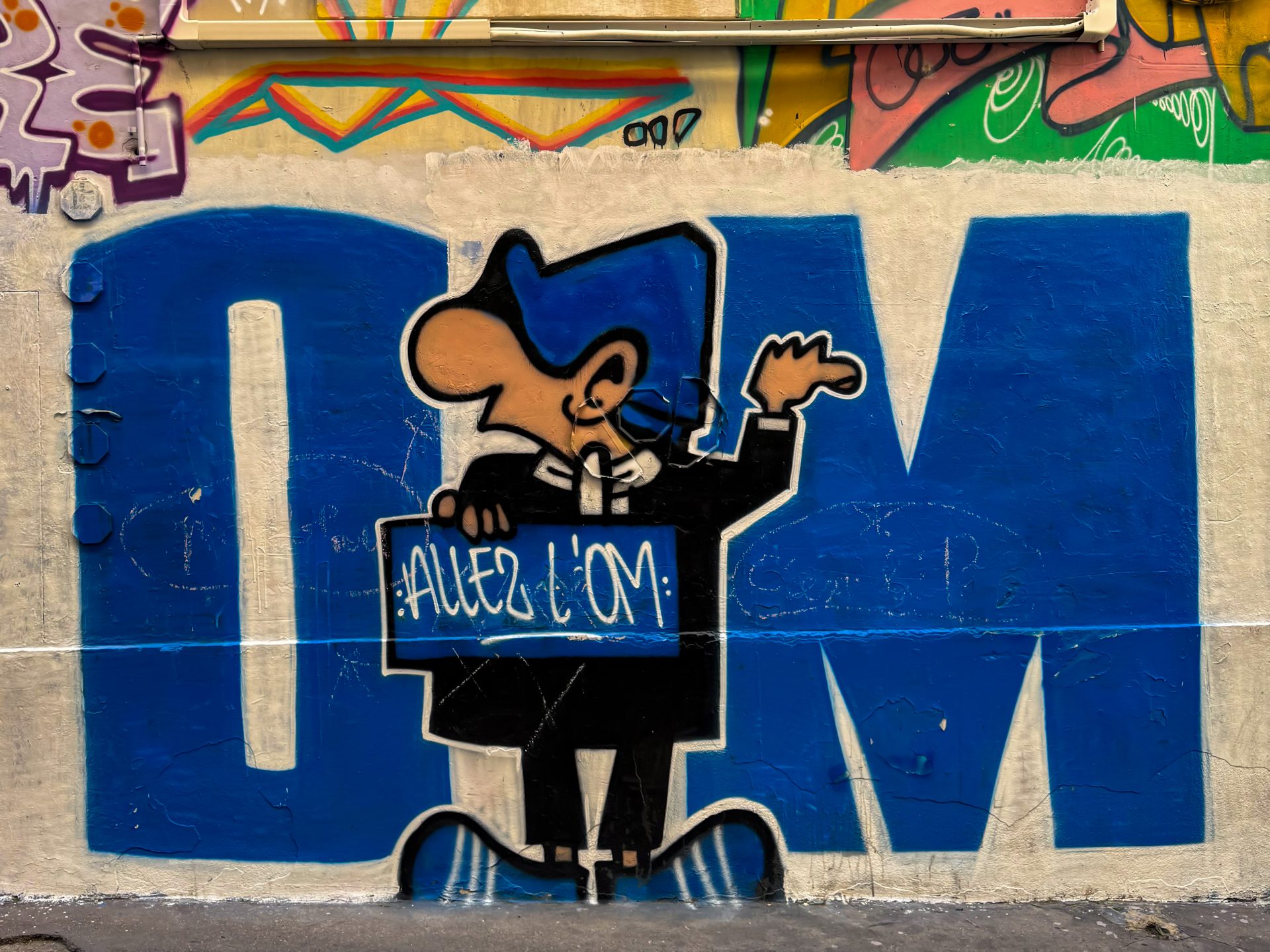
Guirec Munier explores the visual language that surrounds Olympique de Marseille: murals, graffiti, stickers, shirt culture and the everyday spaces where football is woven into the identity of the city.
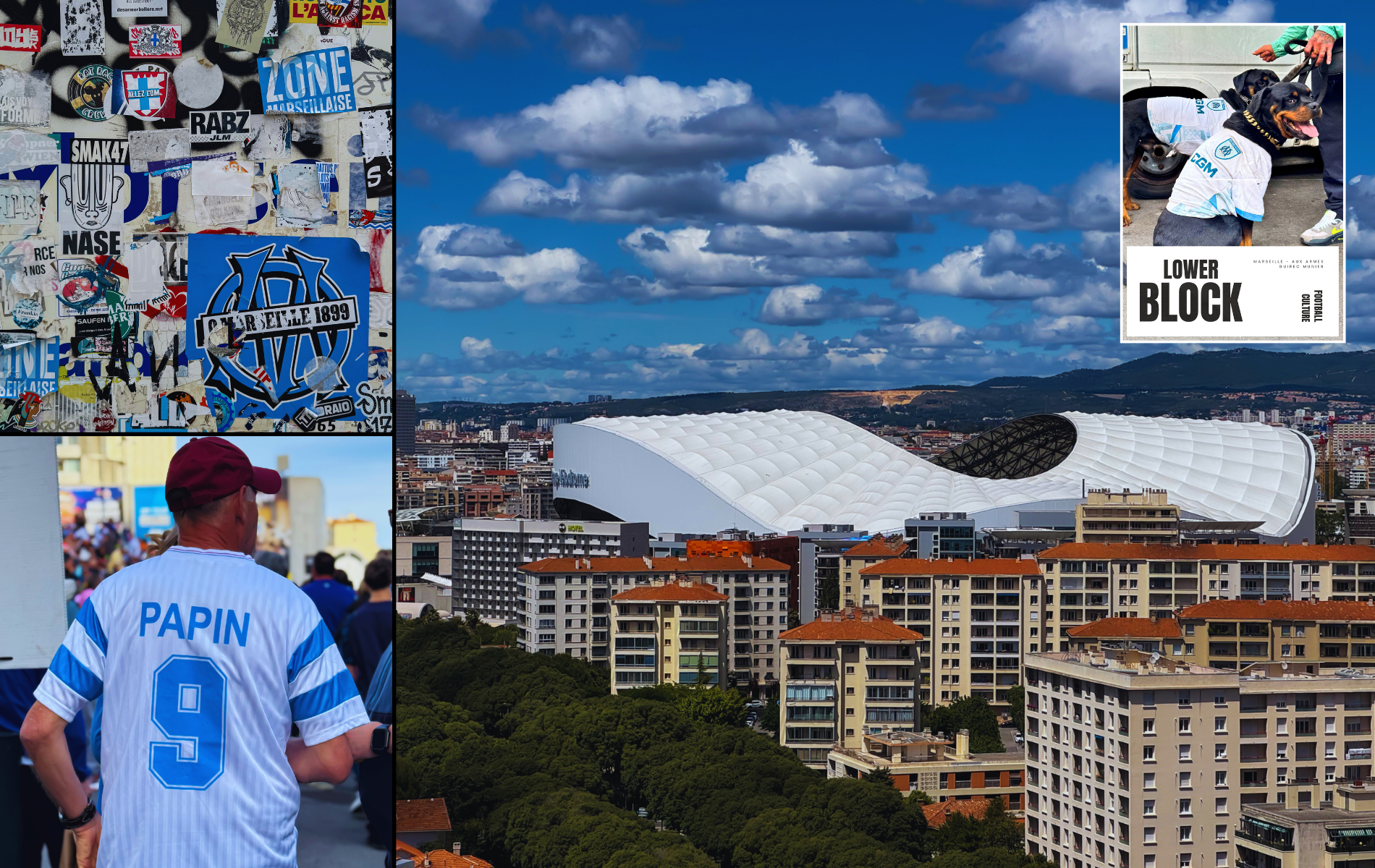
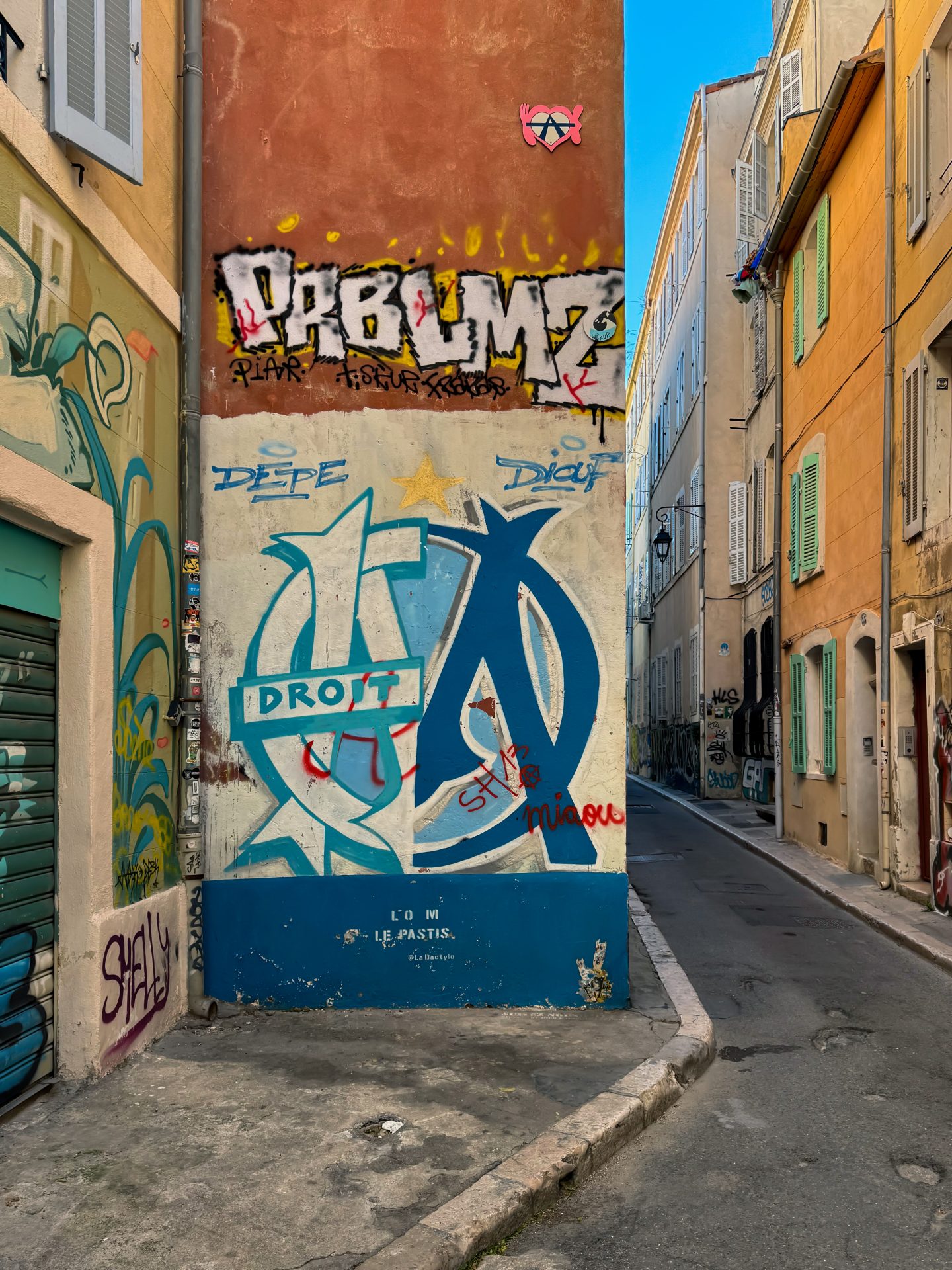
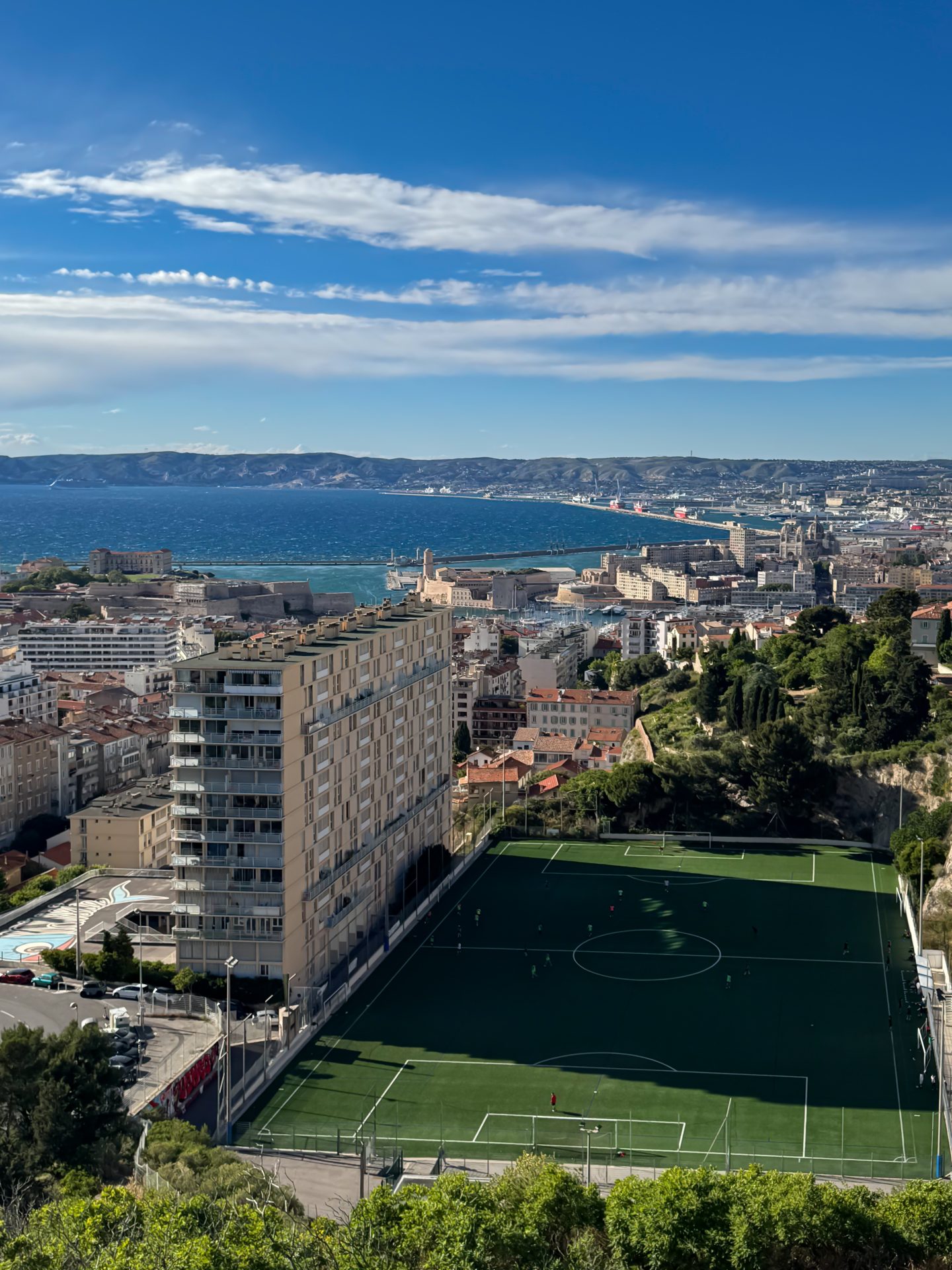
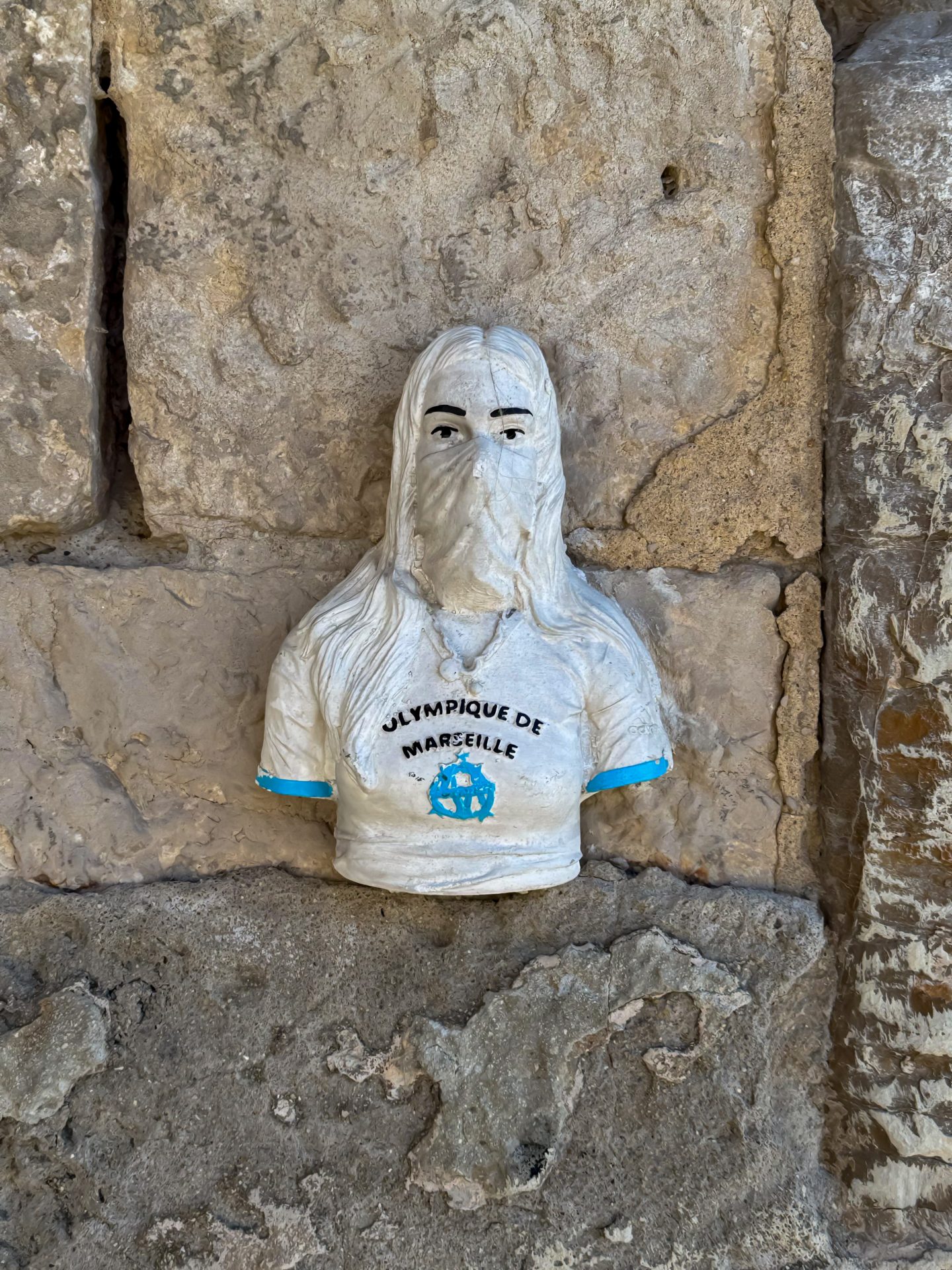
In Marseille, football doesn’t start at the stadium. It shows up long before that. On the faded walls of Le Panier. In the stickers layered around the Vieux-Port. On the fenced concrete pitch behind La Major, squeezed between pale stone and the Mediterranean. Across the beaches of Les Catalans and Le Prophète, where Olympique de Marseille shirts mix with Manchester City tracksuits and Real Madrid jerseys. In the smoke drifting above Boulevard Michelet on matchdays. In café conversations that feel closer to political debates than football talk. In Marseille, football occupies space like the sea – constant, natural, total. The club runs through the city. Not just on matchdays – everyday.
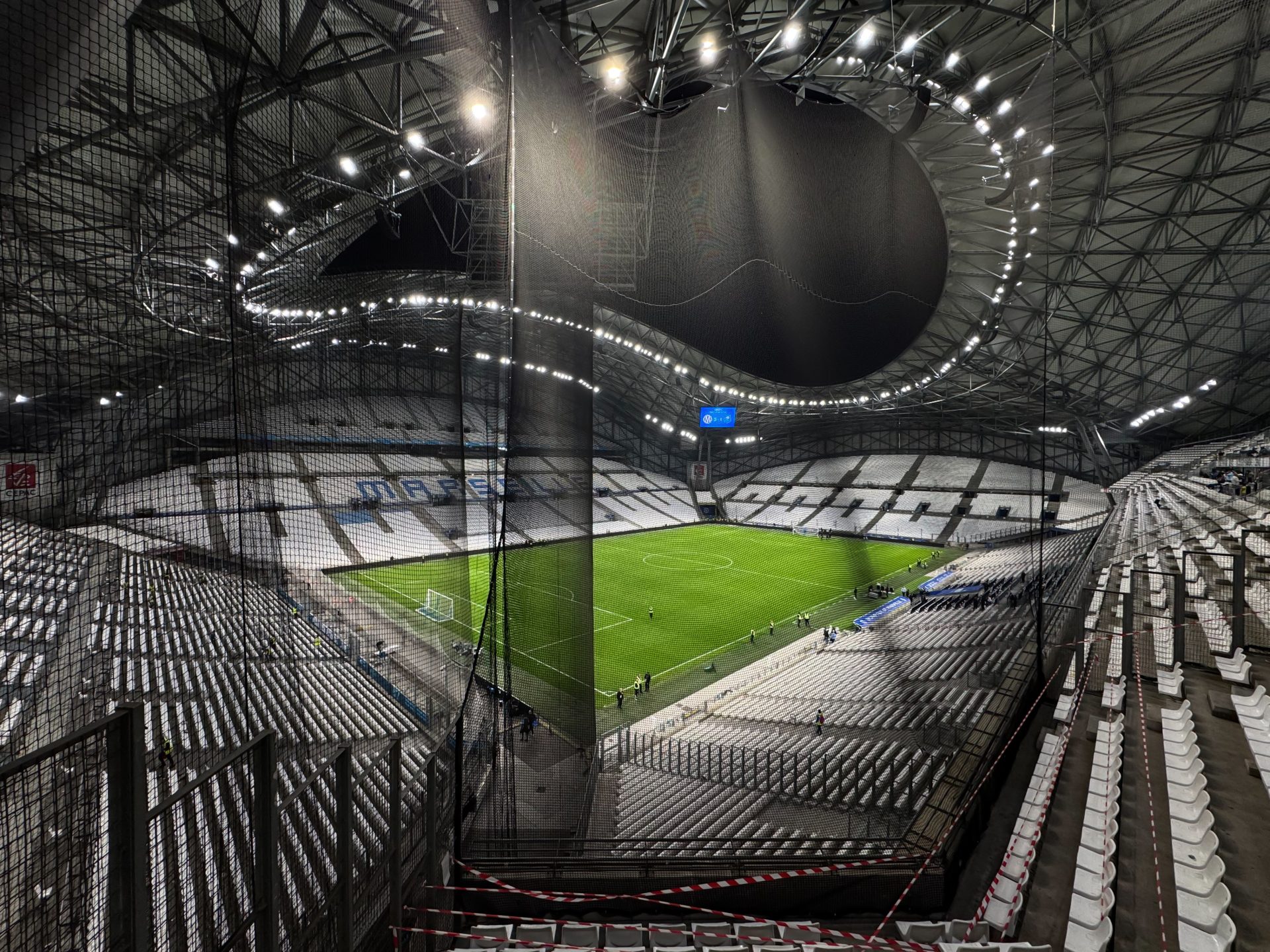
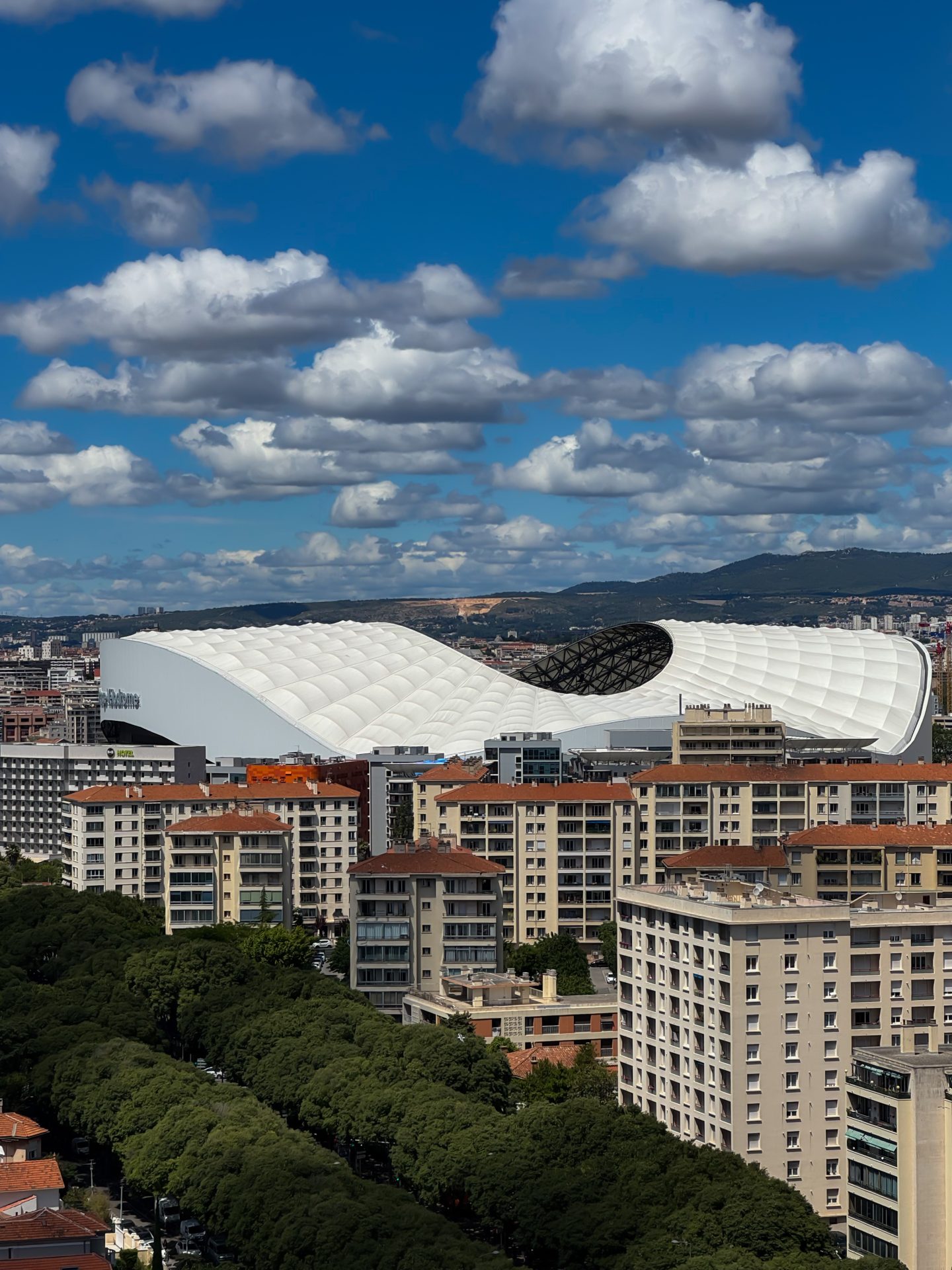
From Notre-Dame de la Garde, the Vélodrome sits in the city like a monument. The same feeling returns from the rooftop of the Cité Radieuse: the stadium rises between housing blocks and hills, as if Marseille was built around it. Step back into the streets and it becomes more than football. “À jamais les premiers.” It doesn’t appear everywhere as a slogan, instead it lingers in the atmosphere – closer to memory than to writing.
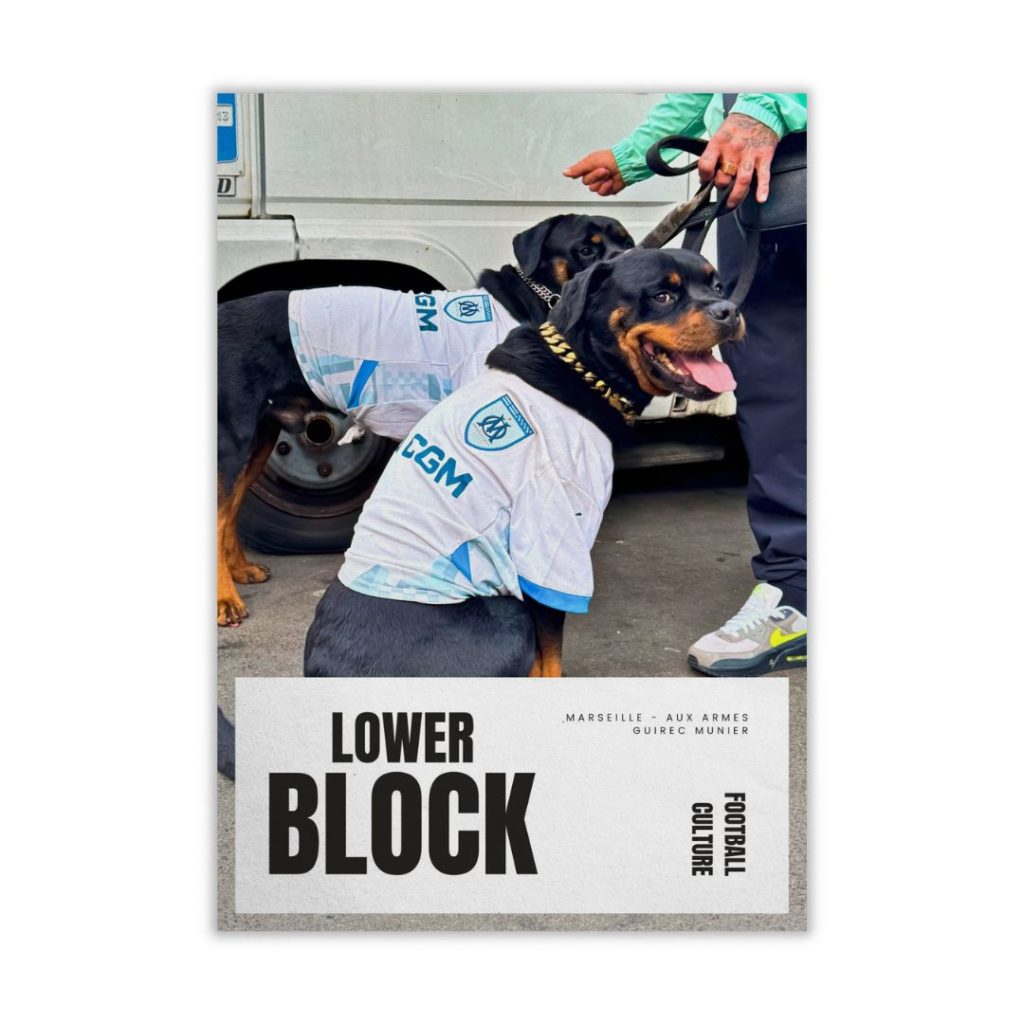
Marseille – Aux Armes | Guirec Munier
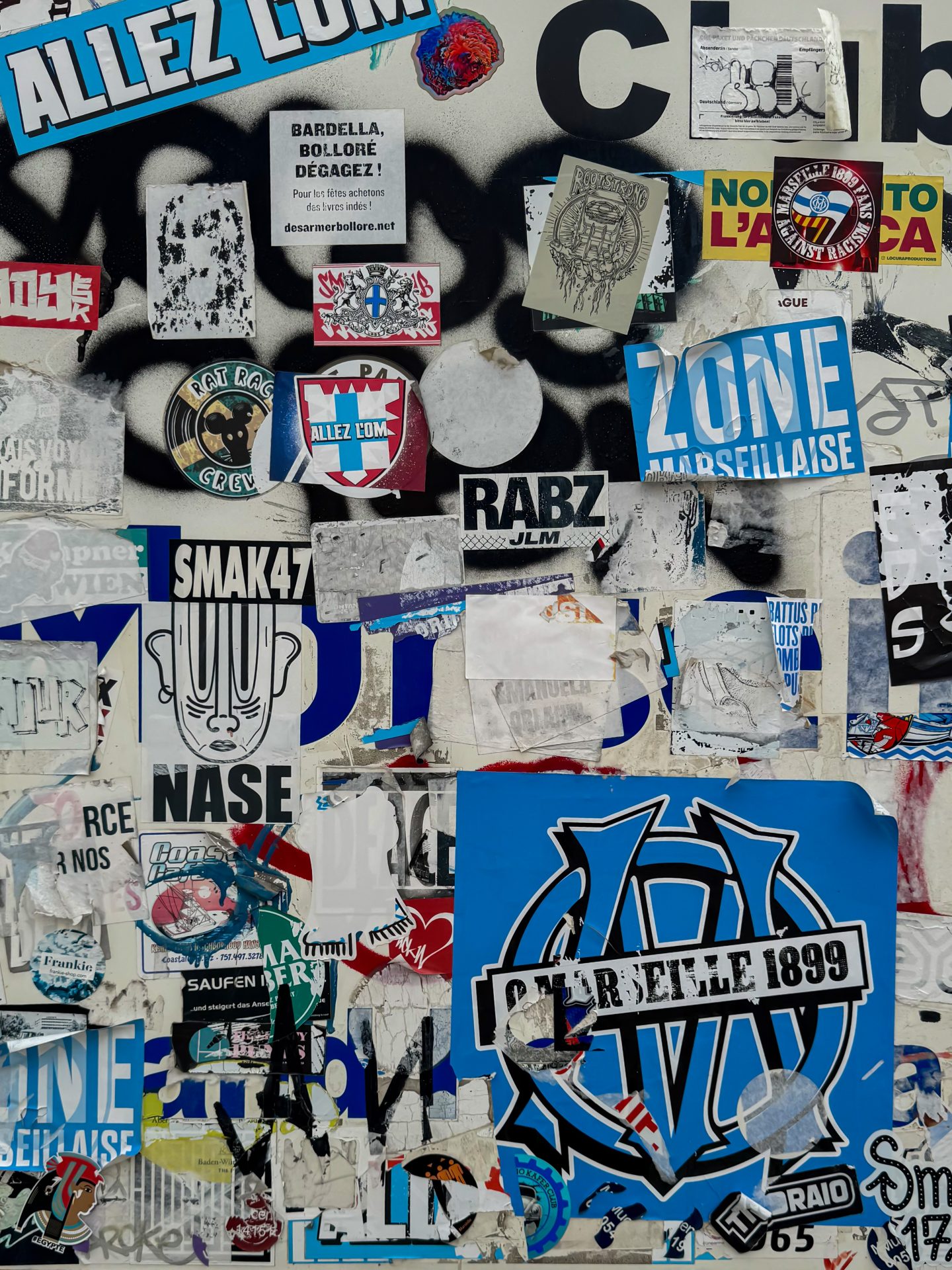
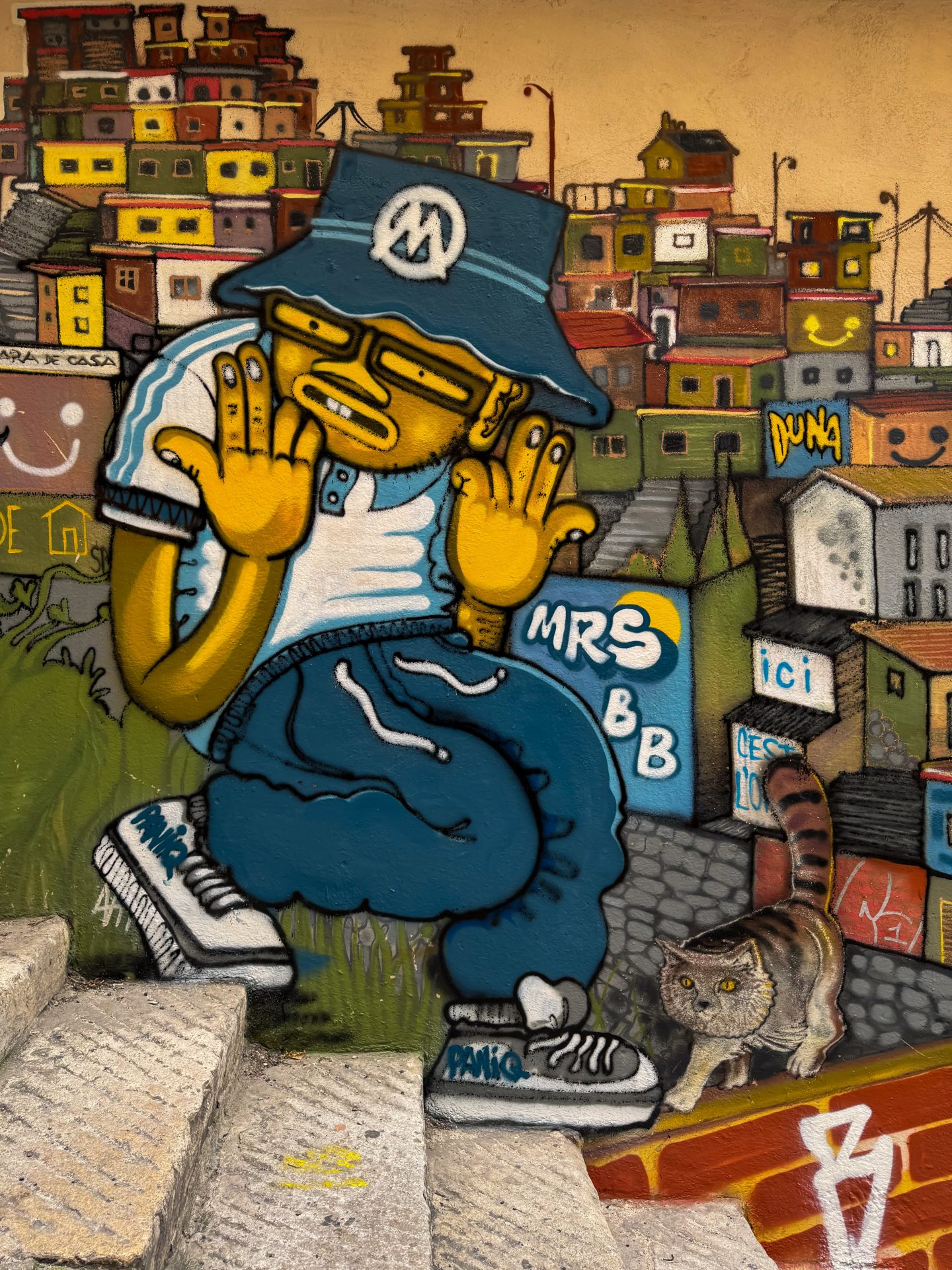
Marseille – Aux Armes documents one of football’s most distinctive supporter cultures through intimate photography and thoughtful observation. Guirec Munier explores the visual language that surrounds Olympique de Marseille: murals, graffiti, stickers, shirt culture and the everyday spaces where football is woven into the identity of the city. A limited-edition, curated A5 photo zine, 32 pages. Over 30 full-colour photographs.
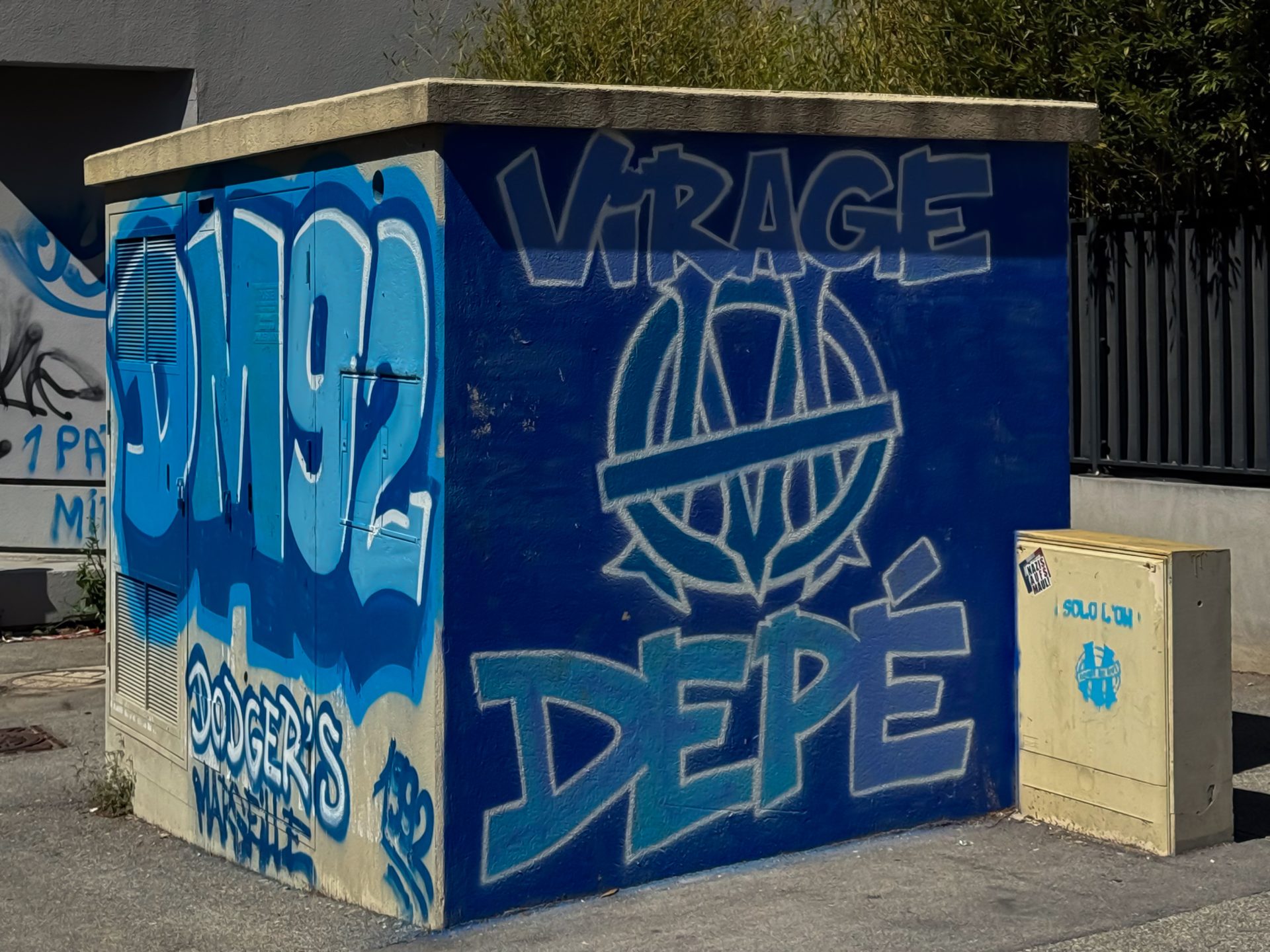
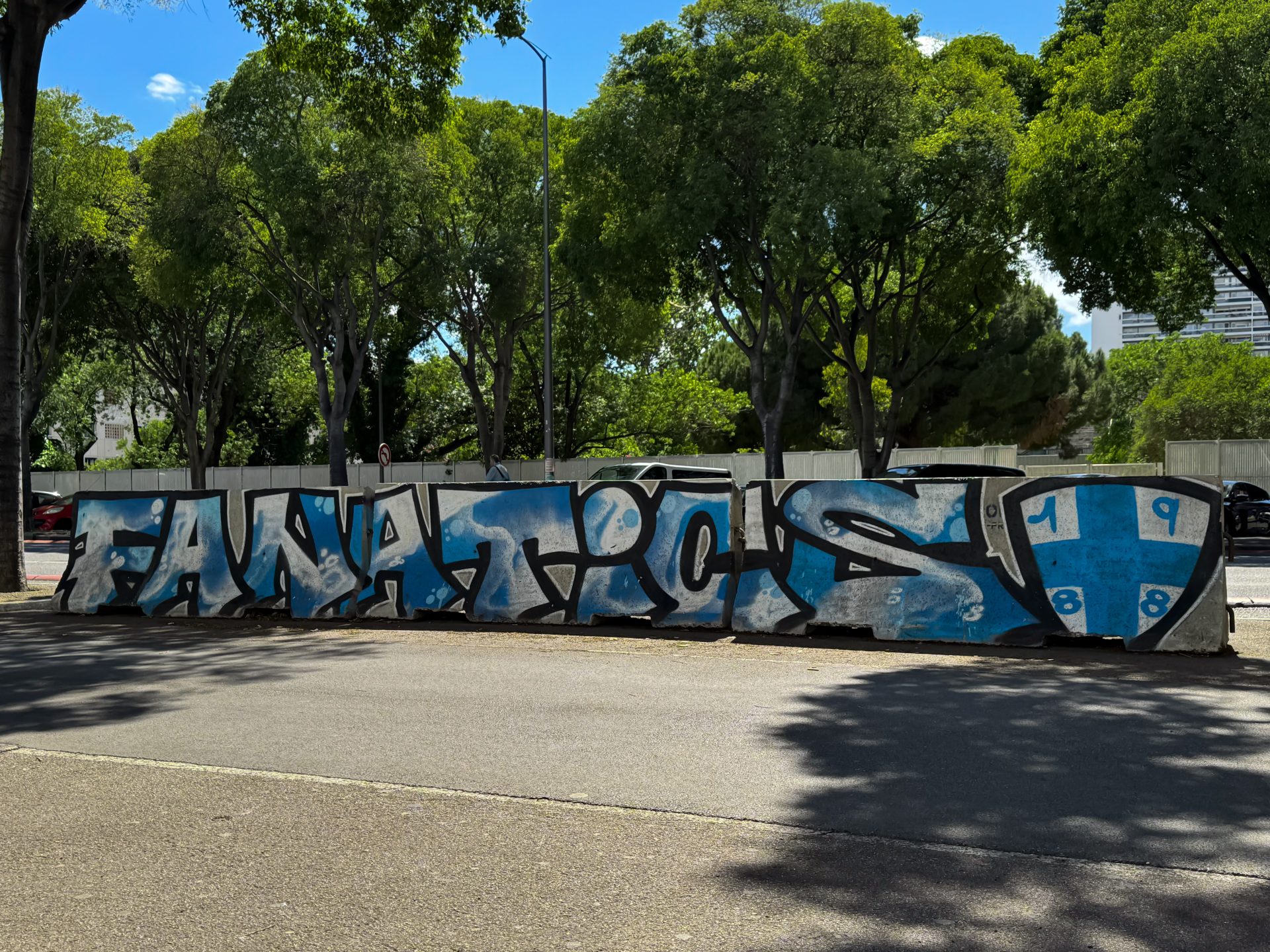
Stickers of Jean-Pierre Papin, Chris Waddle and Bernard Tapie still surface across the city. Just enough to keep the past active. Tributes to the 1993 European Cup win keep that memory alive. Adidas shirts from the early 90s. Old crests. Fragments of a triumph that has become cultural shorthand more than sporting memory. In Marseille, 93 is less a date than a language. It still shapes everything – not just as the year Marseille won the Champions League, but as identity itself. A reference point used against Paris, against the rest of France, against anyone who looks down on the city.
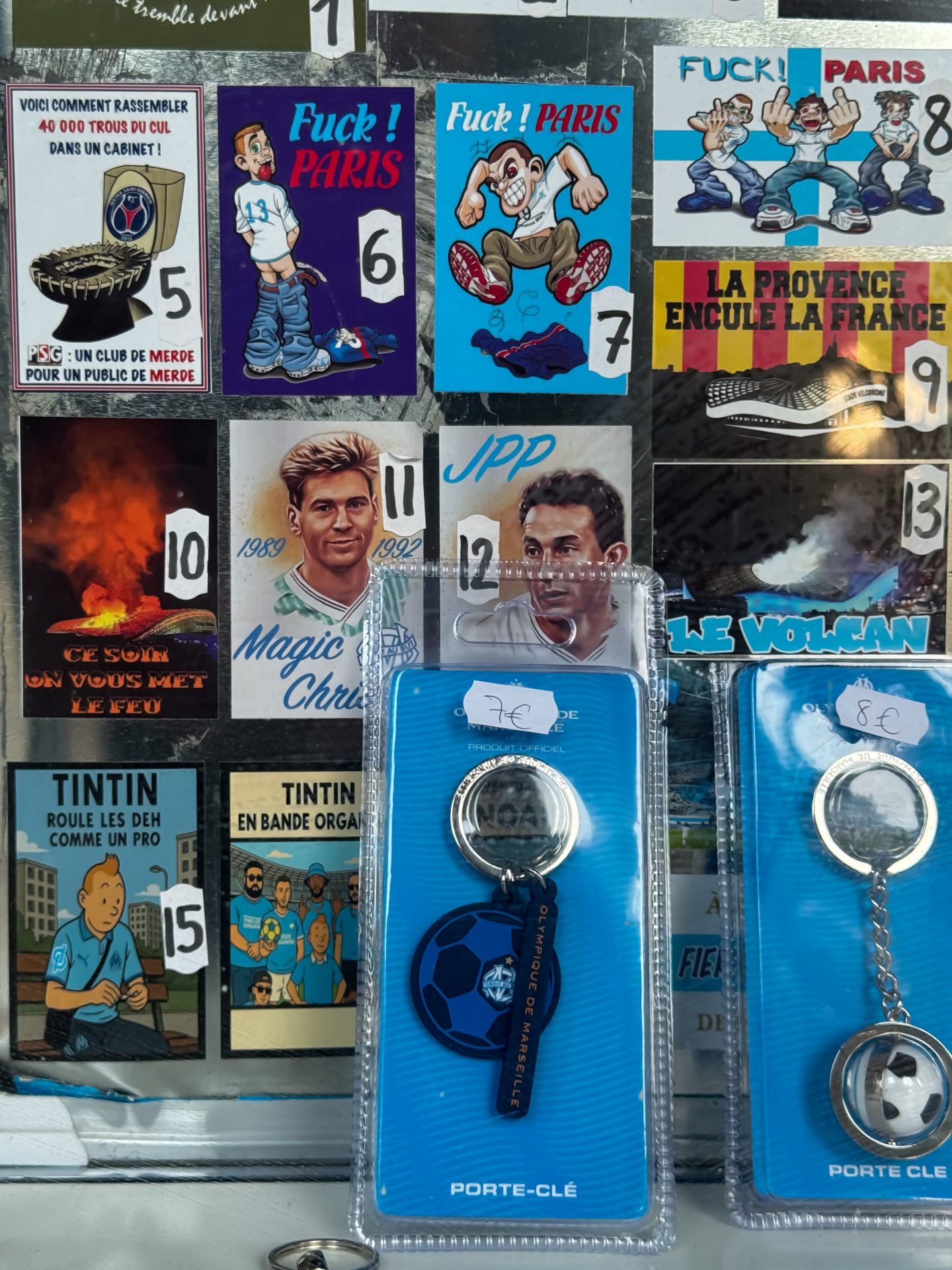
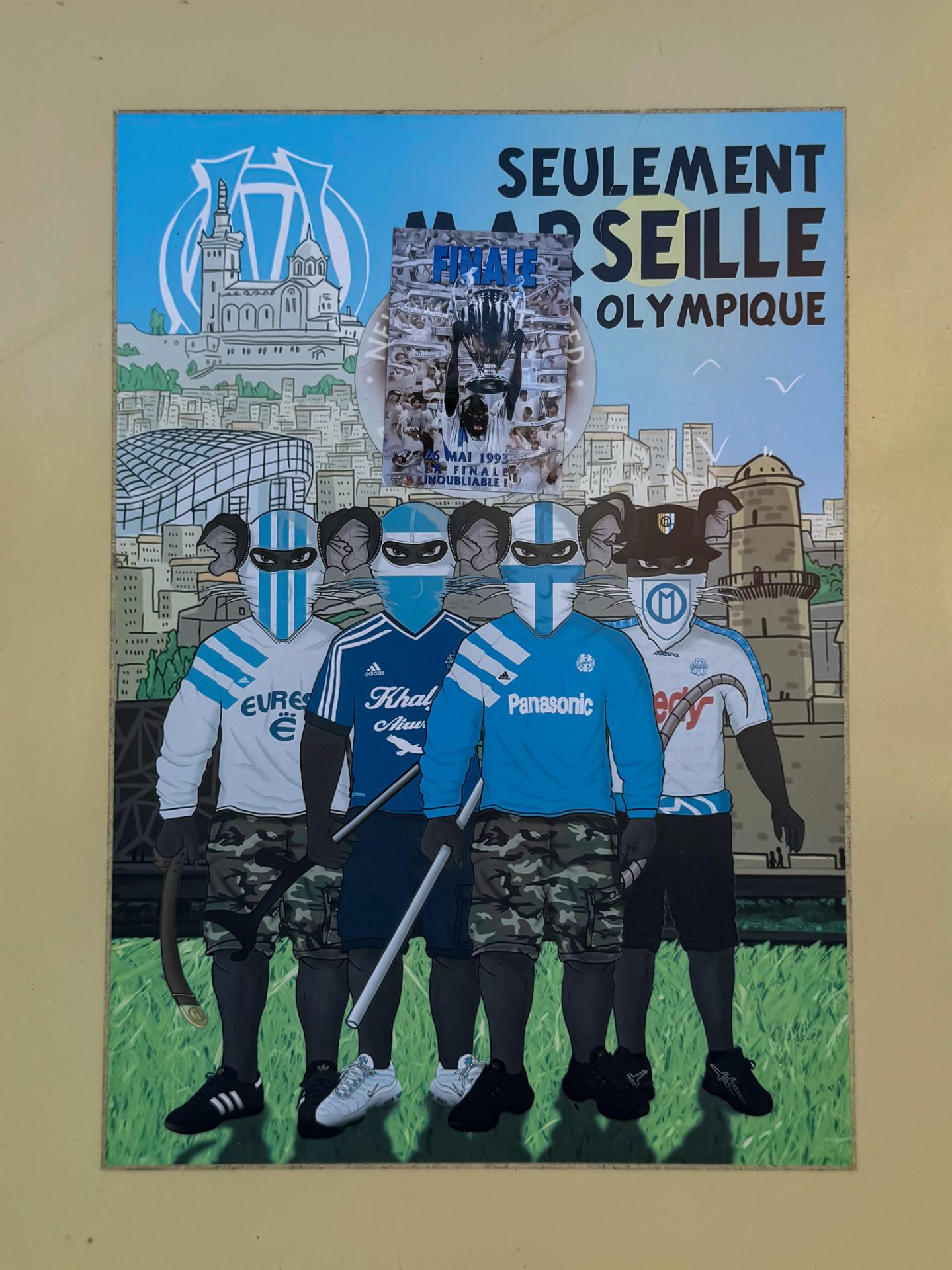
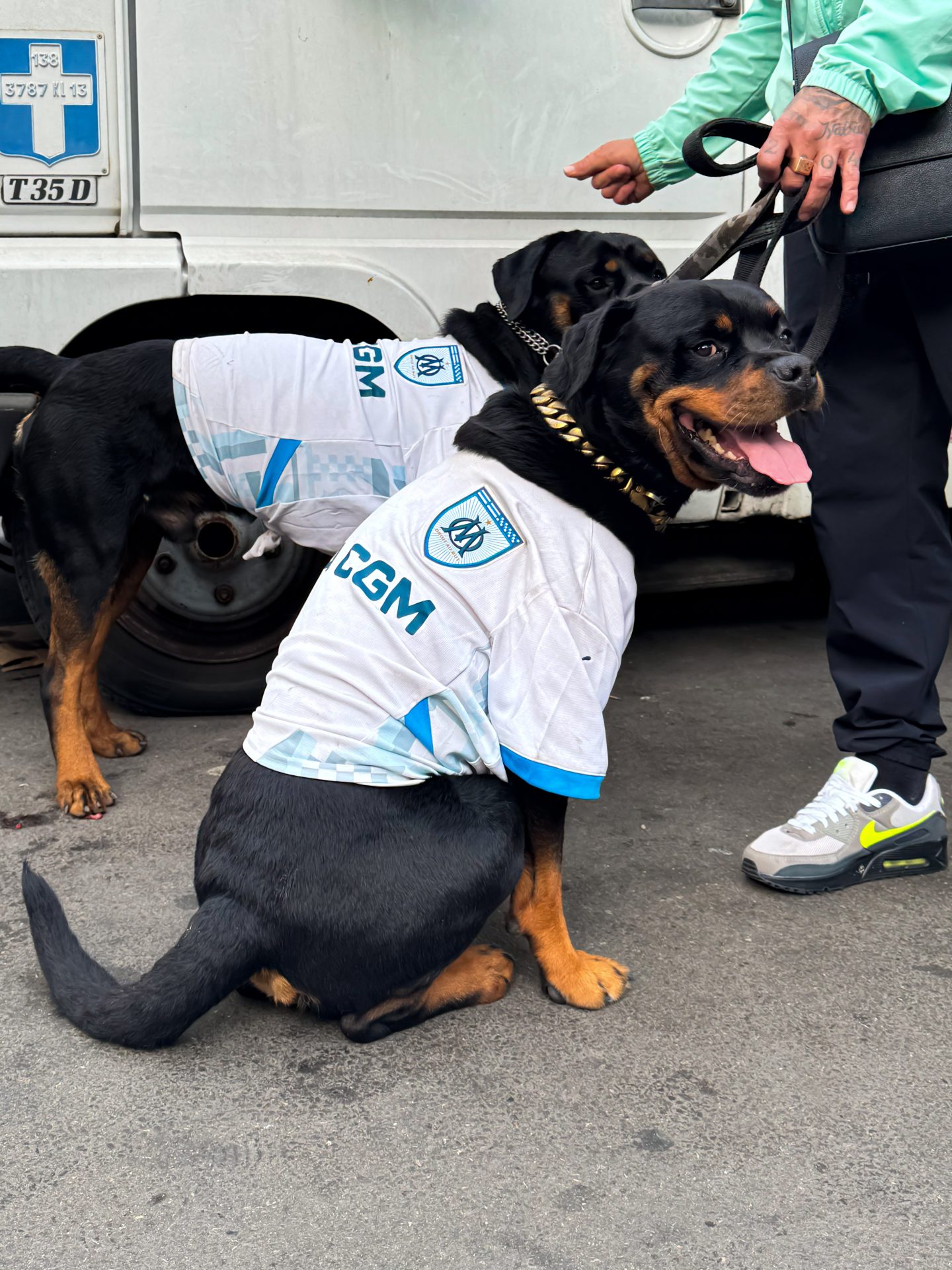
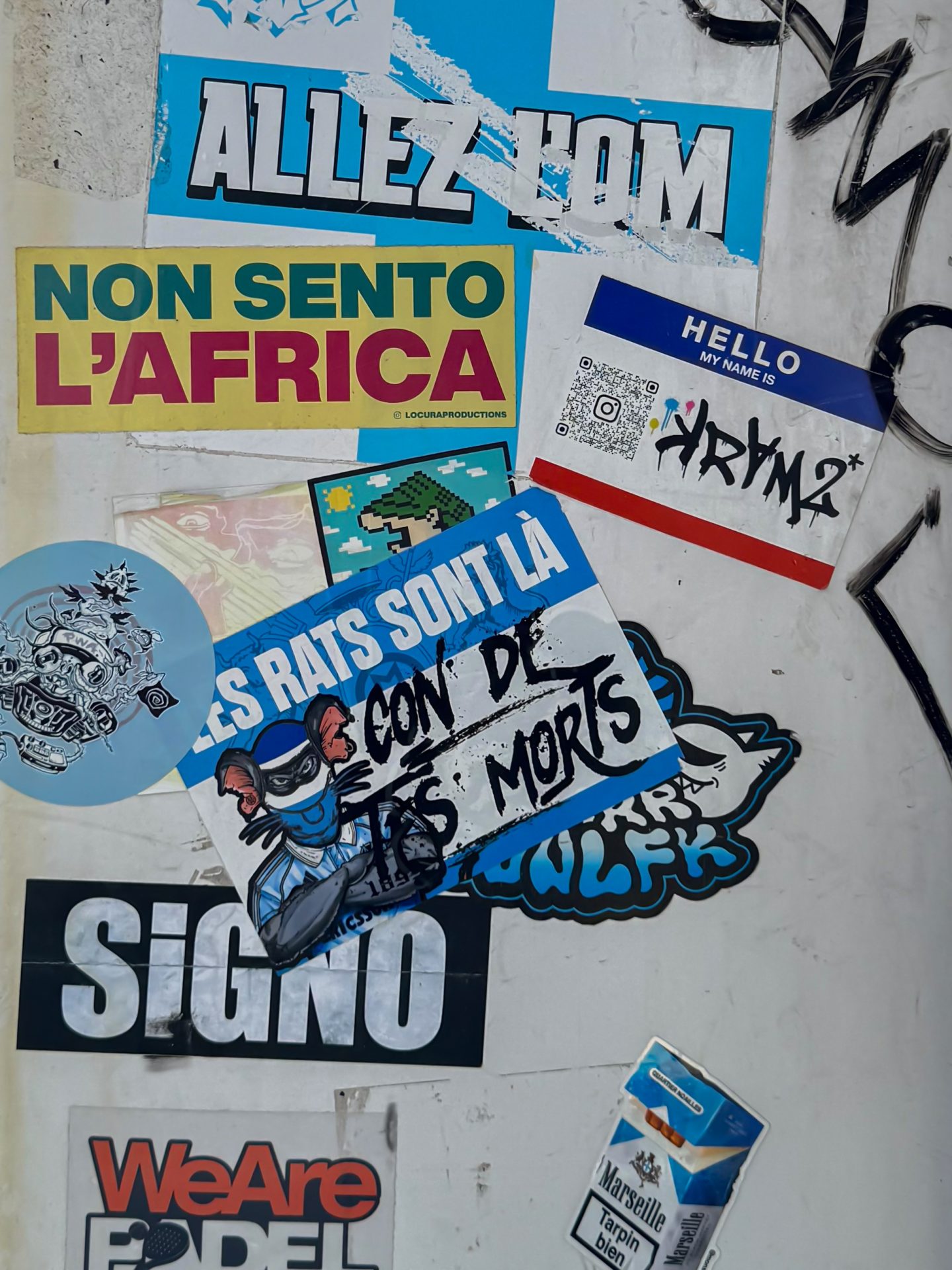
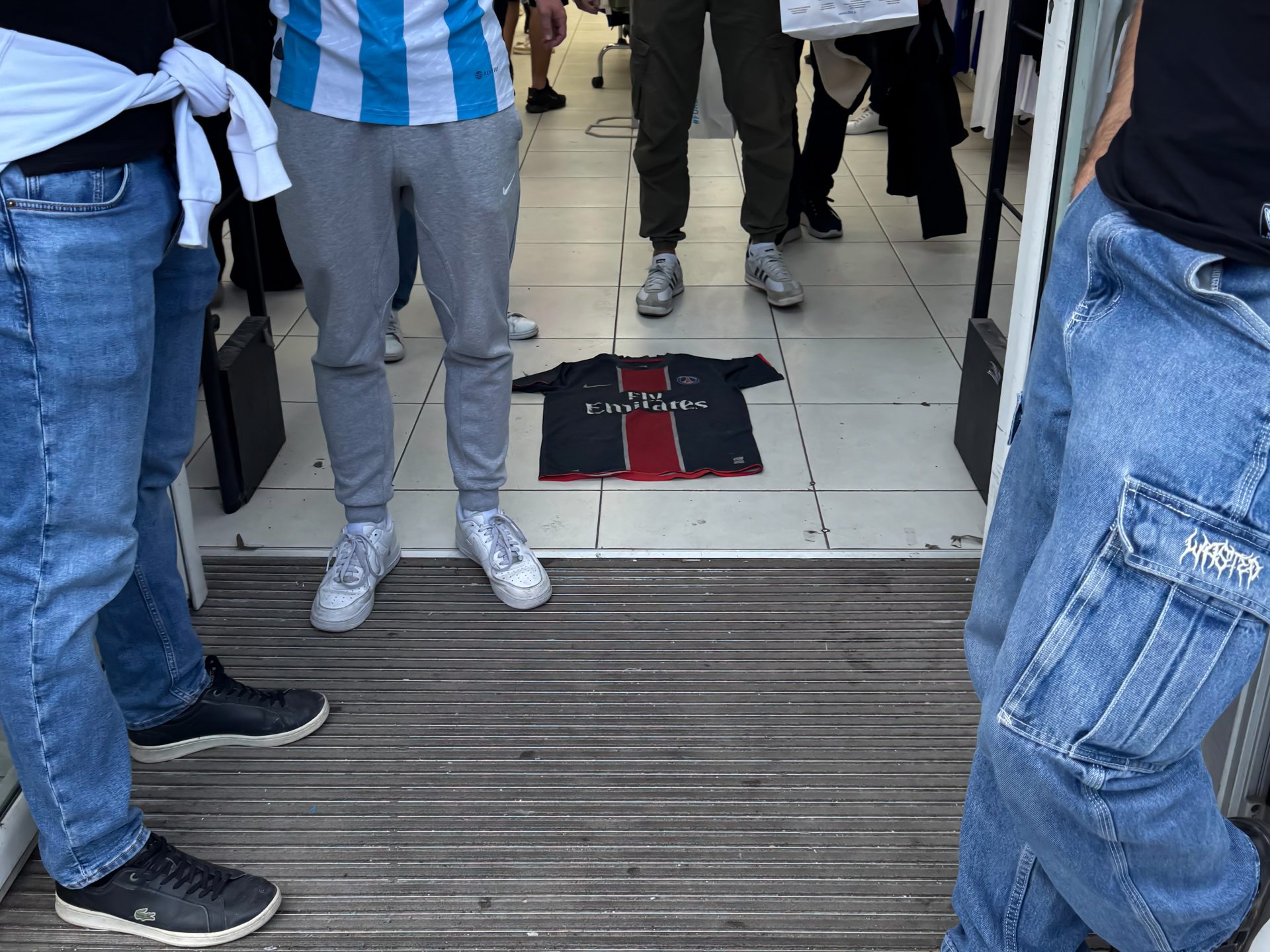
That identity becomes most visible in the anti-PSG culture around OM. On matchdays, anti-Paris references appear around the Vélodrome in constant ways. Stickers. Scarves. Shirt prints. Small gestures, repeated in and around it. Inside one ultra shop near the stadium, a single PSG shirt serves as a doormat, supporters carefully wiping their shoes on it on the way in and out. The rivalry goes far beyond football. Paris as the institutional centre, Marseille as a Mediterranean outsider city shaped by the sea. Orange became part of that identity too. Originally introduced by the South Winners Ultras, the colour emerged in opposition to far-right imagery associated with sections of Parisian supporter culture in the 1980s and 90s. Marseille fans turned their bombers inside out, revealing the orange lining beneath. What began as an anti-racist statement gradually became part of OM’s visual language. Today, orange sits alongside blue and white across the city – proof that Marseille’s ultra culture didn’t just shape the atmosphere around the club, but its identity itself.
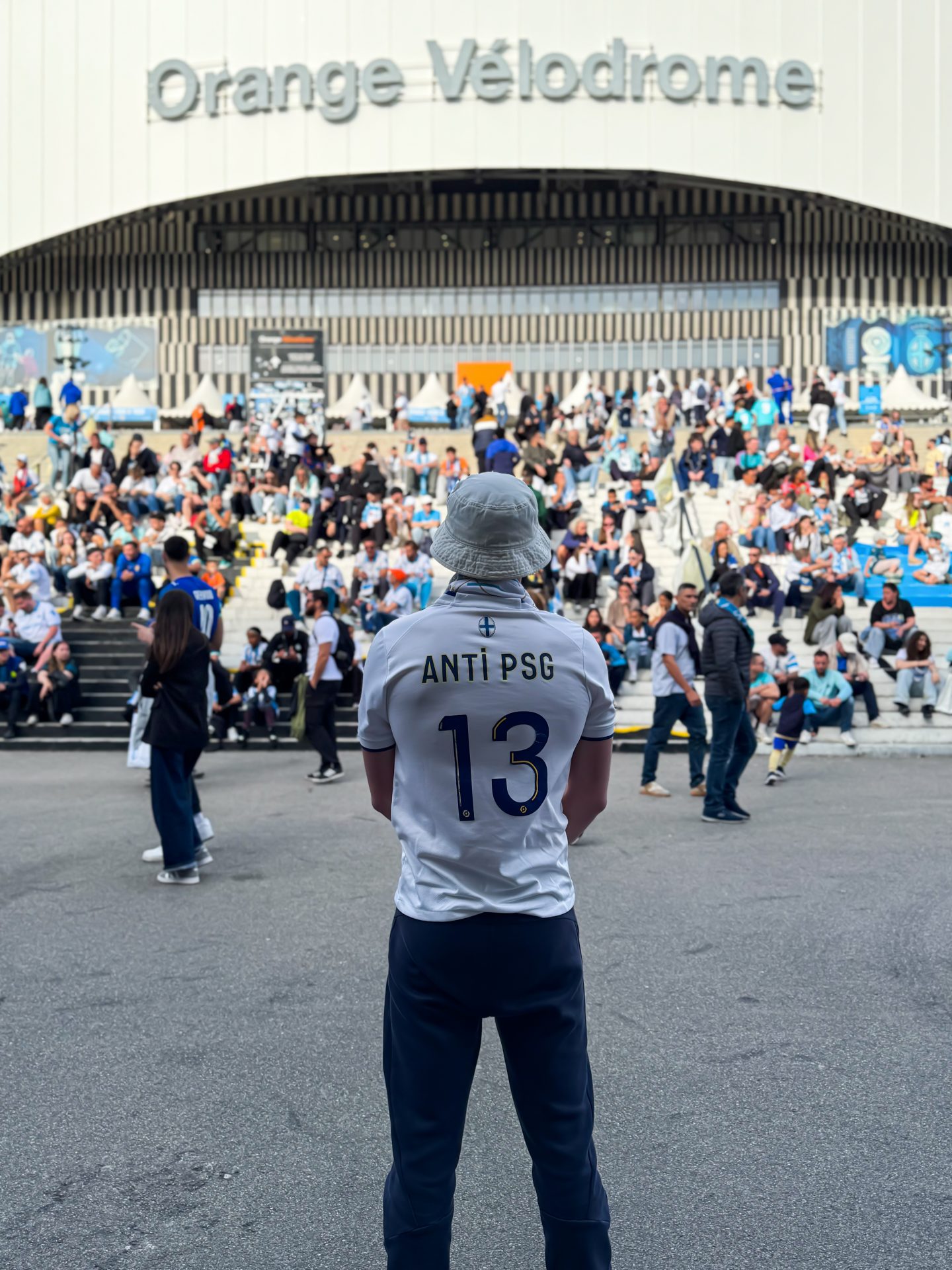
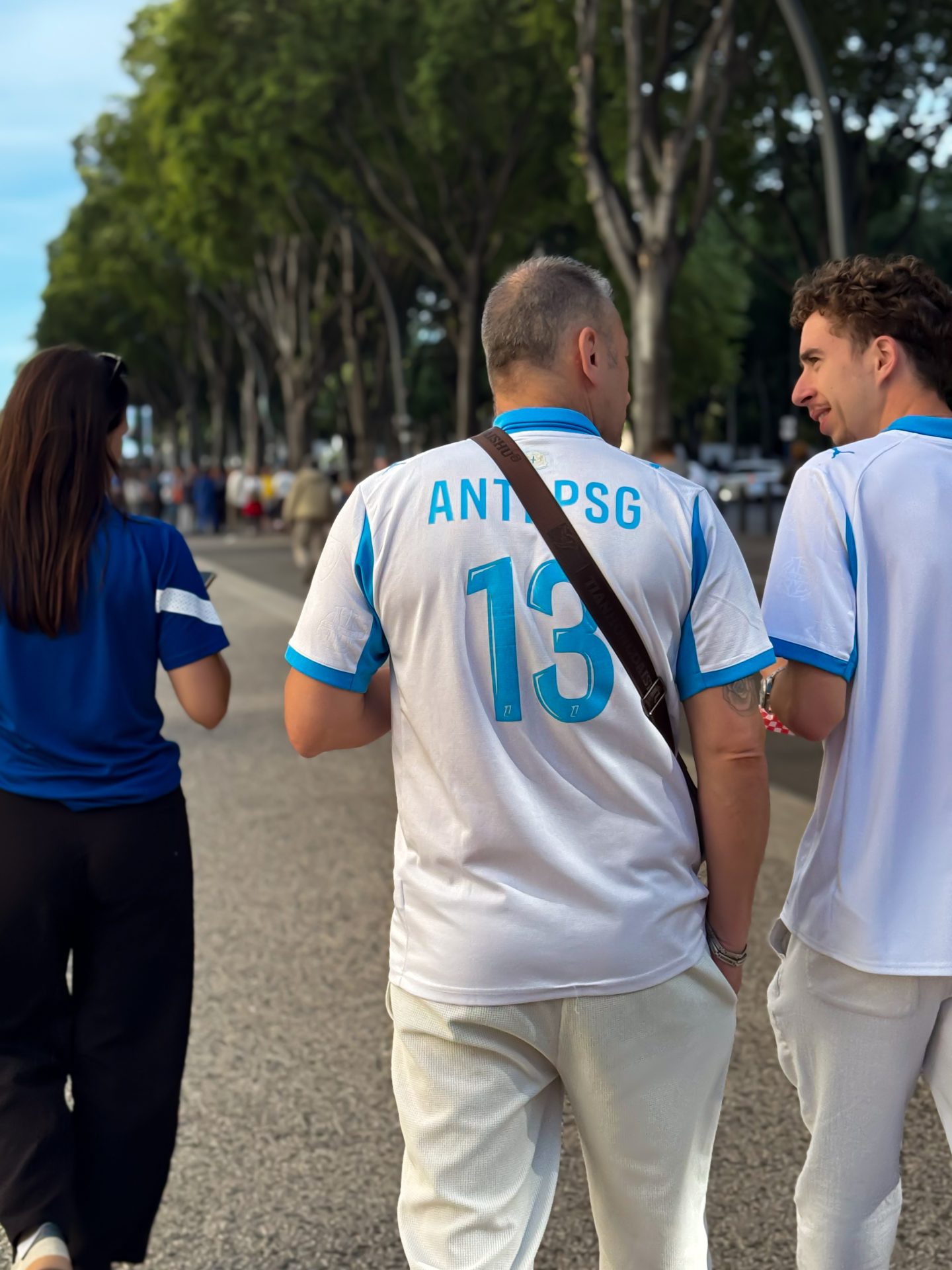
Modern football flows like water through social media, highlights, streetwear, and transfer talk. Marseille mixes influences without losing itself. That is what makes its football culture distinctive – it mirrors the city itself. Loud. Diverse. Excessive. Mediterranean. On the pitches scattered across the city, accents and origins overlap constantly. Comorian, Algerian, Armenian, Senegalese, Tunisian, Corsican, Italian. Marseille plays football the way it lives – through cultural mixing. The ball becomes a shared language connecting neighbourhoods, generations and communities. This layer is essential to understanding the city. It runs through the stands at the Vélodrome, the music coming from scooters, the shirts worn on beaches, and the way football is spoken in Marseille.
The city has also given football some of its most iconic figures. Zinédine Zidane remains perhaps the ultimate symbol of Marseille: La Castellane, quiet elegance, the local kid who became a global icon without ever fully breaking his connection to the city. A different energy surrounds Eric Cantona: more rebellious, more unpredictable, tied to Marseille’s rougher identity. Two legends, two different faces of the same city.
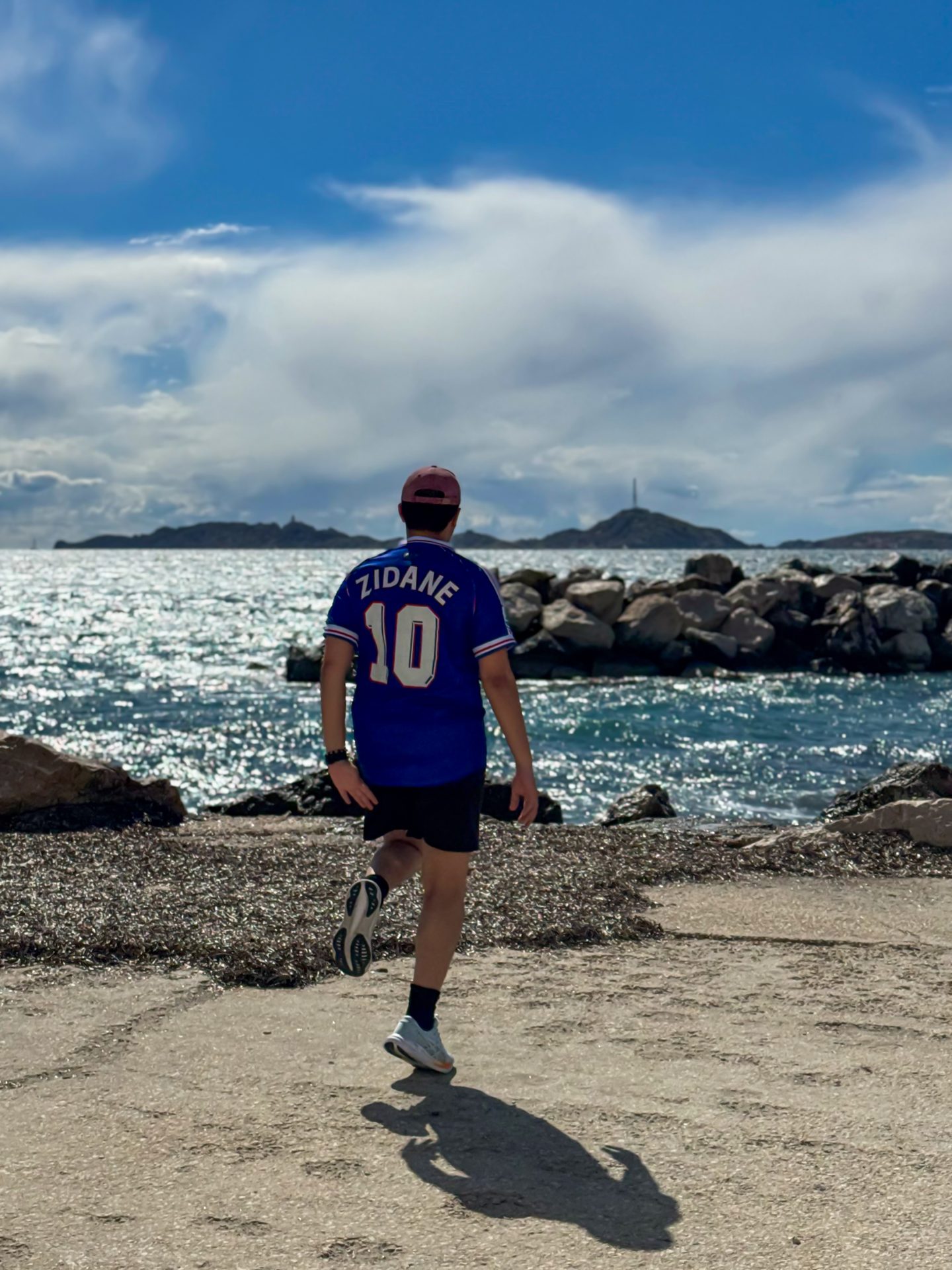
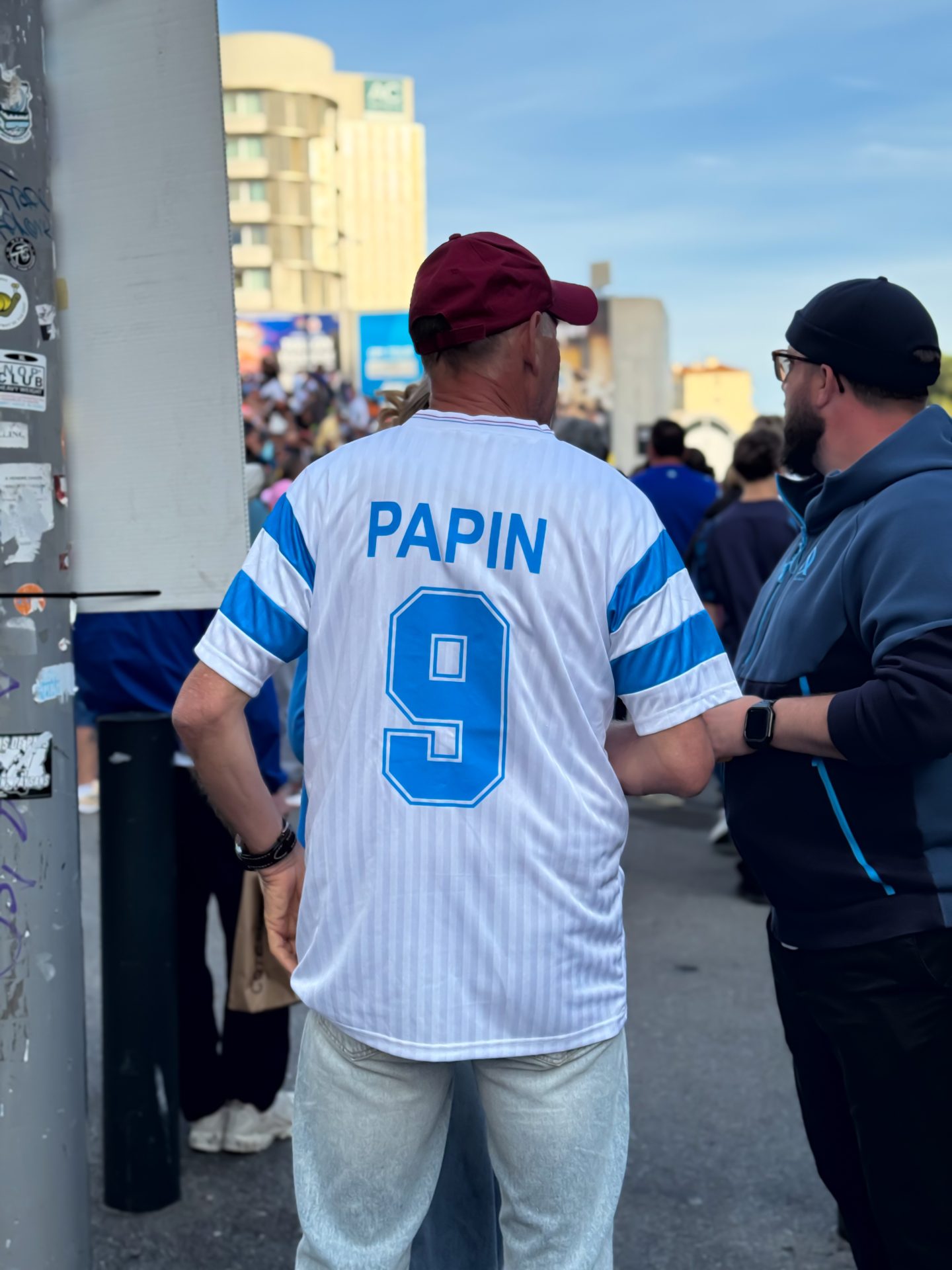
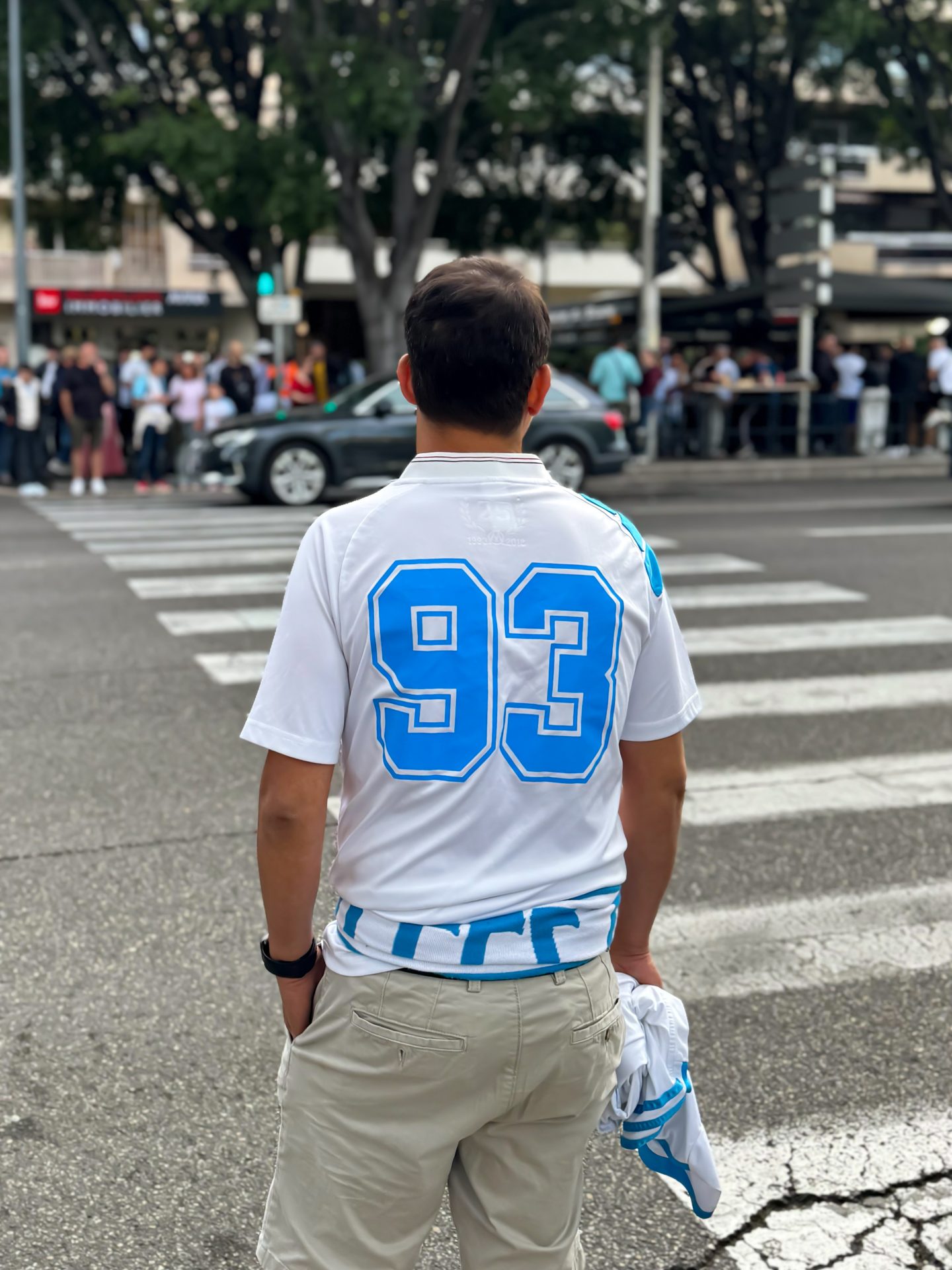
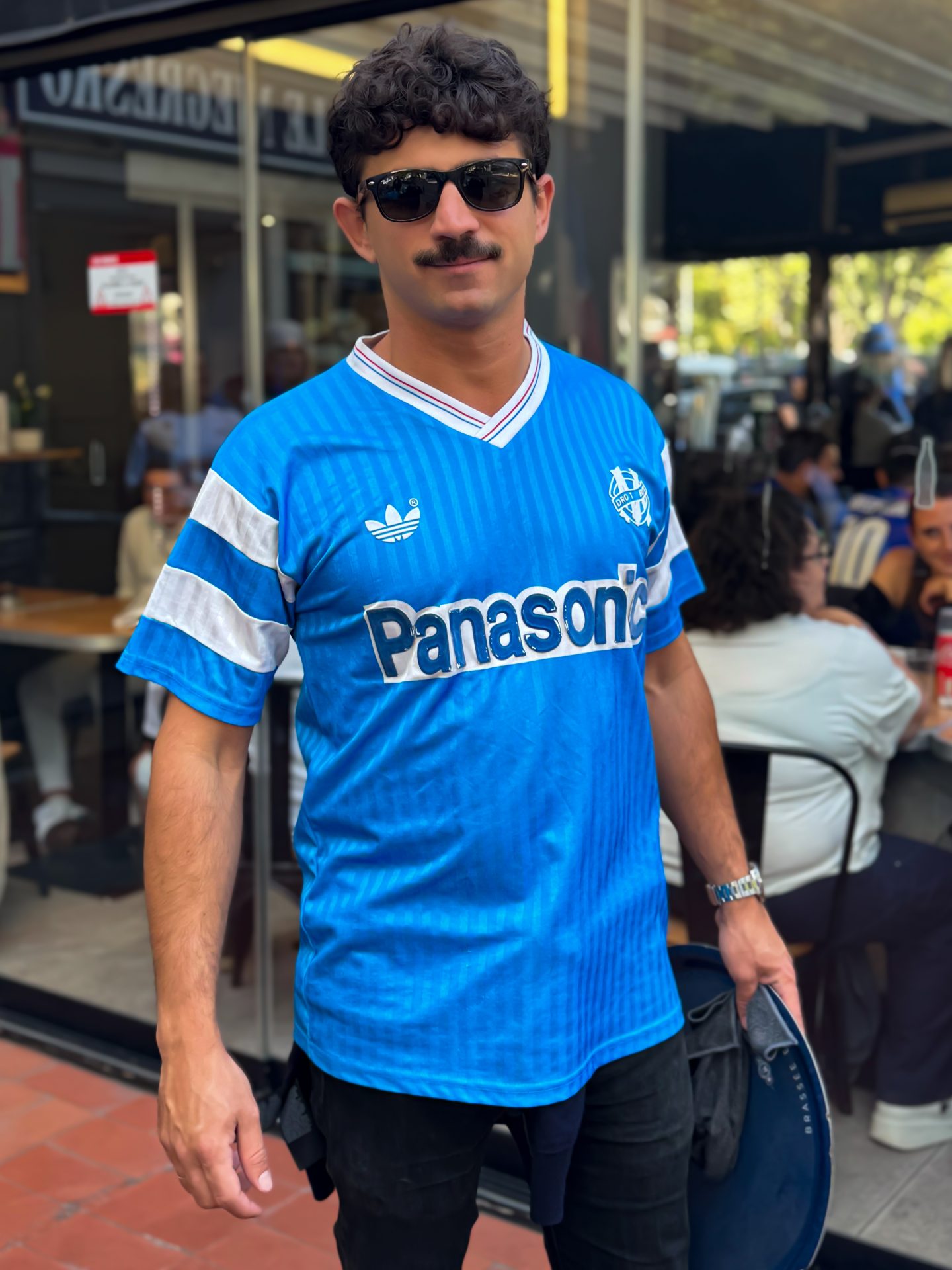
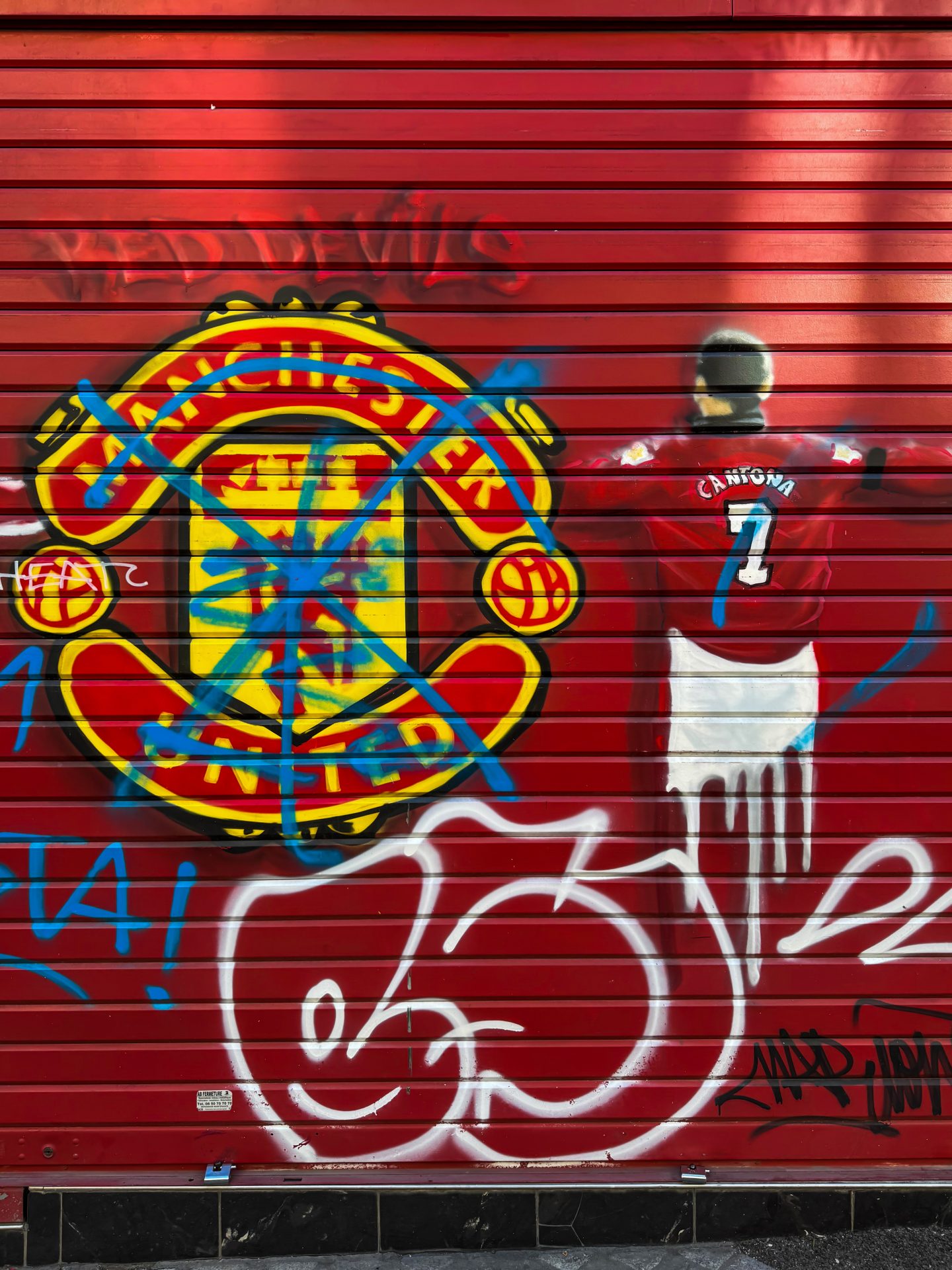
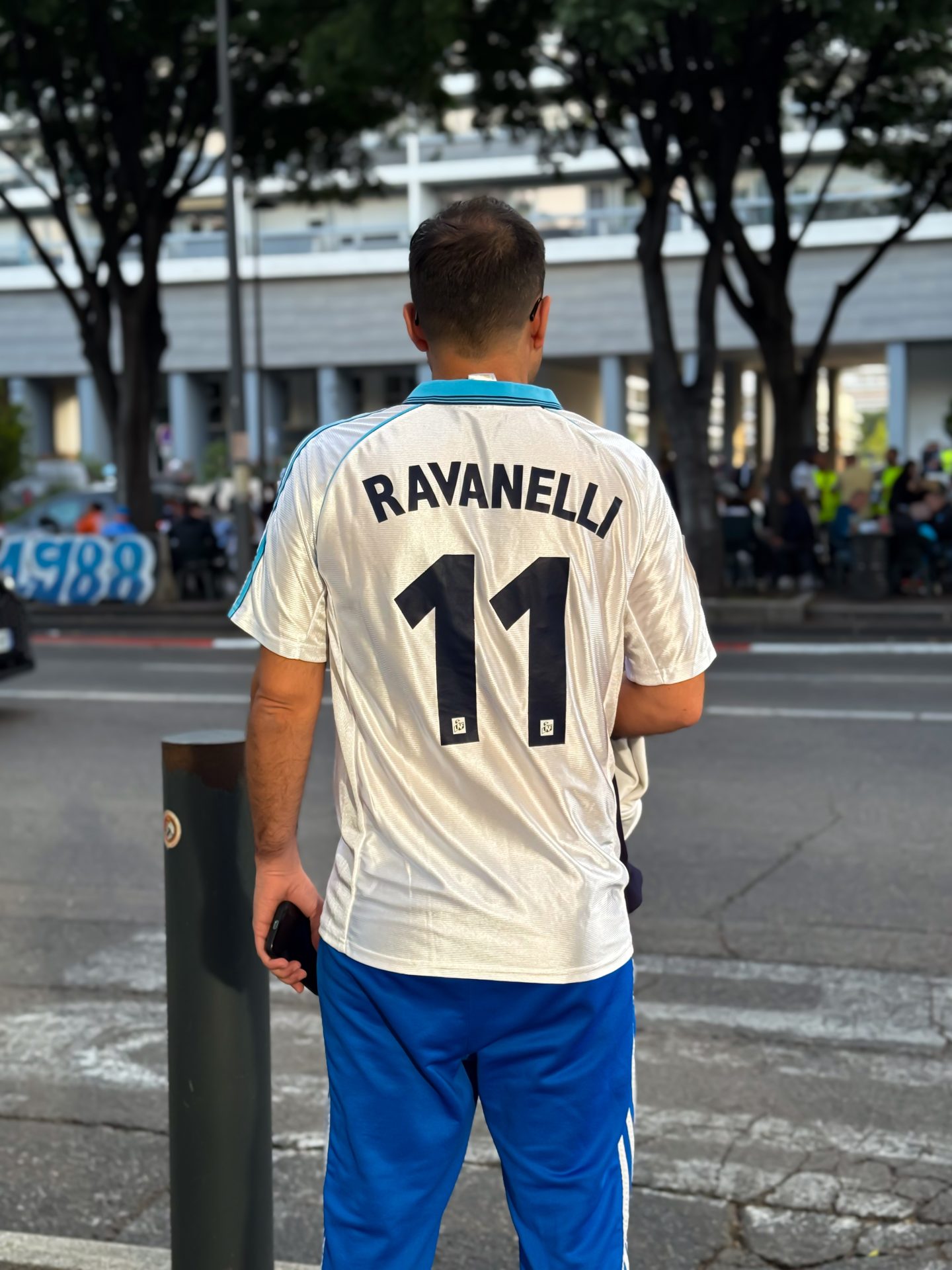
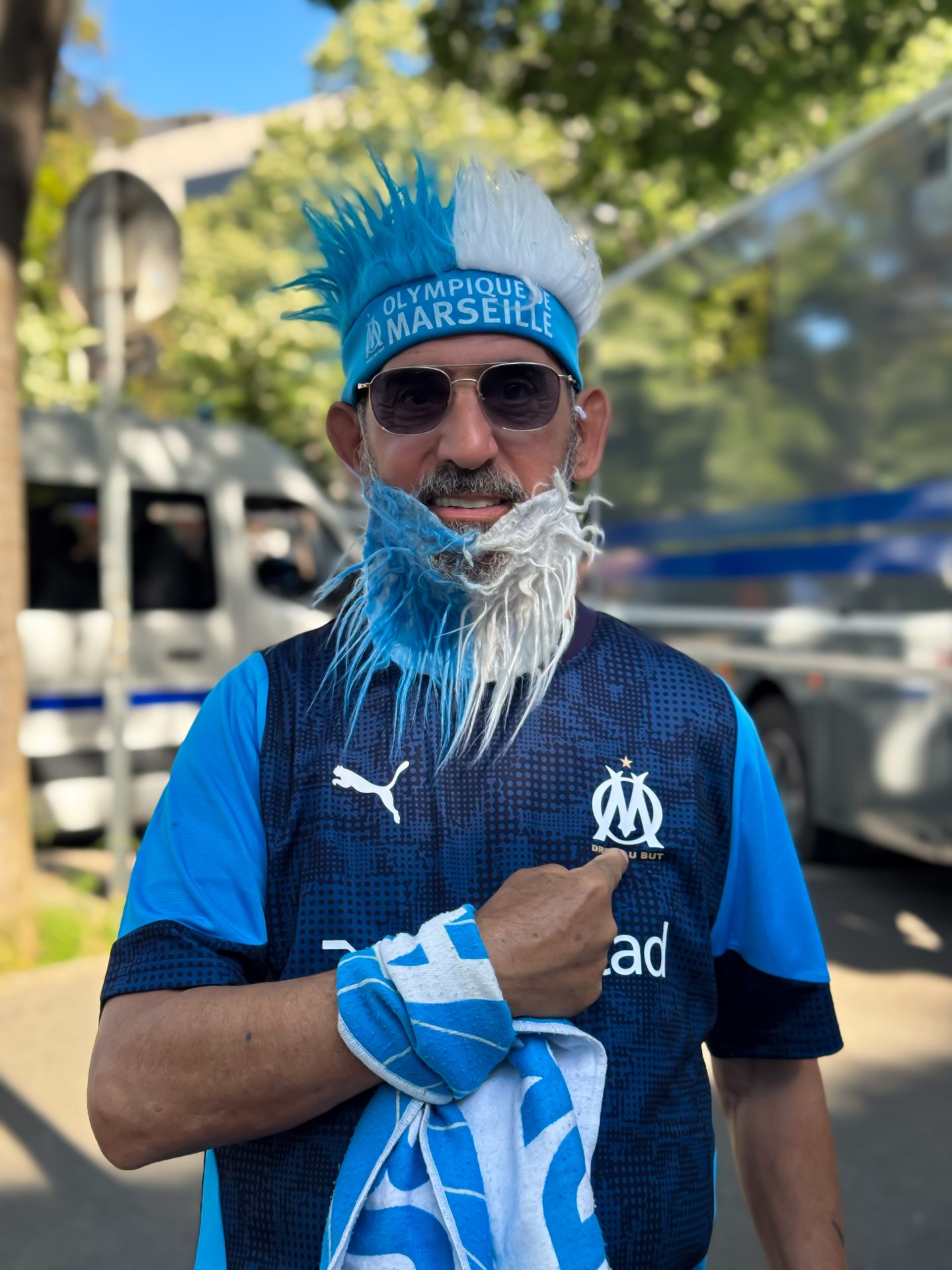
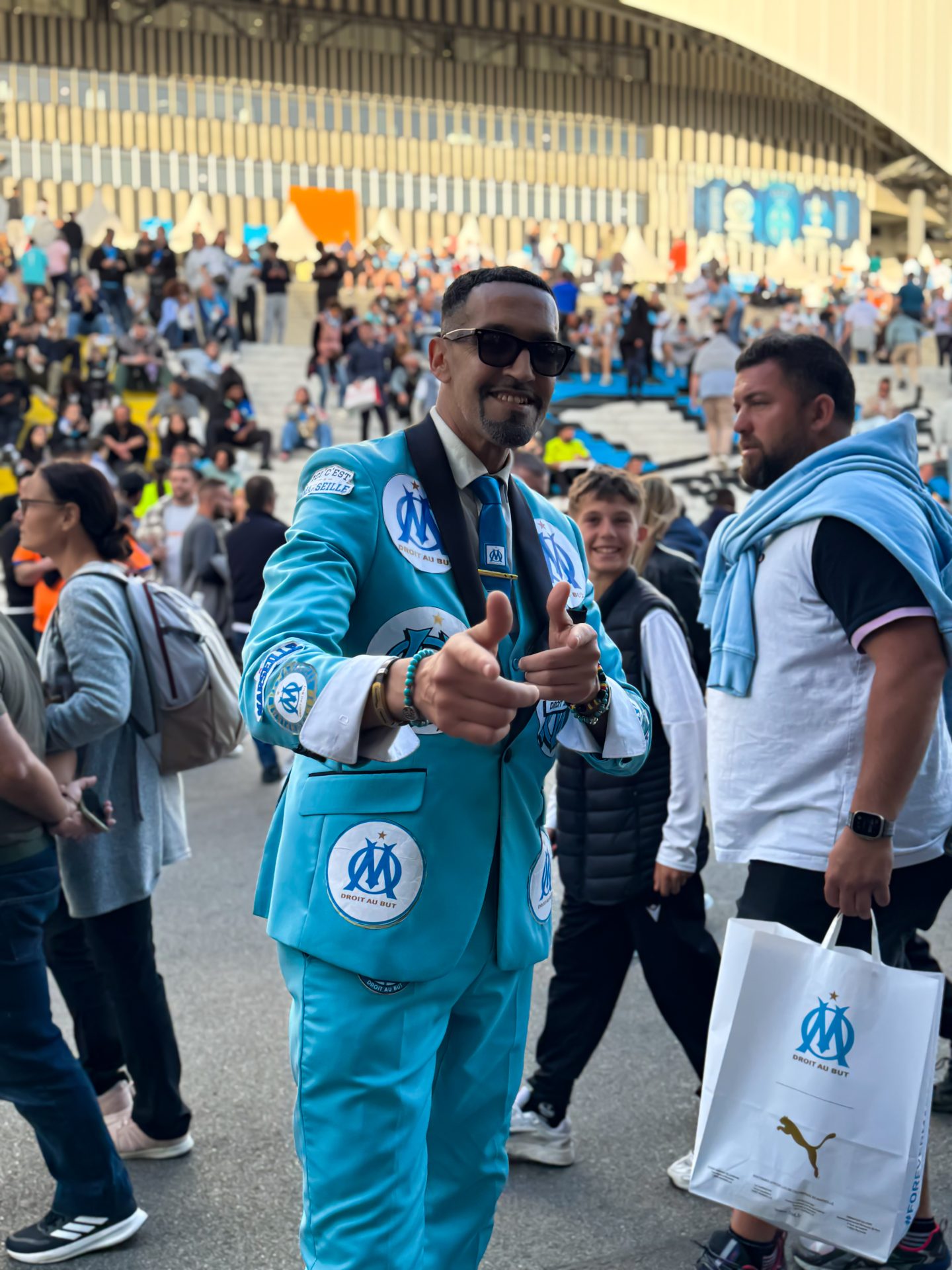
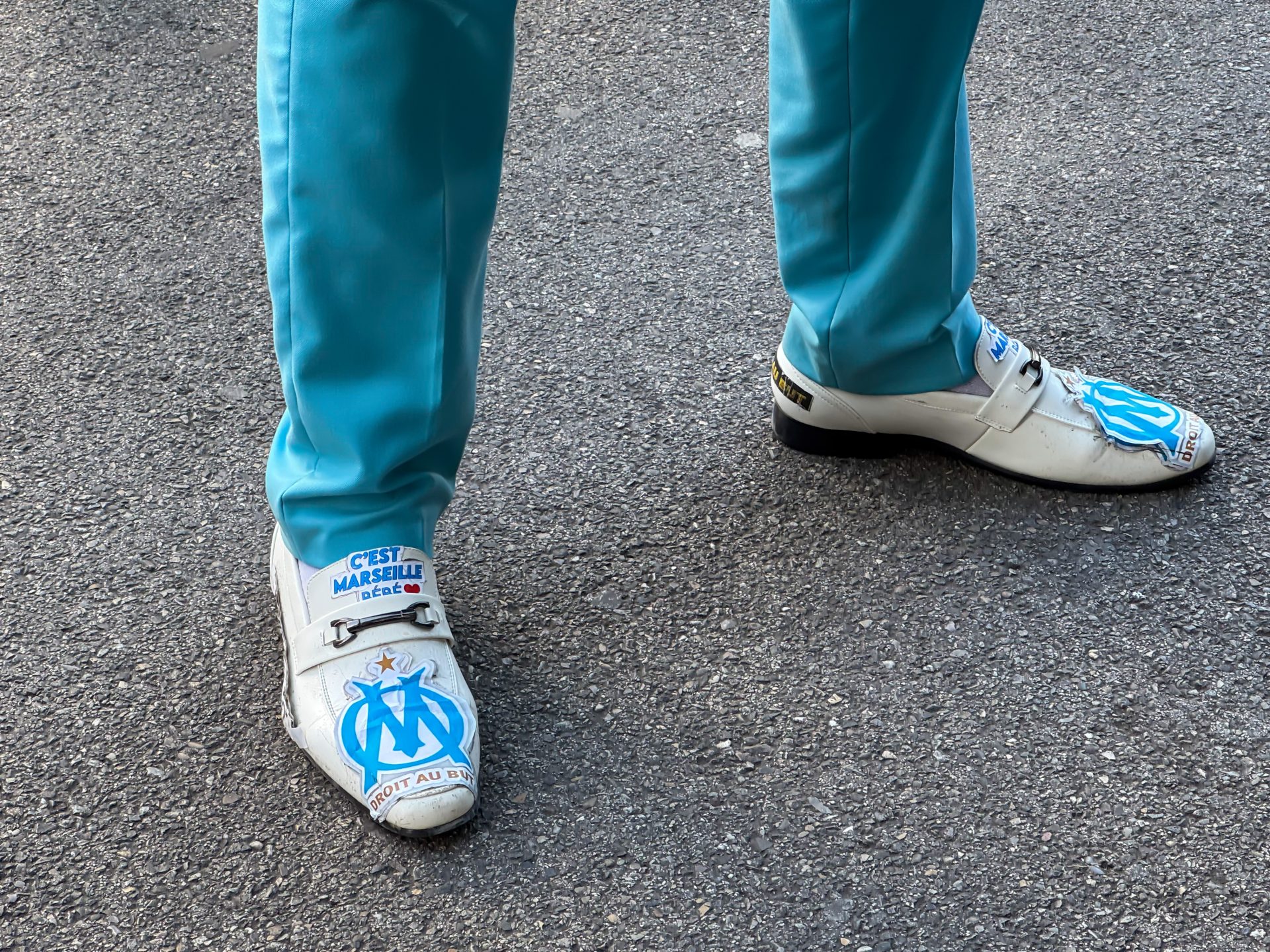
Even far from the centre, football reappears – as if every corner of Marseille eventually ends up marked by football. That, perhaps, is what defines Marseille. In many European cities, football belongs to the stadium. In Marseille, the stadium belongs to the city.
More from the Lower Block Archive