Through words and photographs, Guirec Munier explores a side of Bath rarely found in the city’s carefully curated image, using football culture to examine questions of class, identity and belonging. Set against rugby’s prominence, Outside the Frame reveals a community that exists not in opposition to the city, but just beyond the version most people think they know.
Bath does not present itself through football. In most English cities, the game leaves visible traces behind it: children in rugby kits stretching and passing on worn grass pitches scattered around Bath, weekend fixtures at The Recreation Ground drawing people across the city in a steady flow, and training cones left behind on public fields after evening sessions. In the parks close to the city centre, that presence is constant.
The public image of Bath reinforces that impression. For many visitors, the city exists through Georgian terraces, Roman baths and the visual language carried far beyond its borders by productions like Bridgerton. Bath is presented as orderly, preserved and affluent – a place shaped to be looked at. Bath City sits outside that version of the city.
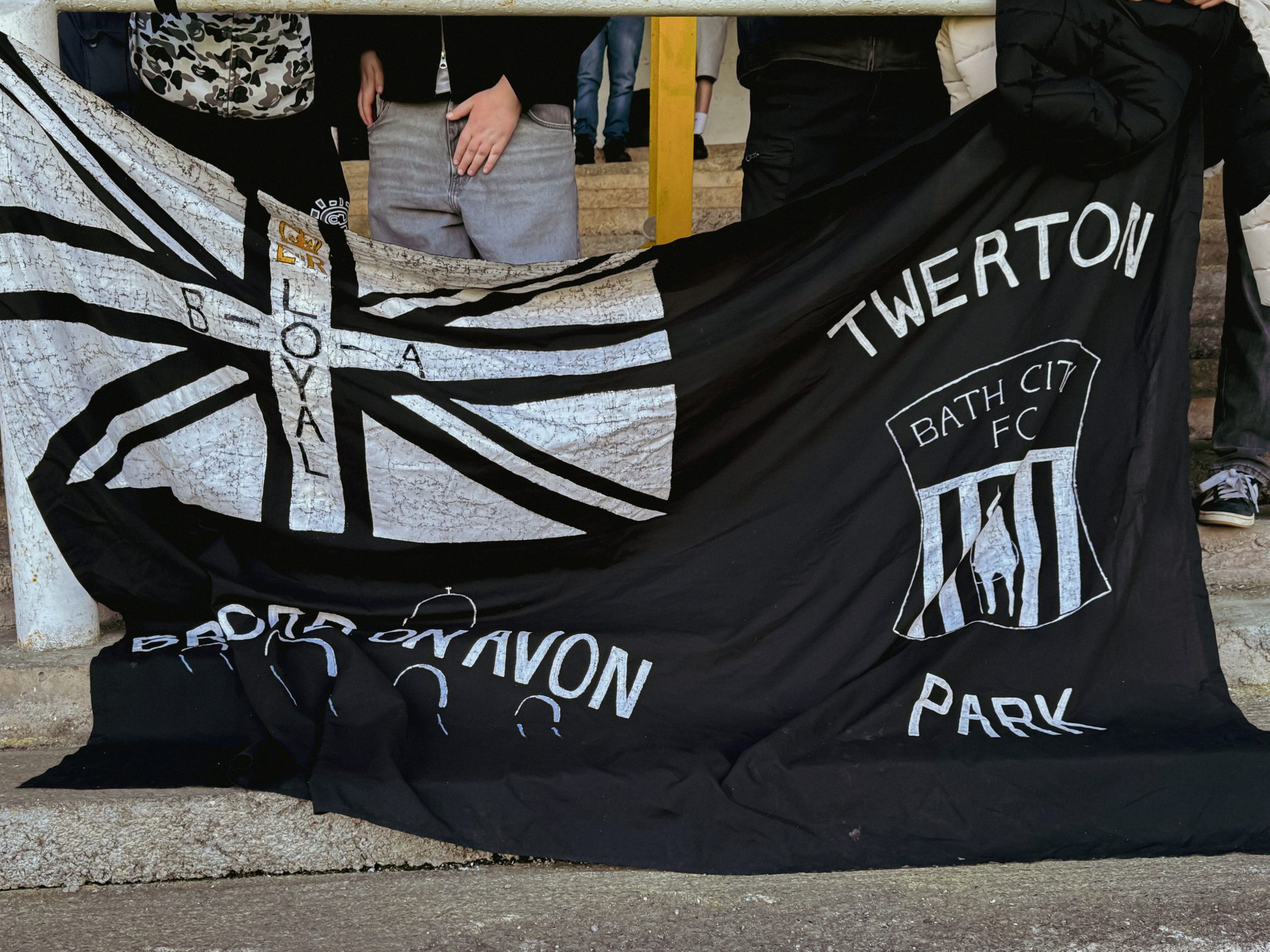
A few kilometres from the centre, Twerton feels denser and less composed, more functional than curated. Some parts of the area rank among the most deprived in England according to national indices, a reality that sits uneasily alongside Bath’s carefully maintained image. Around 2020, Ken Loach described Bath as “a city of two halves”, pointing to levels of debt and child poverty rarely associated with the city from the outside. “Poverty means that you borrow to feed your kids, or to pay for the essentials,” he said while supporting local debt counselling initiatives linked to the club’s community work. “Then debt’s a spiral.” That contrast shapes the way Twerton is spoken about inside Bath itself. The area is close to the city centre geographically, yet often treated as separate from the image Bath prefers to project outward.
Loach understood that tension well. His involvement with the club was never about football alone, but about what the club represented locally: one of the few institutions in the area still capable of bringing different parts of the community into the same space regularly. Around Twerton Park, football does not erase social realities or suspend them. It exists alongside them, woven into the same streets, routines and pressures.
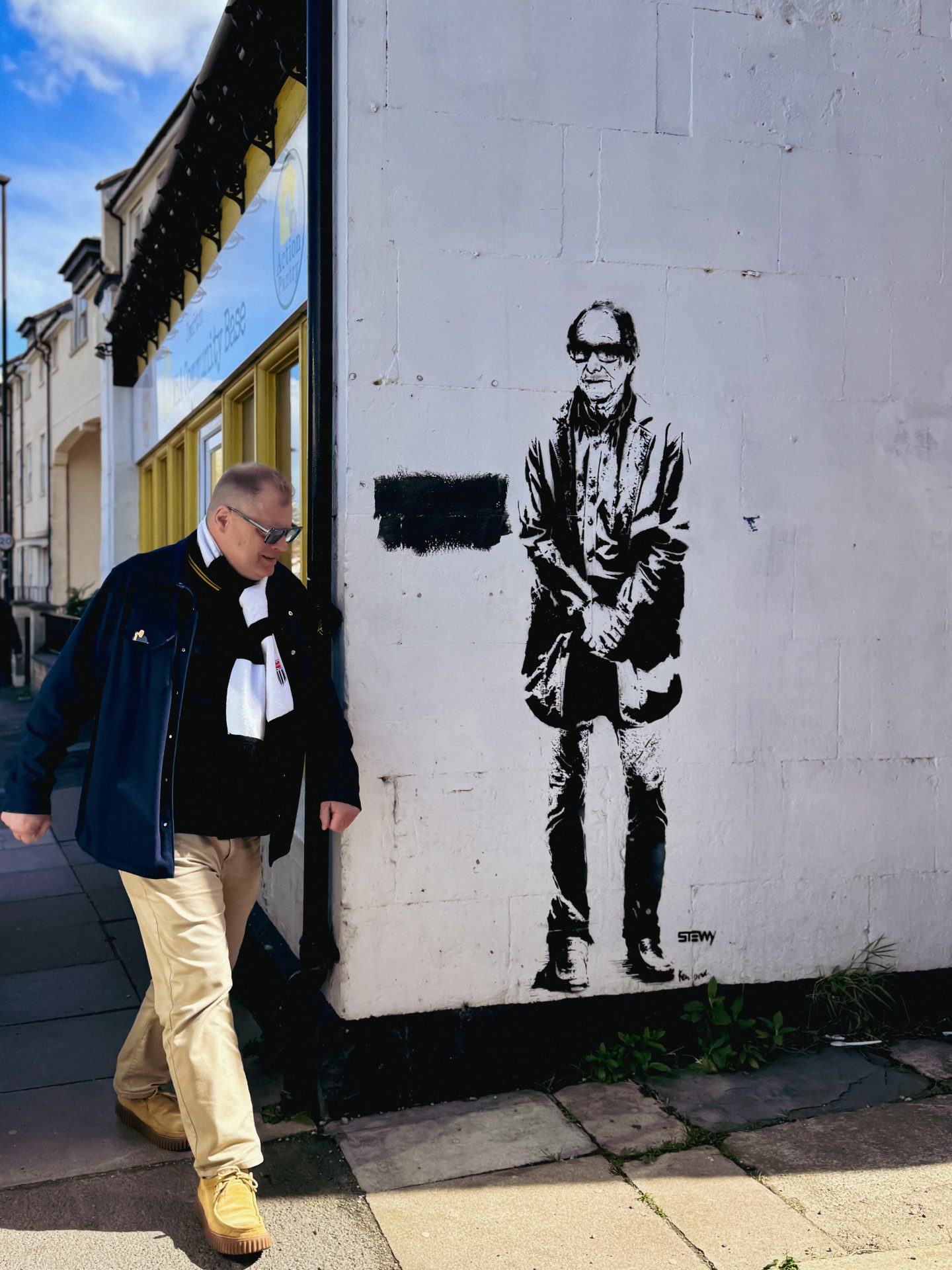
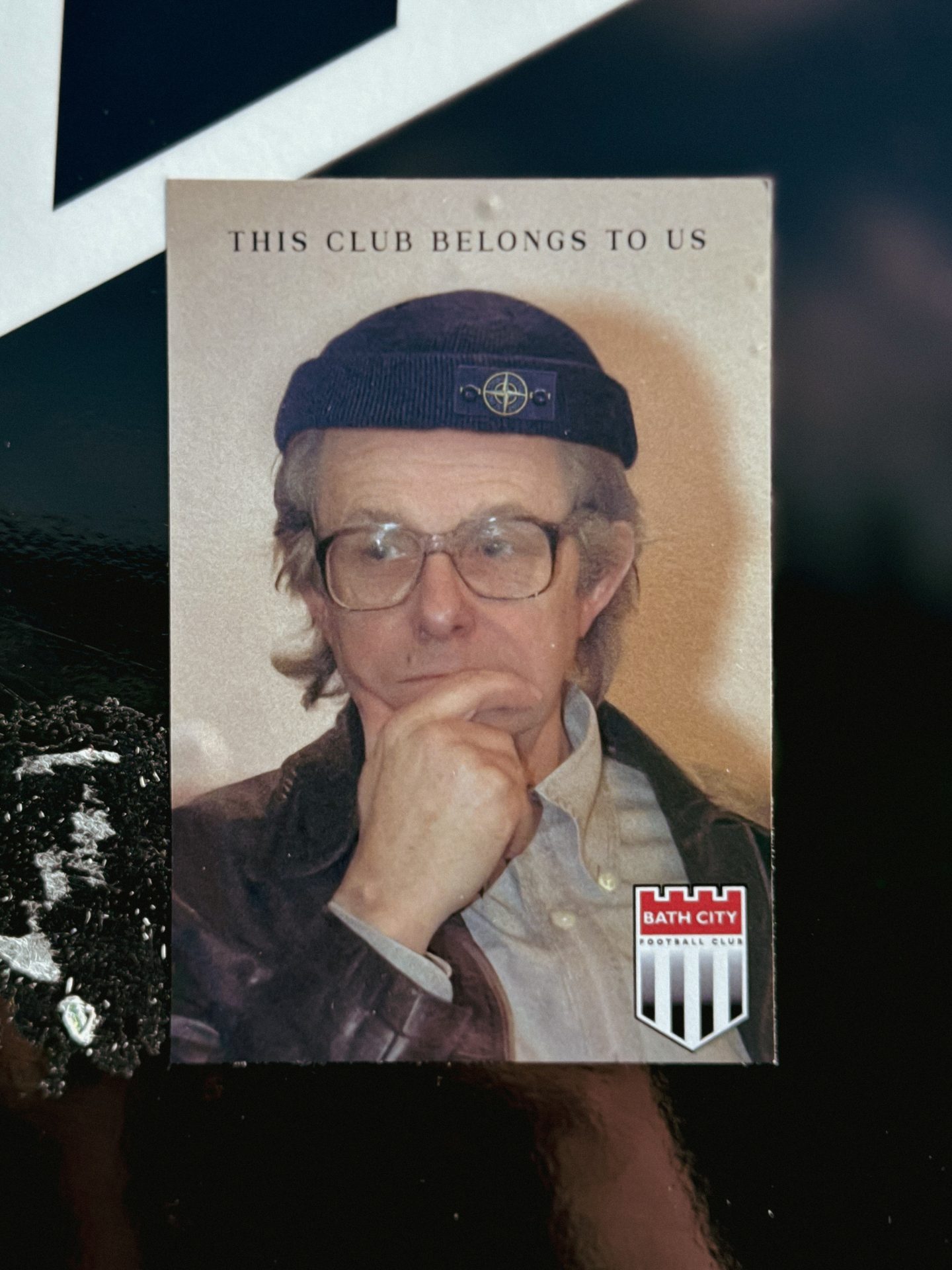
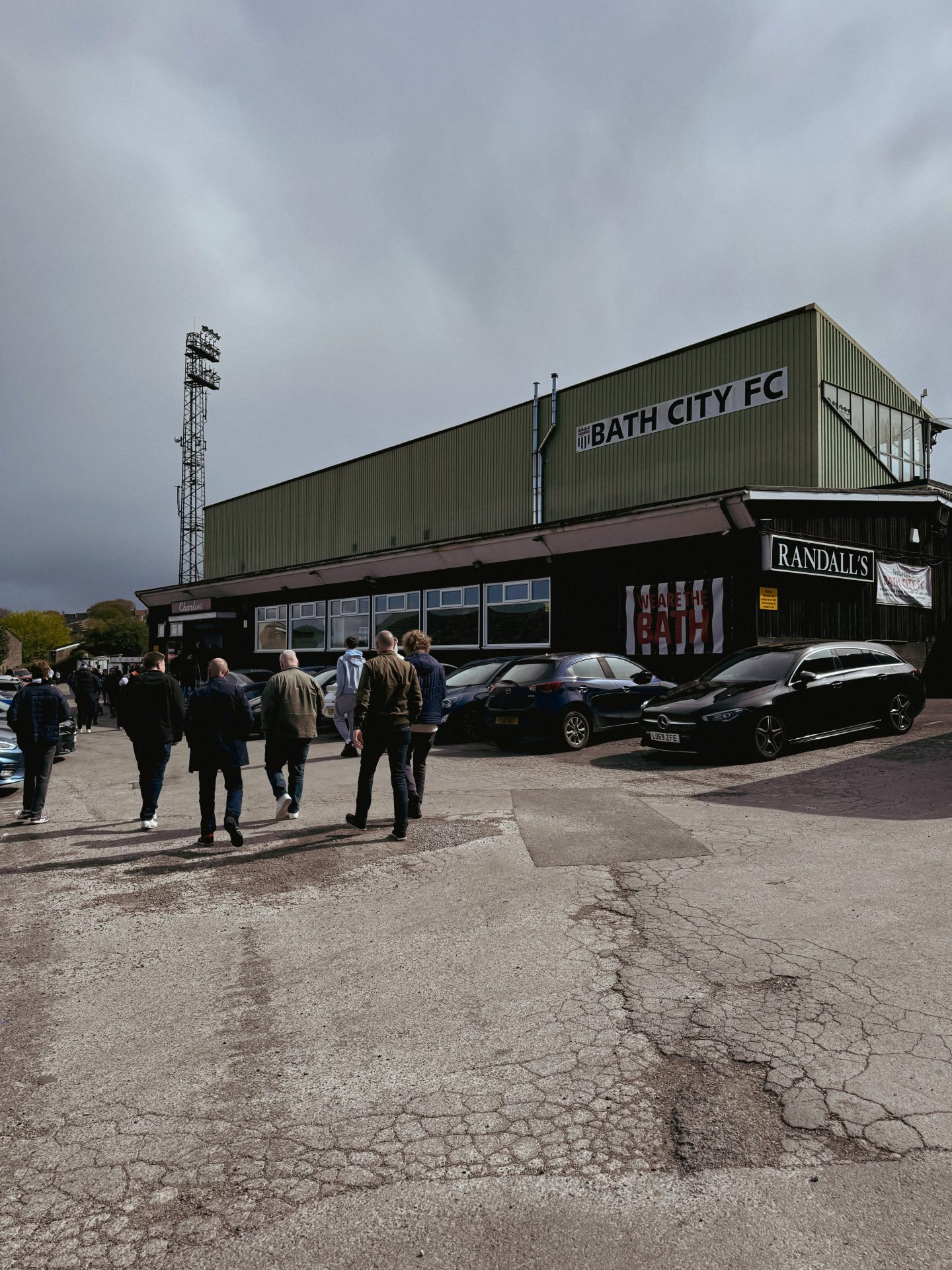
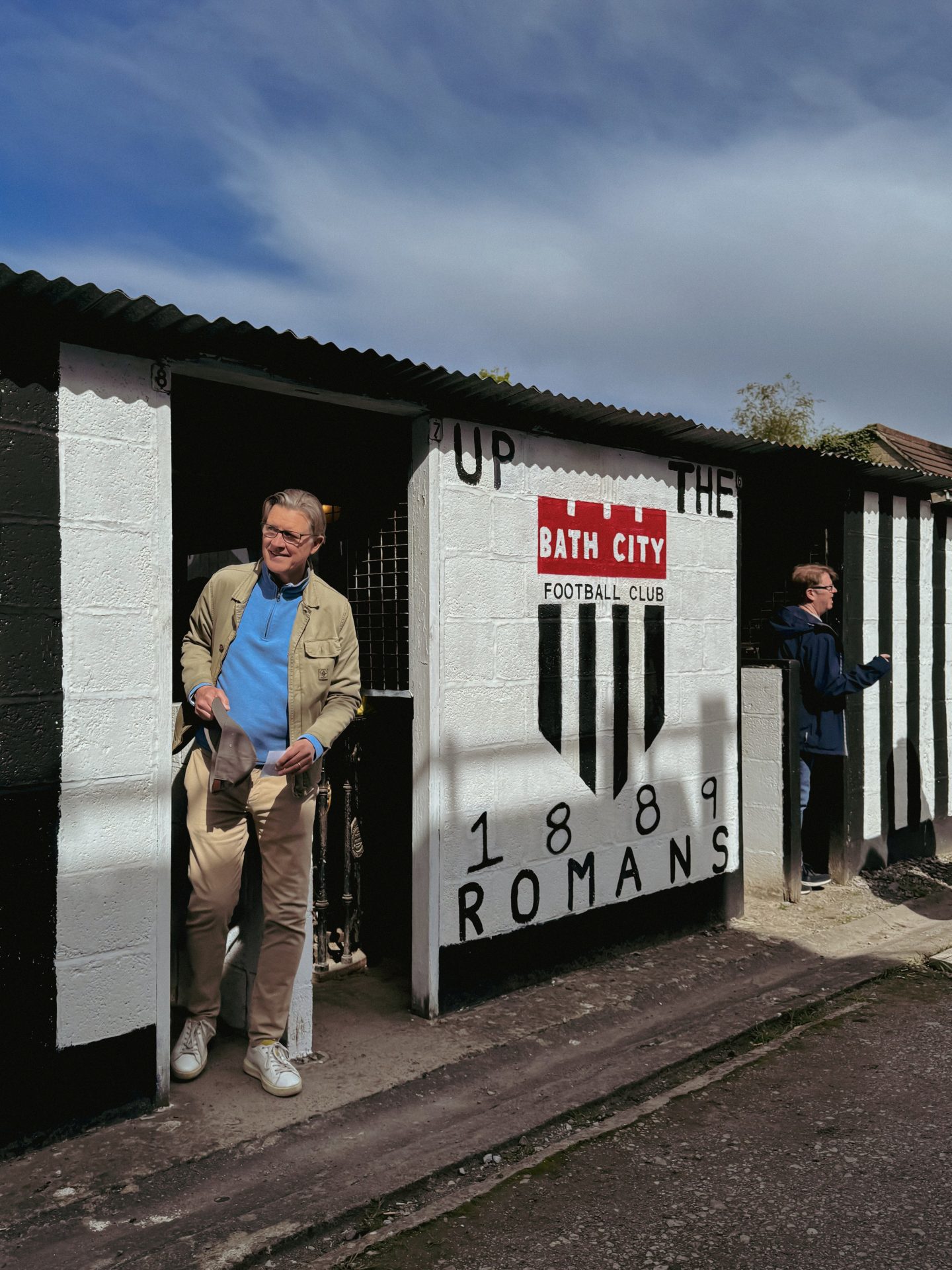
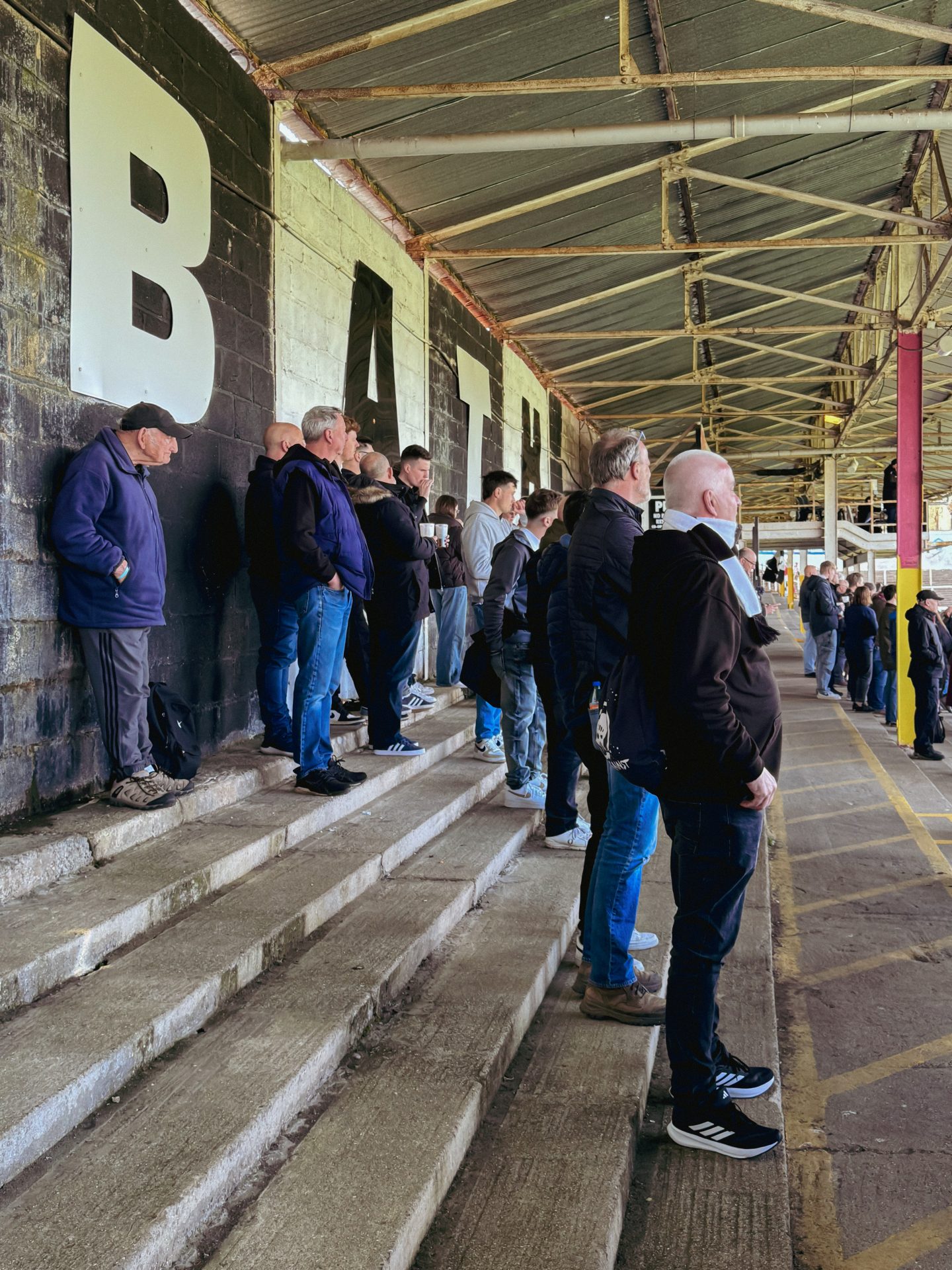
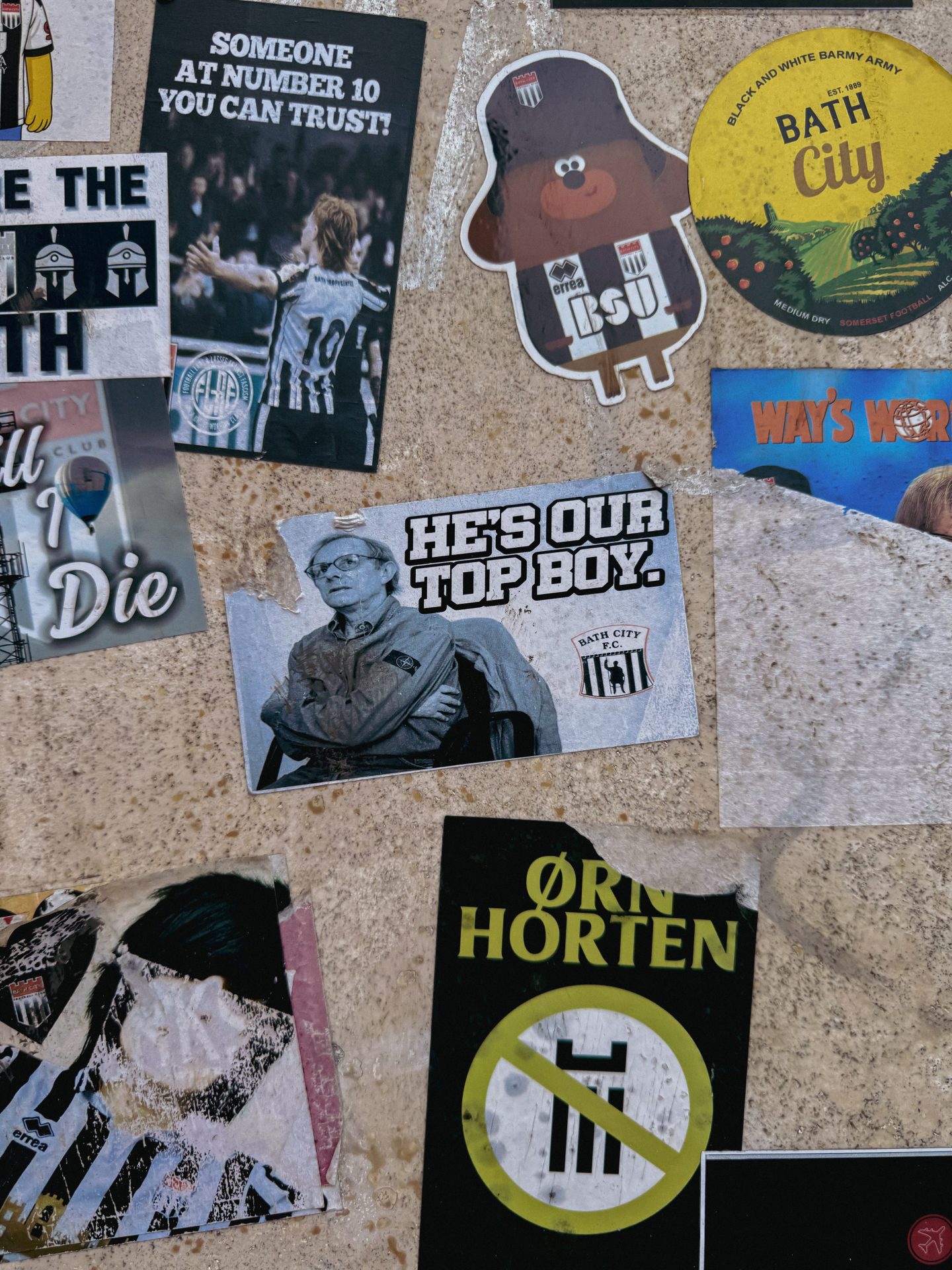
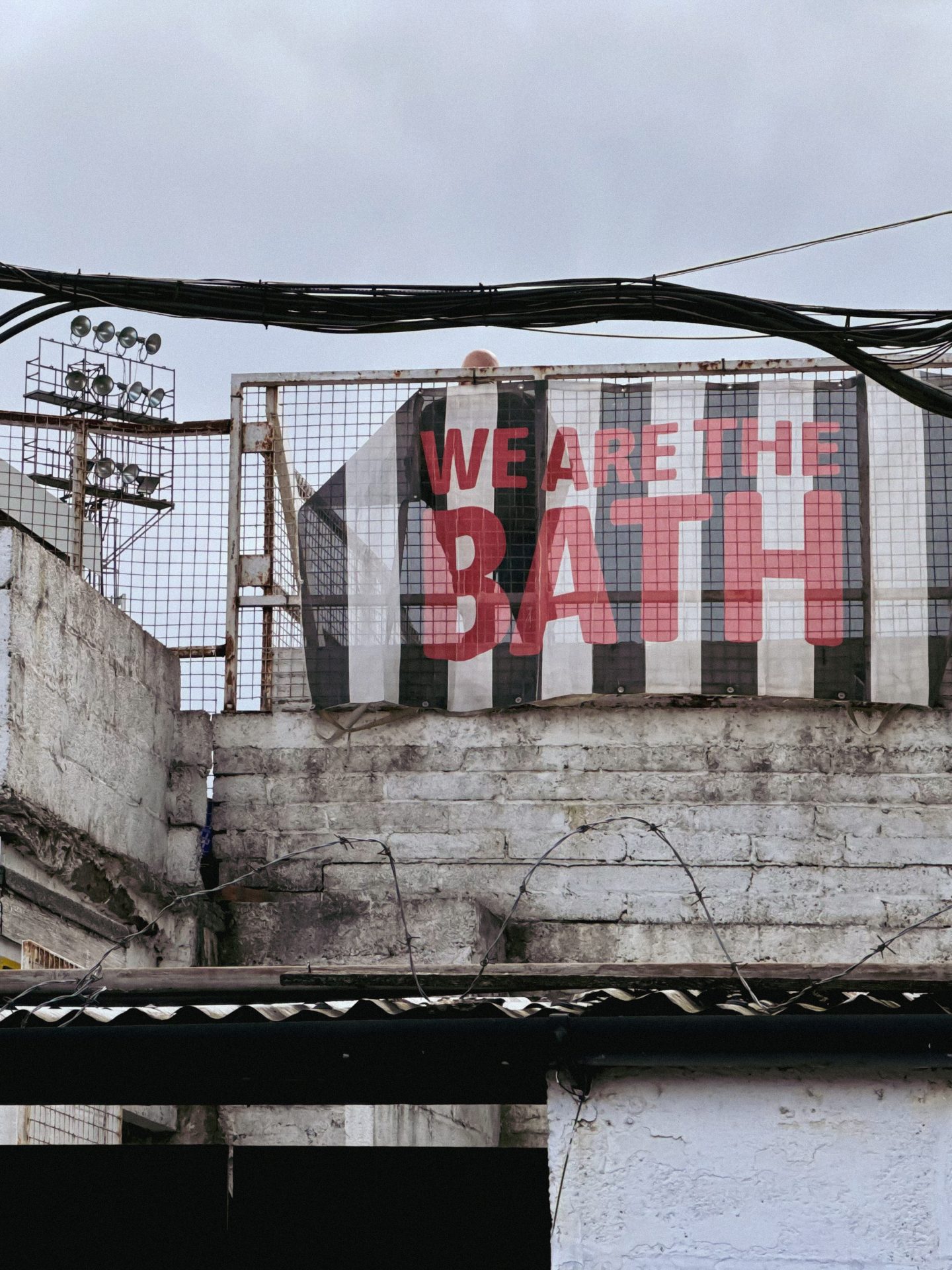
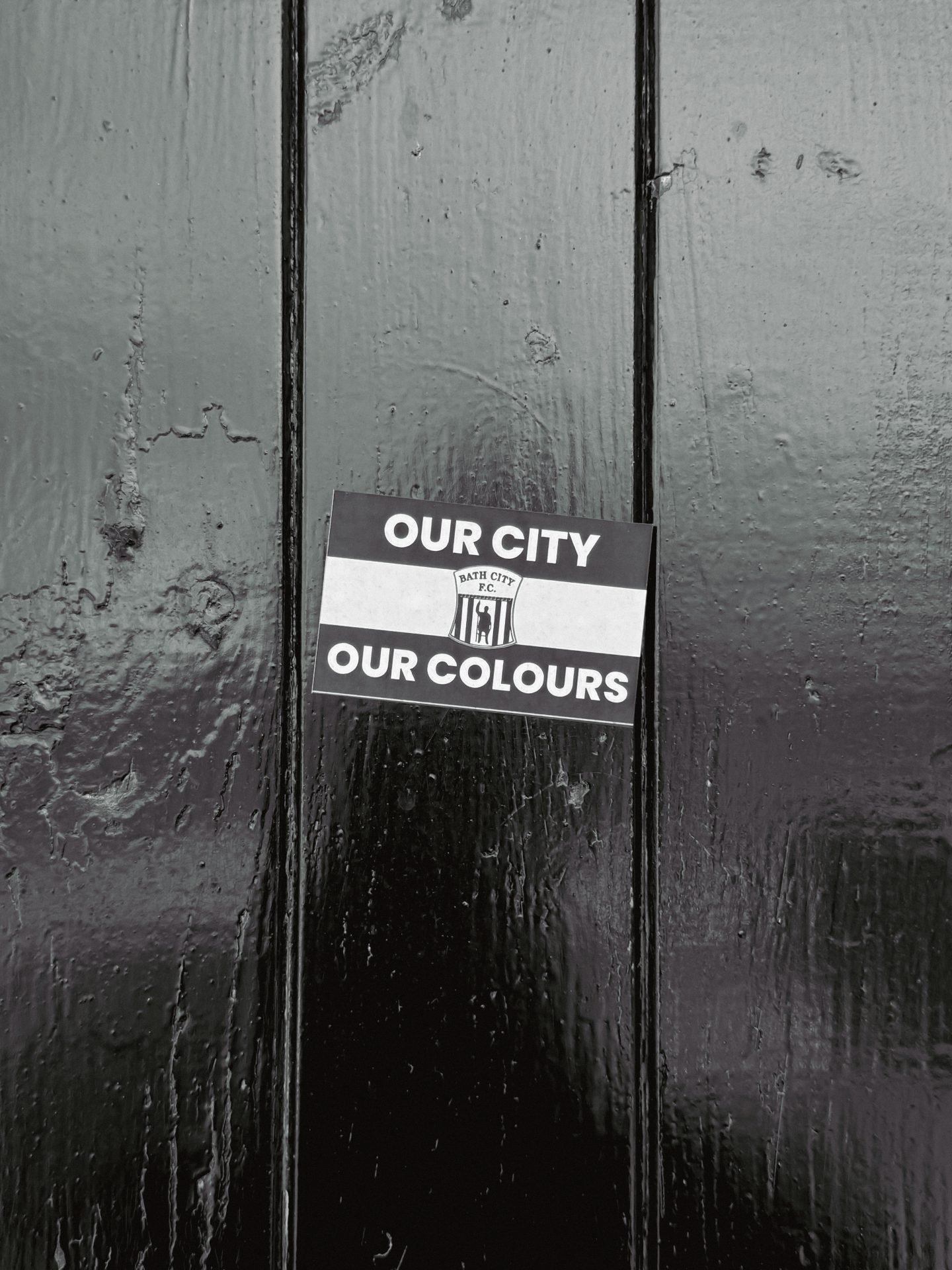
Loach’s presence around Twerton is not abstract. Near High Street, between the Premier convenience store and the community centre, a mural carrying his face stands at the entrance to the narrow passage leading towards Twerton Park. Stickers bearing his image appear around the stadium too. He has been closely involved with the club for years through the Bath City Foundation and wider local initiatives, but in Twerton his presence feels less symbolic than embedded in the fabric of the neighbourhood itself.
The walk to the ground makes that clearer: the further you move from central Bath, the less the city resembles the version most visitors come to see. The streets flatten out. Traffic thins. Shopfronts become more unevenly kept, shutters partly down in the afternoon light, signs for small independents replacing the uniform frontages closer to the centre.
Near the stadium, daily life continues around the small stretch of shops on High Street: people drifting in and out of Morrisons Daily with plastic bags swinging at their sides, betting slips folded and refolded outside William Hill, the Old Crown Inn filling briefly before kick-off and emptying again just as quickly. Nothing about the area asks to be aestheticised, neither does Twerton Park.
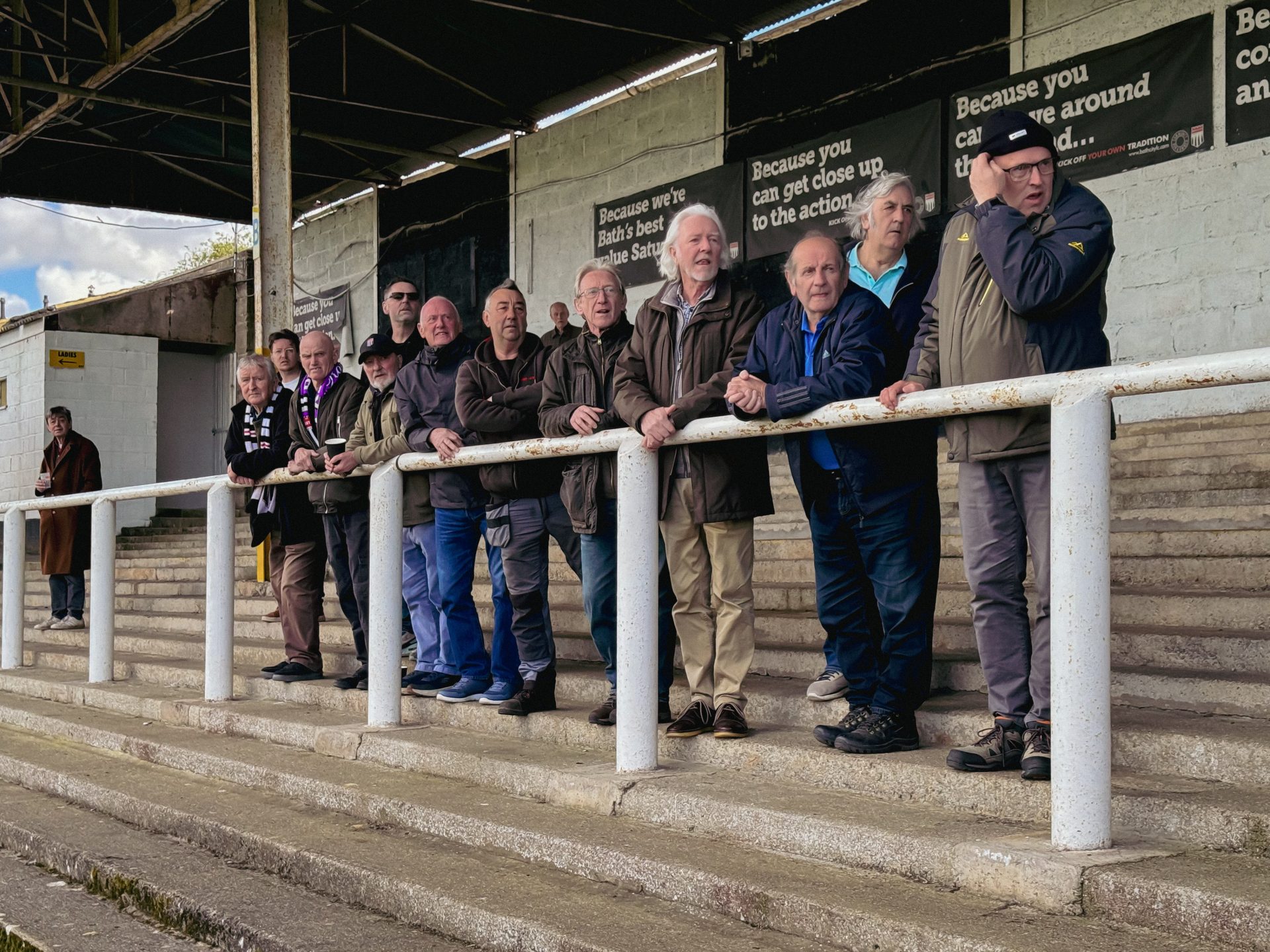
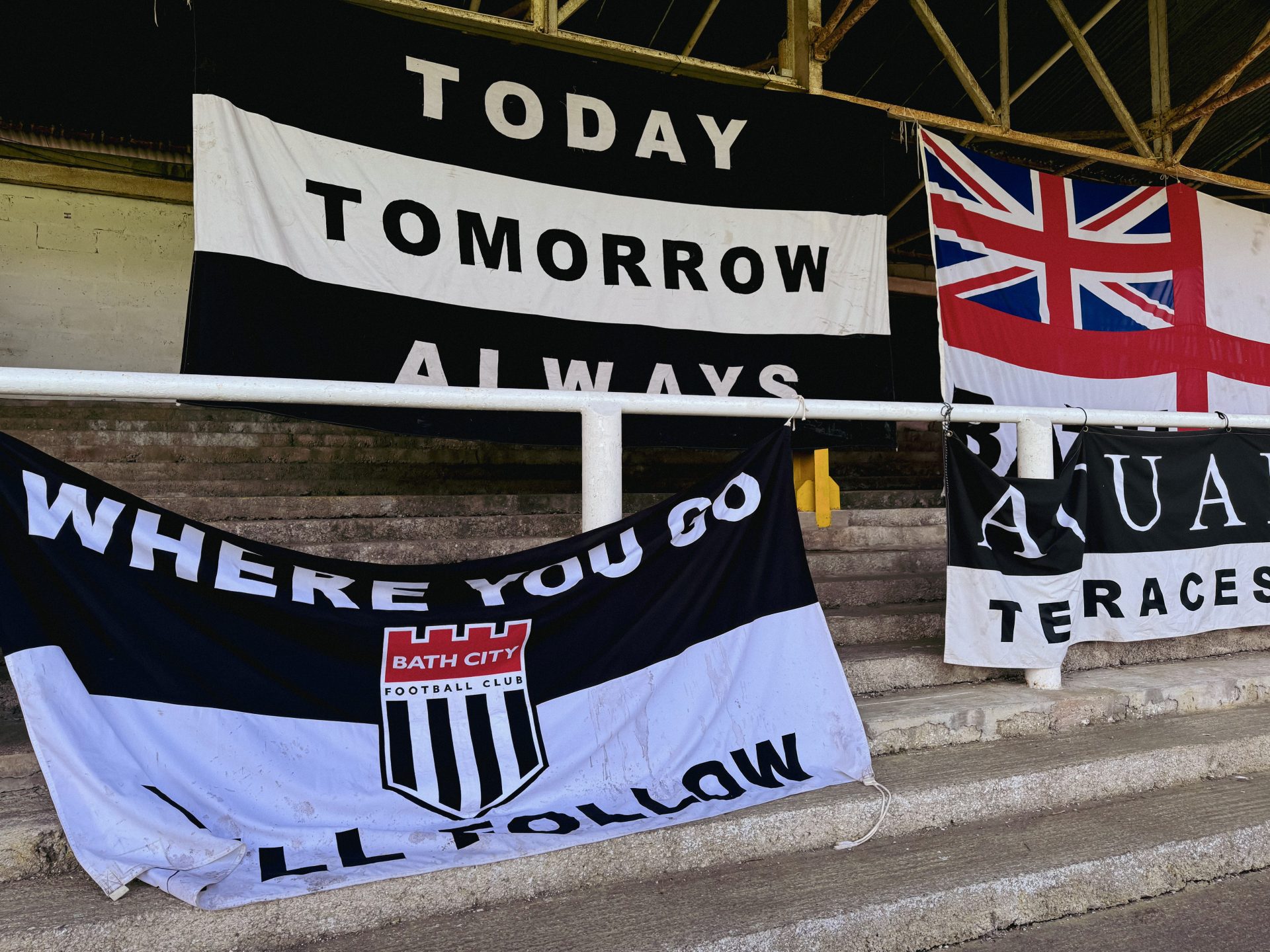
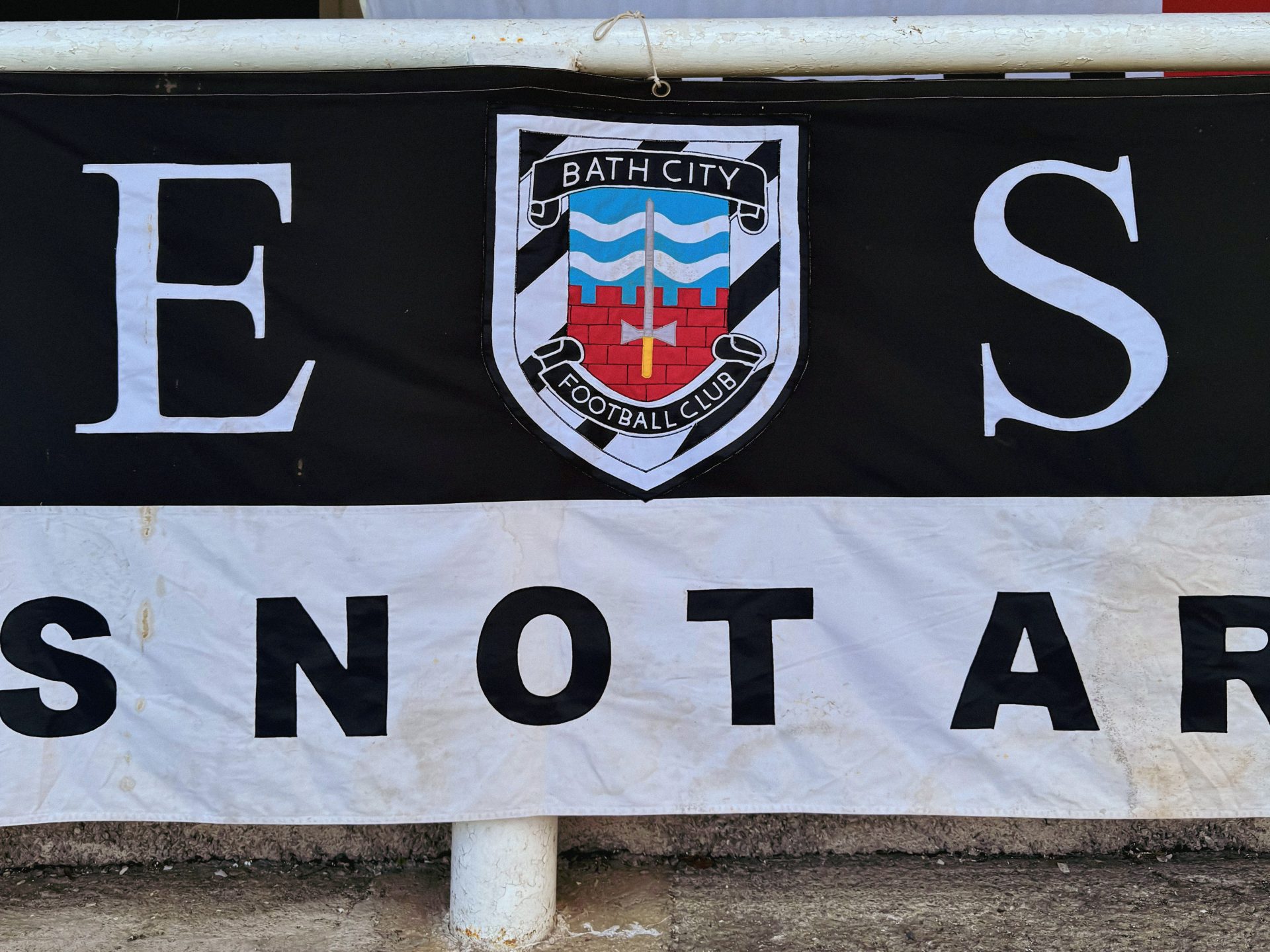
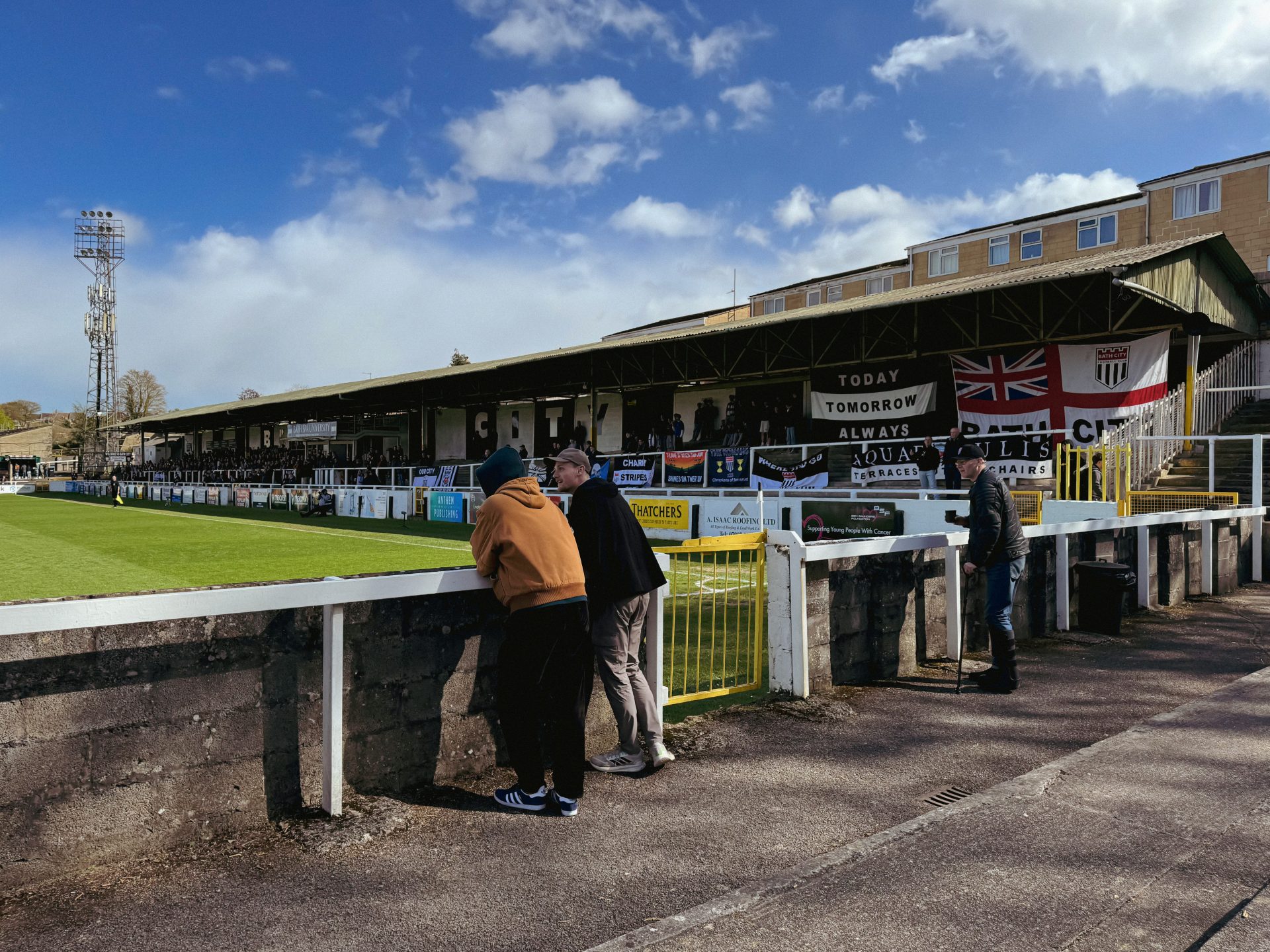
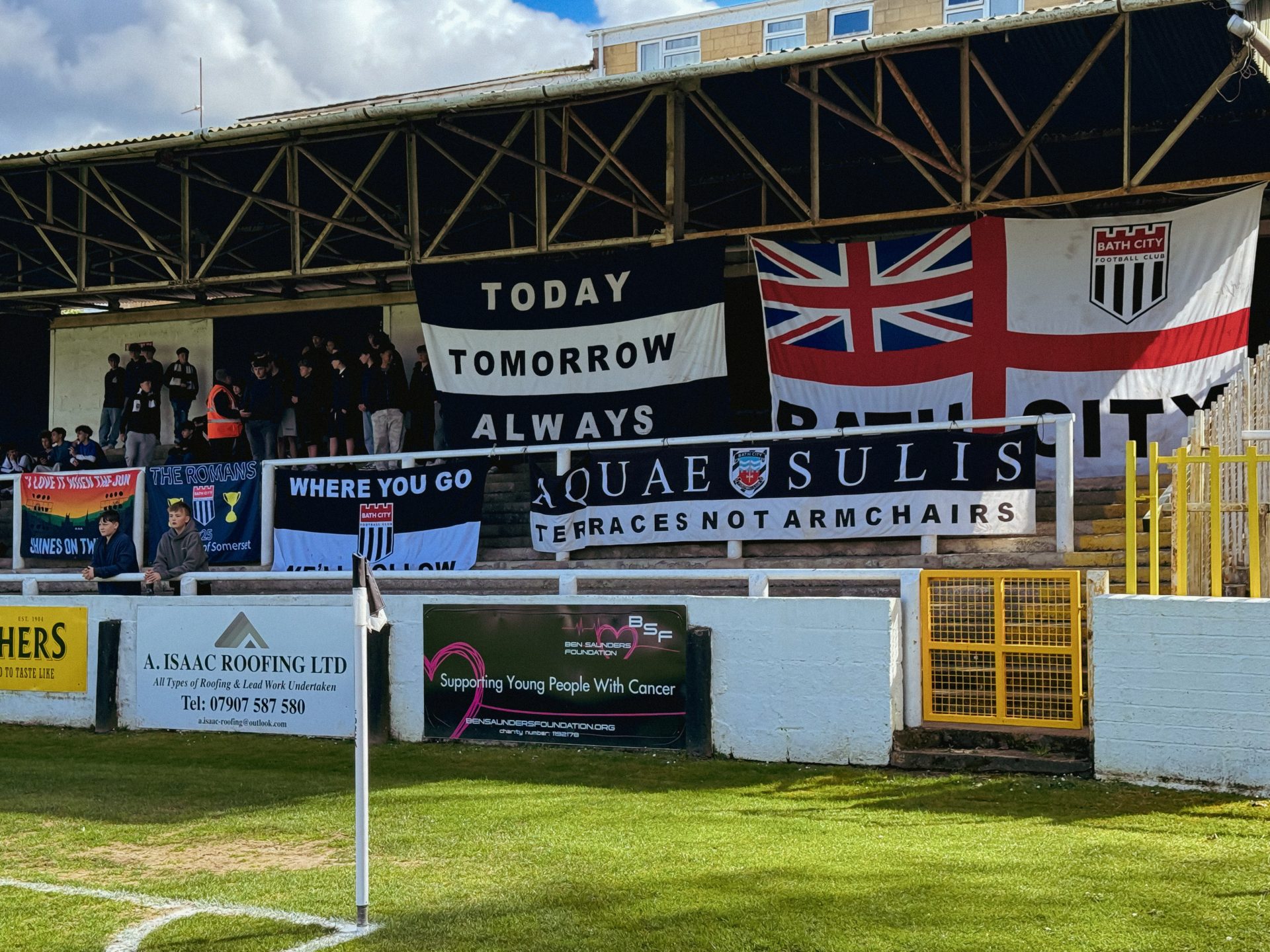
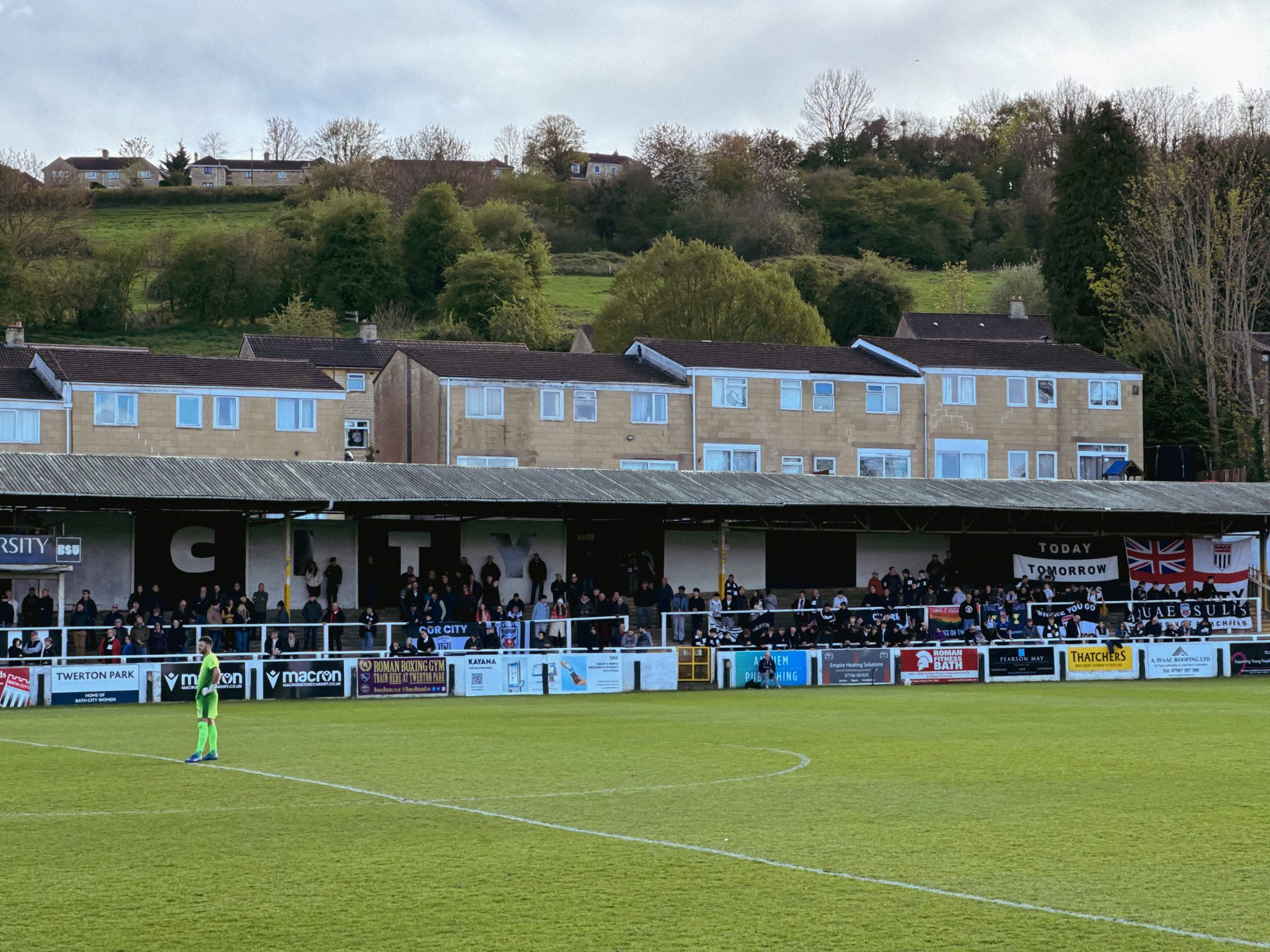
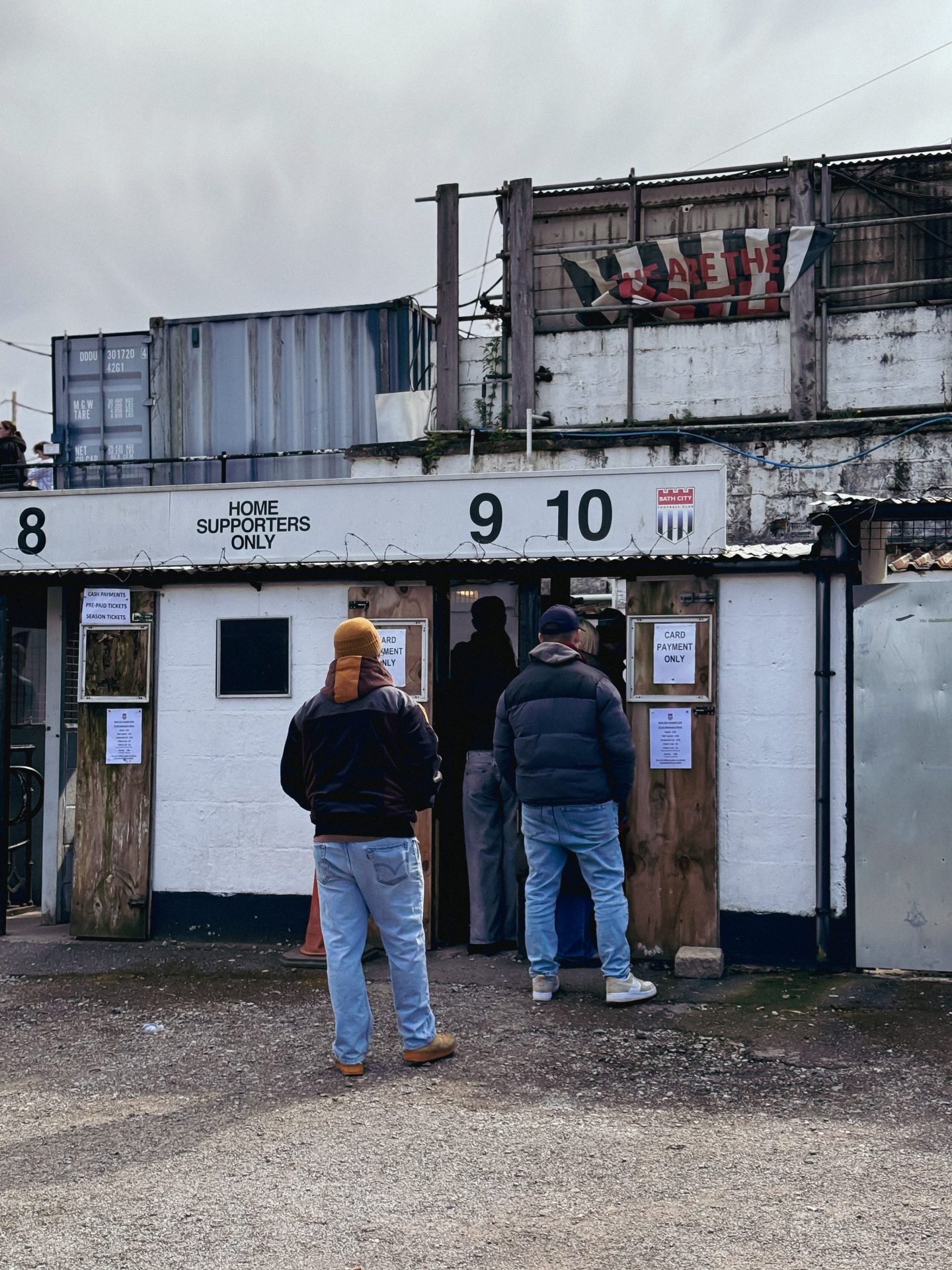
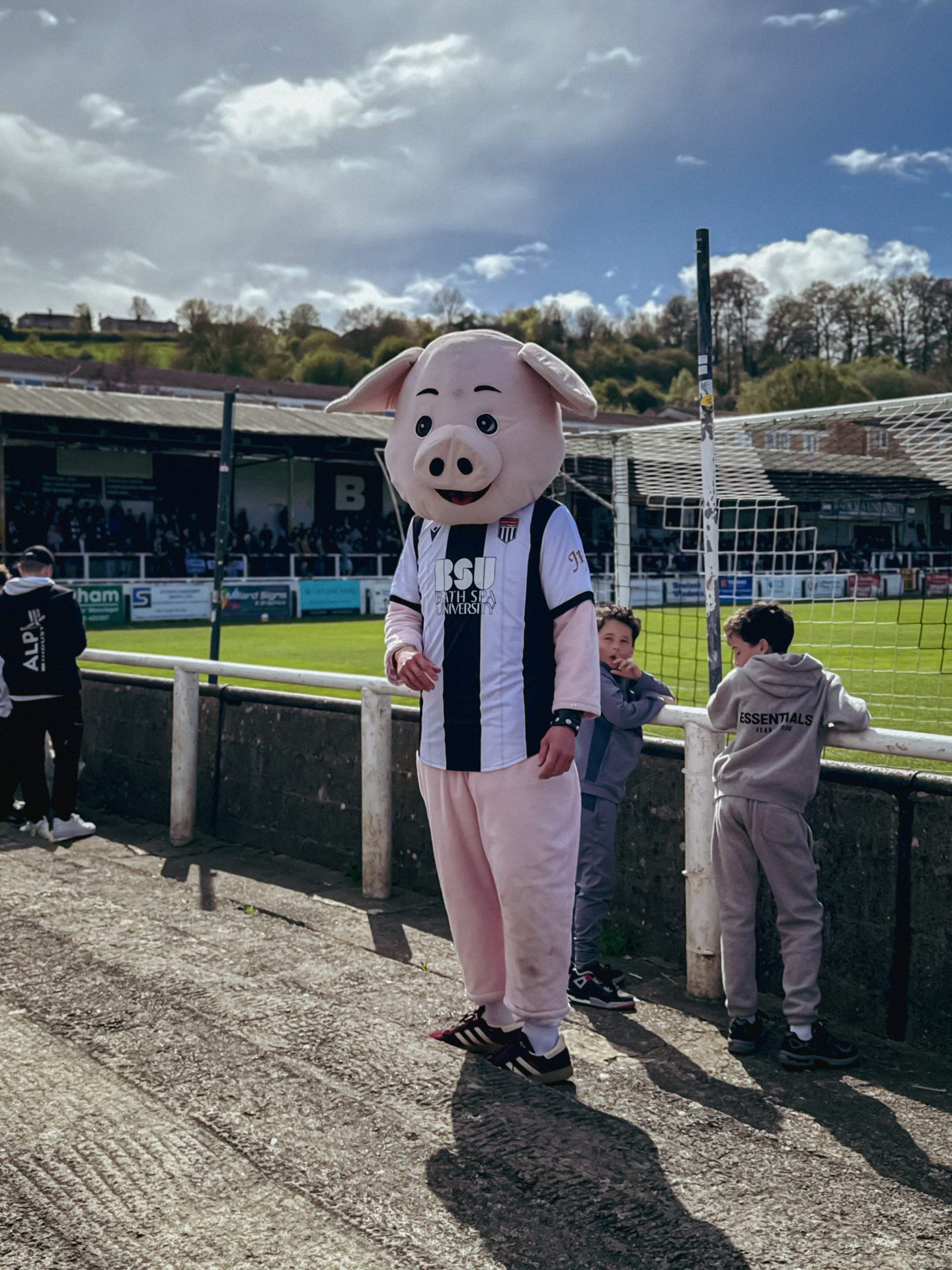
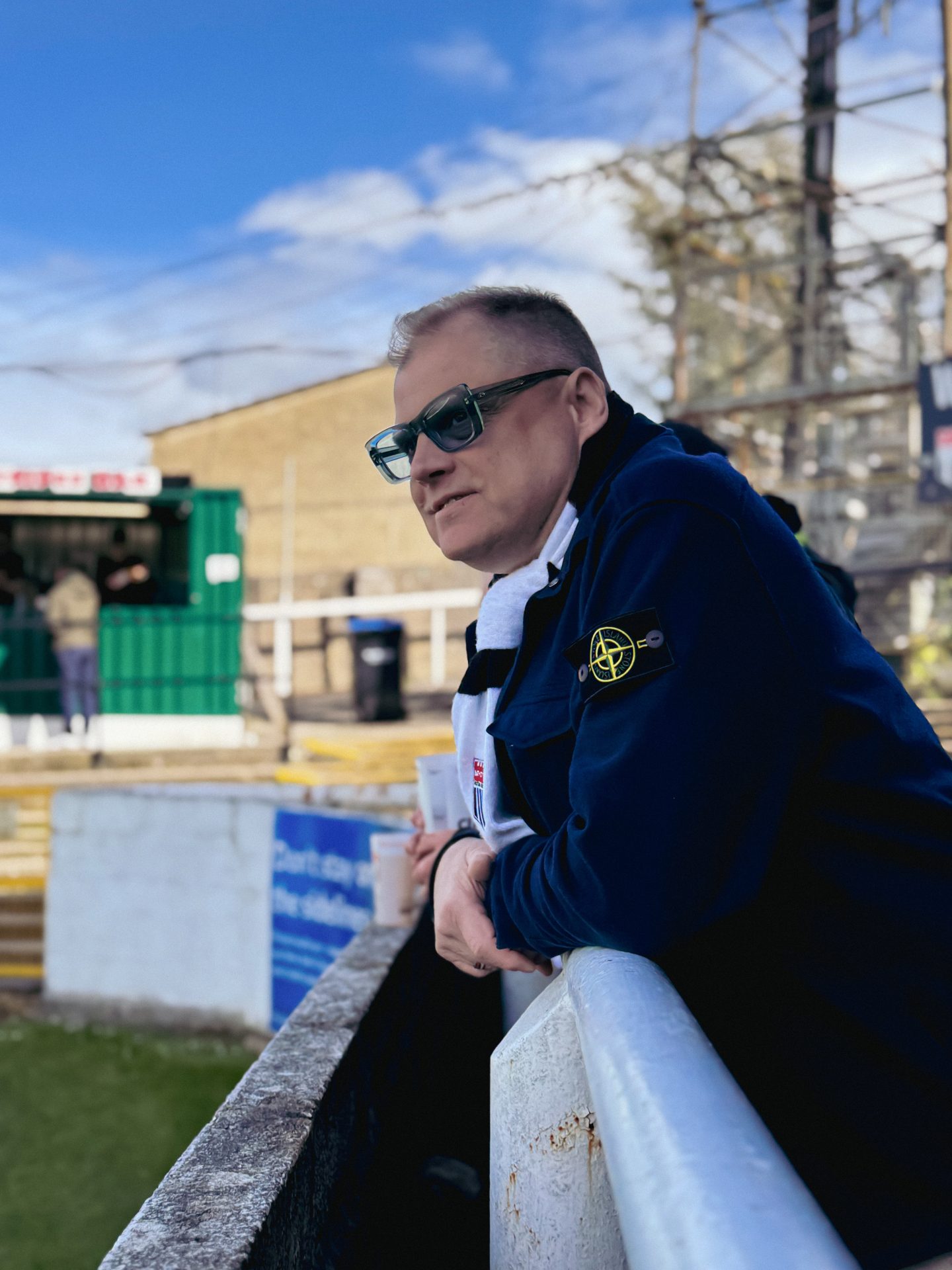
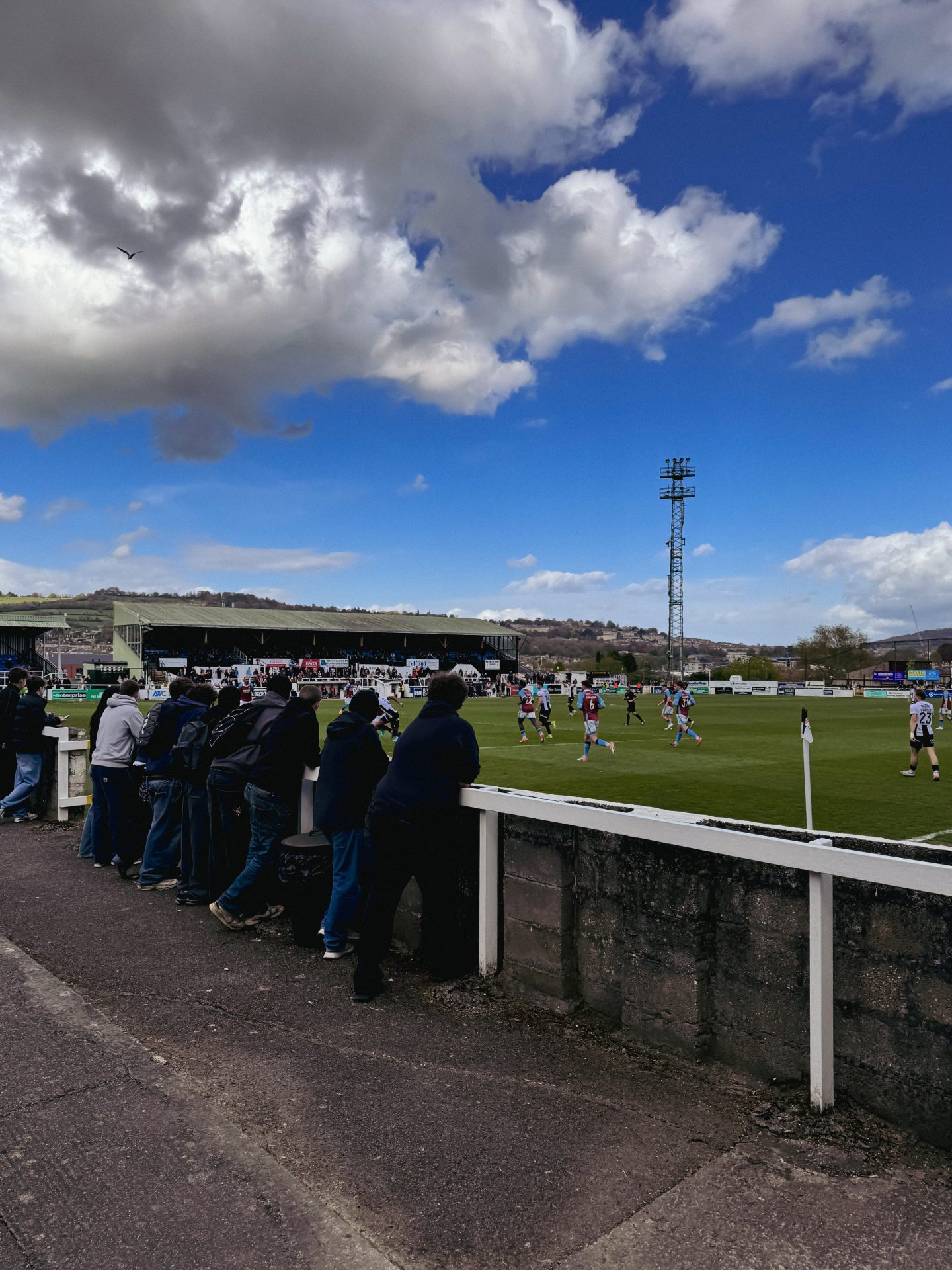
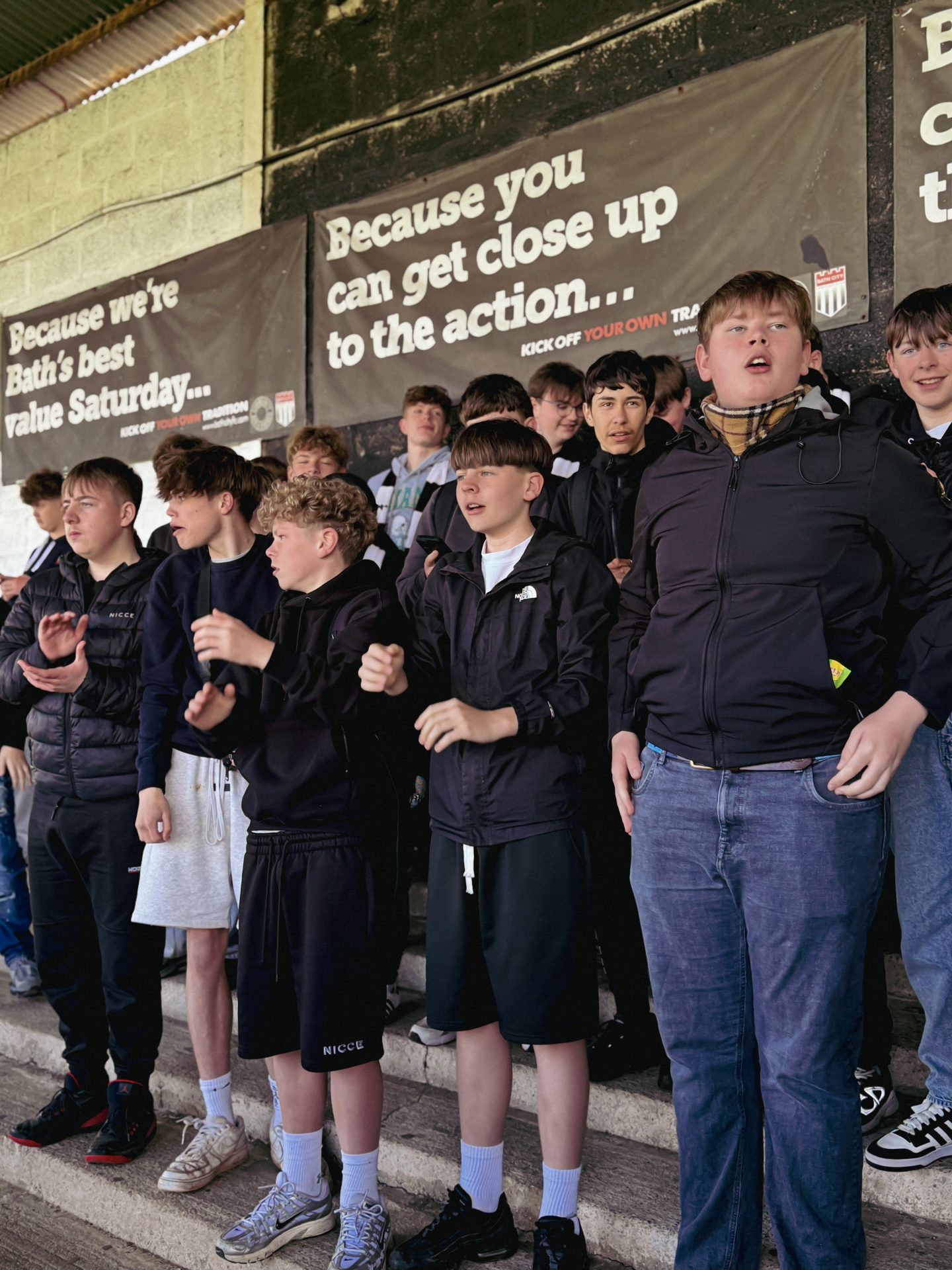
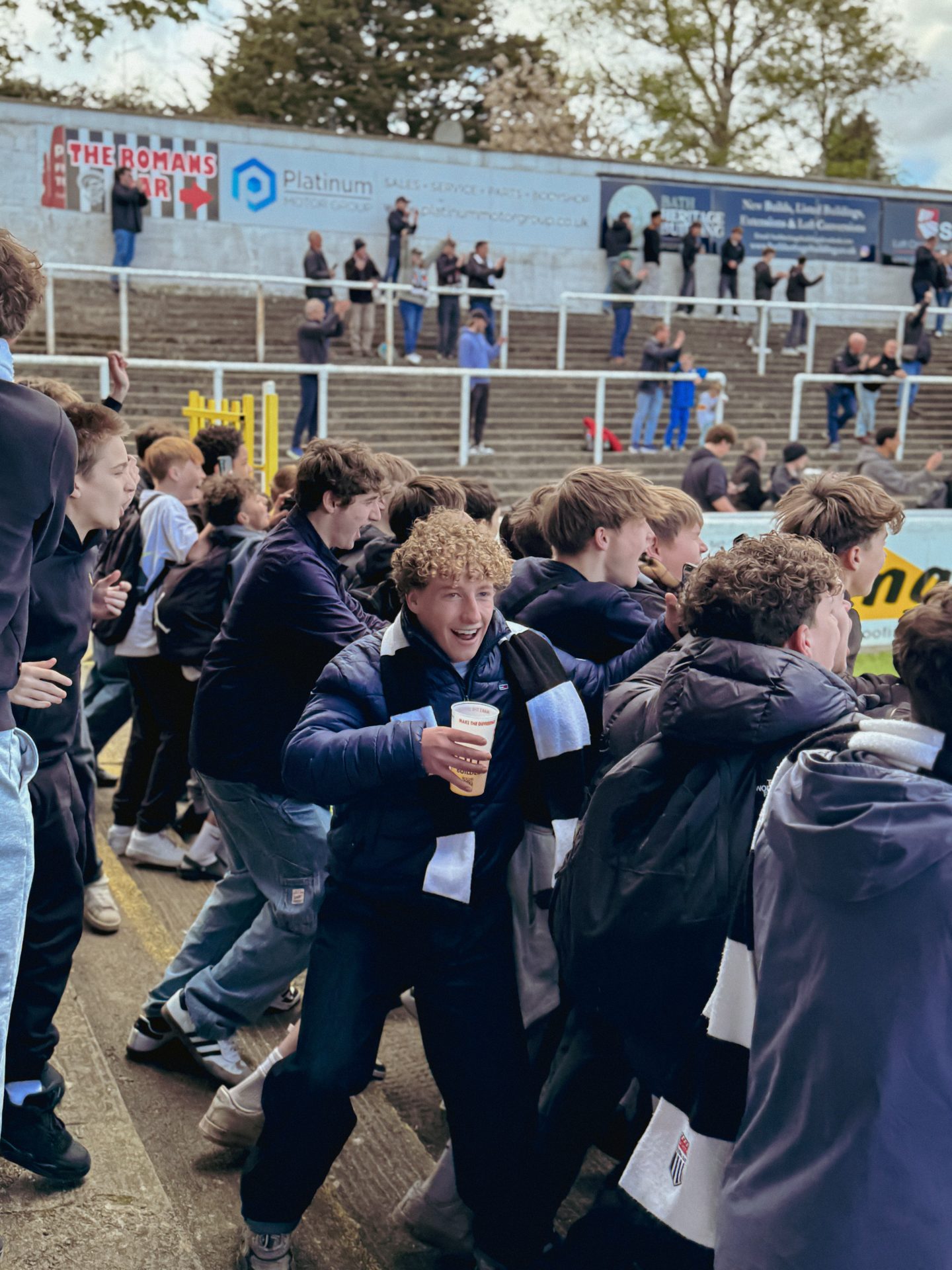
The ground sits tightly inside the neighbourhood, enclosed by streets and housing on all sides. Houses overlook the main side terrace, while beyond the northern end of the stadium the green hills remain visible in the distance. On a Saturday afternoon against Chesham United, fewer than a thousand spectators drift through the turnstiles gradually, without urgency or spectacle. A small queue forms, then dissolves again. Some arrive from the pub. Others come alone, greeting familiar faces briefly before disappearing into the crowd.
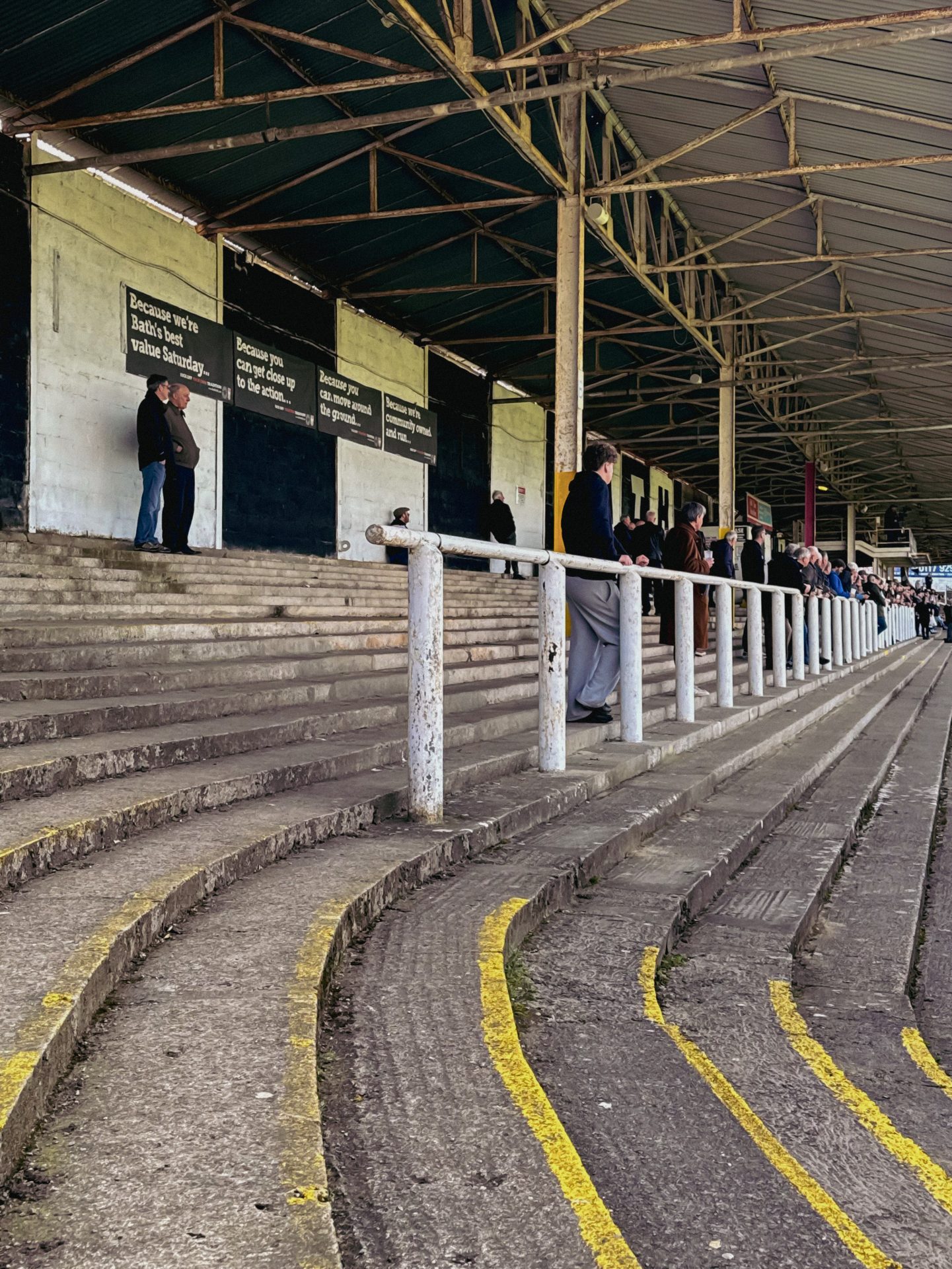
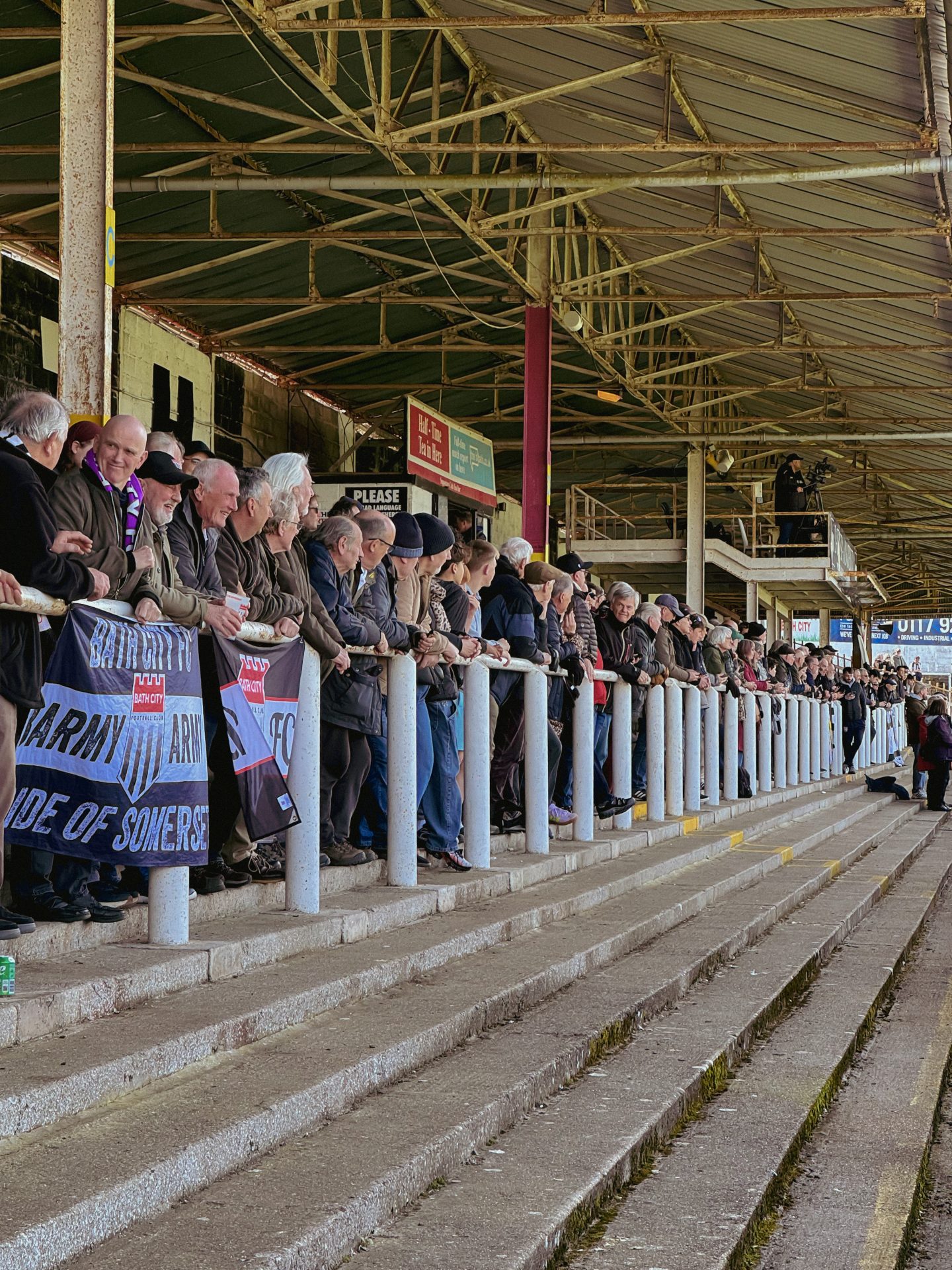
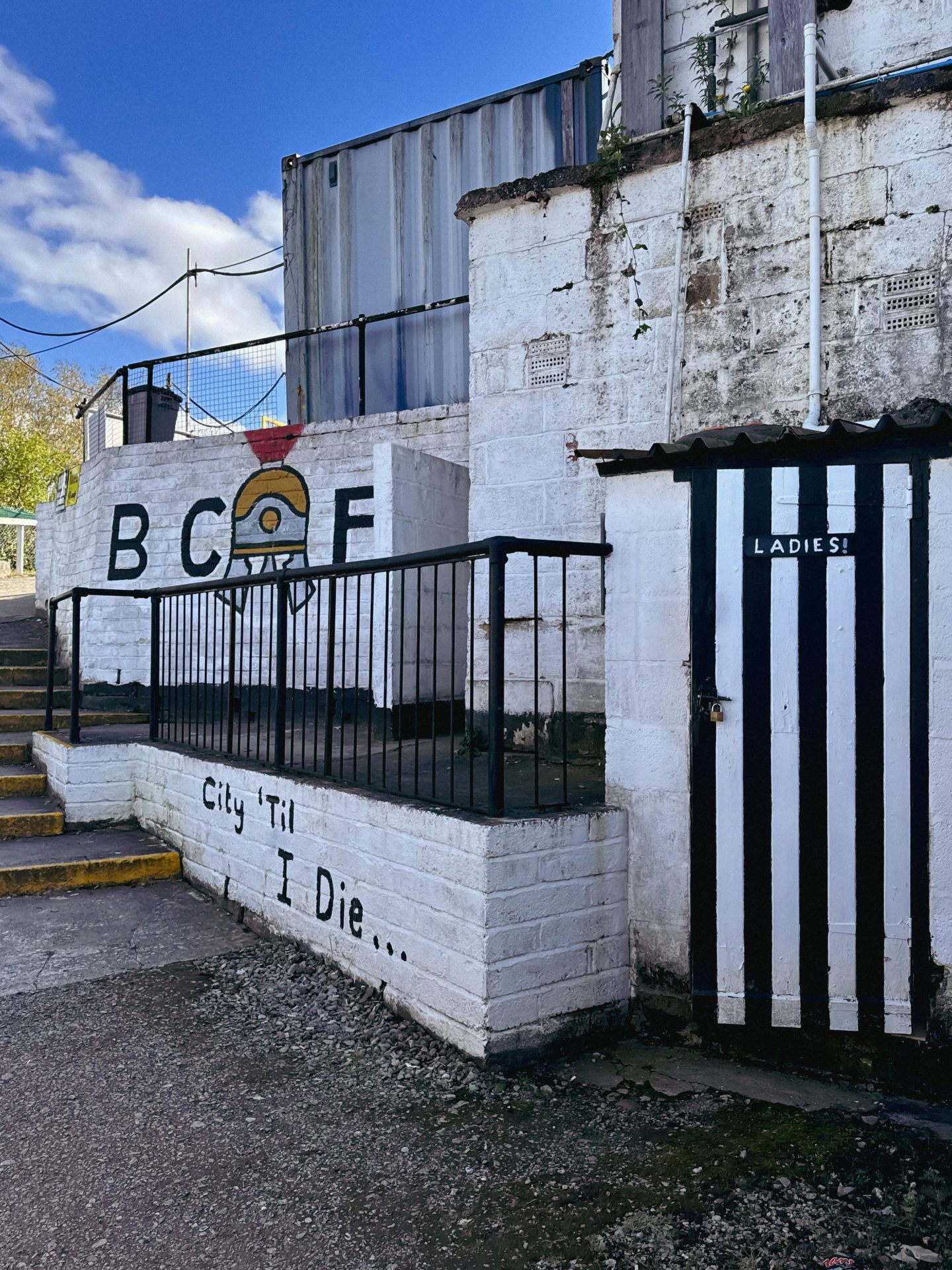
The football reflects its surroundings. Possession breaks apart quickly, often on the first or second contact. Clearances drop into crowded spaces. Play unfolds through loose balls, ricochets and repeated physical contests rather than sustained control, bodies colliding and resetting in small, repetitive patterns.
Bath City does not dominate the city around it, culturally or economically. Rugby remains the reference point in Bath, visible across schools, parks and everyday life in ways football simply is not. Twerton Park is not separated from Bath’s public image, but sits just outside it – close enough to be part of the same city, but rarely included in the way it is usually presented.
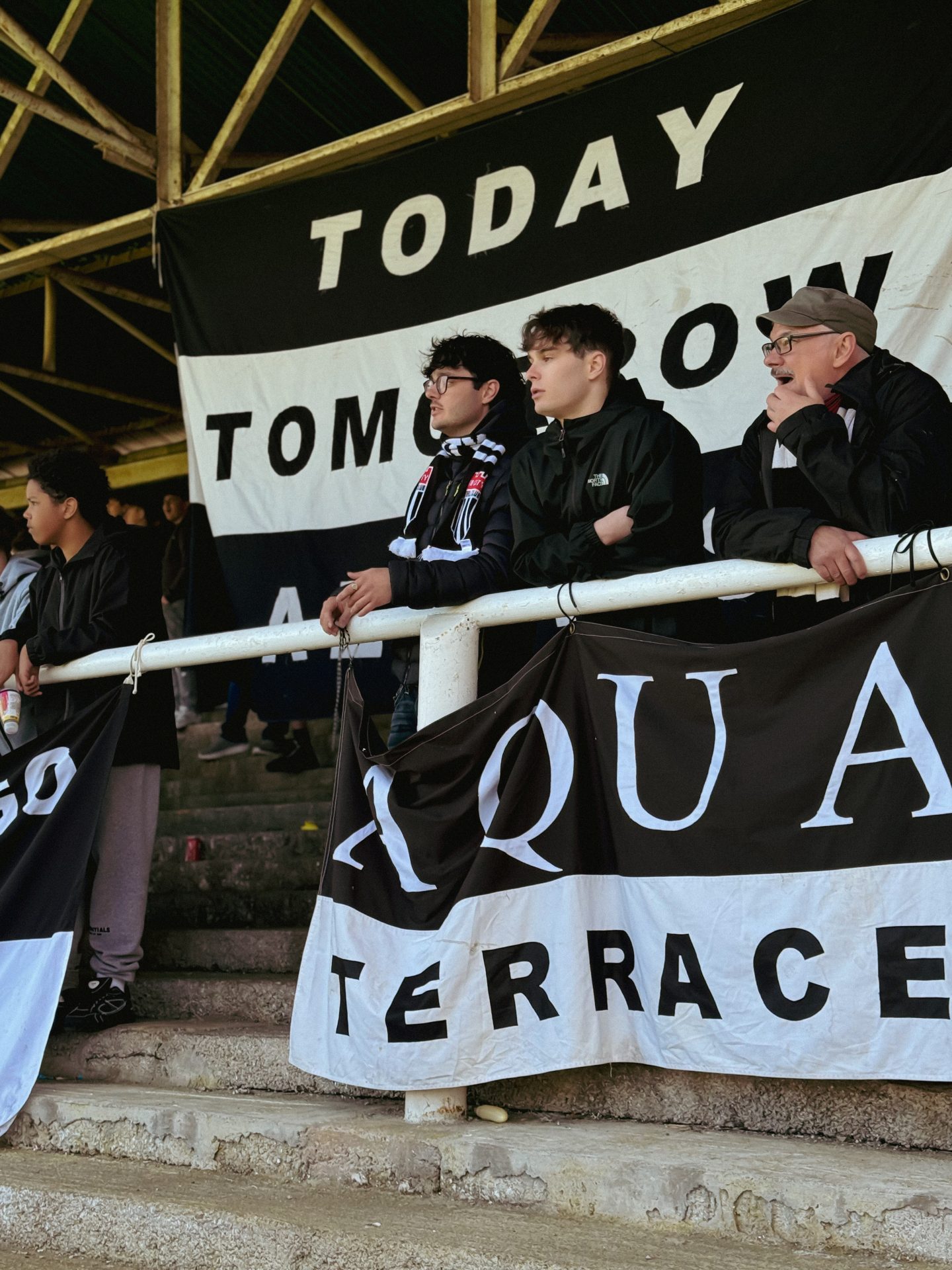
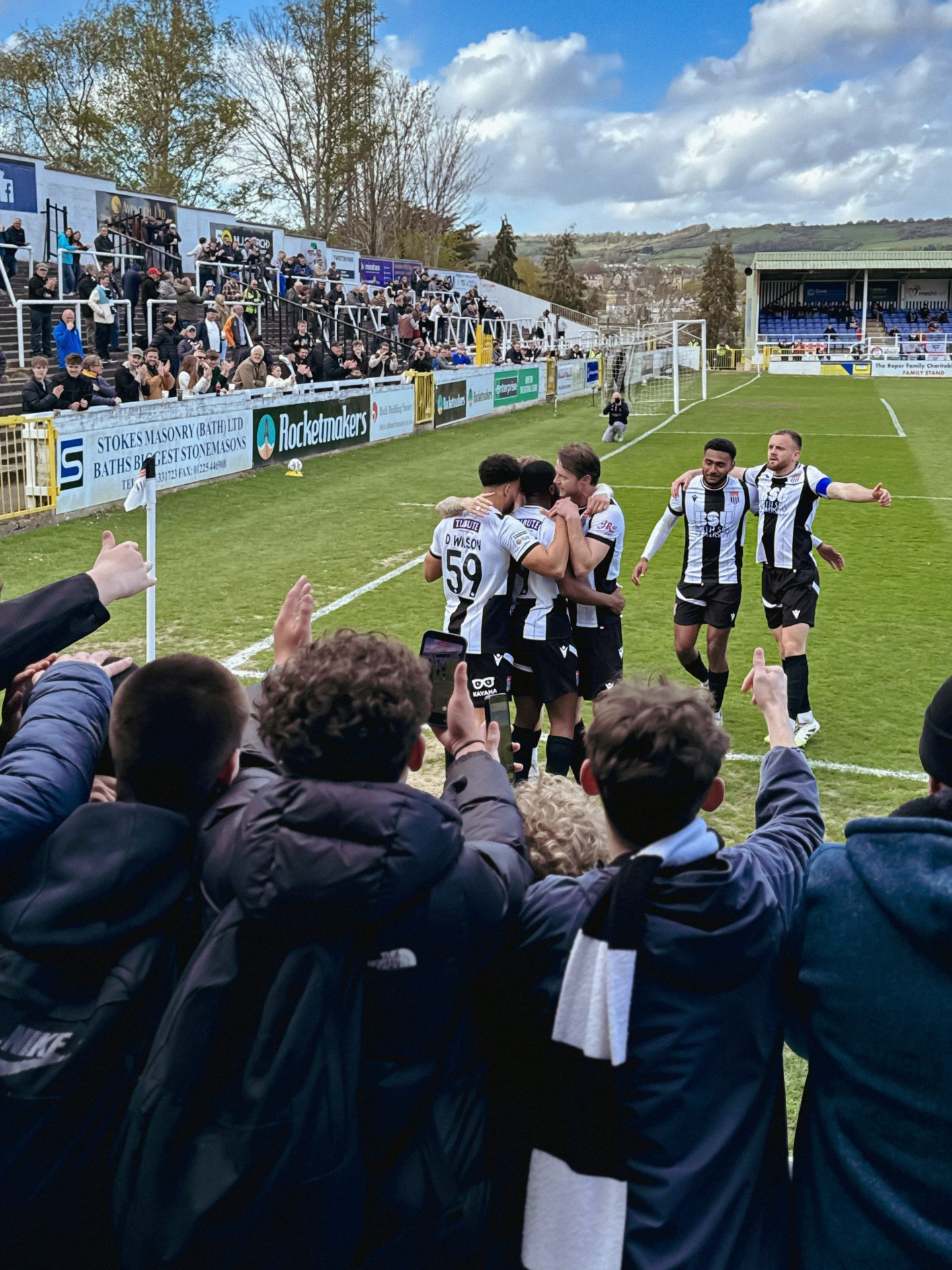
That is where the interest lies. Not in opposition, and not in nostalgia, but in coexistence: a club embedded in a neighbourhood that carries its own weight, its own references, its own daily patterns. The mural of Ken Loach near High Street, the houses overlooking the ground, the small shops feeding matchday routines – none of it stands out individually. It only makes sense together.
And seen from that angle, Bath is no longer a single image. It is two versions of the same place, occupying different levels of visibility, briefly intersecting on a Saturday afternoon at Twerton Park before moving apart again.


You may also enjoy…