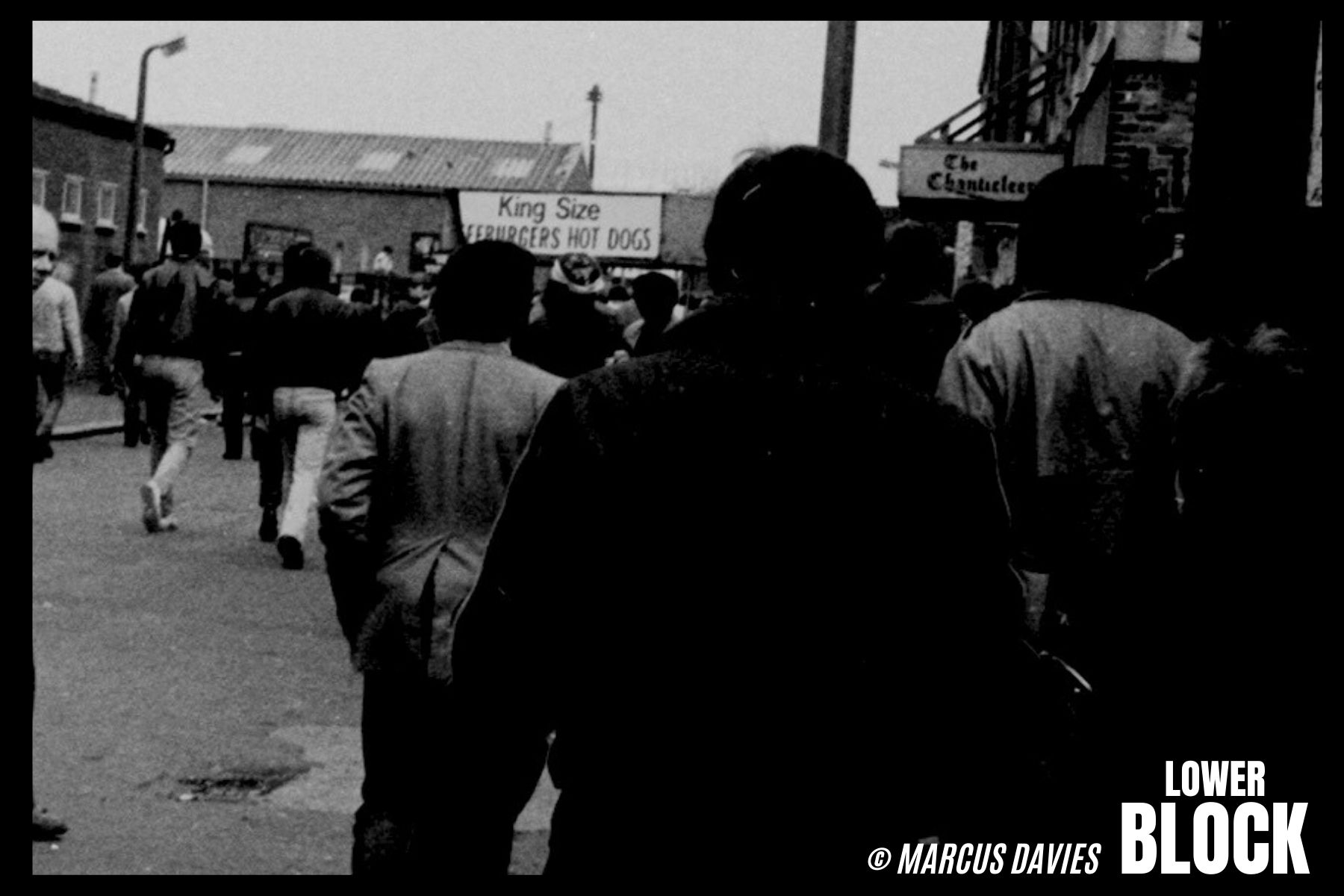
In May 1985, a teenage Marcus Davies took his camera to White Hart Lane as Tottenham Hotspur hosted Coventry City. Spurs won 4–2, but Davies’ photographs remember more than goals – they capture a pause in time.
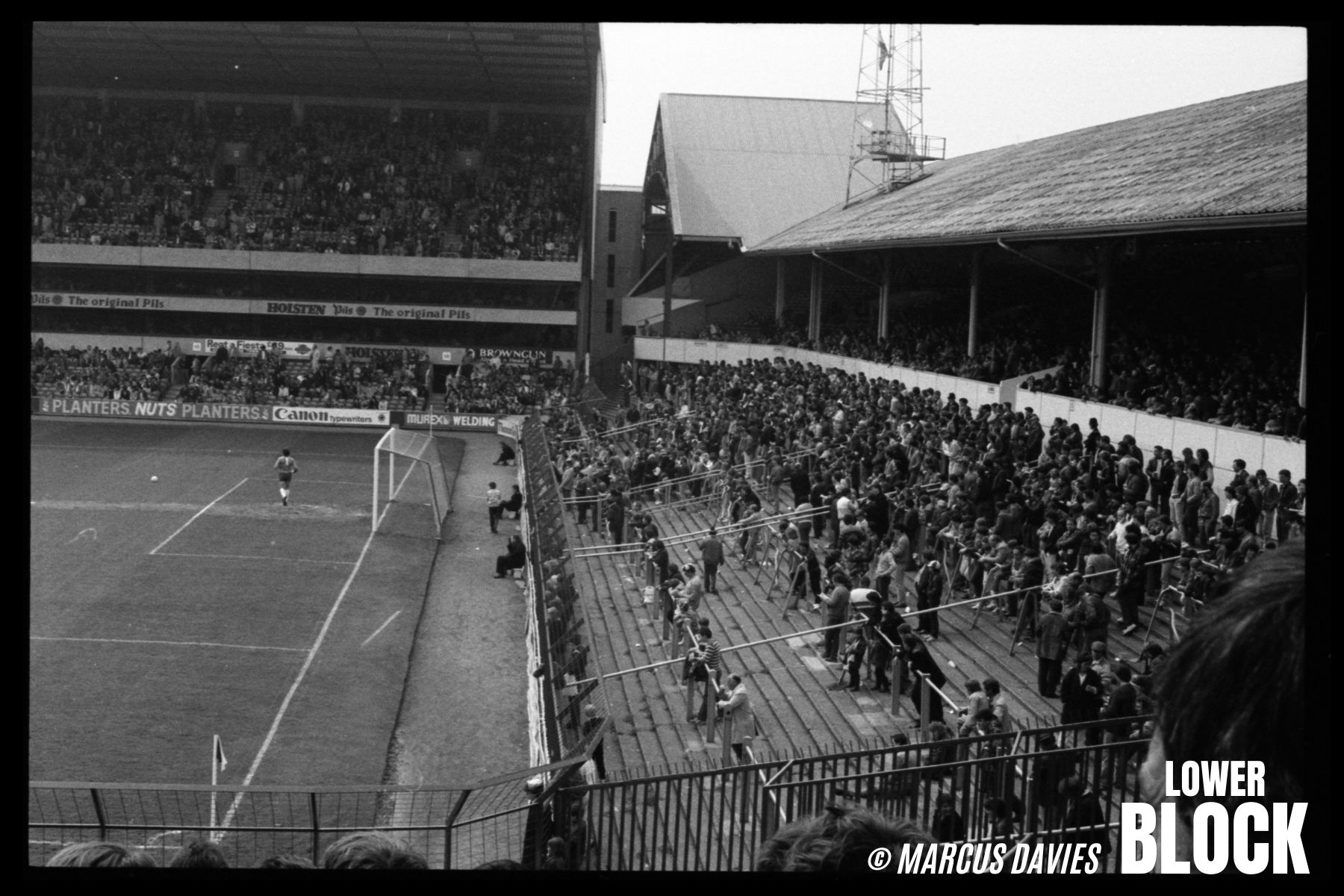
On the pitch, Marc Falco struck first and last for Tottenham, while Glenn Hoddle rose to head the second – an image Davies recalls with particular clarity. Chris Hughton added the third. Coventry replied through Stuart Pearce, then Terry Gibson levelled at 2–2 in the 71st minute before Spurs pulled away.
The cast was strong on both sides: Coventry’s Cyrille Regis and Steve Ogrizovic; Tottenham’s Ray Clemence, Steve Perryman, and Ossie Ardiles. Spurs would finish third that season behind champions Everton, while Coventry stayed up by a single point in 18th.
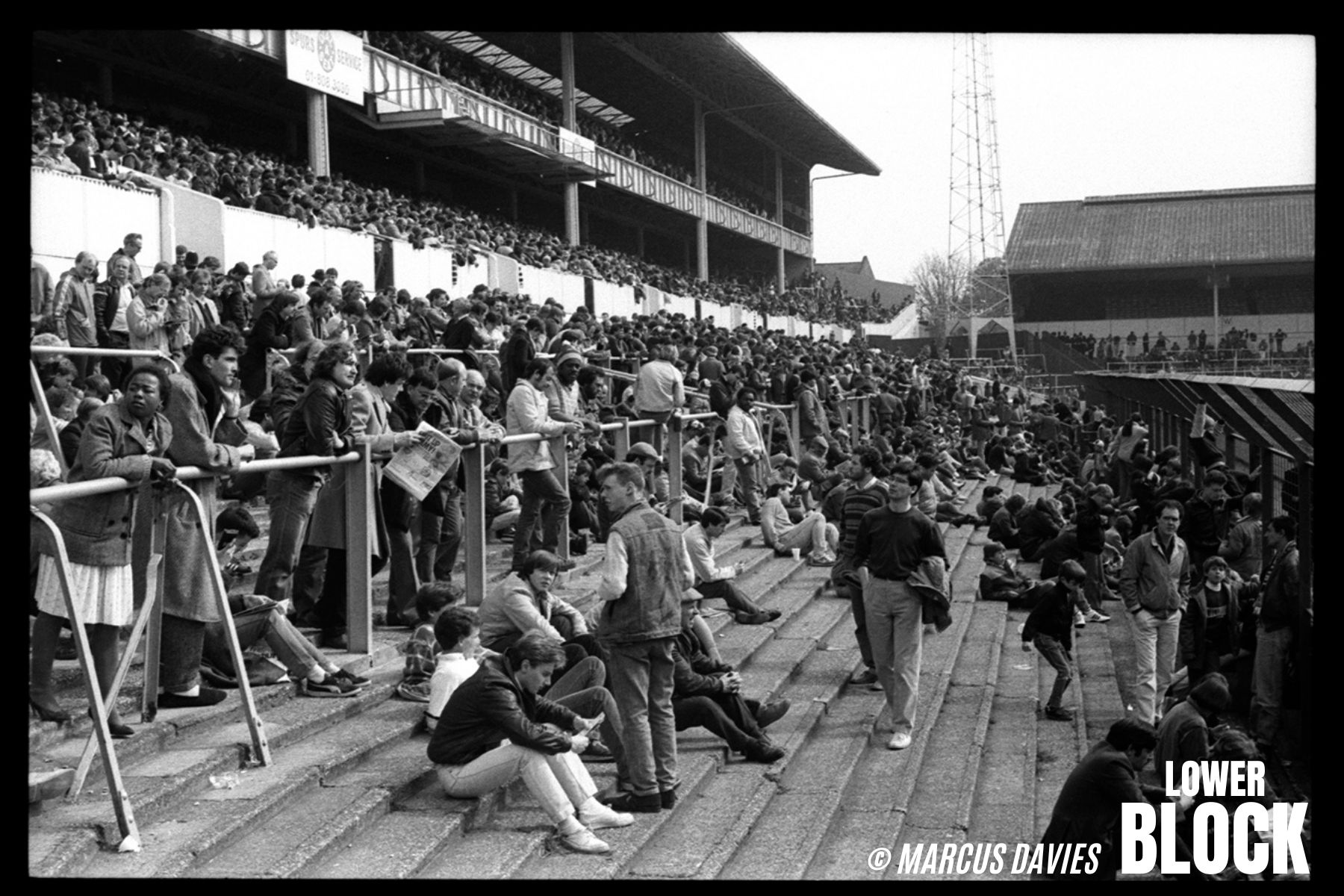
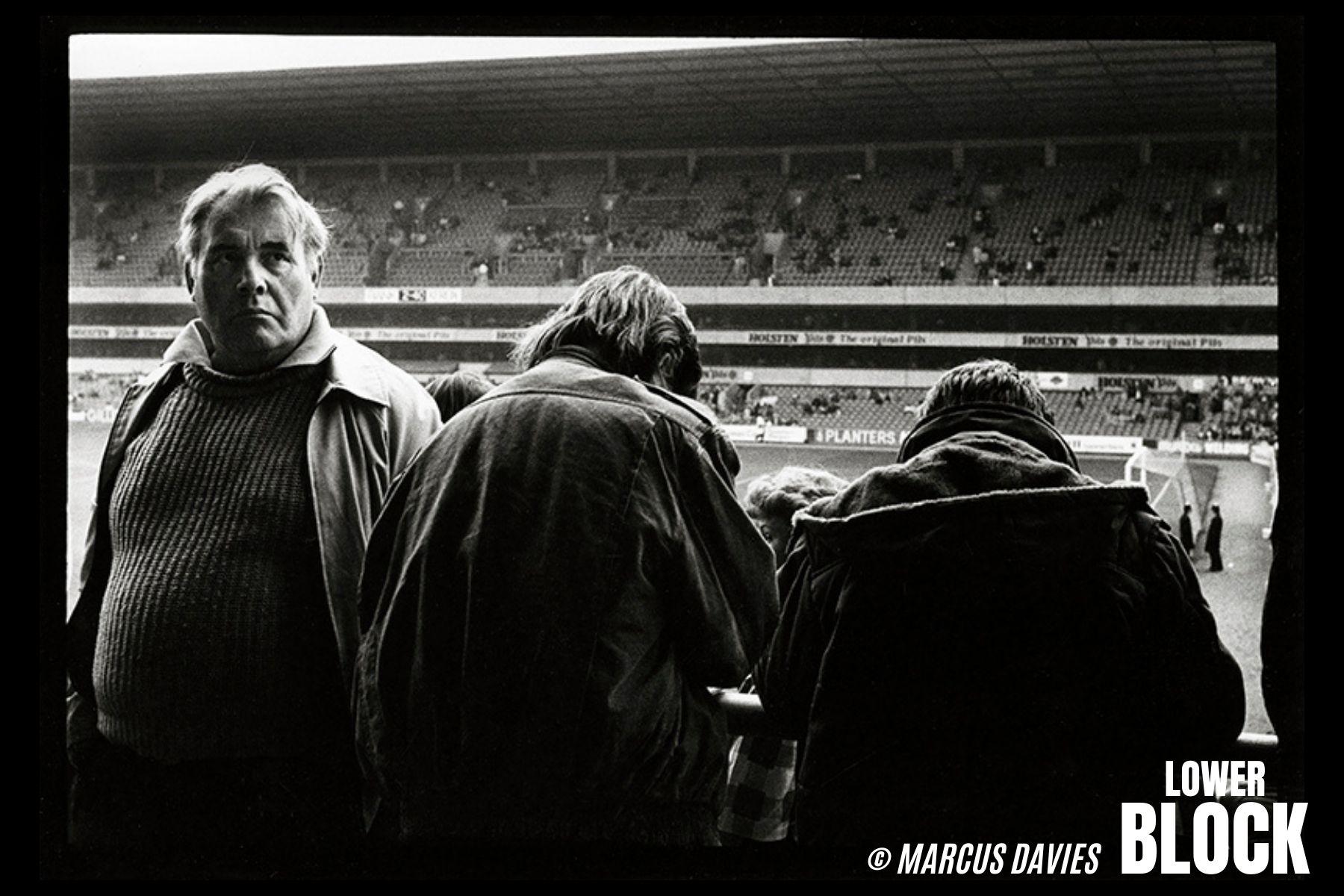
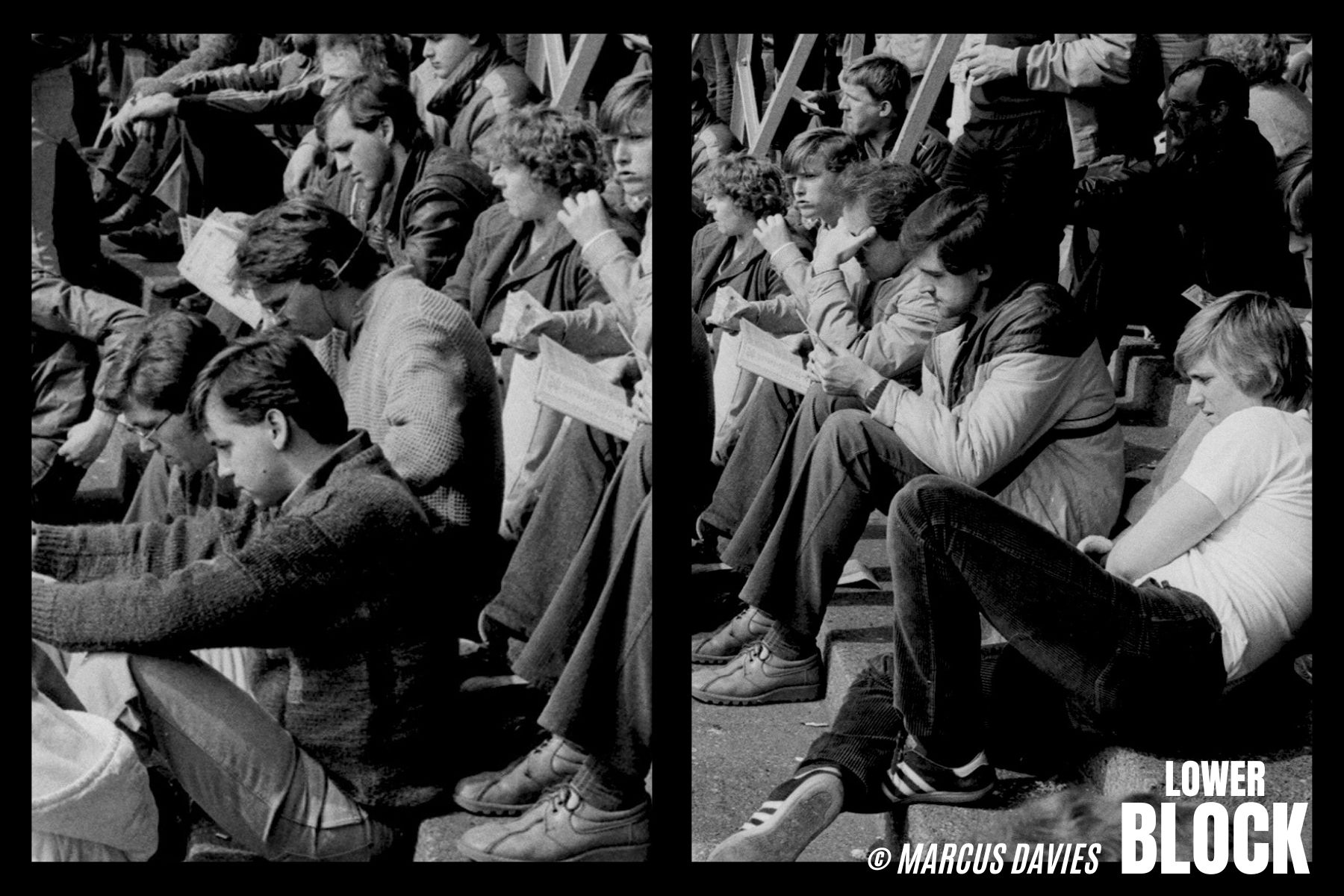
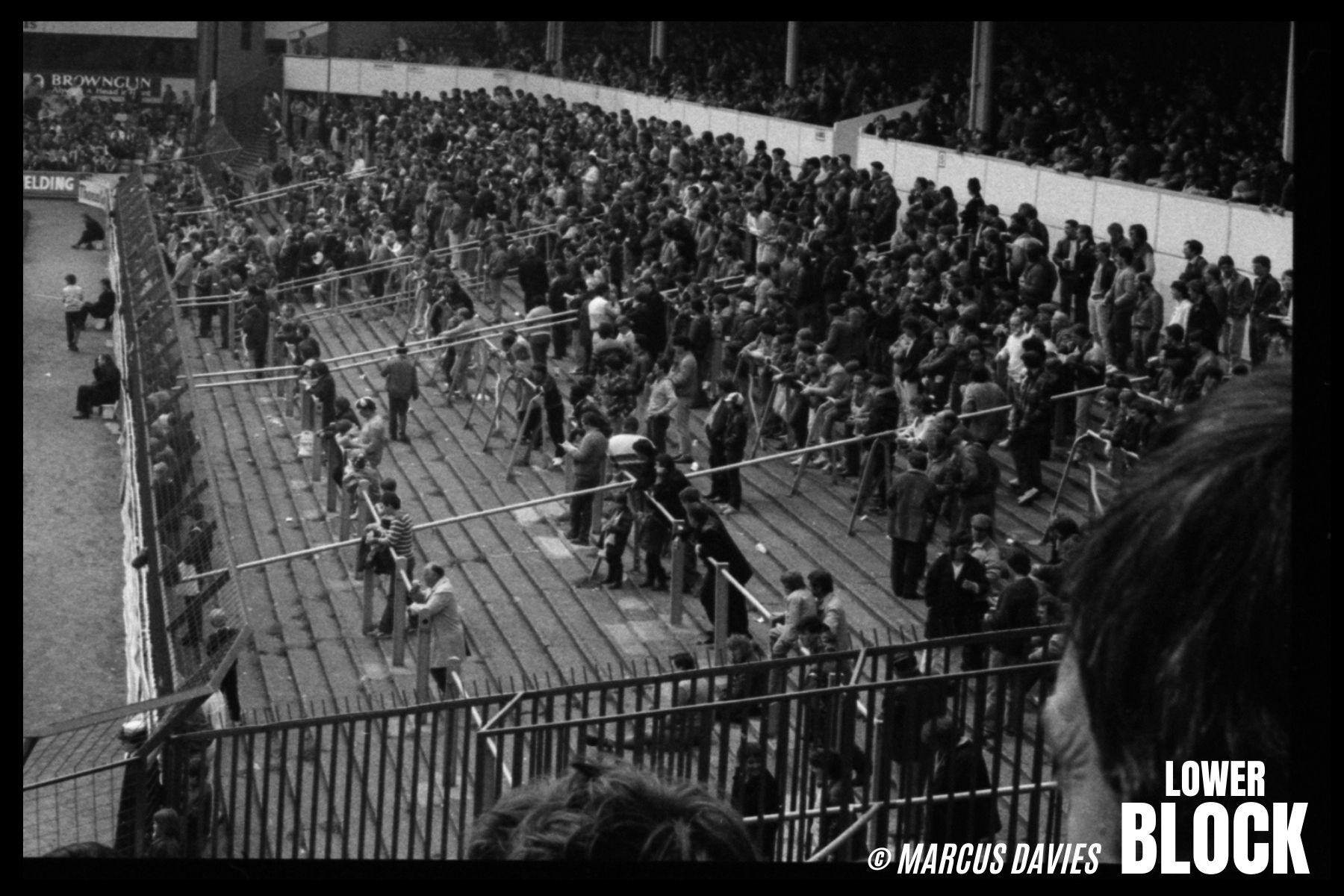
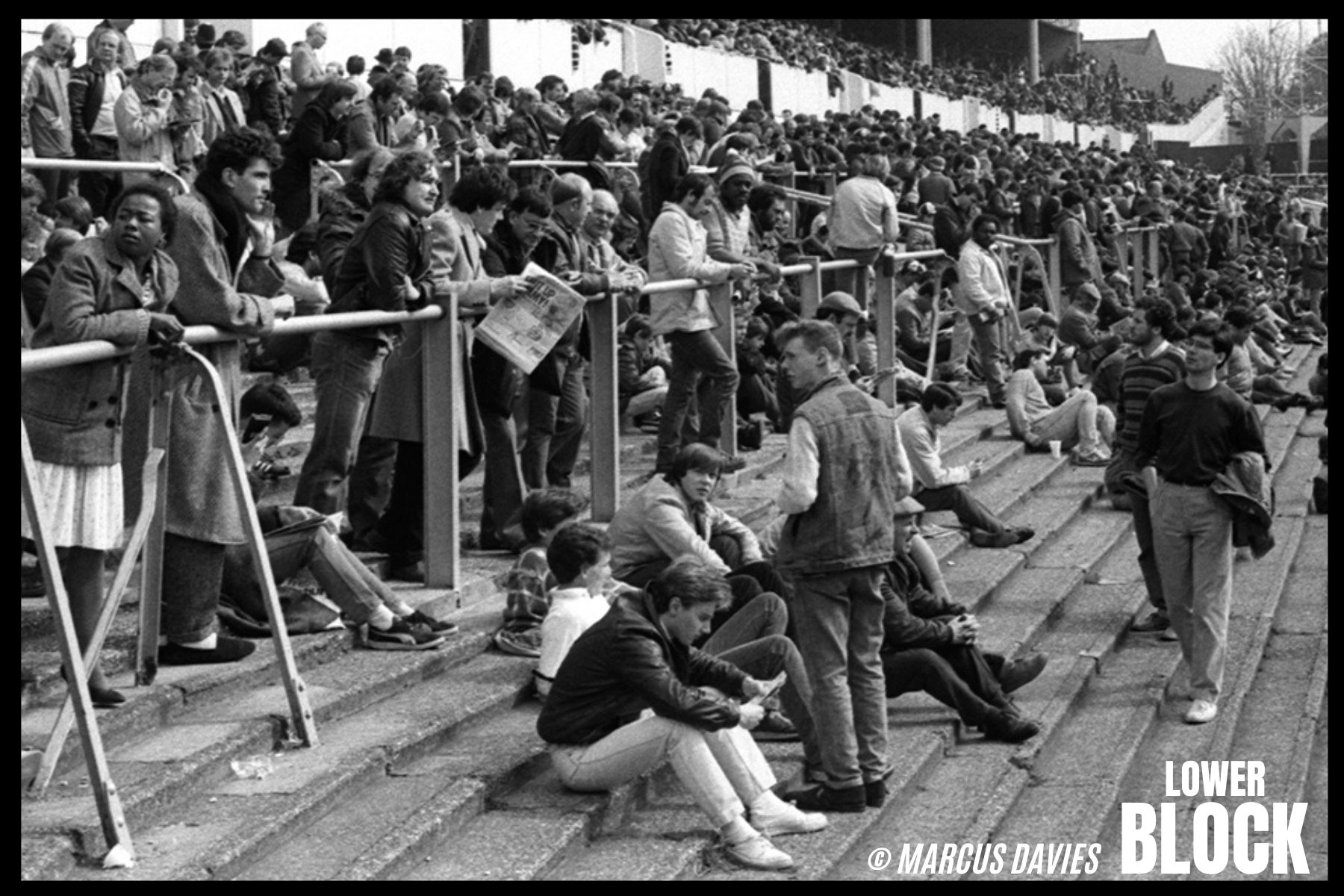
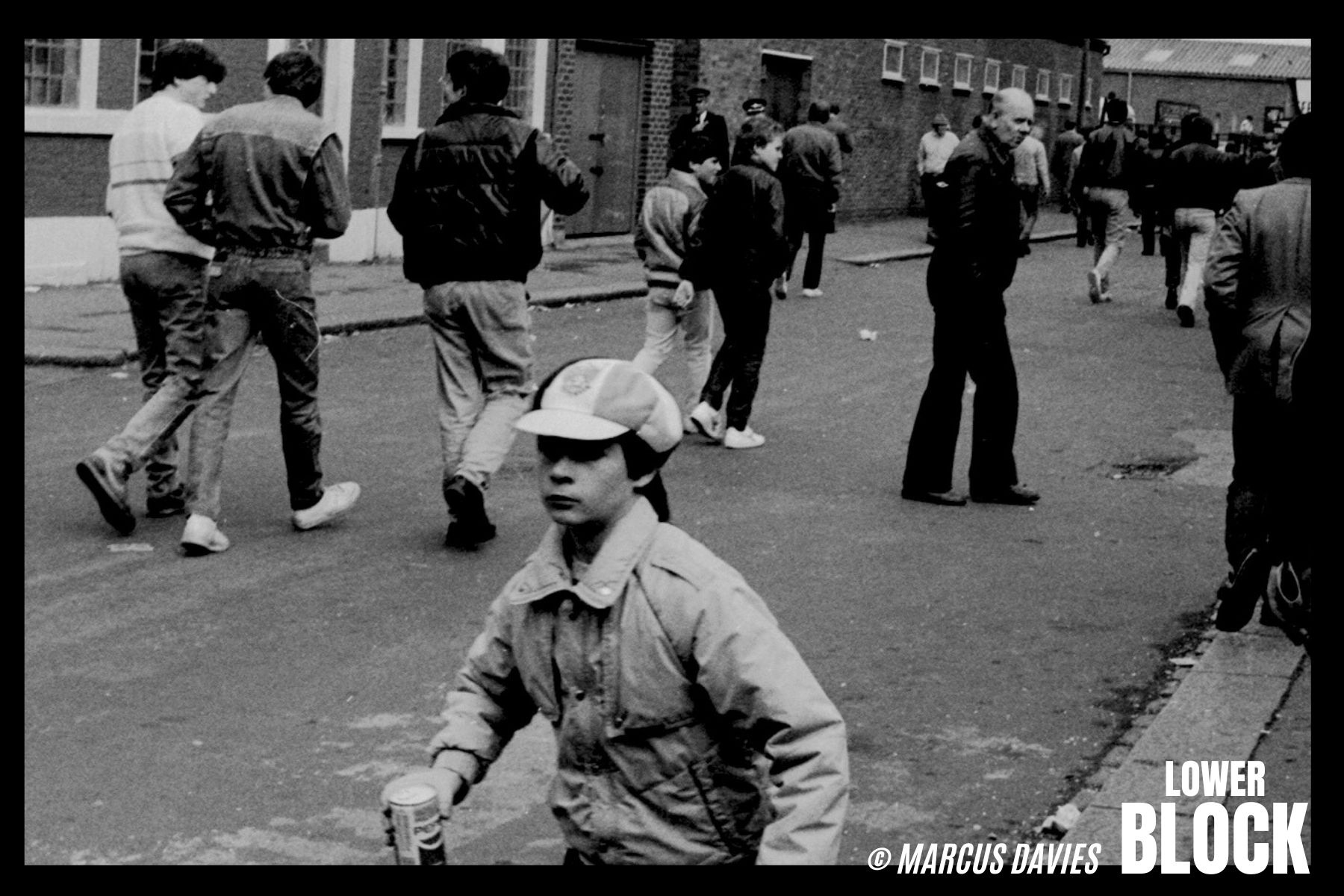
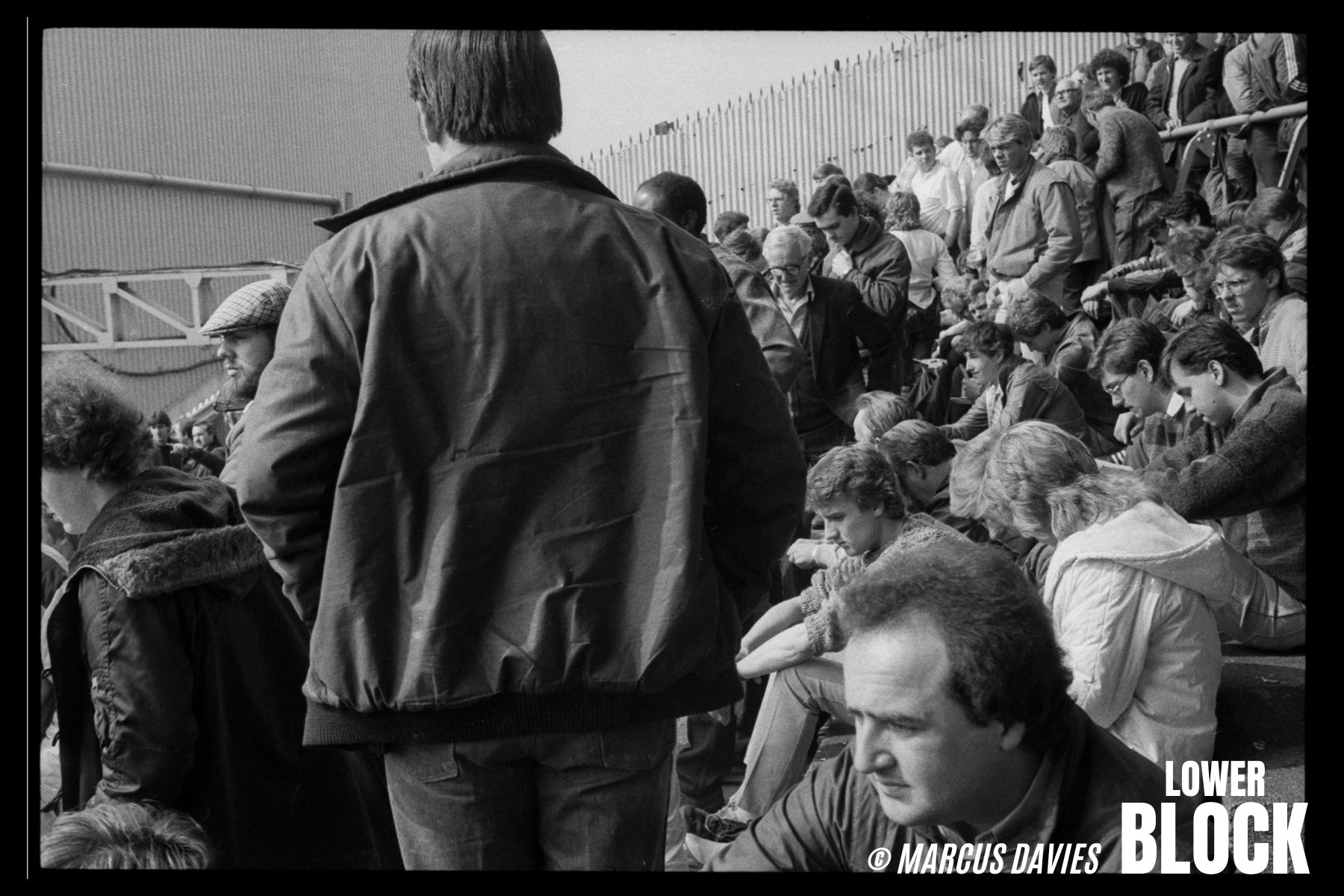
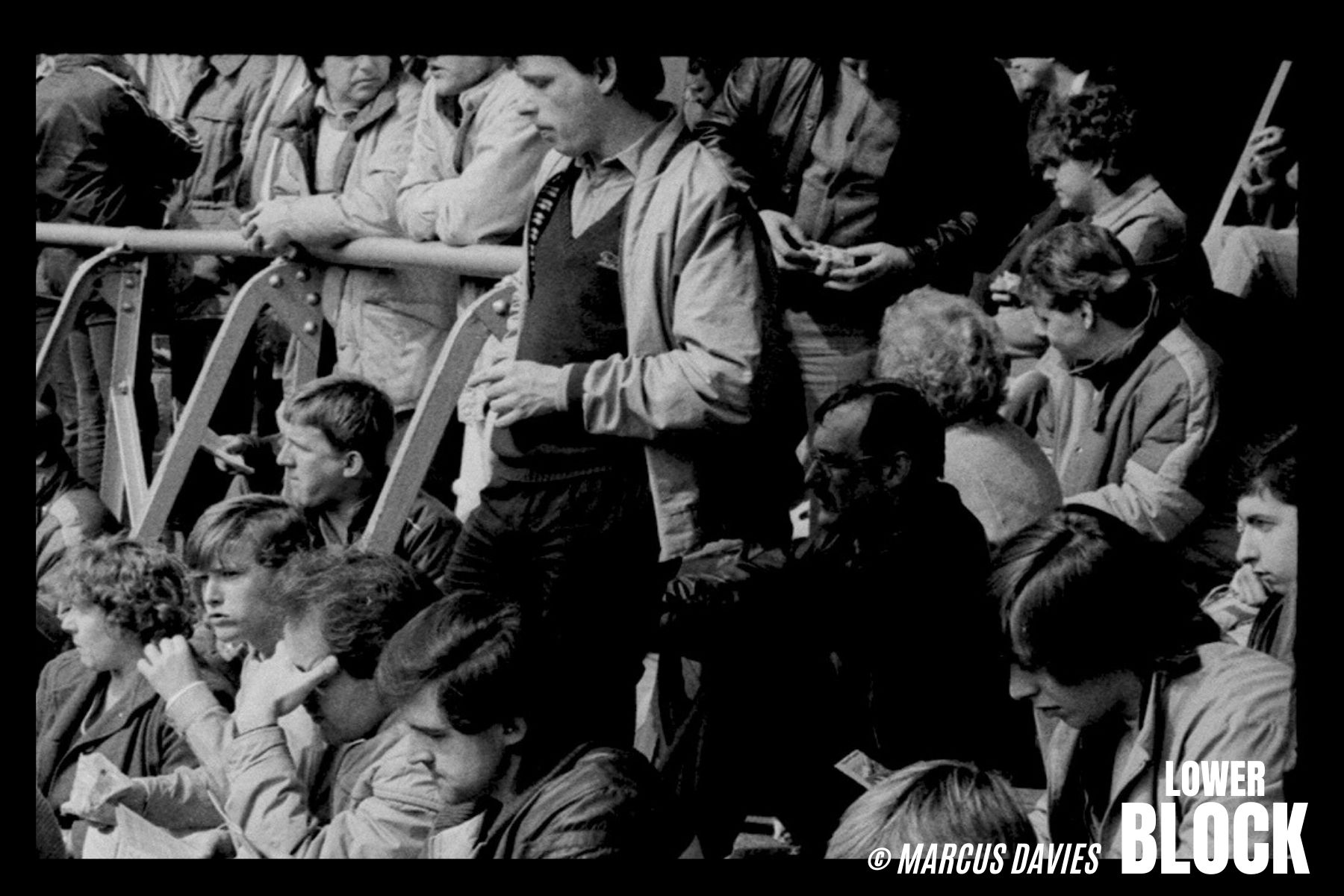
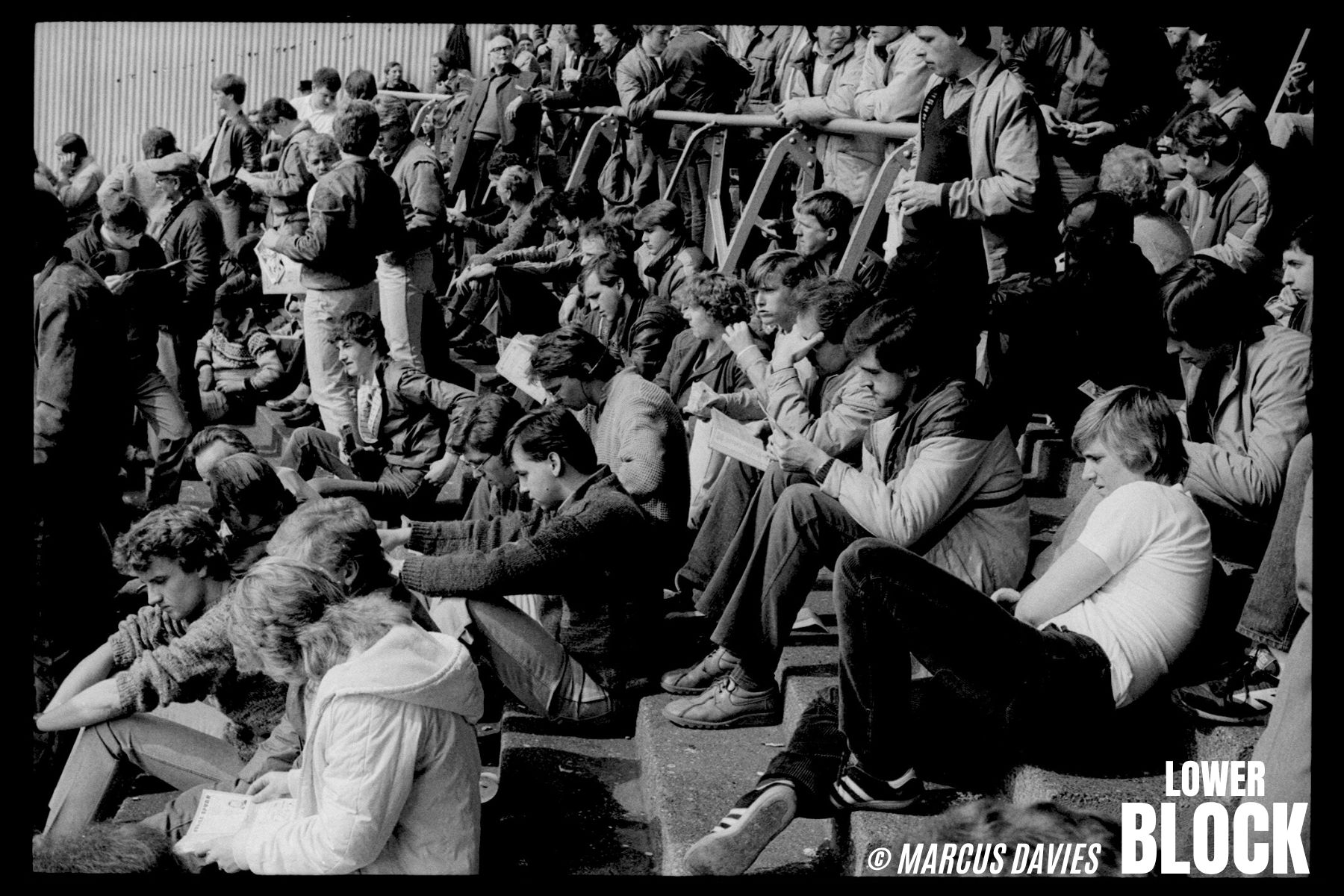
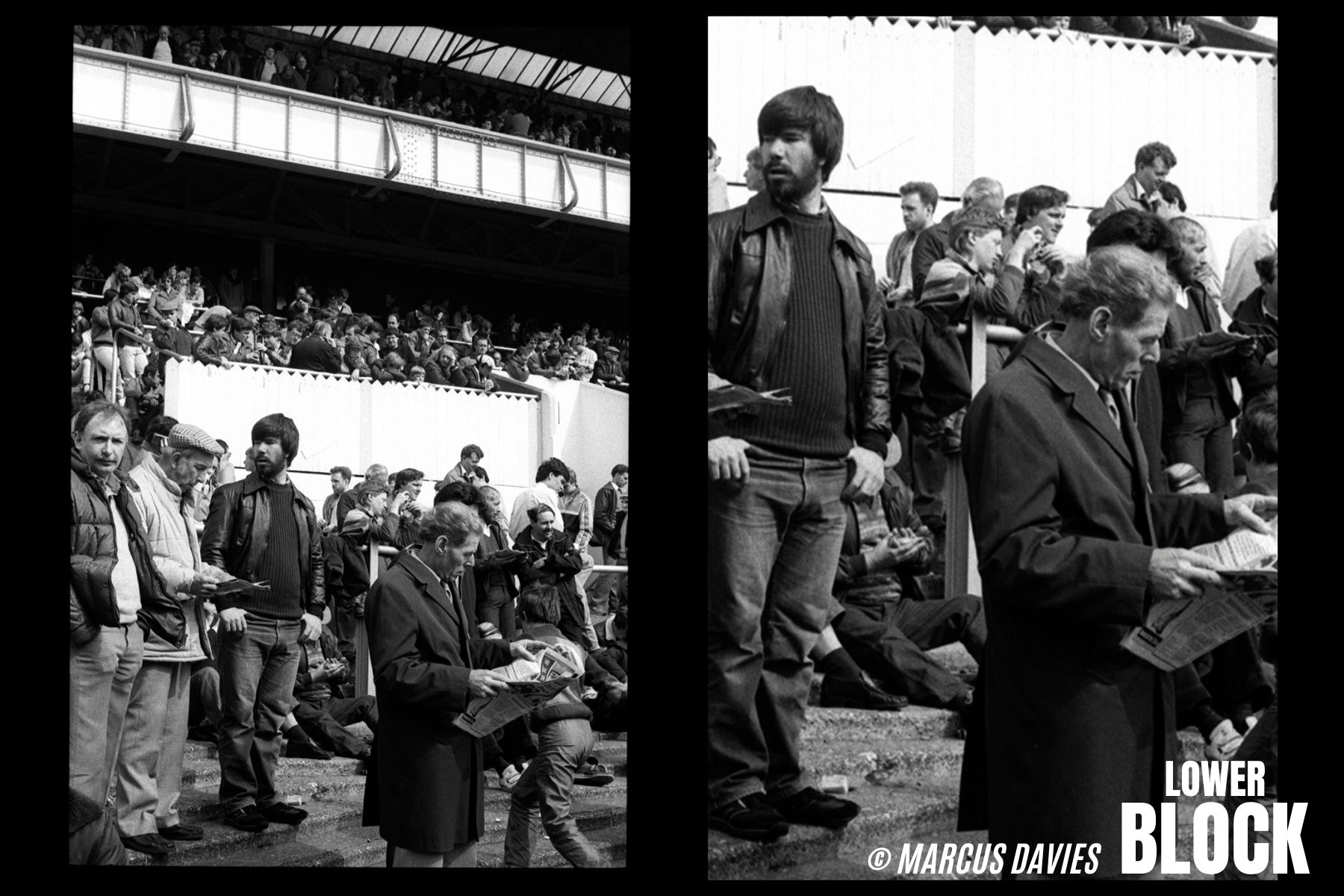
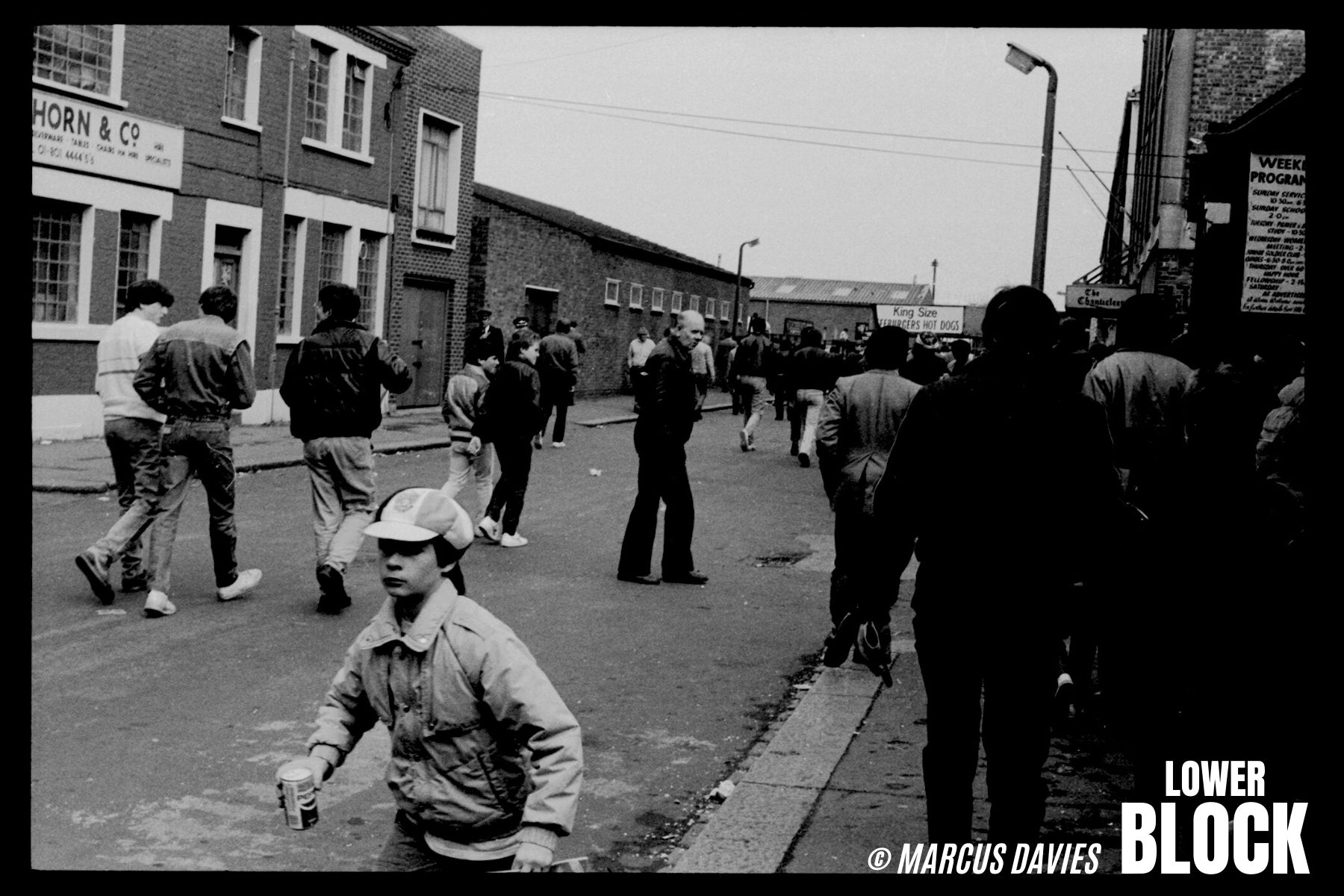
Davies’ black-and-white frames look away from the action. They linger on terraces, streets, and faces – especially a halftime sequence where fans sit on what were still standing areas. Matchday programmes and newspapers are flicked through; conversations drift. One supporter wears headphones, likely tuned to scores elsewhere or the pop of the day. Everything feels hushed, patient, suspended.
The details date it unmistakably: non-digital billboards stating their case without shouting; 1980s casuals – denim, jackets, trainers – at full confidence. There’s no obvious club merchandise, no sea of scarves. Mostly men, but women and children are present too. Football as shared routine, not spectacle.
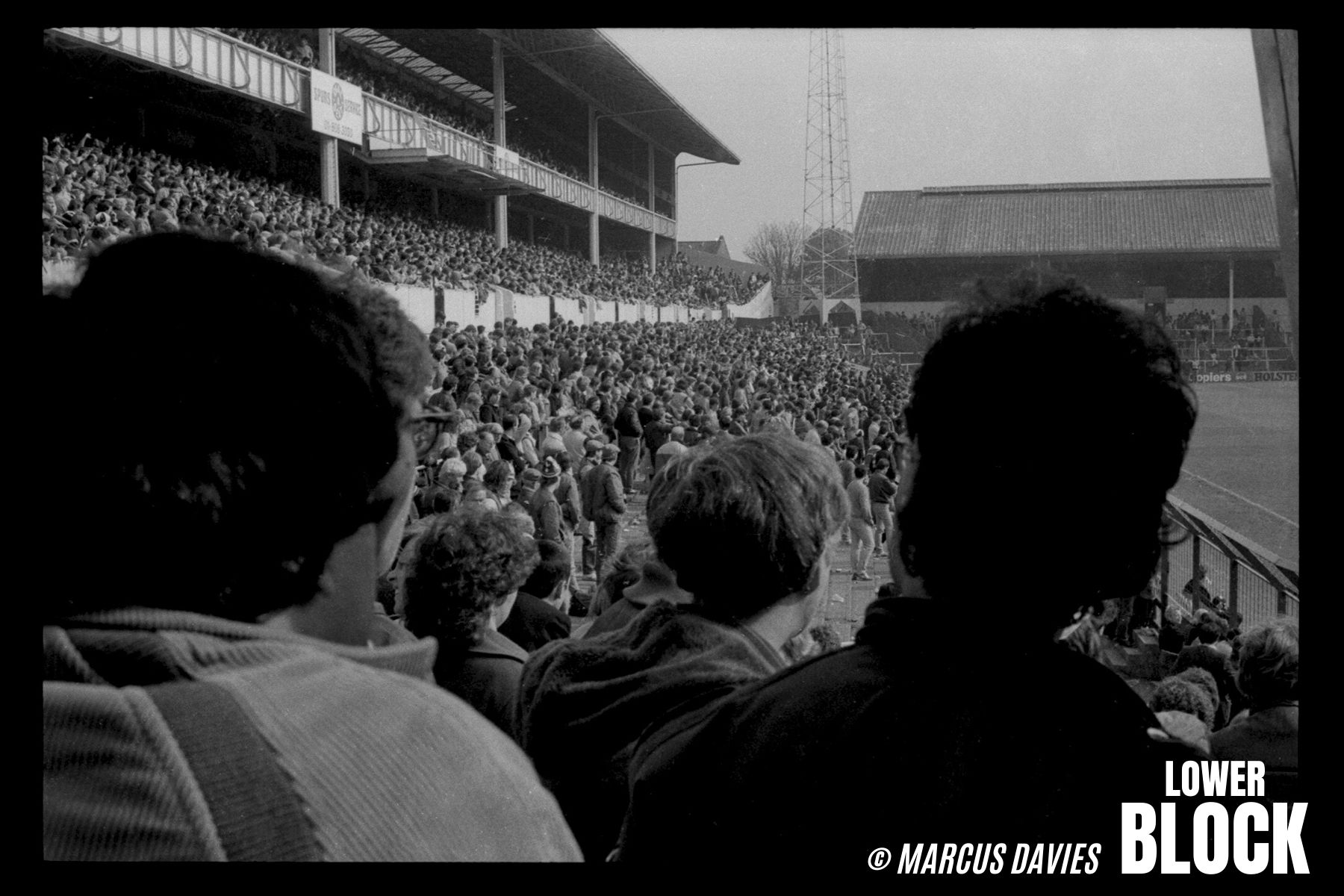
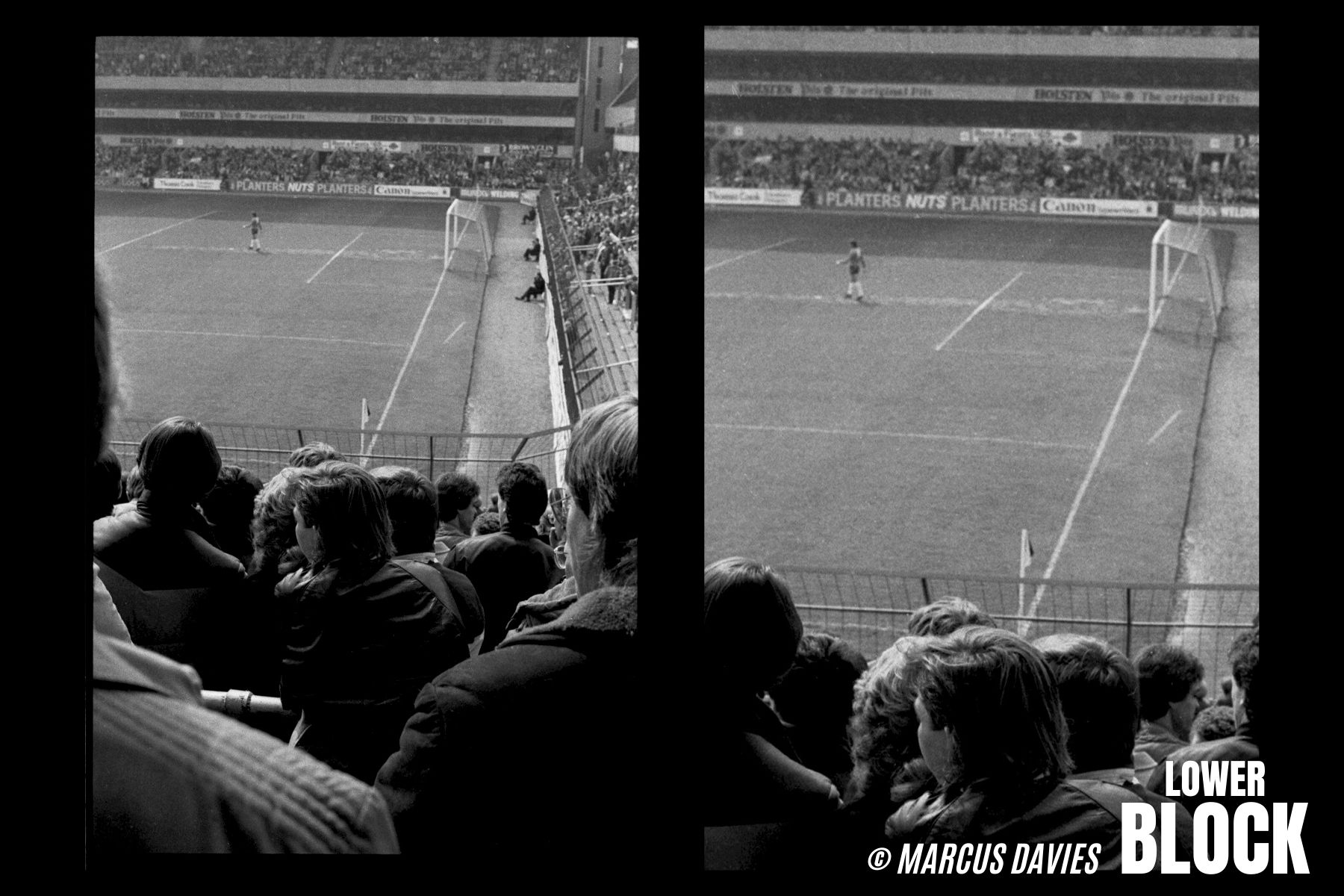
A lifelong football fan, Marcus Davies has photographed professionally for nearly fifty years. His work away from football has been widely exhibited in the UK and The Netherlands and is held in major collections including Citibank (New York and London), the Victoria & Albert Museum, and the Saatchi Collection. These images from White Hart Lane endure not for what happened next, but for the quiet before it did.