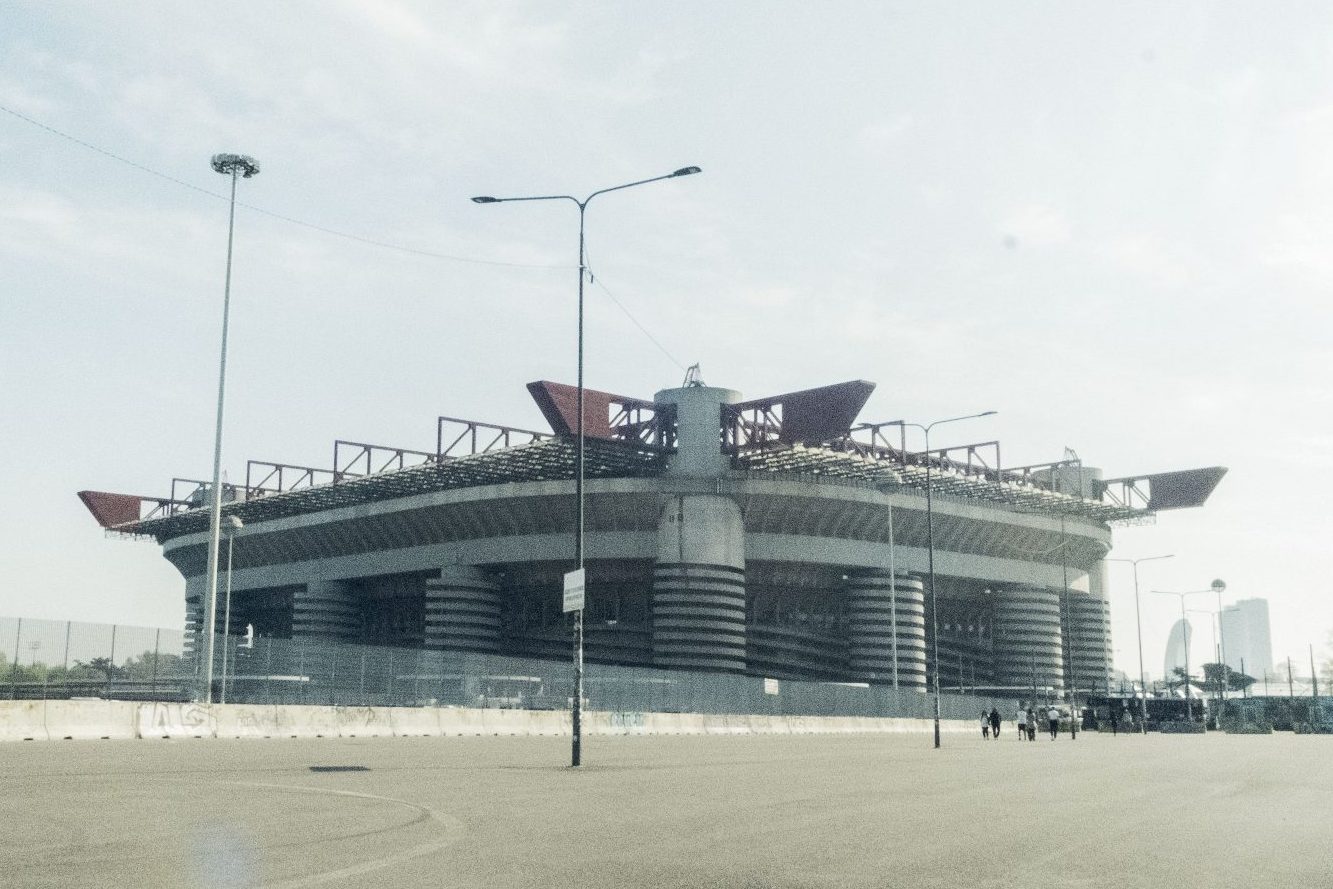
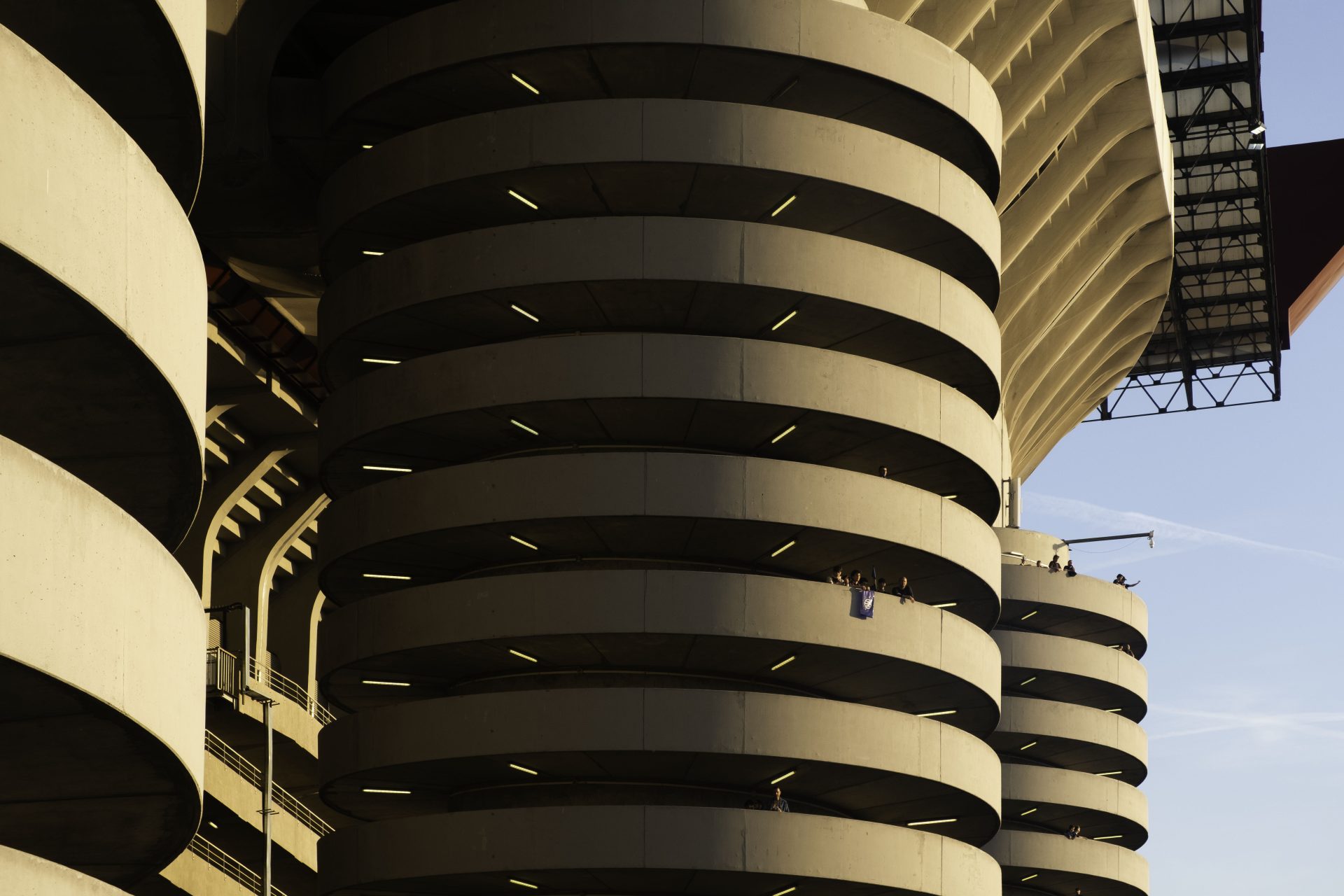
San Siro announces itself long before you reach your seat. Concrete ramps wrap around its exterior. Cylindrical towers rise towards a roof edged with enormous red girders. Approaching on a matchday, you join a stream of people heading towards a building whose outline is familiar even to those who have never visited Milan.
Officially the Stadio Giuseppe Meazza, San Siro is home to AC Milan and Inter Milan. Opened in 1926, it has become a cultural landmark in its own right, recognised across the world through football broadcasts, photographs and the memories of those who have watched a match beneath its roof.

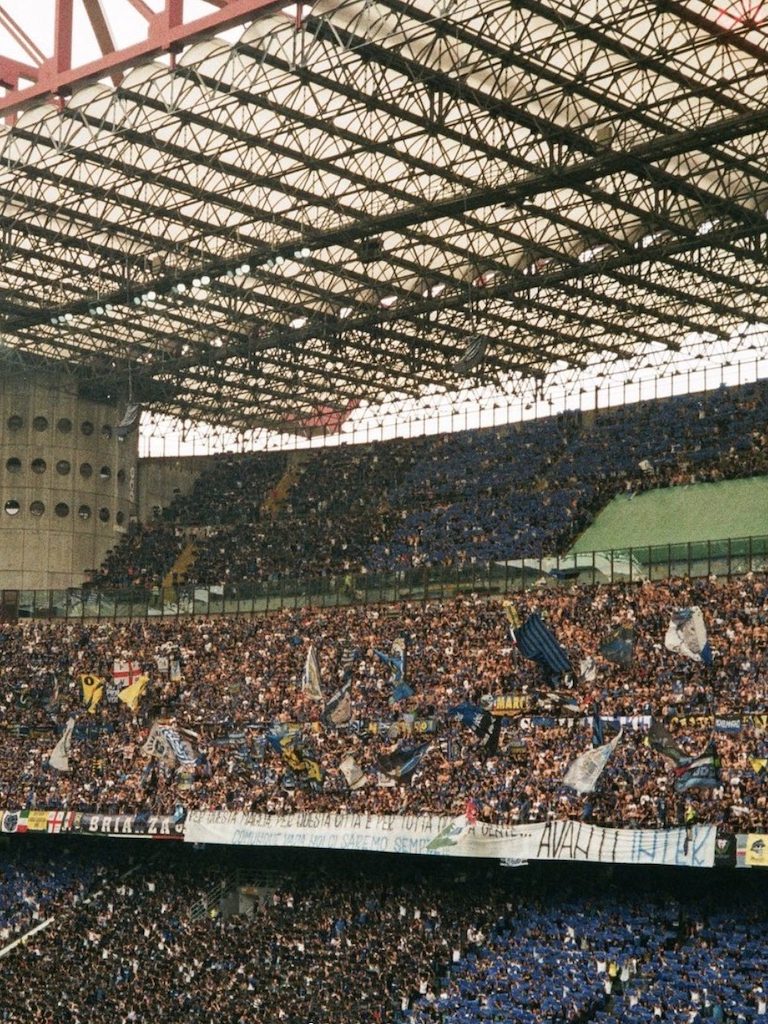
Its two ends have distinct identities. Inter’s supporters gather in the Curva Nord, the North Curve. AC Milan’s supporters gather in the Curva Sud, the South Curve. Their flags, songs and displays give the same structure two different lives.
With a replacement stadium now planned, the building and the culture around it deserve close attention. Lower Block’s archive brings together different ways of seeing San Siro, from Tony Davis’s Italia ’90 photograph to Alex Amorós’s documentary work and Guirec Munier’s studies of the ground after dark.
San Siro stadium history – from 1926 to a shared home
Construction began in 1925 at the instigation of AC Milan president Piero Pirelli. Designed by engineer Alberto Cugini and architect Ulisse Stacchini, the stadium was conceived specifically for football, with four separate stands and no athletics track.
It opened on 19 September 1926 with a friendly between Milan and Inter. Inter won 6–3, although Milan were initially the ground’s sole resident club.
The Municipality of Milan acquired the stadium in 1935, beginning a period of expansion. Inter moved in for the 1947–48 season, establishing the ground-sharing arrangement that continues today.
In 1980, the stadium was named in memory of Giuseppe Meazza, the celebrated Italian international who played for both clubs. San Siro, the name of the surrounding district, remains the name by which the ground is widely known.
That shared address has produced an unusual relationship with place. For generations of supporters, one building has held two sets of family memories, heroes and disappointments. The fixture changes, the colours change, and the same walk to the ground leads into a different football world.
San Siro architecture – the spirals and Italia ’90
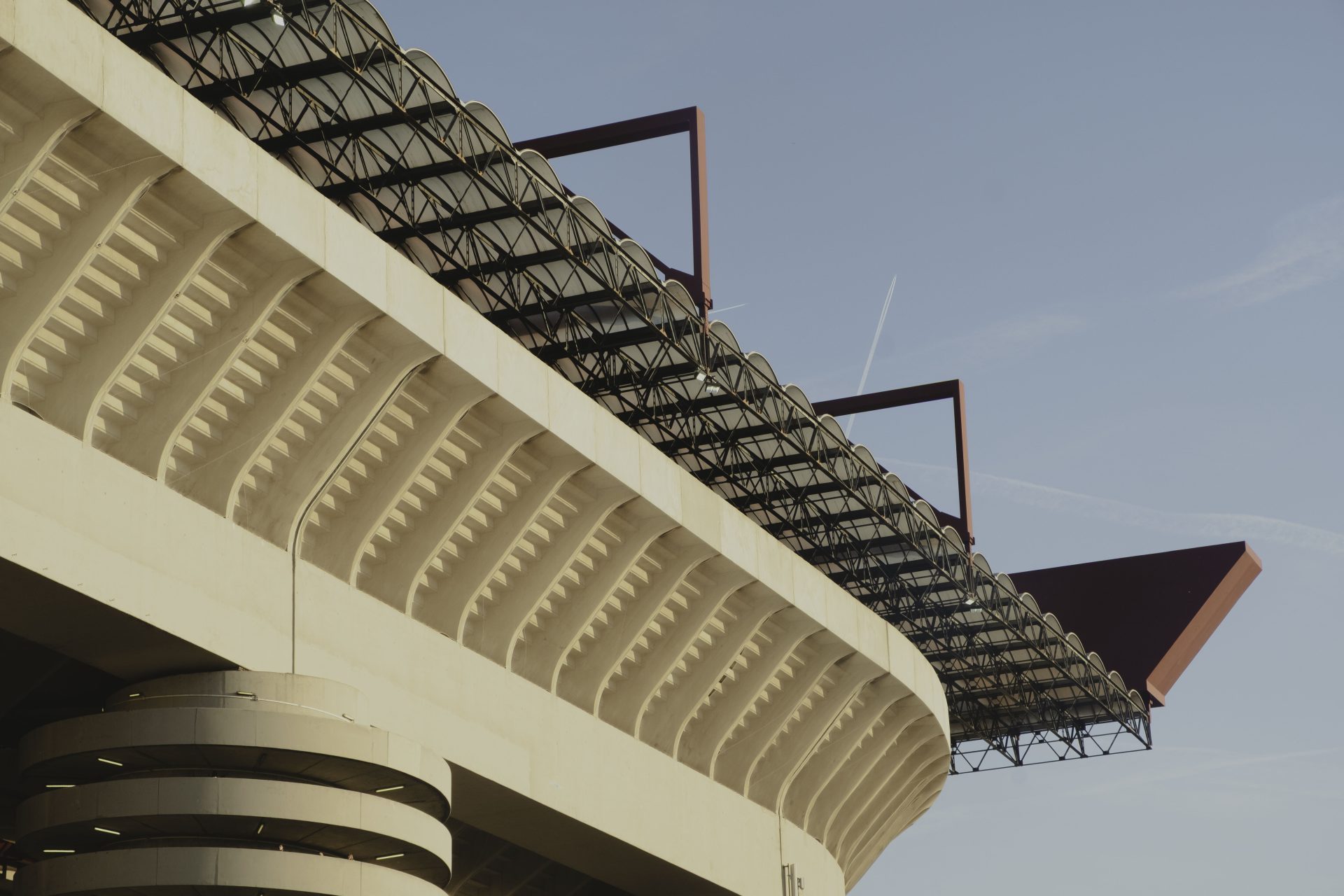
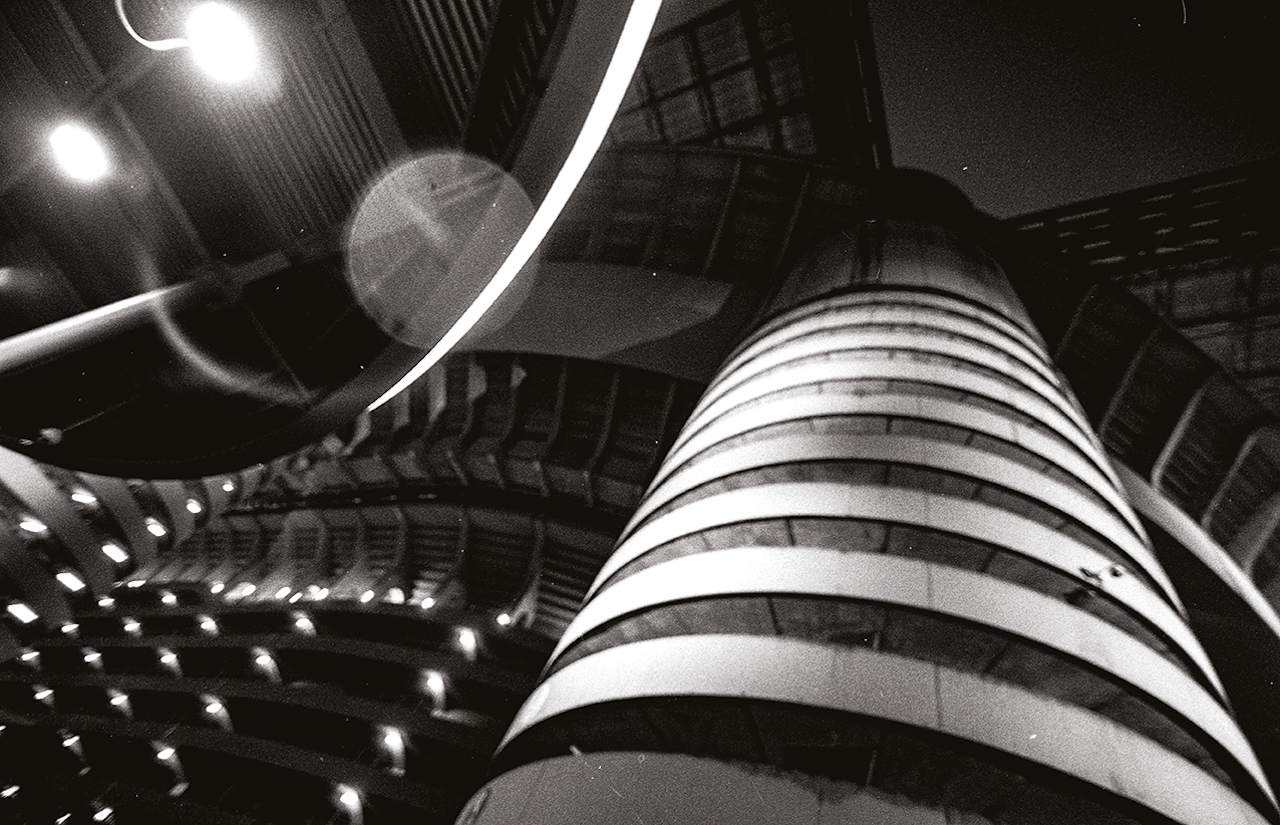
The stadium’s architecture developed through successive expansions. Its characteristic helical ramps arrived with the second tier in 1955, giving supporters access to the upper stands and the exterior its distinctive sweeping lines.
The transformation for the 1990 World Cup added a third tier, eleven cylindrical supporting towers and a roof carried by a vast steel structure. Four of the towers support the roof’s main beams. Together, these additions created the imposing silhouette familiar today.
San Siro hosted the opening match of Italia ’90, when Cameroon beat Argentina 1–0. For viewers discovering Italian football through that tournament, the ground became part of the summer’s visual identity.

There is an extraordinary tension in the building. Its materials are heavy and exposed, yet the curves keep the eye moving. From outside, the ramps make the structure appear to turn. Inside, the steep stands and overhanging roof concentrate attention on the pitch.
Tony Davis photographed San Siro during Italia ’90. His black-and-white image of the spirals records the architecture at a moment when the stadium was being introduced to a new worldwide audience.
Explore Tony Davis’s San Siro Spirals archival print.
Curva Nord – Inter Milan’s North Curve
The Curva Nord, meaning the North Curve, is the end associated with Inter Milan’s organised support. Blue and black flags, banners and coordinated displays give it a visual identity that belongs to the Nerazzurri.
The word curva describes the curved end of an Italian ground, but its significance extends beyond the shape of the stand. It can represent a community of supporters, a place within the stadium and the collective identity expressed there.
At Inter matches, the North Curve provides a focal point for that expression. Songs travel out into the wider stadium. Large displays bring individual supporters into a shared image, assembled through preparation and participation.


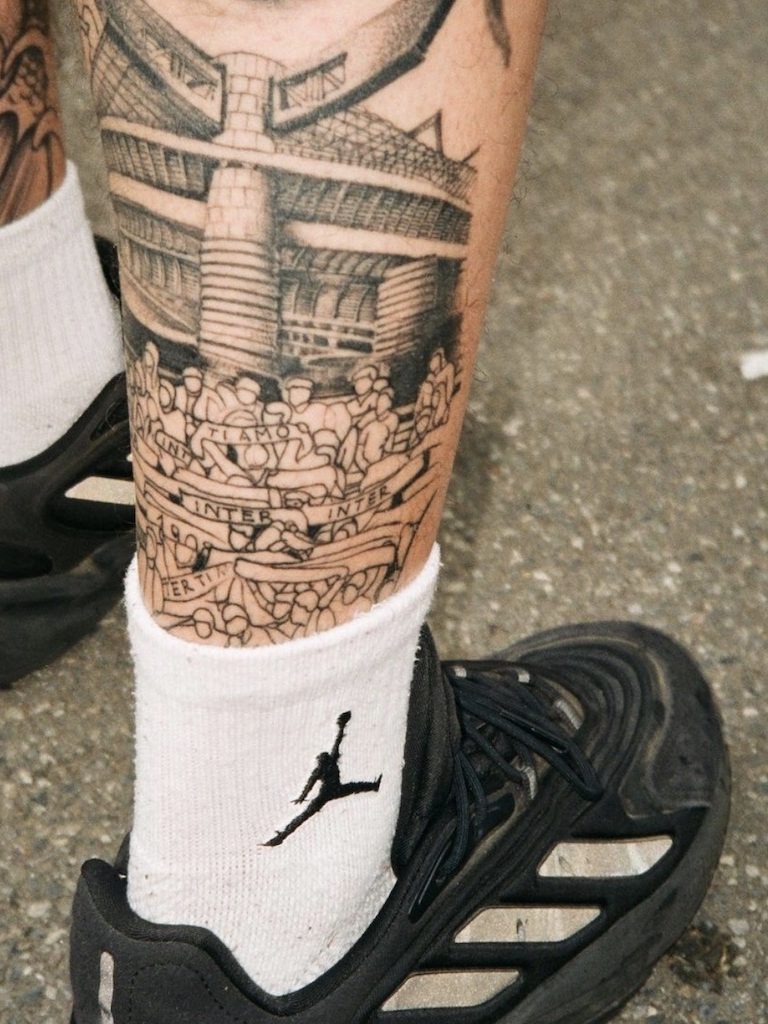
Francesca Scandella’s photographs bring a personal perspective to supporting Inter. Her connection to the club began with her grandfather, while her work explores football shirts, street style, atmosphere and the relationships surrounding matchday.
Her story is a reminder that the crowd contains thousands of individual histories. Loyalty can begin at home, passed between generations, before becoming something publicly expressed in the stand.
Read Francesca Scandella’s feature on Inter Milan, Italian football culture and style.
Curva Sud – AC Milan’s South Curve
At the opposite end, the Curva Sud, meaning the South Curve, is associated with AC Milan’s organised support. Red and black take over, with their own flags, songs, banners and visual traditions.
A tifo is a coordinated supporter display. Cards, fabric, flags and banners can turn an entire stand into a composition. From across the ground, the image is striking. Within it, every person holding something aloft contributes to the whole.


Danny Last’s photograph of an AC Milan tifo captures that relationship between the individual and the crowd. The stand becomes a statement of collective identity, its scale made possible by the supporters taking part.
Explore Danny Last’s AC Milan Tifo — San Siro archival print.
Giuseppe Romano’s photographs offer another view of Milan support, taking in title celebrations, European nights and the emotional investment of those following the club. His work connects the spectacle with the people producing it.
Explore AC Milan — The Soul of the San Siro, photographed by Giuseppe Romano.

The Milan derby – two clubs, one stadium
The Derby della Madonnina gives San Siro’s shared existence its most concentrated expression. AC Milan and Inter meet in a ground both regard as home, with the Curva Sud and Curva Nord expressing their separate loyalties at opposite ends.
The rivalry is written into the appearance of the stadium. Choreography, colour and sound become part of the contest, surrounding the football with another form of competition.
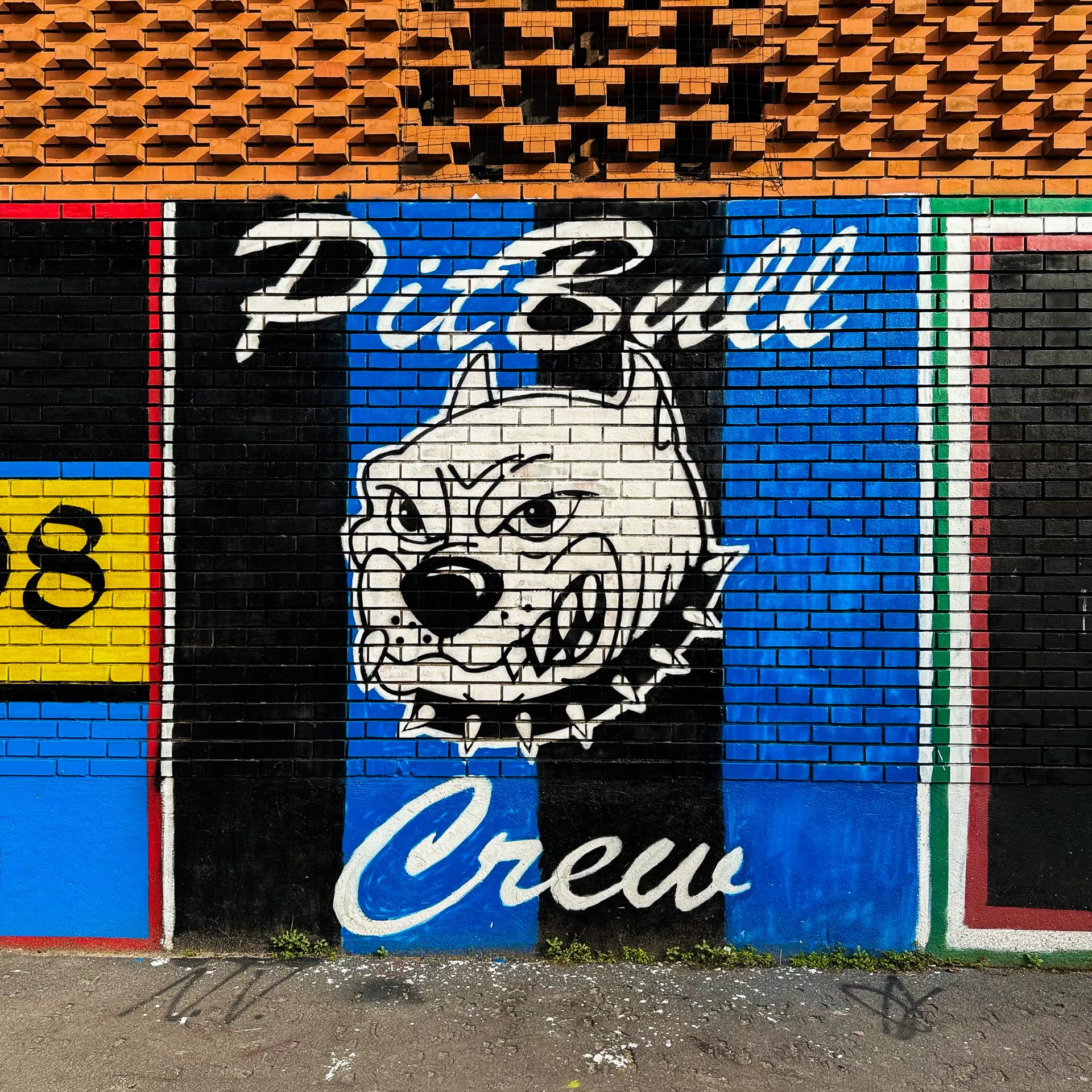
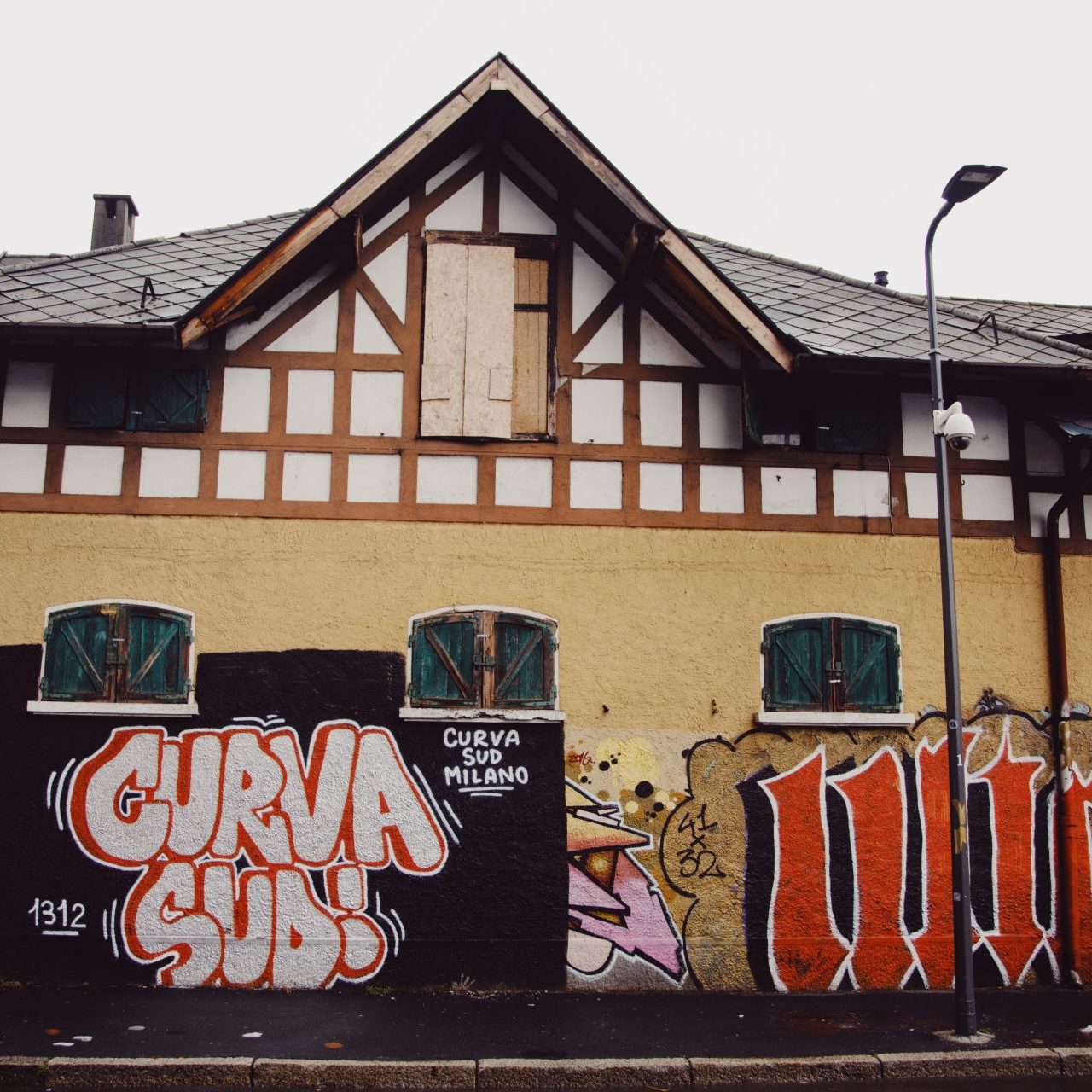
For a photographer, this creates a subject that stretches far beyond the action. Faces in the crowd, the moment a banner rises and supporters arriving through the surrounding streets can reveal how a derby is experienced.
The match also returns the building to its everyday purpose. However imposing the architecture, its meaning is renewed by people coming back, taking their places and caring about what happens.
A football pilgrimage – San Siro as a cultural icon
San Siro is one of football’s places of pilgrimage. Supporters and enthusiasts travel from around the world to experience the stadium, including people whose own club plays elsewhere. For some, the attraction begins with a childhood television memory. For others, it is the architecture, a favourite player or a long fascination with Italian football.
Known as La Scala del Calcio, it carries a reputation that reaches beyond the two clubs. Seeing the structure emerge above the surrounding streets, climbing its ramps and entering the stands can feel like stepping into a familiar photograph.
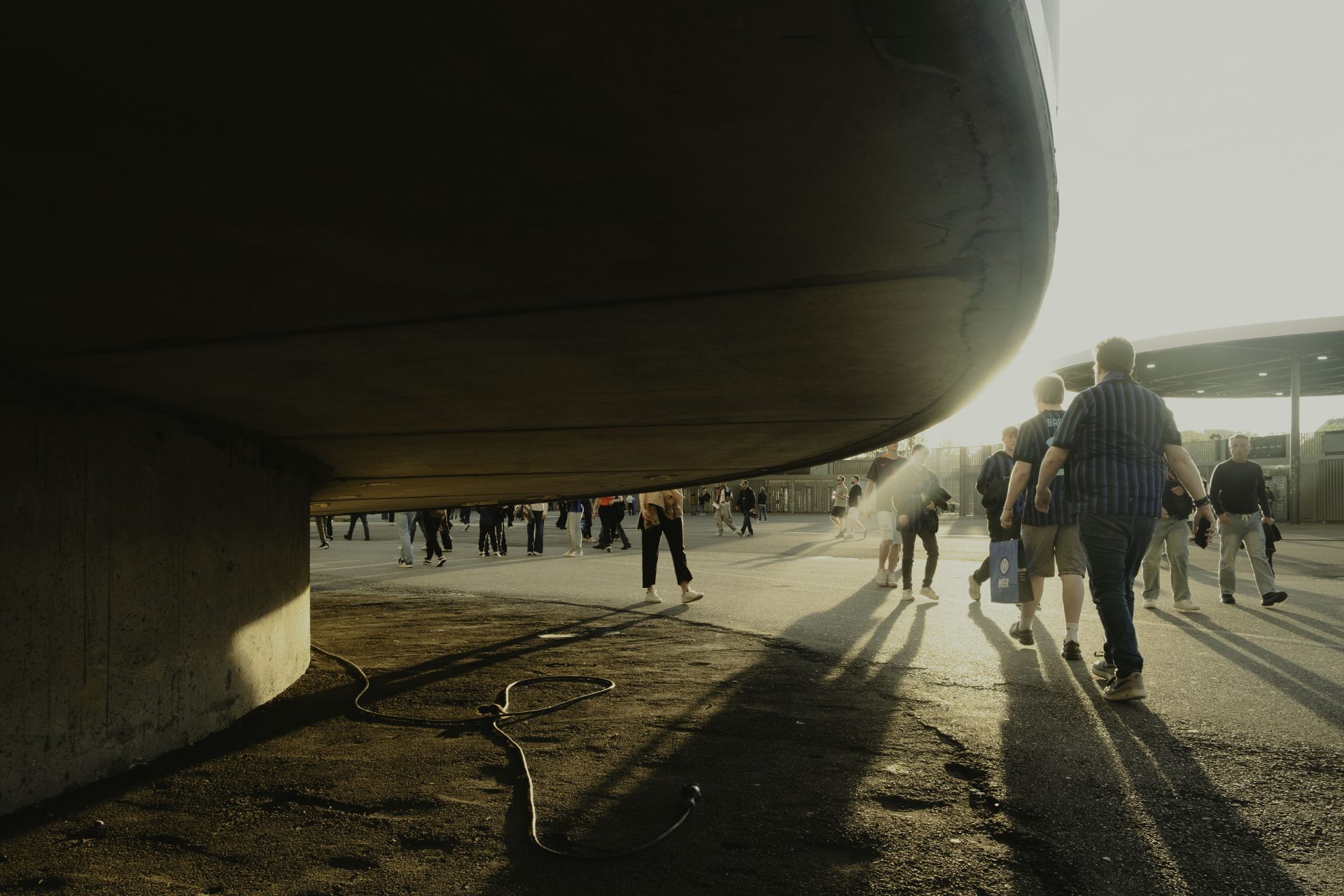
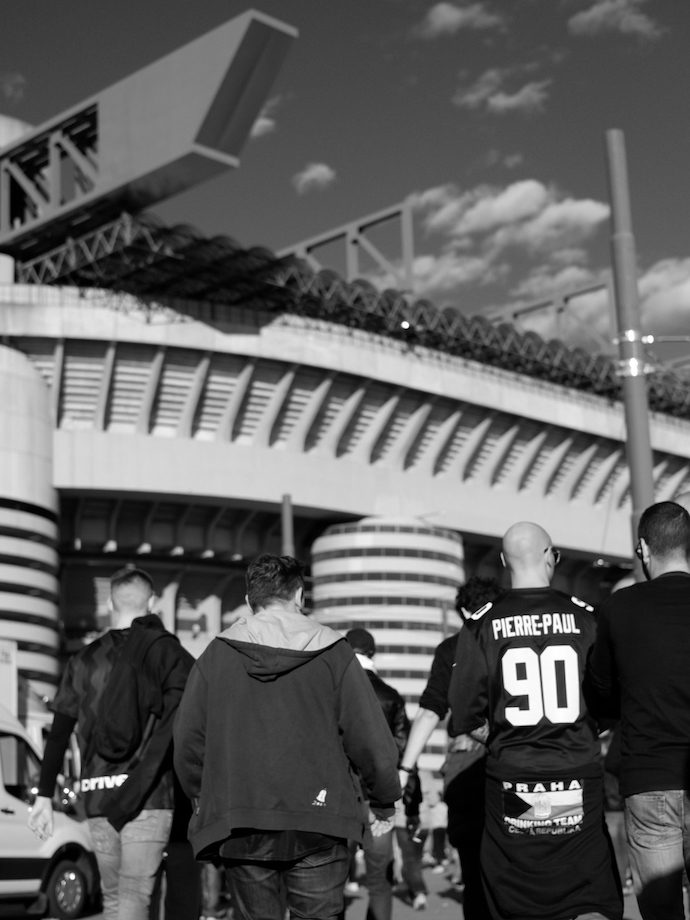
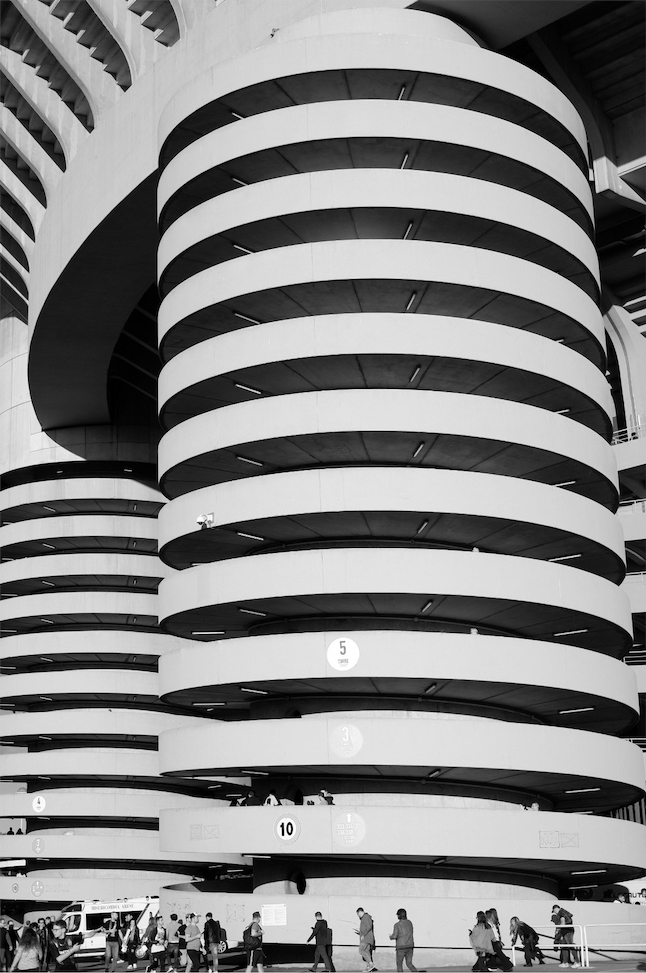


That international appeal brings an important tension. The atmosphere visitors travel to experience depends on the supporters who attend regularly. It is sustained through repeated journeys, established friendships and commitment across seasons.
As an editorial question, the issue is how clubs balance their global attraction with those local foundations. Ticket affordability and access, the space given to organised support and respect for matchday traditions all matter. If visiting a celebrated ground becomes increasingly expensive or its regular supporters feel pushed aside, the qualities that made it desirable can be weakened.
Football travel can deepen appreciation of a place and its people. At San Siro, that begins with recognising the ground as part of other people’s weekly lives, and treating the culture around it with the same interest as the building itself.
Beyond the stadium – Forza San Siro by Alex Amorós
Alex Amorós’s work explores the relationship between San Siro and its surroundings. His photographs move between the stadium and the district, following the connections between football, public space and community.

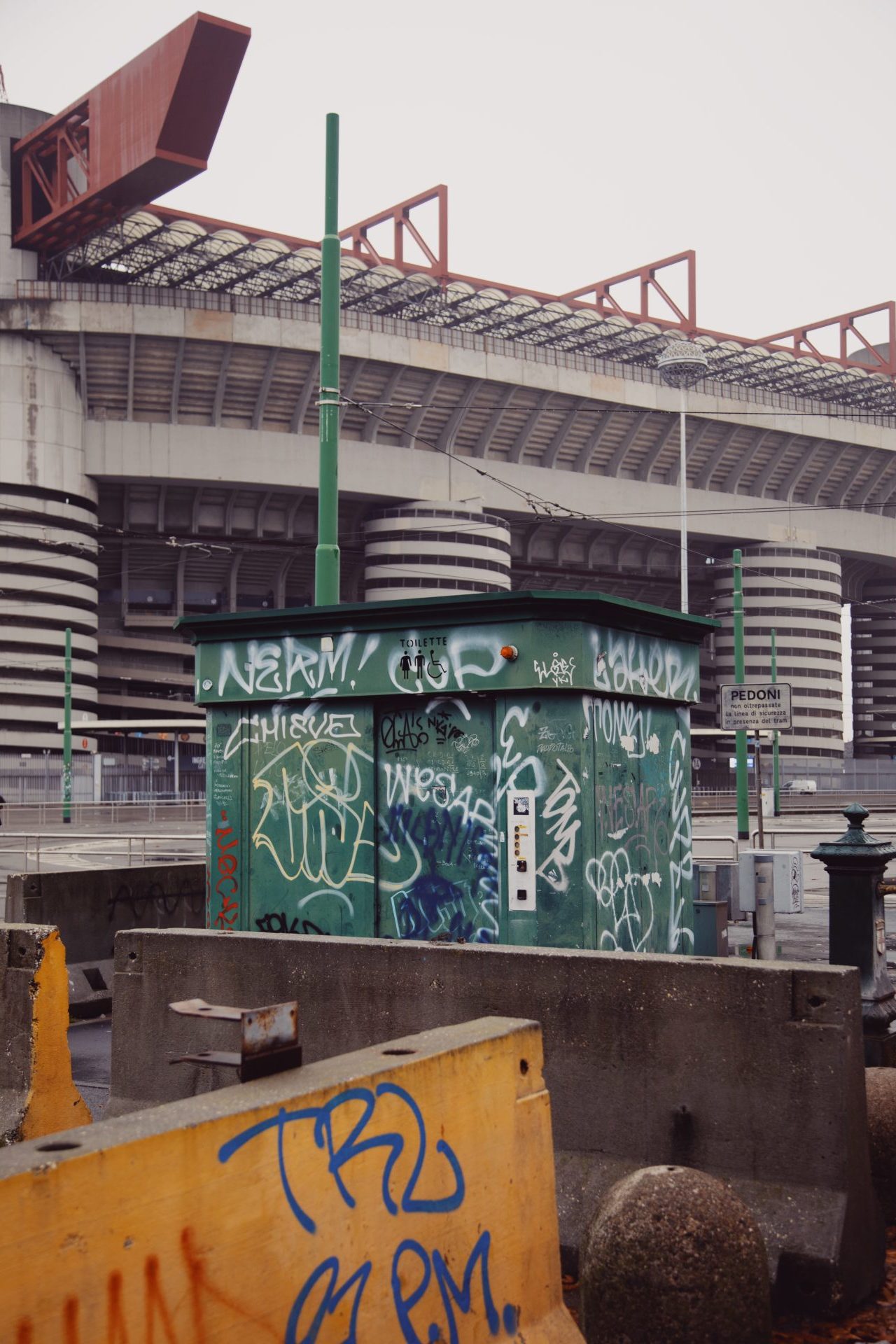


That wider view matters. A ground becomes part of a neighbourhood through the journeys people make around it and the places where they meet. Over time, those routines become inseparable from the experience of supporting a club.
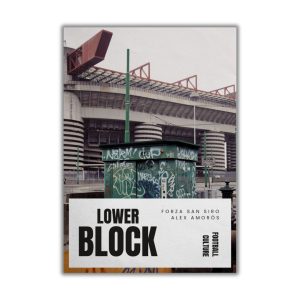
Published by Lower Block in 2023, Forza San Siro brings together 38 colour photographs across 30 pages in an A5 Edition. It documents the stadium through its relationship with the people and streets of Milan.
Discover Forza San Siro by Alex Amorós.
Explore the accompanying photo feature, Inter & AC Milan — San Siro.
San Siro at night – photographed by Guirec Munier
Guirec Munier turned his camera towards the stadium when Inter hosted Club Brugge. His photographs examine its architecture after dark, when artificial light picks out the concrete, curves and steelwork.
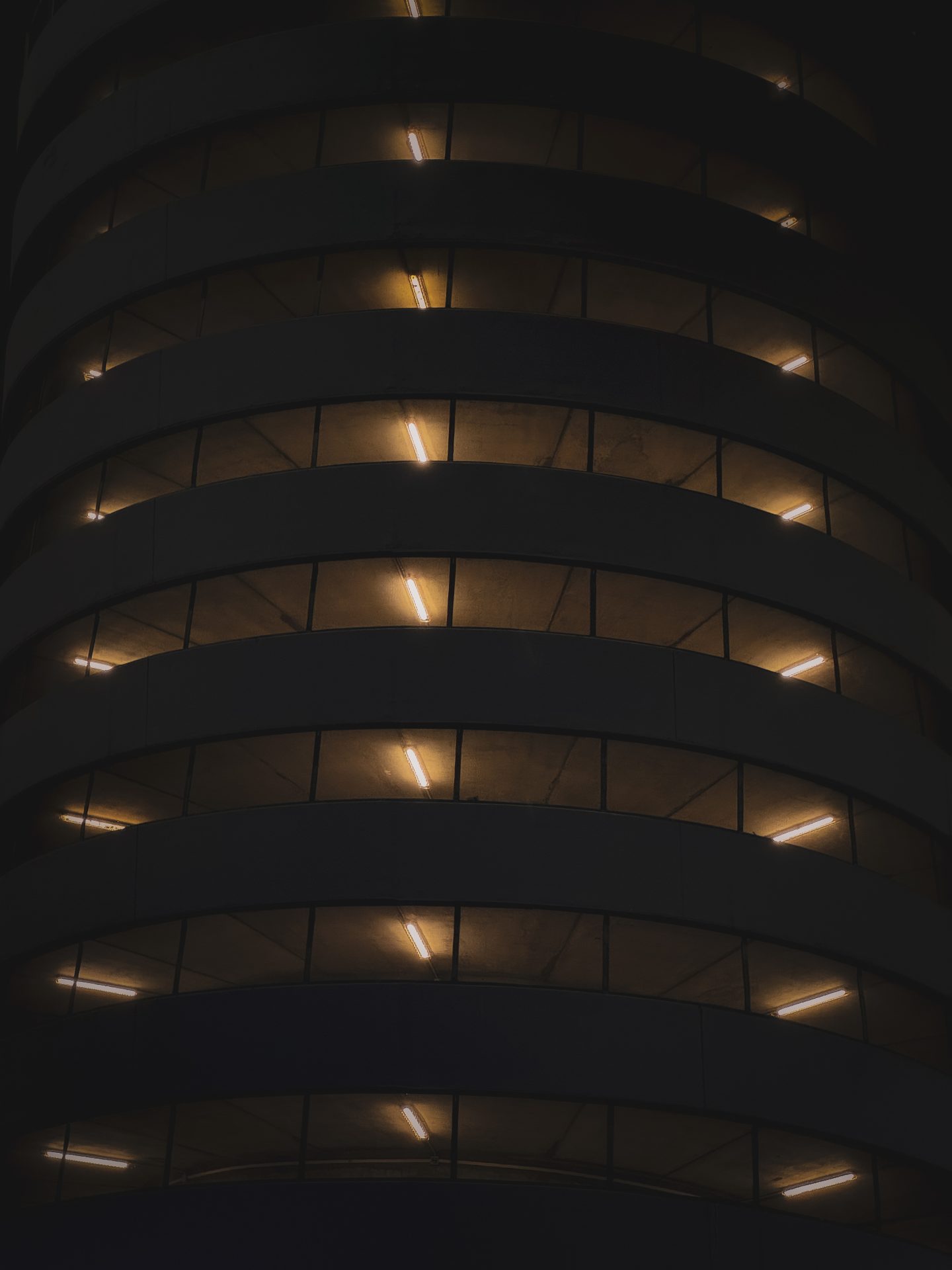
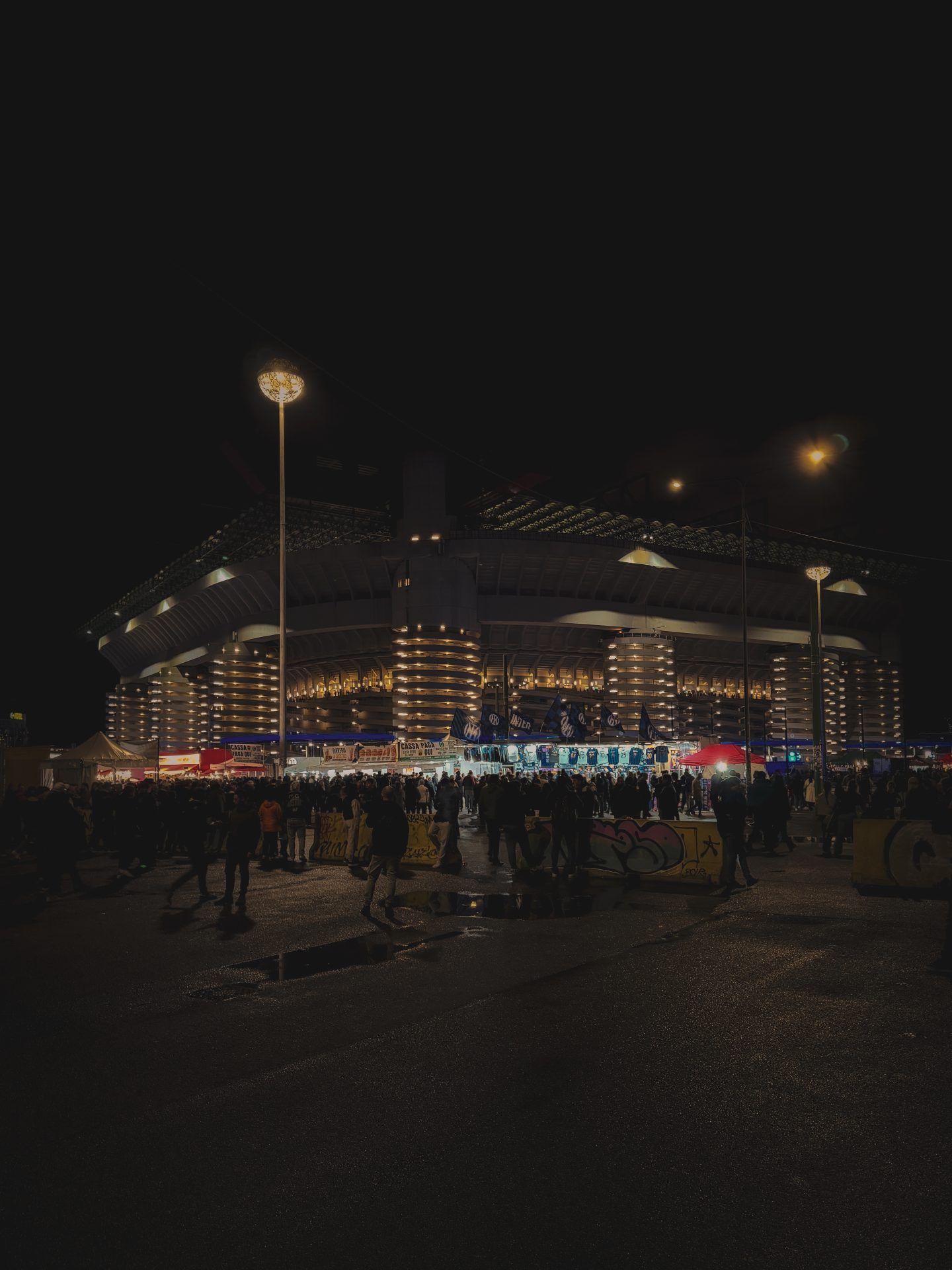
They offer a different encounter with a building usually seen as the setting for a match. Attention shifts to its proportions, the relationship between the towers and roof, and the way light reveals its surfaces.
Photography allows that slower reading. Across Lower Block’s archive, the same ground appears as architecture, meeting place, spectacle and part of the surrounding streets. Each photographer adds another perspective to its record.
See San Siro at Night — The Grandeur of La Scala del Calcio, by Guirec Munier.
What will replace San Siro? The new stadium plans
Latest update – November 2026.
On 29 October 2026, AC Milan and Inter unveiled plans for Generali Stadium, a new shared home designed by Foster + Partners and MANICA.
The proposed stadium has approximately 71,500 seats, a concrete X-frame exterior and a sweeping double-curved roof. The design includes two seating tiers, with steep stands at either end intended to preserve the impact of the two curve.
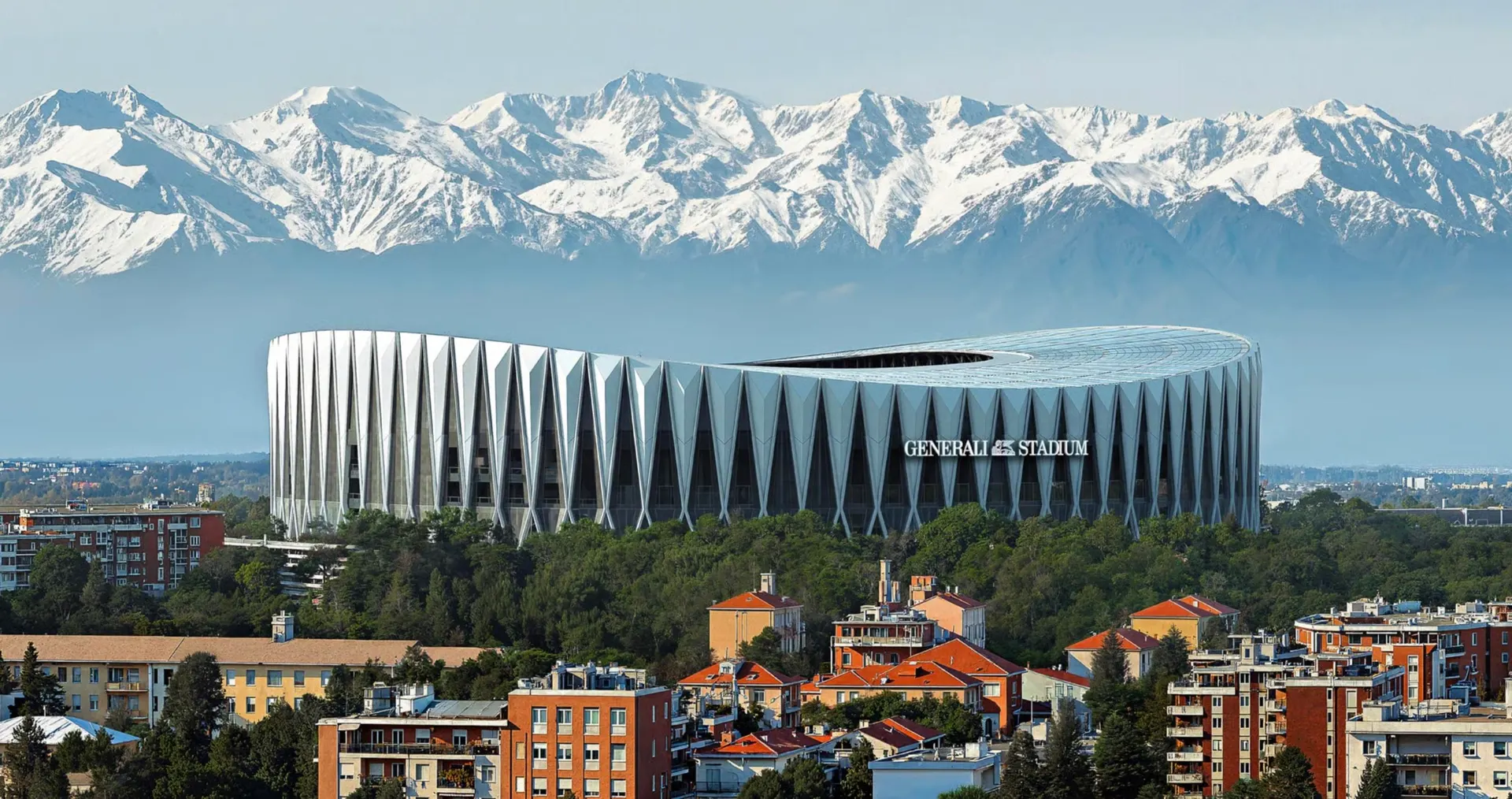
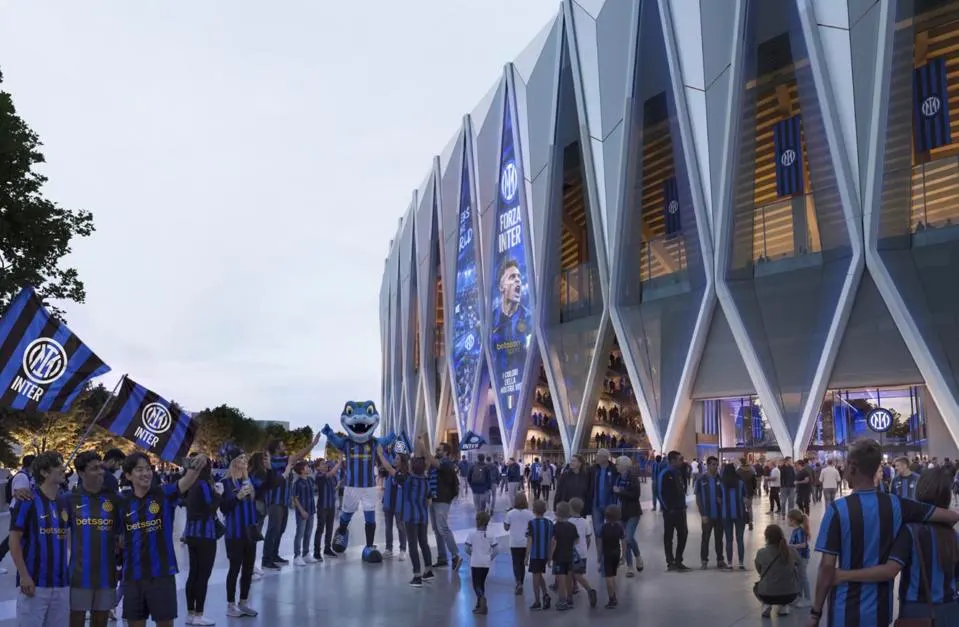
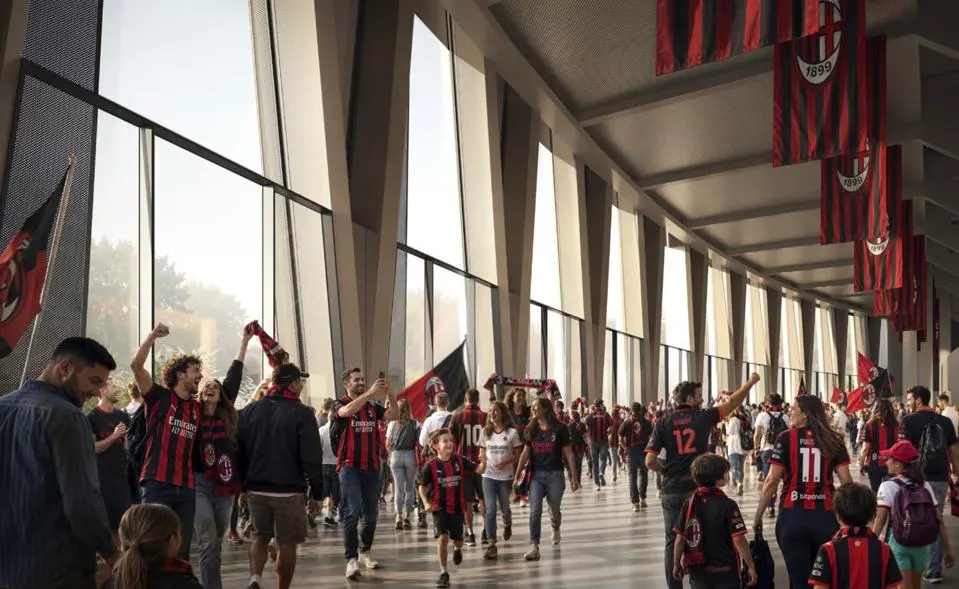
The clubs say construction is expected to begin in 2028, with the first match targeted for the 2031–32 season, subject to the necessary approvals.
The wider redevelopment process includes plans for the partial demolition of the existing Meazza stadium. The Municipality of Milan confirmed that this formed part of the implementation-plan process initiated in March 2026.
For supporters, the significance extends beyond a change of address. The debate involves the architecture people recognise, the places where they meet, the affordability of attending and how established supporter traditions will work in a new setting.
A stadium’s character develops through use. The people who attend will shape the new ground’s atmosphere over time, just as generations have shaped San Siro.
The photographs collected here preserve different chapters of the existing ground’s life. As the plans develop, they will remain a record of the building, the two clubs and the football culture that grew around them.
Explore more Italian football culture
San Siro is one part of a much wider photographic story. Lower Block’s Italian football coverage follows supporters, stadiums, streets and local identities across the country.
-
 AC Milan Tifo – San SiroPrice range: £50.00 through £75.00
-
 San Siro SpiralsPrice range: £130.00 through £175.00
-
 Forza San Siro | Alex Amorós£8.50
More from the Lower Block Archive