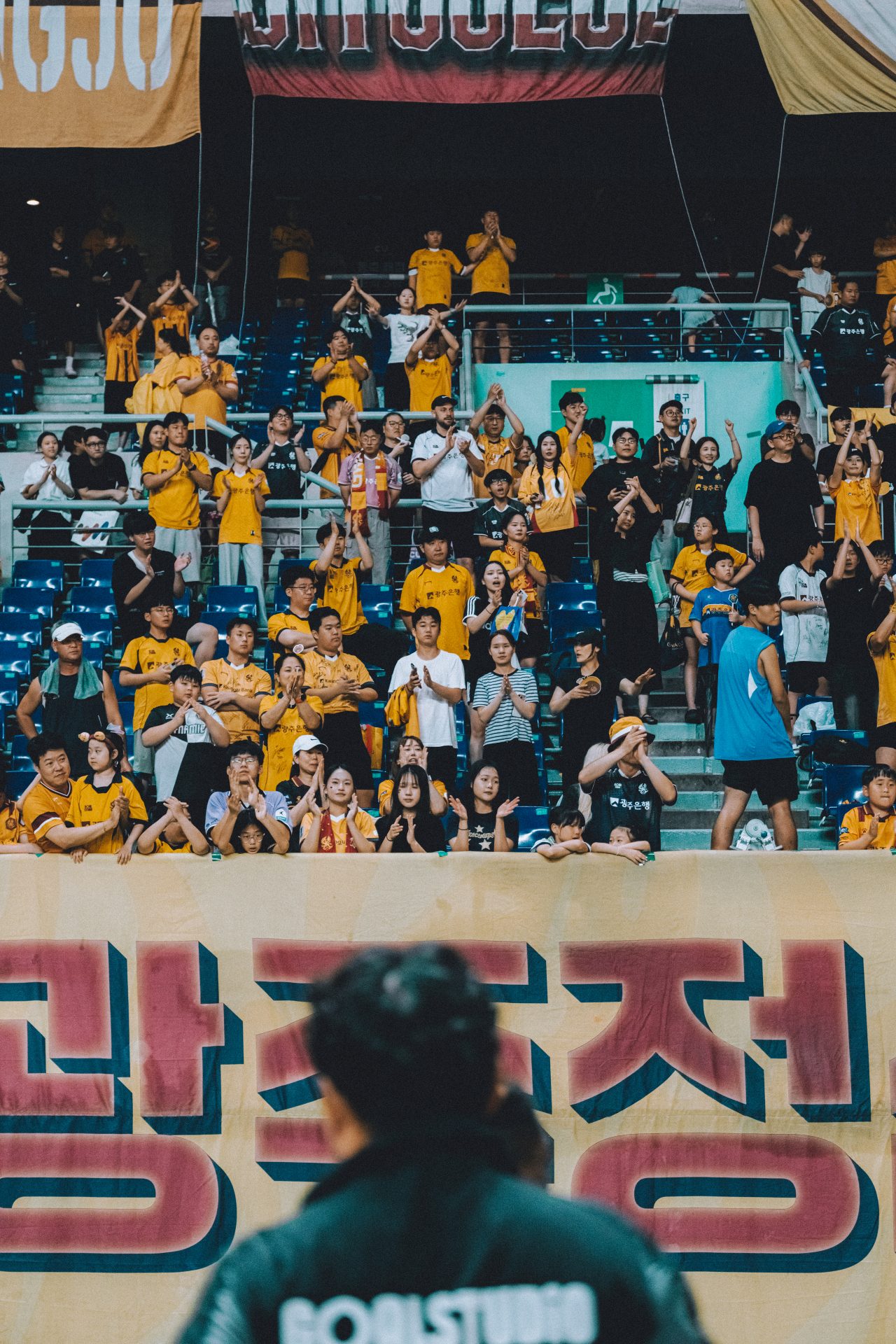
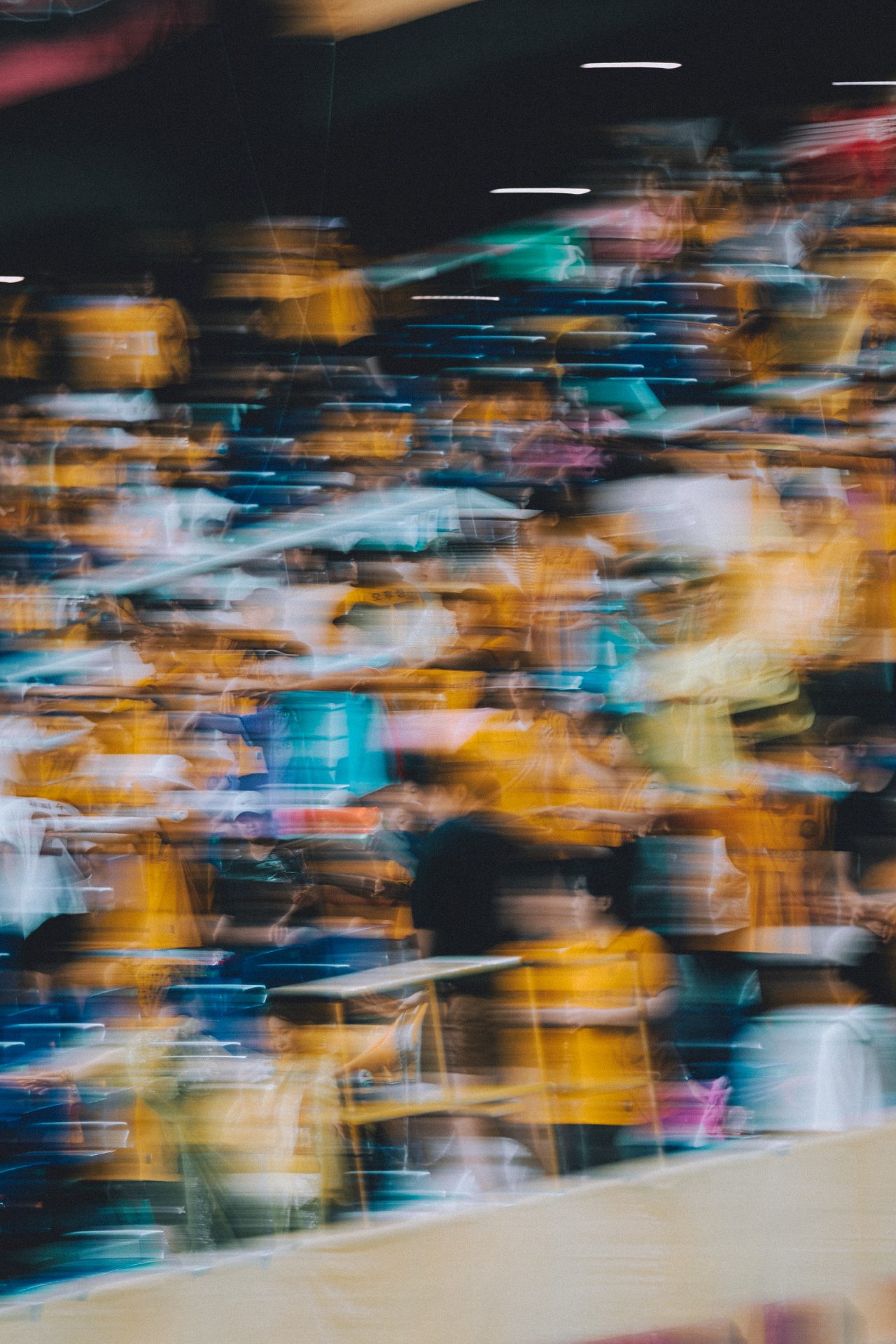
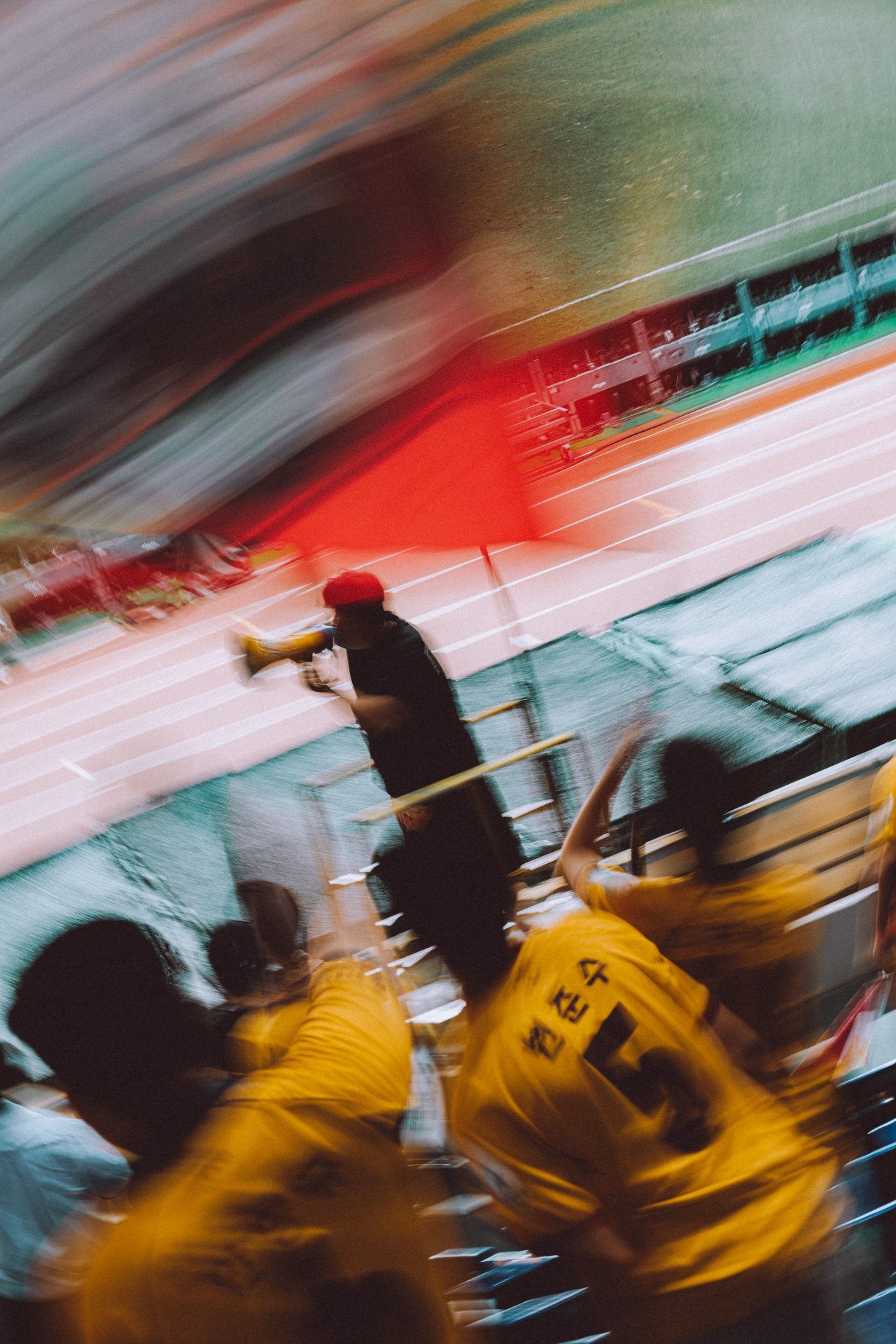
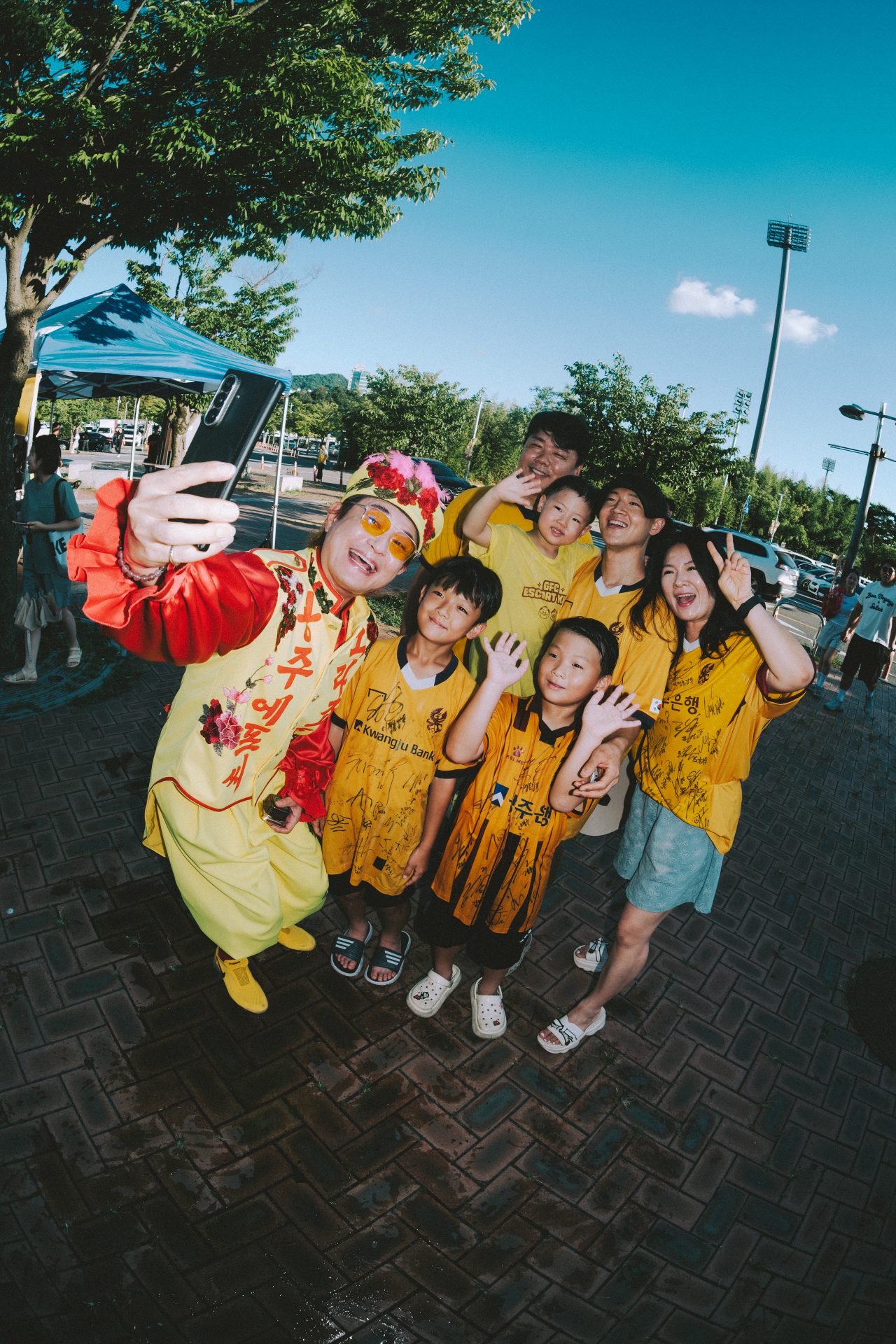
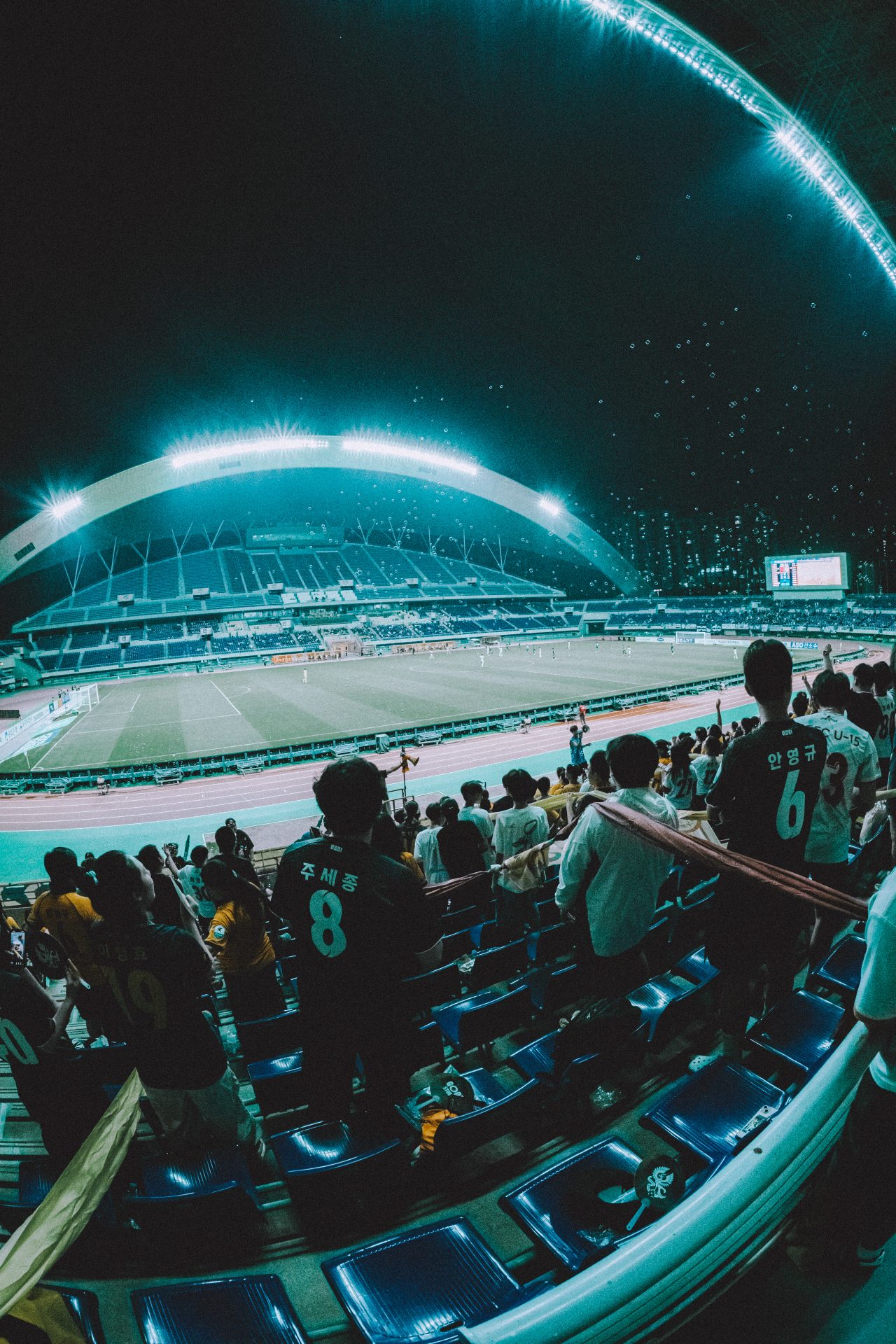
Photographer Jason Min documents Gwangju FC with a supporter’s eye. His colour photographs bring together fans, players and matchday rituals, using long exposures and fisheye perspectives to capture movement within an often quiet, composed atmosphere. Families mix with groups leading chants, flags wave and club colours connect the crowd.
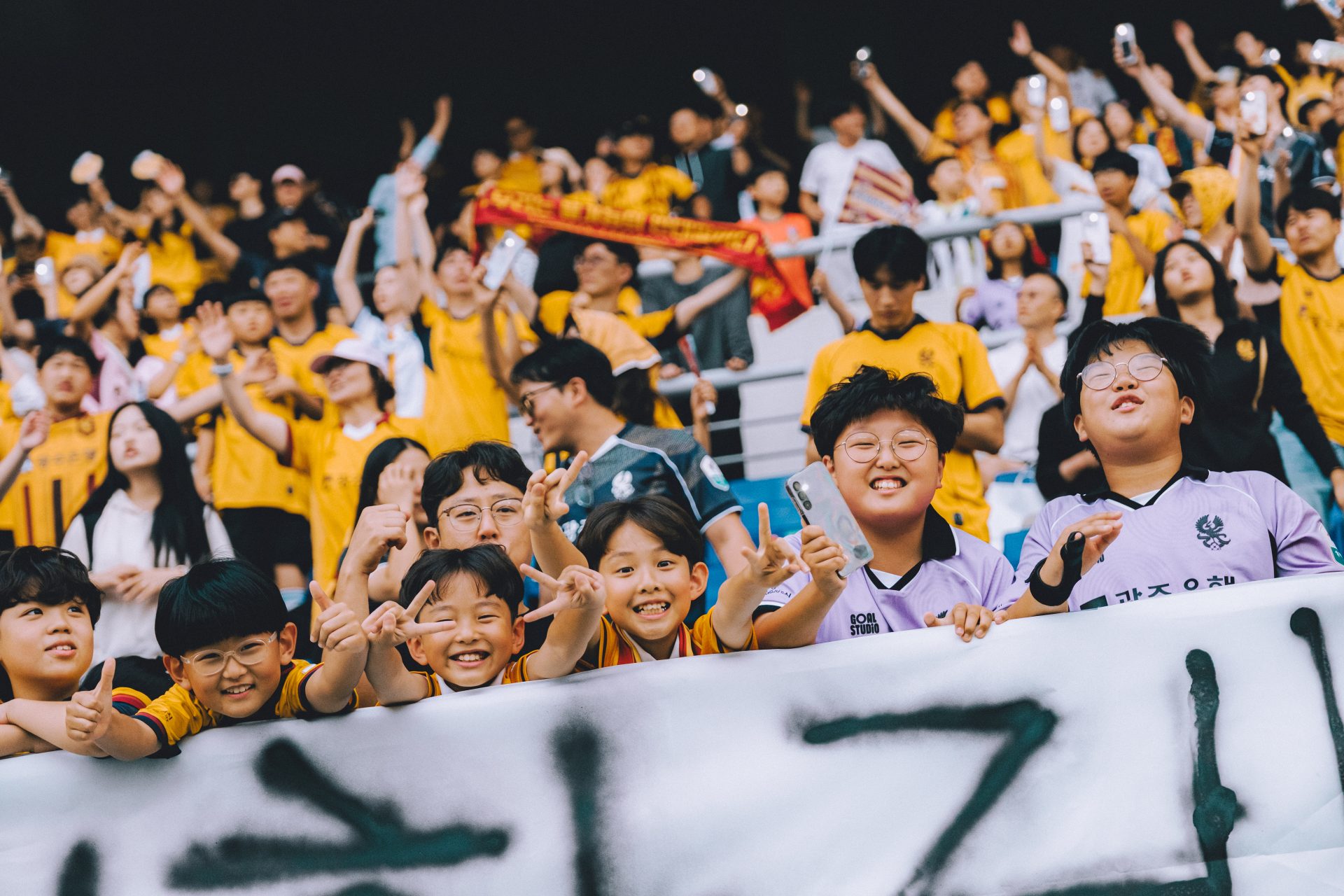
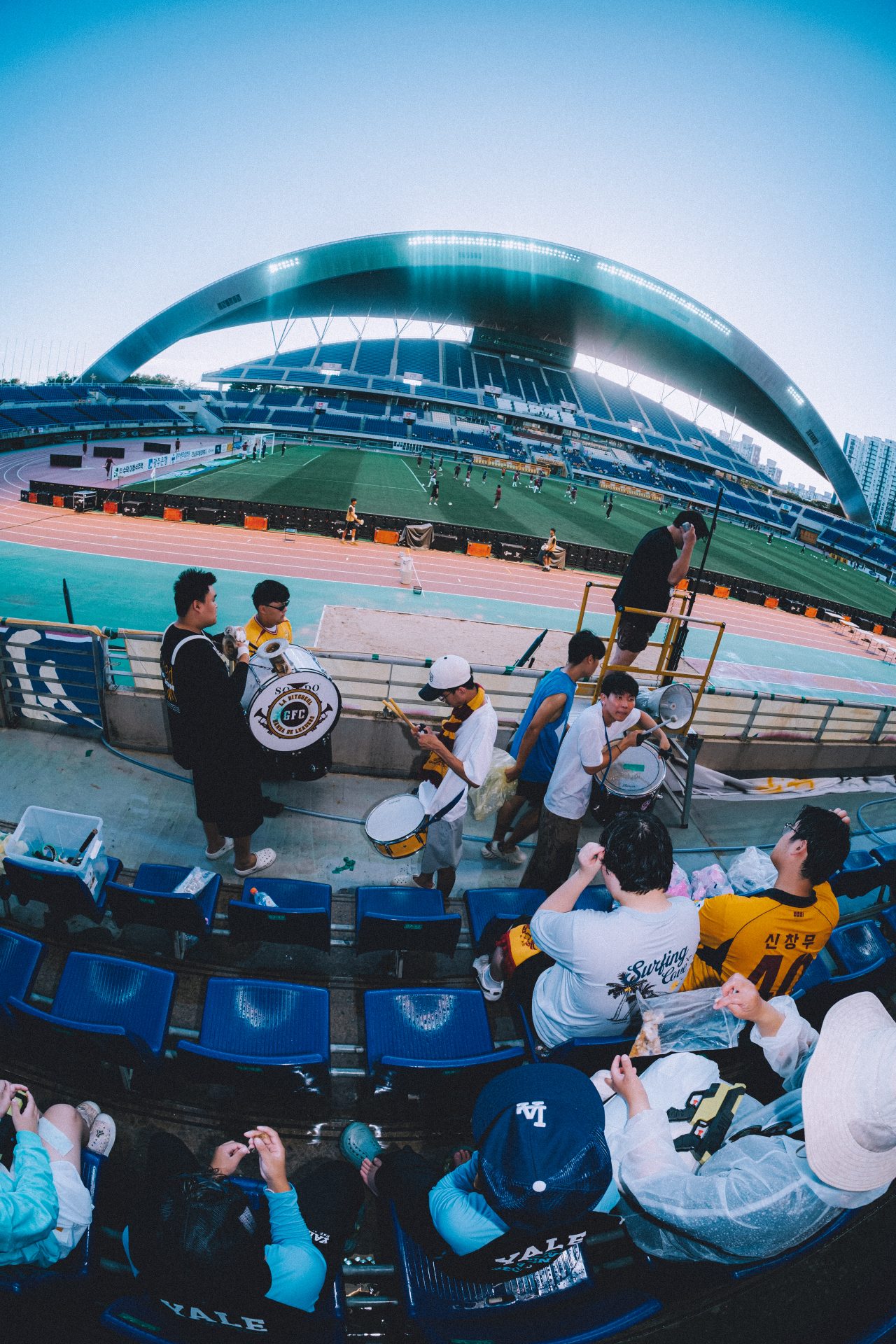
Their home, Gwangju World Cup Stadium, was built for the 2002 tournament and hosted South Korea’s memorable quarter-final victory over Spain. Today, Jason’s photographs tell a more local story: the relationship between a hometown club and the people who keep turning up.
Originally from Gwangju, Jason began looking more closely at that relationship while living in Budapest. Watching Ferencváros, he saw how football could occupy a city’s streets and shape its identity. Back in South Korea, he started following Gwangju home and away, documenting a club he describes as a close friend.
For Lower Block, exploring these different football cultures means looking beyond familiar expressions of support. There is a softness to Jason’s images, but also commitment and belonging. As he explains, enthusiasm for European football and the national team does not always extend to local clubs. His work gives attention to those building that culture in their own city.
Below, Jason discusses Gwangju, his route into photography and why supporters deserve to see themselves in their club’s story.
Words and photographs: Jason Min / @foto.de.jason
What does Gwangju FC mean to you, and how do you see the club’s identity developing?
I support Gwangju FC, my hometown club. For a long time, Gwangju FC was a team that moved between the bottom of the first division and the second division. Even people in the city didn’t pay much attention to the club.
Gwangju FC is still a relatively young club, and I feel like it’s only recently started to find its own identity.
To me, the club is like a close friend. There are good times, and there are times when we argue and get frustrated with each other. But even if I criticise my friend, I can’t stand it when someone else does.
And when we have a common enemy, that friendship becomes stronger than ever. That’s how I see my relationship with the club.
How did you first get into football, and what did living in Budapest change about your relationship with the game?
I first became a football fan as a kid, watching the World Cup and admiring the stars. Ronaldo at the 1998 World Cup in France, the Korean national team at the 2002 World Cup in Korea and Japan. And as more Korean players started moving to European leagues, I naturally became interested in European football too.
But back then, football was still something I mostly experienced through TV.
That changed when I moved to Budapest, Hungary, where I lived from October 2021 to December 2024. I started going to Ferencvárosi TC matches, as their stadium wasn’t far from where I lived.
Seeing the streets filled with people wearing green on matchdays, and the flares lighting up the stands during derby matches, was something completely new to me. That’s when I started thinking more deeply about the relationship between a football club and its city.
Meanwhile, in 2023, Gwangju FC finished third in Korea’s 1st division, the best result in the club’s history. Even though I was living in Hungary at the time, I wanted to keep following all the excitement my hometown club was creating back home.
And after returning to Korea, I started going to matches regularly, both home and away.
What are you hoping to capture around Gwangju FC, and which photograph means the most to you?
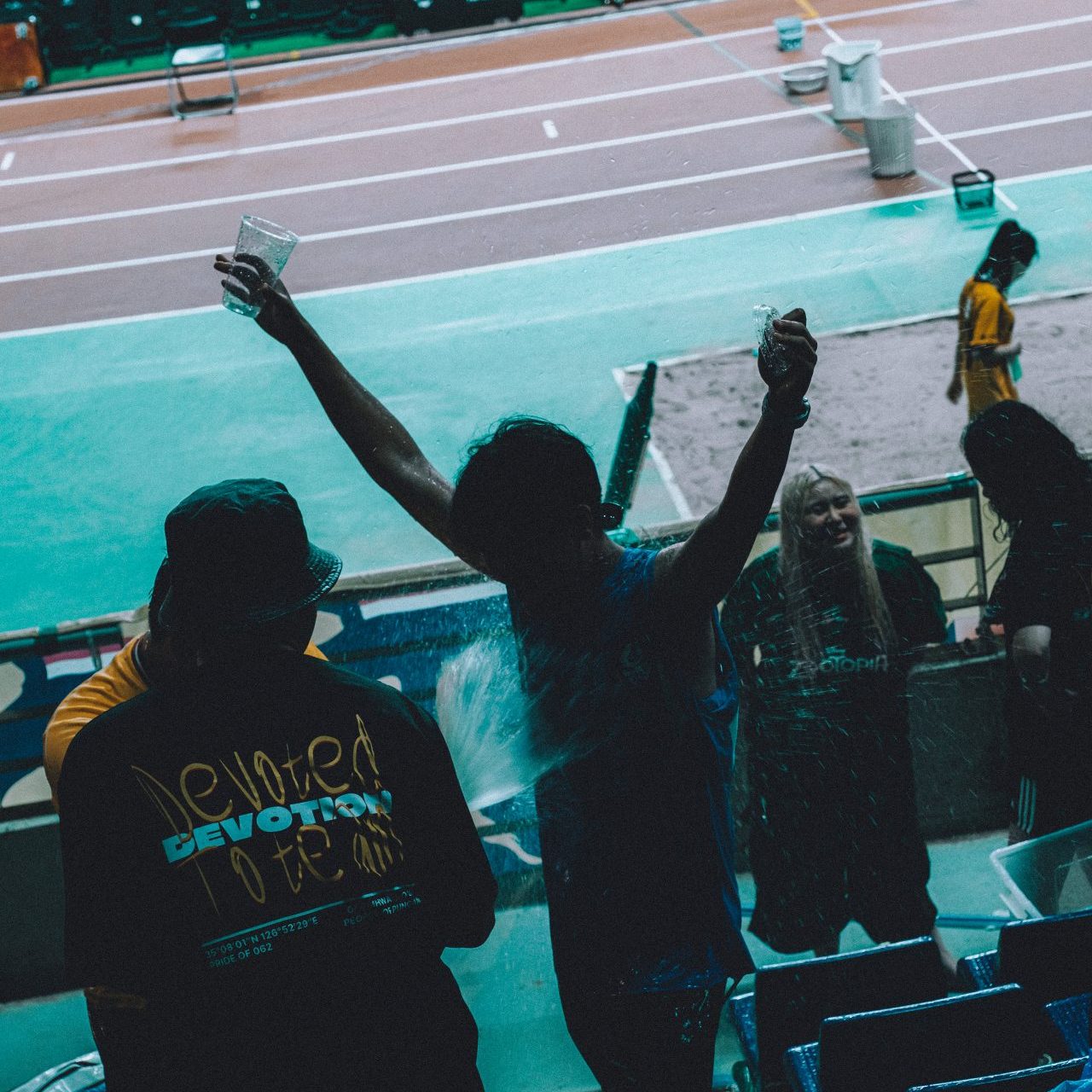
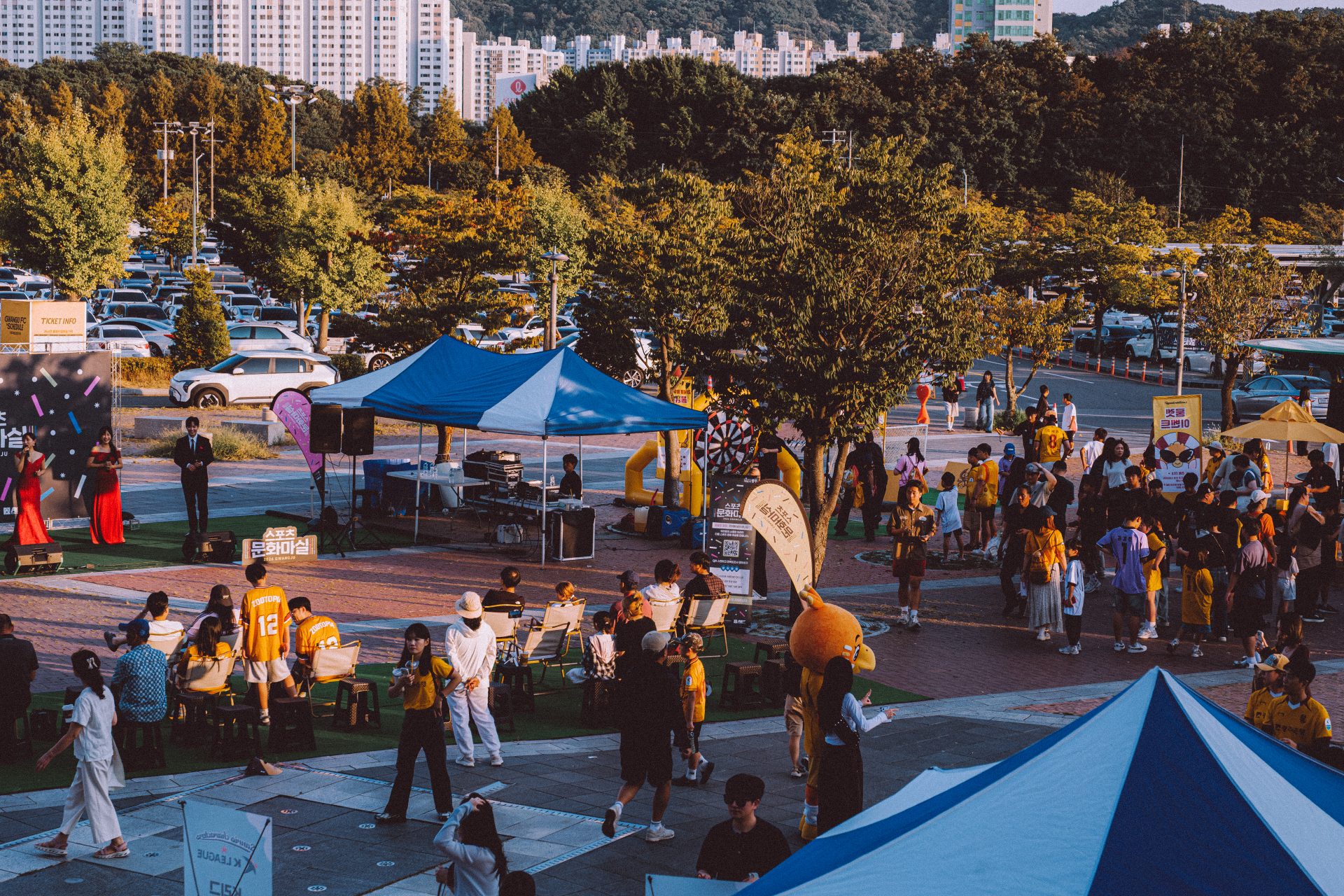
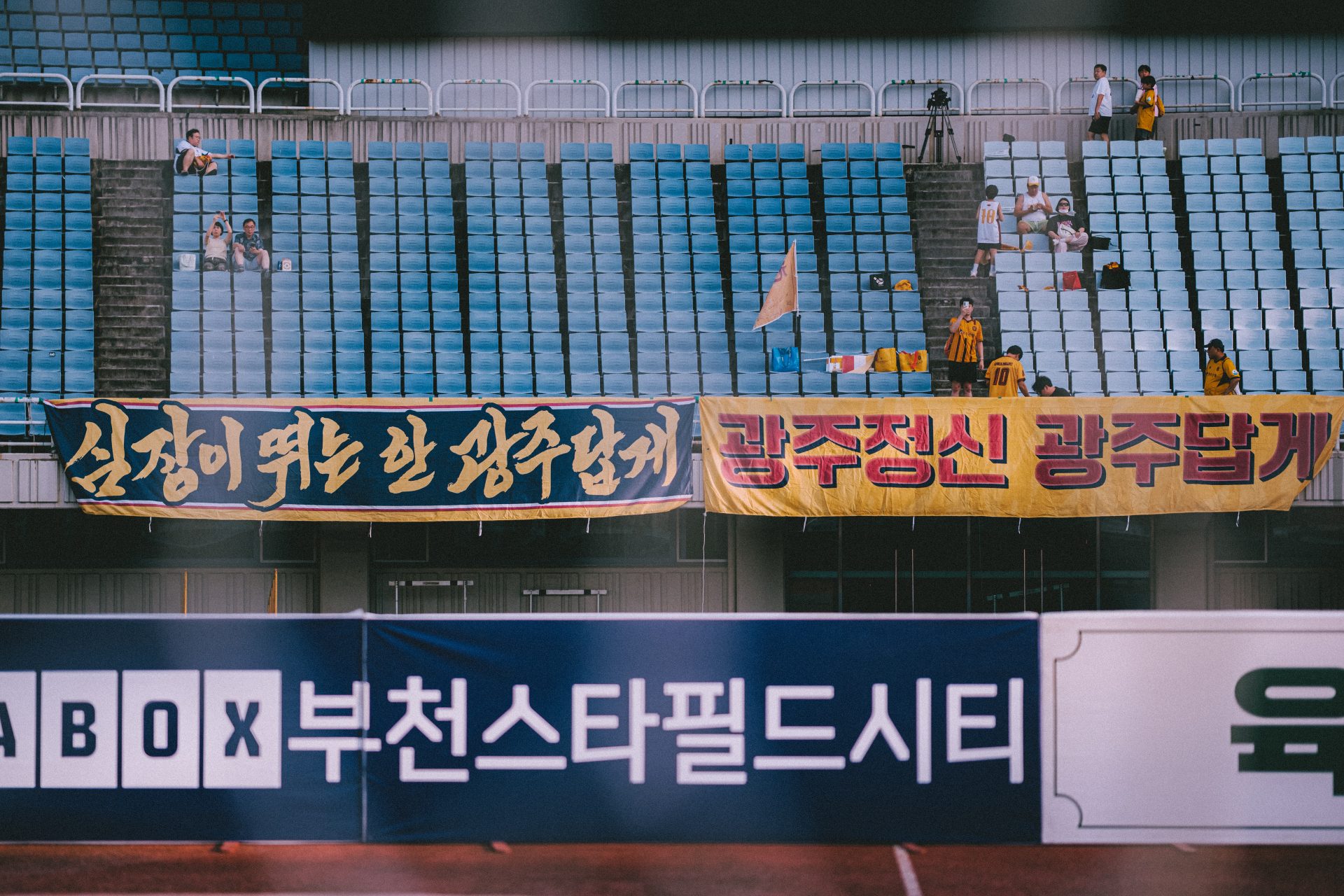
Gwangju FC has one of the smaller fanbases in Korea’s 1st division. Especially now, with the team sitting at the bottom of the league and fighting to avoid relegation, fewer people are coming to the stadium.
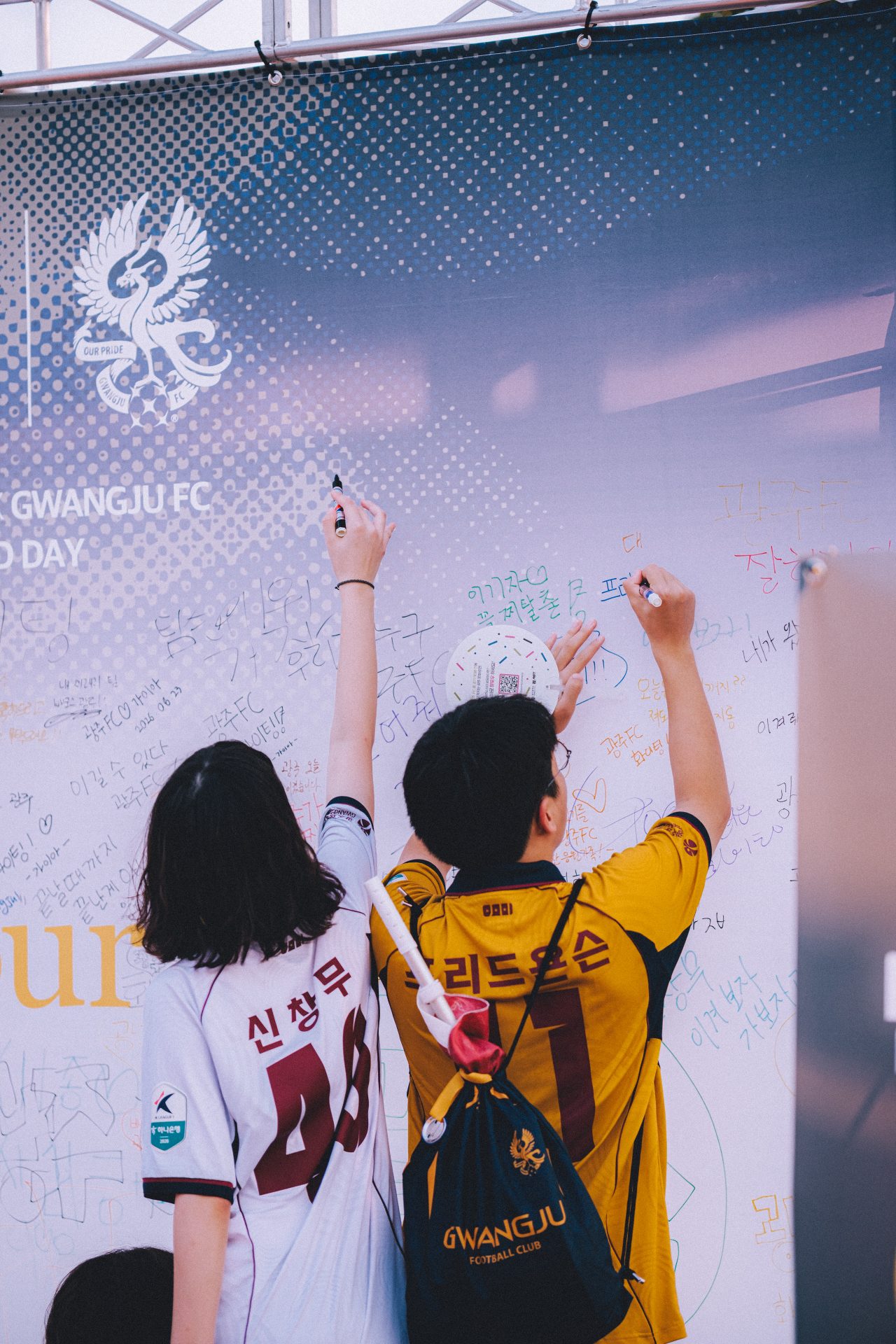
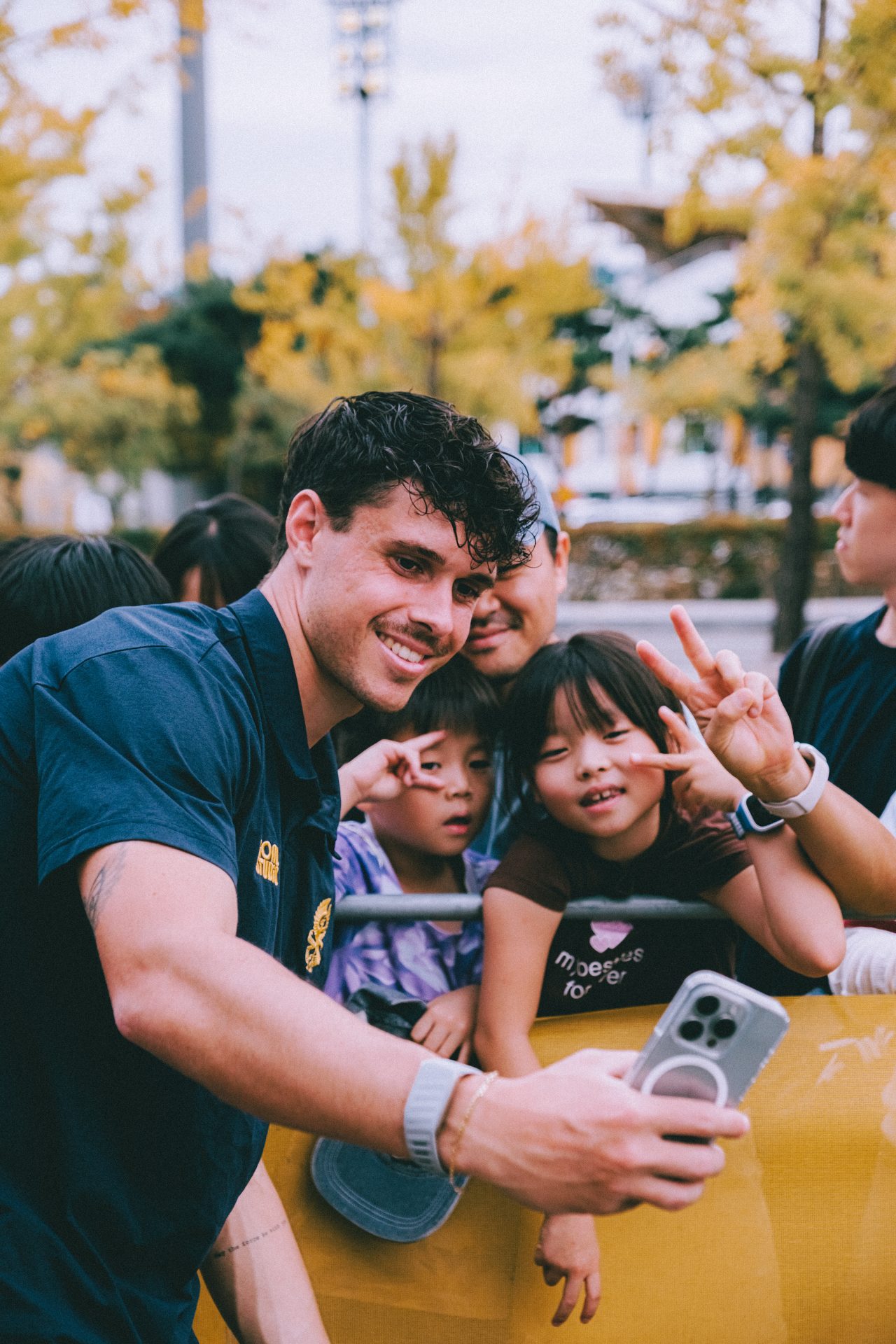
But among those who still show up, there’s a strong sense of connection. Gwangju FC is a relatively young club, and many of its supporters are young too. To these kids, the players are stars and heroes.
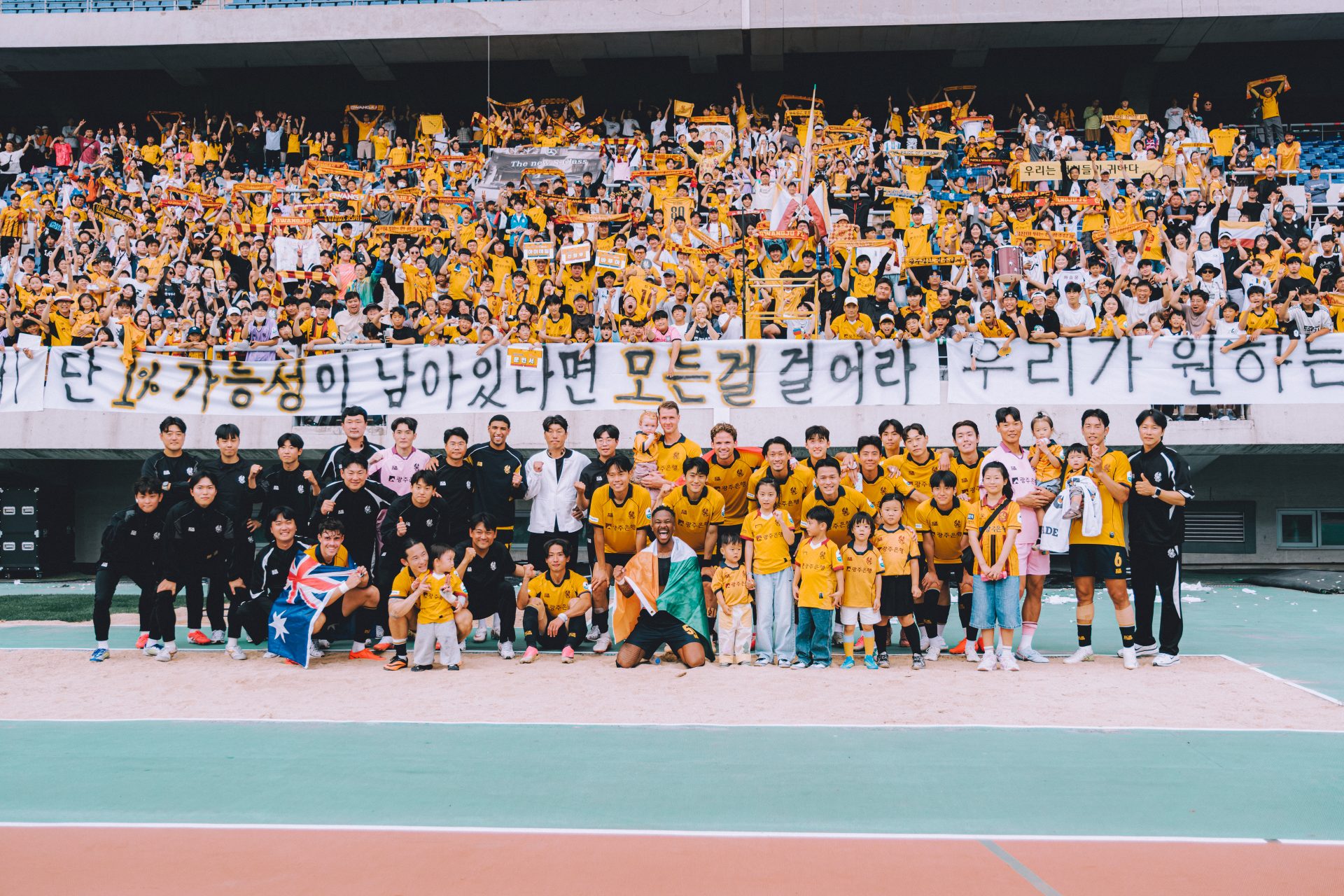
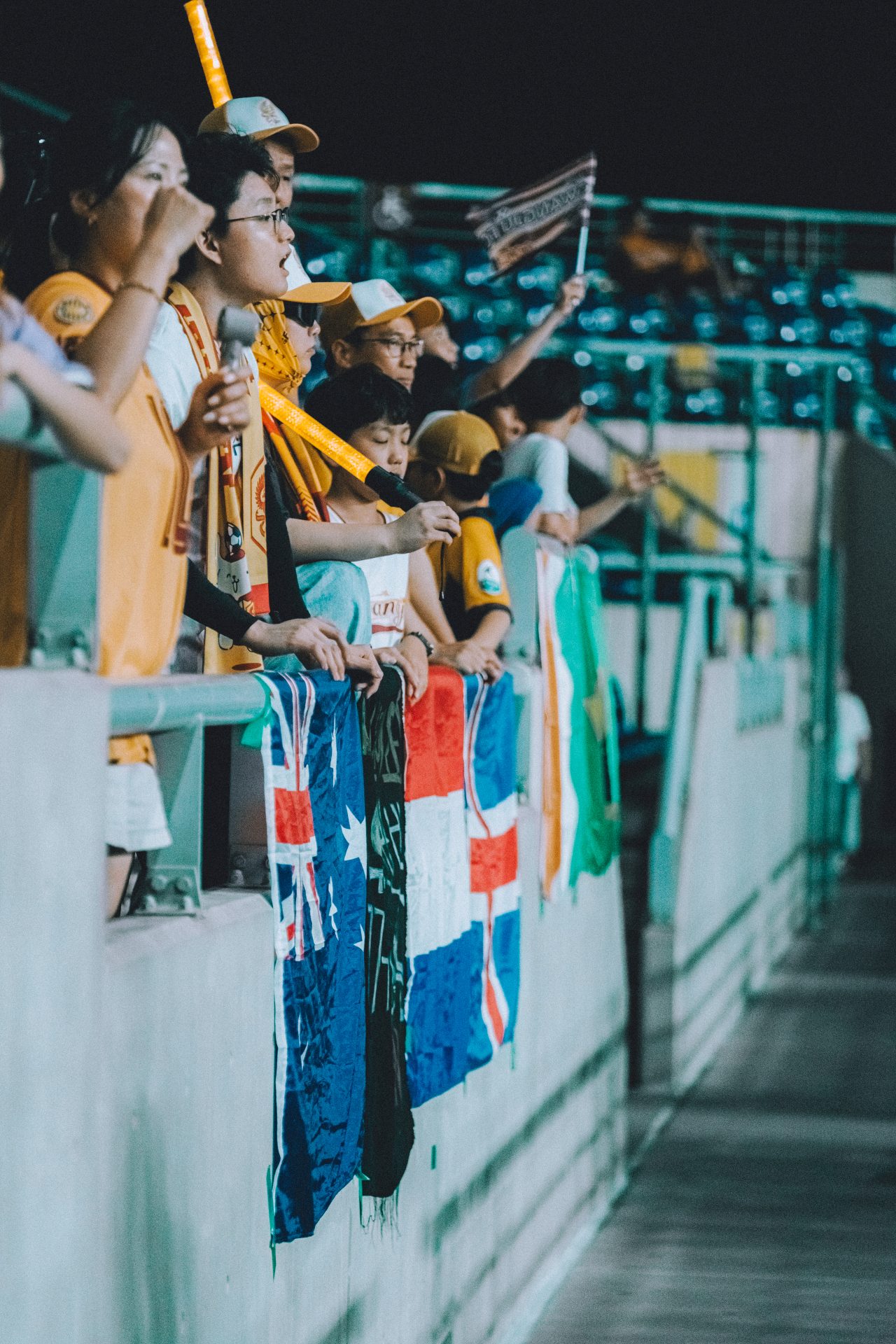
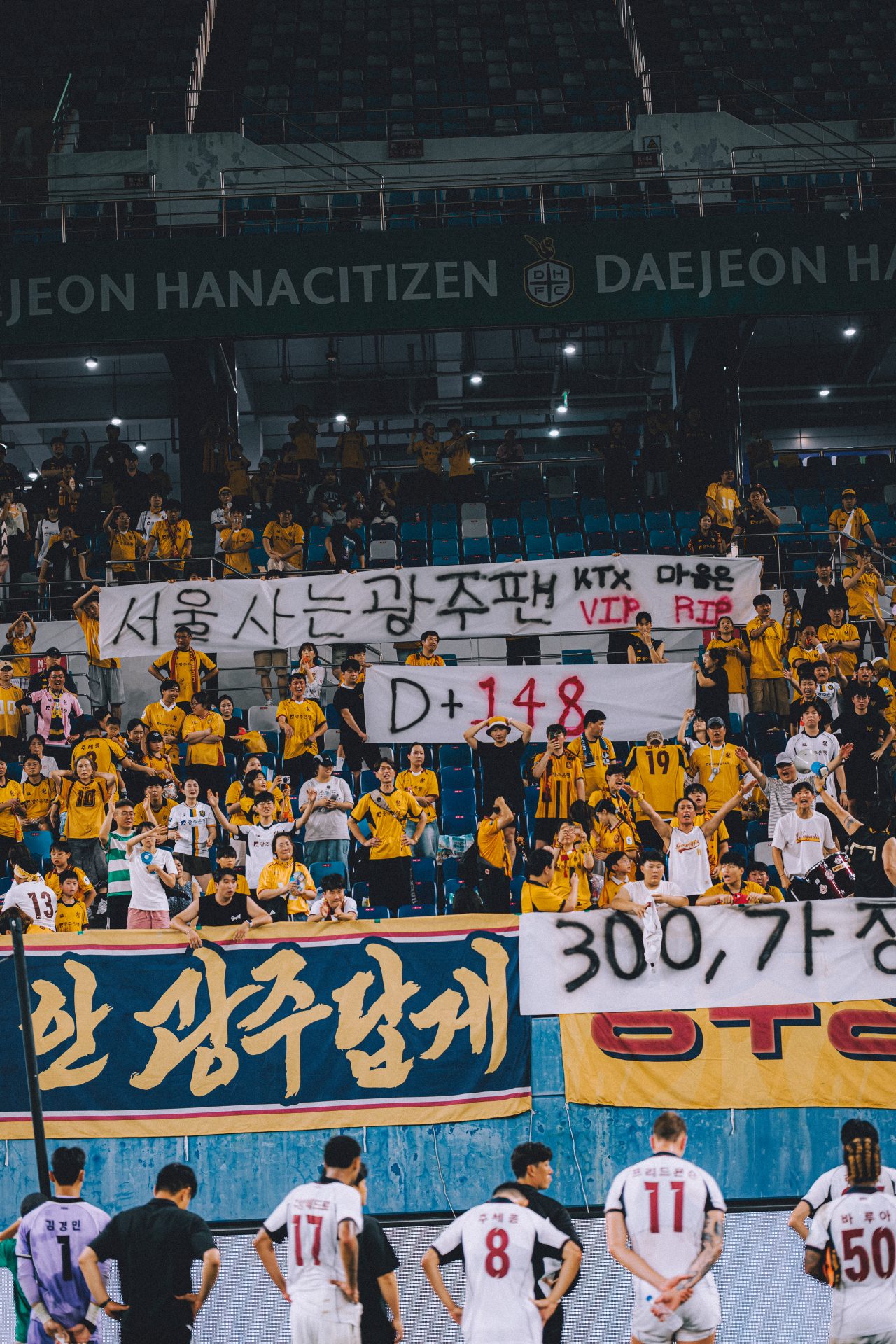
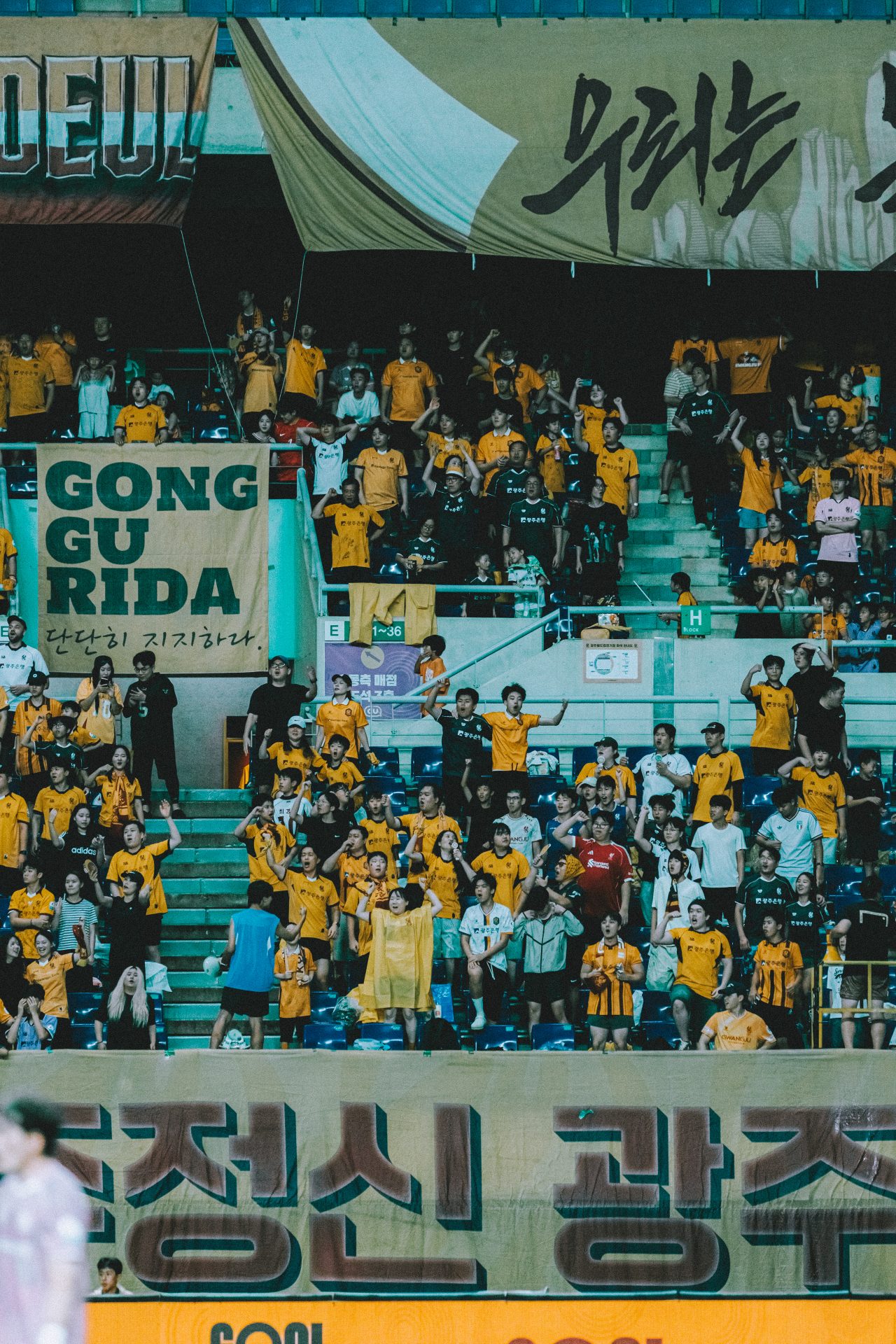
The photo was taken during a match against FC Seoul, who were top of the league at the time. It was raining, and there were fewer fans than usual. But those who came were still there with their flags, ready to fight alongside the team from the stands.
I could really feel their determination in that moment, and that’s why this is my favourite photograph.
How did you start photographing football?
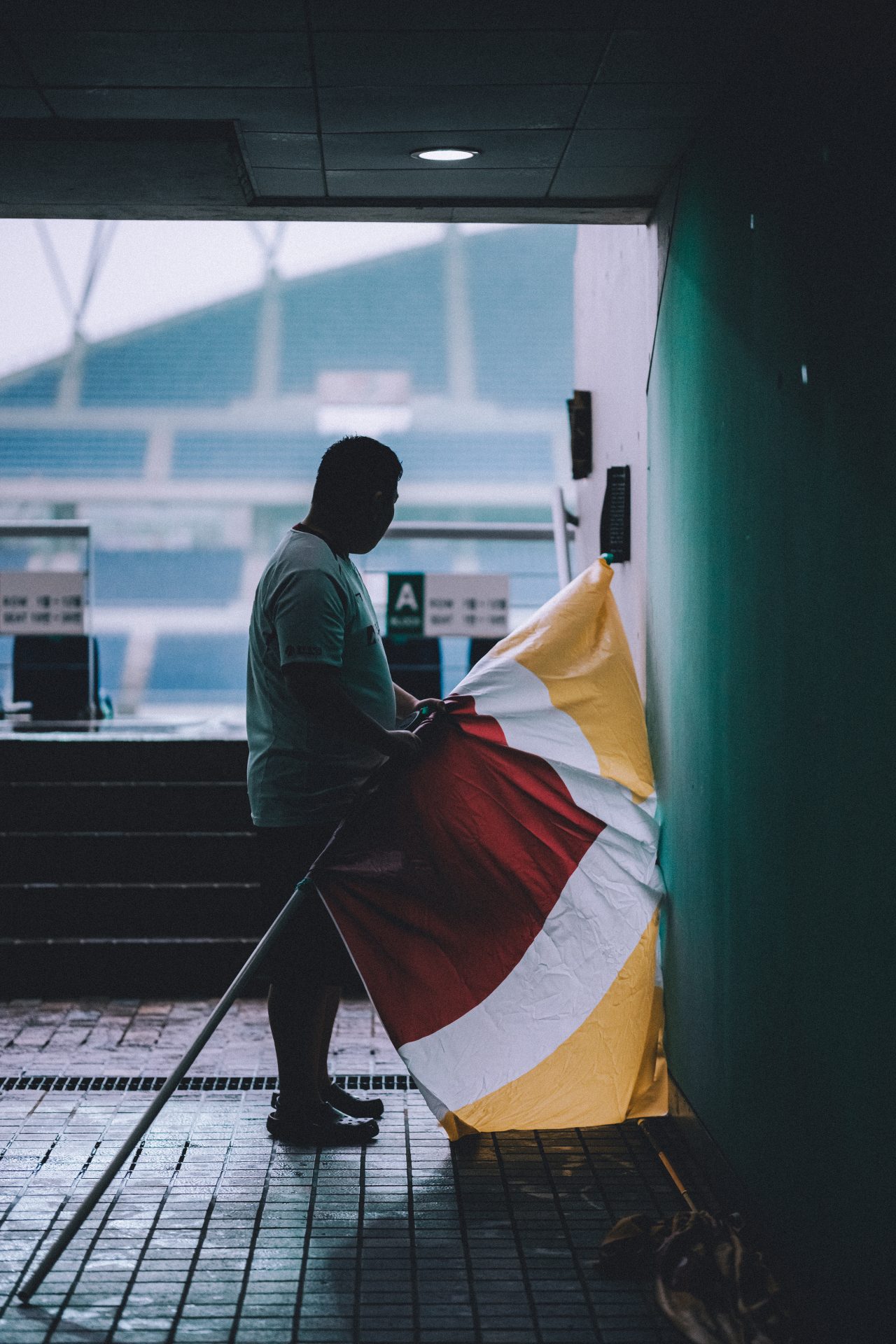
While watching Ferencváros matches in Budapest, I suddenly had the idea of documenting what I was seeing through photography. Photography had already been a hobby of mine, so it felt quite natural.
As you probably know, European clubs generally don’t allow spectators to bring professional cameras into stadiums. So I checked the club’s website and found a page where I could apply for press accreditation.
I applied to photograph the Europa League match between Ferencvárosi TC and OGC Nice during the league phase of the 2024/25 season. After going through a few steps, the club approved my application.
That match is really what led me to where I am today.
How do you see football photography developing in South Korea, and where do you find inspiration?
In Korea, most football clubs have traditionally approached sports photography mainly as press photography. And I think it’s fair to say that we’re still a little behind European clubs when it comes to visual identity and branding.
I spend a lot of time exploring social media accounts from different clubs and online magazines focused on football culture. Every day, I come across something new, and I keep thinking about how I can take that inspiration and recreate it in my own style.
What interests you about local football culture in South Korea, and why is it important to put supporters in the picture?
What fascinates me most about photographing football culture is that it’s about much more than just football itself.
In South Korea, football is a mainstream sport, but the culture surrounding local clubs still feels more like a subculture. People follow European football, support the national team, and get excited about the World Cup. But many of them don’t really pay much attention to the football clubs in their own cities.
And that’s actually what makes it so interesting to me. Because there are still people who keep coming back to the stadium, regardless of how their team is performing. They travel long distances, sing for 90 minutes, and even after another defeat, they’re back in the stands the following week.
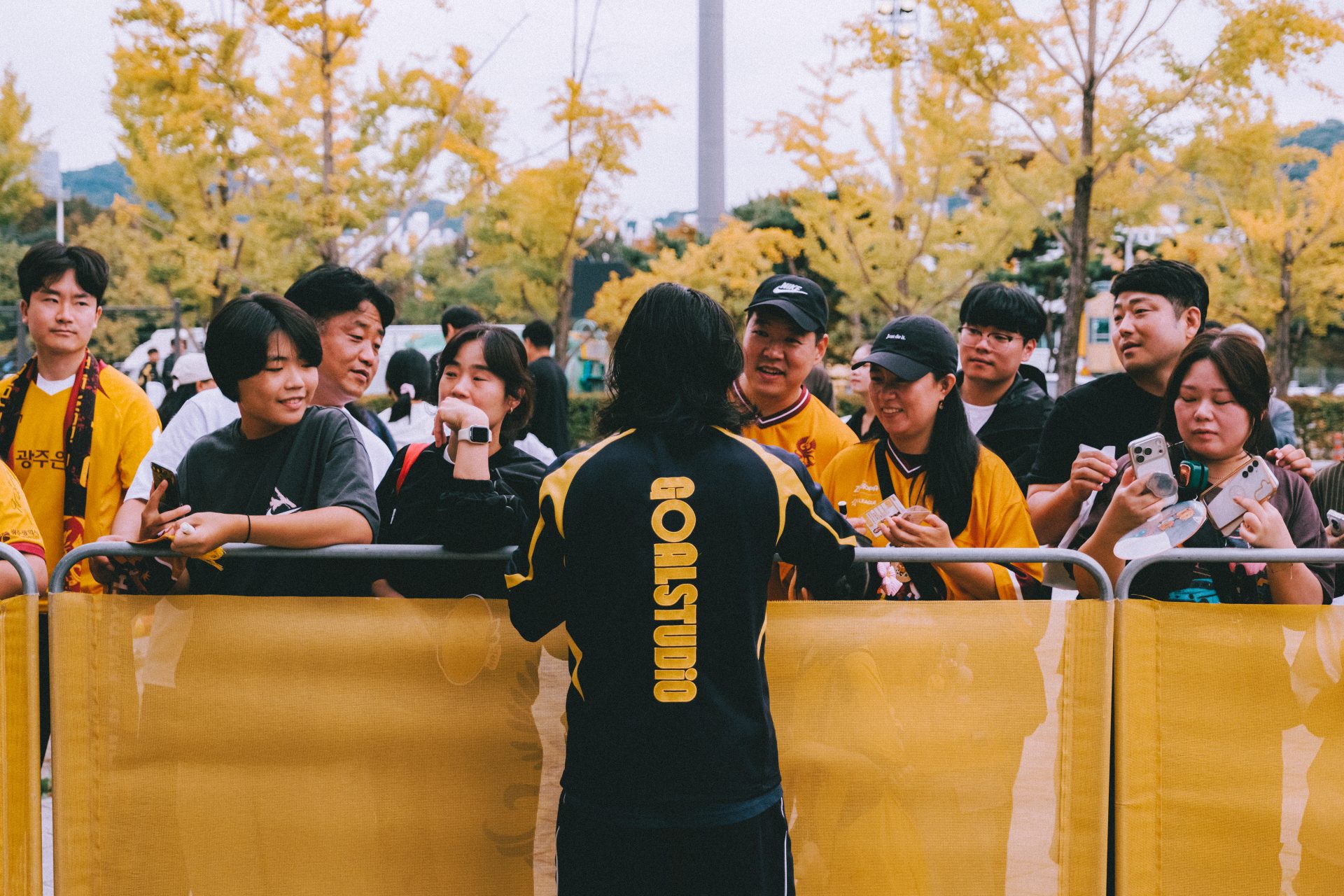
I always try to reflect that relationship between the club and its supporters in my work.
I think there’s something really special about seeing yourself in your favourite club’s content. Not just as someone watching the match, but as someone who’s part of it. I believe those moments can become memories, bring people joy, and give them a sense of pride in being part of their club.
Jason will continue creating matchday content for Gwangju FC throughout the rest of the season. He is also in talks with another K League club competing in the AFC Champions League and developing independent projects exploring stories wherever football is played. Follow his work on Instagram at @foto.de.jason.
Explore Lower Block’s Global Football Culture Collection
Suggested Lower Block Edtions
More from the Lower Block Archive