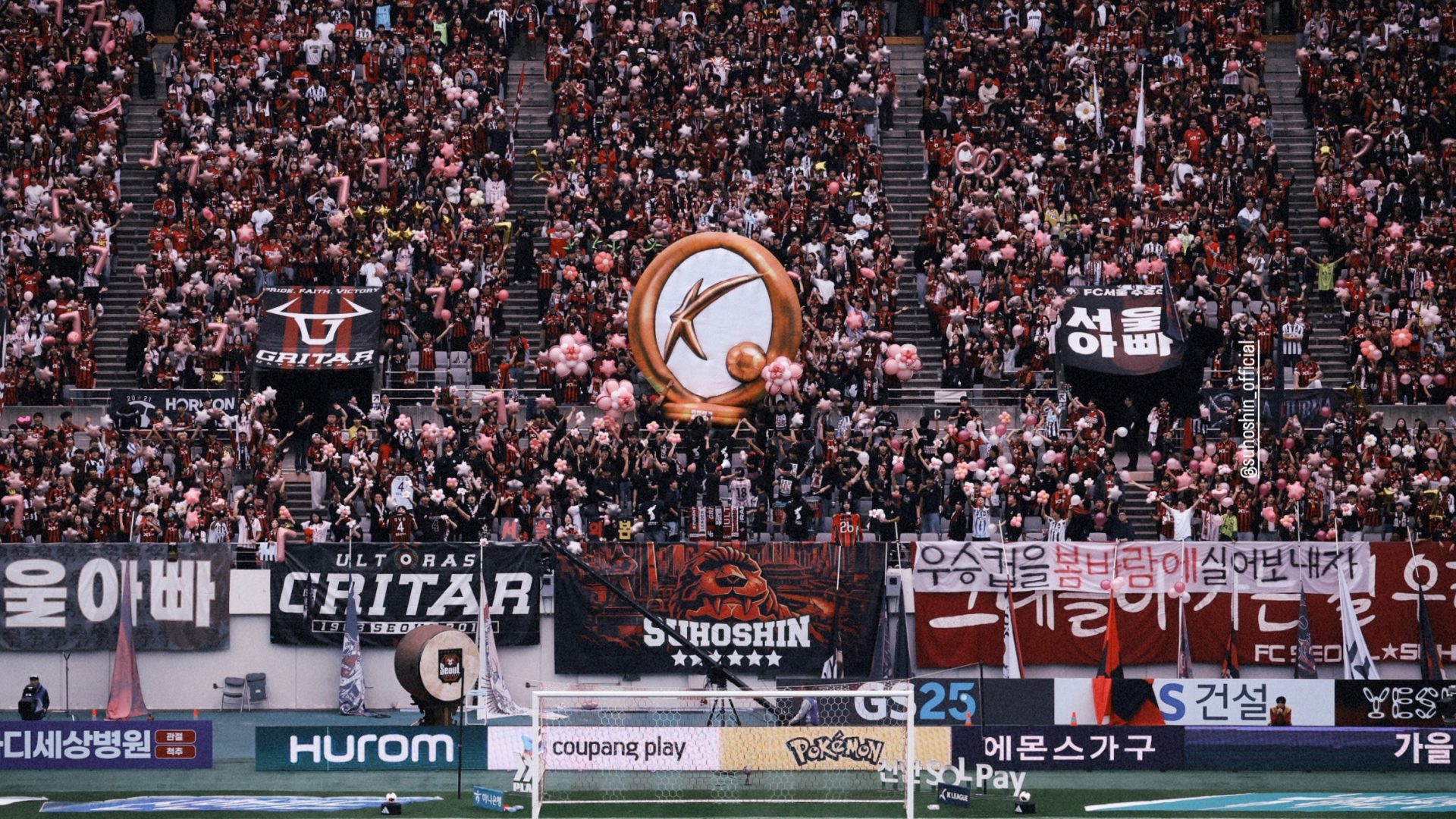
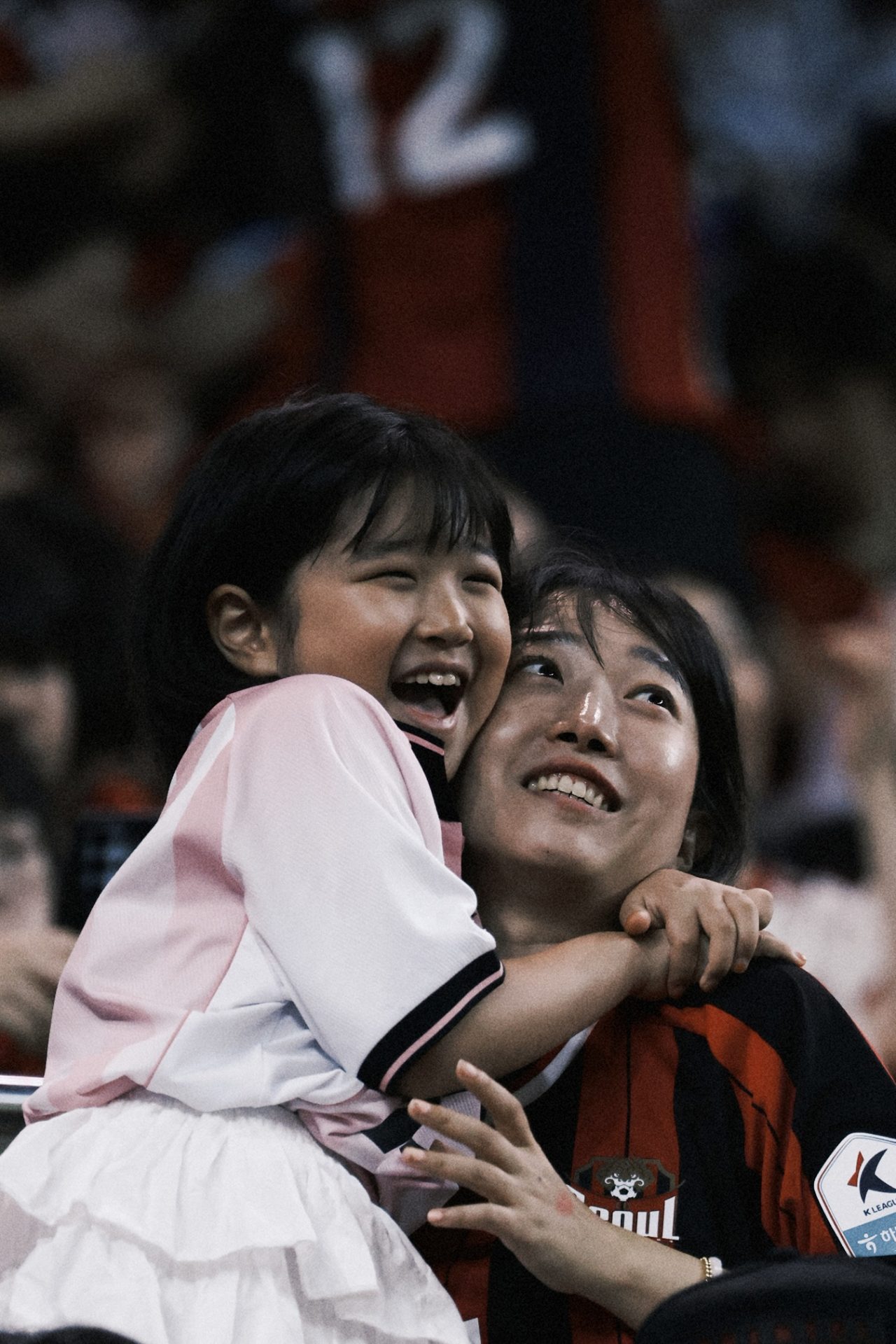
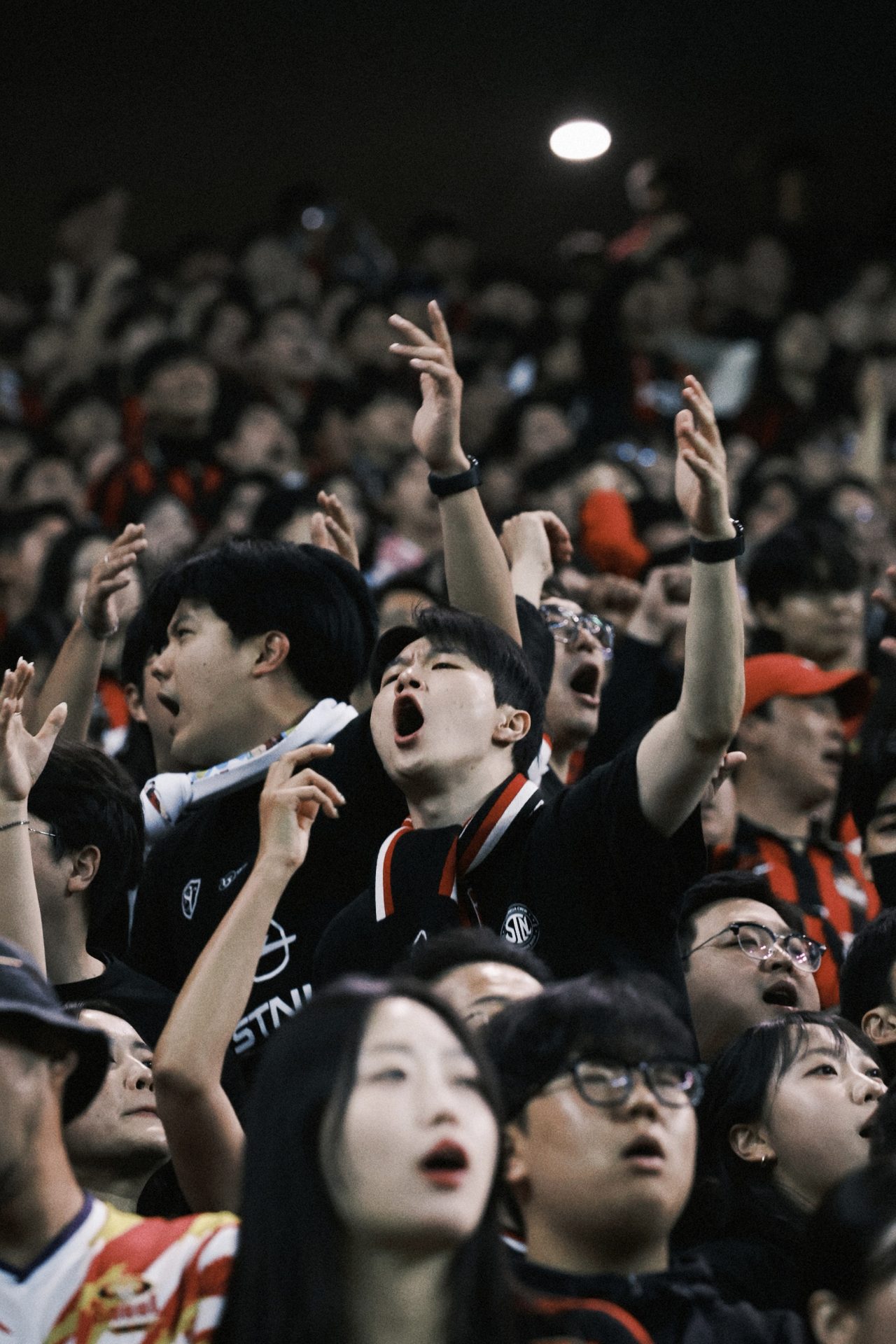
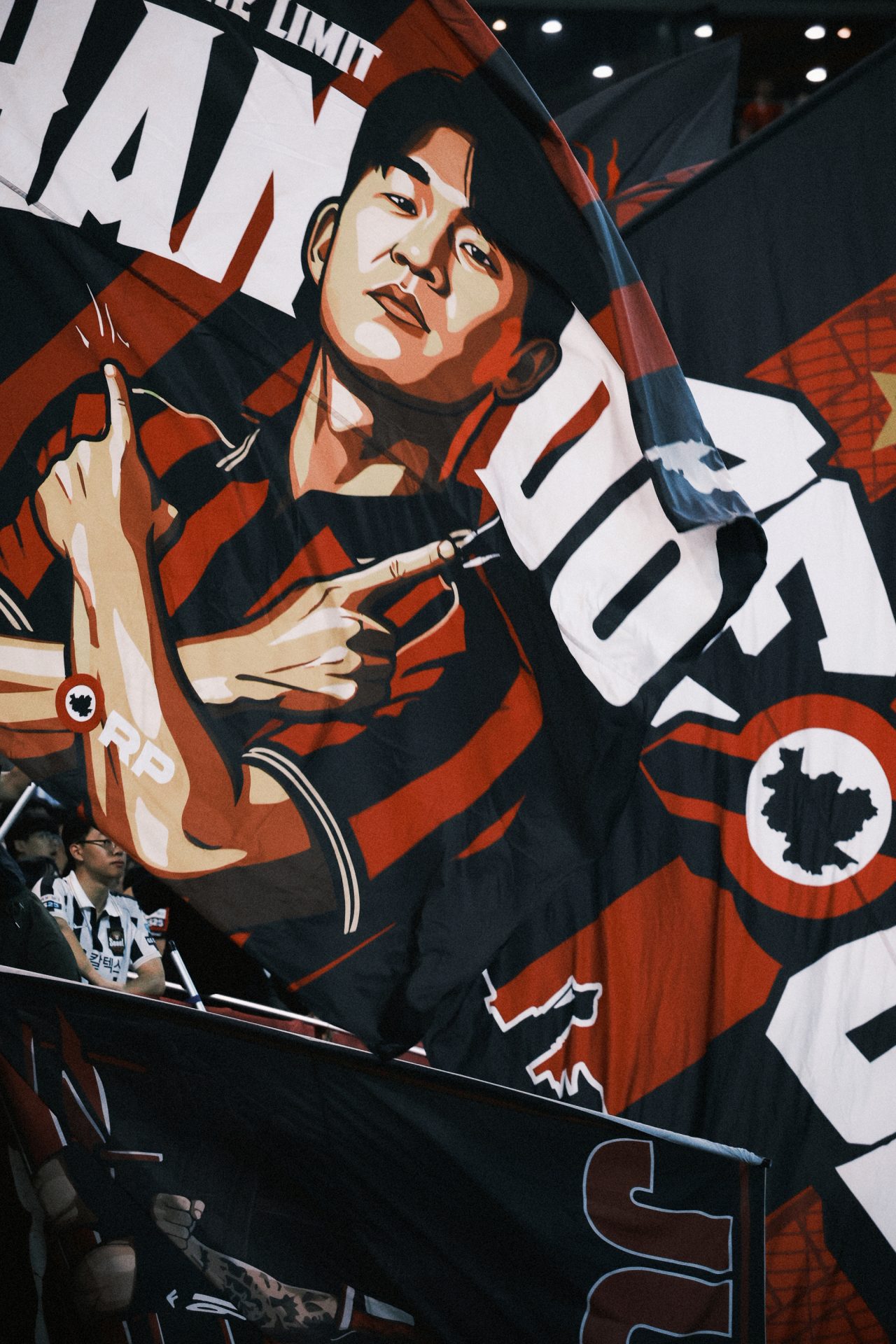
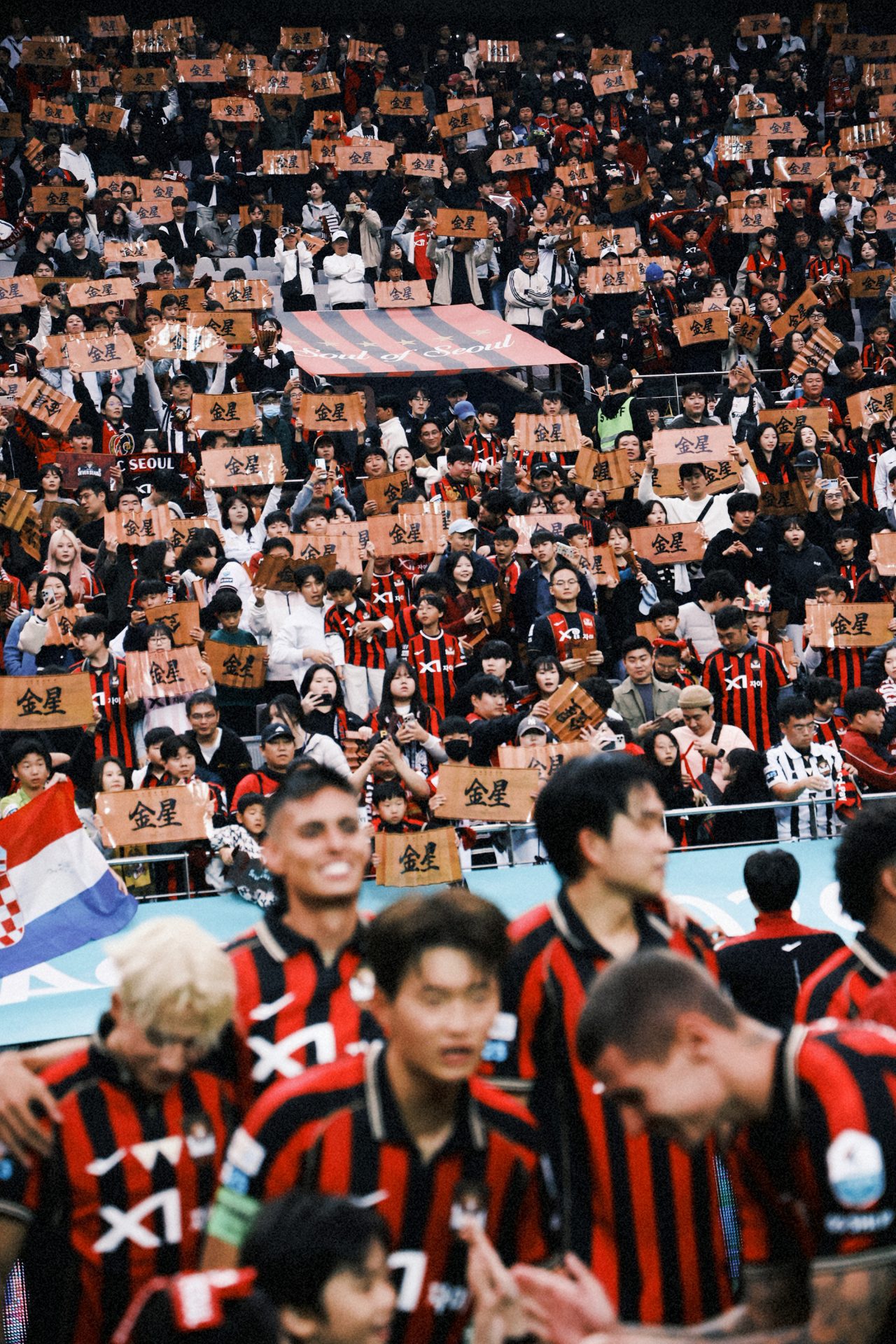
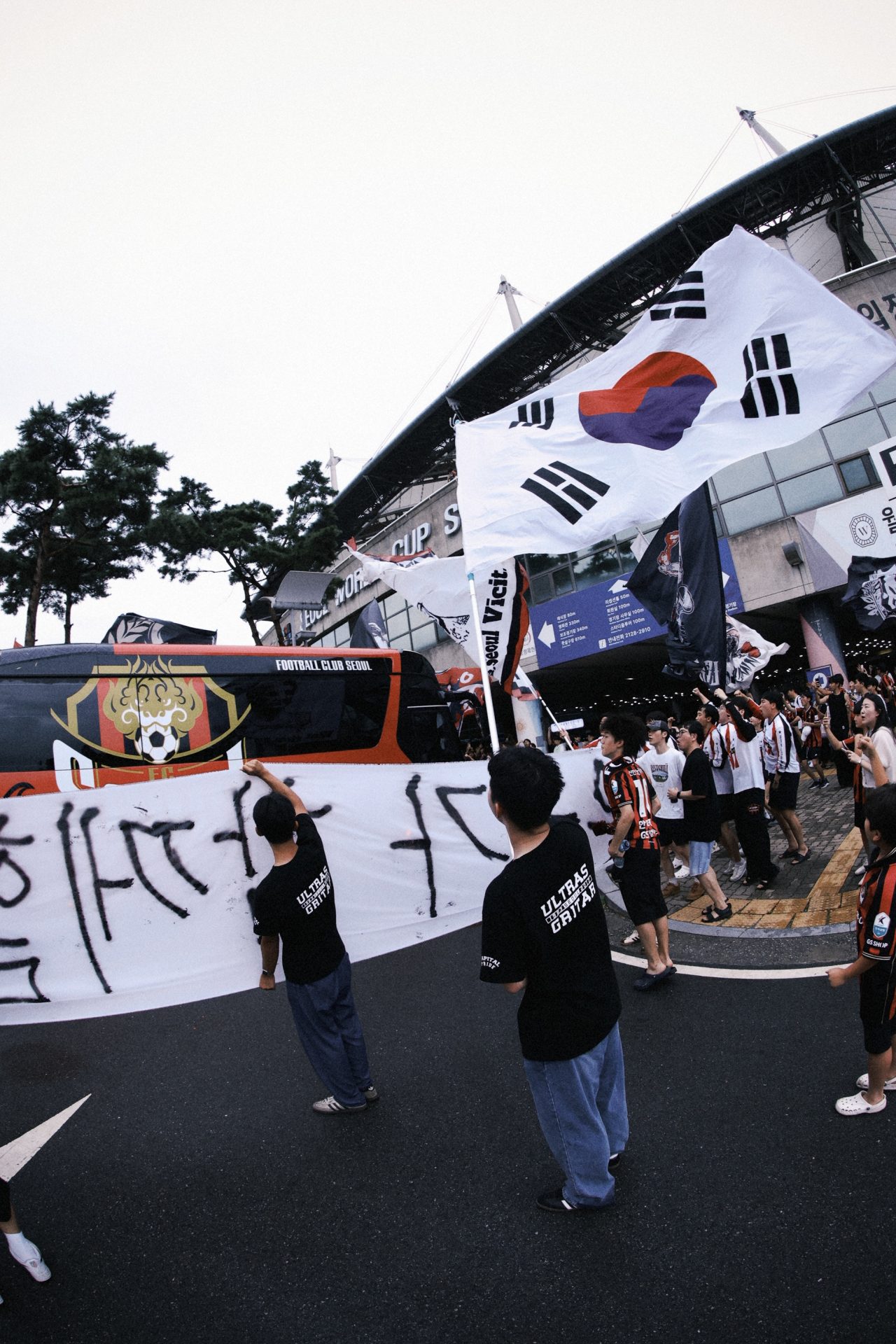
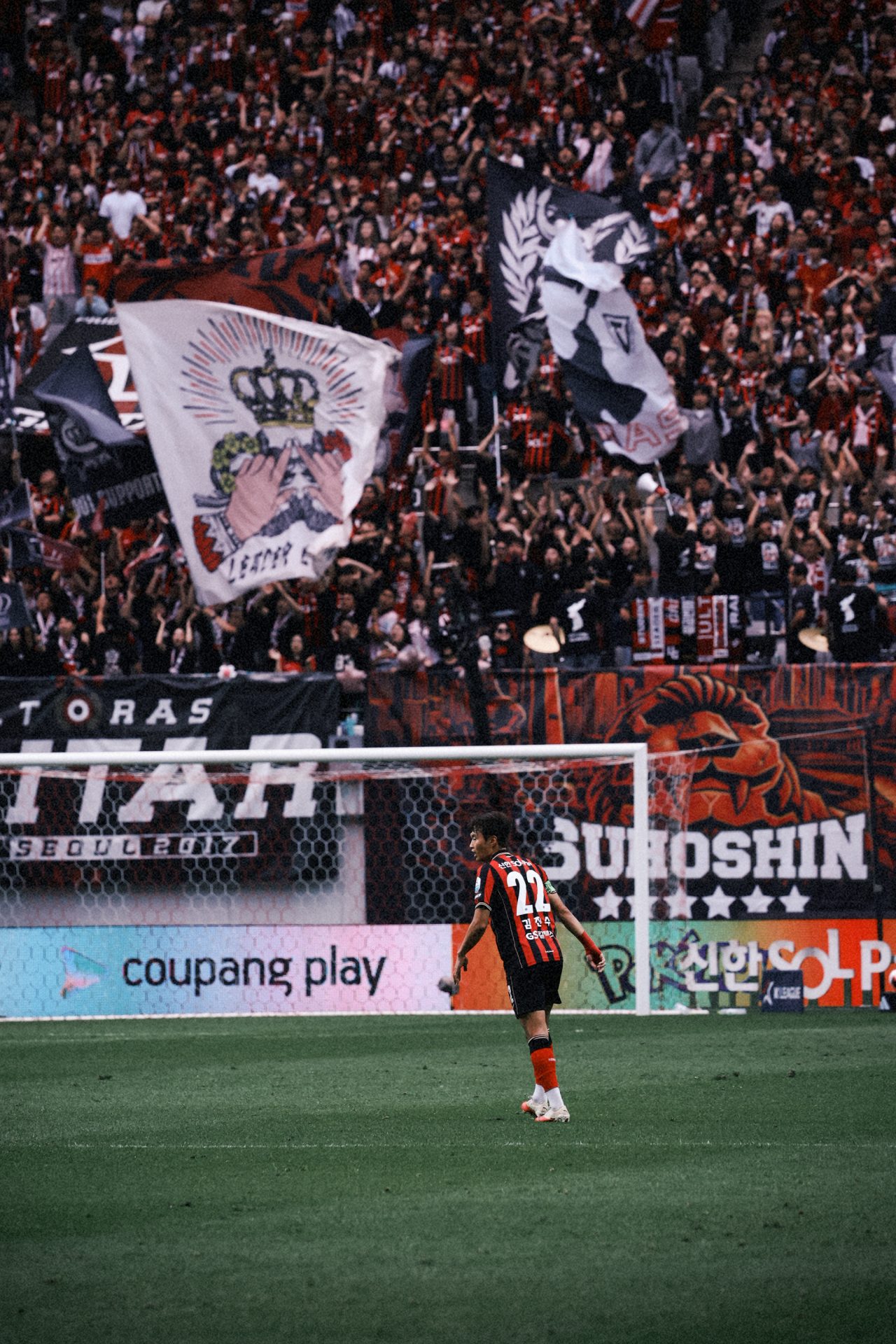
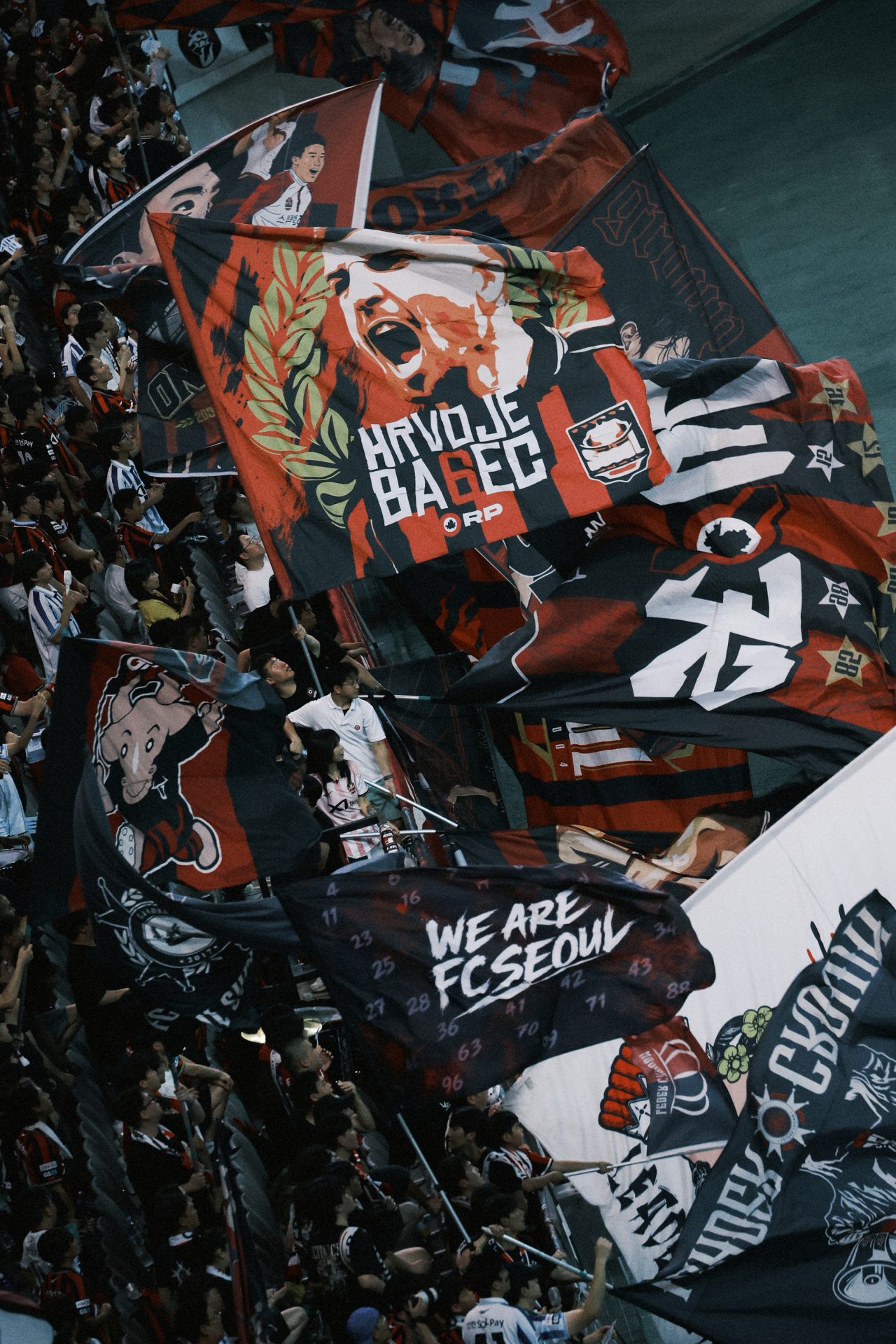
Inside Seoul World Cup Stadium, men, women and children come together with a shared purpose. Voices rise, arms stretch upwards and the emotions of the match play out across faces in the North Stand. This is Suhoshin, FC Seoul’s supporters, whose name means “guardian spirit” in Korean.
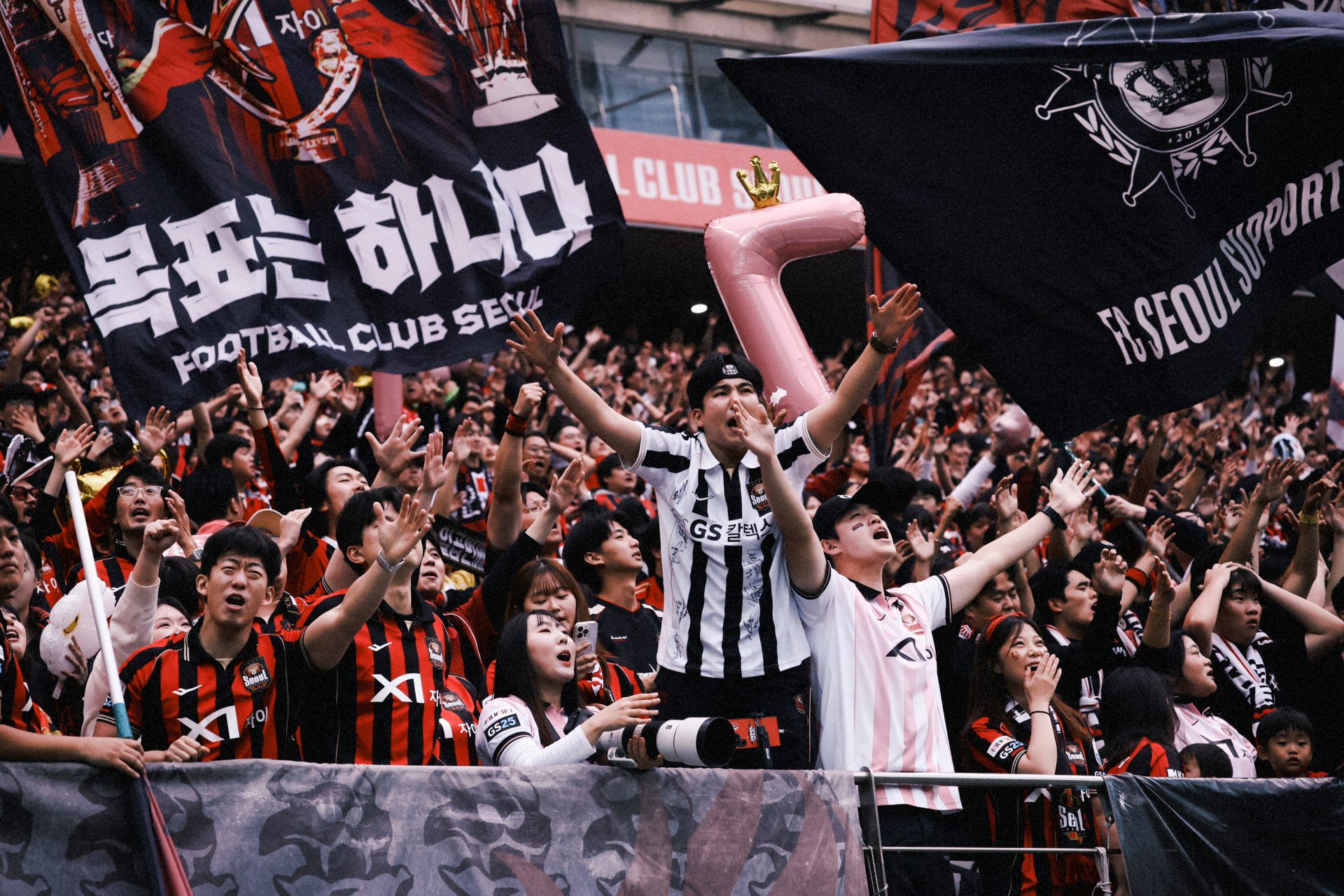
South Korea’s football culture continues to find new audiences through the K League, its professional league system. Combined attendances across its top two divisions rose from 3.01 million in 2023 to 3.43 million in 2024, reflecting a growing appetite for the domestic game and the experience of belonging to a club.
One of Korea’s most successful clubs, FC Seoul recognise that connection by reserving the number 12 shirt for their supporters. Behind the goal, Suhoshin give that gesture its meaning through their energy and commitment.
Seoul-born and based photographer Hyuntae Ahn, aka @Harryphoto, has spent the season documenting this community. A photographer, brand director and marketer whose work connects football, fashion and people, Ahn approaches the stands without allegiance to a particular club. His photographs reveal friendships, rituals and unguarded emotion: the details that turn a crowd into a community, and keep people coming back long after a single match has been decided.
Hyuntae Ahn on photographing FC Seoul and Suhoshin
Do you support a particular club, and how has photographing FC Seoul shaped your connection to them?
I don’t personally support one particular club. My connection to football comes through photography and the people I meet along the way. Spending this season documenting FC Seoul has given me a closer understanding of the club and its supporters, while allowing me to approach their stories from my own perspective.
What has FC Seoul come to mean to you?
Through this project, FC Seoul has become more than a team I photograph. It has become a way of understanding the relationship between a city, its club, and the people who show up for it week after week. I’m especially drawn to the supporters and the sense of belonging they create around the club.
What first connected you to football and football culture?
My connection to football has grown through photography. Being at matches gives me the opportunity to look beyond the game itself and experience everything happening around it: the anticipation, the rituals, the friendships, and the emotions in the stands.
Watching people become completely absorbed in a match has made me increasingly interested in football culture. Those moments reveal how much the game can mean to people beyond the result.
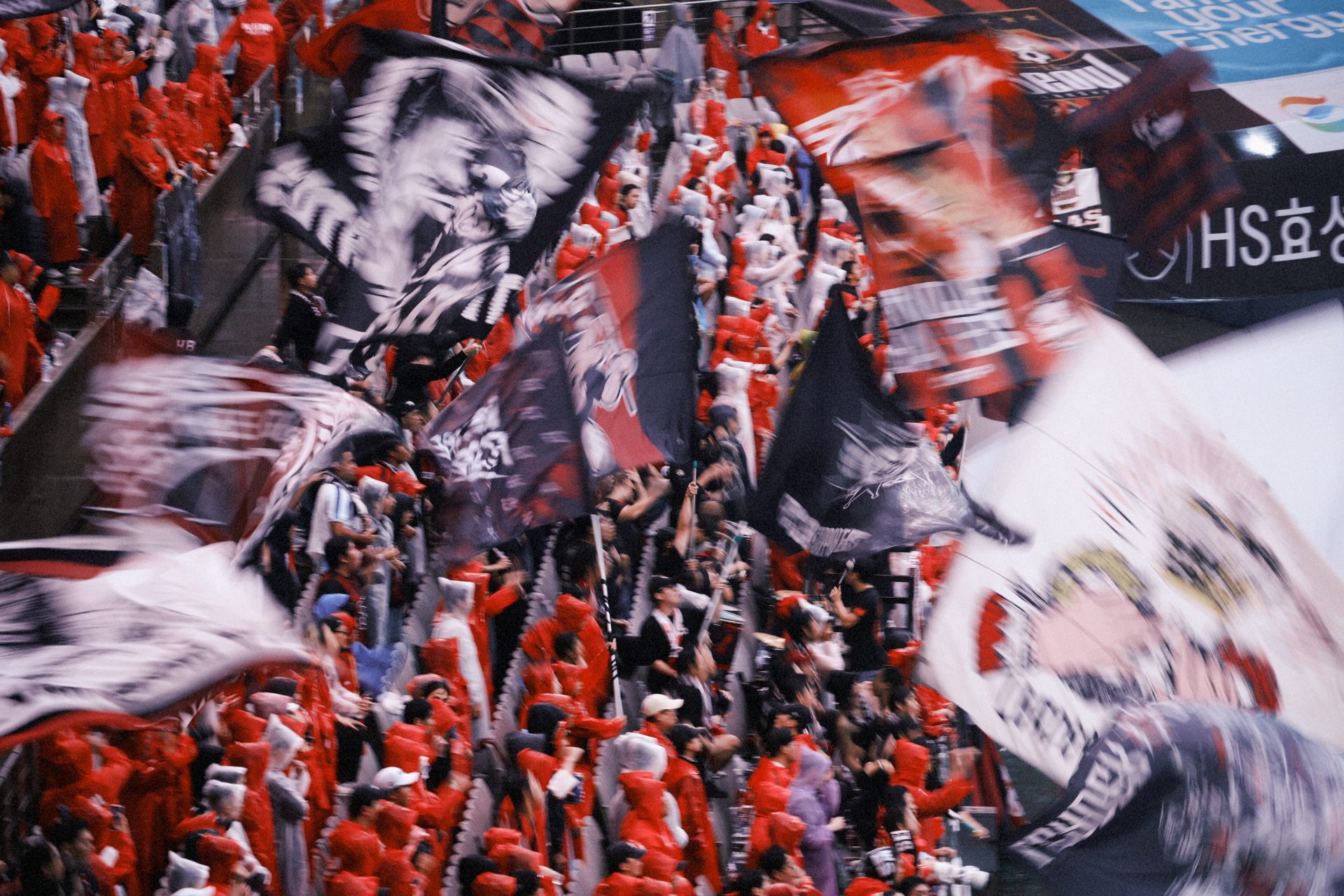
Tell us about this project and the people in these photographs.
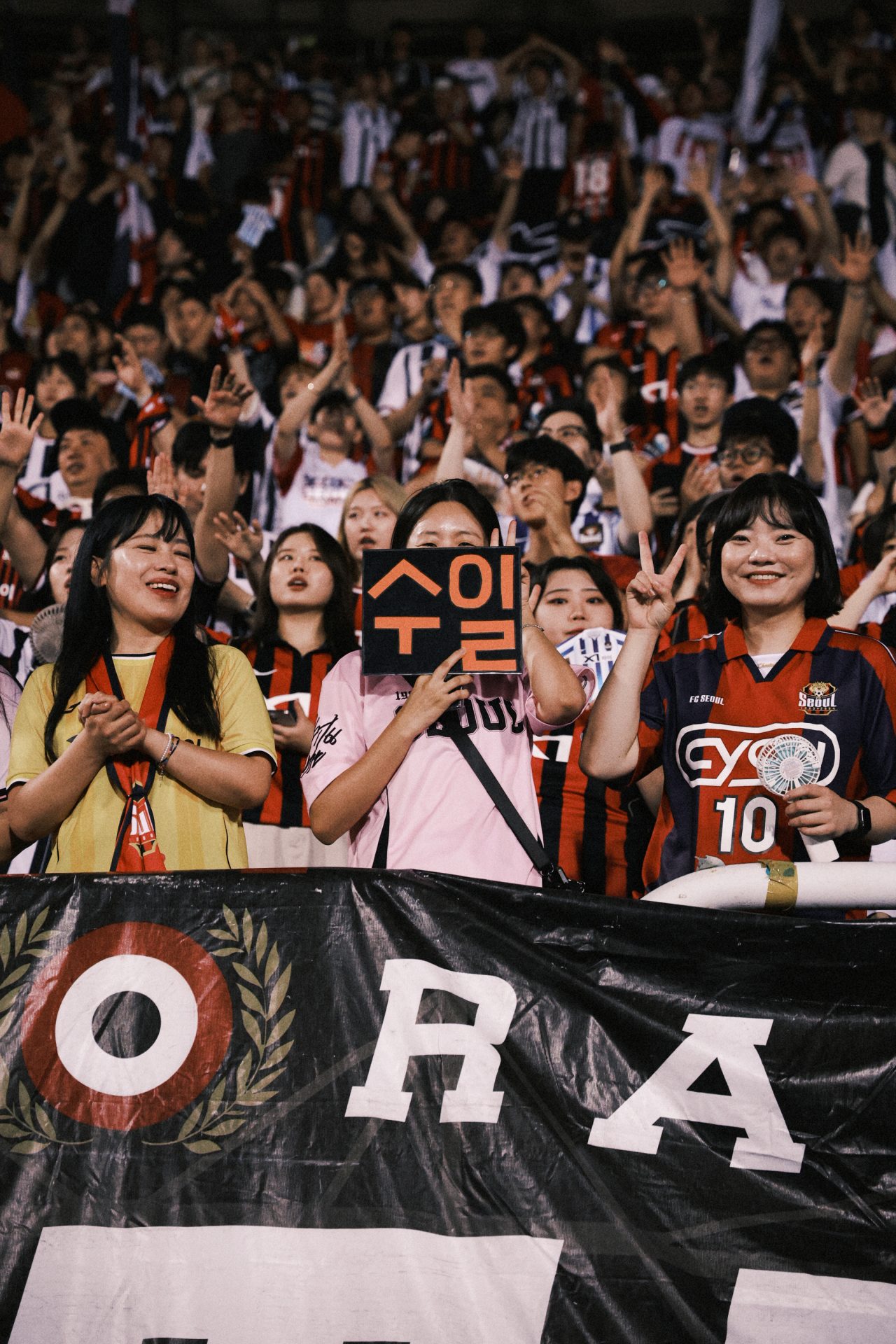
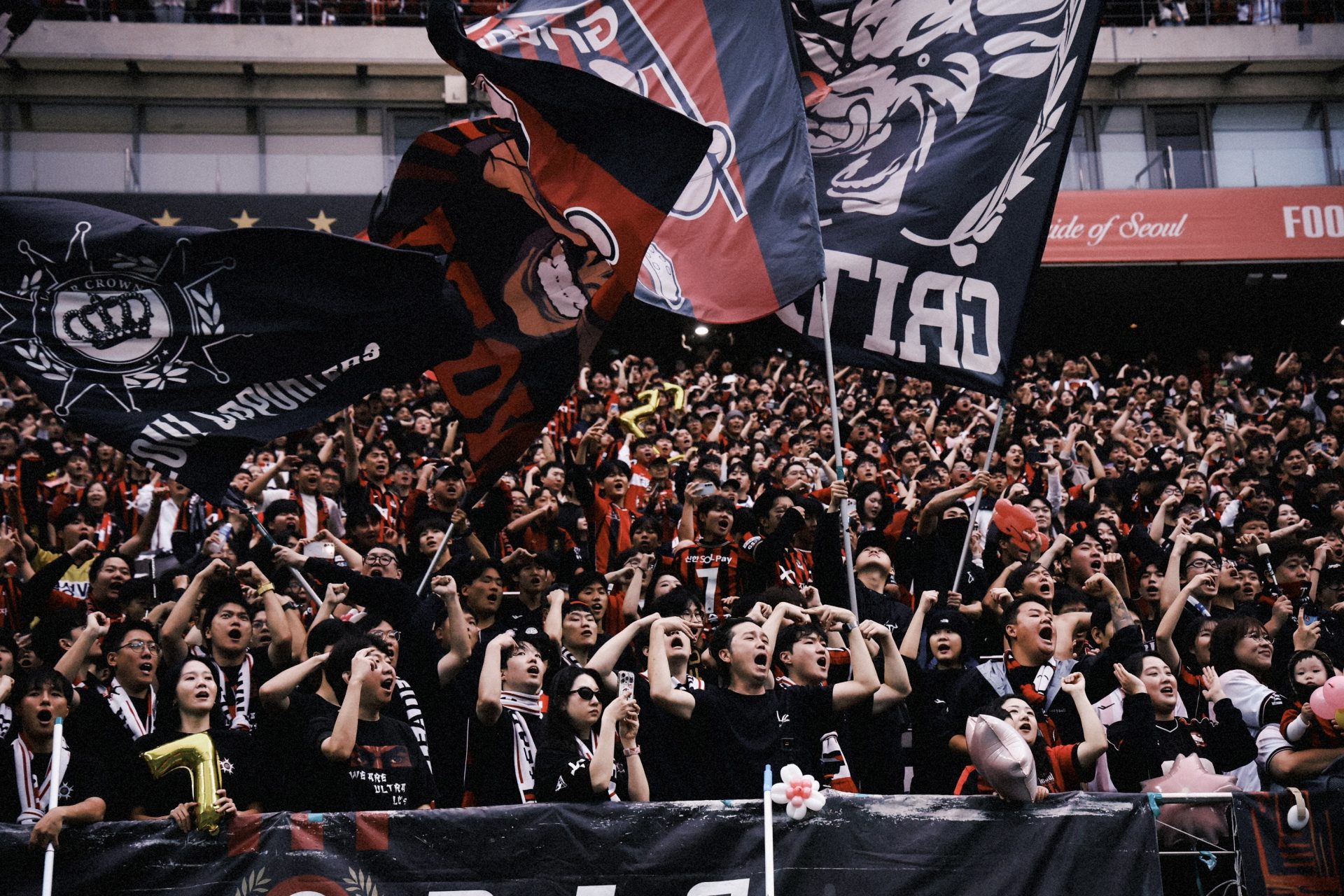
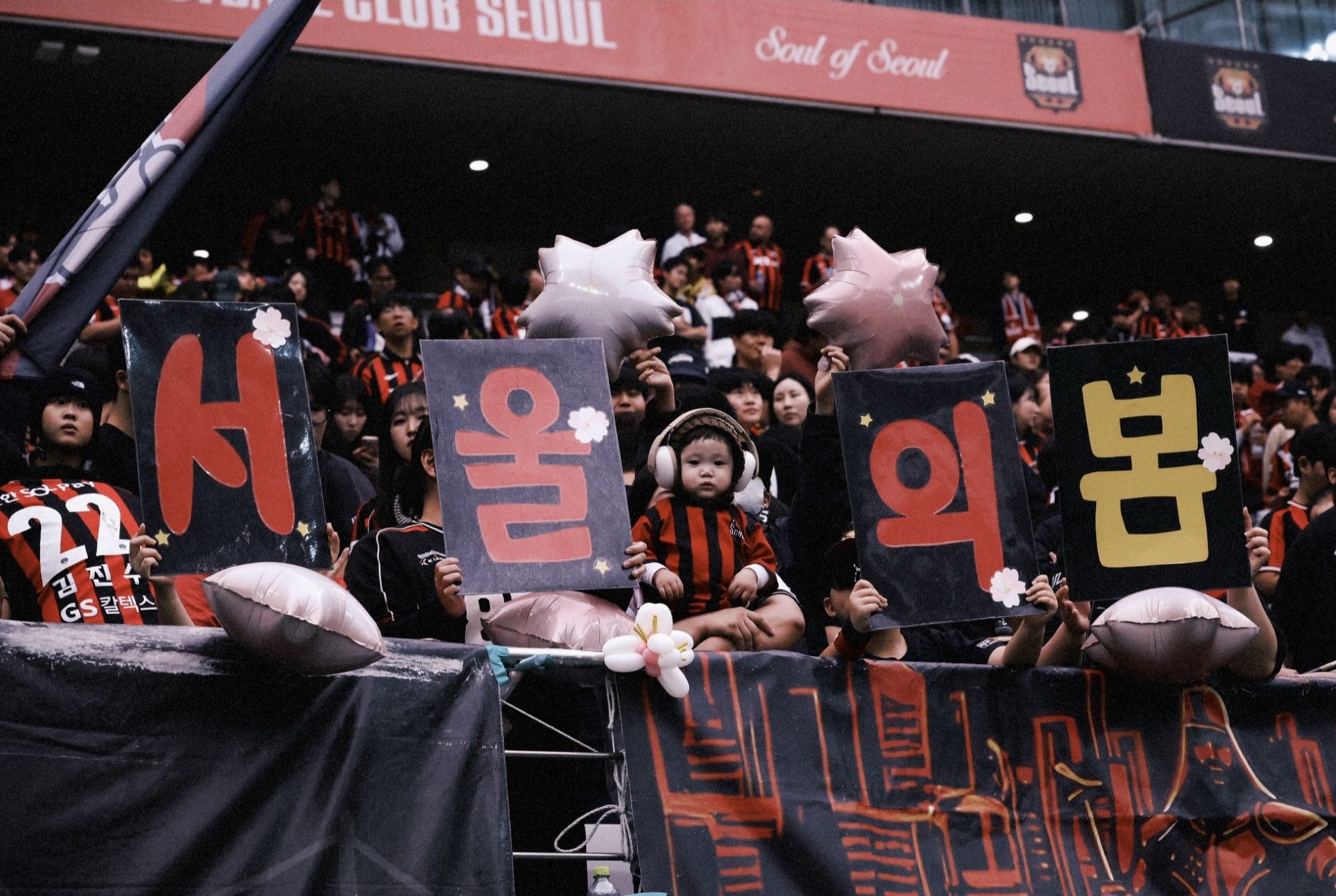
While photographing FC Seoul’s matches this season, I also turned my camera towards Suhoshin, the club’s supporters in the North Stand behind the goal.
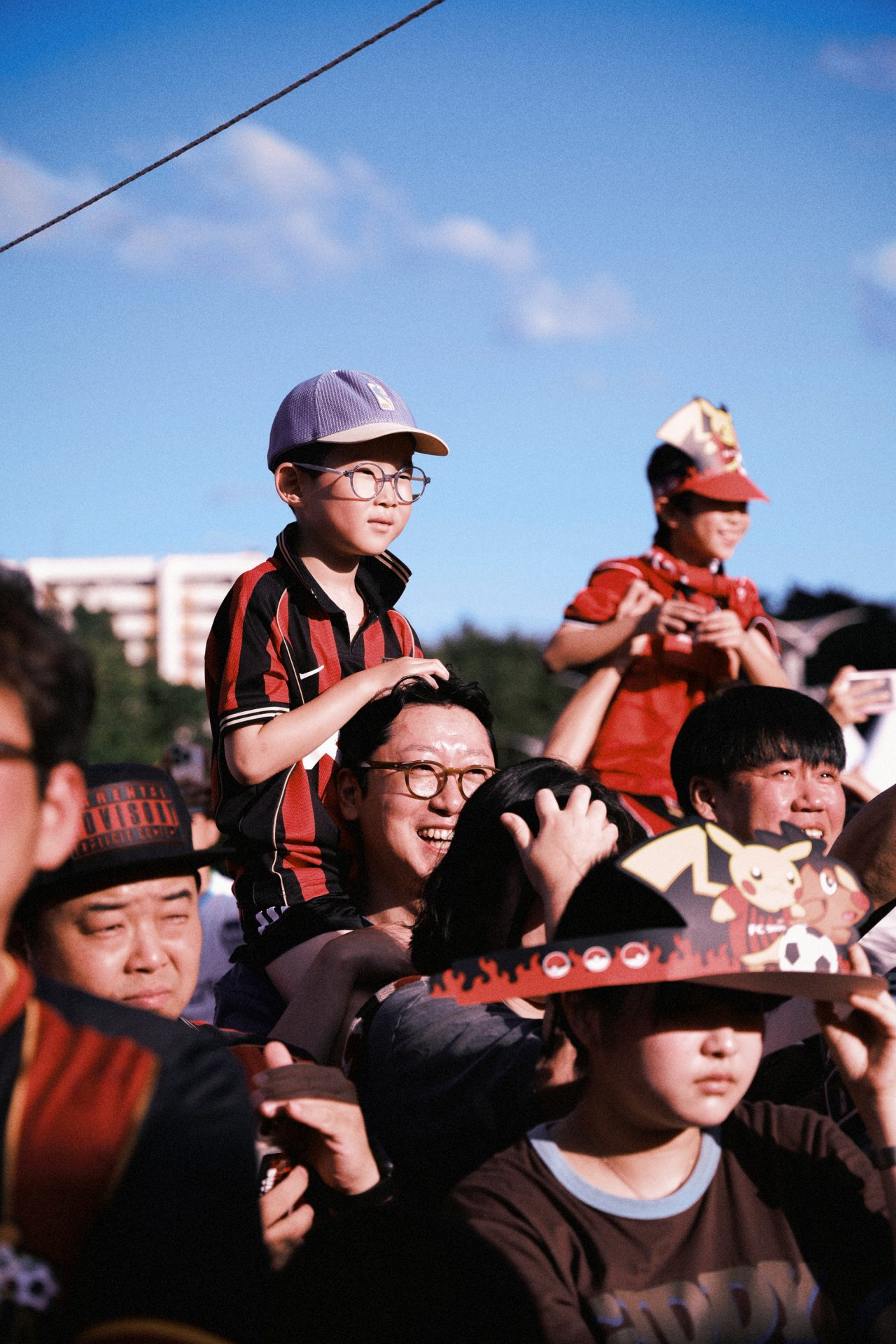
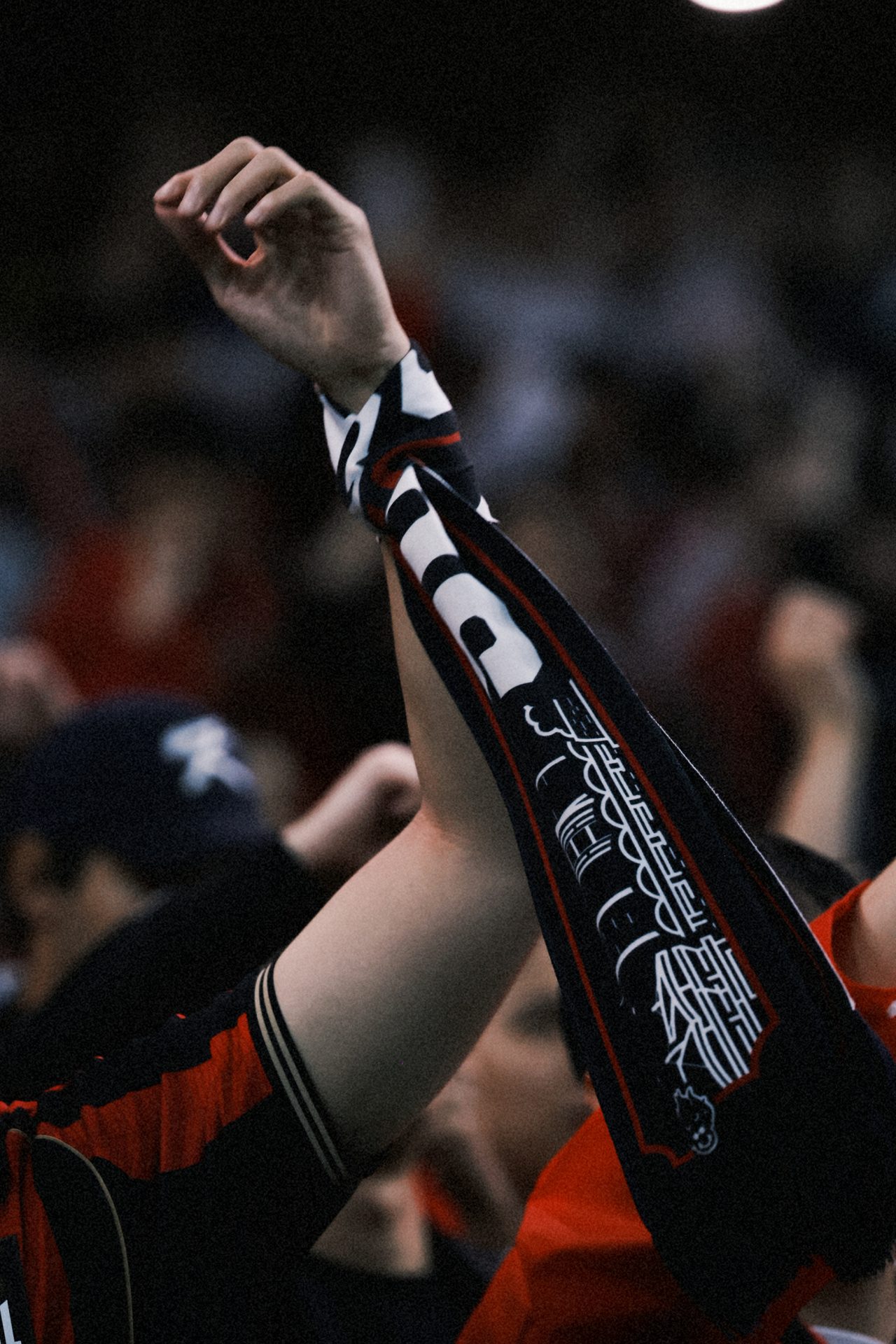
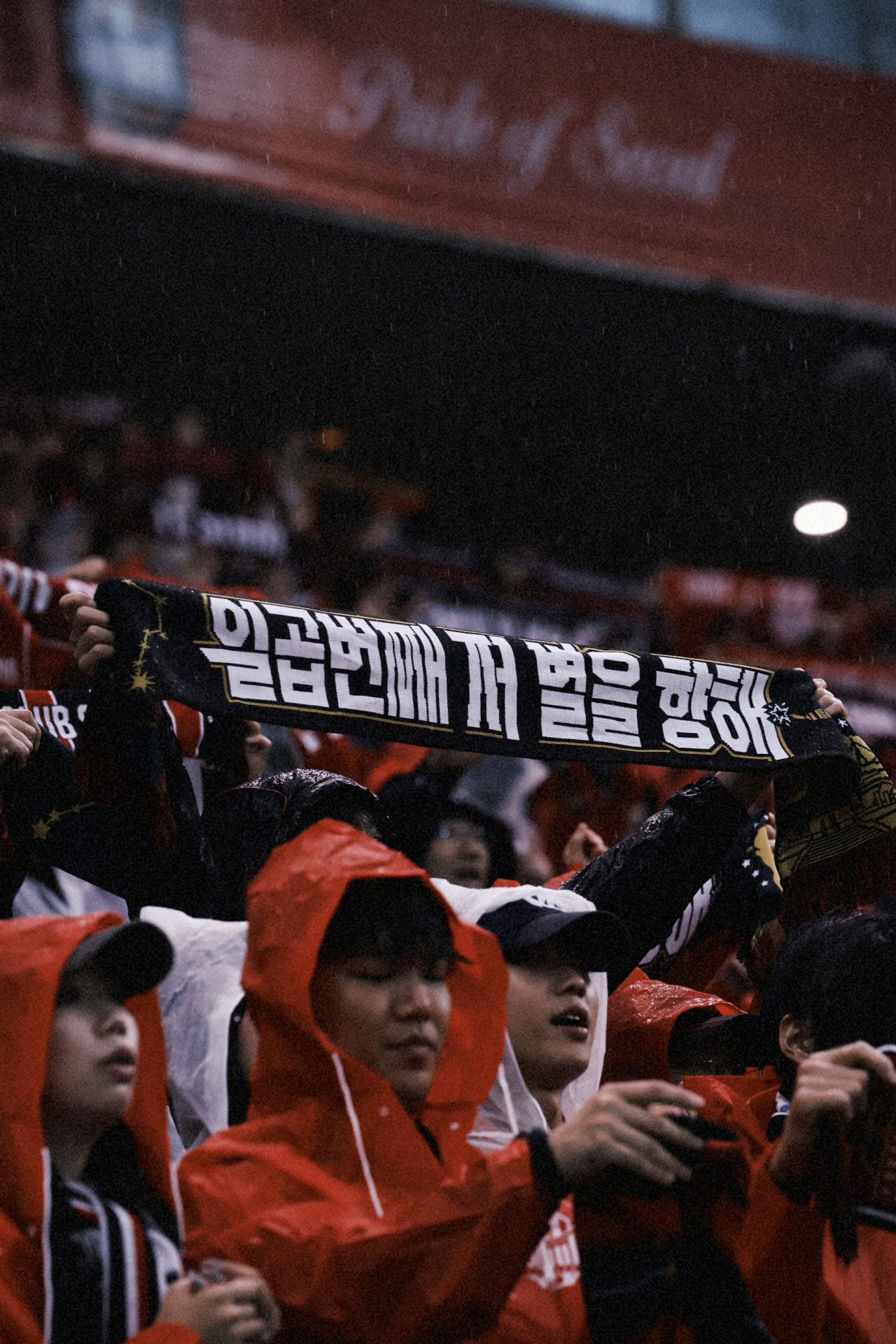
I wanted to document the people who help create the atmosphere of a match: their voices, gestures, expressions, and the energy they share. These photographs tell another side of the season’s story, seen through the people who support the team from the stands.
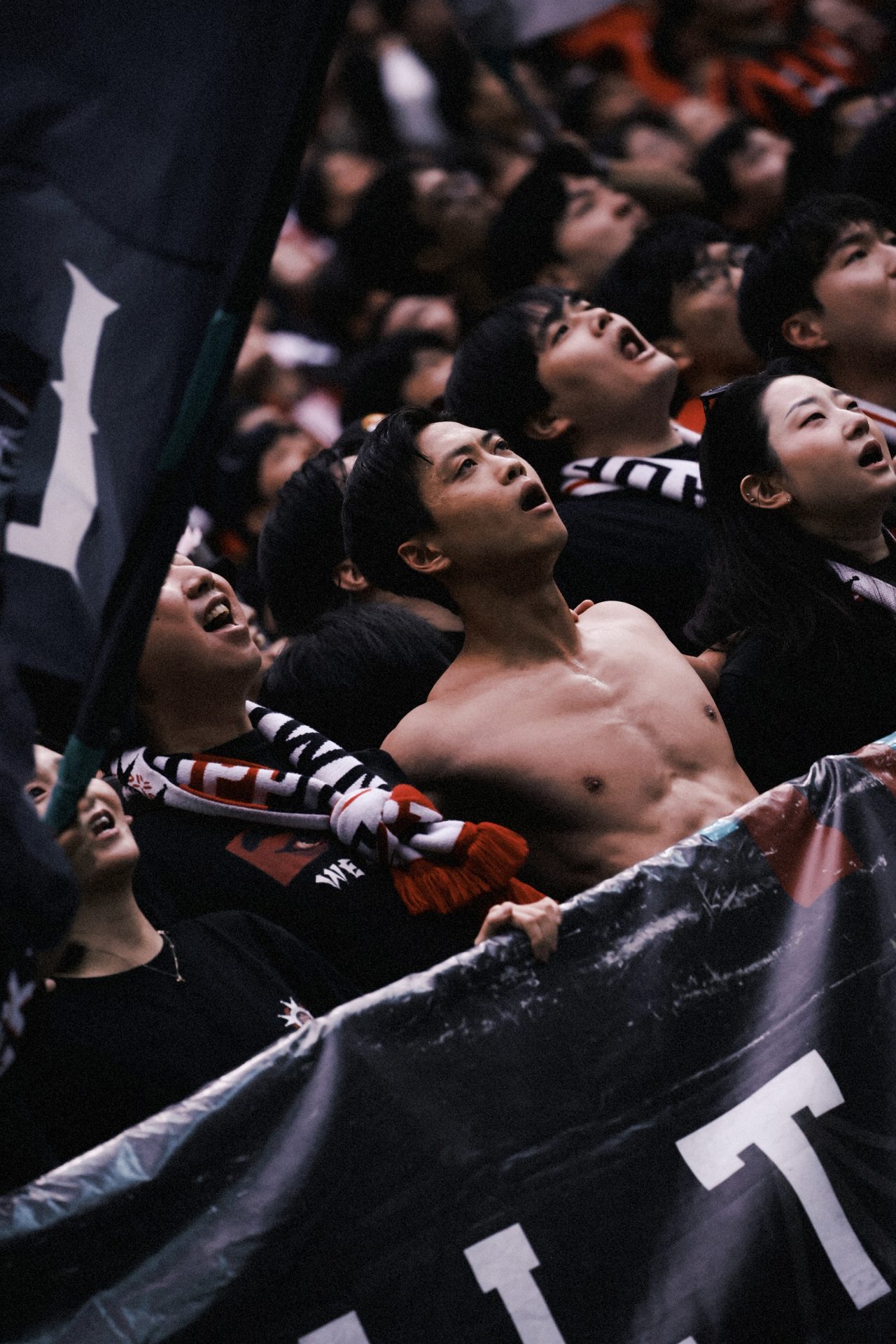
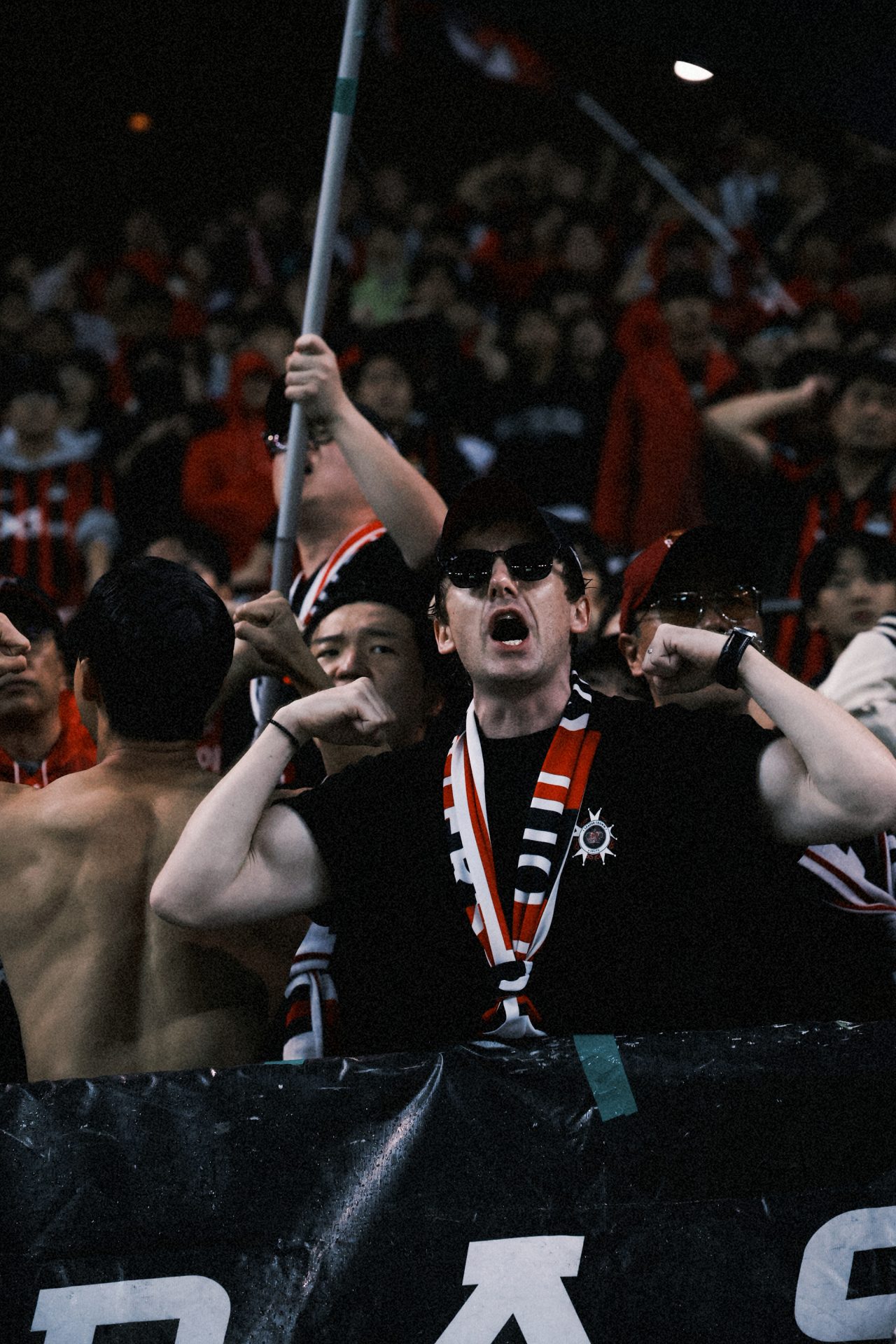
I’m particularly drawn to photographs of supporters chanting with everything they have, completely unaware of the people or cameras around them.
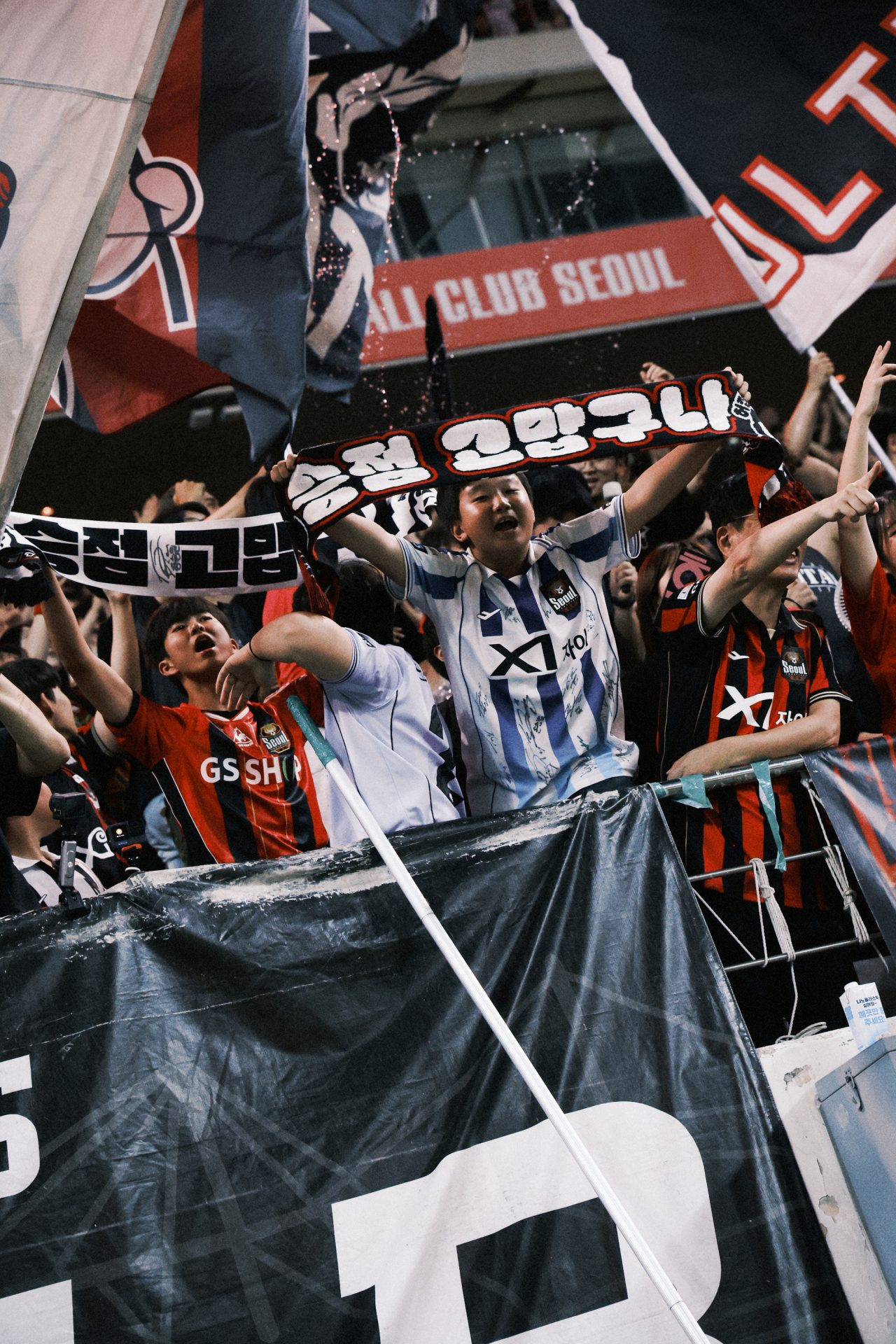
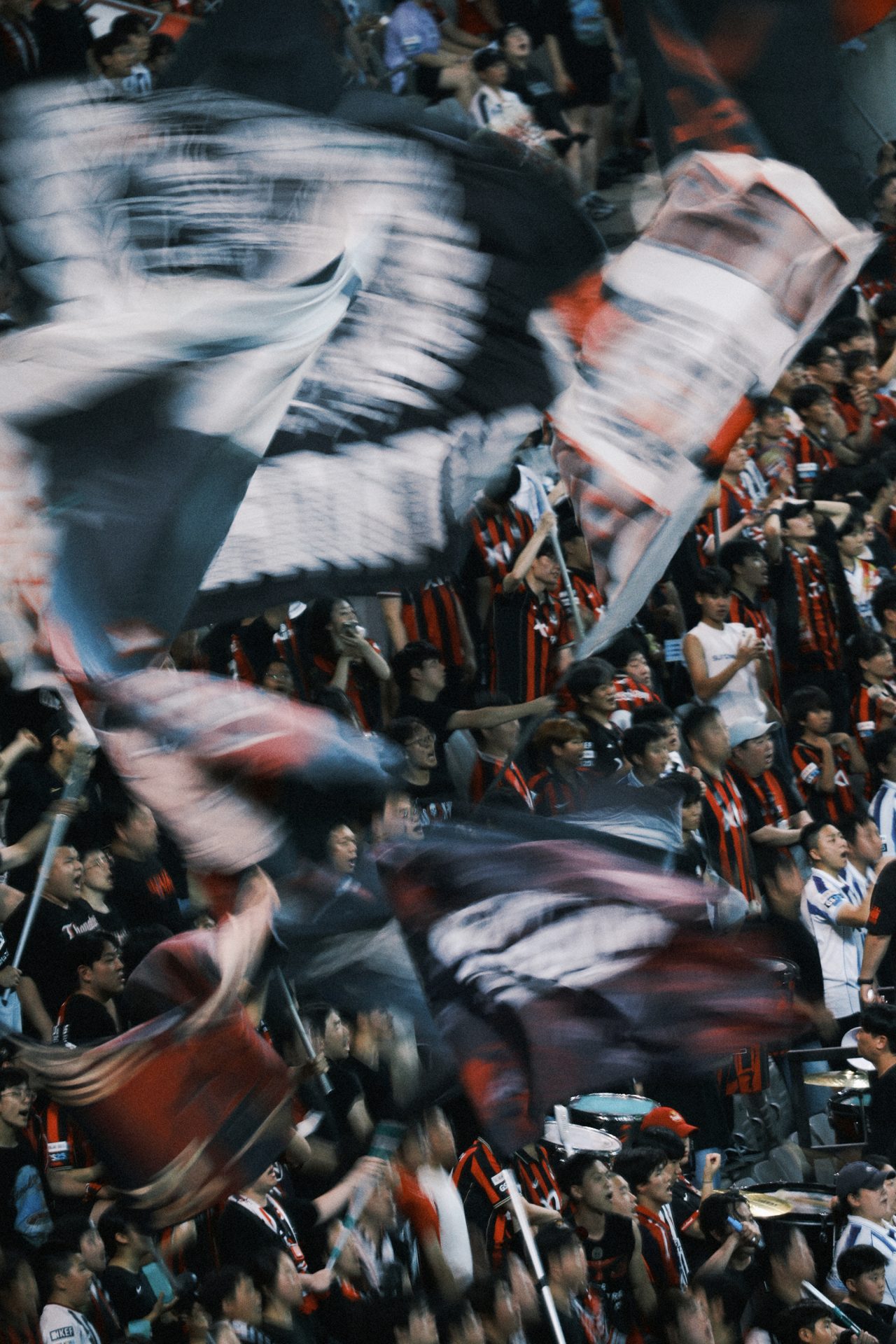
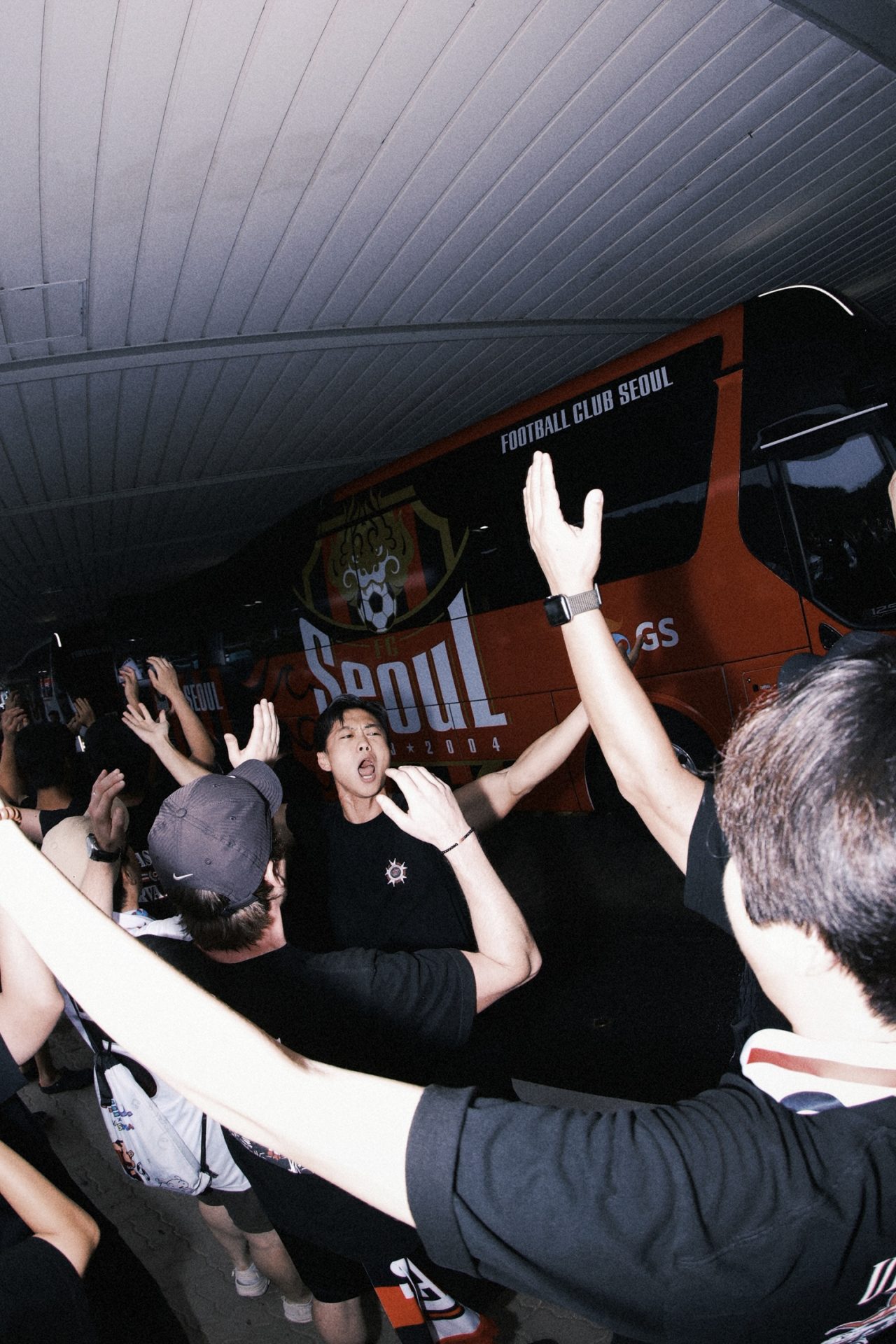
There’s something powerful about that lack of self-consciousness. Their emotions are completely unfiltered, and those are the moments I most enjoy capturing.
FC Seoul have secured the league title this season, and I believe ‘Suhoshin’, the supporters behind the goal, played a huge part in that journey. Their presence and energy have been an essential part of the season.
I also believe supporter culture is one of the strongest ways to bring new people into football. Sometimes it’s the atmosphere in the stands – the voices, the passion, and the sense of belonging – that makes someone want to come back.
As supporters of a club representing Korea’s capital, Suhoshin have built a culture with a strong identity of its own. That’s something I really wanted to share through this project.
What inspired you to photograph football culture specifically?
I wanted to show how much of football exists beyond the action on the pitch. The supporters, the clothes, the rituals, and the small interactions around a match all help give the game its identity.
Those details can be easy to overlook when everyone is focused on the score. Photography gives me a way to bring them into view and show why they matter.
I’m drawn to the work of other photographers who notice what others might miss at a stadium. I enjoy images that look beyond the performance on the pitch and offer a more intimate, behind-the-scenes perspective.
I often follow European football photographers on Instagram. I’m interested in how they document the wider world around the game, paying attention to atmosphere, everyday details, and moments that might otherwise go unnoticed.
What makes photographing football lifestyle and culture in Korea so fascinating?
In Korea, football isn’t yet woven into everyday life in the same way it is in many European communities. But I think few things have the power to bring people together here quite like football does.
That makes this an exciting culture to document. I want to keep showing its character, creativity, and visual appeal so that more people feel drawn to it. In the long term, I hope football becomes an even more natural part of everyday life and culture in Korea. I’d like my photographs to play a small part in that.
What’s next for the project?
My next step is to bring the photographs I’ve collected together into a book.
I want to give these moments a lasting, physical form – something people can return to beyond a social media post. It will be a way to preserve the emotions of the season and tell a fuller story through the images.
Where can people find your work or get in touch?
Instagram is the best place to find me: @harryphoto.kr.
I share my latest photographs, projects, and updates there, including news about upcoming releases and exhibitions. For editorial or commercial commissions, image licensing, or collaborations, feel free to get in touch through DM.
Suggested Lower Block Editions


More from the Lower Block Archive