Local football grounds are far more than just venues. They are landmarks of memory, routine, and identity. Long before redevelopment plans and naming rights, these spaces existed as fixed points in working-class life – places you walked to, waited outside, grew up around, and eventually passed on.
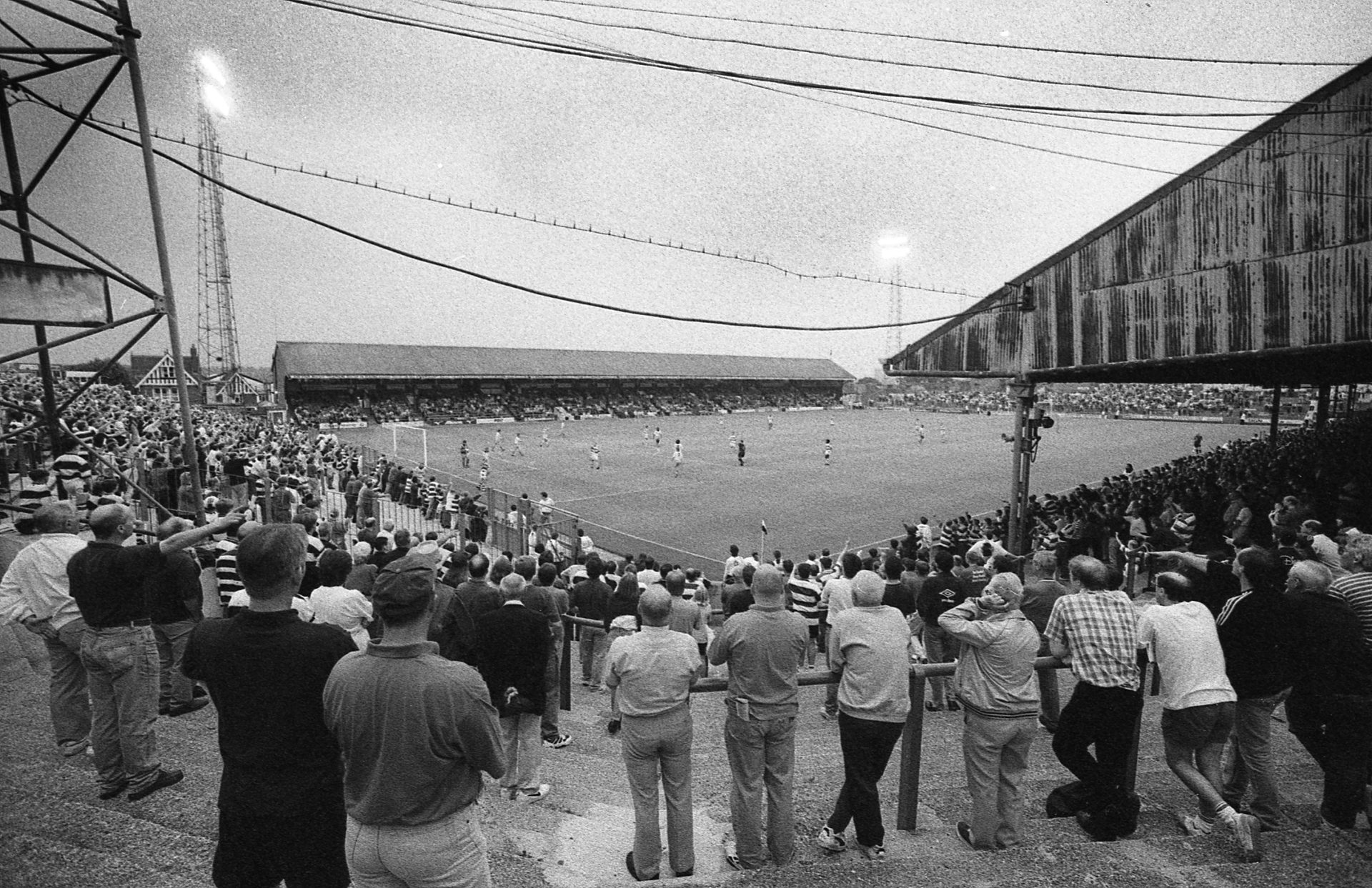
The importance of a ground is not defined by capacity or silverware. It is defined by repetition. Saturdays that follow the same route. Streets that fill and empty in rhythm. The same walls, gates, floodlights, and corners becoming markers of time passing. These spaces hold personal history as much as collective history.
Architecturally, many local grounds were never designed to impress. Concrete, corrugated steel, brickwork, railings. Functional forms shaped by budget and necessity. But this is exactly where their cultural value lies. They belong to their environment. They mirror the estates, factories, and high streets around them. They feel lived-in because they are.
For photographers, these grounds offer a visual language rooted in honesty. Weathered surfaces. Hand-painted signage. Generations standing in the same positions. The relationship between ground and community matters as much as what happens on the pitch. The space tells a story even when it’s empty.

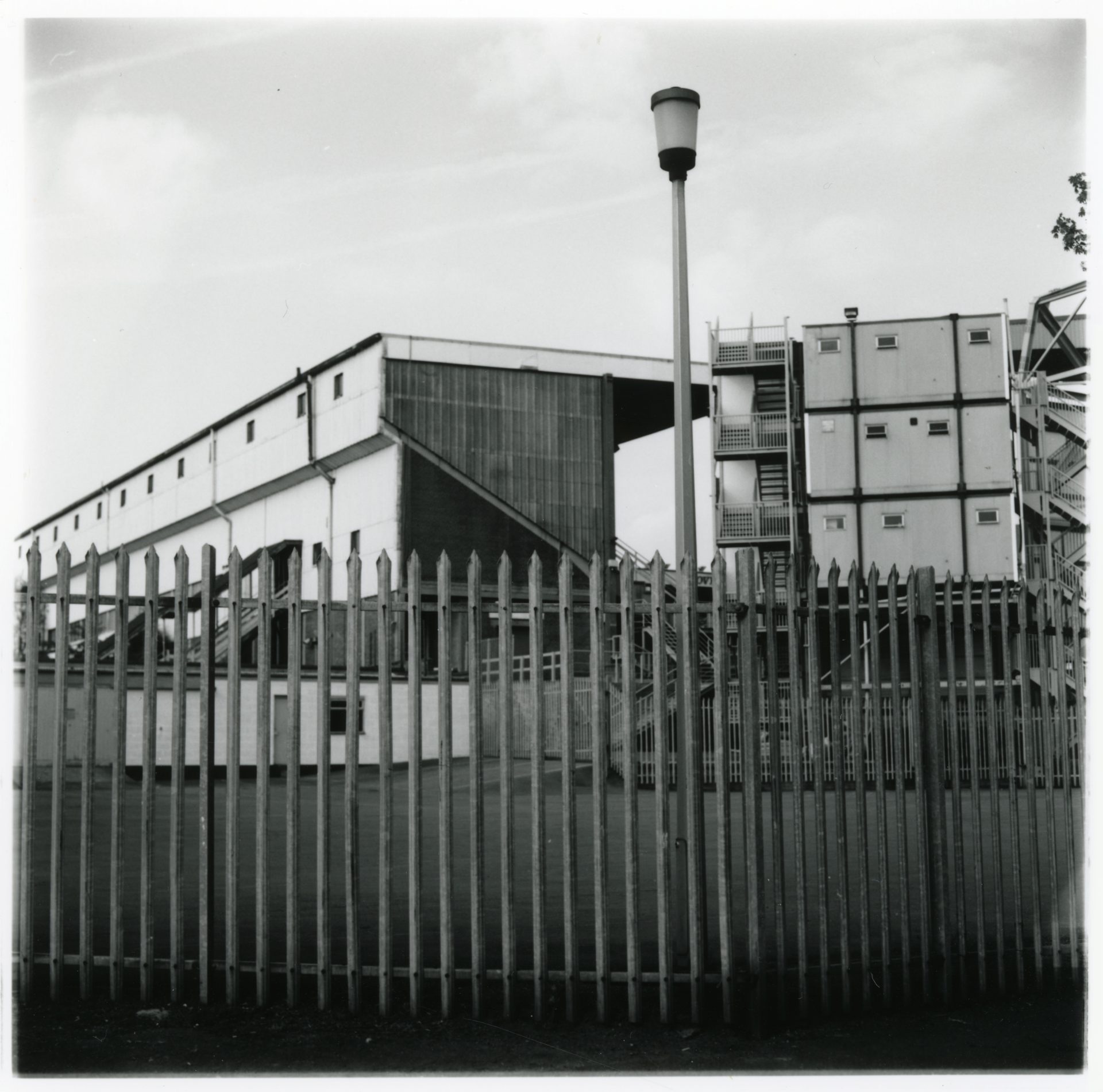
In an era where football increasingly chases spectacle, local grounds remain anchors of authenticity. They resist sanitisation by existing through use rather than performance. Their meaning is not manufactured – it accumulates. Memory layered on memory.
Documenting these places is not simply about nostalgia. It is about preservation. Once a ground disappears, something intangible goes with it: the routes, the rituals, the small details that never make official histories but shape real experience. Photography becomes a form of cultural record – quiet, patient, necessary.
Lower Block treats football spaces as cultural artefacts. Grounds are not backdrops; they are protagonists. Through photography and print, these environments are archived with care, respecting their role in shaping identity, belonging, and community life.
Lower Block works with photographers, brands, galleries, and cultural institutions to document football culture with integrity. For consultancy, archive research, or collaborative editorial projects, read more abut our services and how to get in touch.
Related Lower Block Editions
-
 Highfield Road 1999-05 | Jason Scott Tilley£8.50
 -
 Goodison Park 18.05.25 | Gisela & Craig Szlatoszlavek£8.50
 -
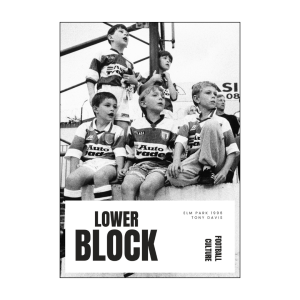 Elm Park 1996 | Tony Davis£8.50
 -
 The Old Showground | Nic Salmon£8.50
 -
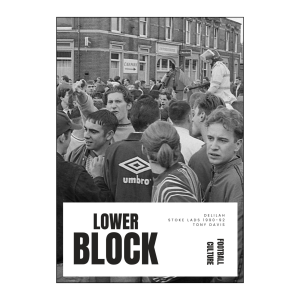 Delilah – Stoke Lads 1990-92 | Tony Davis£8.50
 -
 Scottish Grounds 1990s | Tony Davis£8.50
 -
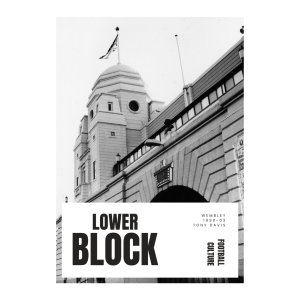 Wembley 1990-03 | Tony Davis£8.50
 -
 Forza San Siro | Alex Amorós£8.50
 -
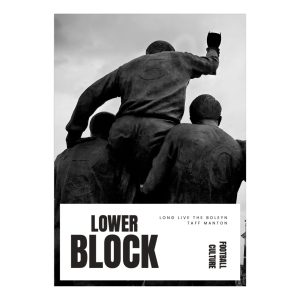 Long Live The Boleyn | Taff Manton£8.50
You may also enjoy…