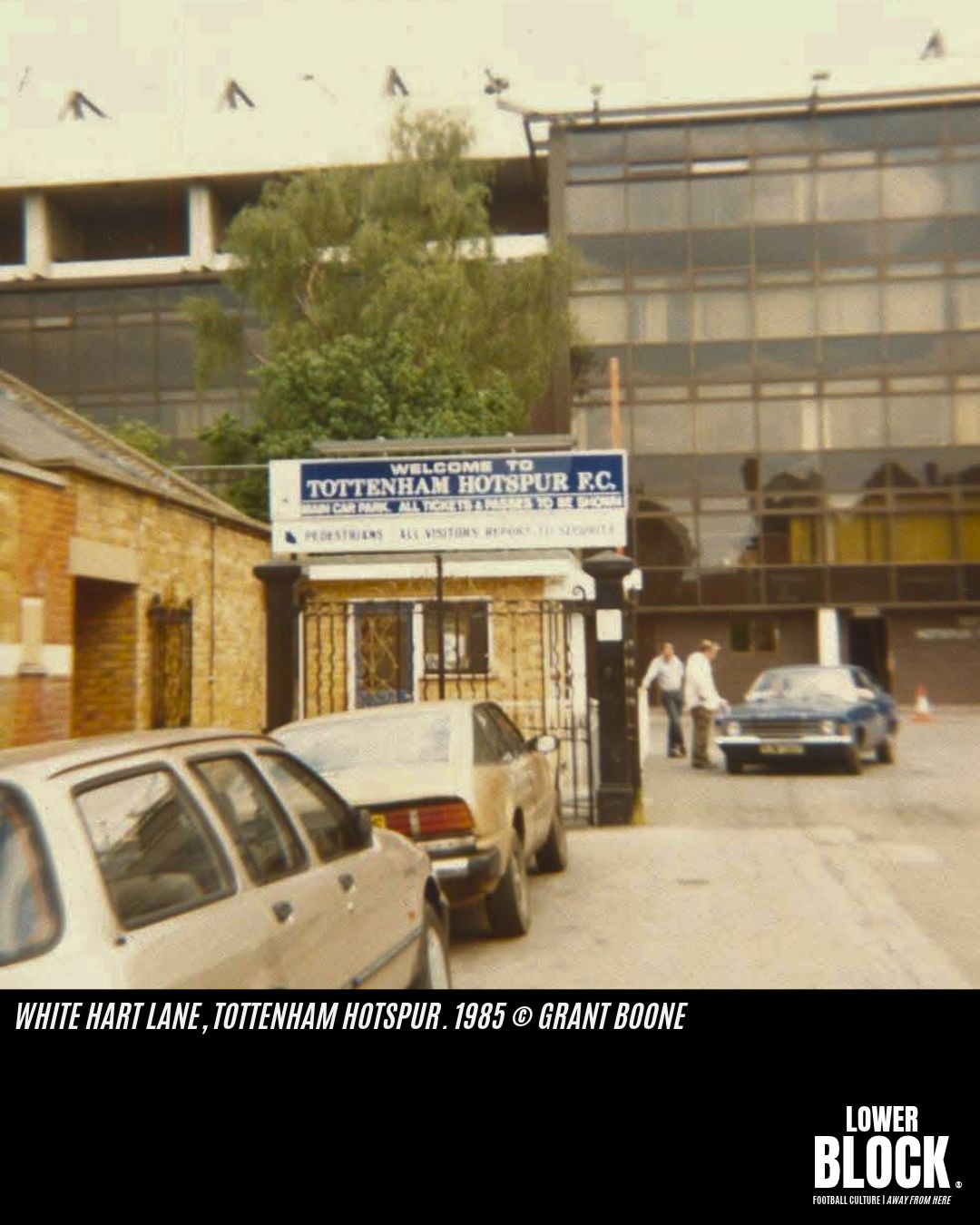
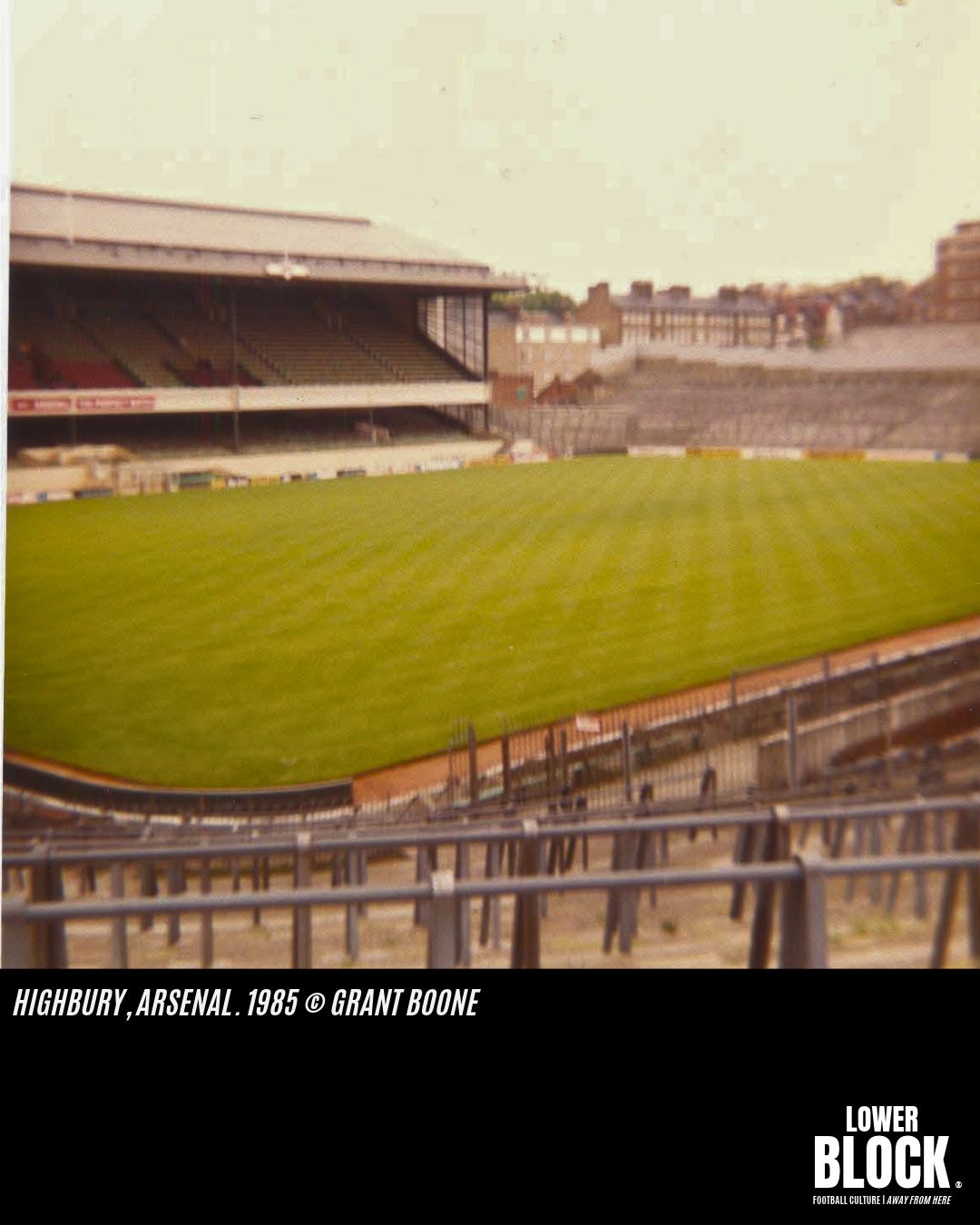
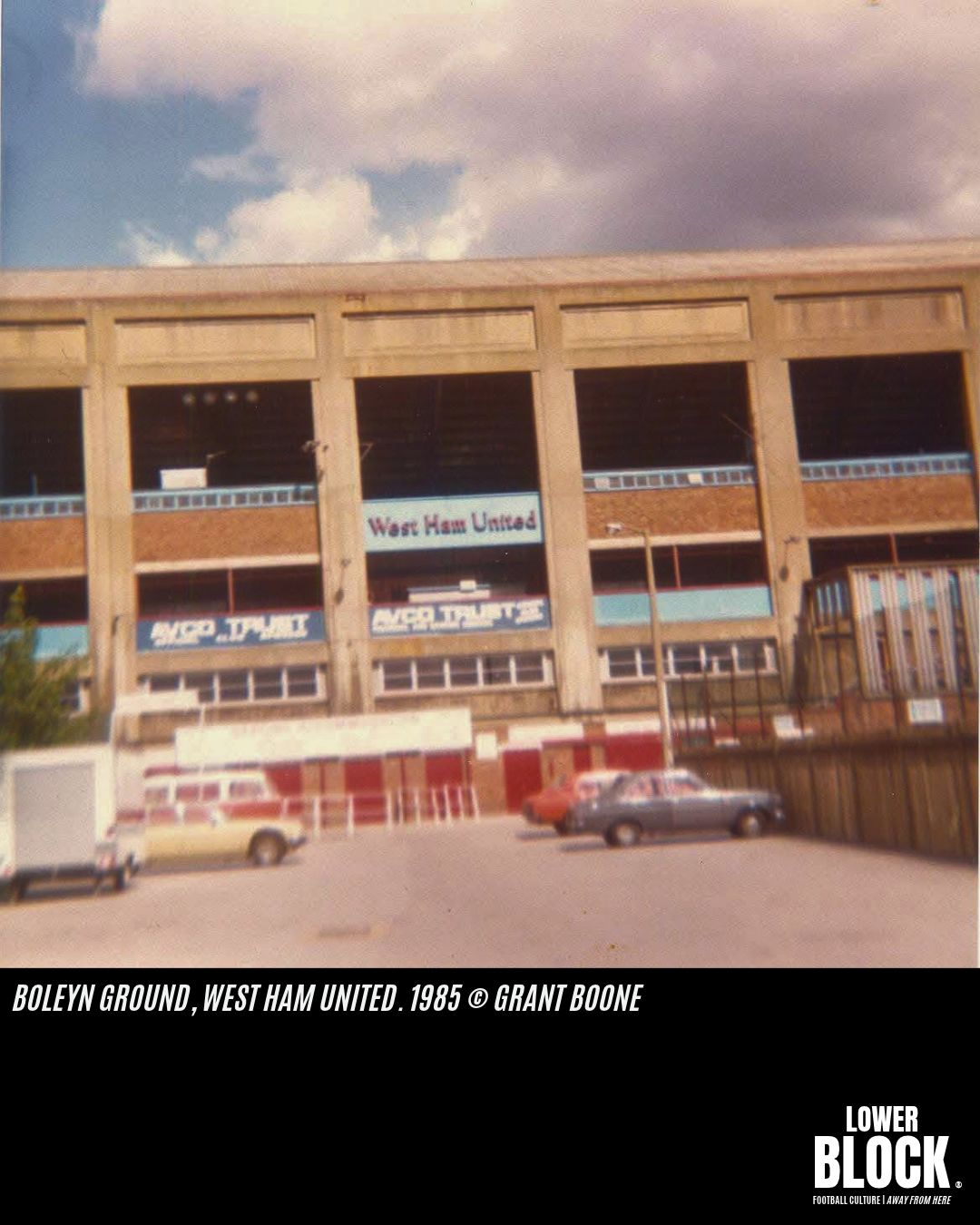
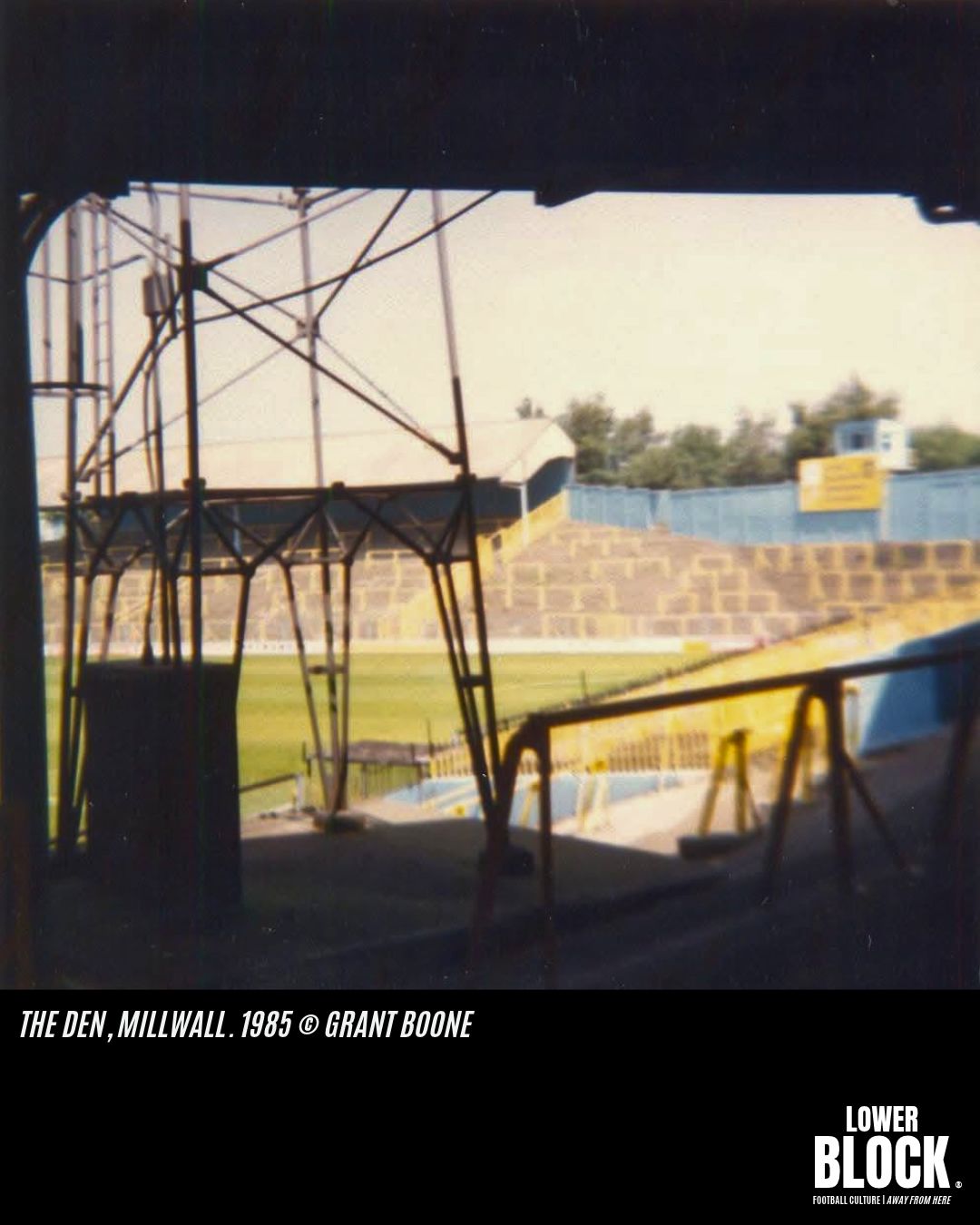
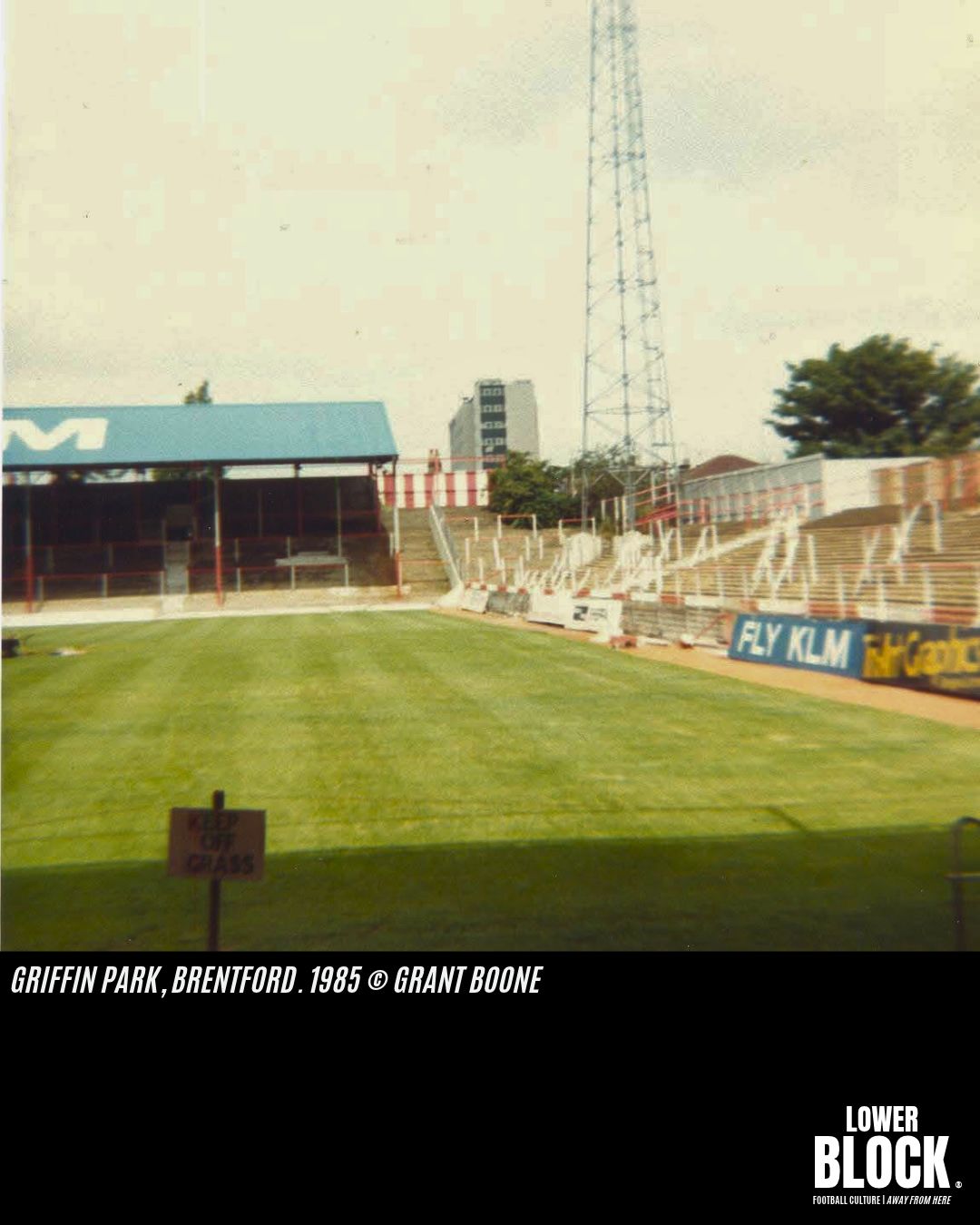
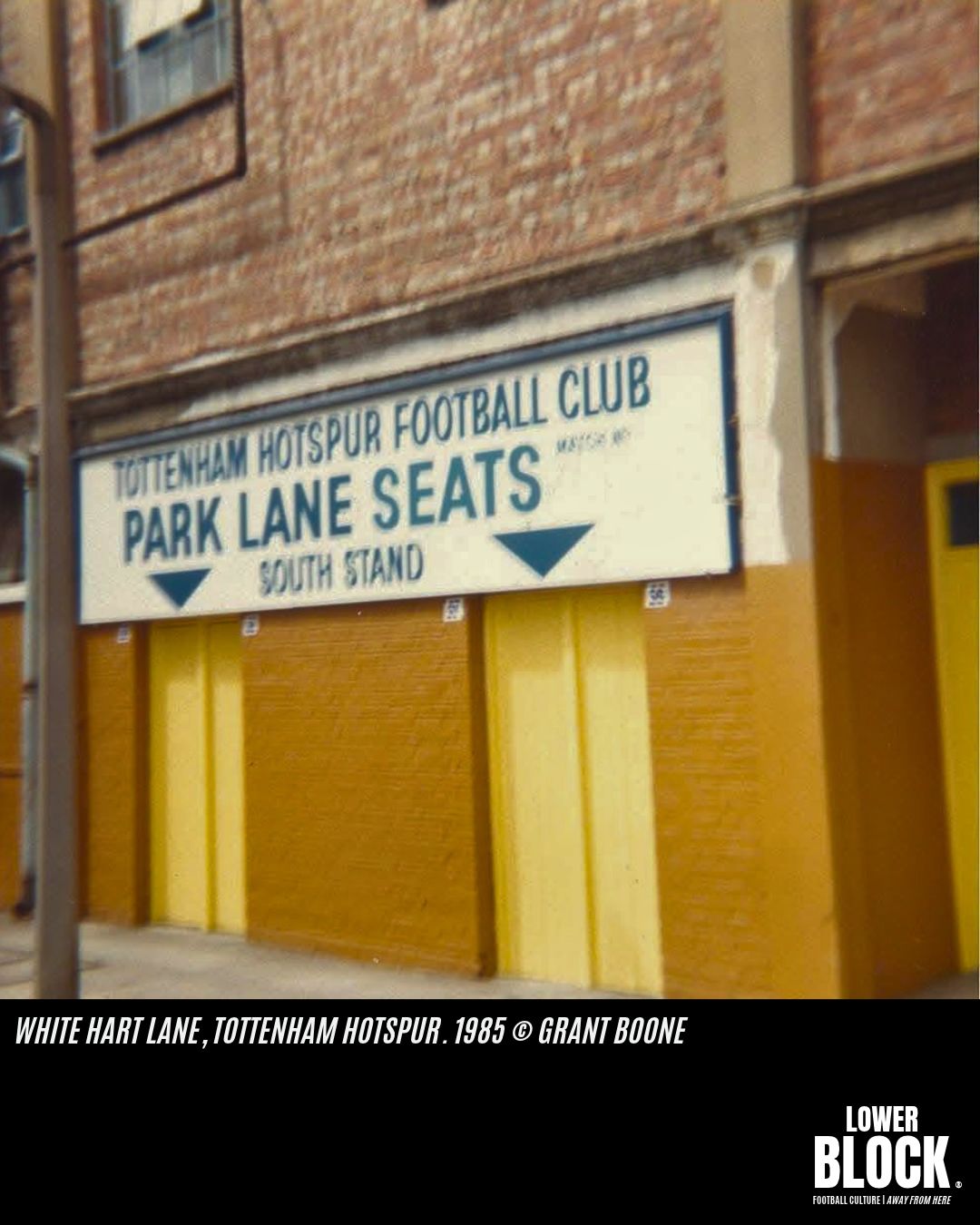
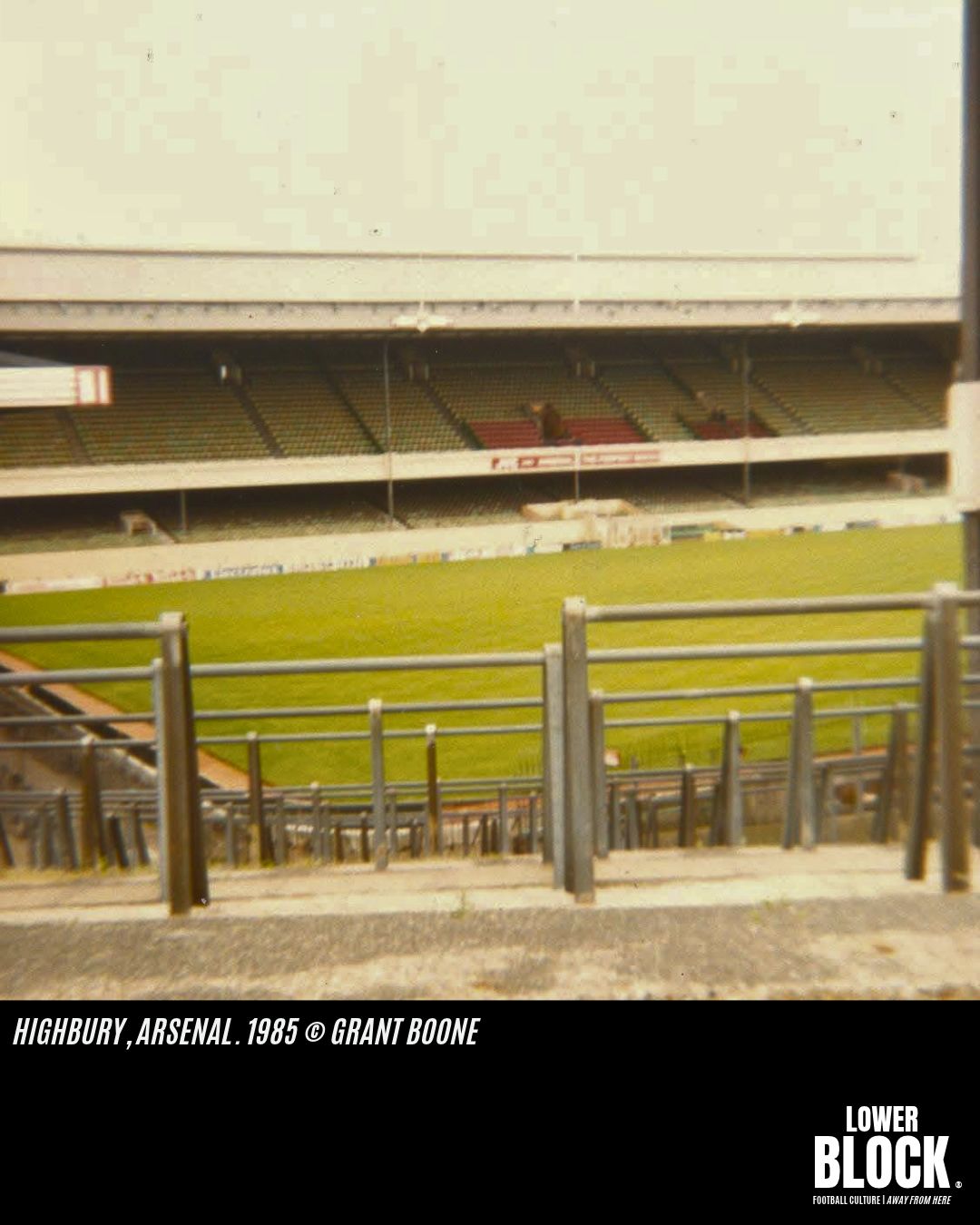
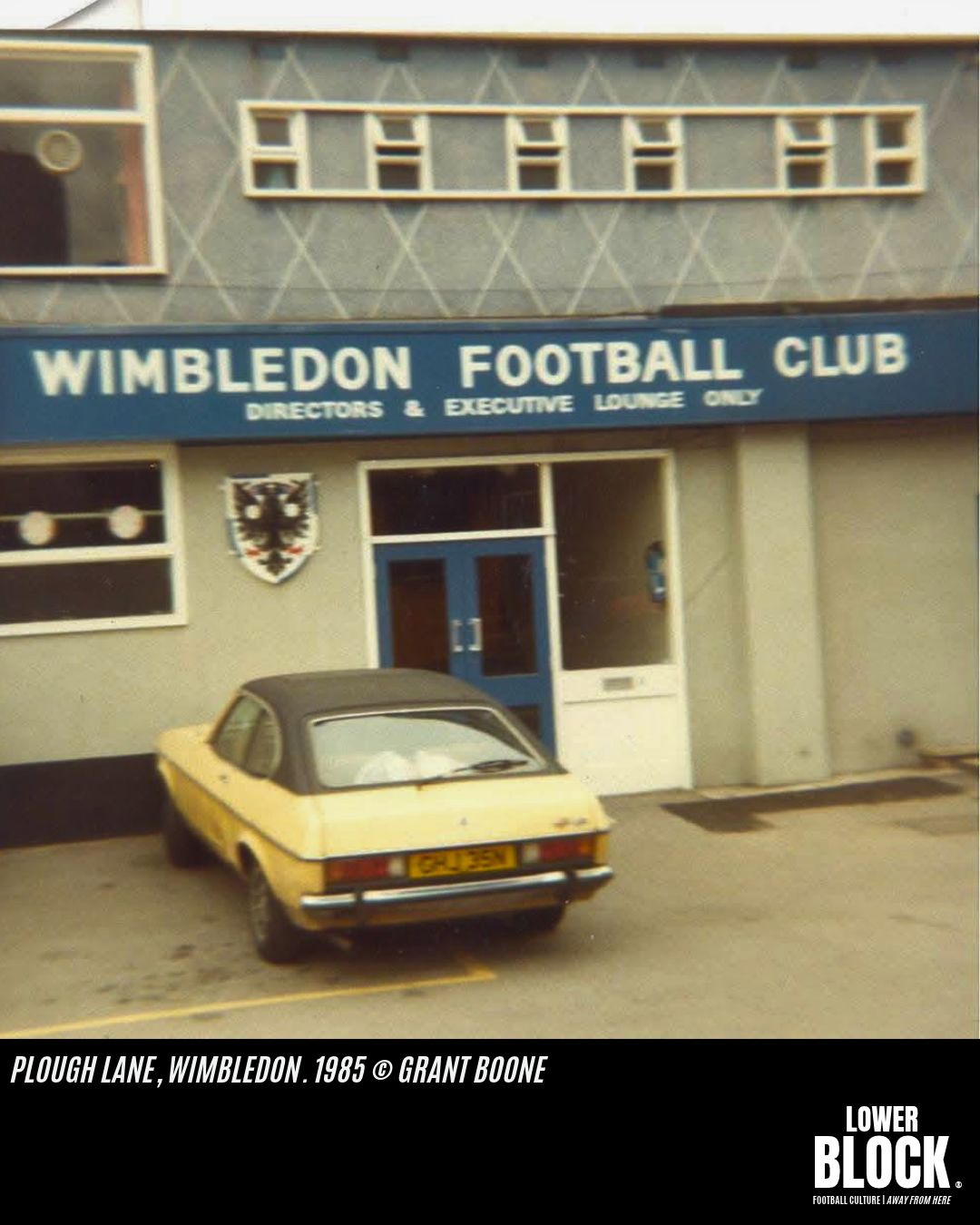
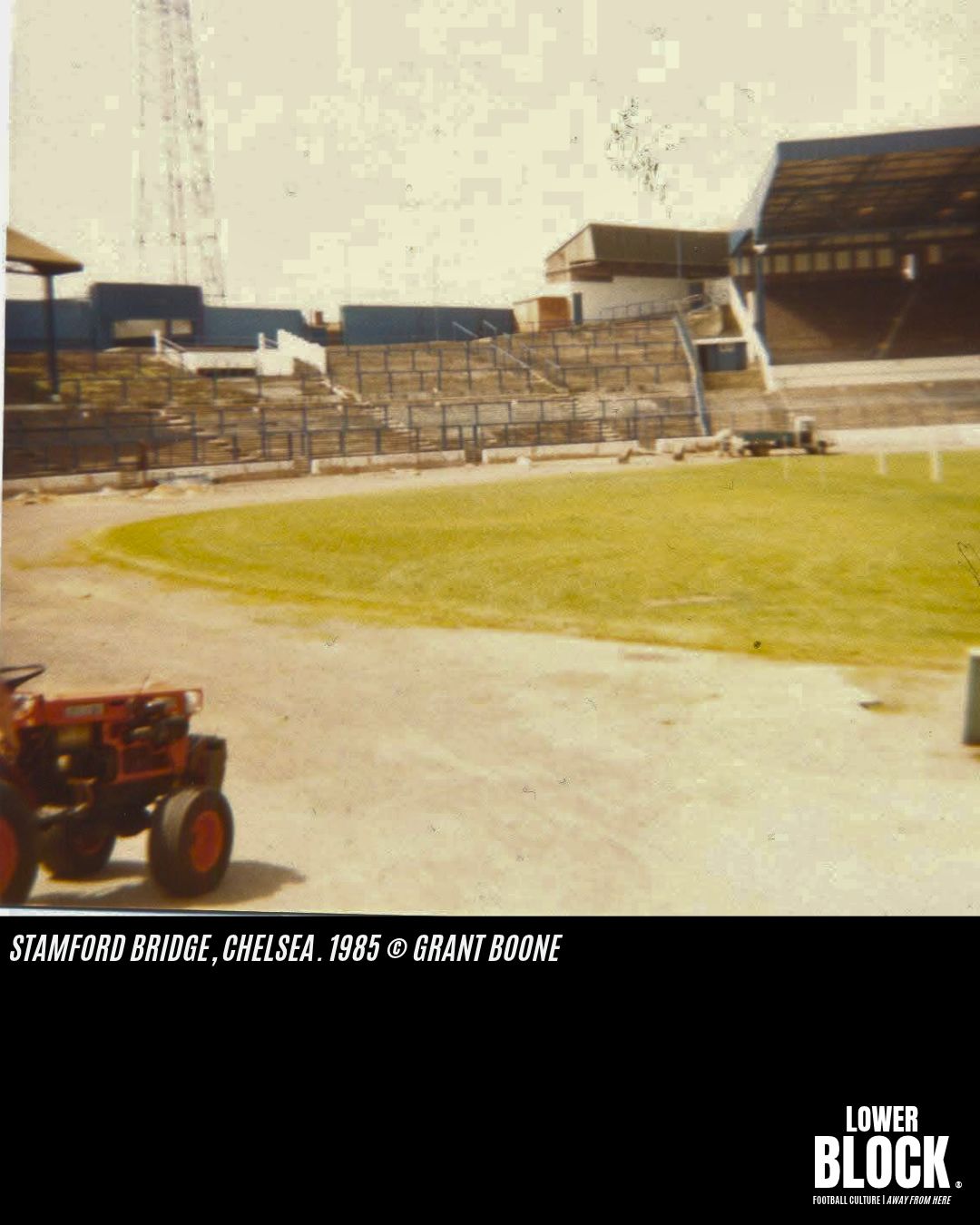
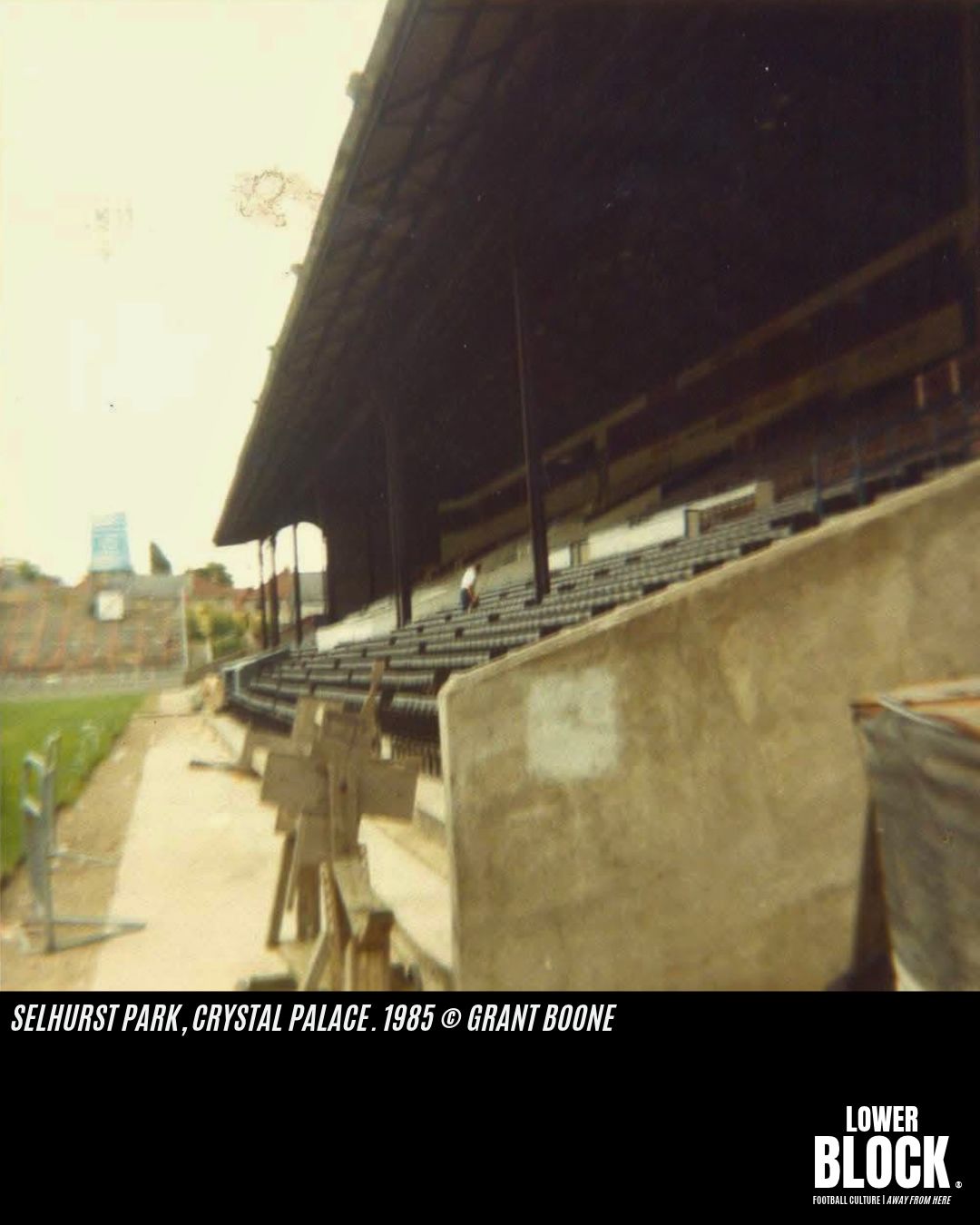
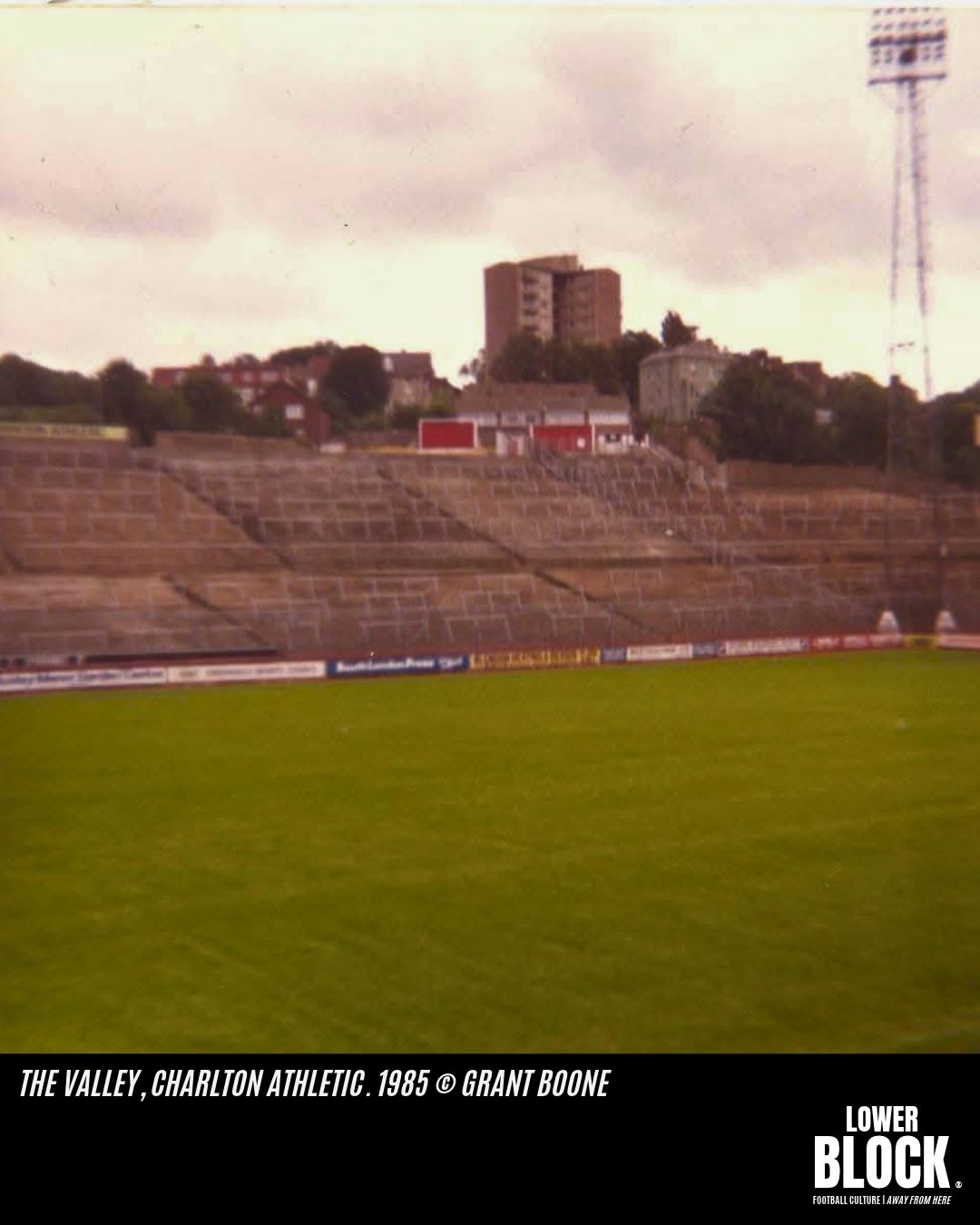
In the summer of 1985, Grant Boone photographed London’s football grounds on an old Kodak camera. There are no matches taking place, no supporters outside the turnstiles and no crowds heading home. Yet these quiet photographs give a strong sense of the city, its clubs and the communities around them.
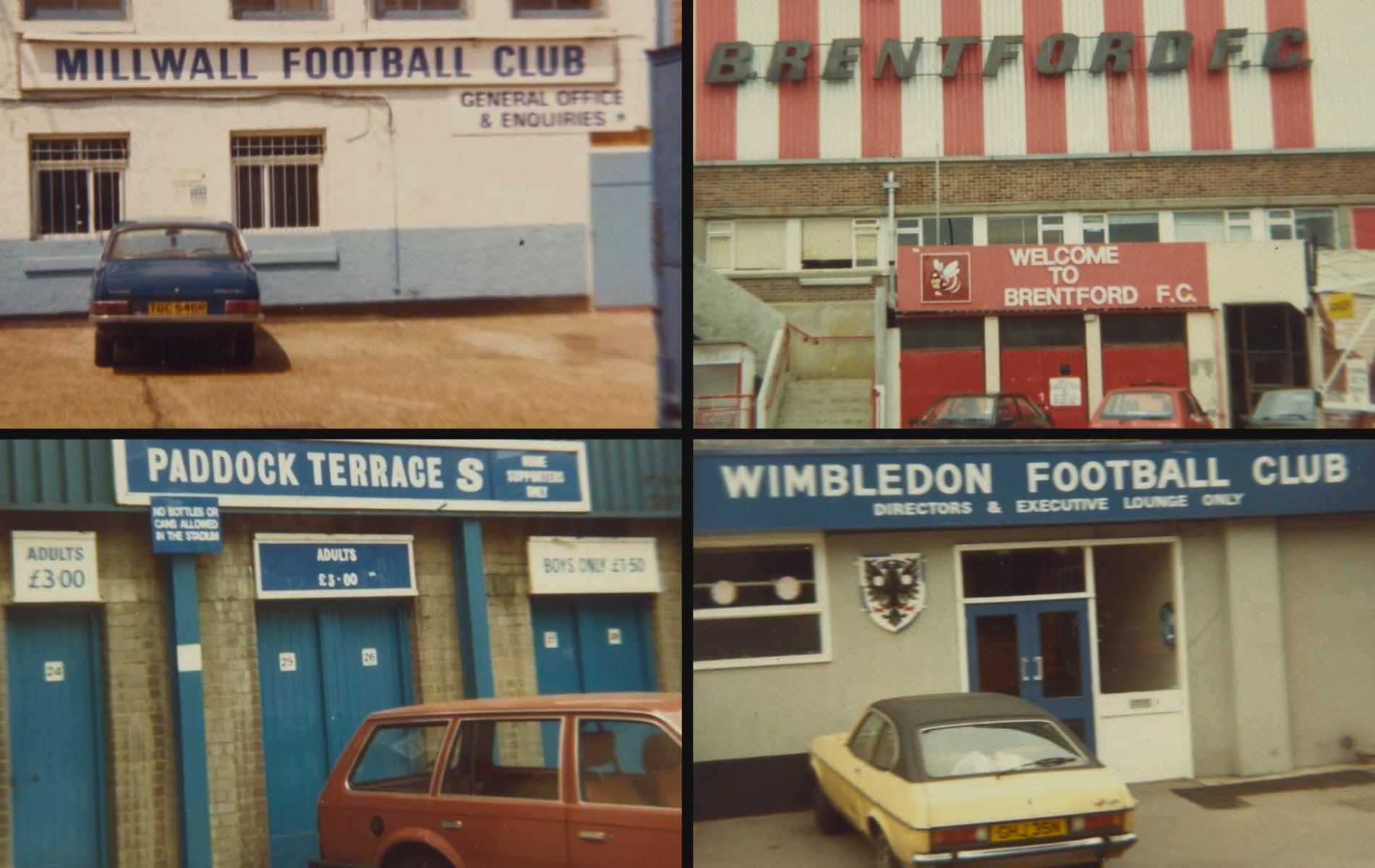
The collection takes in the Boleyn Ground, Plough Lane, Griffin Park, The Den, Selhurst Park, Loftus Road, Stamford Bridge, White Hart Lane, Highbury, The Valley and Craven Cottage. Some remain familiar. Others have changed dramatically or disappeared altogether.
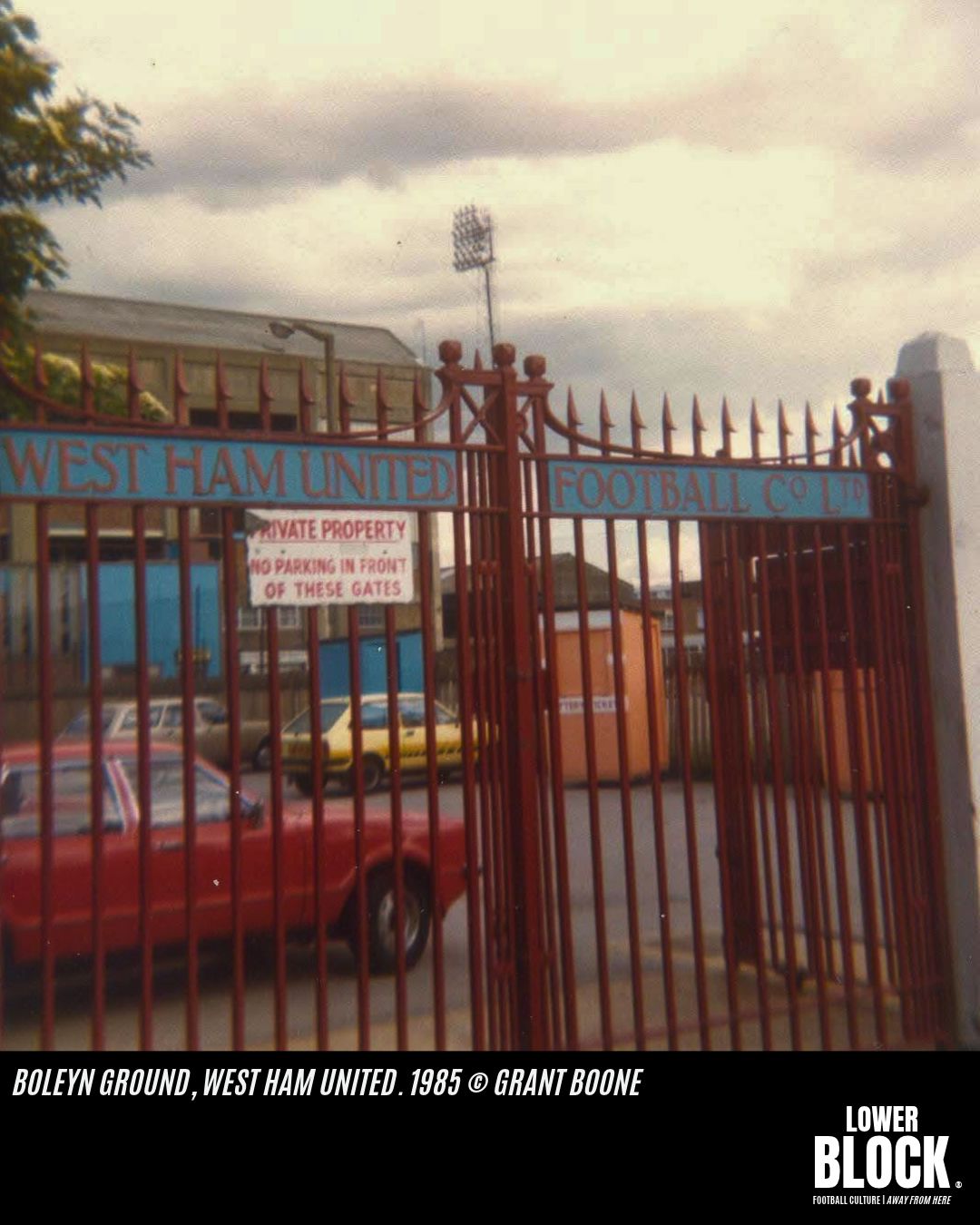
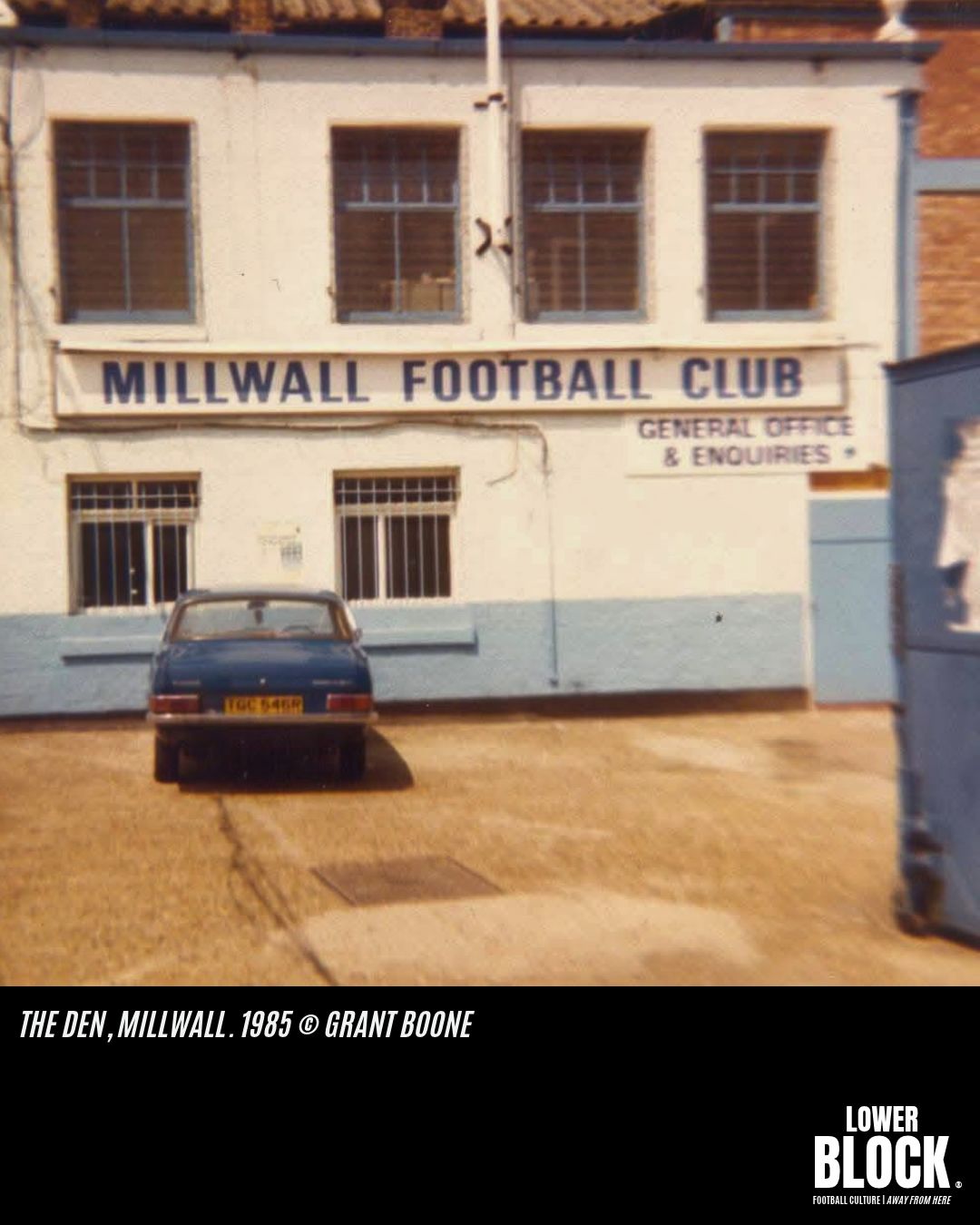
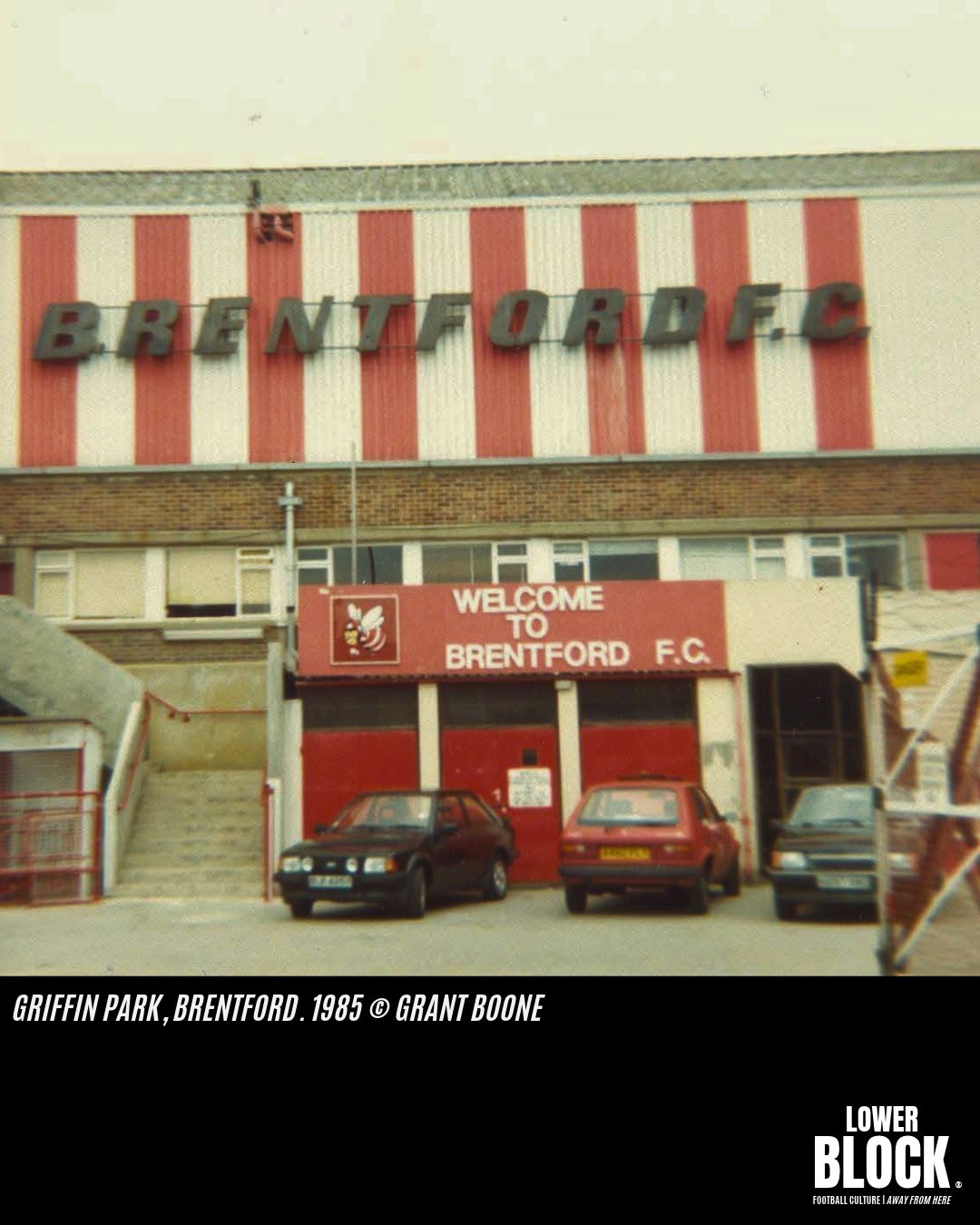
It is the detail around the grounds that makes this such a revealing piece of football culture photography. The parked cars, surrounding buildings and stadium entrances place each photograph firmly in mid-1980s London. Together, they preserve an everyday view of places that held enormous meaning for the people who used them.
Lost grounds and changing stadiums
Several photographs now belong to the story of London’s lost grounds. West Ham left the Boleyn Ground in 2016, Brentford departed Griffin Park in 2020, and Millwall moved from the original Den in 1993. Wimbledon’s old Plough Lane has also gone, distinct from the ground where AFC Wimbledon play today.
White Hart Lane was demolished in 2017 as Tottenham built their new stadium. At Highbury, Arsenal’s home until 2006, the preserved East and West Stand façades survive within a residential development. The setting remains recognisable, but its purpose has changed.
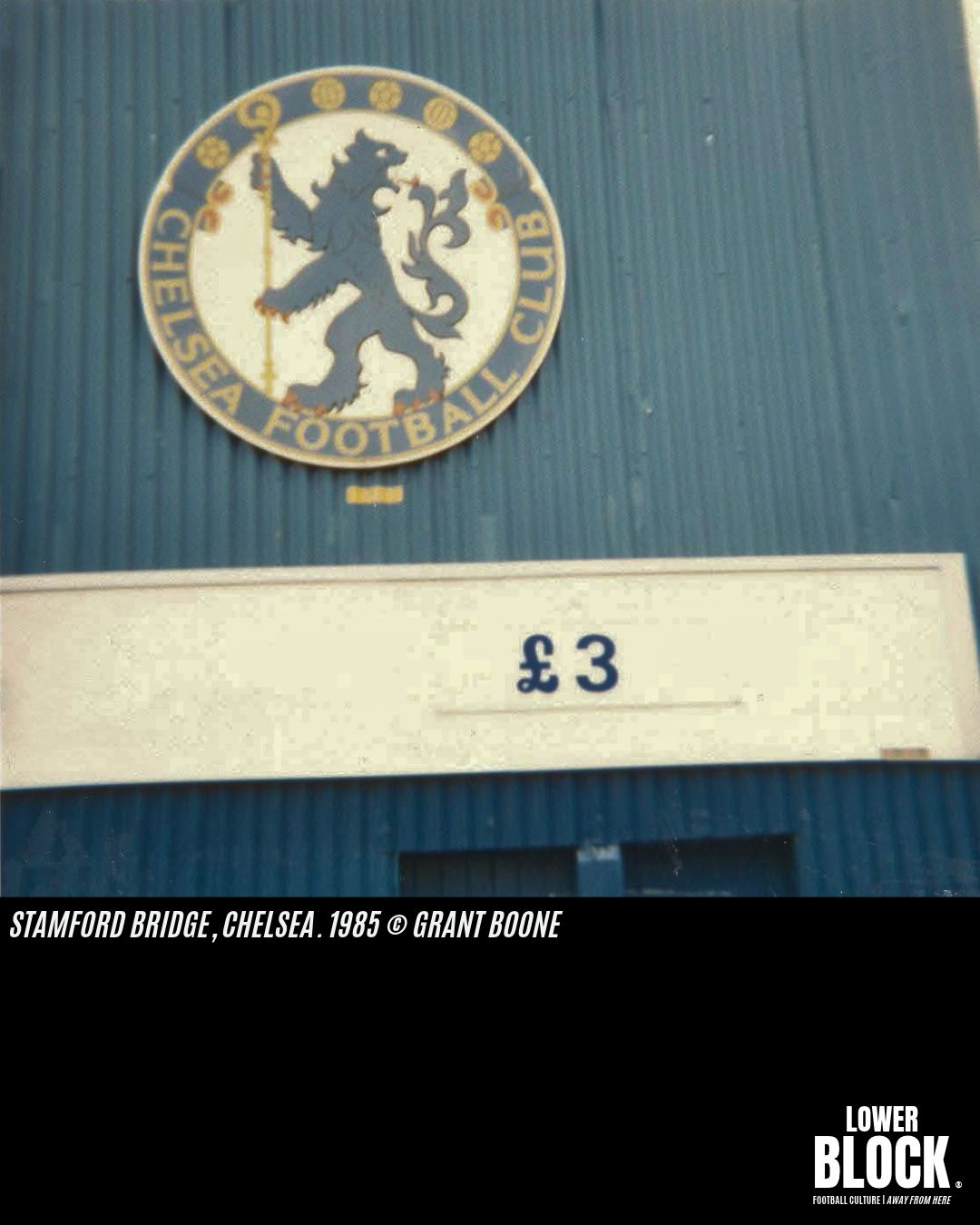
Stamford Bridge tells another story of transformation. Chelsea stayed on the same site, while extensive rebuilding from the 1990s reshaped much of the stadium. Boone’s photograph records an earlier version of a ground that generations of supporters have known.
Football on the doorstep
The proximity of the parked cars is striking. These are summer scenes, but the ease with which ordinary street life sits alongside stadium walls is a reminder of how deeply the grounds were embedded in their neighbourhoods. Football occupied the same streets as people’s homes, shops and daily journeys.
At Stamford Bridge, a sign advertises admission for £3. That is roughly £12 in 2026 money after inflation, a striking illustration of the affordability of the advertised entry price.
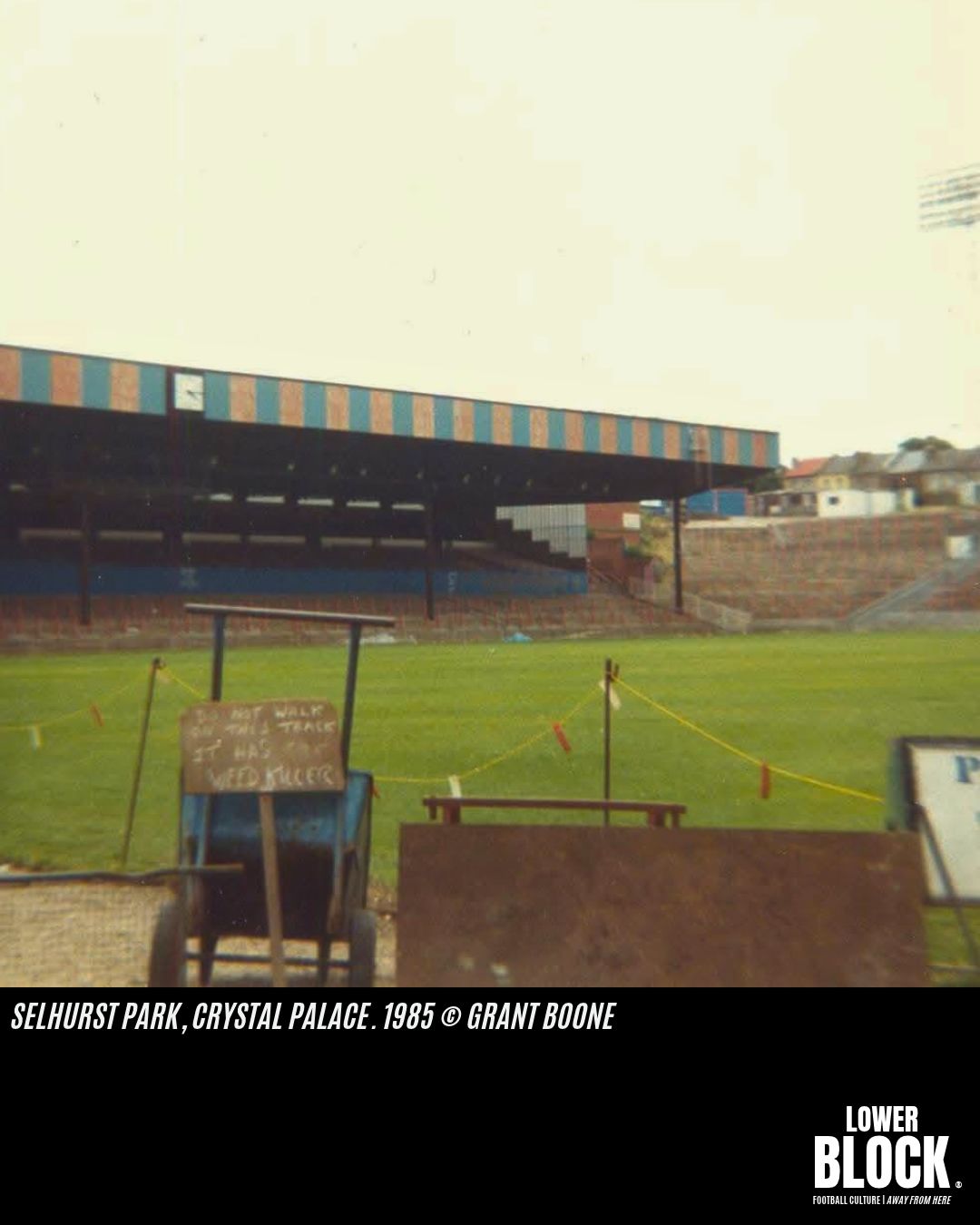
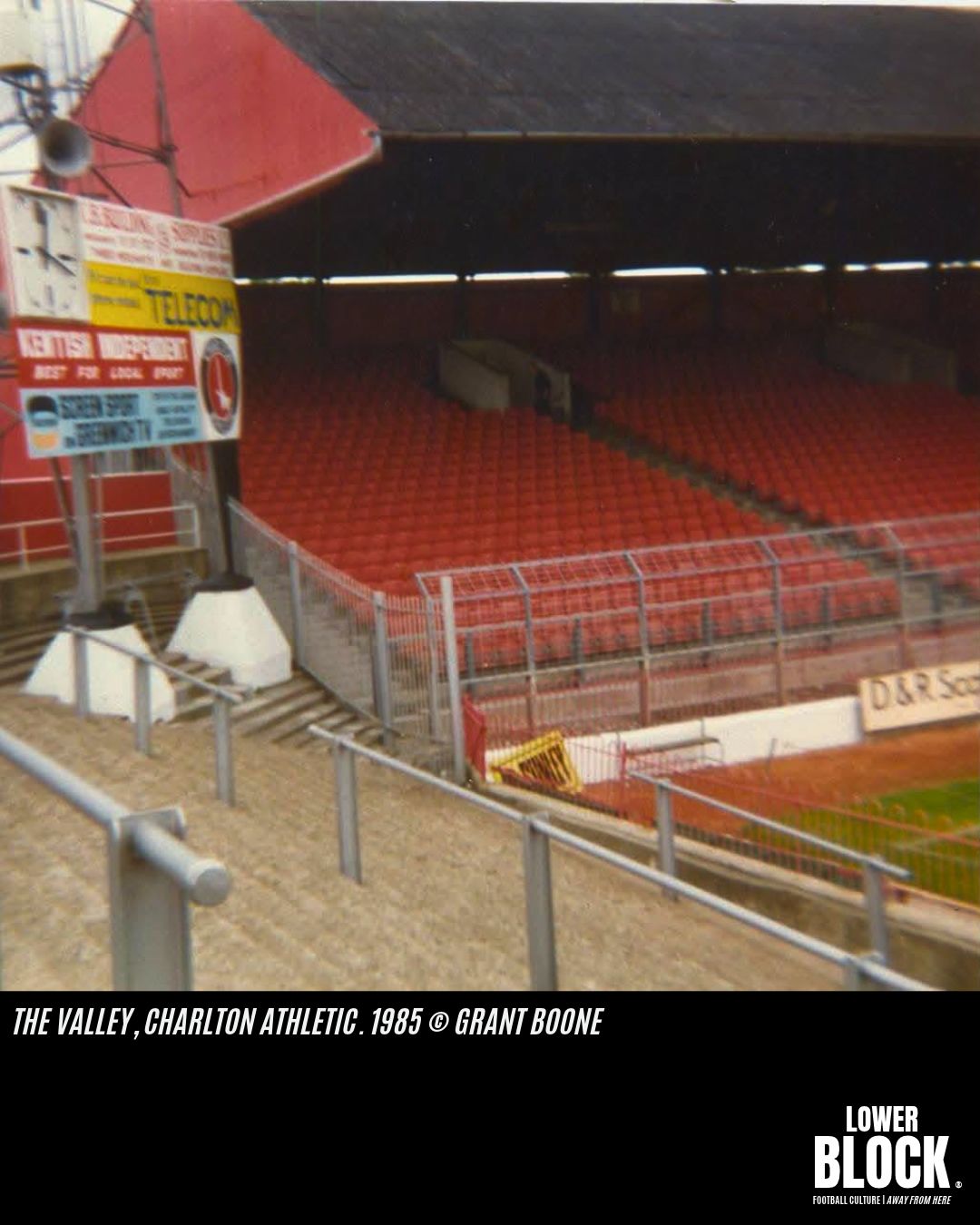
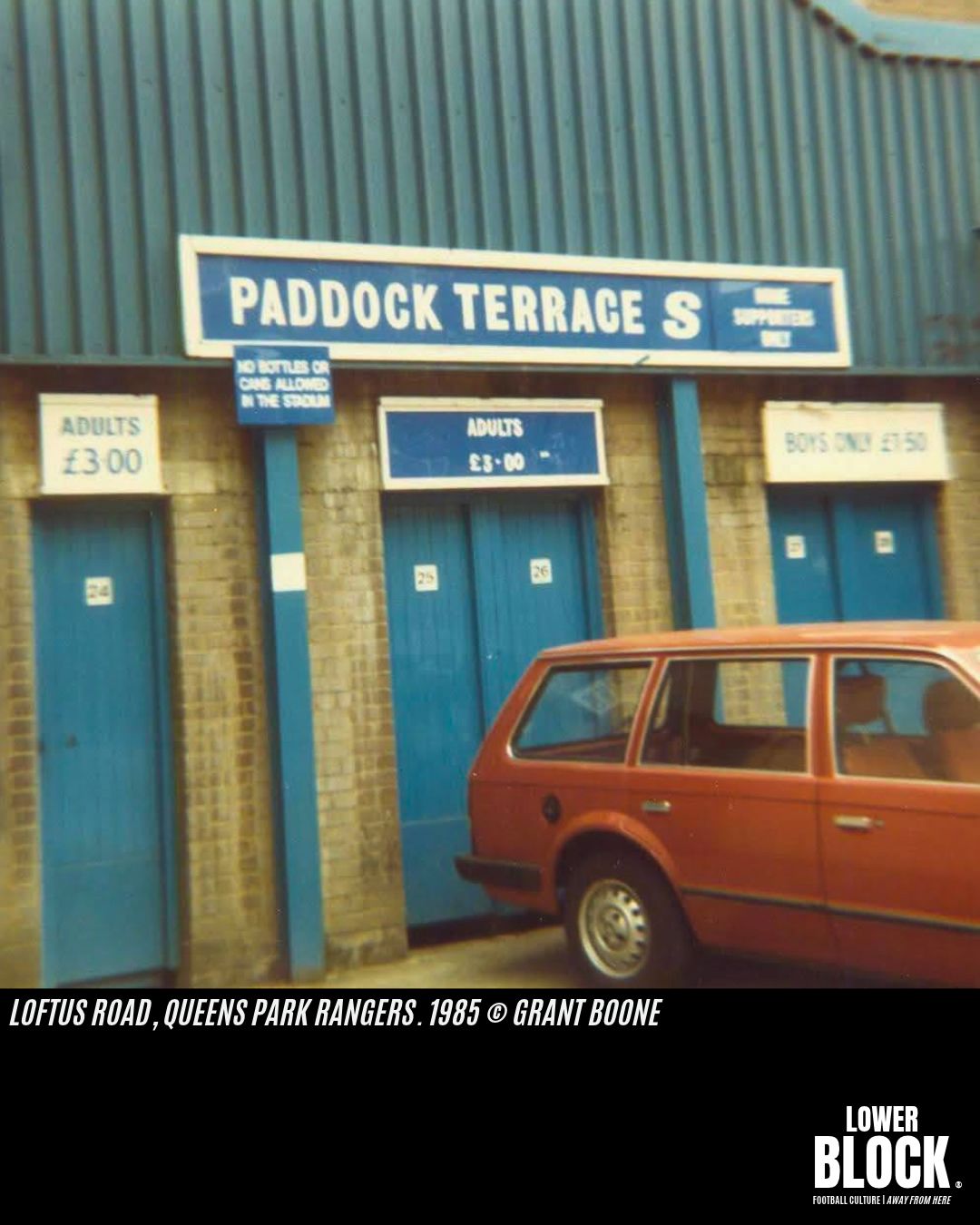
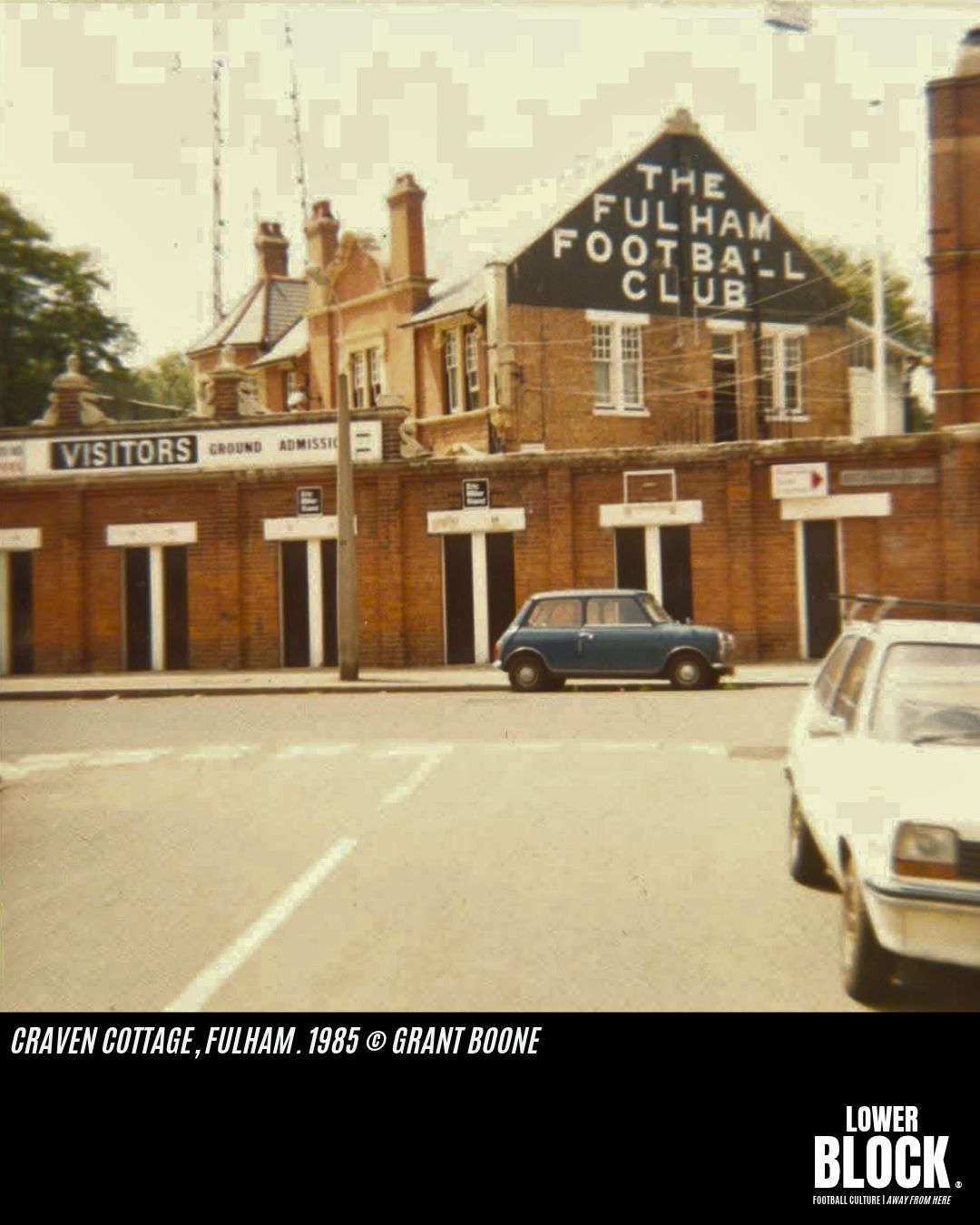
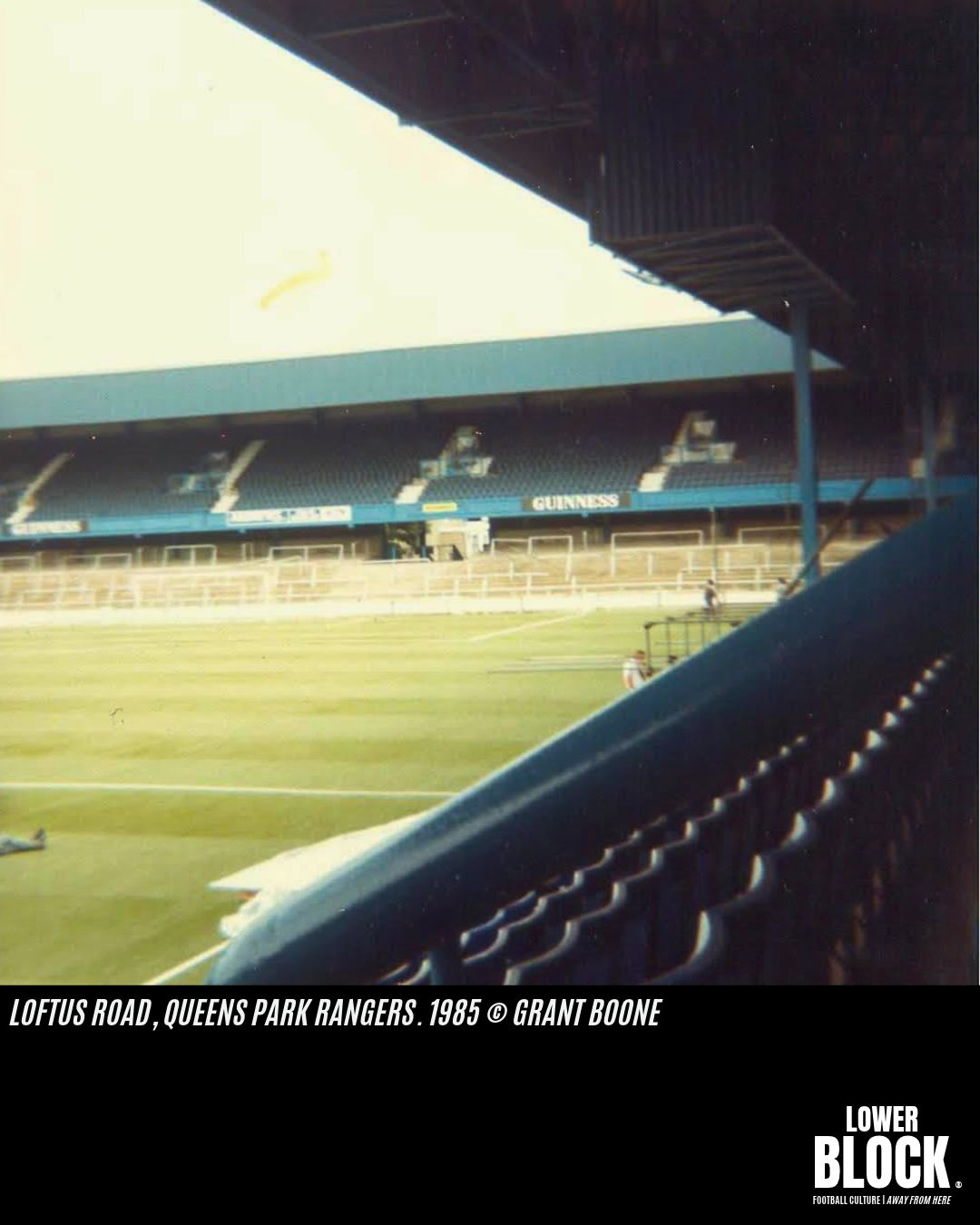
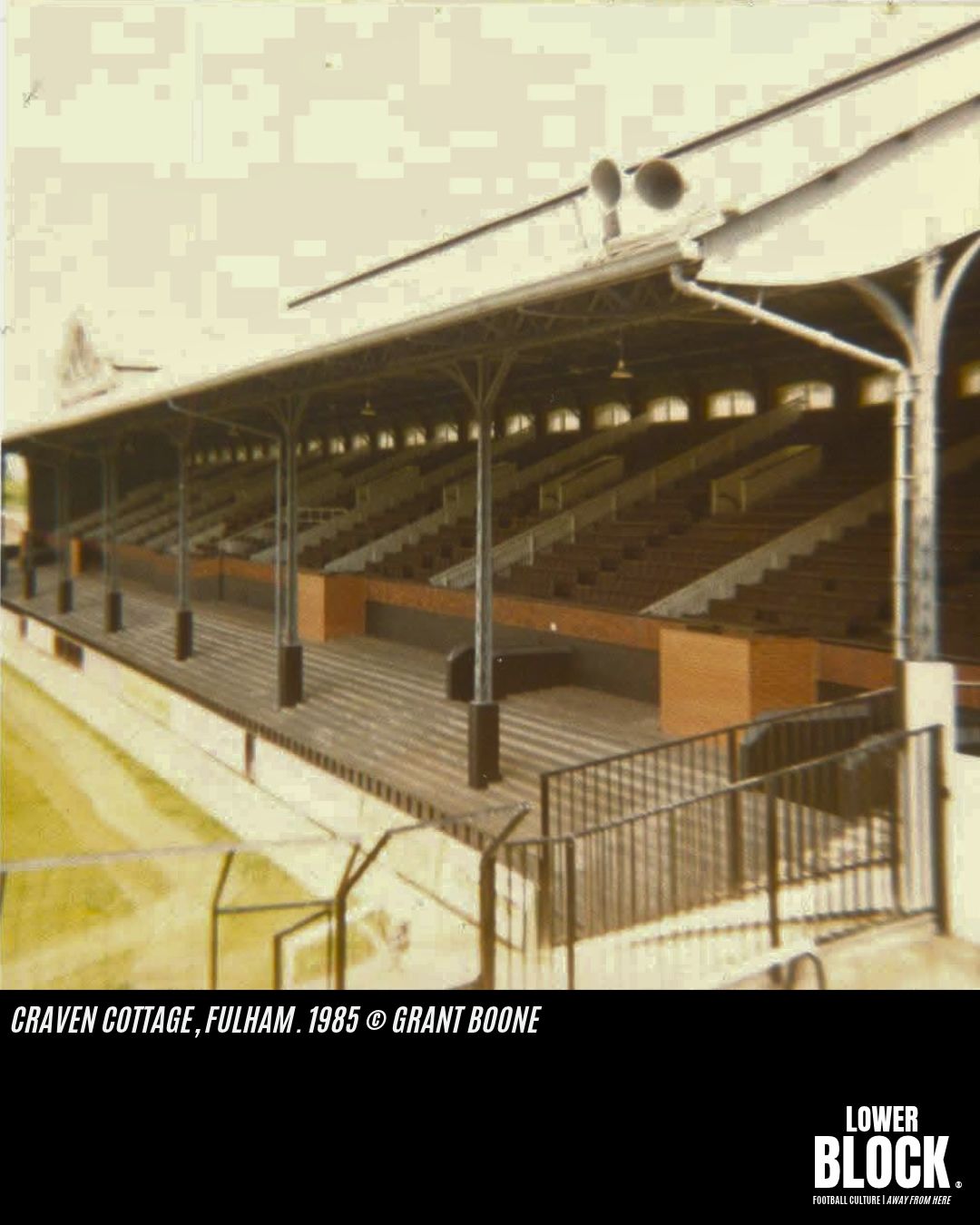
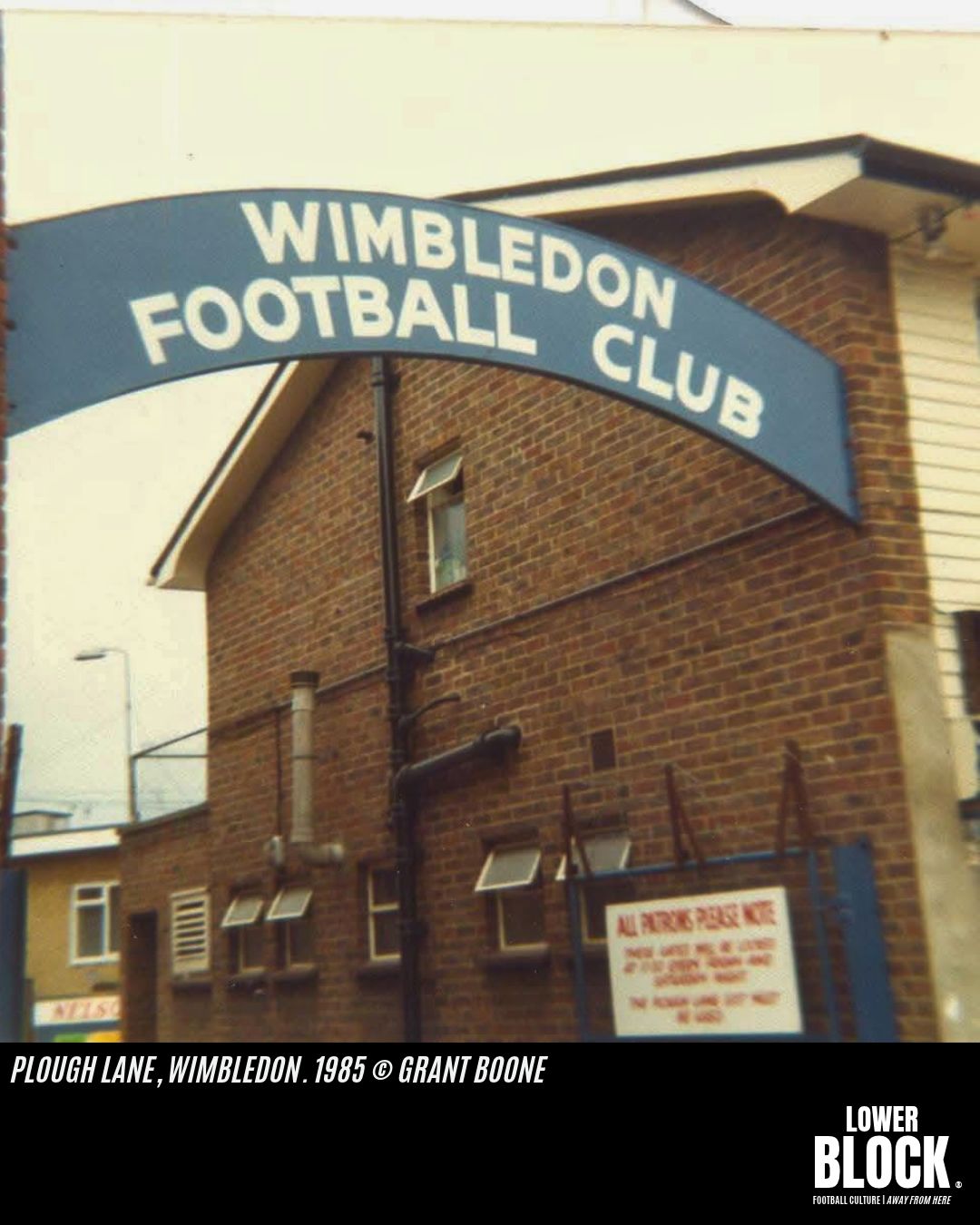
For many supporters, this is an era remembered with great fondness. Even without people in the photographs, the buildings and streets can bring back the approach to a turnstile, a familiar meeting place or a first visit with family.
Preserving British football heritage
An 80s archive like this holds value beyond nostalgia. It records the appearance of grounds and neighbourhoods before changes that could easily have passed without being photographed. These personal collections are an important part of British football heritage.
Lower Block is curating and archiving photographs that help preserve football culture and the memories attached to it. If you have your own photographs of old grounds, surrounding streets, away days or life at the football, we would love to see them.
Share your pictures and tell us what you remember. Include the ground, approximate date and who took the photographs, where known. A few frames in a family album could hold a piece of football history worth sharing. hello@lowerblock.com
Suggested Lower Block Edtions


More from the Lower Block Archive