You can hear the march long before you see it. In Rennes, Milan and Turin, Guirec Munier follows Stade Rennais’ Roazhon Celtic Kop through the streets on matchday. In words and photographs, he gets inside the rhythm of the march, from the capo who starts a chant to the strangers who fall into step beside each other. For a few streets at a time, the whole city moves to the crowd’s pace.
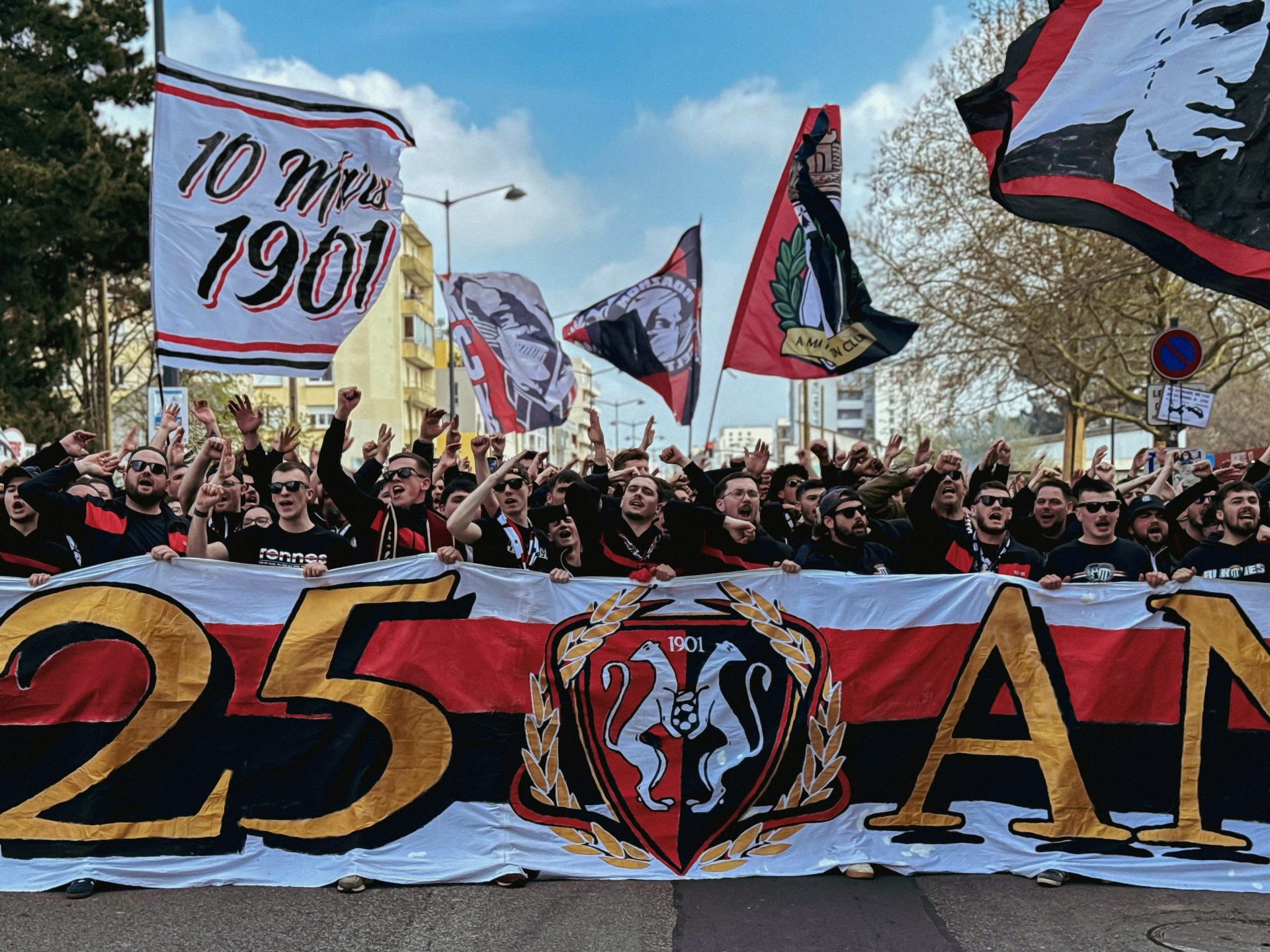
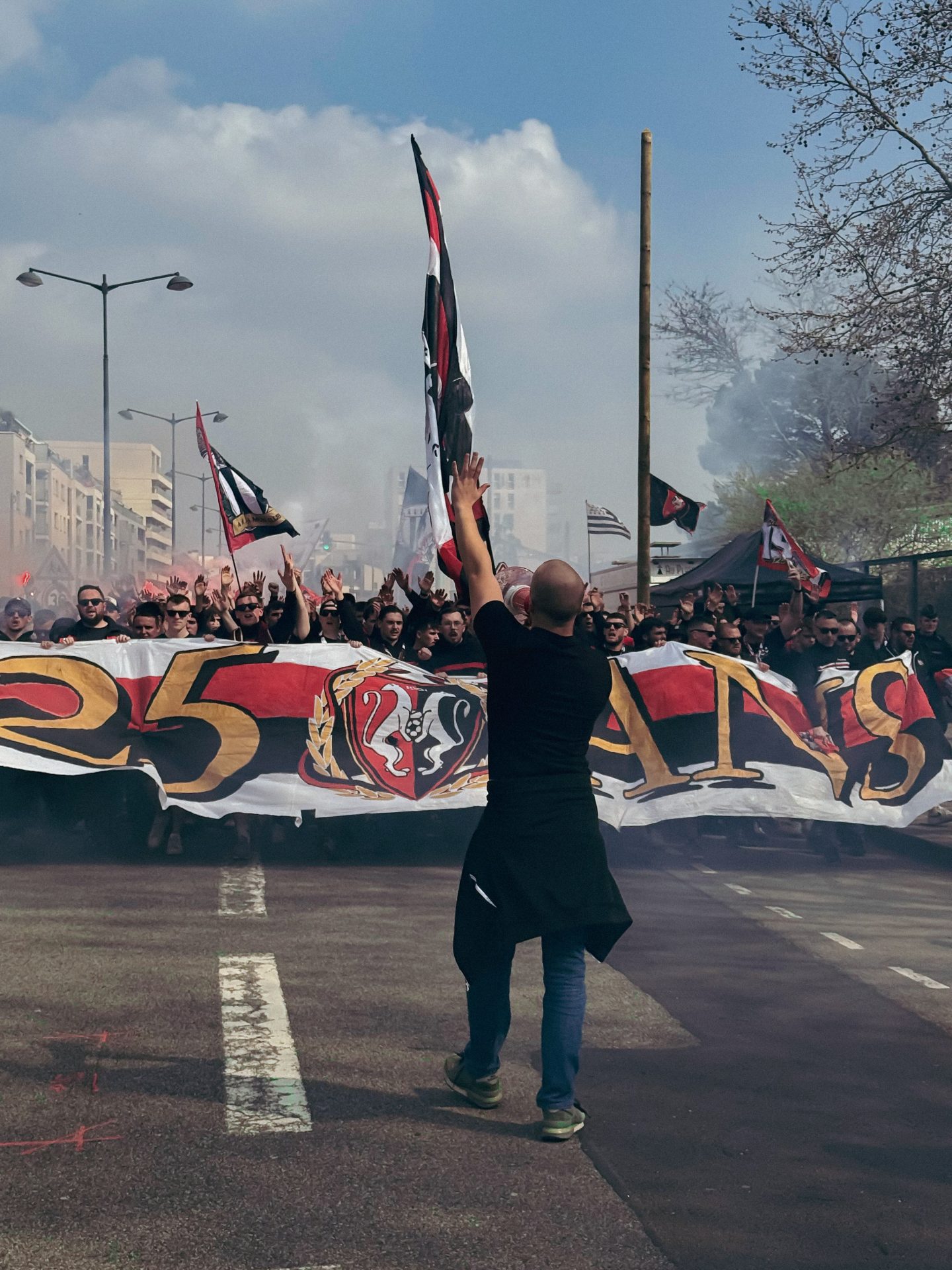
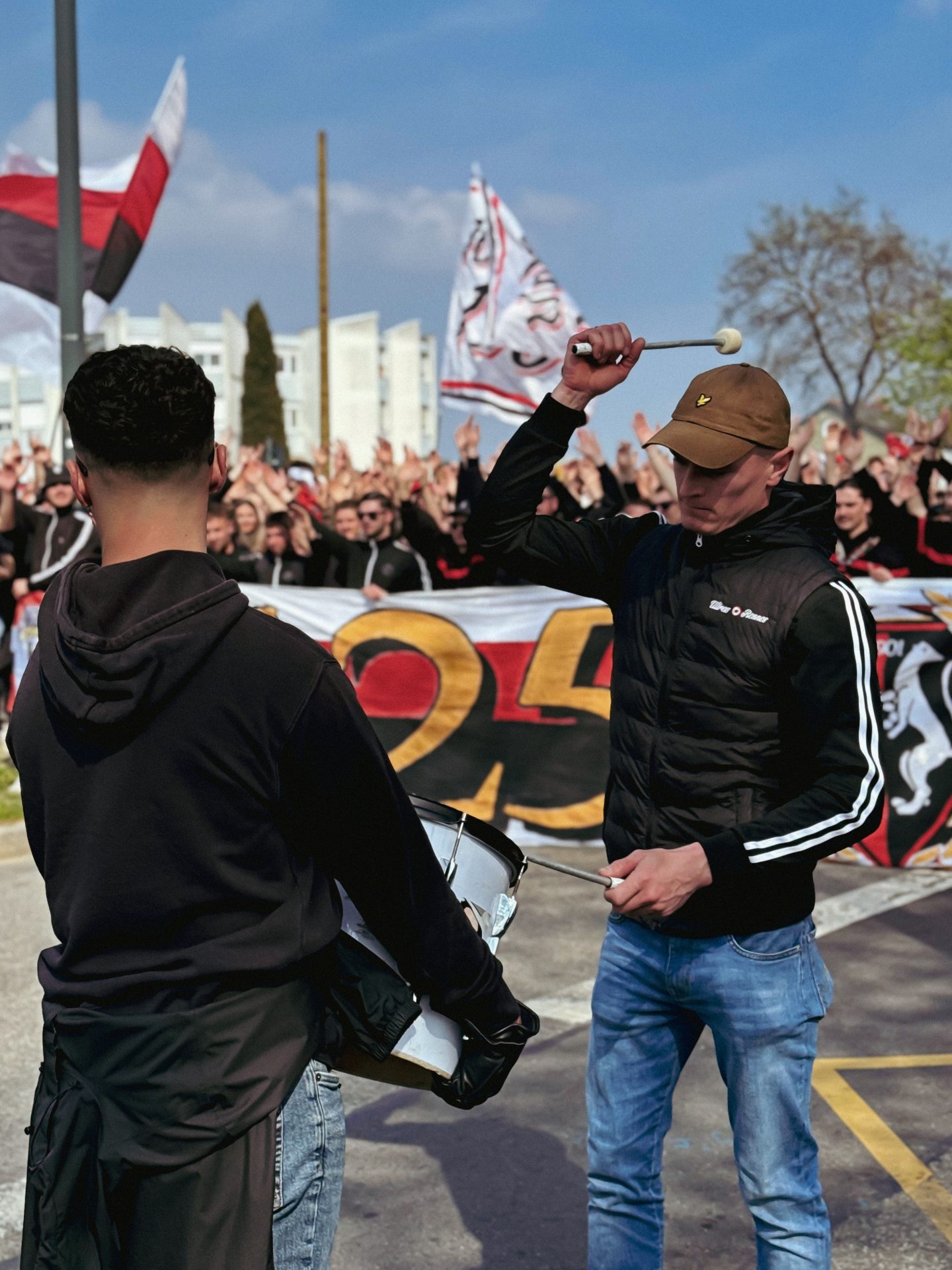
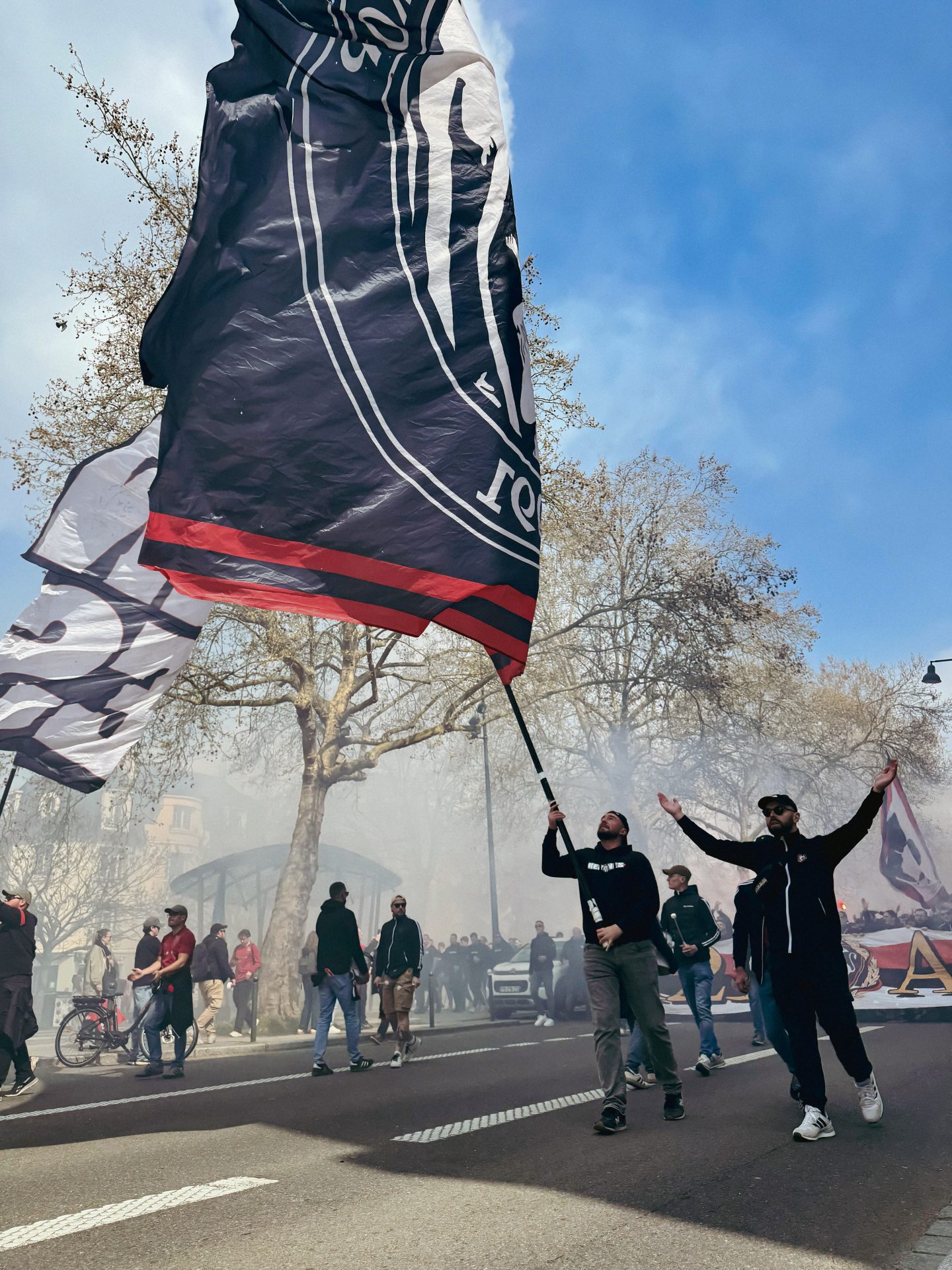
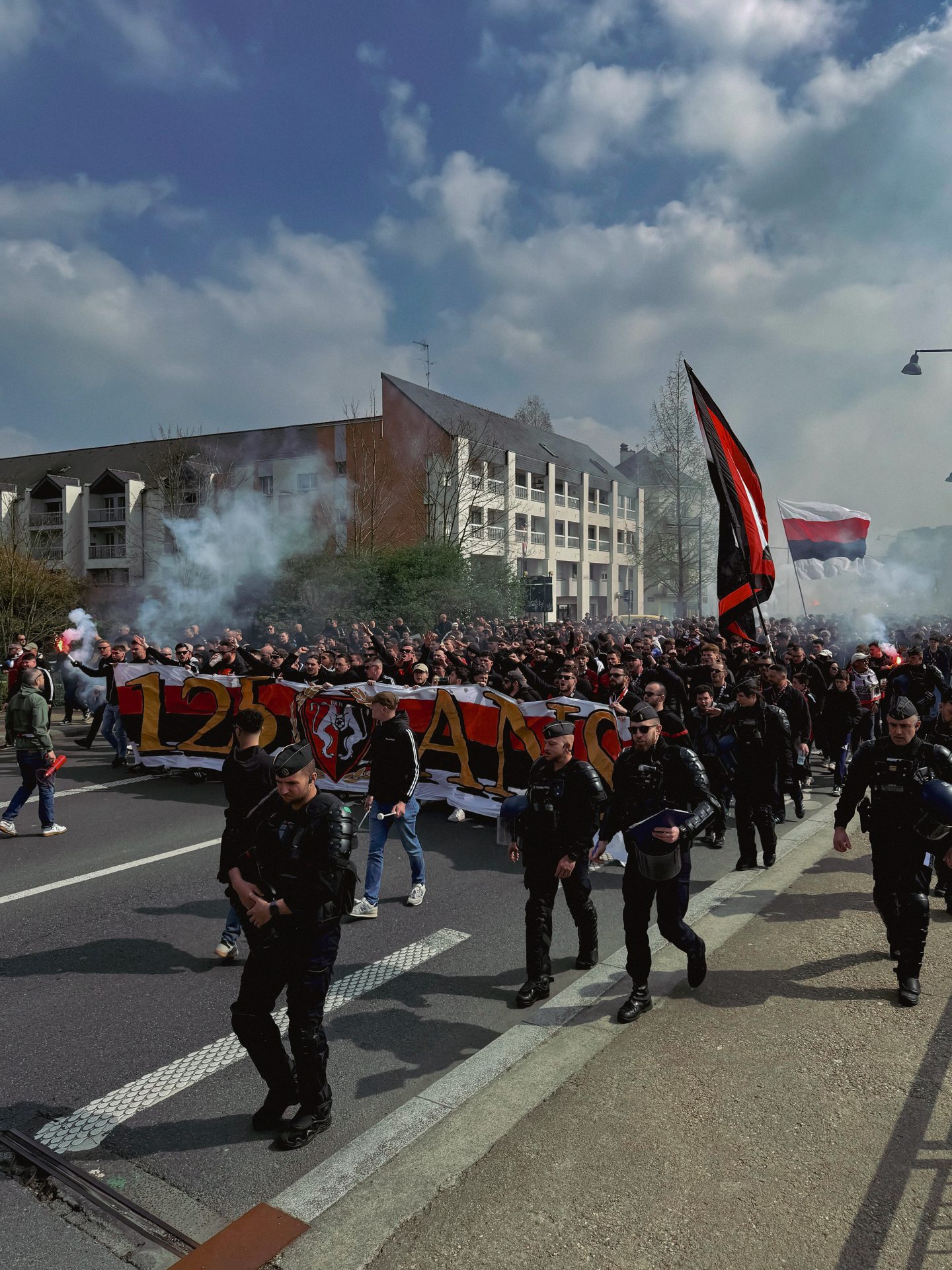
First, the noise. Then the flags. Then the crowd spilling into the street. A drum sets the pace. A chant breaks out, gathers voices and comes back louder. Scarves rise. Shoulders press together. The pavement gives way to the road. Cars stop. Heads turn. For a few dozen minutes, the street belongs to the march.
Milan. Turin. Rennes. Different cities, different occasions, the same group and the same ritual. The route changes. The surroundings change. But the pattern holds. The drum, the call, the response. Before long, you are marching in step, singing alongside people you may never have met, yet sharing the same songs. The chant returns, louder this time. Another follows. Gradually, the march develops its own momentum. The match is still ahead, but the day is already taking shape.
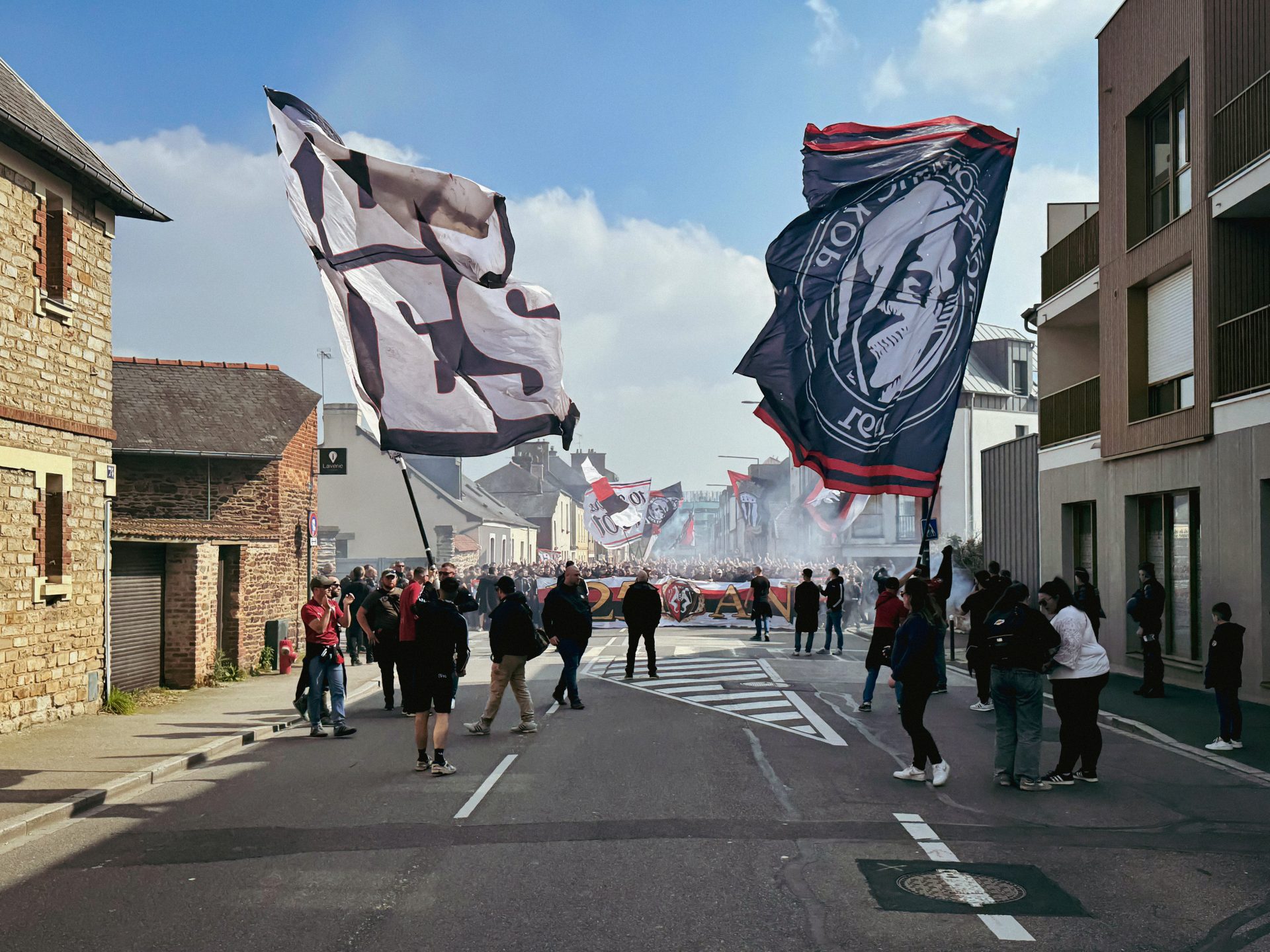
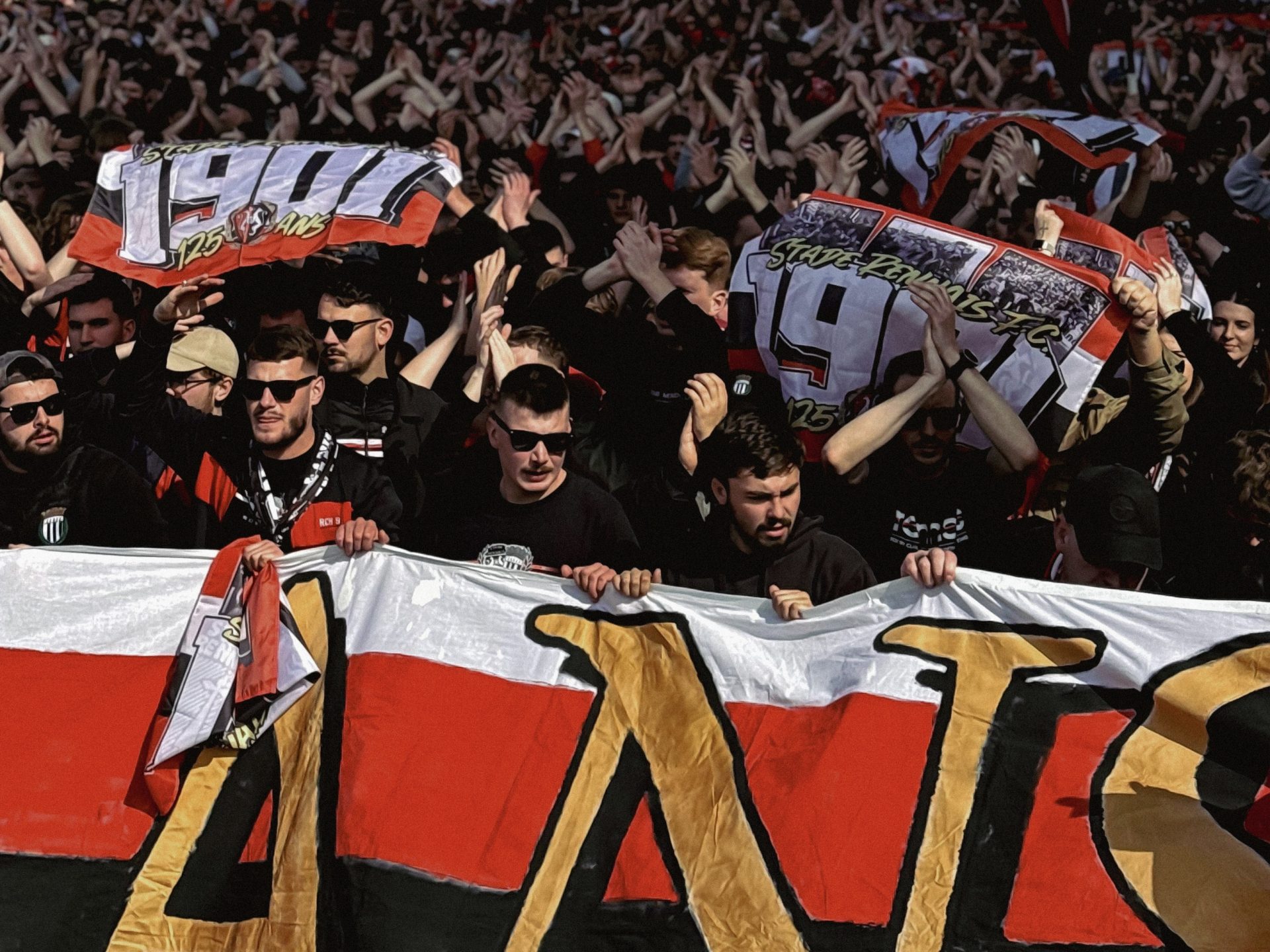
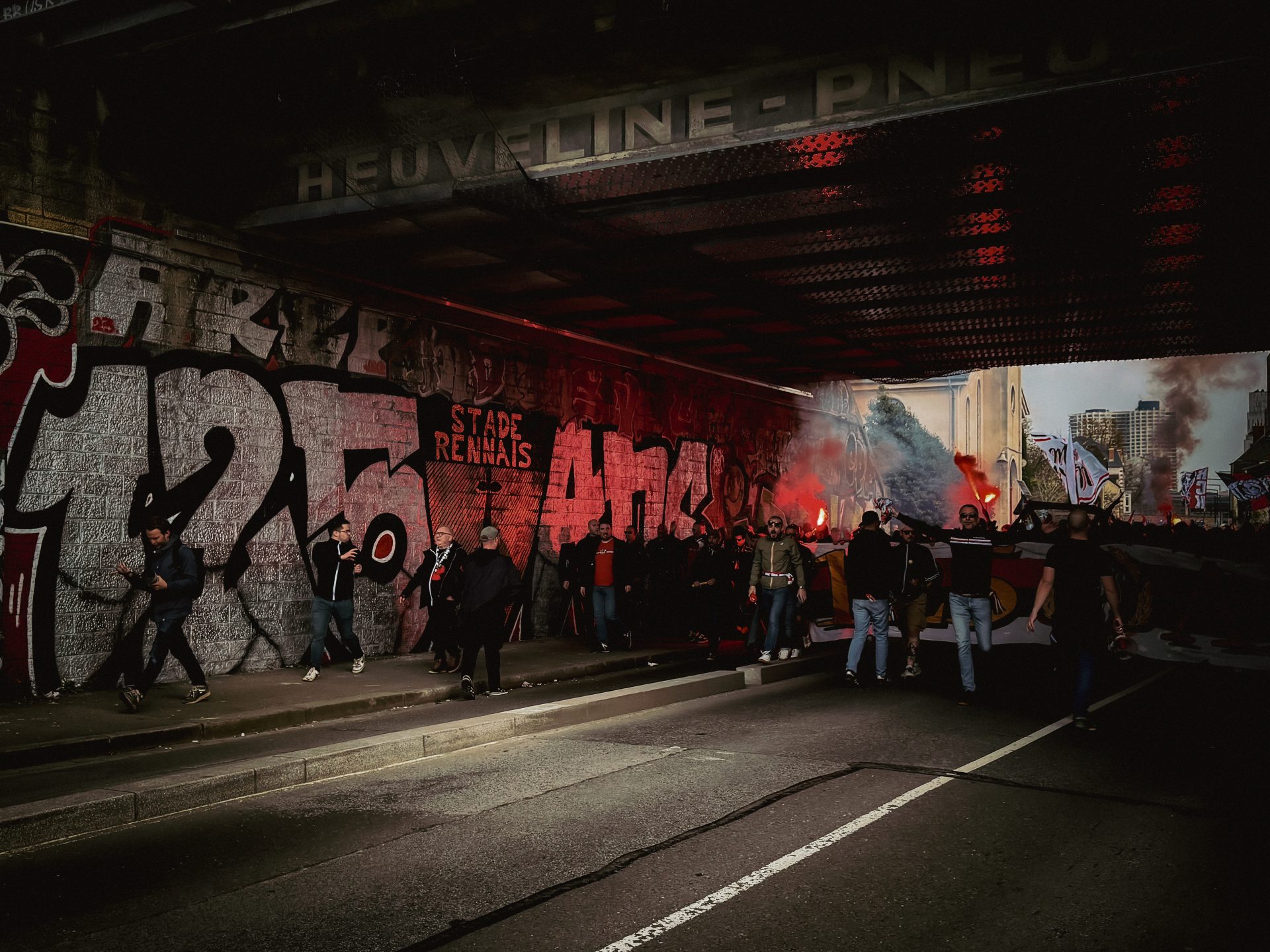
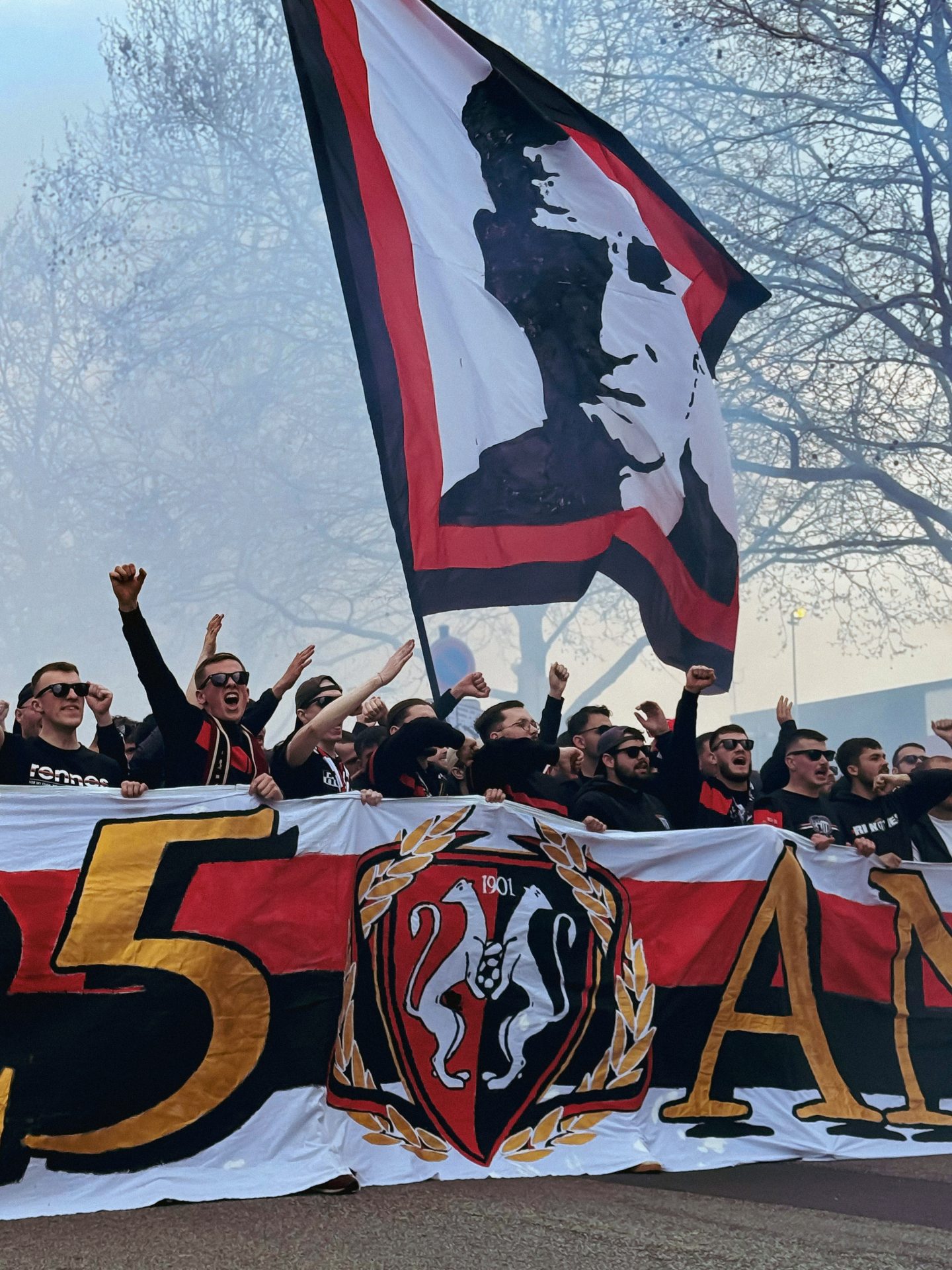
The longer the march goes on, the more the crowd becomes something greater than the sum of its voices. The rhythm is shared, the response almost instinctive, and the energy passes from one person to the next. What begins as a group of individuals singing together becomes a collective experience, felt as much in the body as in the sound. Sociologist Émile Durkheim described this surge of shared energy as collective effervescence, the force generated when people gather around common symbols and rituals. In a supporters’ march, the concept becomes physical. A chant is not simply a song being repeated. It is a call that invites a response, drawing individuals into a common rhythm. Each voice adds to the volume. Each response strengthens the next. The crowd generates an atmosphere that, in turn, intensifies the experience of being part of it.
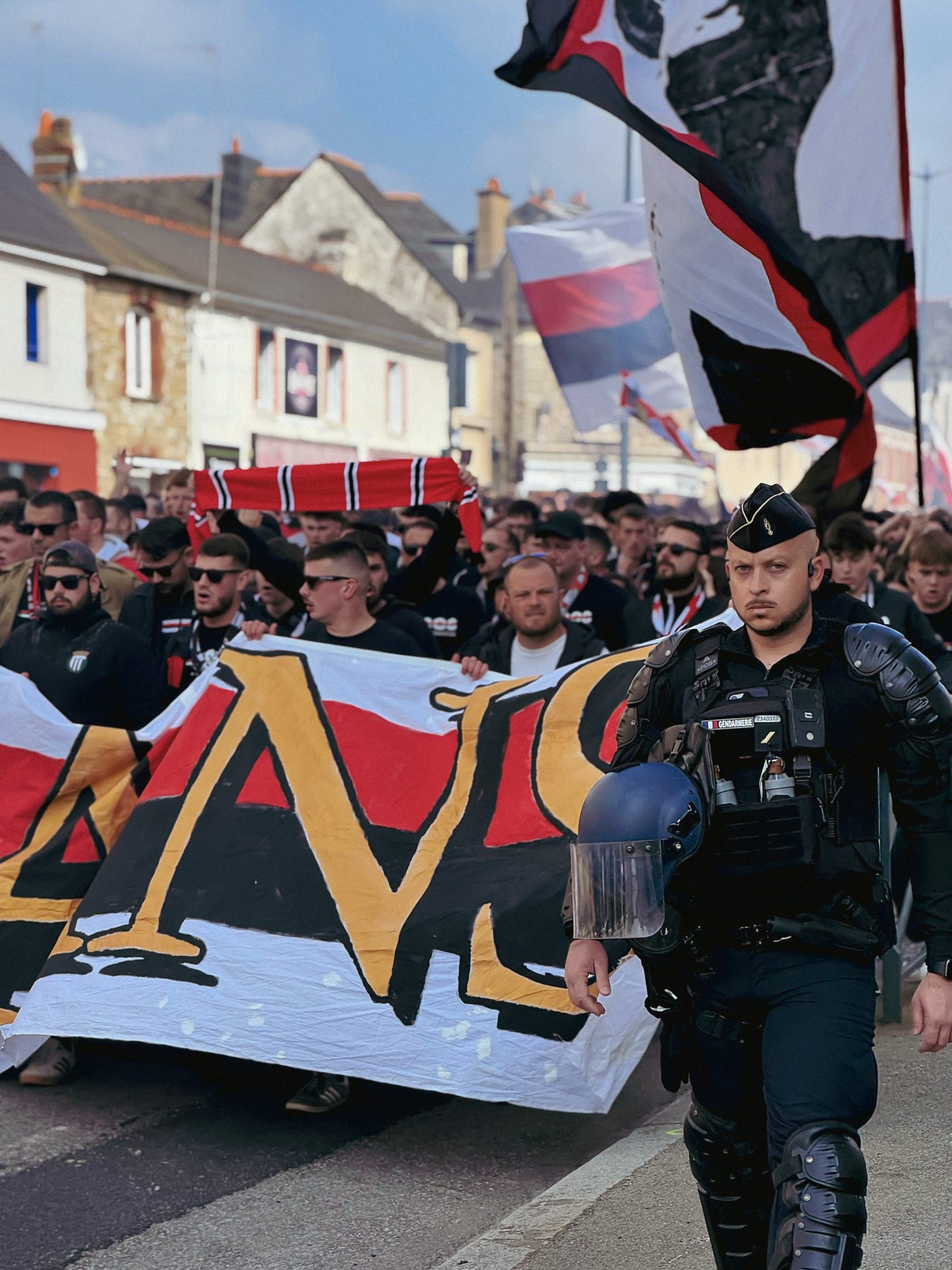
Yet this is not simply spontaneous combustion. The apparent disorder rests on organisation. The route is usually agreed in advance, often in coordination with local authorities. Within the crowd, a different kind of organisation takes shape. The capo launches the chants, sets their tempo and keeps the collective voice moving. Experienced members help maintain cohesion, their influence grounded not simply in where they stand, but in their history within the group and the trust they have earned. The military parallel is hard to miss. Marching, rhythm, symbols and collective song can turn individuals into a coordinated formation. Both settings draw on repetition and synchronisation to align people around a shared purpose. But a supporters’ group is not an army. Its hierarchy grows from within, shaped by relationships, reputation and shared history. Its discipline is largely unwritten, sustained by the group’s own codes and expectations. And it is precisely this structure that allows such intensity to emerge.
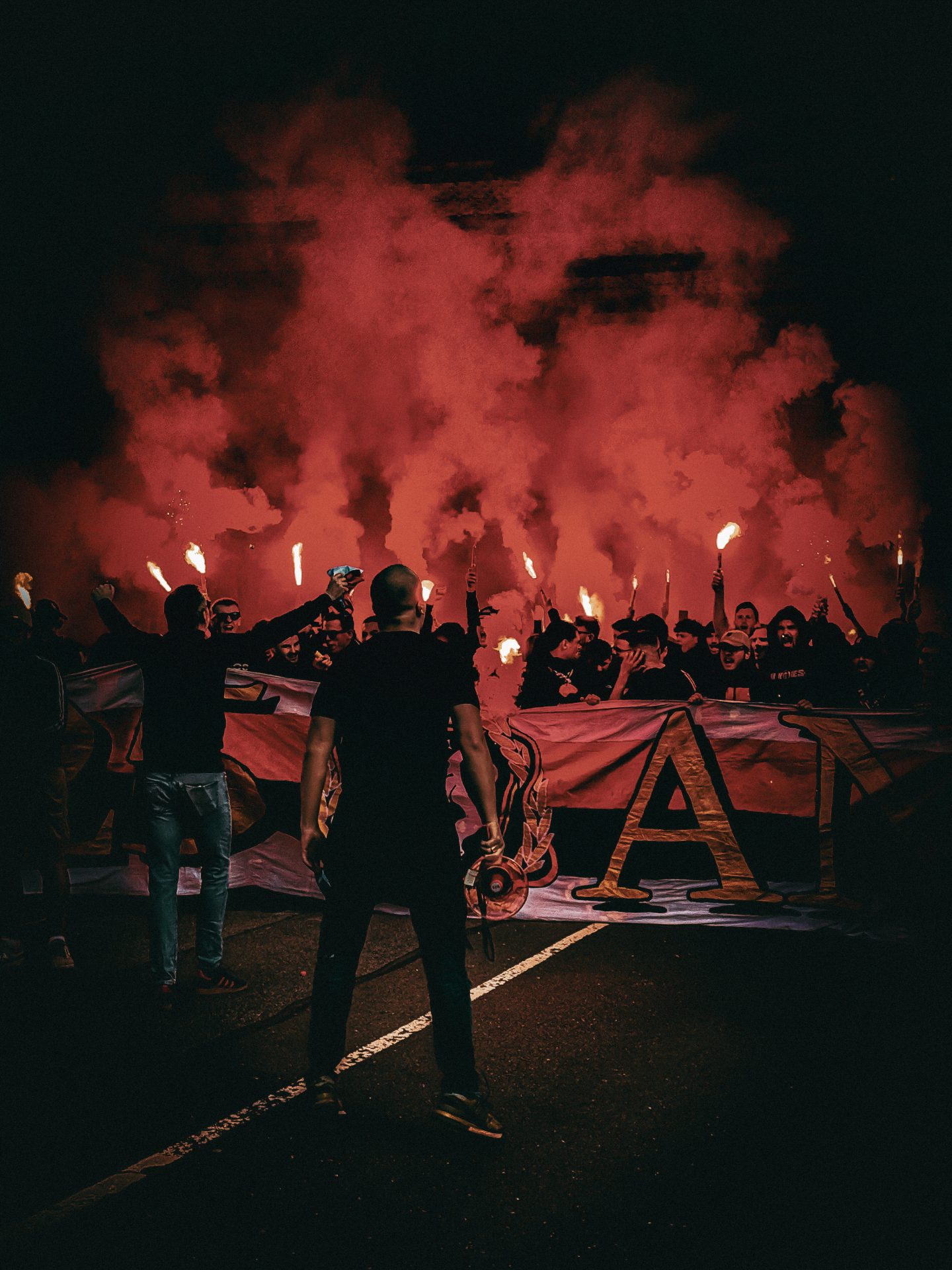
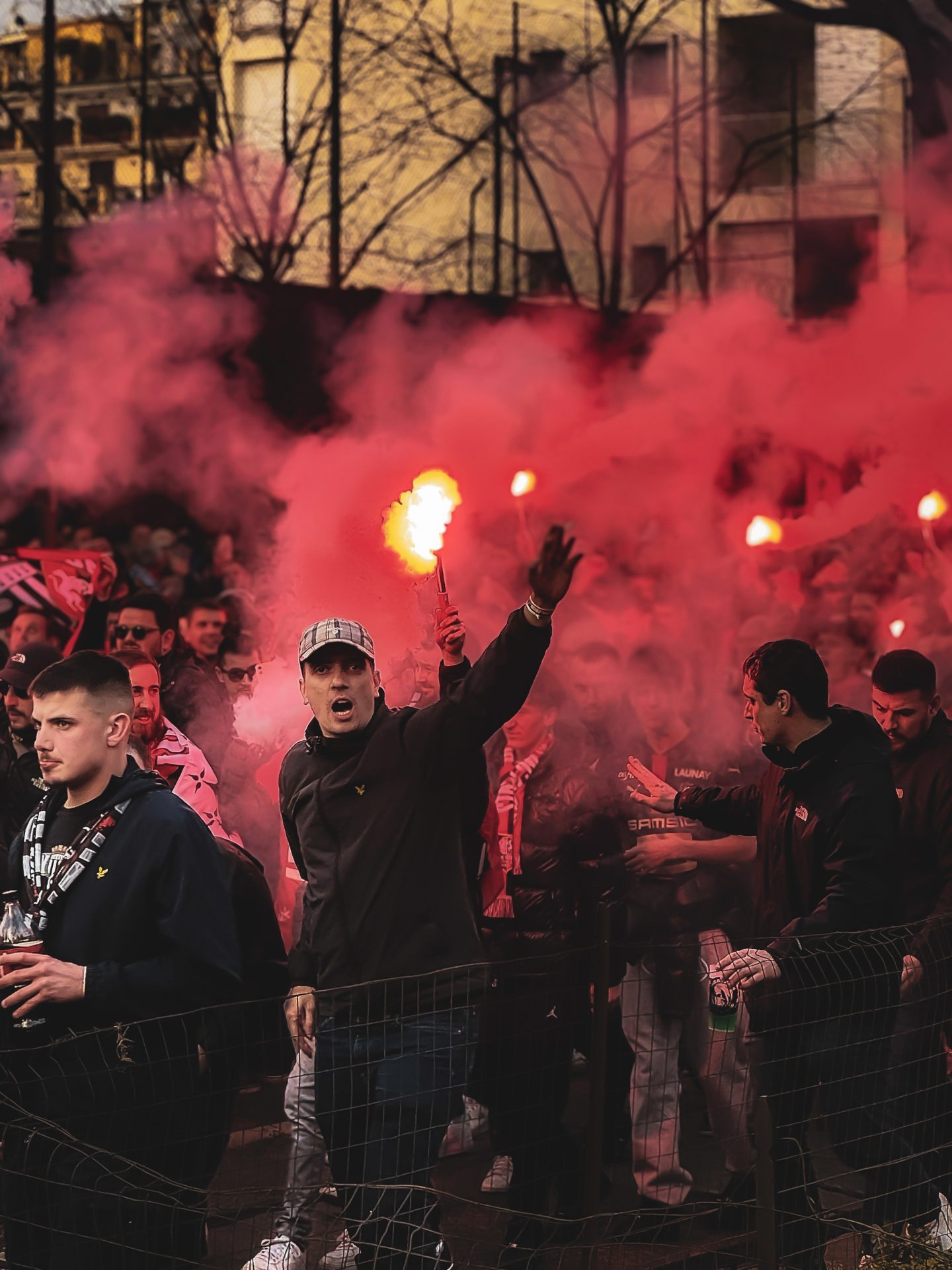
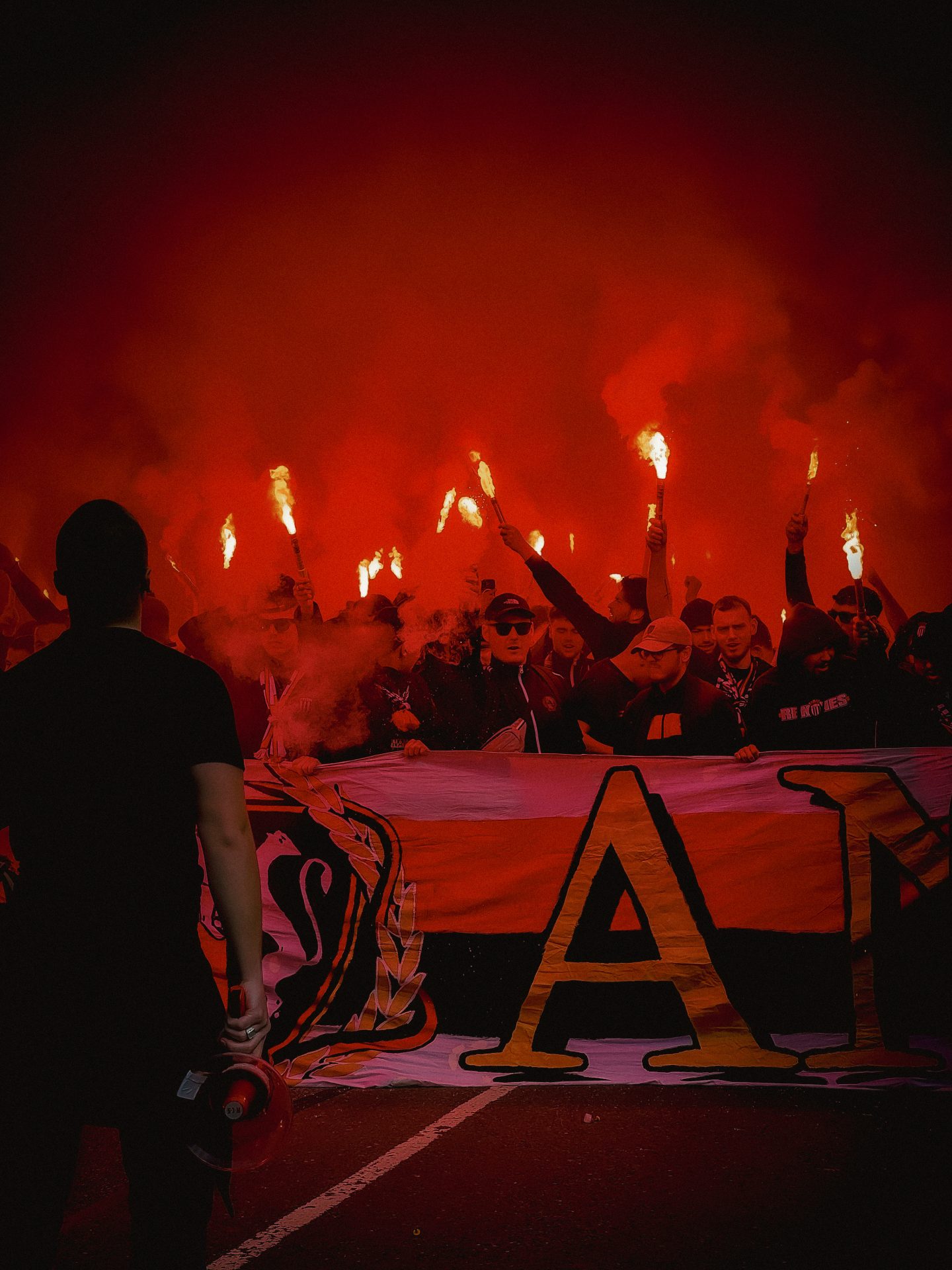
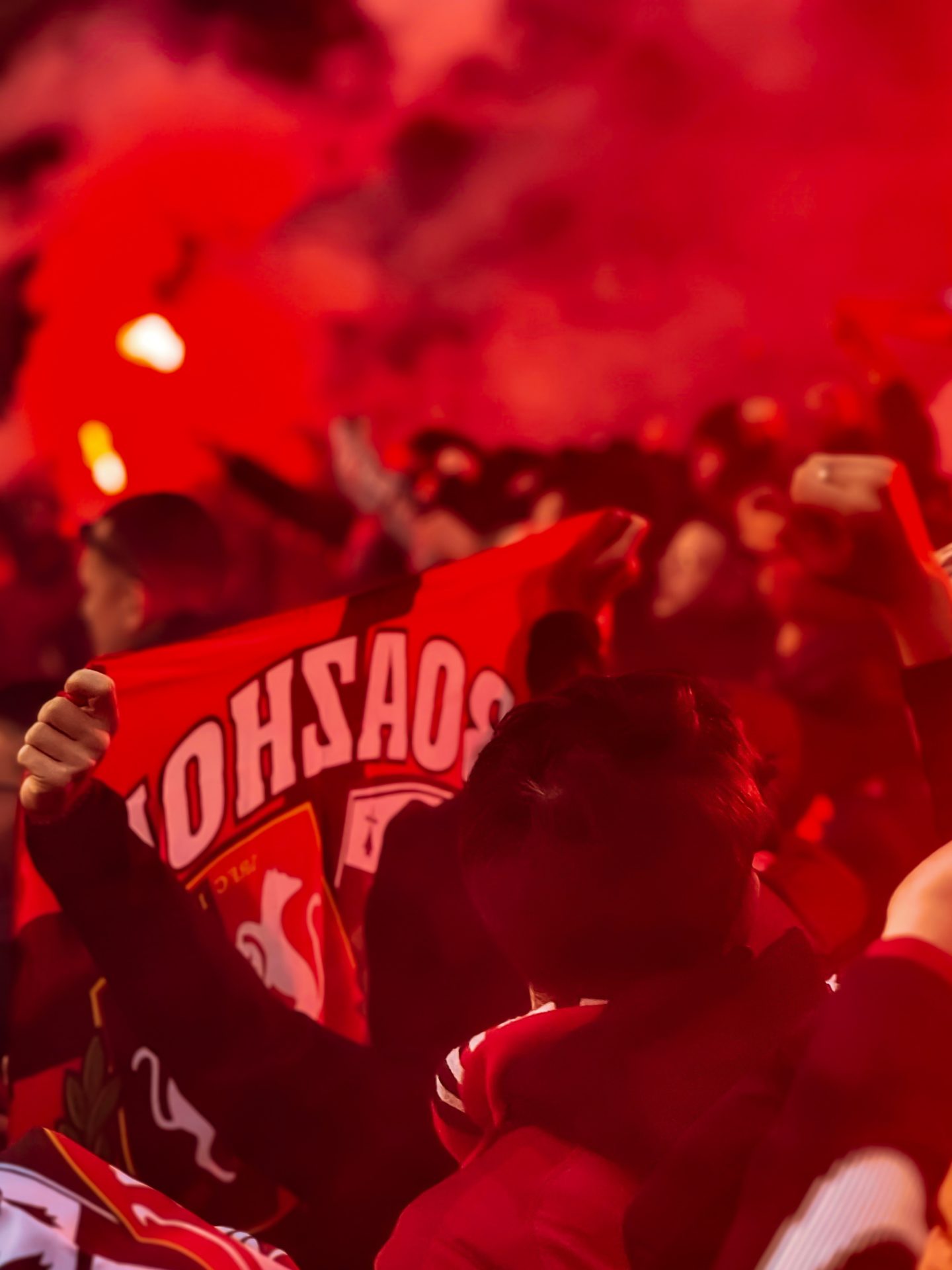
The march does more than bring supporters together. It gives their passion a collective force, one that can be heard long before the stadium comes into view. It also changes the street itself. Traffic stops. Shopfronts become viewing galleries. Residents lean out of their windows. A route normally crossed without a second thought becomes occupied by a moving crowd, with its own sound, pace and visual identity. Research into ultras culture has examined this relationship between collective movement and public space. A march takes the atmosphere normally associated with the stands beyond the stadium walls. Flags and chants do more than identify a club. They make the group visible, assert its presence and interrupt the ordinary rhythm of the city. For supporters, this can be an expression of pride and belonging. For those watching from the pavement, it can be exhilarating, unsettling or simply unexpected. The same crowd can produce very different experiences depending on where you stand.
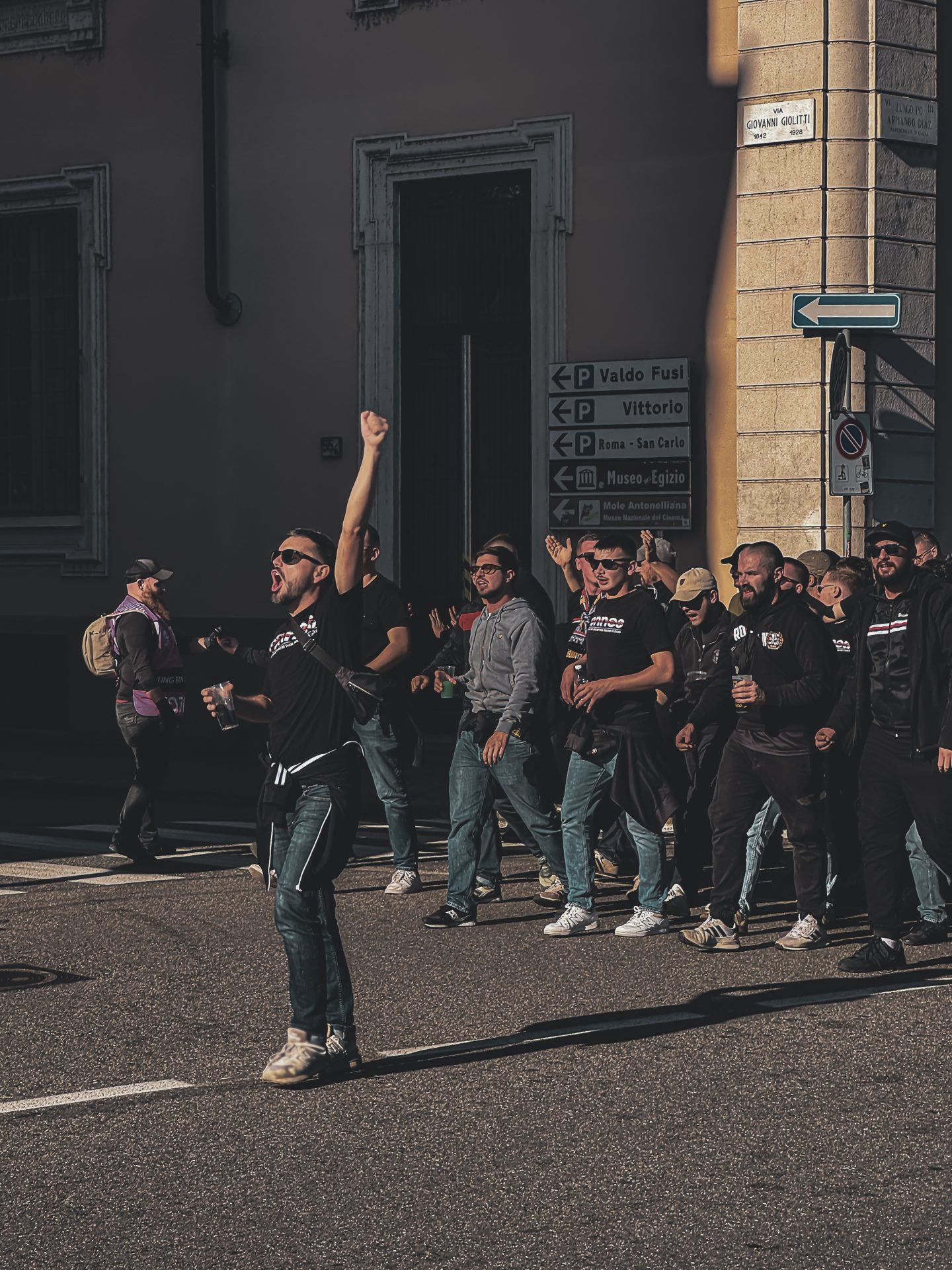
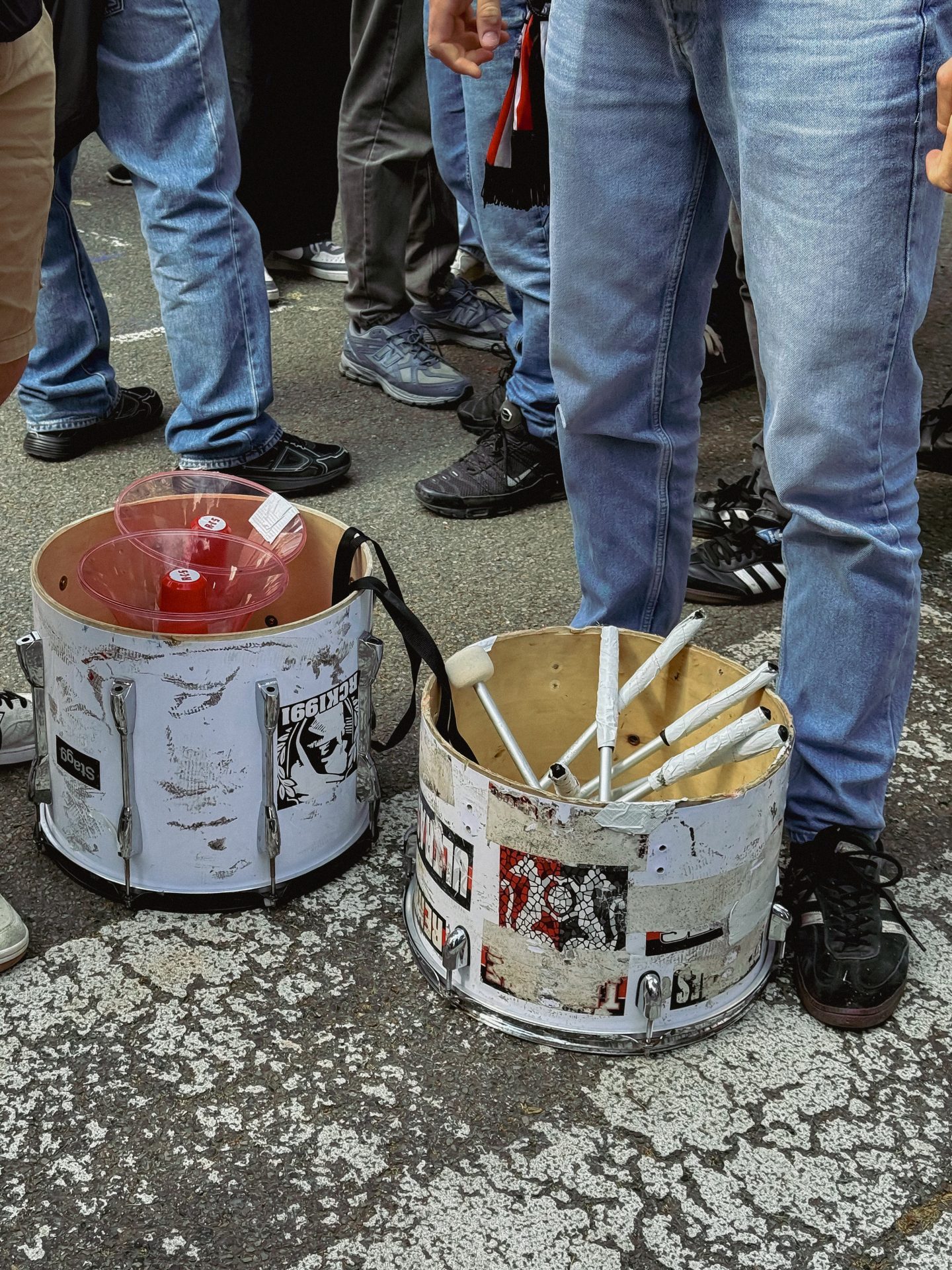
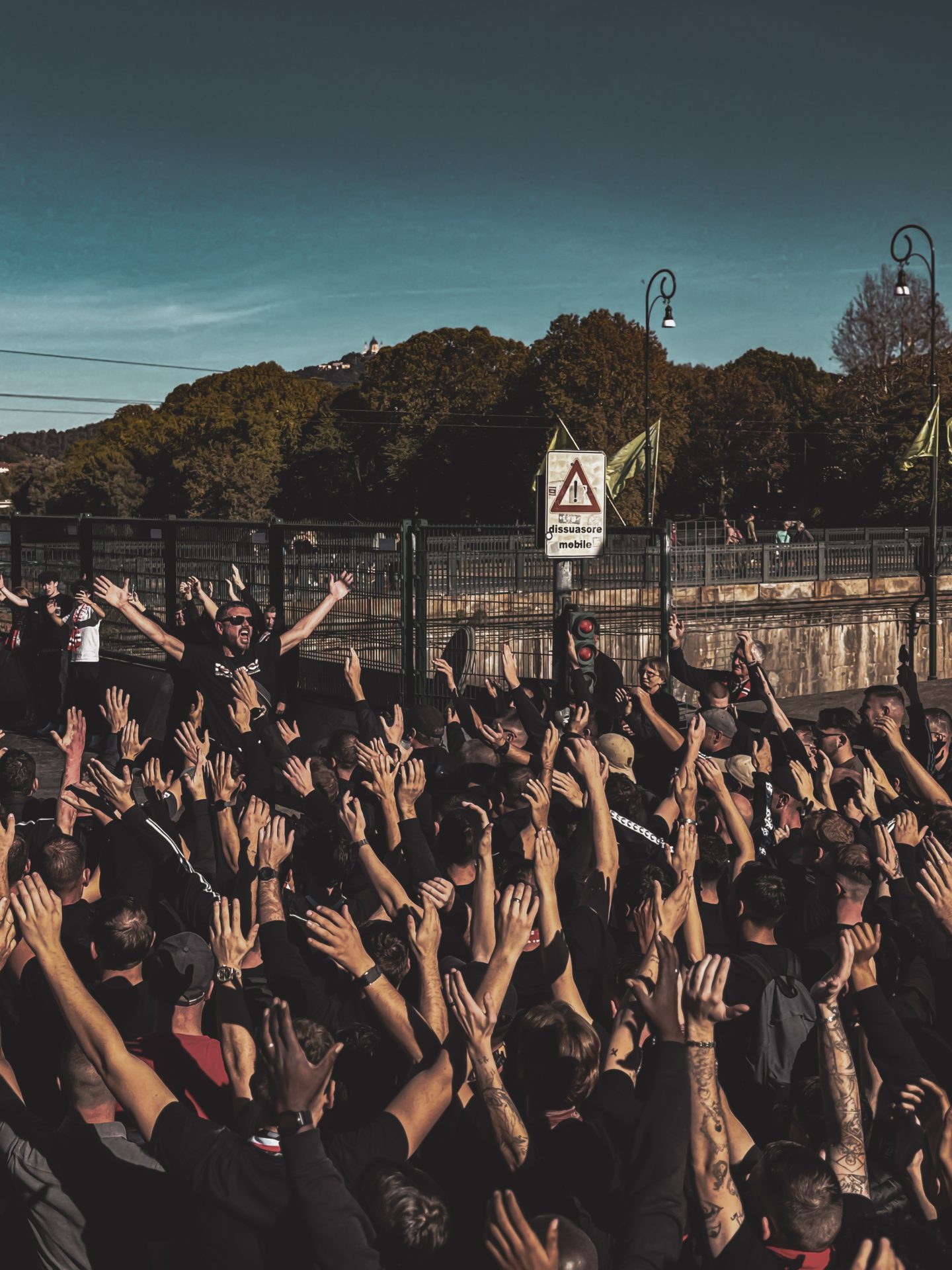
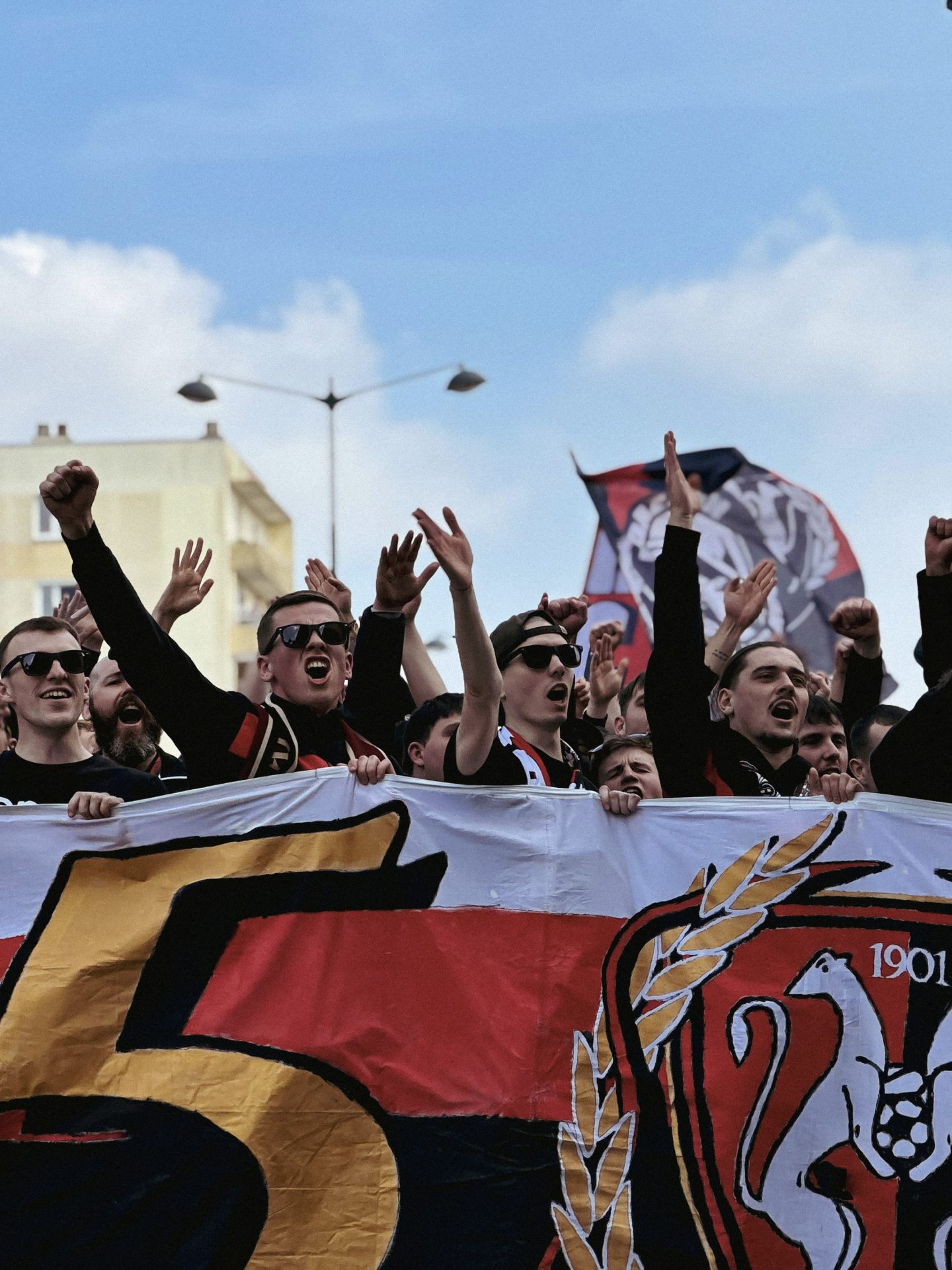
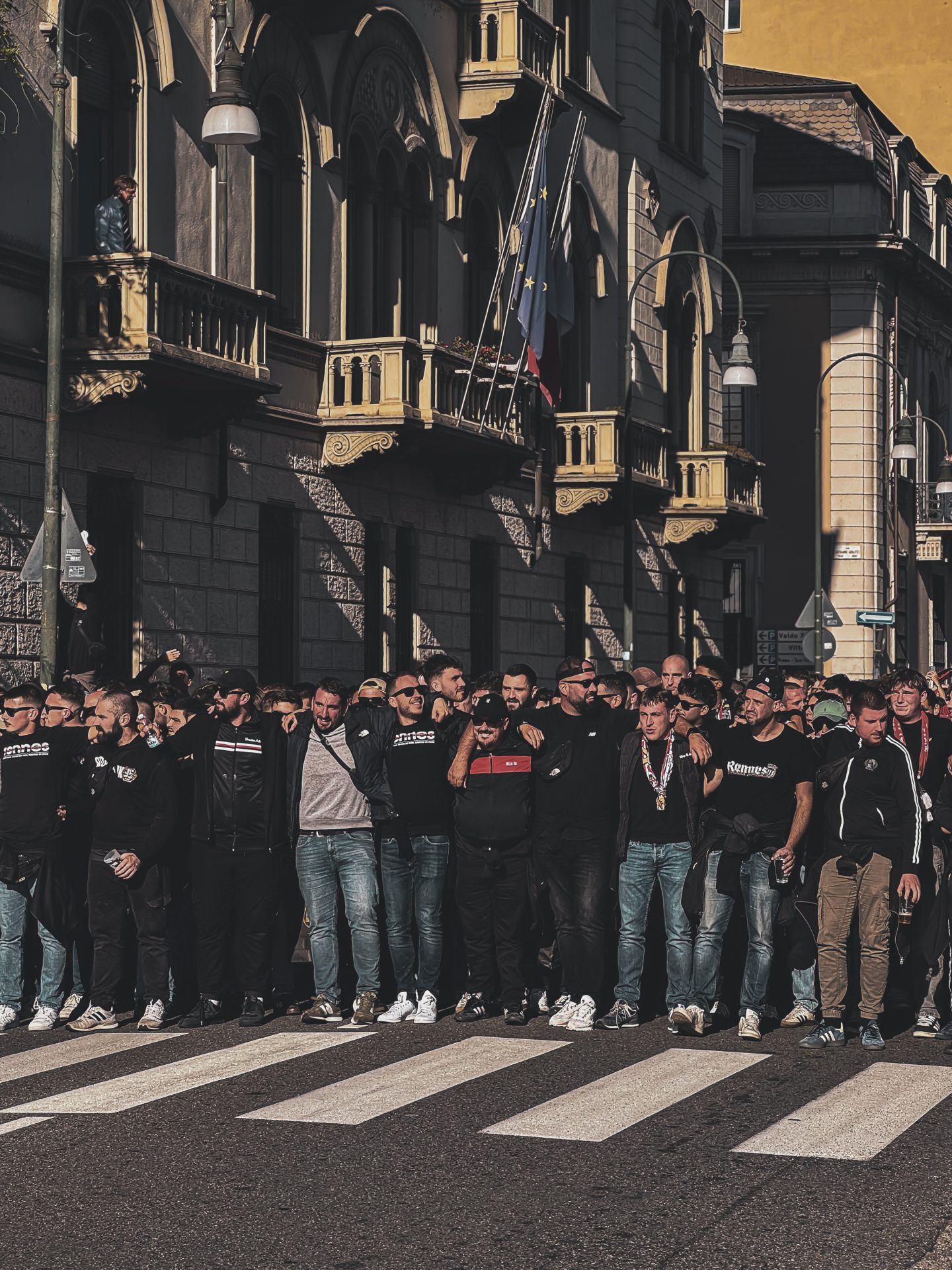
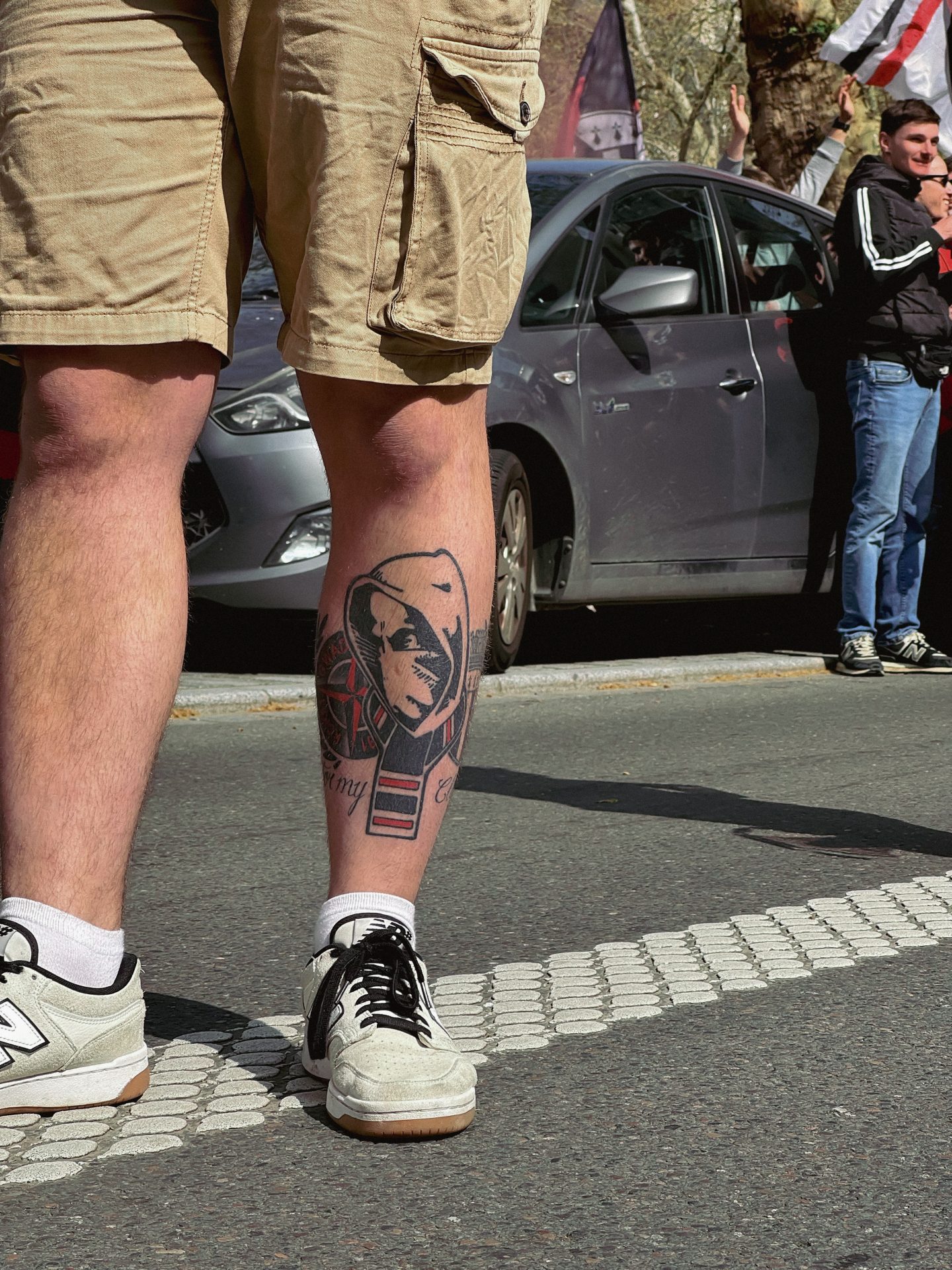
Abroad, that contrast becomes part of the experience. Milan or Turin brings unfamiliar streets, different architecture and the presence of another club’s history. Then a familiar chant cuts through the surroundings. The words are known. The references are understood. For a moment, Rennes travels with the crowd. This continuity matters. Ultras culture is not recreated from scratch at every match. It is sustained through repeated participation, shared codes and collective memory. Each journey becomes another occasion to express that culture, in a different place but through recognisable rituals. The march carries the group’s identity beyond its home ground, not as an abstract badge of allegiance but as something visible and audible in the streets.
For the Roazhon Celtic Kop, this is part of supporting Stade Rennais. The relationship with the club is expressed not only during the ninety minutes, but through everything that surrounds the match. The crowd does not simply assemble for the occasion. It arrives with a history of its own. Football, of course, ultimately reduces a season to goals, points and results. A march follows another measure. Its value does not disappear with a defeat. The atmosphere, the turnout and the experience of travelling together cannot be captured by a scoreline. They belong to a different dimension of football, one that begins well before kick-off and cannot be judged at the final whistle.
Eventually, the stadium comes into view. The march narrows towards the entrances and breaks apart through the turnstiles. The flags disappear inside. The singing follows. What was a single moving crowd becomes thousands of individuals again, filtering into the stands and finding their places. The street returns to normal. Traffic starts moving. The city carries on. But for a while, the city has had to make room for something else. A group has brought its songs, its symbols and its history into the streets, then carried them all the way to the ground. By the time the teams walk out, the supporters have already made their presence felt. The match has not yet begun, but the day is far from having started just now.
Suggested Lower Block Editions


More from the Lower Block Archive