British football has provided cinema with some unforgettable characters, extraordinary stories and a fair amount of questionable behaviour.
From football firms and casual culture to terraces, pubs, friendships and everyday life, British filmmakers have often found their most interesting stories away from the action on the pitch.
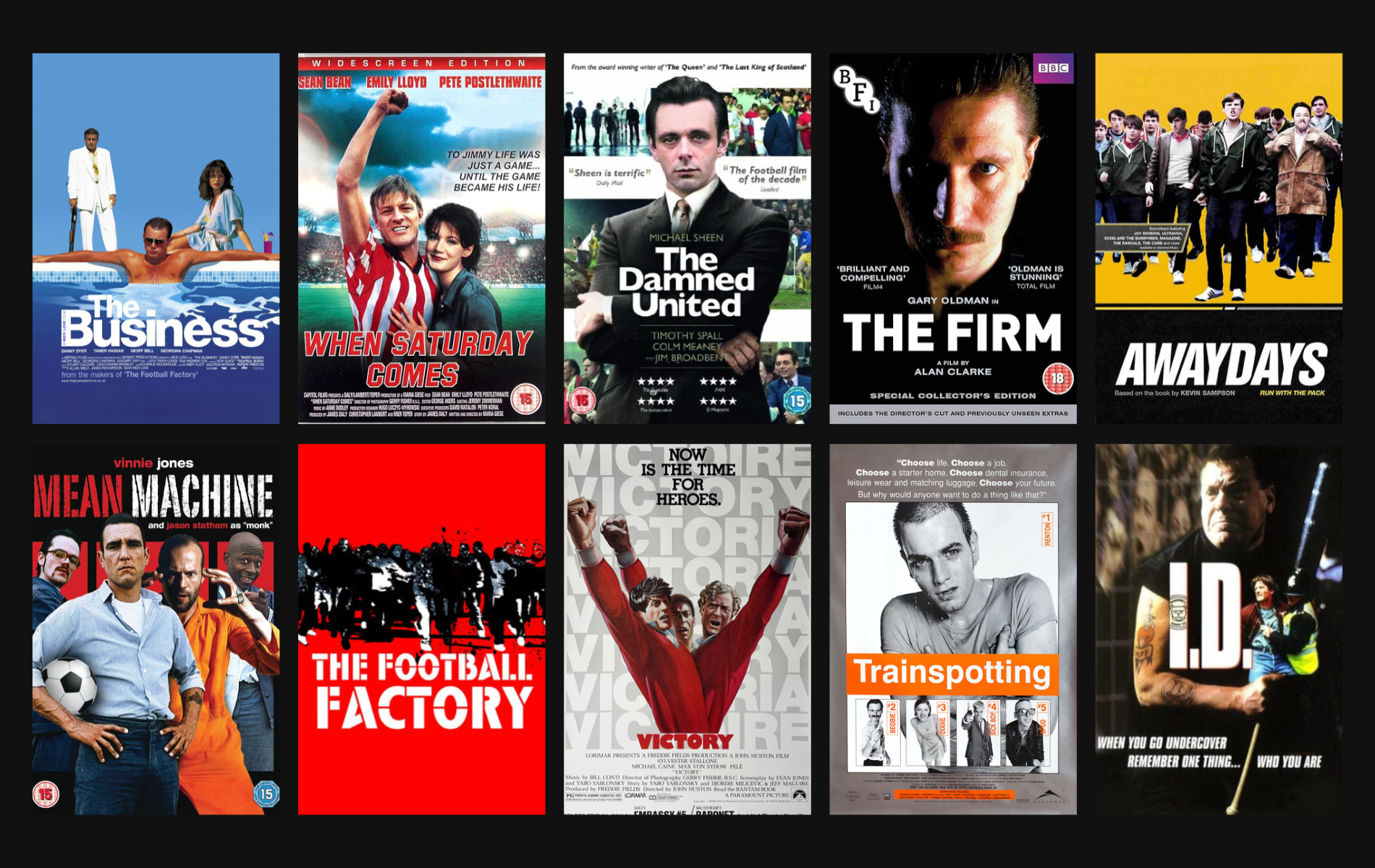
Football has provided the backdrop for stories about working-class identity, masculinity, music, fashion, friendship and belonging. Some films explore the darker aspects of supporter culture. Others capture the humour, hope, heartbreak and occasional absurdity of following a football club.
The 1980s, 1990s and early 2000s were particularly fertile ground, producing films that remain closely associated with British football culture.
But some of the films that best capture the wider cultural landscape barely feature football at all.
From the music and fashion of Trainspotting to the designer sportswear and excess of The Business, these films document a period when football, music, youth subcultures and British popular culture were closely intertwined.
Here, we bring together some of our favourite British football films and culturally connected classics. Some are genuinely outstanding cinema. Others are cult favourites remembered as much for their characters, clothes, dialogue and soundtracks as their filmmaking.
1. Terrace Culture, Casuals & Football Firms
Football violence has provided the subject for some of Britain’s most recognisable cult films.
Beyond the confrontations, many also explore friendship, identity, clothing, masculinity and the desire to belong to something bigger than yourself.
I.D. (1995)
Director: Phil Davis | Starring: Reece Dinsdale, Warren Clarke
One of British cinema’s most unsettling portrayals of football violence.
Reece Dinsdale plays an undercover police officer who infiltrates a football firm and gradually becomes consumed by the culture he’s investigating.
What makes I.D. particularly compelling is its exploration of identity, belonging and the loss of personal boundaries. The film depicts the psychological consequences of violence without turning its characters into conventional heroes.
Gritty, uncomfortable and unmistakably British.
The Firm (1989)
Director: Alan Clarke | Starring: Gary Oldman, Phil Davis
Before the 2009 remake came Alan Clarke’s original BBC television drama, featuring an extraordinary performance by Gary Oldman as Bex Bissell.
A respectable family man and estate agent, Bex leads a double life as the ambitious leader of a violent football firm.
Set against the social landscape of Thatcher’s Britain, The Firm explores class, masculinity, status and the contradictions of a culture in which apparently respectable men pursue violent reputations.
A particularly powerful film about the darker side of 1980s British identity.
The Football Factory (2004)
Director: Nick Love | Starring: Danny Dyer, Frank Harper, Tamer Hassan
Few films have become as closely associated with modern British football hooligan culture.
Based on John King’s novel, The Football Factory follows Chelsea supporter Tommy Johnson through a world of drinking, drugs, friendship, violence and self-destruction.
The film captures the language, fashion, music and restless energy of early-2000s British lad culture.
Its portrayal of football violence remains divisive, but there’s no denying its lasting influence on popular perceptions of the terrace scene.
Awaydays (2009)
Director: Pat Holden | Starring: Nicky Bell, Liam Boyle
One of the strongest films exploring the relationship between football casual culture, fashion and music.
Set on Merseyside at the end of the 1970s, Awaydays follows a young man drawn into a group of football casuals known as The Pack.
The football violence is only part of the story. The film is equally interested in clothing, friendships, personal identity and the influence of post-punk music.
With its unmistakable period styling and soundtrack, Awaydays captures a particular moment in British youth culture.
Green Street (2005)
Director: Lexi Alexander | Starring: Elijah Wood, Charlie Hunnam
An American student becomes involved with a fictional West Ham-associated football firm after moving to London.
Green Street became an international cult favourite, helping introduce an exaggerated version of British football hooligan culture to a much wider audience.
Its treatment of the subject is often sensationalised, particularly compared with more grounded films such as I.D.
Nevertheless, it remains an influential part of the football-film conversation.
The Firm (2009)
Director: Nick Love | Starring: Paul Anderson, Calum MacNab
Nick Love revisits Alan Clarke’s original story, placing greater emphasis on the clothing, music and youth culture associated with 1980s football casuals.
The film follows a young supporter drawn towards Bex, a charismatic figure within the football firm scene.
For viewers interested in terrace fashion, the period styling is a major part of its appeal.
Where Clarke’s original concentrates on the violence and social contradictions of the era, the remake gives more attention to youth identity and the attraction of belonging to a group.
2. Football, Friendship & Everyday Life
Not every great football film needs a punch-up or a last-minute winner.
Some of the most memorable stories explore what supporting a football club means to ordinary people: the relationships it creates, the rituals it encourages and the extraordinary hold it can have over everyday life.
Fever Pitch (1997)
Director: David Evans | Starring: Colin Firth, Ruth Gemmell
Based on Nick Hornby’s bestselling book, Fever Pitch explores what happens when a lifelong attachment to Arsenal competes with everything else in a supporter’s life.
Set against the club’s dramatic 1988/89 championship campaign, the film captures the rituals, superstitions and emotional investment familiar to generations of football supporters.
It’s funny, affectionate and occasionally uncomfortable in its portrayal of obsession.
One of the better films about what supporting a football club actually feels like.
Purely Belter (2000)
Director: Mark Herman | Starring: Chris Beattie, Greg McLane
Two young Newcastle United supporters are desperate to get their hands on season tickets. The only problem is finding the money.
Set against the working-class streets of Tyneside, Purely Belter combines football obsession with friendship, teenage ambition and the difficulties of everyday life.
The film understands that a season ticket can represent something much bigger than admission to a football match.
Football as escape, belonging and hope.
Looking for Eric (2009)
Director: Ken Loach | Starring: Steve Evets, Eric Cantona
A Manchester postman struggling with his personal life receives some unlikely guidance from his footballing hero, Eric Cantona.
Ken Loach brings his characteristic interest in working-class communities to a warm, funny and occasionally surreal story about friendship, mental health and football.
Looking for Eric celebrates the importance of collective support, both inside and outside the stadium.
It also provides a reminder that football’s greatest value often lies in the relationships it creates.
Bend It Like Beckham (2002)
Director: Gurinder Chadha | Starring: Parminder Nagra, Keira Knightley
Set in West London, Bend It Like Beckham follows a young British-Indian footballer navigating family expectations and her ambition to play the game.
The film captures a different side of British football culture: identity, community, friendship and the barriers faced by young women pursuing their sporting ambitions.
Its early-2000s setting also provides a vivid picture of British popular culture at the time.
A reminder that football’s cultural significance extends across different communities and experiences.
3. The Beautiful Game – On Screen
Football itself has inspired everything from powerful character studies and working-class dramas to gloriously ridiculous comedies.
These films explore the players, managers, dreams and personalities that have shaped the game.
The Damned United (2009)
Director: Tom Hooper | Starring: Michael Sheen, Timothy Spall
Michael Sheen delivers a memorable portrayal of Brian Clough during his disastrous 44-day reign at Leeds United.
Based on David Peace’s novel, the film explores ambition, ego, rivalry and the complicated relationship between Clough and his trusted assistant Peter Taylor.
The 1970s football setting, training grounds, clothing and club interiors are as memorable as the performances.
A compelling dramatic interpretation of one of English football’s most extraordinary personalities, rather than a definitive historical account.
When Saturday Comes (1996)
Director: Maria Giese | Starring: Sean Bean, Emily Lloyd, Pete Postlethwaite
A working-class Sheffield factory worker dreams of becoming a professional footballer and playing for Sheffield United.
Released in the mid-1990s, When Saturday Comes draws heavily on the traditional landscapes and identities of English football.
Factories, pubs, family expectations and local ambition provide the backdrop to a familiar sporting dream.
It may not be the most sophisticated football film, but its sense of place gives it a particular appeal.
Mike Bassett: England Manager (2001)
Director: Steve Barron | Starring: Ricky Tomlinson, Amanda Redman
One of British football’s great comedies.
Ricky Tomlinson plays Mike Bassett, an unlikely England manager thrown into the madness of international football.
Its exaggerated characters, disastrous press conferences and painfully familiar footballing disappointments make it one of the most quotable films about the English game.
A celebration of football’s absurdity, and of the national obsession that surrounds it.
Mean Machine (2001)
Director: Barry Skolnick | Starring: Vinnie Jones, Jason Statham
Vinnie Jones plays a disgraced former England footballer who finds himself in prison and is tasked with organising a team to play against the guards.
Mean Machine is not really a film about supporter culture, but its cast of familiar British characters, humour and footballing redemption have made it something of a cult favourite.
An entertaining, distinctly early-2000s British football comedy.
Escape to Victory (1981)
Director: John Huston | Starring: Michael Caine, Sylvester Stallone, Pelé
A wartime football adventure in which Allied prisoners of war prepare to face a German team.
Escape to Victory brings together Hollywood stars and genuine football legends, including Pelé, Bobby Moore and Osvaldo Ardiles.
It’s an unlikely combination of war film, football fantasy and sporting spectacle.
Not strictly a British production or a story of British football culture, but a fixture of football-film nostalgia that deserves a mention.
4. Beyond Football – British Culture on Film
Music, fashion, crime and the characters who defined an era
Some of the films most closely associated with British football culture barely feature football at all.
They share something else: the music, clothing, humour, attitudes and working-class environments familiar to generations of supporters.
From the designer sportswear and criminal underworld of The Business to the heroin-ravaged streets of Edinburgh in Trainspotting, these films capture aspects of British life that existed alongside football culture during the 1980s, 1990s and early 2000s.
They’re not necessarily football films. But their characters, soundtracks, fashions and cultural references belong to the wider landscape of British popular culture.
The Business (2005)
Director: Nick Love | Starring: Danny Dyer, Tamer Hassan
Set against the sun-drenched Costa del Sol of the 1980s, The Business follows a young Londoner drawn into the glamorous and increasingly violent world of British expatriate gangsters.
Football barely features, but the film’s Sergio Tacchini tracksuits, designer sportswear, soundtrack and laddish characters have obvious connections to the aesthetic associated with British casual culture.
It’s an exaggerated and entertaining portrait of 1980s excess, remembered as much for its clothing, characters and music as its criminal storyline.
Sexy Beast (2000)
Director: Jonathan Glazer | Starring: Ray Winstone, Ben Kingsley
Ray Winstone plays a retired British criminal enjoying life in Spain before the arrival of the terrifying Don Logan, played by Ben Kingsley.
Sexy Beast has little direct connection to football, but its characters, language, humour and uncompromising portrayal of British masculinity give it a place in the wider cultural conversation.
Its examination of loyalty, intimidation and male relationships also resonates with themes explored in British football-firm cinema.
A genuinely outstanding British crime film.
Trainspotting (1996)
Director: Danny Boyle | Starring: Ewan McGregor, Robert Carlyle, Ewen Bremner
One of the defining British films of the 1990s.
Based on Irvine Welsh’s novel, Trainspotting follows a group of young men navigating heroin addiction, friendship, violence and disillusionment in Edinburgh.
Its football references, extraordinary soundtrack and depiction of Scottish working-class youth culture place it firmly within the wider cultural landscape surrounding the game.
From Iggy Pop and Underworld to its unforgettable visual style, Trainspotting captured the attitude of an era.
Human Traffic (1999)
Director: Justin Kerrigan | Starring: John Simm, Danny Dyer, Lorraine Pilkington
Five friends, one weekend and the anticipation of escaping everyday life through music, clubs and drugs.
Set in Cardiff, Human Traffic is an affectionate portrait of Britain’s late-1990s clubbing culture.
Football isn’t central to the story, but the clothing, friendships, nightlife and shared experiences overlap with the broader youth culture that influenced football supporters during the decade.
A film that captures the atmosphere of its time particularly well.
This Is England (2006)
Director: Shane Meadows | Starring: Thomas Turgoose, Stephen Graham
Set in 1983, This Is England explores skinhead culture, friendship, identity and the political divisions emerging within a group of young people.
Football isn’t the focus, but the clothes, music and social environments belong to a period when skinhead and terrace cultures frequently intersected.
Fred Perry shirts, braces, boots, ska and reggae provide the visual and musical backdrop to a much more complicated story about belonging, racism and growing up in Britain.
An essential film for understanding aspects of British youth culture during the early 1980s.
24 Hour Party People (2002)
Director: Michael Winterbottom | Starring: Steve Coogan, Lennie James
The story of Manchester’s music scene, Factory Records and the extraordinary rise of the Haçienda.
From Joy Division and New Order to the Happy Mondays and the emergence of acid house, 24 Hour Party People celebrates a period when Manchester became one of Britain’s most influential cultural cities.
Its connection to football is indirect, but the music, fashion and nightlife of the era formed part of the wider environment in which British football culture evolved.
A fitting inclusion in any celebration of the relationship between football, music and British identity.
British Football Culture Beyond the Screen
These films have helped shape how British football and the culture surrounding it are remembered and represented.
Some are affectionate portraits of ordinary supporters. Others explore violence, obsession, ambition, friendship or the relationship between football and wider society.
And some capture a cultural landscape in which football was only one part of a much bigger story.
Football supporters have never existed in isolation from the wider world. The music they listened to, the clothes they wore, the films they watched and the places they travelled all contributed to the culture that developed around the game.
That relationship is central to Lower Block.
Across our photographic archive, photographers including Steve Pyke, Tony Davis, Richard Davis and Justin Slee have documented British football supporters, casual culture, stadiums, fashion and the changing social landscape of the game.
From Leicester City’s Baby Squad in 1984 and Stoke City’s supporters in the early 1990s to the everyday rituals of Going to the Match in 1991, these photographs capture the real people and places behind the culture.
Cinema recreates these worlds. Documentary photography preserves the people who lived them.
Explore more of British football culture through the Lower Block photographic archive and independent Editions.
-
 Protests to Promotion | Clive Lawrence£8.50
-
 Going to the Match | Richard Davis£8.50
-
 The Third Element | Steve Pyke£8.50
-
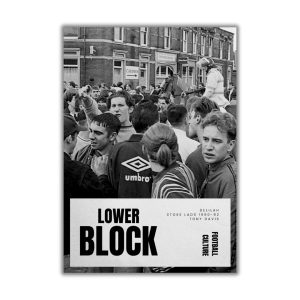 Delilah – Stoke Lads 1990-92 | Tony Davis£8.50
-
 Baby Squad 1984 | Steve Pyke£8.50
-
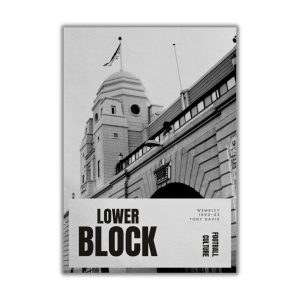 Wembley 1990-03 | Tony Davis£8.50
-
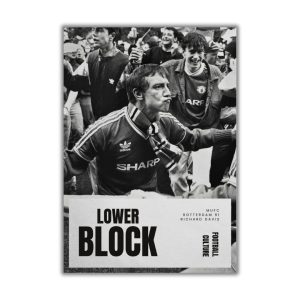 MUFC Rotterdam 91 | Richard Davis£8.50
-
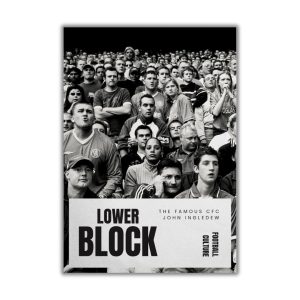 The Famous CFC | John Ingledew£8.50
-
 No One Likes Us | Jérôme Favre£8.50
More from the Lower Block Archive