FOOTBALL, WAR AND WHAT REMAINS
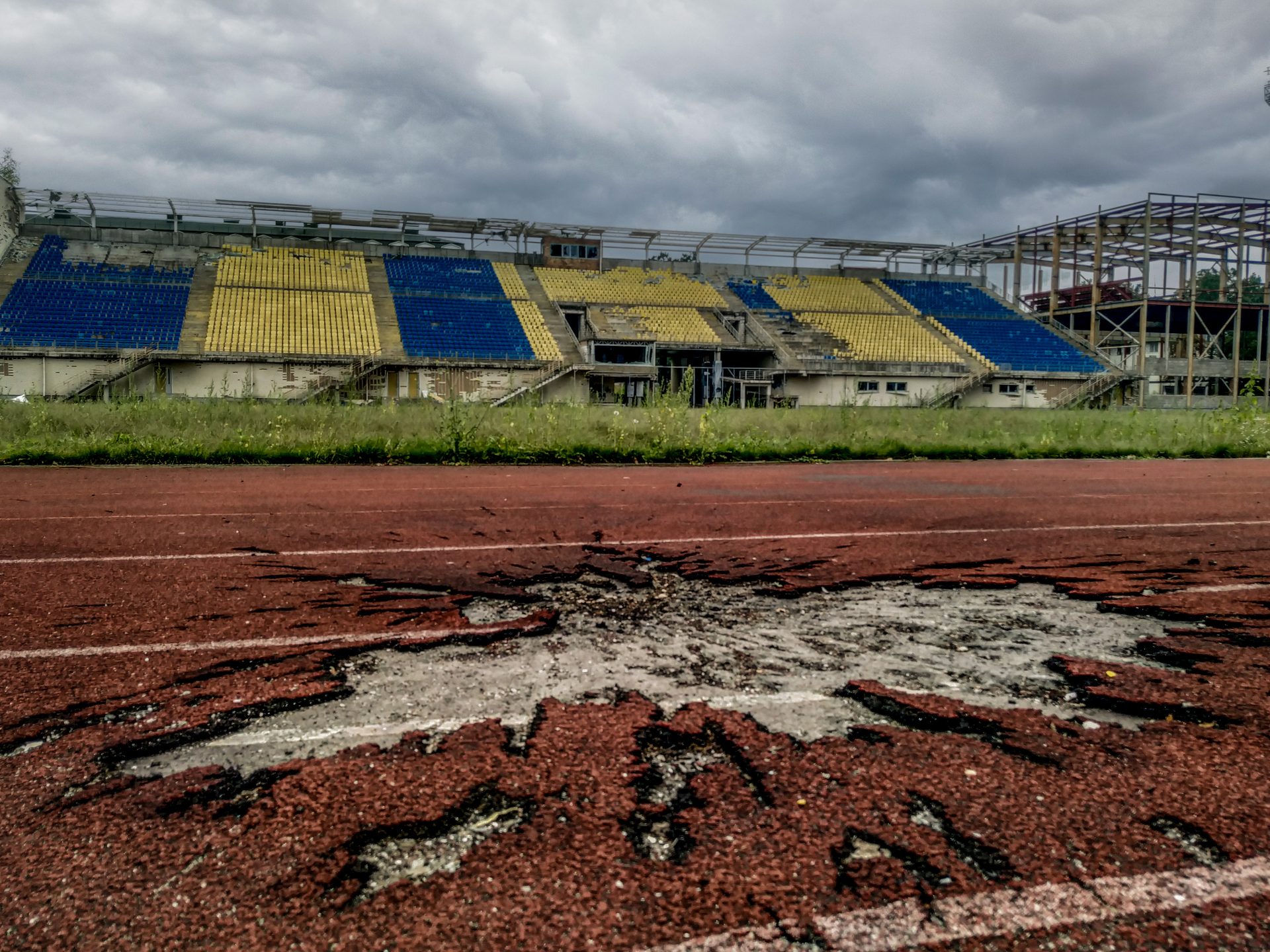
There is something particularly stark about seeing a football stadium damaged by war.
These are places normally associated with routine and collective experience: weekend fixtures, floodlights, turnstiles, terraces, training sessions and generations of supporters returning to the same ground.
Placed against war, football can feel insignificant.
People are displaced. Families lose homes. Lives are lost.
And yet the destruction of football grounds also says something about the wider damage inflicted on towns, cities and communities. Stadiums are part of those places. They hold memory, identity and everyday history.
That tension sits at the centre of Stadiums of War, an independent documentary project by Ukrainian football traveller and author Ostap Sip.
The resulting book, Stadiums of War – Ukrainian Arenas Damaged by the Russian Invasion, documents football stadiums across Ukraine before and after the beginning of the full-scale invasion on February 24, 2022.
38 Stadiums Across Ukraine
The project covers 38 stadiums in 25 cities, ranging from major urban arenas to smaller local sports grounds.
For each location, Sip documents its history, its condition before the war, the damage sustained and the changes that have followed.
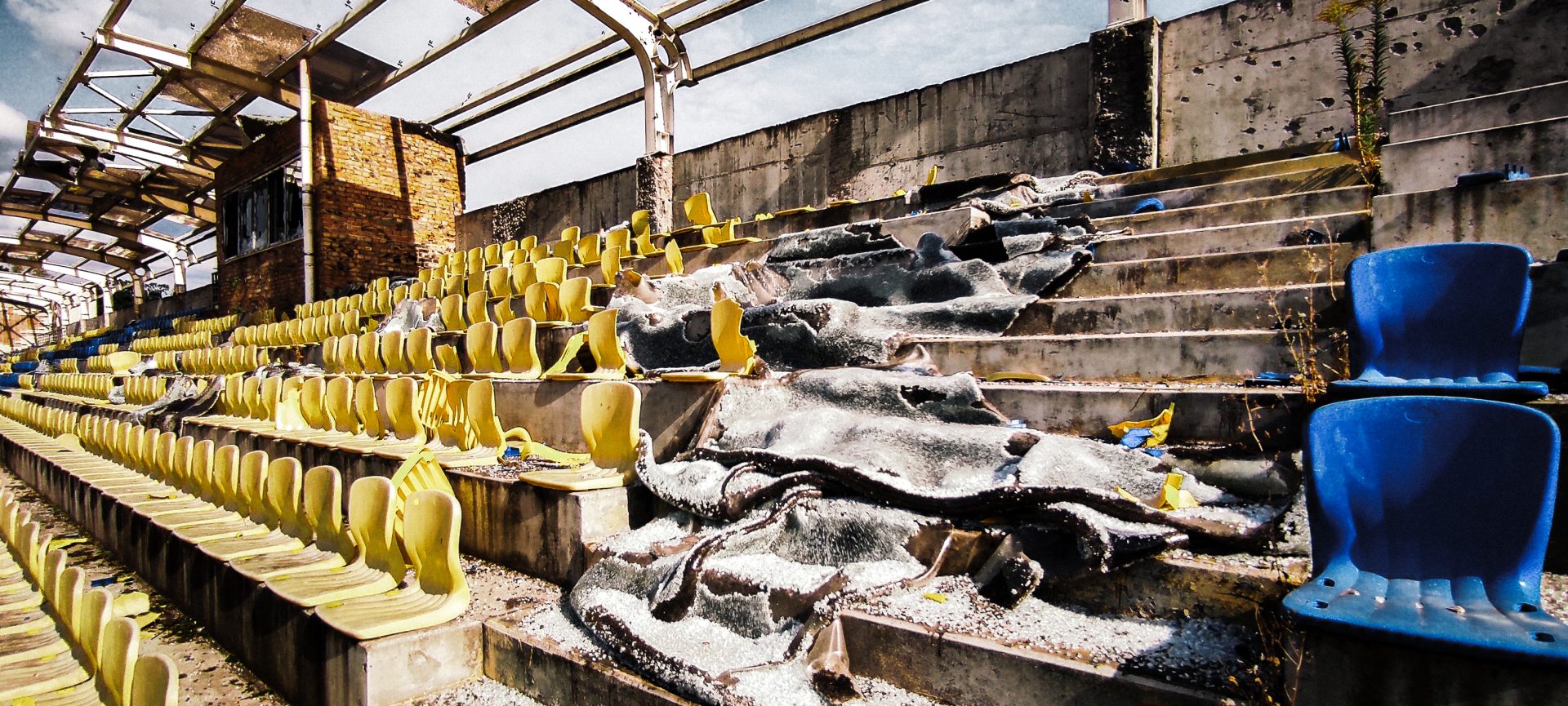
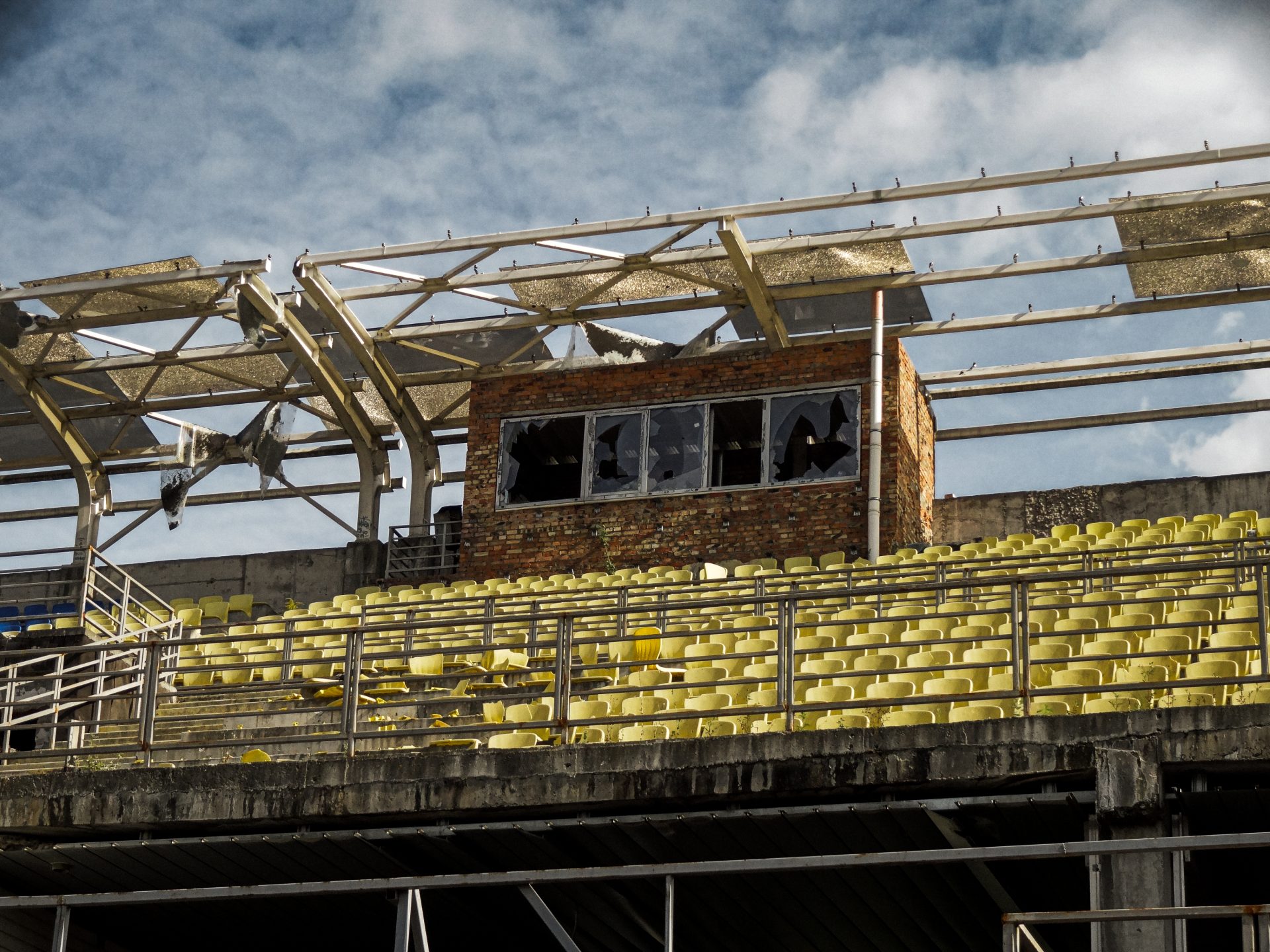
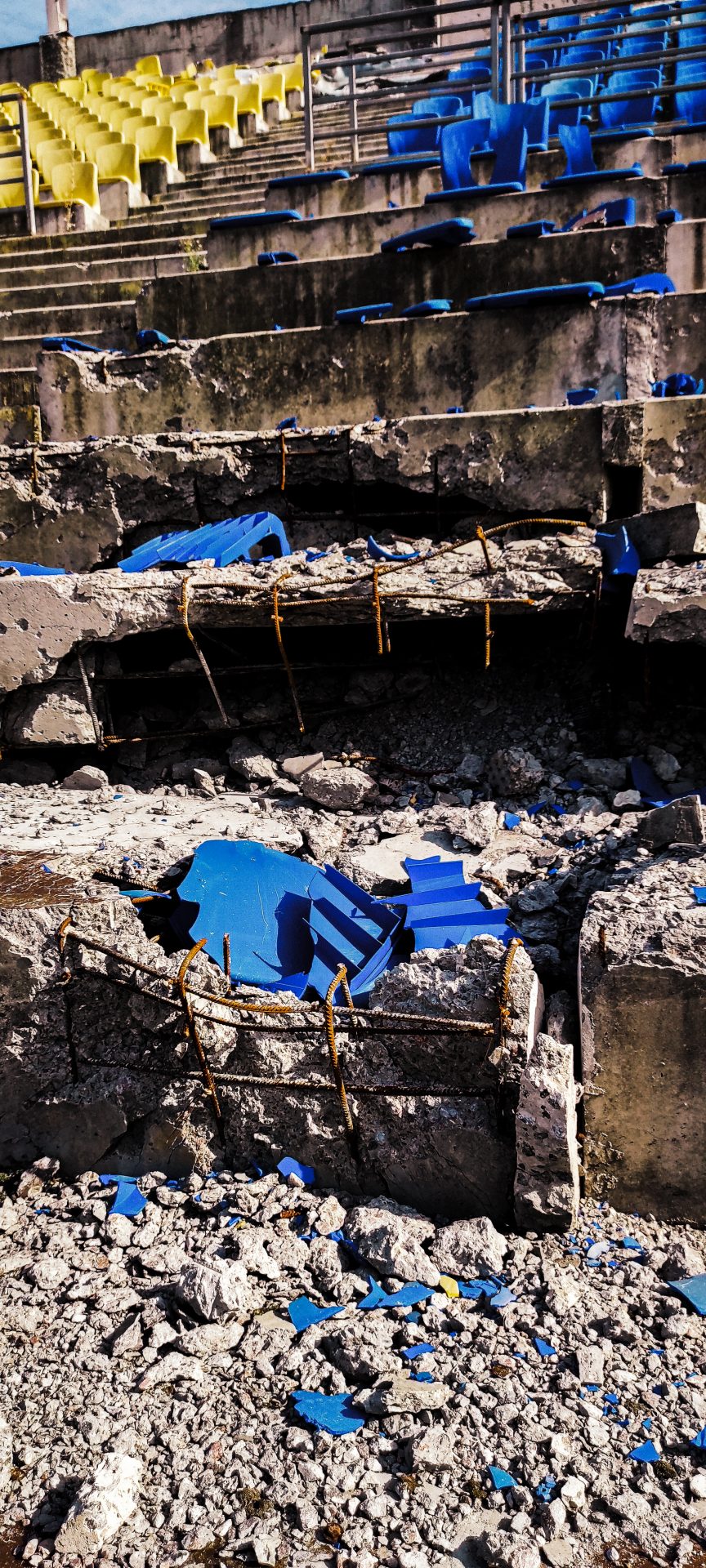
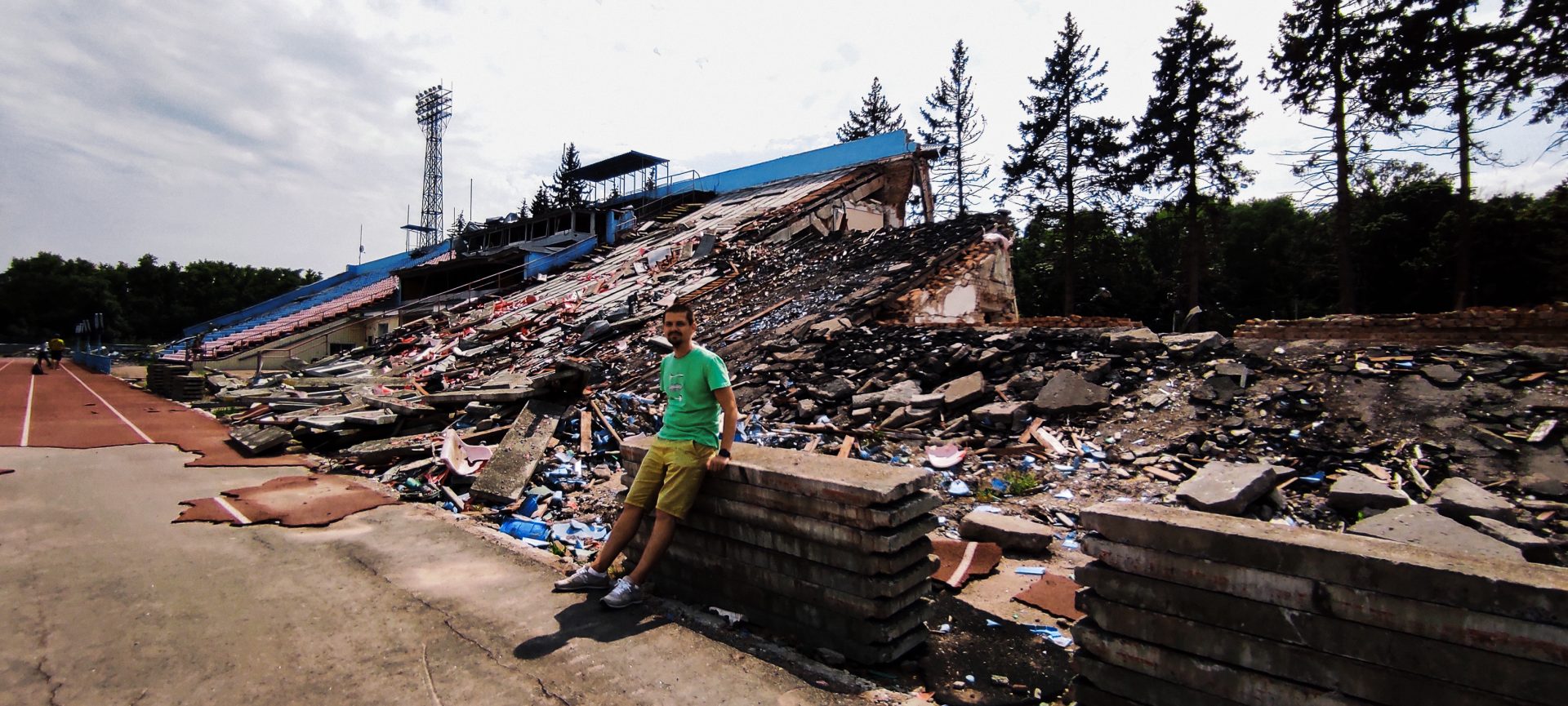
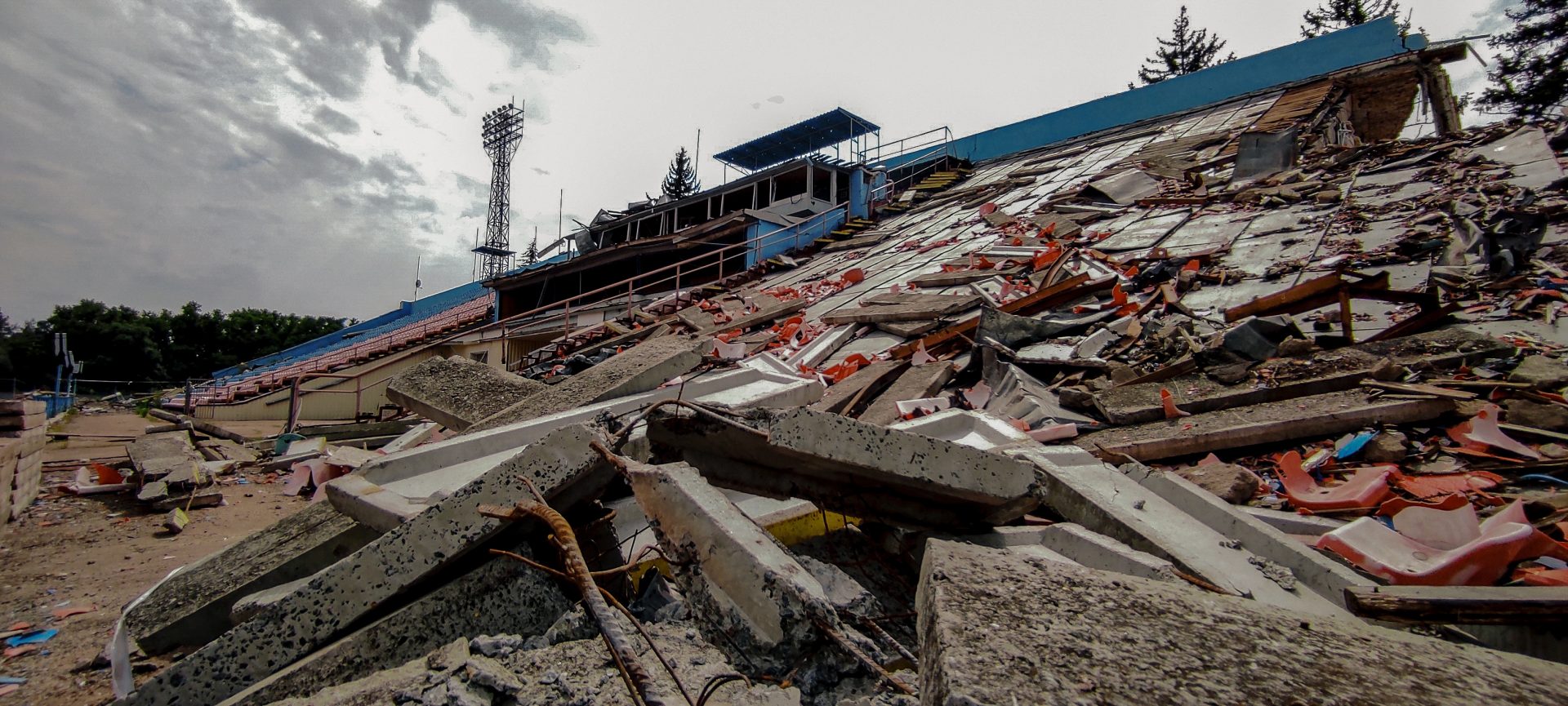
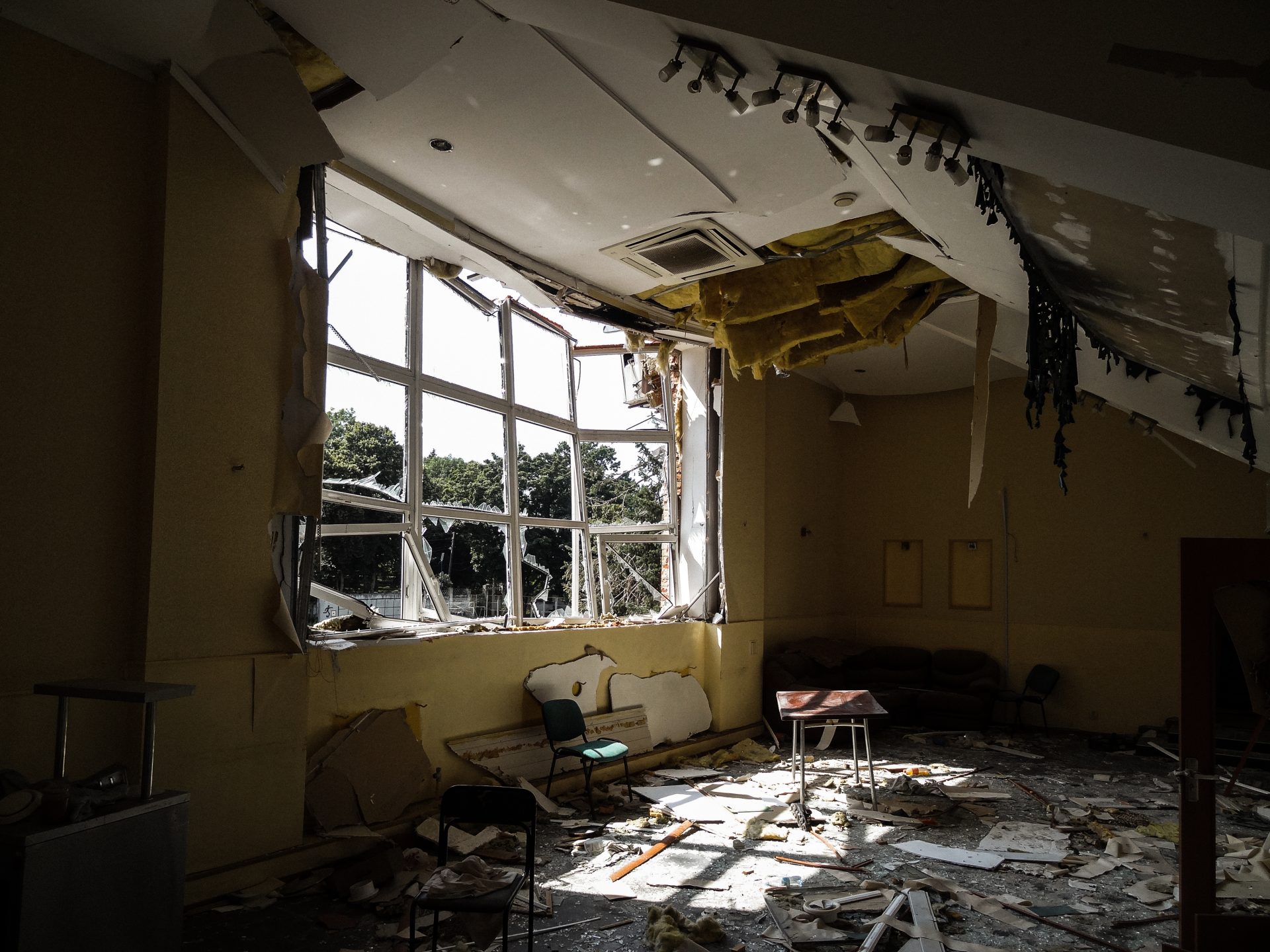
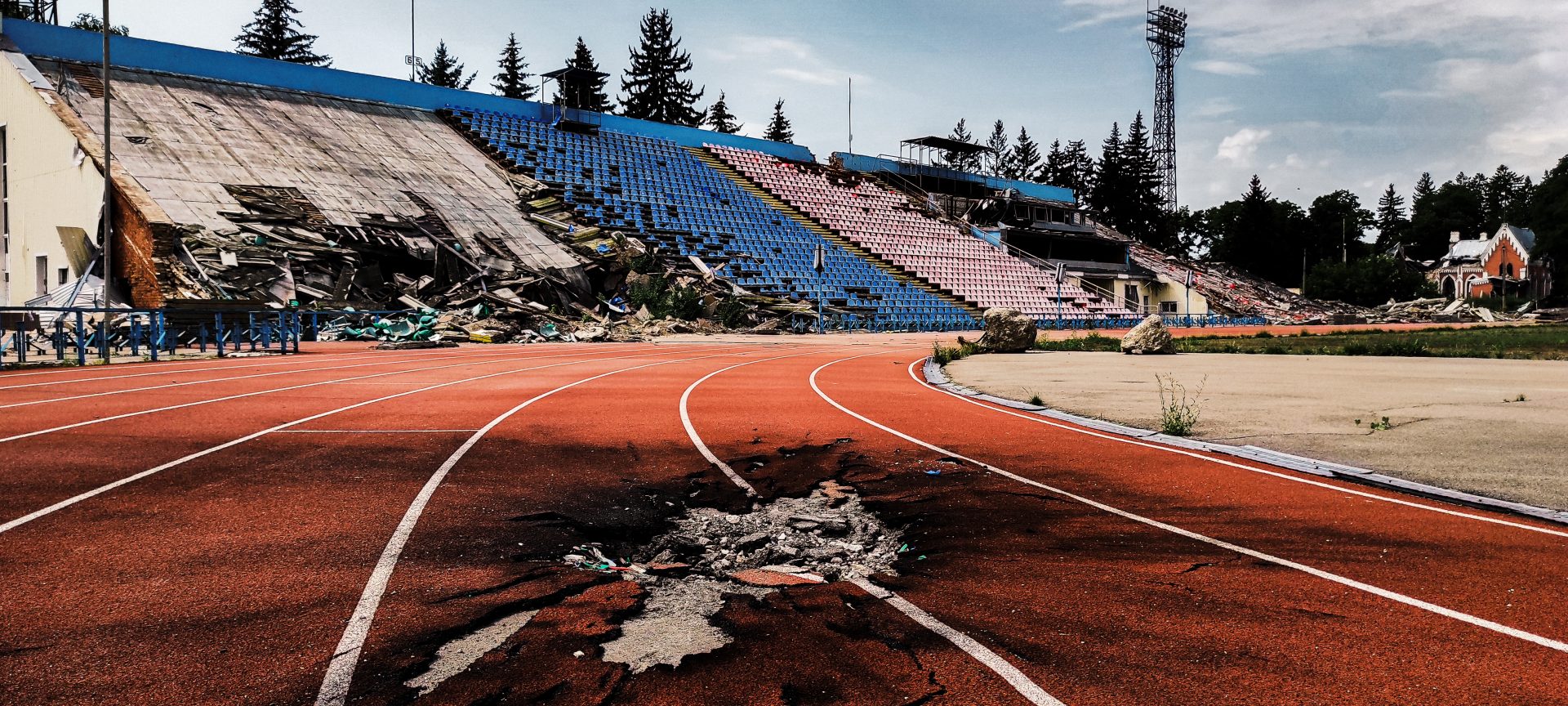
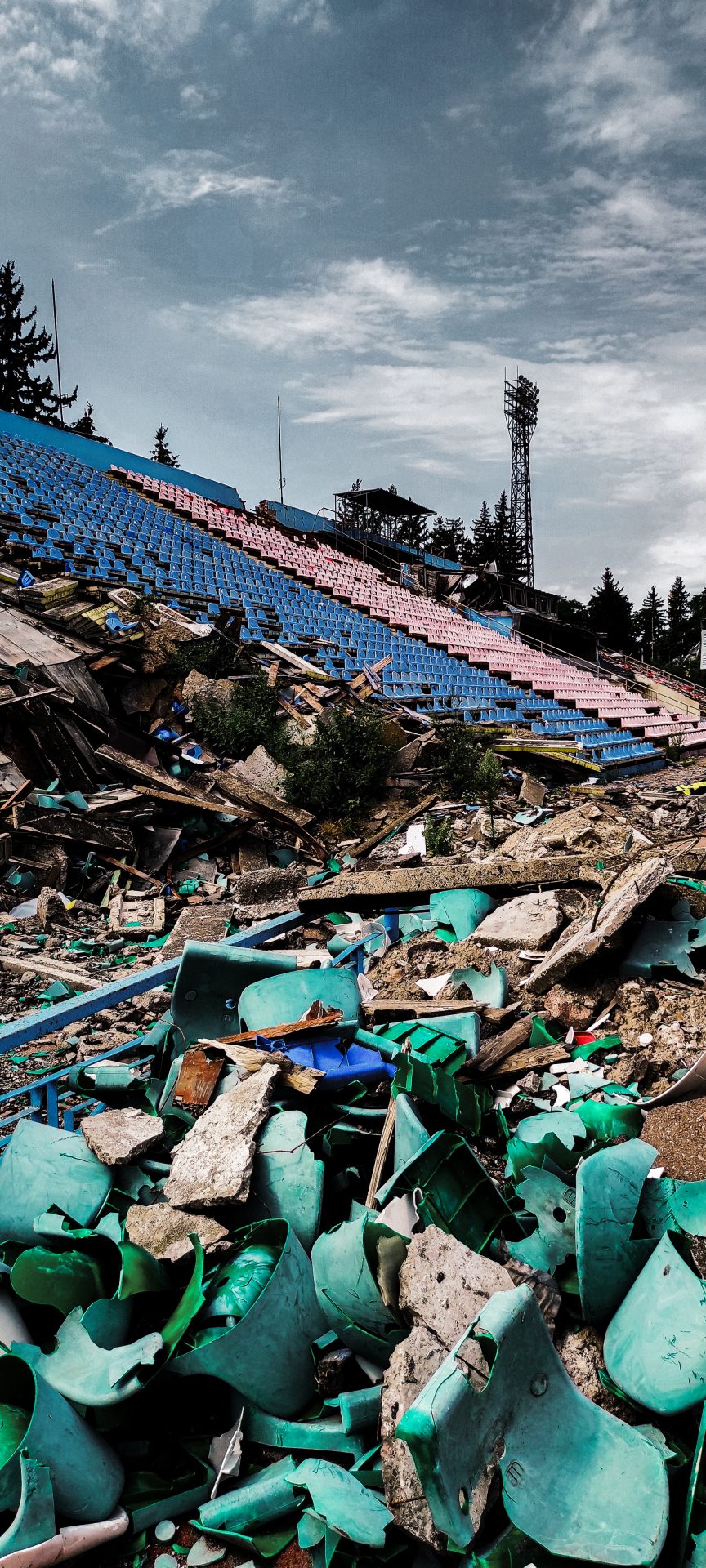
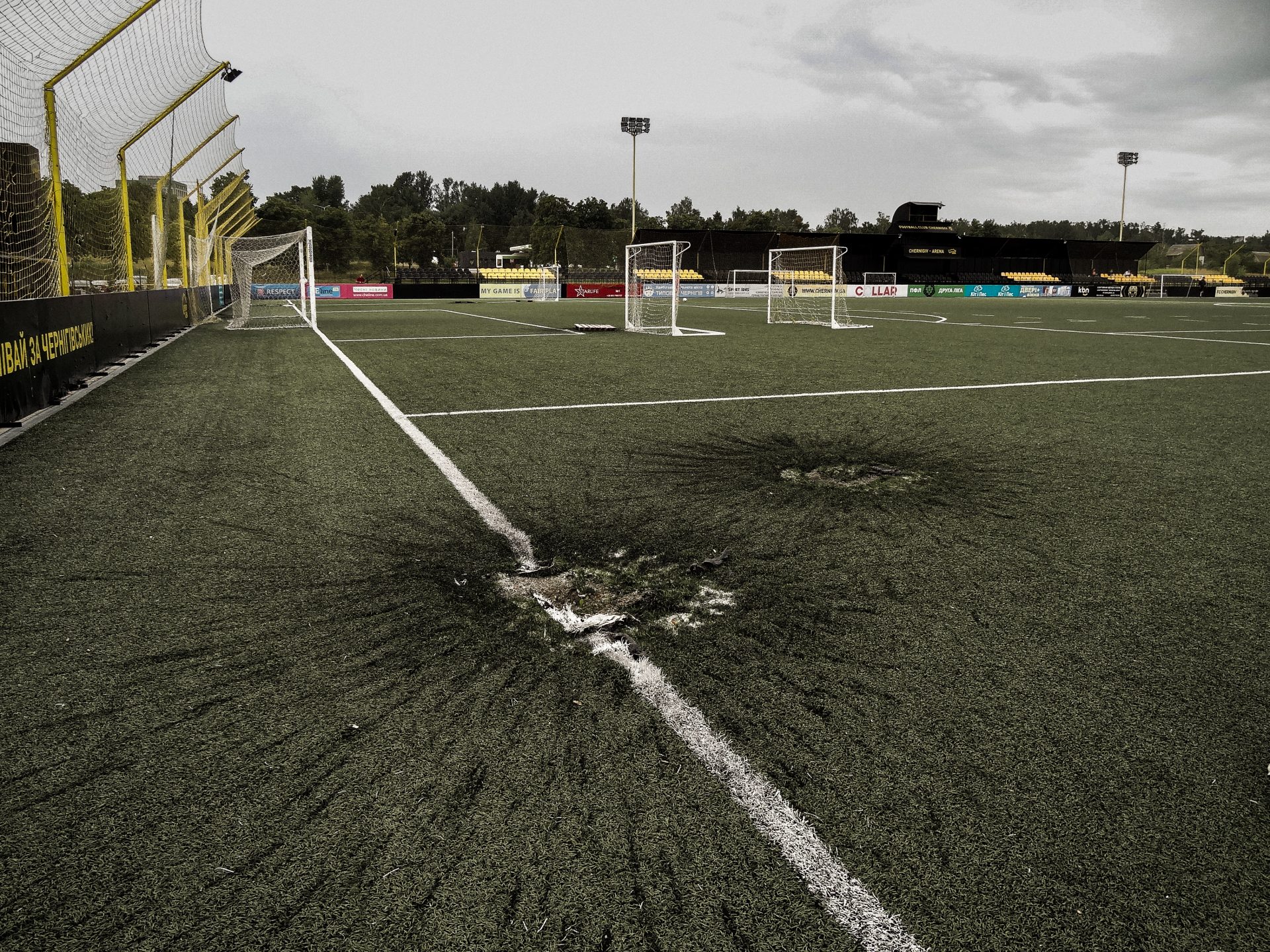
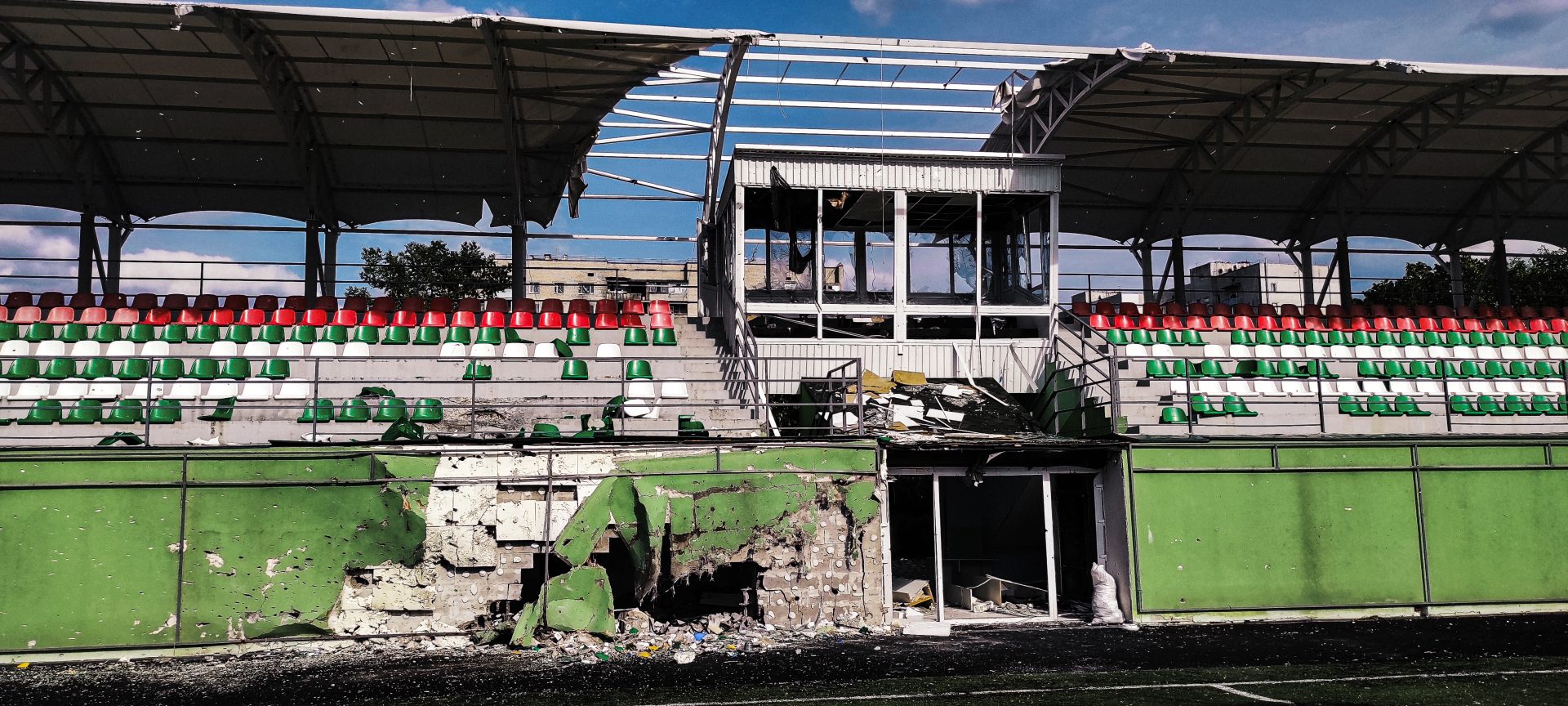
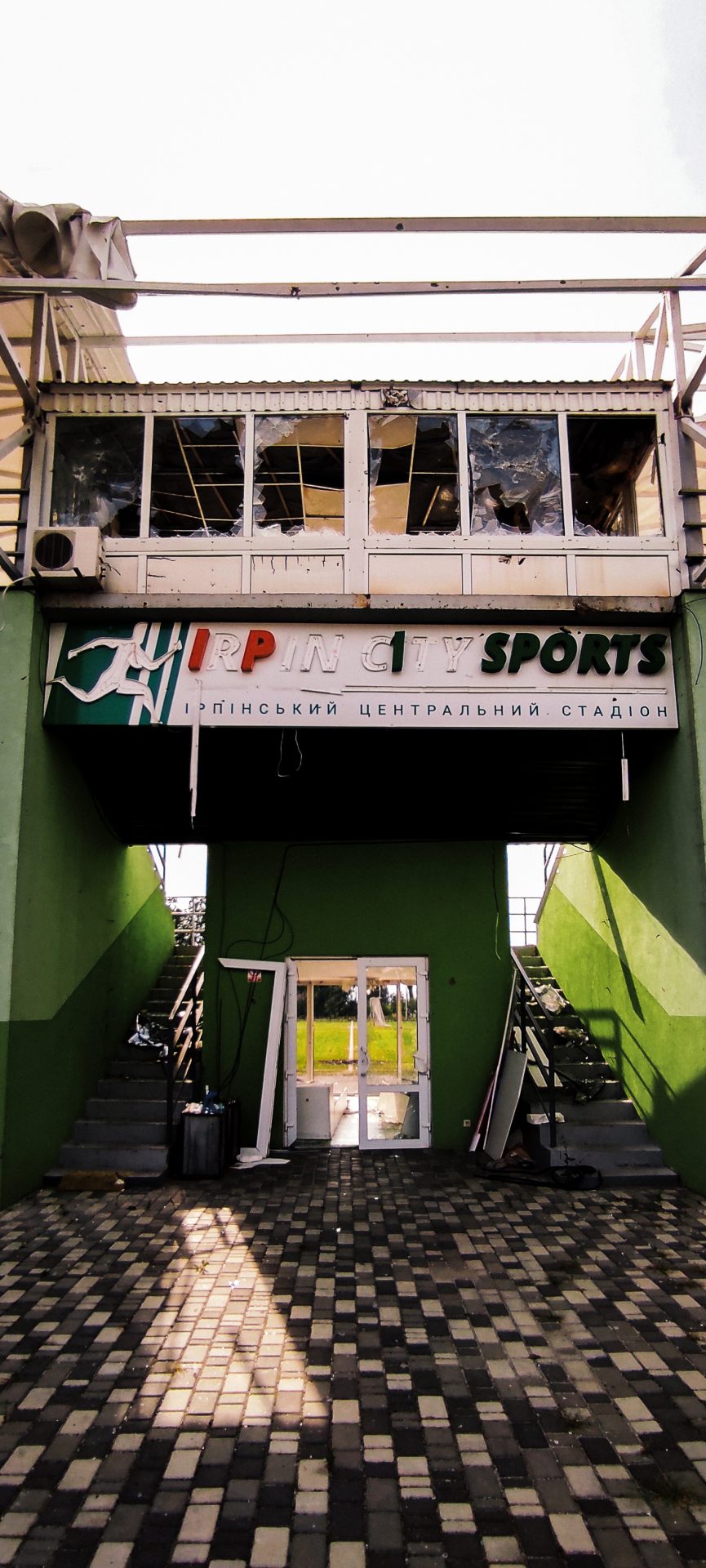
The photographs are both striking and difficult to look at.
Seats are torn apart. Stands are damaged. Structures once built for crowds and competition carry the physical traces of conflict.
Within the book, alongside contemporary photographs, are images showing how the same stadiums looked before the invasion, allowing the scale of the change to be understood directly.
The comparison is simple, but powerful.
These were ordinary football places.
Then war arrived.
Documenting What Happened
Stadiums of War is not built solely from photographs.
Over four years, Sip travelled to damaged sports facilities across different regions of Ukraine, conducting field research and collecting documents, testimony and physical material from the sites.
Fragments recovered during those journeys – metal, pieces of plastic seating, burnt rubber and broken glass – also form part of the project.
They become another form of evidence.
The book combines this material with photography, architectural history and research to create a record of places that may never exist again in the same form.
A separate section also examines three military stadiums in Kyiv, Odesa and Lviv.
More Than Sports Facilities
The project deliberately treats stadiums as more than buildings.
Each one has its own relationship with the surrounding city, club and community.
Some hosted professional football. Others served much smaller local teams or sporting communities.
What connects them is their place within everyday life.
Before the war, supporters walked through their gates, children played sport there and communities gathered around them.
By documenting what happened to these grounds, Sip is also recording the wider transformation of Ukrainian towns and cities.
“What was once part of everyday life, what was destroyed or damaged, and what continues to exist and be rebuilt” is central to the project.
This is where football becomes significant again.
Not because a stadium matters more than the people around it, but because these places carry the traces of those people and their lives.
Preserving Ukrainian Football Heritage
At its core, Stadiums of War is a preservation project.
War changes landscapes quickly. Buildings are destroyed, rebuilt or abandoned. Physical evidence disappears.
Photography and research provide a way of retaining some record of what existed before.
For football culture, that matters.
Grounds are part of the history of clubs, supporters and communities. Their architecture, stands, entrances, floodlights and surrounding streets become inseparable from the experience of following a team.
Once those places are lost, photographs often become one of the few remaining ways to understand them.
Sip’s work preserves that history while placing it within the much larger reality of war.
A Book Built as a Record
The finished publication runs to 212 pages, is printed in full colour and presented in a landscape A4-format hardcover.
It is published bilingually in Ukrainian and English and combines photography with research across the 38 stadiums featured.
The book is dedicated to football supporters, club fans and everyone for whom these grounds formed an important part of their lives.
Part of the proceeds from every copy sold is donated to the STAND OF HEROES Foundation, which provides support to the families of Ukrainian ultras and hooligans killed in the war.
Football, Memory and Place
There is no attempt within Stadiums of War to suggest that damage to football grounds compares with the human cost of war.
Instead, the stadium becomes a way of looking at something much larger.
These buildings represent local history, routine and community.
Their destruction shows how war reaches into the most ordinary parts of life.
At the same time, documenting them demonstrates why football retains such importance to people around the world.
A club or stadium can become tied to family, neighbourhood, memory and identity.
That can appear trivial when placed beside conflict.
It can also explain why these places are worth recording.
Stadiums of War is ultimately a photographic and historical record of what has been damaged, what has been lost and what remains.
The book is available directly from Stadioners, with more from the project available through its website and social channels.

Buy Stadiums of War → stadioners.com
More from the Lower Block Archive