For Callum Connolly, following Arsenal began with a childhood friendship and a hand-me-down shirt. It became a constant through his formative years, a career in the Royal Marines and the journeys between his base in Arbroath and watching his club.
Today, Connolly works as a welfare officer for an organisation providing mental health support to members of the Armed Forces and emergency services, helping those from communities he knows first-hand. Photography has also brought him new connections, giving him the confidence to become more involved in the social life surrounding football.
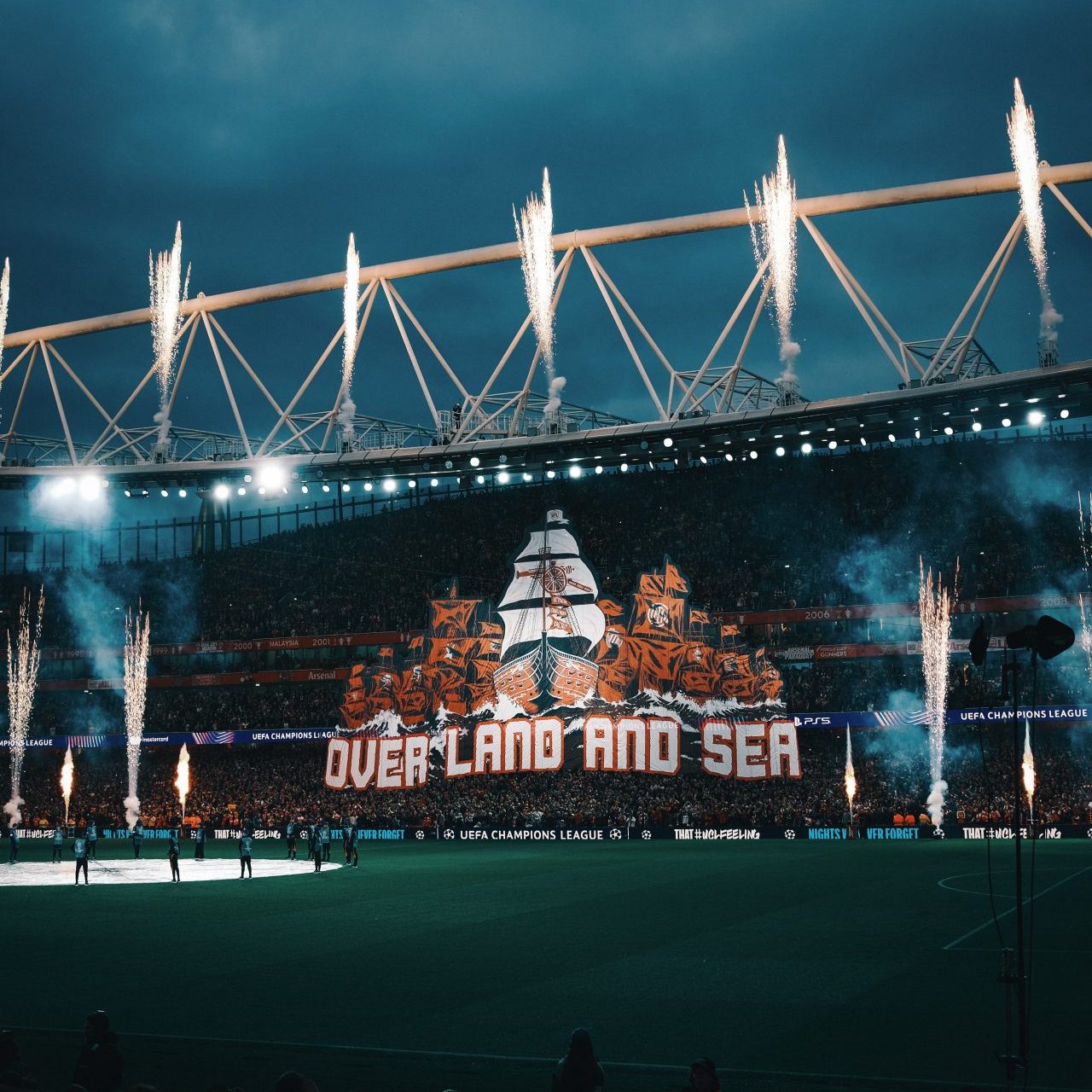
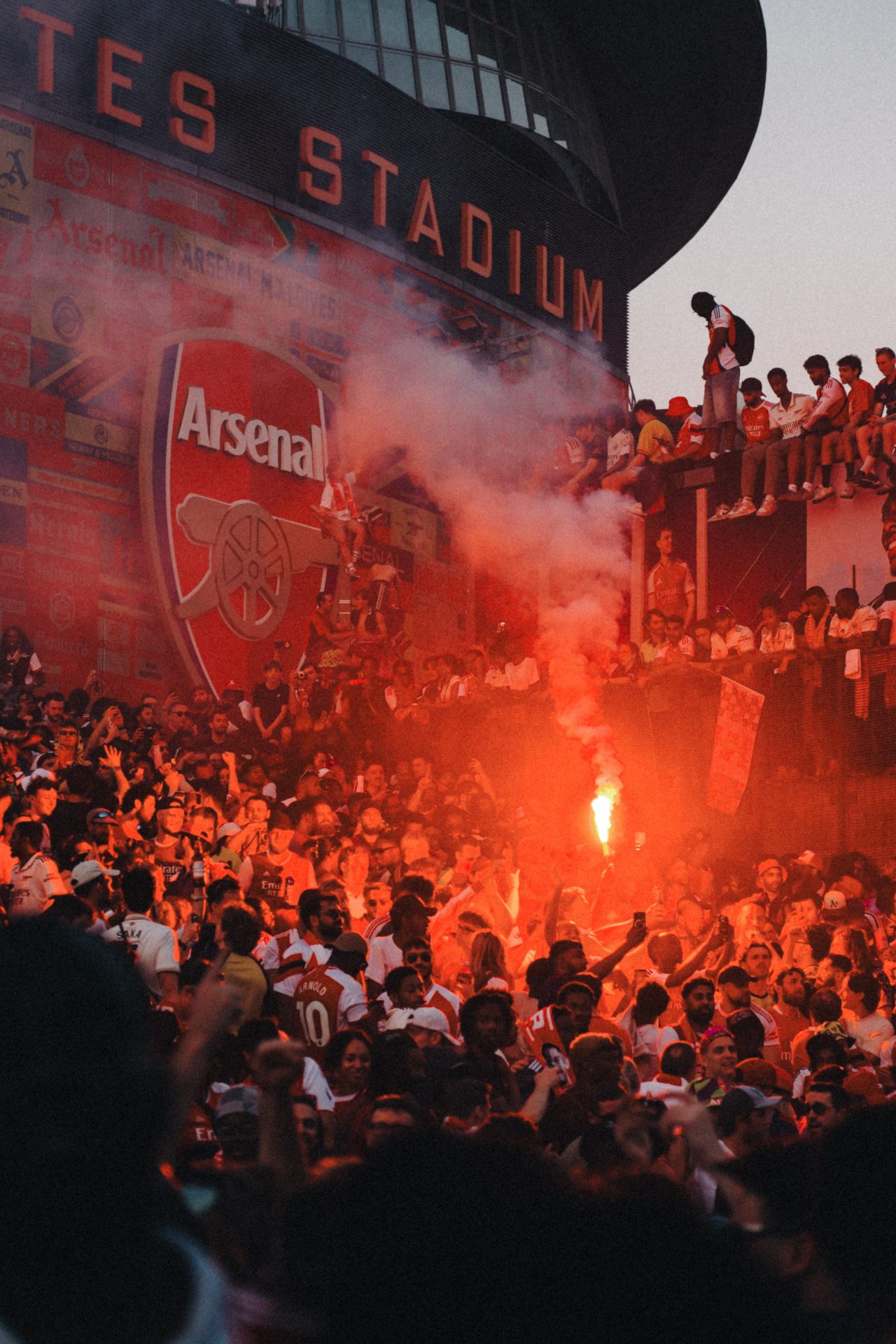
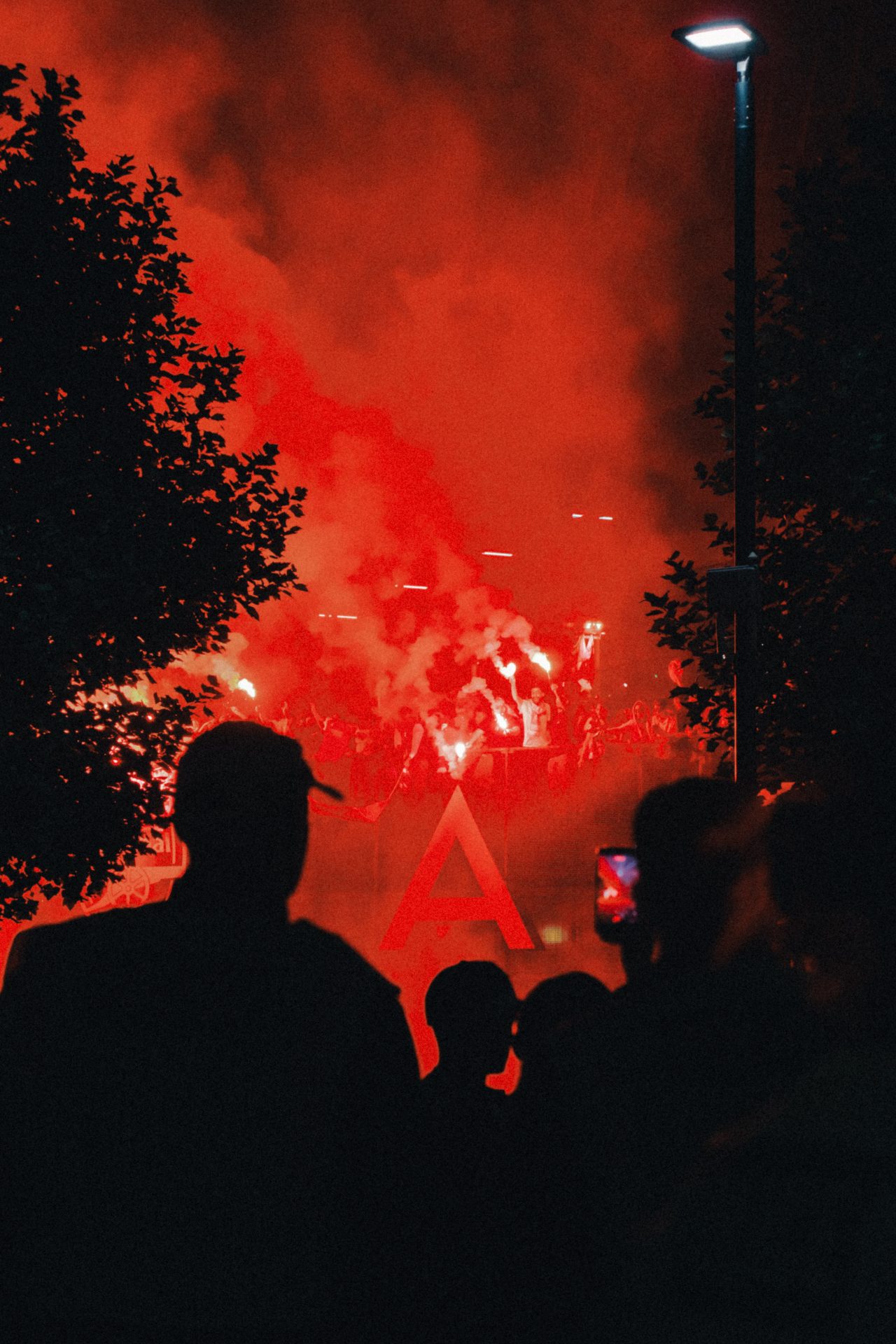
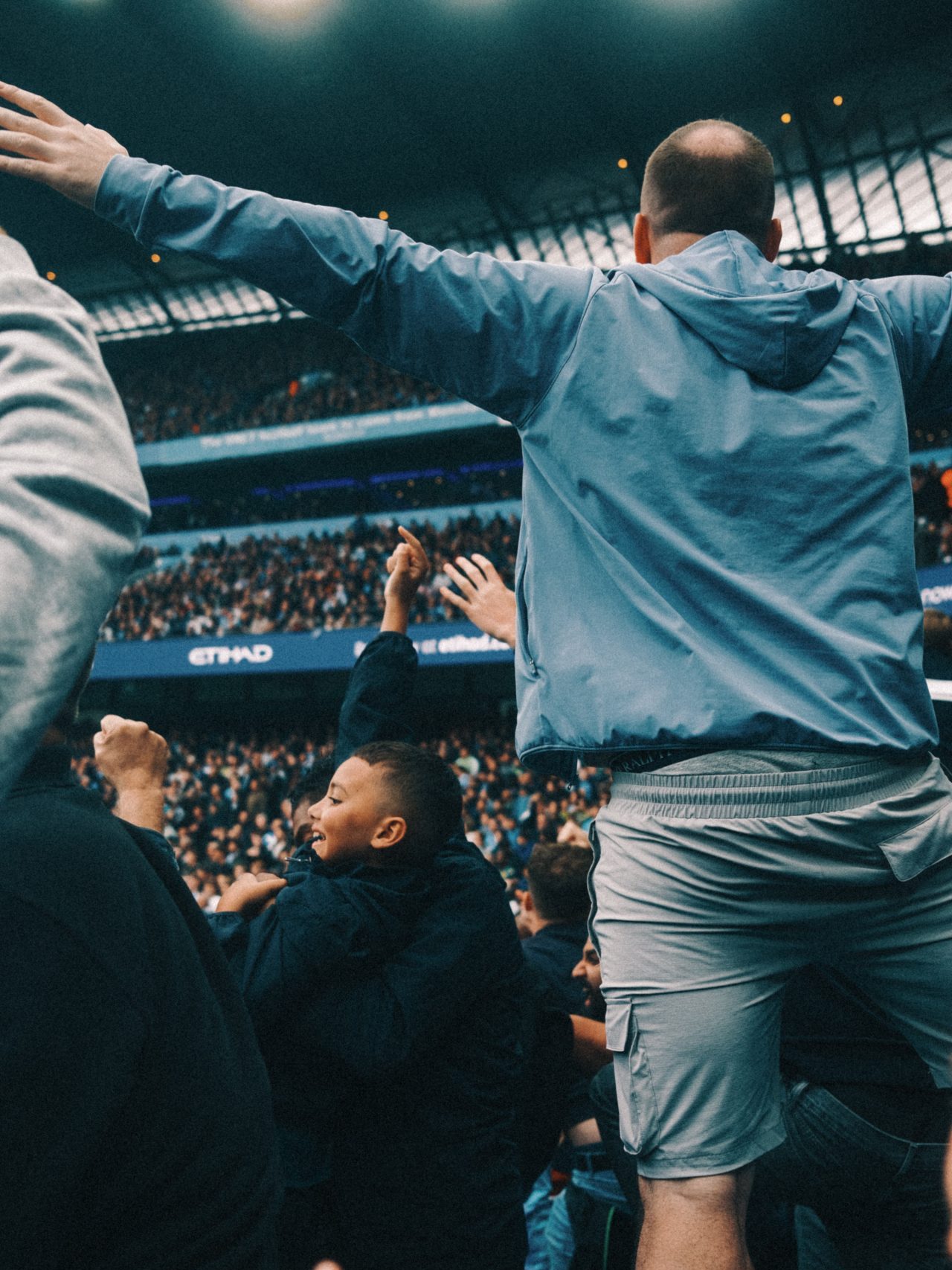
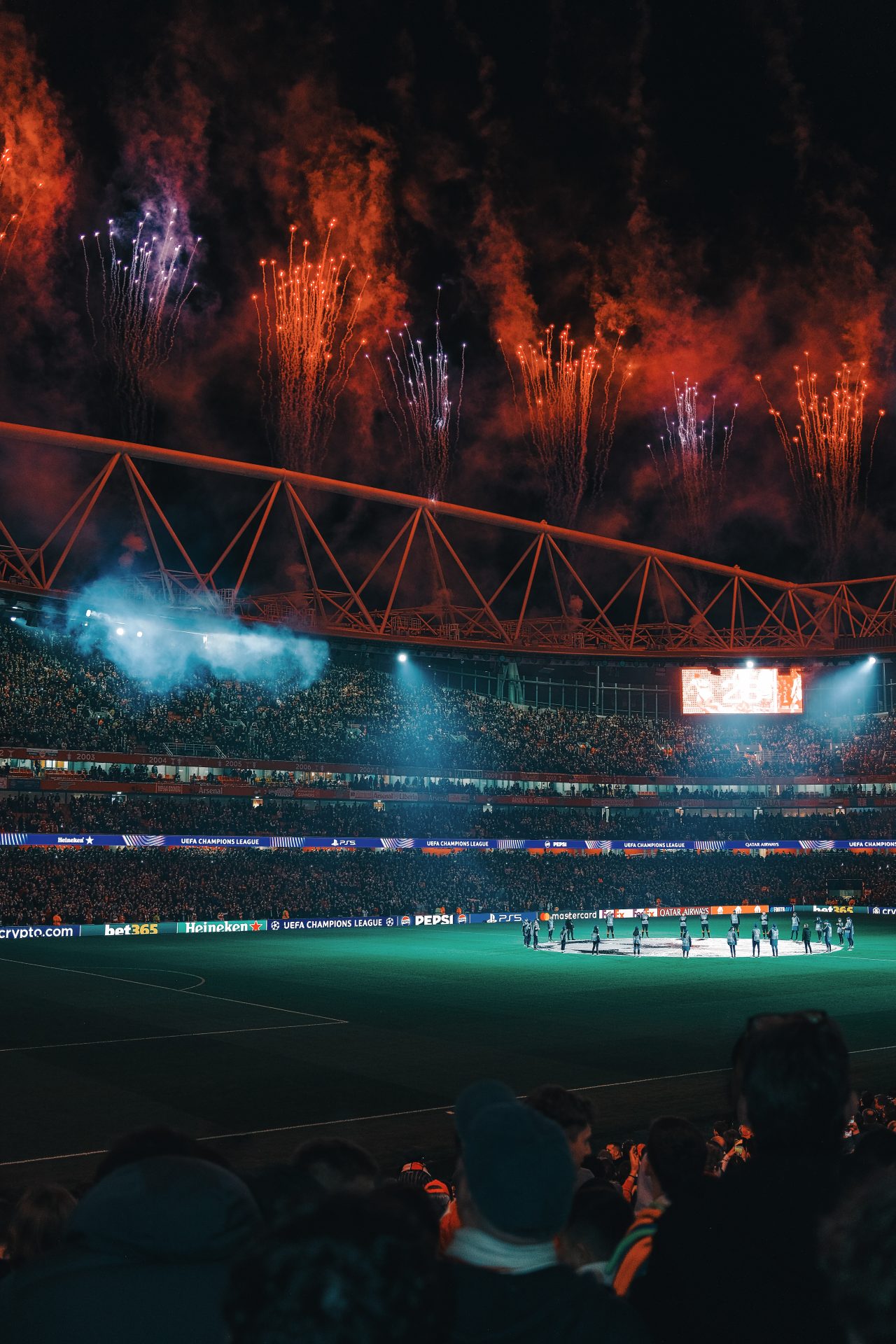
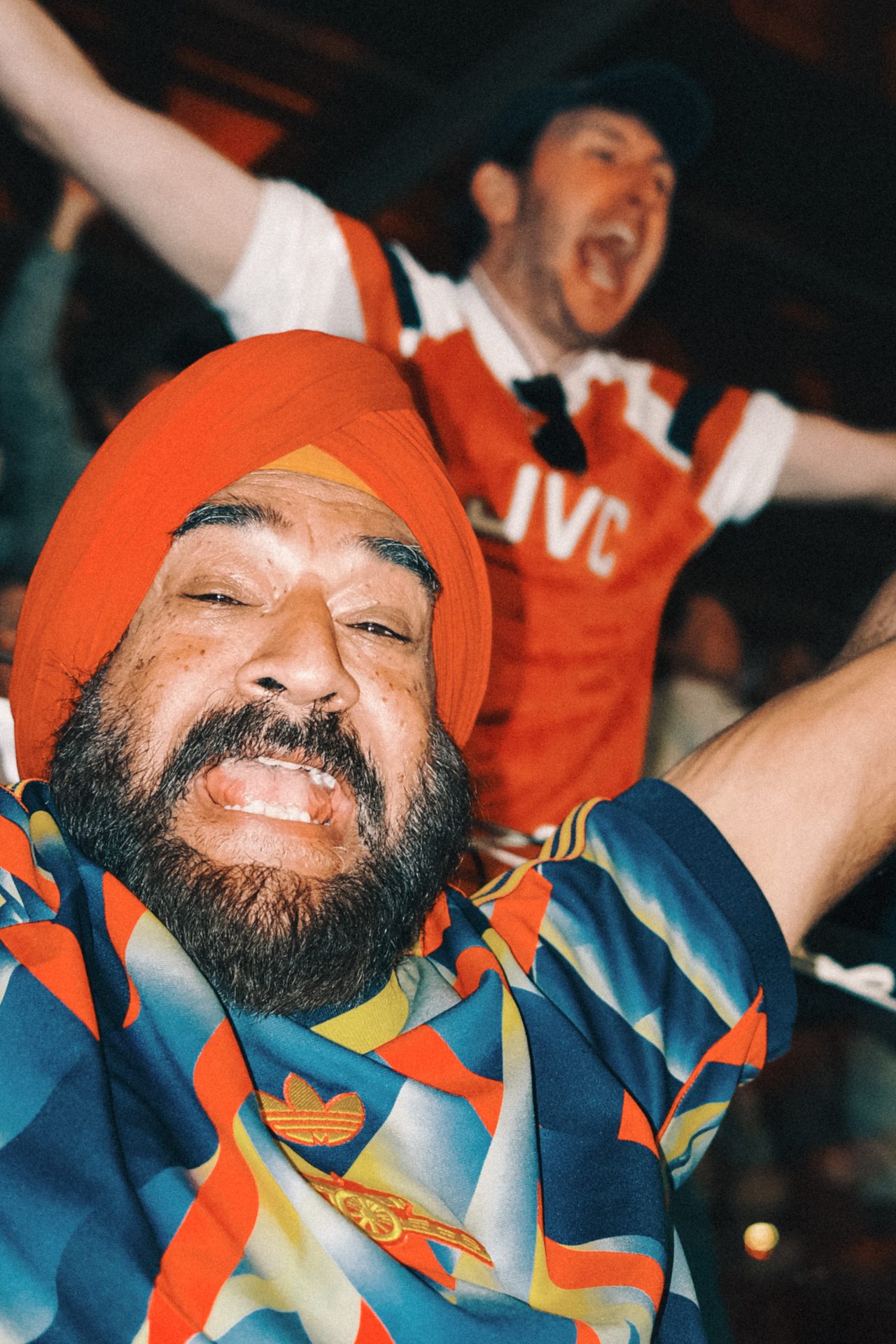
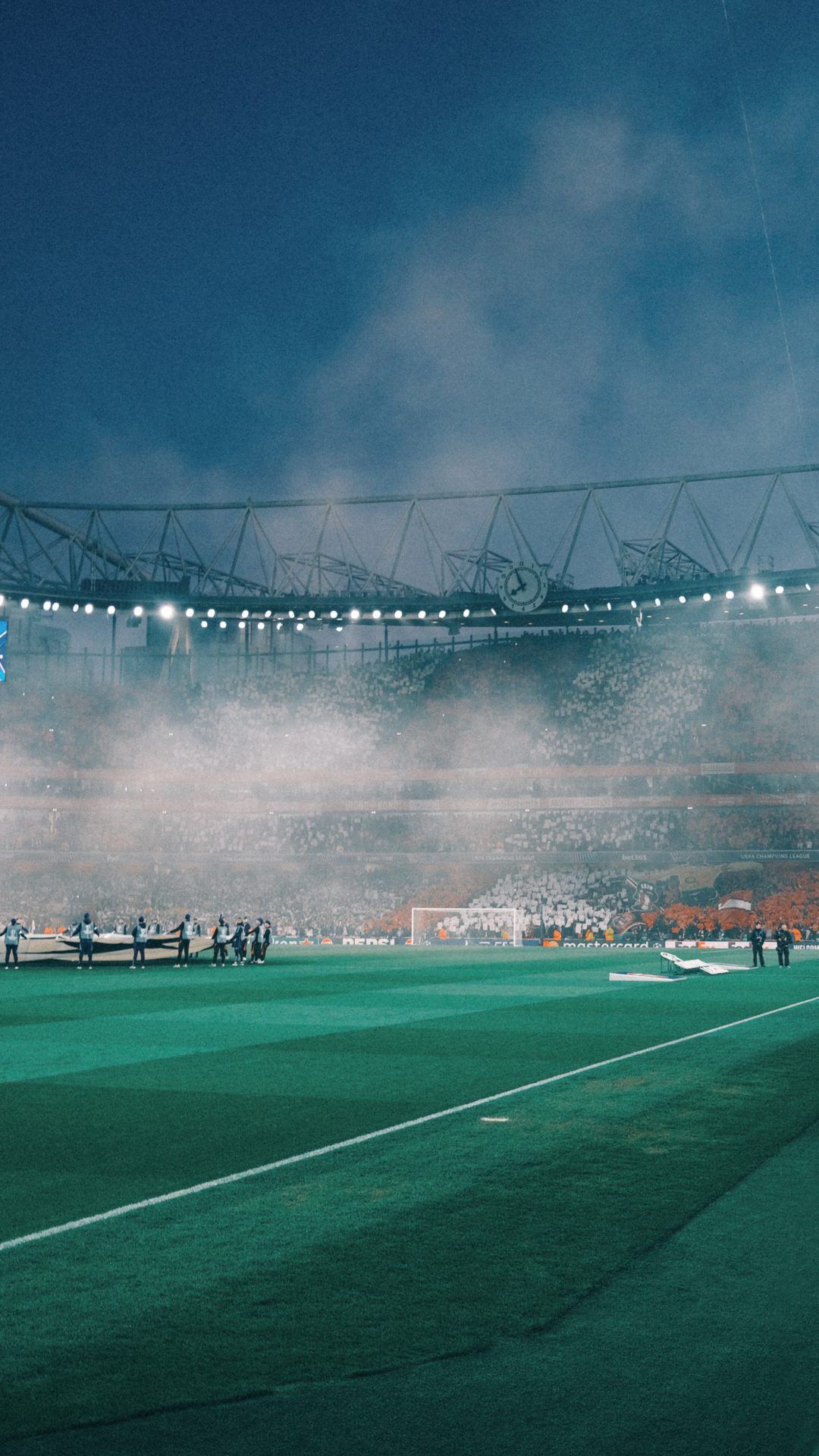
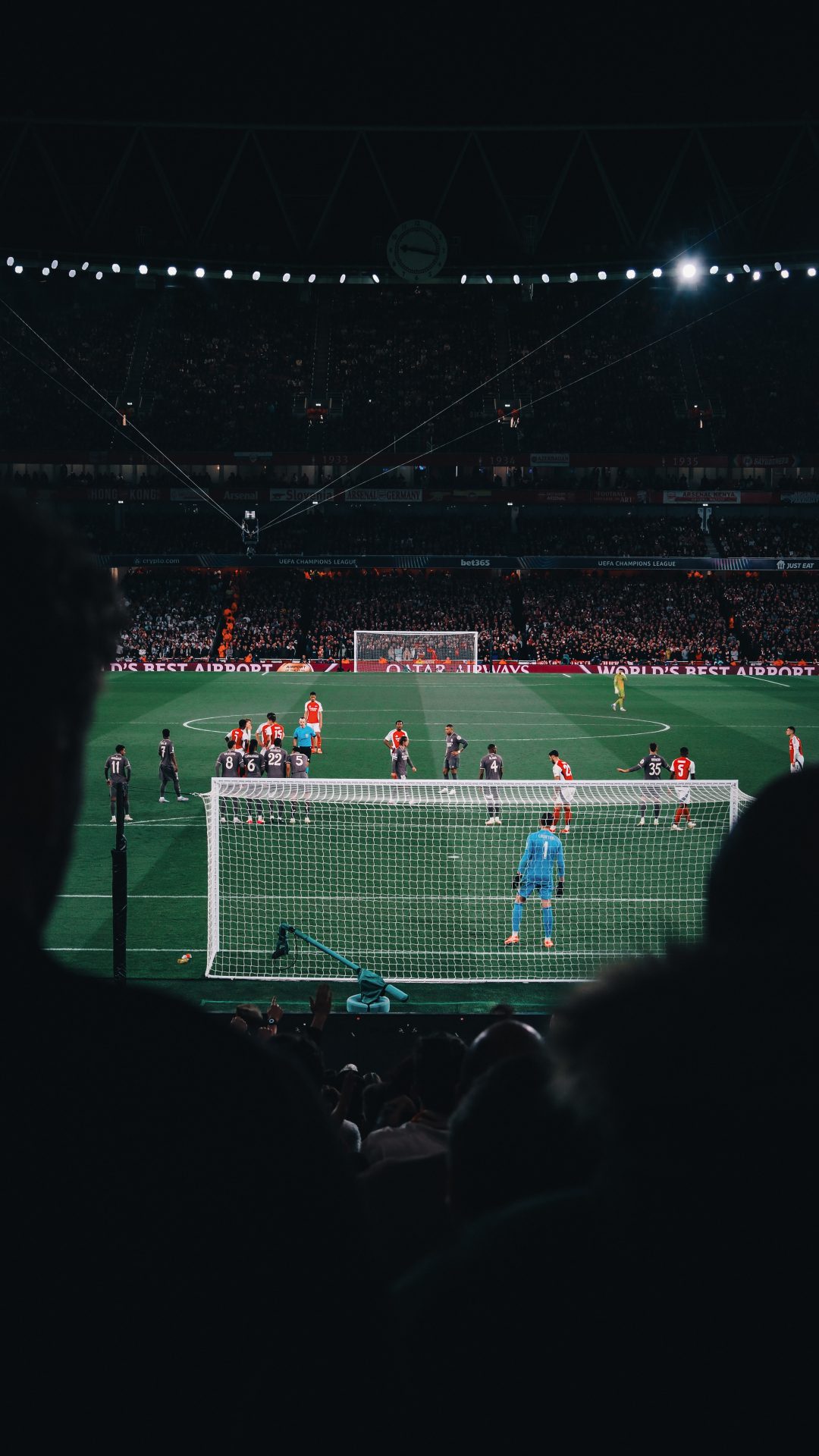
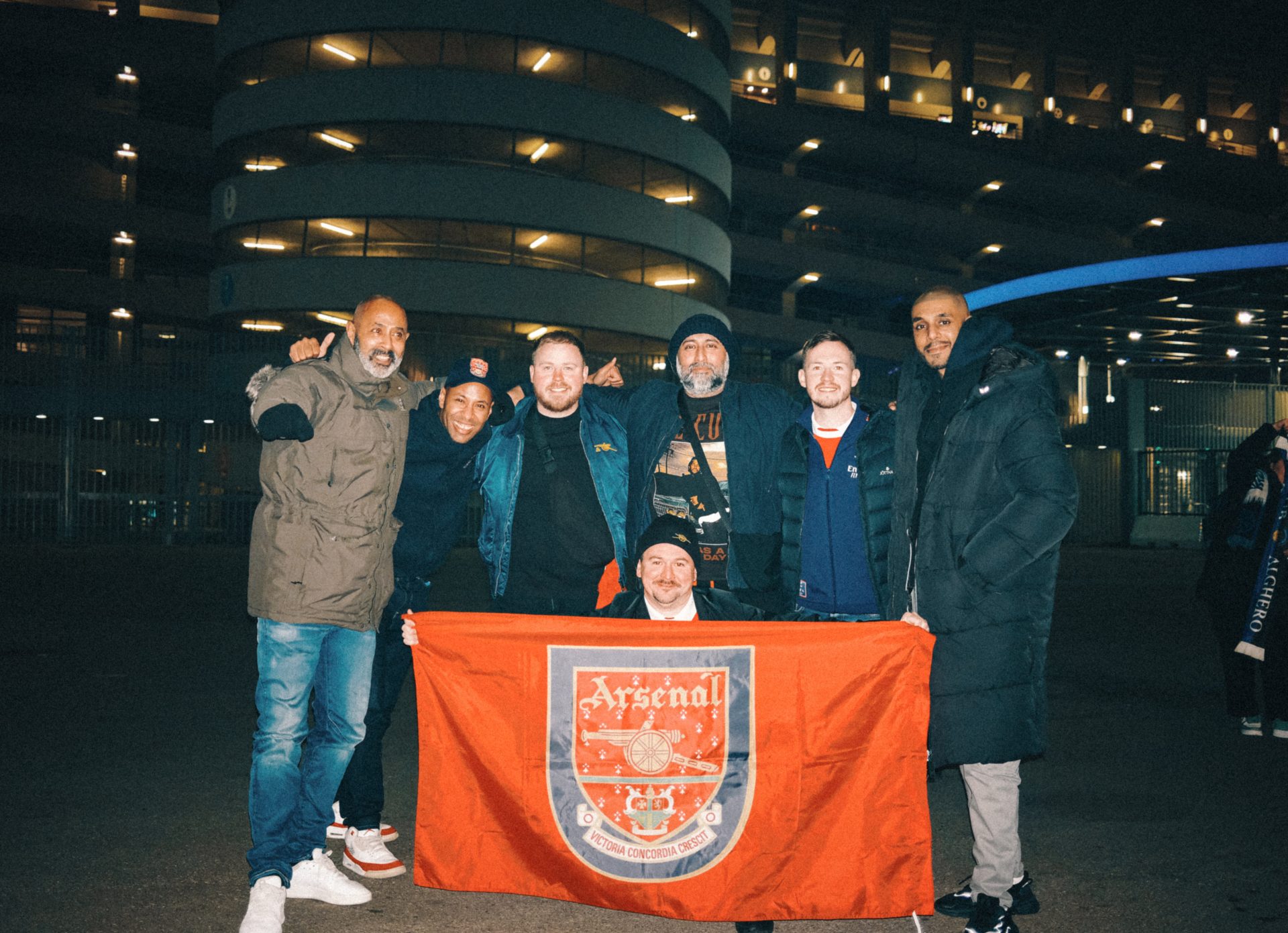
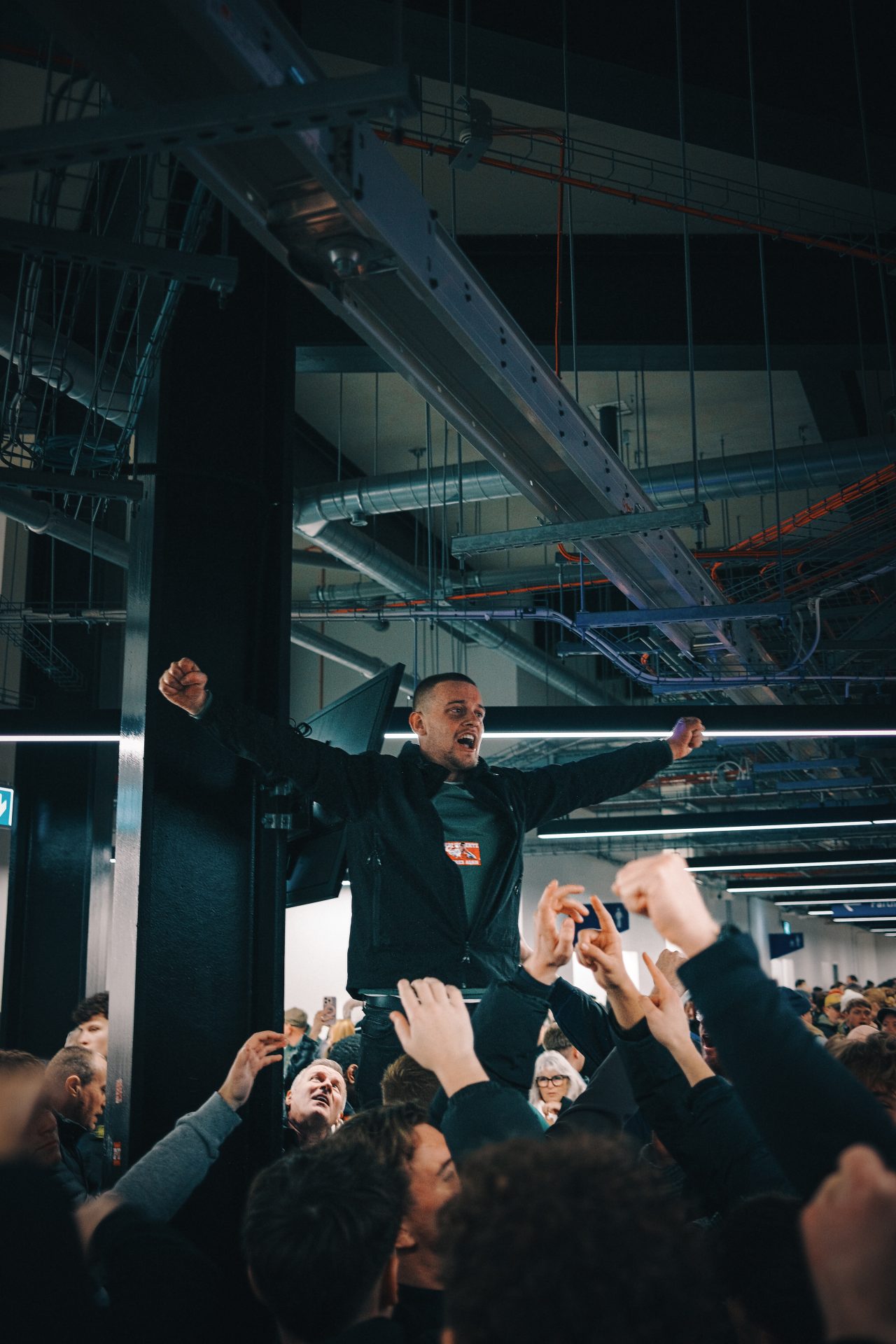
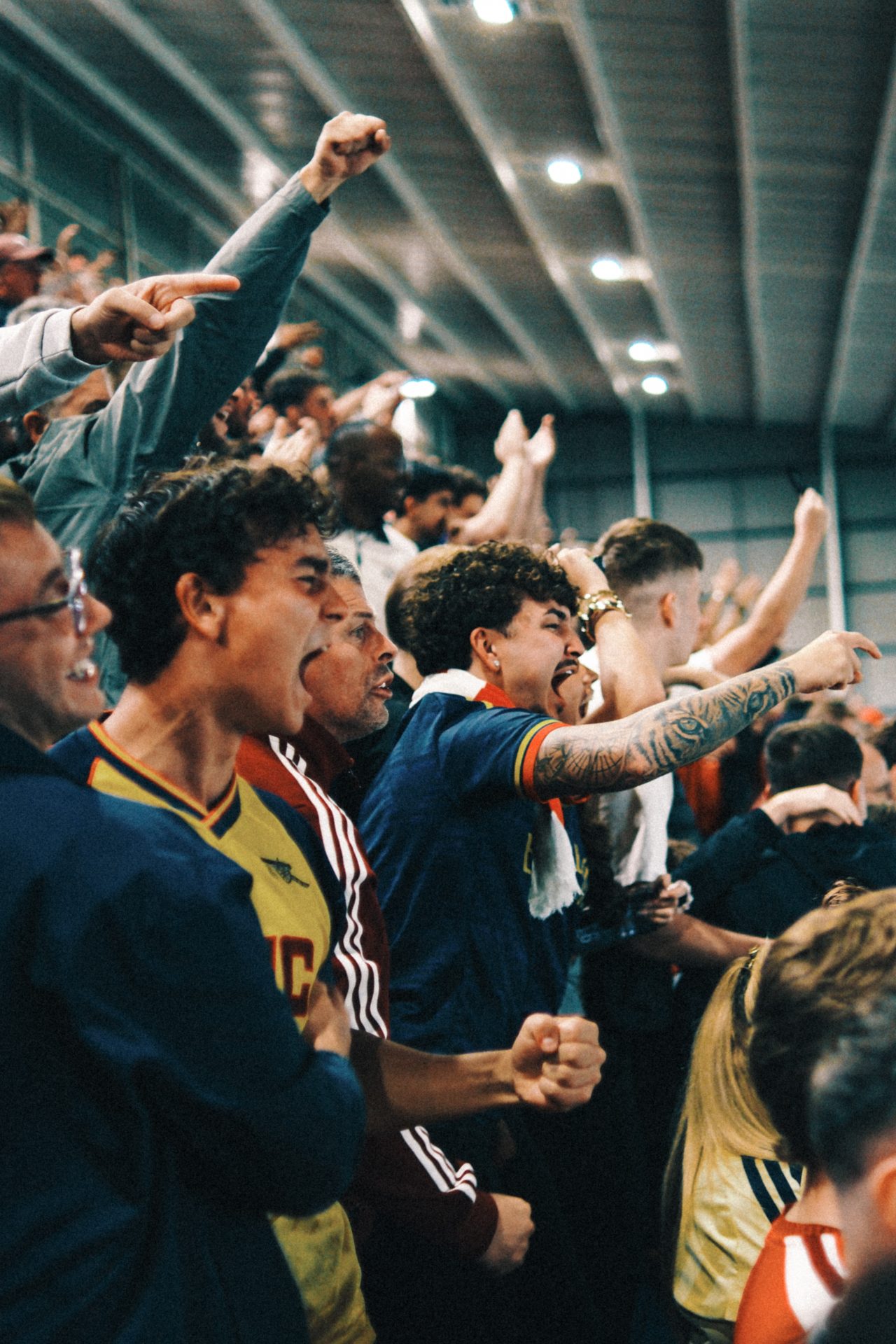
His images are sharp, focused and distinctive, drawing vibrant colours from low light and capturing the energy and emotion of a moment. Photographed from within the crowd, they reflect his own experience of following Arsenal: the streets, stadiums and small details that give each matchday its character.
Here, Connolly discusses his relationship with Arsenal, his military service and the people and rituals that keep him reaching for his camera.
What do you do outside photography?
I work as a welfare officer for an organisation that provides mental health support to members of the Armed Forces and the emergency services.
How did you become an Arsenal supporter?
I’ve supported the Arsenal from as early as I can remember, I would probably say from around 1999 into the early 2000s. A close friend growing up was from a family of Arsenal fans, who I’d spend most of my youth with, either watching football or playing football. My very first Arsenal top was a hand-me-down shirt from him, essentially being adopted into the Arsenal family.
What does Arsenal mean to you, and which players have made the biggest impression on you?
The club, to me, is genuinely a way of life. Through so many highs and lows, watching us win silverware and come so close, for every mile travelled and every moment of heartbreak, I’m drawn back time and time again. Believing and hoping, all for those moments like last season, watching my team win big again! The people I’ve met along the way and memories shared will live with me forever.
Growing up in an era where Arsène Wenger changed the way football was played in the Premier League, I’ve always been mesmerised by players like Dennis Bergkamp, Thierry Henry and Robert Pirès, and more recently players like Mesut Özil and Santi Cazorla. Players who are technically elite and make football enjoyable to watch through their moments of brilliance!
What role did football play in your childhood, and how has that relationship changed as an adult?
Growing up, I spent a lot of my childhood years out on the streets with friends, either playing football or causing trouble. I had a pretty rough upbringing, which ultimately led me to join the Royal Marines at 16, so I spent a lot of time out as an escape from home life!
Football for me during the late ’90s into the early 2000s was peak Premier League, with so many moments and games to fixate on and recreate – this was pretty much my first version of escapism from childhood trauma, something to latch on to and help see me through. Now, as an adult, I think football still acts as an escape, but from day-to-day life, which you need to allow for yourself.
How did football fit into your life during your service in the Royal Marines?
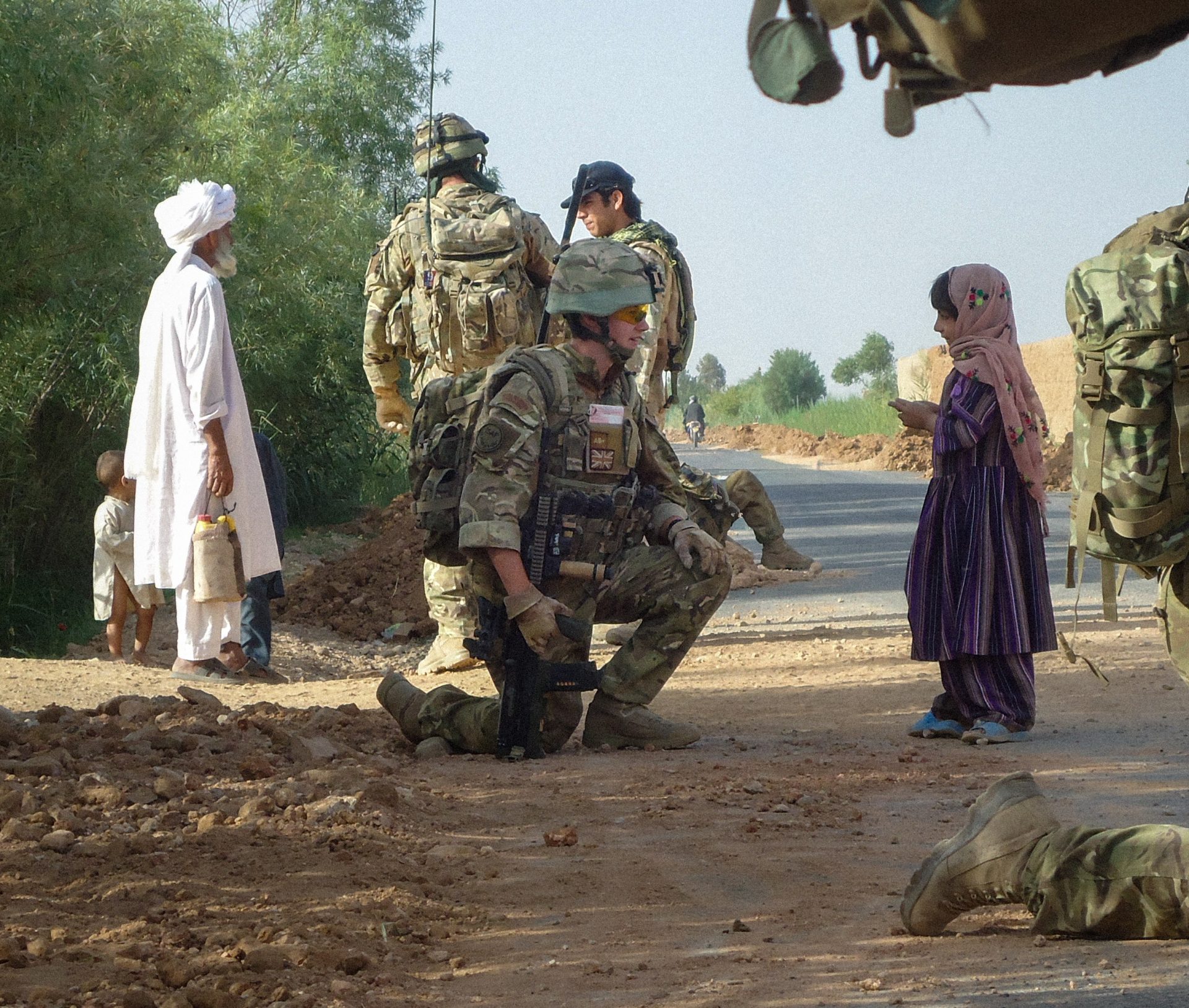
In my early career days, my focus was the job and nothing but the job. With the intensity of Royal Marines training and then general training for deployments to Afghanistan at the time, football, although a great distraction most weekends, was almost completely put on the back burner.
During my service, I served an operational tour in Afghanistan, and the only connection to football possible out there was finding out the scores via a text-link service. It wasn’t until further into my career that I started to enjoy the return to football, and it controlling not just where my weekends were spent but also my morale!
I think my career certainly helped me with the camaraderie side of football when it eventually opened up to me. Enjoying some drinks and watching the game was always used as a way to wind down from the intensity of the job. Plus, so many fellow Marines came from different parts of the country, so you soon get used to the banter they bring and a better understanding of how the different fan bases are.
Tell us about this selection of photographs and your new project, “Those Who Follow”.
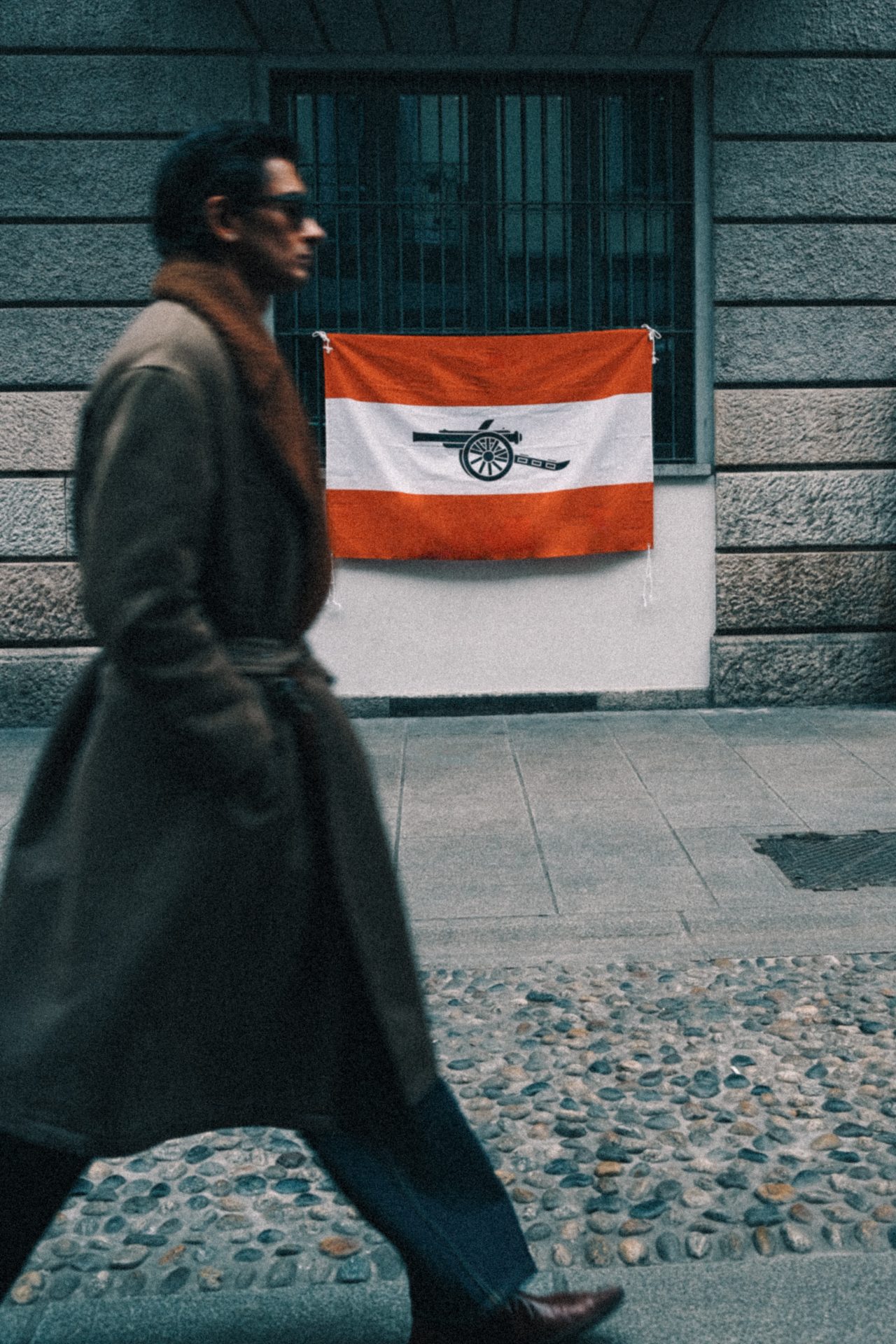
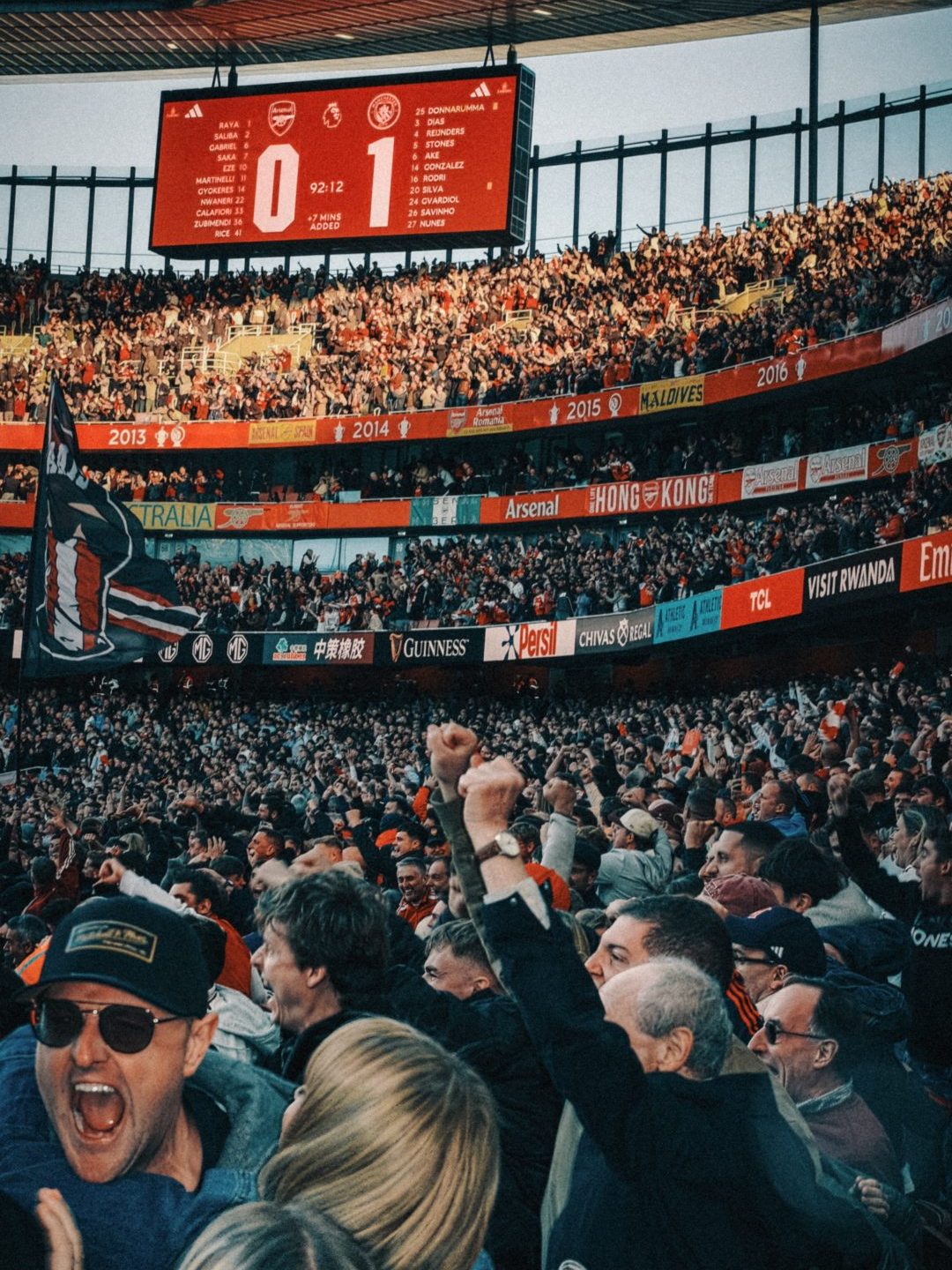
These photos were all captured throughout the last few seasons, home and away. I just try to shoot what I see and how I see it. I never try to recreate anything else I see, and nothing is ever planned.
I usually shoot whilst I’ve been at the pub enjoying my day like everyone else. I think the less pressure I put on myself, the happier I am with the shots I come away with.
Included here is a new project I started this season, “Those Who Follow”, where I’m trying to capture the uniqueness fans bring to the game, whether that’s match rituals, music that gets them ready, superstitions, etc.
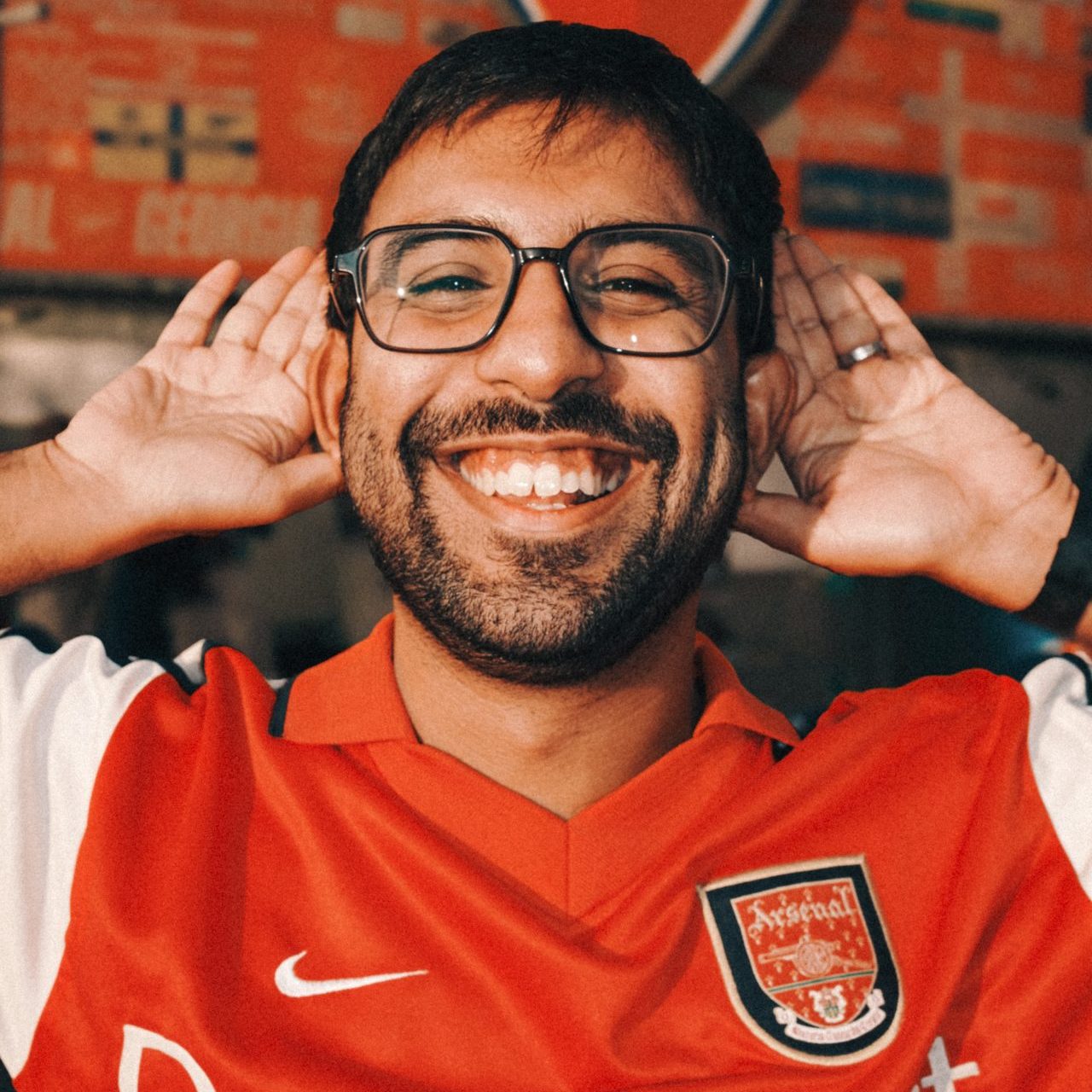
Do you have a favourite, and what does it capture for you?
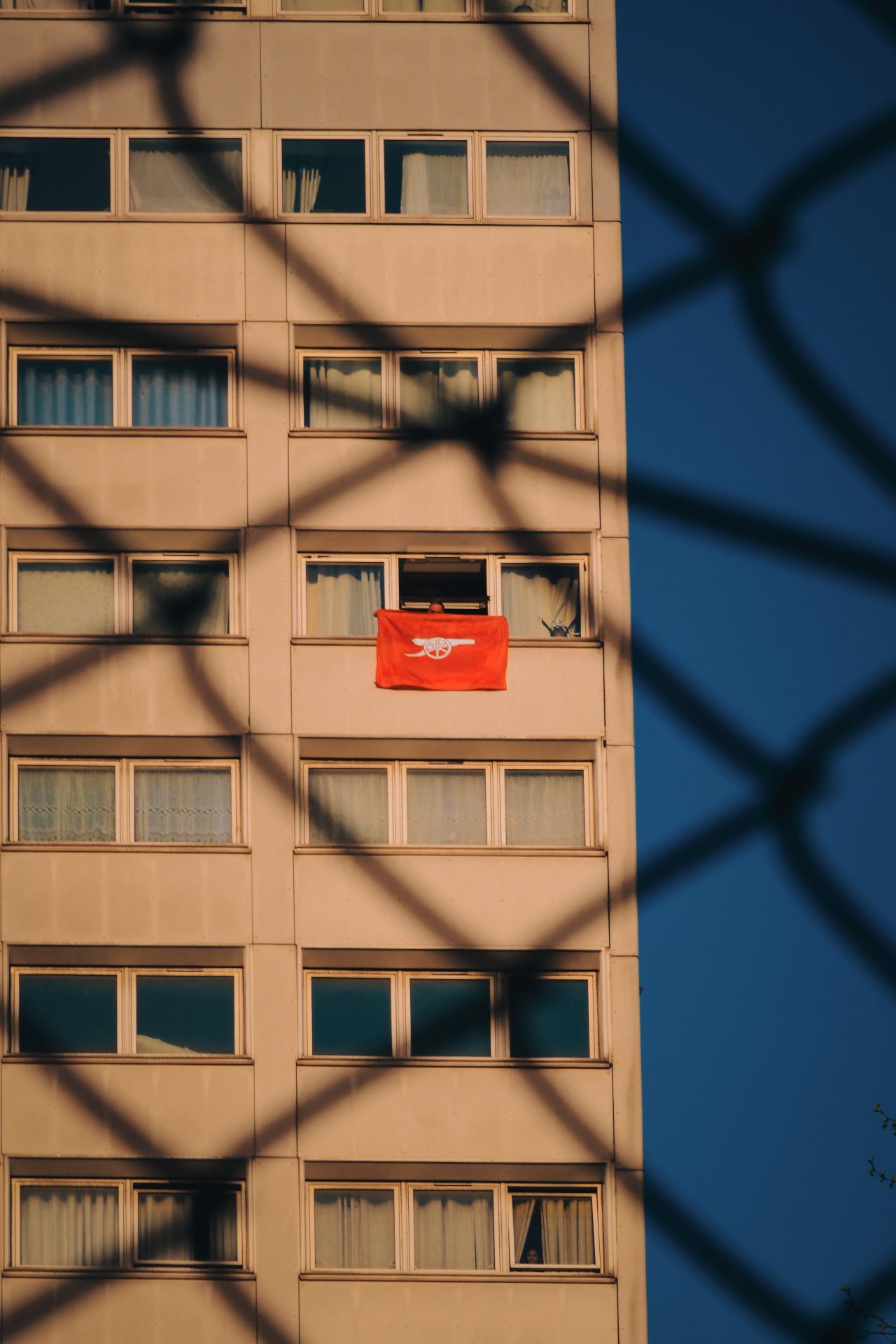
Strangely, it’s the flag being flown out of the residential block window. Simple, but as someone who loves attention to detail, I’m always looking for those moments that many may miss.
Capturing someone enjoying the atmosphere passing their window and wanting to be involved shows how, regardless of how you spend matchday, we all do it our own way, alone or with others.
What led you to photograph football culture, and how has it changed your experience of going to games?
I’ve spent decades attending football and rarely socialising: attend the game, no pre-match drinks, no immersion in the culture of the game, simply attend and go home.
I’m not sure why. It could possibly be due to my time in the military taking me away, and also spending my entire career at 45 Commando in Arbroath, Scotland, which would make my journey down for football pretty treacherous. But I would still attend very often, regardless of the travel.
Like many who leave the military, we usually pick up hobbies to keep ourselves mentally engaged. I like to think I have an eye for detail, so photography was something I picked up and really enjoyed.
With that, it gave me a different version of confidence to document my time at football, and I naturally started to become more social, either through the photos I was posting on Instagram or in the pubs, streets and stadiums where I was capturing the photos.
A combining of two hobbies which has opened my life up to great opportunities working with large brands, paid work, licensed images used in huge campaigns and friends made for life!
Which photographers or artists have influenced or supported your work?
There are so many amazing photographers in sport to draw inspiration from. A good friend of mine, Charn (@lowernorthbank), has always been supportive and, in the early days of me shooting at games, helped bring me out of my shell socially at football. He does incredible work for large brands and for our club.
What makes football culture so compelling to photograph?
I think the emotional connection to sport is unbelievable, especially in football around the UK. Capturing that moment in a still, regardless of the high or low, shows the passion and investment so many have whilst watching their team. Men or women with a gift most can only dream of, who they will never meet, giving them moments of pure elation and also of heartbreak.
I look back after a game and get to relive it all over again. When people reach out to me after the game, applauding my work or thanking me for capturing their moment, I find it keeps the enjoyment of what I capture alive.
What would you like to do next with your photography?
Happy to see what comes my way, trying to keep an open mind and not chase anything, in the hope that what comes my way is organic and not forced. Ideally, shooting more and more paid fan engagement work or shooting behind the scenes is up there.
Where can people follow your work or license your photographs?
Always appreciate a follow on Instagram @AFC_Callum, and any of my images can be licensed via Catch+Release.
Suggested Lower Block Edtions
More from the Lower Block Archive